
The F-150 uses a sensor in each wheel, and the truck needs to know which sensor is at which corner. After a rotation, new wheels or new sensors, the system may show the wrong positions or a warning until it is retrained. Here is how Ford’s procedure works and when you need a tool.
Quick Answer
Ford’s owner procedure: drive above 20 mph for two minutes, park, turn the ignition on with the engine off, then switch the hazard flashers on and off three times within 10 seconds. The horn sounds once and the TPMS light flashes. Train each sensor in order left front, right front, right rear, left rear by letting air out or using a TPMS activation tool until the horn chirps. A double horn means it failed. Ford’s service information says to use a TPMS tool when training new sensors.
Key Takeaways
- F-150s use direct sensors that transmit about once a minute above 20 mph.
- Retrain sensor positions after rotations or wheel changes.
- The hazard-flasher method enters training mode; a TPMS tool makes training easy.
- New sensors should be trained with a TPMS tool per Ford service information.
When the F-150 TPMS Needs Attention
| Situation | What to do |
|---|---|
| Low-pressure warning | Inflate to the door label; the light should clear after driving |
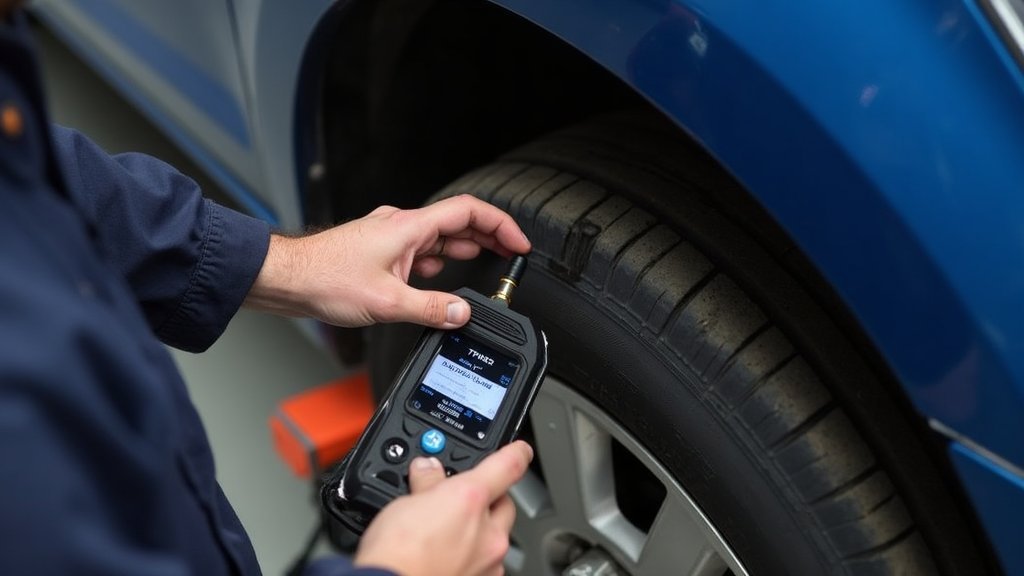
| Tires rotated | Retrain sensor positions so pressures show at the right corners |
| New wheels with transferred sensors | Retrain positions |
| New sensors fitted | Train with a TPMS tool |
| Light flashes then stays on | System or sensor fault; have it checked |
Note: Set pressures first using our F-150 tire pressure guide. Retraining does not fix a tire that is actually low.
Products Worth Considering

This TPMS sensor training and relearn reset tool is customized for Ford, Lincoln, and Mercury vehicles to help activate tire pressure programming after sensor replacement or tire rotation. It can activate individual tire pressure sensors with one-button operation, helping prevent TPMS warning light illumination. It is not a sensor programming tool and cannot program replacement sensors—use it to trigger/activate sensors only.

Replace your worn or missing TPMS sensors with pre-programmed, direct-fit sensors for compatible Ford, Lincoln, and select Mazda models. Each sensor comes ready to activate with a scan tool, helping restore accurate tire pressure monitoring and trouble-free installation. Built with a long-life CR2032 battery and tested before factory release, this set provides dependable performance with a one-year warranty.

This GM TPMS relearn and reset tool (EL-50448) helps you activate and reset OE/OEM compatible tire pressure sensors for many Chevrolet, GMC, Buick, and Cadillac vehicles. It includes a pre-installed 9V alkaline battery for ready-to-use performance and features a one-button design for quick DIY TPMS relearn. Use it to clear the TPMS warning light, set the correct dashboard tire pressure, and test sensor operation.
Ford’s Owner Reset (Training) Procedure
- Drive above 20 mph (32 km/h) for at least two minutes, then park where you can reach all four tires.
- Turn the ignition off, then on with the engine off.
- Turn the hazard flashers on and off three times within 10 seconds.
- Confirm the horn sounds once and the TPMS indicator flashes. If not, start again.
- At the left front tire, hold a TPMS activation tool against the sidewall by the valve, or let air out until the horn chirps.
- Repeat at the right front, right rear and left rear, in that order.
- Turn the ignition off. One horn chirp confirms success; a double horn means retry.
- Reinflate any tire you let air out of to the label pressure.
This procedure comes from Ford’s F-150 owner’s manual. Newer trucks follow the same idea, though some owners report needing an ignition-cycling entry method; follow your own manual.
Training New Sensors
Ford’s service information for the 2023 F-150 tells technicians to use the sensor training procedure with a TPMS tool when directed to train sensors, and not to rely on the owner’s reset procedure, because that procedure does not program new sensors to the module. Each sensor sends a signal about once every 60 seconds when the truck is moving above 20 mph, which is why the system needs a short drive before it shows readings.
Pro tip: An inexpensive TPMS activation tool avoids letting air out of each tire and makes the training sequence quicker and more reliable.
Products Worth Considering
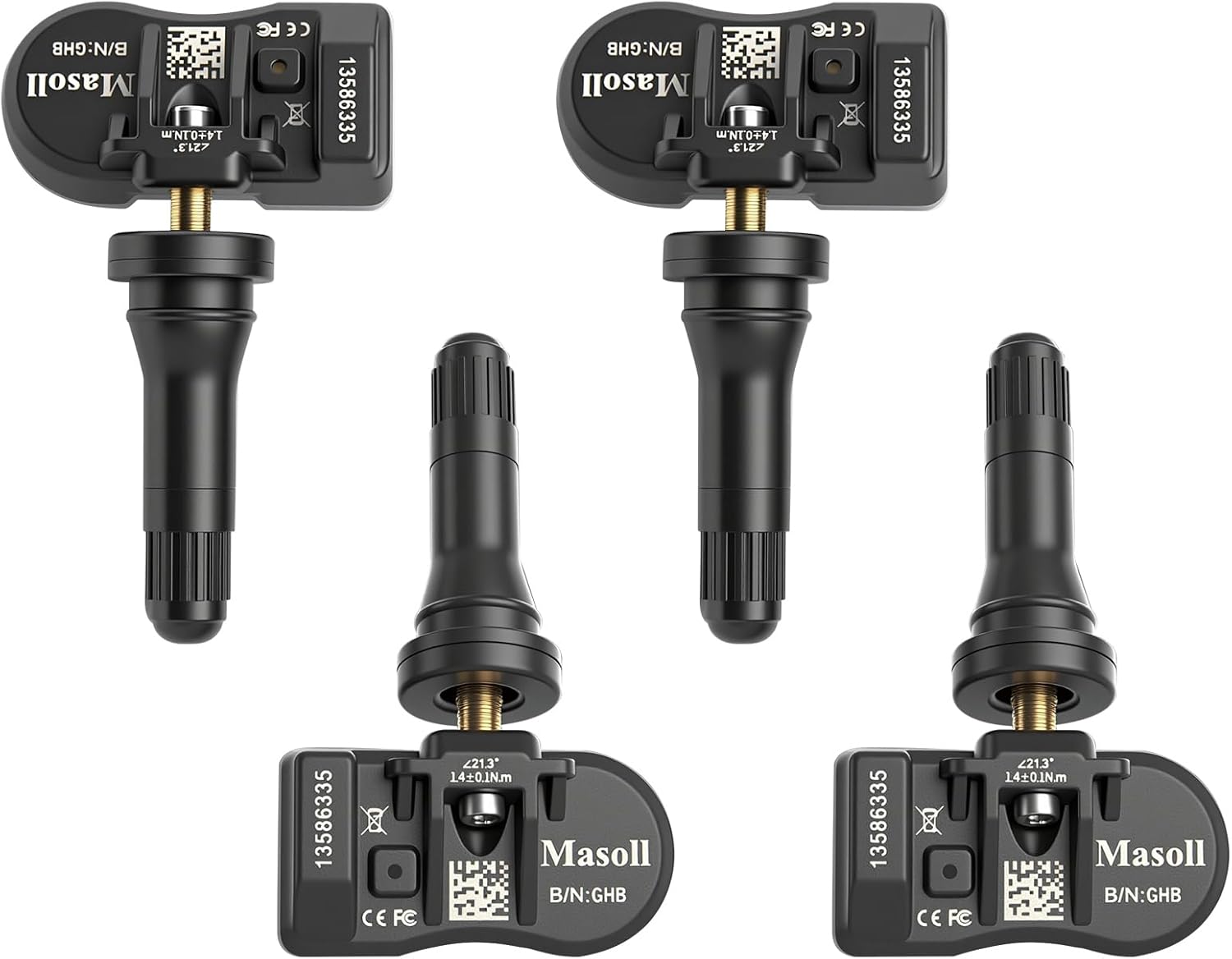
Masoll TPMS sensors are designed for most GM vehicles after 2006, helping you clear tire pressure warnings with OEM-level 315/433MHz compatibility. The 4-pack includes pre-programmed sensors, but re-learning is required after installation using a GM TPMS relearn tool or scan tool. Built with a dual-antenna design and a long-life CR2050 battery, these sensors deliver reliable performance in extreme temperatures with corrosion-resistant valve construction.

This spare tire tool kit is designed for the 2004 to 2018 Ford F-150 to help you loosen and tighten wheel lug nuts and manage the spare tire and provided jack functions from underneath the vehicle. It includes the lug nut wrench and extension pieces plus a convenient storage carrying case for organized transport. The jack itself is not included.
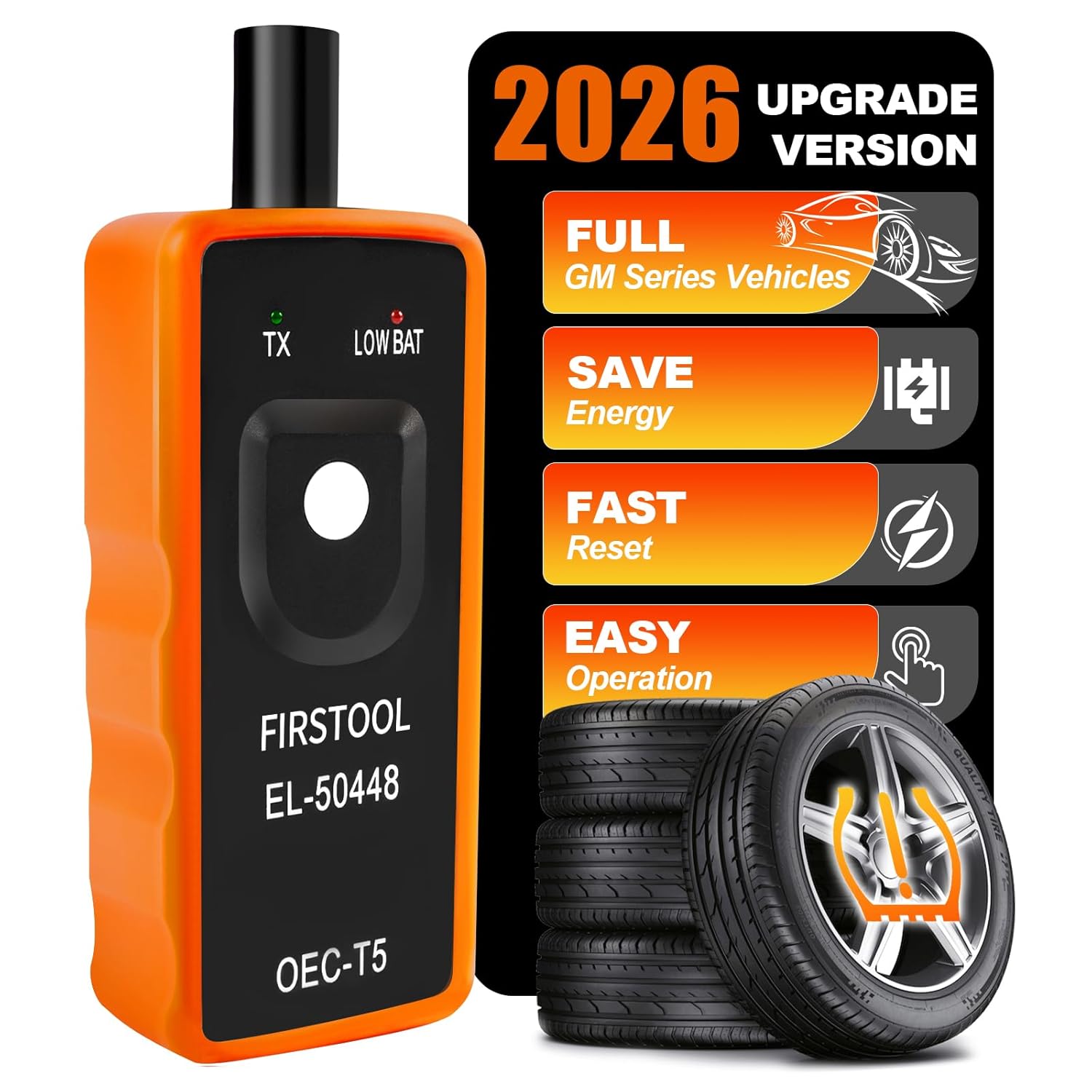
This TPMS relearn tool helps you quickly activate, match, and reset GM tire pressure sensors to keep the vehicle monitoring system working properly. It clears tire pressure alarms and dashboard warning lights after sensor replacement or tire rotation, and supports learning for common 315/433 MHz TPMS sensors. Designed for simple one-button operation, it can help you avoid unnecessary trips to repair shops.
If the Warning Will Not Clear
- Confirm all four tires (and any monitored spare) are at the label pressure.
- Drive above 20 mph for a few minutes so sensors report.
- Retrain the positions with a tool.
- A flashing-then-solid light points to a dead sensor battery or a fault; see TPMS sensor replacement cost and TPMS not reading one tire.
Frequently Asked Questions
How do I reset the TPMS on a Ford F-150?
Turn the ignition on with the engine off, switch the hazard flashers on and off three times within 10 seconds, then train each tire in order (left front, right front, right rear, left rear) with a TPMS tool or by letting air out until the horn chirps.
Do I need a tool to reset F-150 TPMS?
Not always, but a TPMS activation tool makes training easier, and Ford’s service information says to use one when training new sensors.
What does a double horn mean during F-150 TPMS training?
Ford’s manual says a double horn means the training was unsuccessful and must be repeated.
Why does my F-150 show tire pressures at the wrong corners?
The tires were moved without retraining the sensor positions. Run the training procedure after every rotation.
Sources
- Ford 2013 F-150 owner’s manual: TPMS reset procedure
- Ford F-150 owner’s manual: system reset steps
- Modern Tire Dealer: 2023 Ford F-150 TPMS service procedure
- F150gen14 forum: TPMS reset methods on newer trucks
Products Worth Considering

The VEHLIVE SU-50448 II TPMS relearn tool provides a fast activation reset to restore accurate tire pressure monitoring after sensor replacement or tire rotation. It supports 315 MHz and 433 MHz GM series sensors and helps clear dashboard pressure warnings. With simple two-button operation and horn-confirmed relearning order, you can reprogram sensors conveniently at home.
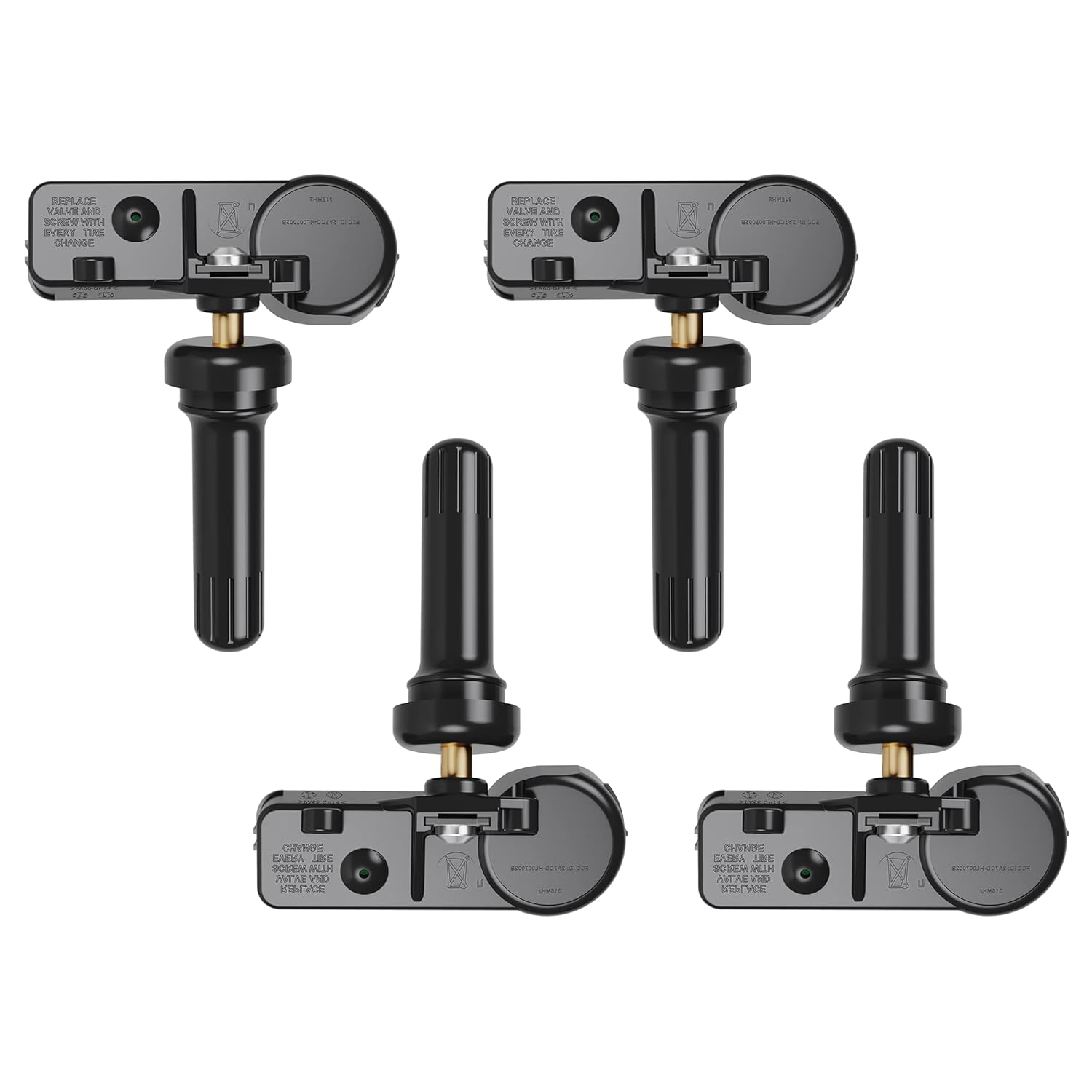
Replace worn or faulty TPMS sensors with this brand new 315MHz GM-compatible replacement set for select Chevy, GMC, Buick, Cadillac, and similar vehicles. These sensors are pre-programmed for your make/model/year and typically only require activation with a scan tool. Built for long service life with a high-temperature battery, they help maintain reliable tire pressure monitoring for safer driving.
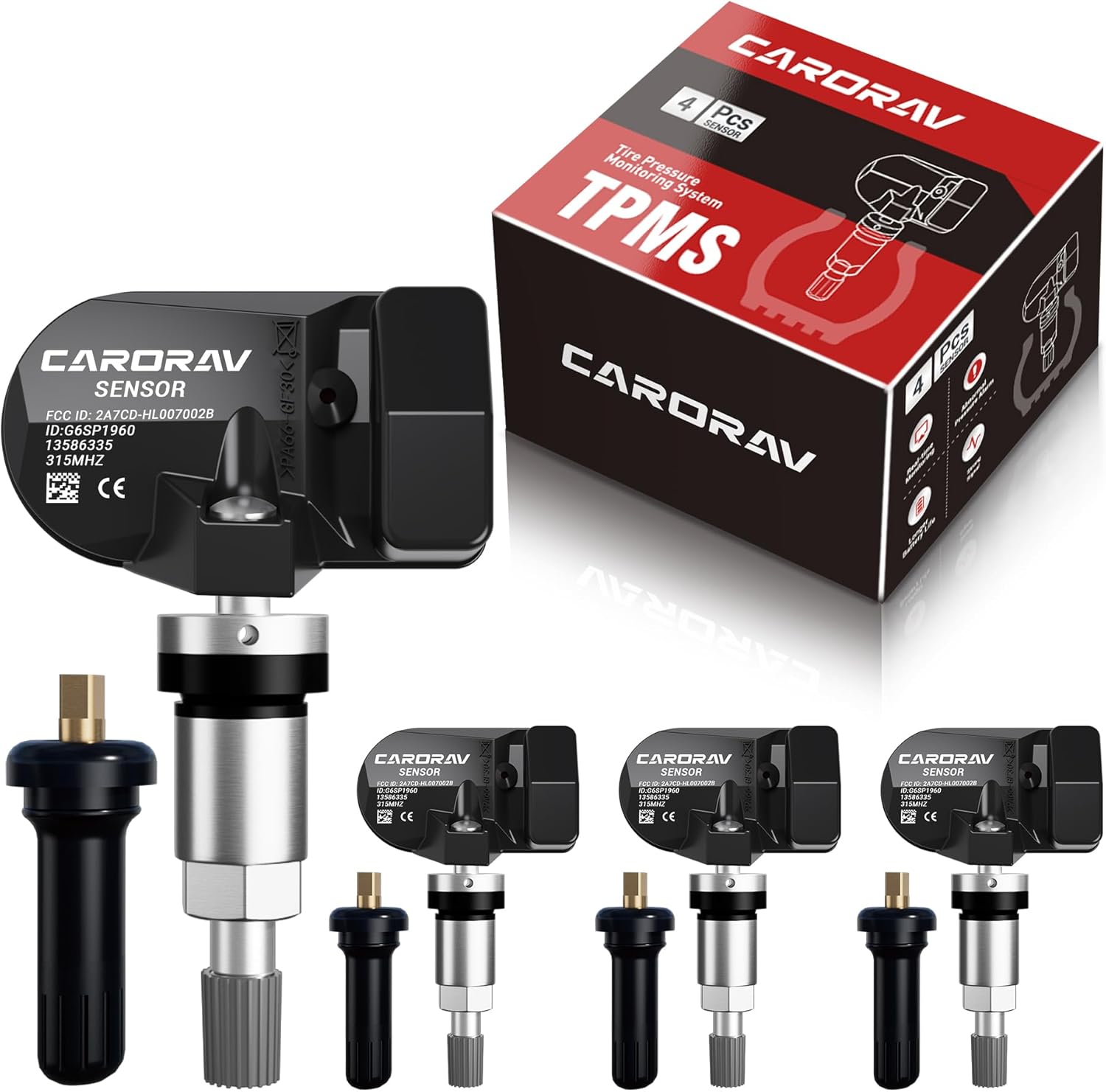
Replace worn or missing TPMS sensors with CARORAV pre-programmed GM-compatible sensors for a smoother installation experience. These 315MHz replacement sensors help monitor tire pressure in real time with long battery life, and they are designed to withstand harsh temperatures. Manual or OBDII relearn may be required to reset the system for proper recognition.