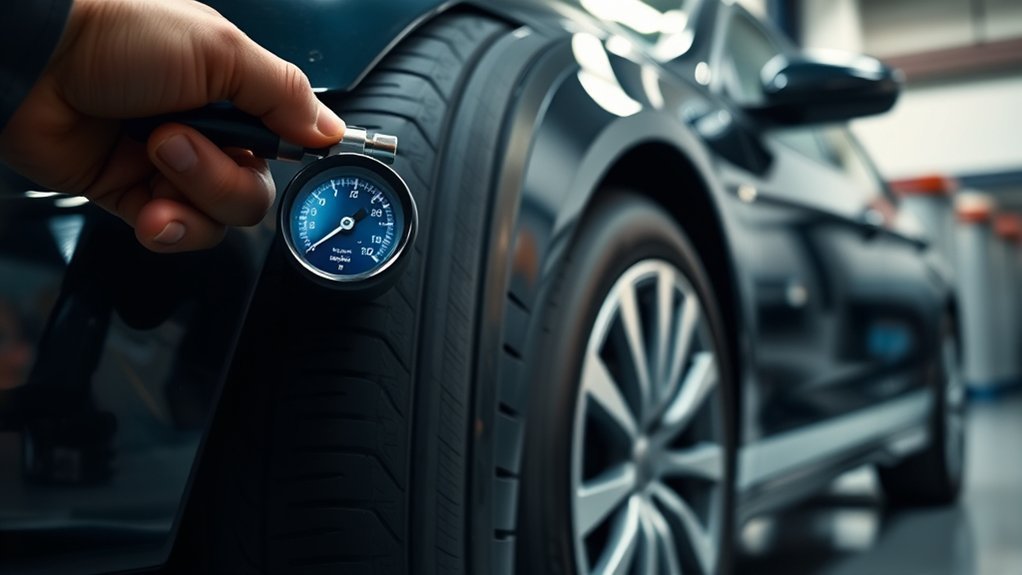
“Train Left Front Tire” means the vehicle’s tire pressure monitoring system is asking you to register, relearn, or confirm the sensor for the left front wheel position. On many Ford vehicles, this message appears during TPMS relearn mode after a tire rotation, tire replacement, wheel swap, sensor replacement, or pressure adjustment.
Quick Answer
“Train Left Front Tire” usually means your vehicle is in TPMS relearn mode and wants you to activate the left front tire pressure sensor first. Check all tire pressures, use the reset method listed in your owner’s manual, train the tires in the correct order, then reinflate every tire to the placard pressure.
Key Takeaways
- The message does not always mean the left front sensor is bad; it often means the TPMS relearn sequence has started.
- Many Ford relearn procedures start at the left front tire, then continue clockwise: right front, right rear, left rear.
- Always set tire pressure to the number on the door-jamb Tire Label or Safety Compliance Certification Label.
- Some Ford and Transit models use a menu reset, TPMS reset button, or automatic relearn instead of the horn-chirp air-release method.
- If the warning remains after correct pressure and relearn, check for a dead sensor battery, damaged valve-stem sensor, incompatible wheel, spare tire use, or a TPMS module fault.
At a Glance
| Time Required | 10–25 minutes, depending on vehicle method and whether the first attempt works |
| Difficulty | Easy to moderate |
| Tools Needed | Accurate tire pressure gauge, air compressor, owner’s manual, and optional TPMS activation or scan tool |
| Cost | Usually free if the sensors work; shop cost varies if diagnosis, programming, or sensor replacement is needed |
What Does “Train Left Front Tire” Mean?
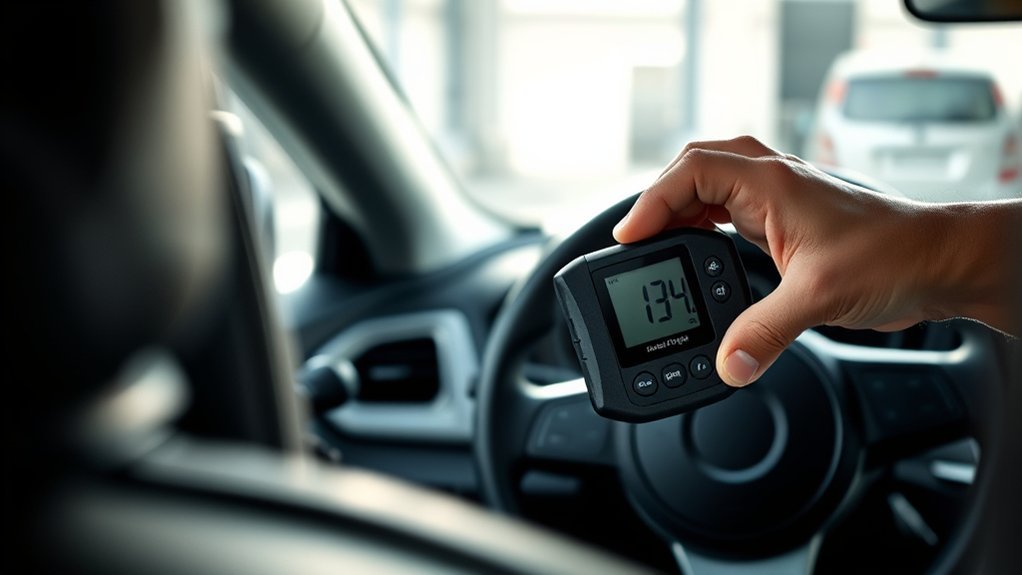
The “Train Left Front Tire” message means the TPMS is trying to identify the tire pressure sensor at the left front wheel. In a Ford-style relearn sequence, the left front tire is usually trained first, followed by the right front, right rear, and left rear.
This message commonly appears after a tire rotation, tire replacement, wheel replacement, sensor replacement, pressure adjustment, or failed relearn attempt. It can also appear if the vehicle no longer knows which sensor belongs to which wheel position.
During a manual horn-chirp relearn, the vehicle confirms each sensor by sounding the horn after the sensor is activated. Some procedures activate the sensor by releasing air from the tire; others use a TPMS activation tool or an in-dash menu. Ford’s owner-manual procedure for some vehicles describes driving above 20 mph for at least two minutes, cycling the hazard flashers three times, and training the tires in clockwise order from the left front.
Ford’s owner-manual TPMS reset procedure confirms that the horn chirp means the sensor identification code has been learned for that wheel position.
Warning: Do not train tires on the shoulder of a road or in traffic. Park on level ground, use a reliable pressure gauge, and reinflate every tire to the pressure shown on the vehicle’s Tire Label or Safety Compliance Certification Label before driving normally.
Before You Start: Check Pressure and Identify the Right Reset Method
Start with the basics before entering TPMS training mode. TPMS is a warning system, not a replacement for manual tire-pressure checks. Check each tire when cold, including the spare if your vehicle uses one, and inflate the tires to the vehicle manufacturer’s recommended pressure.
Look for the pressure label on the driver door edge, B-pillar, door-latch post, or Safety Compliance Certification Label. Do not use the maximum pressure printed on the tire sidewall as your normal inflation target.
- Use an accurate tire pressure gauge.
- Confirm all four road tires are the correct size and type for the vehicle.
- Check whether a temporary spare is installed; many TPMS systems will keep warning until the repaired road wheel is reinstalled.
- Move at least 3 ft (1 m) away from another Ford vehicle that is also being trained to reduce interference.
- Have an air compressor ready before you release any air.
- Read the owner’s manual for your exact model and year before following a generic reset method.
Note: On some Ford vehicles, the TPMS light may not turn off immediately after inflation. The vehicle may need to be driven for a short time above the speed listed in the owner’s manual before the system updates.
What Causes the Left Front TPMS Warning?
Low pressure is the first thing to check, but it is not the only possible cause. A “Train Left Front Tire” message can be a normal part of relearn mode, a sign that the relearn sequence was interrupted, or a clue that the sensor is not communicating.
| Cause | What It Means | What To Do |
|---|---|---|
| Low tire pressure | The tire may be underinflated or leaking. | Check cold PSI and inflate to the placard pressure. |
| Recent tire rotation | The vehicle may not know which sensor moved to which corner. | Run the correct TPMS reset or relearn sequence. |
| Sensor not waking up | The TPMS module is not receiving a usable signal. | Retry the sequence or use a TPMS scan tool. |
| Weak or dead sensor battery | The sealed battery inside the sensor may be near the end of its life. | Replace the TPMS sensor if testing confirms failure. |
| Wrong or incompatible wheel/sensor | Aftermarket wheels or wrong-frequency sensors may not communicate correctly. | Verify sensor compatibility for your exact vehicle. |
| Temporary spare installed | The system may keep warning until the road wheel returns. | Repair and reinstall the original road wheel and tire assembly. |
Which Ford TPMS Reset Method Should You Use?
Do not assume every Ford uses the same relearn procedure. The right method depends on the vehicle, model year, wheel setup, dashboard display, and whether a sensor was replaced.
[Products Worth Considering]
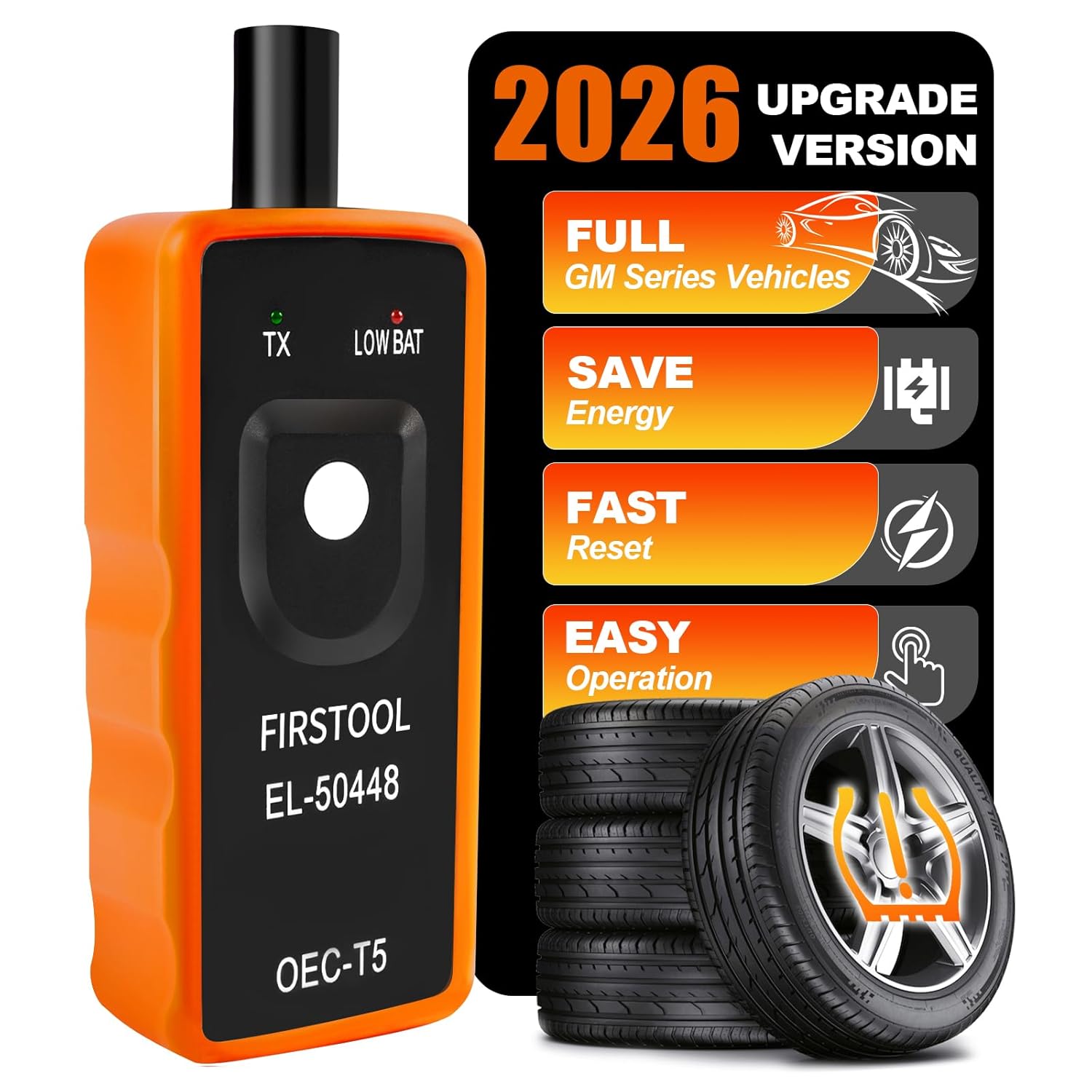
This TPMS relearn tool helps you quickly activate, match, and reset GM tire pressure sensors to keep the vehicle monitoring system working properly. It clears tire pressure alarms and dashboard warning lights after sensor replacement or tire rotation, and supports learning for common 315/433 MHz TPMS sensors. Designed for simple one-button operation, it can help you avoid unnecessary trips to repair shops.

Replace your worn or missing TPMS sensors with pre-programmed, direct-fit sensors for compatible Ford, Lincoln, and select Mazda models. Each sensor comes ready to activate with a scan tool, helping restore accurate tire pressure monitoring and trouble-free installation. Built with a long-life CR2032 battery and tested before factory release, this set provides dependable performance with a one-year warranty.

This TPMS sensor training and relearn reset tool is customized for Ford, Lincoln, and Mercury vehicles to help activate tire pressure programming after sensor replacement or tire rotation. It can activate individual tire pressure sensors with one-button operation, helping prevent TPMS warning light illumination. It is not a sensor programming tool and cannot program replacement sensors—use it to trigger/activate sensors only.
Hazard-Flasher / Horn-Chirp Method
Many Ford vehicles use a manual relearn sequence. The common pattern is:
- Drive above 20 mph for at least two minutes.
- Park somewhere safe with access to all four tires and an air pump.
- Switch the ignition off, then switch it on without starting the engine.
- Turn the hazard flashers on and off three times within 10 seconds.
- Wait for one horn chirp and a flashing TPMS indicator.
- Train the tires in this order: left front, right front, right rear, left rear.
This method is the one most people mean when they talk about “training” a tire. It may use controlled air release from each tire until the horn chirps, or a TPMS activation tool if your vehicle or shop procedure calls for one.
Menu, Button, or Automatic Relearn Method
Some Ford Transit and newer Ford vehicles use the information display or a TPMS reset button instead of the hazard-flasher sequence. A Transit owner-manual procedure, for example, points drivers to Settings, Driver Assist, Tire Monitor, and holding OK until confirmation appears. It also says the system can automatically relearn the tire pressure sensors the next time the vehicle is driven for about 15 minutes above 25 mph.
Ford Transit owner-manual TPMS guidance is the better source for Transit-specific instructions than a generic Ford reset article.
Pro Tip: If your dash shows a Tire Monitor reset menu, try the menu method first. If your dash specifically prompts “Train Left Front Tire,” you are likely already in a wheel-position relearn sequence.
How to Reset the TPMS System
Use this general process only if it matches your owner’s manual. If your vehicle uses a menu reset or TPMS reset button, follow that method instead.
- Set all tire pressures first. Use the pressure listed on the vehicle placard, not the tire sidewall maximum.
- Drive above 20 mph for at least two minutes. This prepares many Ford systems for reset mode.
- Park safely. Choose a flat area where you can reach all four tires and use an air source.
- Turn the ignition off.
- Turn the ignition on without starting the engine.
- Cycle the hazard flashers. Turn them on and off three times within 10 seconds.
- Listen for one horn chirp. This confirms reset mode on vehicles that use this method.
- Train the tires in order. Start with the left front tire, then move clockwise.
- Reinflate every tire. After the sequence, set all tires back to the recommended cold pressure.
- Drive and recheck. Confirm the warning stays off and each tire reports normally.
Note: If the horn does not chirp after repeated attempts, stop guessing. Check the exact owner’s manual procedure or have the vehicle checked by a qualified technician.
How to Train the Left Front Tire
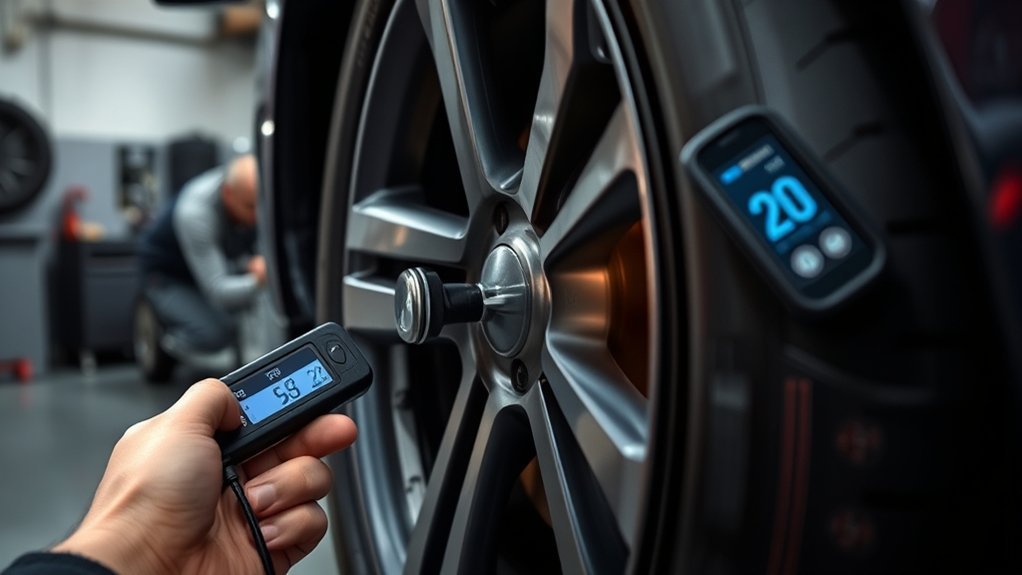
Once the vehicle is in TPMS relearn mode, the left front tire is the first position in the common Ford clockwise sequence. The goal is to make the vehicle learn the sensor ID for that exact wheel location.
Enter TPMS Learn Mode
For the horn-chirp method, enter learn mode by following the owner-manual sequence: drive above the required speed, park safely, switch the ignition on with the engine off, and cycle the hazard flashers three times within 10 seconds. One horn chirp usually confirms the vehicle is ready.
If your model uses a dashboard menu, enter TPMS reset through the Tire Monitor or Driver Assist menu instead. Do not deflate a tire just because a generic guide says to do it.
Train Left Front First
Remove the valve cap from the left front tire. If your vehicle uses the air-release method, slowly decrease the tire pressure until the horn chirps once. That single chirp confirms the sensor ID has been learned for the left front position.
If you have a TPMS activation tool, hold it near the valve stem and trigger the sensor according to the tool instructions instead of releasing air. Shops often prefer a tool because it avoids unnecessary deflation.
Confirm Sensor Reset
After the left front tire is accepted, move to the next tire immediately. Many Ford procedures time out if you wait too long between sensors. If you hear a double horn chirp or the system exits learn mode, the reset did not complete and the full sequence may need to be repeated.
How to Train the Remaining TPMS Sensors
After the left front tire is trained, continue clockwise. Keep the same method for every wheel: activate the sensor, wait for confirmation, then move to the next tire.
Right Front Sensor
Move to the right front tire. Remove the valve cap and activate the sensor. If you are using the air-release method, release air slowly until the horn chirps once. Do not remove too much air, and do not forget to restore pressure later.
| Step | Action |
|---|---|
| 1 | Confirm the left front tire has already chirped. |
| 2 | Move to the right front tire. |
| 3 | Activate the sensor or release air slowly. |
| 4 | Wait for one horn chirp. |
| 5 | Move to the right rear tire. |
Right Rear Sensor
Train the right rear tire next. The horn chirp confirms that the TPMS module received and stored that sensor ID for the right rear position. If the horn does not chirp, recheck that the vehicle is still in learn mode and that you did not wait too long between tires.
Left Rear Sensor
Train the left rear tire last. On the horn-chirp method, the final horn confirmation usually means the four-wheel training sequence is complete. Turn the ignition off only after the sequence finishes, then set all four tires to the recommended pressure.
- Left front: train first.
- Right front: train second.
- Right rear: train third.
- Left rear: train last.
- After training: reinflate all tires and verify the warning clears.
What to Check If the Sensor Won’t Train
If the left front sensor will not train, do not keep releasing air indefinitely. Stop, restore the tire pressure, and work through the likely causes.
- Wrong reset method: Your vehicle may require a menu reset, reset button, scan tool, or auto relearn instead of hazard-flasher mode.
- Low or incorrect pressure: Set every tire to the placard pressure before retrying.
- System timeout: Some relearn procedures time out if you wait more than about two minutes between sensors.
- Interference: Move away from another Ford vehicle being trained at the same time.
- Dead sensor battery: A sensor with a sealed, depleted battery may not transmit.
- Damaged sensor: Tire service, corrosion, curb damage, or a broken valve stem can damage the sensor.
- Wrong sensor: Aftermarket or replacement sensors must match the vehicle’s frequency and programming requirements.
- TPMS malfunction: A light that flashes for about a minute and then stays on usually points to a system fault, not just low tire pressure.
Warning: A faulty TPMS does not make tire pressure unimportant. Until the system is fixed, check tire pressure manually and often, especially before highway driving, towing, or carrying heavy loads.
[Products Worth Considering]

The VEHLIVE SU-50448 II TPMS relearn tool provides a fast activation reset to restore accurate tire pressure monitoring after sensor replacement or tire rotation. It supports 315 MHz and 433 MHz GM series sensors and helps clear dashboard pressure warnings. With simple two-button operation and horn-confirmed relearning order, you can reprogram sensors conveniently at home.
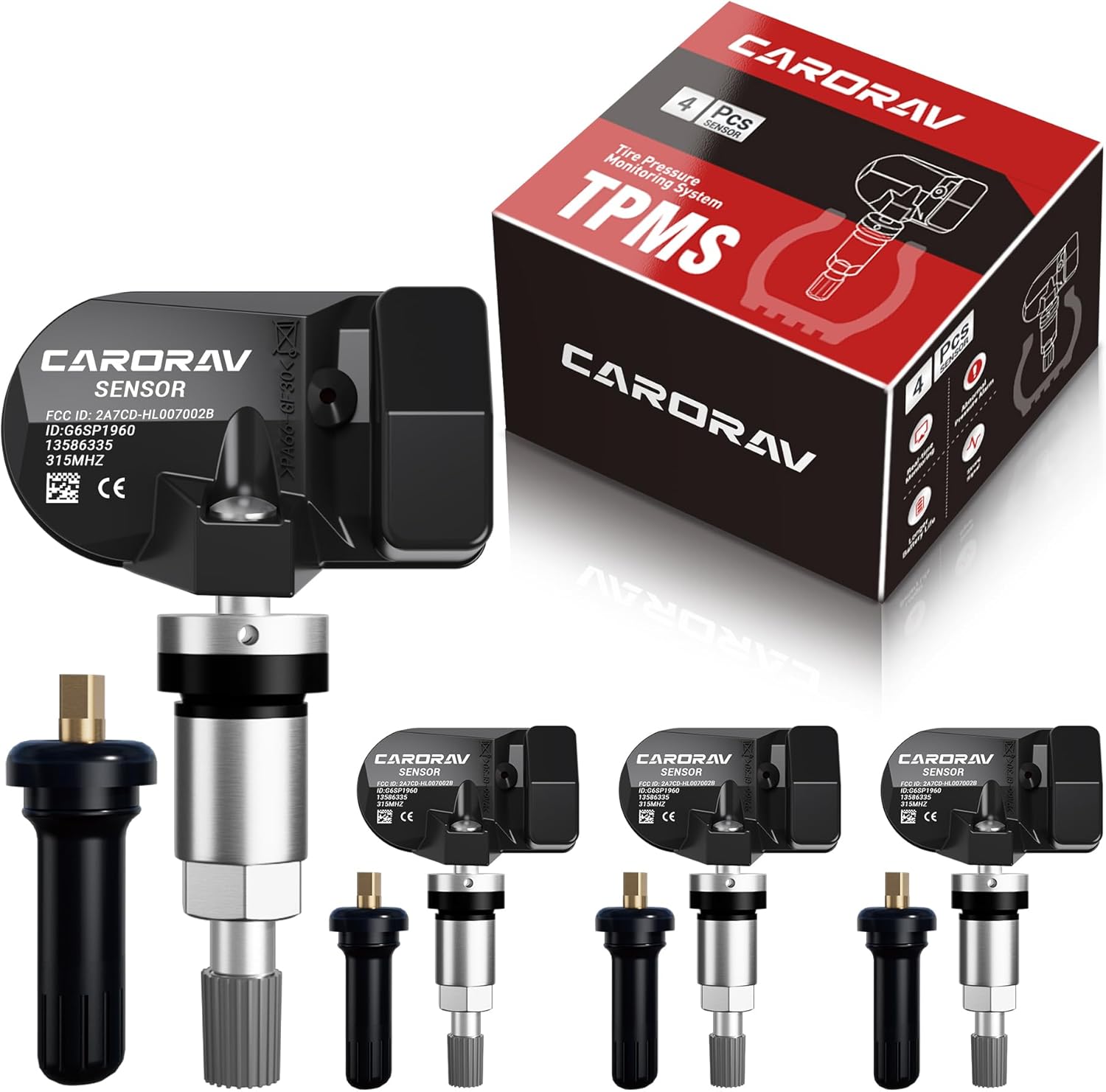
Replace worn or missing TPMS sensors with CARORAV pre-programmed GM-compatible sensors for a smoother installation experience. These 315MHz replacement sensors help monitor tire pressure in real time with long battery life, and they are designed to withstand harsh temperatures. Manual or OBDII relearn may be required to reset the system for proper recognition.

This GM TPMS relearn and reset tool (EL-50448) helps you activate and reset OE/OEM compatible tire pressure sensors for many Chevrolet, GMC, Buick, and Cadillac vehicles. It includes a pre-installed 9V alkaline battery for ready-to-use performance and features a one-button design for quick DIY TPMS relearn. Use it to clear the TPMS warning light, set the correct dashboard tire pressure, and test sensor operation.
When the TPMS Sensor Needs Replacing
A TPMS sensor usually needs replacement when it cannot transmit a reliable pressure signal after the tire is correctly inflated and the proper relearn method has been completed. Direct TPMS sensors have sealed batteries, so the battery is usually not replaced separately; the sensor is replaced as a unit.
Typical signs of a failed or failing sensor include:
- TPMS malfunction light flashes, then stays on.
- One tire shows no pressure reading while the others report normally.
- Pressure readings are erratic or disappear after tire service.
- The sensor will not activate with a TPMS tool.
- The valve stem or sensor body is damaged.
- The vehicle is old enough that original TPMS sensor batteries may be near the end of their life.
REDI-Sensor’s TPMS battery guidance notes that typical TPMS sensor lifespan is often 5–10 years, depending on sensor type, vehicle use, and operating conditions.
A trained TPMS sensor restores the vehicle’s ability to match each pressure reading to the correct wheel position, but it still does not replace regular manual pressure checks.
[Products Worth Considering]

Replace worn or missing TPMS sensors with a pre-programmed 4-pack designed for compatible GM vehicles. These 315MHz sensors provide real-time tire pressure monitoring and alert you if pressure is too high, too low, or if a rapid air leak occurs. Most installations are ready with minimal relearn effort after mounting, helping improve safety and driving confidence.

Replace worn or malfunctioning GM TPMS sensors with this 433MHz pre-programmed sensor set designed for compatibility with many Chevrolet, Buick, GMC, and Cadillac models. It includes guidance for proper OBDII relearning/pairing after installation and supports reliable long-term operation with a high-performance CR2032 battery. Quality tested for durability and performance to help restore accurate tire pressure monitoring.

Autel MX TPMS sensors combine 315MHz and 433MHz in a single easy-to-install press-in design for faster tire service. They support wireless programming with strong signal performance, and the sensors are clone-able for streamlined replacement. Built for reliability and tested to SAE standards, each sensor includes a series number for quality control.
Frequently Asked Questions
What does it mean to train a tire?
To train a tire means to teach the vehicle’s TPMS which sensor belongs to which wheel position. This is often needed after tire rotation, wheel replacement, sensor replacement, or some pressure adjustments.
Can I still drive if my TPMS sensor is bad?
Yes, the vehicle can usually still be driven, but you lose reliable low-pressure warnings from that sensor. Check tire pressure manually until the TPMS fault is diagnosed and repaired.
What is “Train Left Front Tire” on a Ford Transit?
On a Ford Transit, it means the TPMS needs to reset, relearn, or confirm tire sensor positions. Check your exact Transit owner’s manual first because some Transit procedures use the Tire Monitor menu, a reset button, and automatic relearn after driving rather than the hazard-flasher horn-chirp method.
How do you train a Ford tire pressure sensor?
For Ford vehicles that use the horn-chirp method, drive above 20 mph for at least two minutes, park safely, switch the ignition on without starting the engine, cycle the hazard flashers on and off three times, then train the tires from left front clockwise. Other Ford models may require a menu reset, reset button, TPMS tool, or automatic relearn.
Why did the horn chirp twice during TPMS training?
A double horn chirp usually means the reset was unsuccessful or the procedure needs to be repeated. Restore tire pressure, restart the procedure from the beginning, and check the owner’s manual if the double chirp happens again.
Do I need a TPMS tool to train the left front tire?
Not always. Some Ford procedures let you activate each sensor by releasing air until the horn chirps. A TPMS activation tool is cleaner and faster, and some vehicles or replacement sensors may require one.
Conclusion
If your dashboard says “Train Left Front Tire,” treat it as a TPMS relearn prompt first, not an automatic sensor-failure diagnosis. Check cold tire pressure, follow the reset method for your exact vehicle, train the left front tire first if your system asks for it, then continue in the correct order and reinflate every tire to spec. If the system still will not learn the sensor, the problem is likely pressure, procedure, sensor battery, sensor compatibility, or a TPMS fault that needs diagnosis.
Sources
- Ford Owner Manual — Tire Pressure Monitoring System Reset Procedure — backs up the hazard-flasher, horn-chirp, left-front-first reset sequence.
- Ford Transit Owner Manual — Tire Pressure Monitoring System — backs up Transit reset-menu and automatic relearn guidance.
- Ford Owner Manual — TPMS Overview and Warnings — backs up manual pressure checks, warning-light behavior, and tire-label pressure guidance.
- eCFR 49 CFR § 571.138 — Tire Pressure Monitoring Systems — backs up the federal purpose and definition of TPMS.
- REDI-Sensor — Understanding TPMS Batteries — backs up TPMS sensor battery lifespan and sealed-battery replacement guidance.