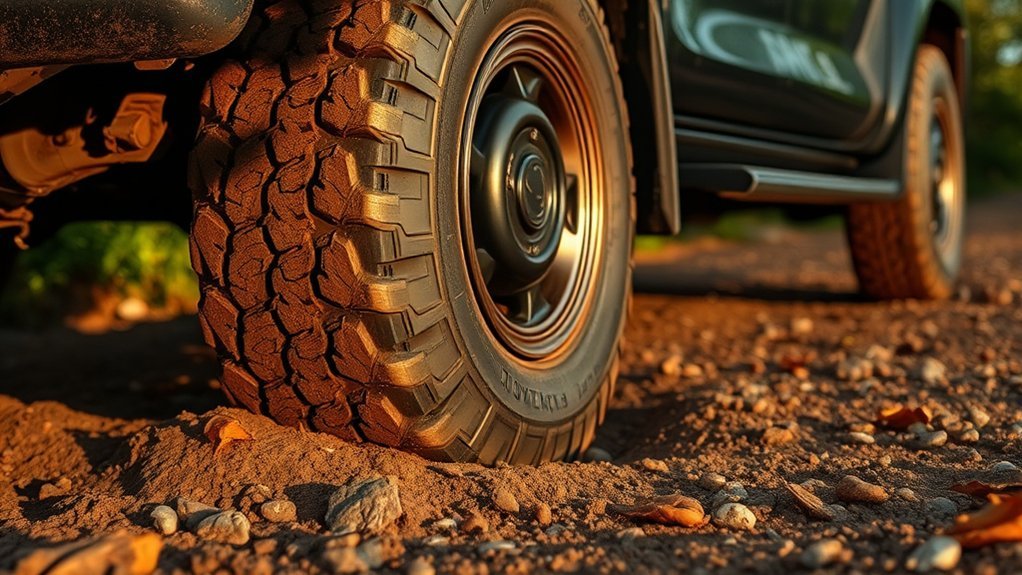
Getting Toyota Hilux tire pressure right off-road is not about choosing one magic PSI. It is about matching pressure to the terrain, tire size, load, speed, and wheel setup. Airing down can improve traction and comfort on sand, mud, rocks, and corrugations, but driving too low or returning to pavement without reinflating can damage tires and reduce control.
Quick Answer
For most Toyota Hilux off-roading, start around 24–28 PSI on dirt roads, 20–24 PSI on rocky trails, and 16–20 PSI in sand or mud. Very soft sand may need 12–16 PSI at low speed, but pressures near 10–12 PSI are advanced-use only and increase bead-unseating risk. Always reinflate to the door-placard or owner’s-manual pressure before sustained road driving.
Key Takeaways
- Use your Hilux door placard or owner’s manual for normal road pressure; do not use the tire sidewall maximum as your daily setting.
- Airing down helps off-road traction by increasing the tire footprint, but there is no universal safe PSI for every Hilux.
- The lower you go, the slower you should drive, and the higher the risk of sidewall damage or the tire bead coming off the rim.
- Carry a reliable gauge, deflator, and compressor so you can air down at the trail and air back up before pavement.
At a Glance
| Time Required | 5–10 minutes to air down; 10–20 minutes to reinflate, depending on compressor speed |
| Difficulty | Easy, but pressure choice needs judgment |
| Tools Needed | Digital tire pressure gauge, tire deflator, portable compressor, valve caps, full-size spare, tire plug kit |
| Cost | Low to moderate; a gauge is inexpensive, while a quality 4×4 compressor costs more but is essential for safe reinflation |
Start With Your Hilux Door-Placard Pressure
Before choosing an off-road PSI, find your Toyota Hilux’s normal road pressure. Check the tire information placard on the driver-side door area and confirm it in the owner’s manual. Toyota pressure recommendations vary by tire size and market. For example, Toyota UK lists some Hilux tires at 29 PSI and others at 35 PSI, so one universal road number is not reliable. Toyota UK’s tyre pressure guide and NHTSA tire safety guidance both point drivers back to the vehicle placard or manual for the correct cold inflation pressure.
Warning: Never use the maximum PSI printed on the tire sidewall as your normal Hilux road pressure. That number is a tire limit, not Toyota’s recommended operating pressure for your vehicle.
The Importance of Tire Pressure for Off-Roading
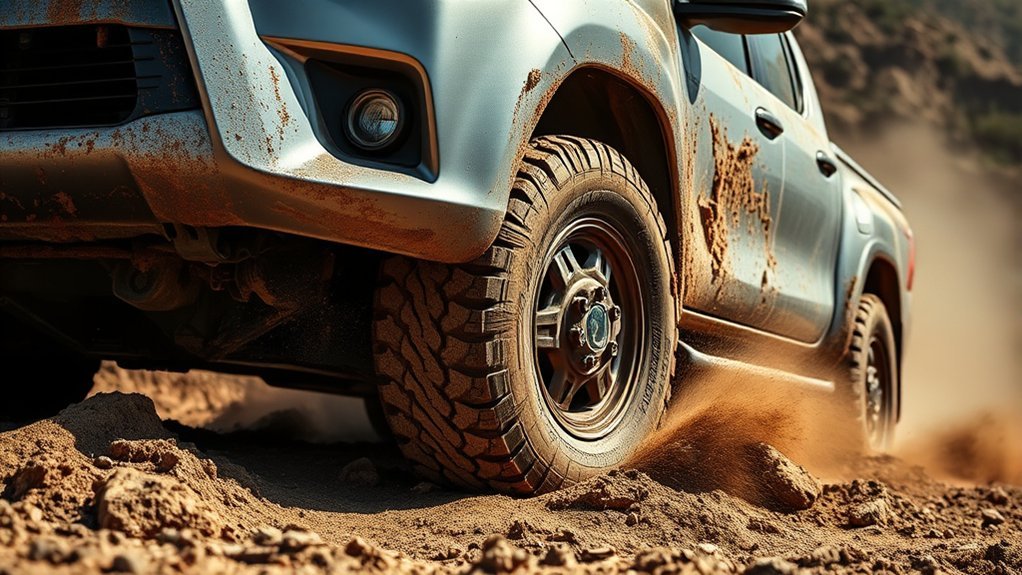
When you air down your Hilux, the tire can flex more and create a longer contact patch. That can help the tire float over sand, conform to rocks, smooth out corrugated tracks, and reduce wheelspin in loose terrain. This is why lowering tire pressure is one of the most useful off-road adjustments.
The tradeoff is sidewall support. Less air means more heat, more tire flex, more chance of rim damage, and more risk of the bead unseating from the wheel. That risk rises quickly if you turn sharply, carry a heavy load, tow, drive fast, or run very low pressures on standard non-beadlock wheels.
Airing down is for low-speed off-road driving. Airing back up is not optional before highway or sustained pavement driving.
Ideal Tire Pressures for Off-Road Conditions
Use these Toyota Hilux off-road tire pressure ranges as starting points, not fixed rules. Adjust based on your tire construction, load, wheel size, driving speed, and how the vehicle feels.
| Terrain | Safe Starting Range | Why It Works |
|---|---|---|
| Gravel, dirt roads, corrugations | 24–28 PSI | Improves comfort and traction while keeping good sidewall support. |
| Rocky trails | 20–24 PSI | Lets the tire conform to uneven rocks while reducing pinch and rim-damage risk. |
| Mud and firm sand | 16–20 PSI | Increases footprint and helps reduce digging or wheelspin. |
| Very soft sand or deep snow | 12–16 PSI | Improves flotation, but requires low speed and careful steering. |
| Extreme low-speed recovery use | 10–12 PSI only with caution | May help in extreme soft terrain, but greatly increases bead-unseating and sidewall risk on standard wheels. |
Note: If your Hilux has LT tires, larger aftermarket tires, heavy accessories, a canopy, drawers, rooftop tent, or recovery gear, you may need higher pressure than a lightly loaded stock Hilux.
How to Air Down a Toyota Hilux Safely
- Park safely before the trail. Stop on level ground away from traffic and sharp rocks.
- Check your starting PSI. Use a reliable gauge and write down your road pressure before releasing air.
- Choose a conservative first drop. For mixed trails, start 4–6 PSI below road pressure rather than going straight to a very low number.
- Deflate evenly. Use a deflator and check all four tires so the Hilux does not pull to one side.
- Drive a short test section. If the ride is still harsh or the tires are digging, drop another 2 PSI and test again.
- Watch speed and steering. Keep speed low when aired down, avoid hard cornering, and do not slam into rocks or ruts.
- Air back up before pavement. Reinflate to the Hilux’s placard/manual pressure before sustained road or highway driving.
Pro Tip: Air down in stages. A Hilux that feels planted at 20 PSI on rocks may not need to go lower. The best pressure is the highest pressure that gives enough traction and comfort for the terrain.
[Products Worth Considering]

AstroAI’s calibrated digital tire pressure gauge delivers precise readings across a 0–150 PSI range, with high clarity from a backlit LCD. Built for everyday road use, it features one-button operation, an anti-slip ergonomic grip, and support for multiple pressure units plus auto shutoff. Powered by AAA batteries, it’s an all-weather essential for checking tire health and TPMS warnings.

This ALL-TOP auto-stop tire deflator valve kit lets you air down off-road tires quickly without watching pressure, automatically stopping when your preset PSI is reached. Each valve is individually calibrated for reliable performance with an acceptable +/- 2 PSI tolerance. The adjustable deflator range covers 10 to 30 PSI and includes four valves plus valve caps and a zipper pouch for easy setup on trucks, SUVs, RVs, UTVs, and powersports.
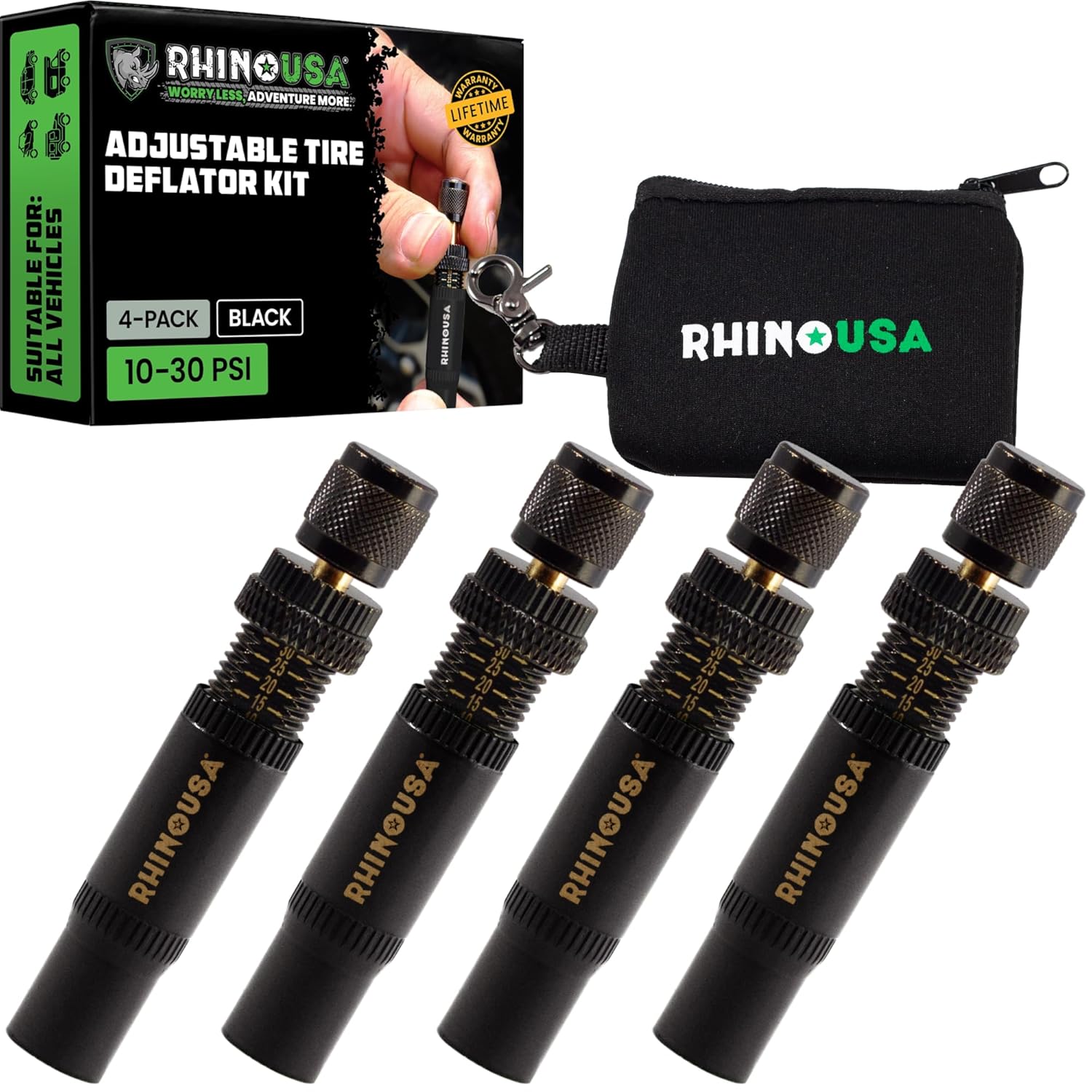
Use the Rhino USA adjustable tire deflators to air down all four tires at once by screwing one deflator onto each valve stem, letting you step away while the tires reach your preset pressure. Each deflator independently adjusts across a 10–30 PSI range with laser-etched indicators for quick setup and verification, making it ideal for beach, sand, and rocky off-road trails.
Adjusting Tire Pressure for Different Off-Road Terrains
Deep Mud and Sand Strategies
In mud and sand, the goal is flotation. Lower pressure spreads the tire’s load over a larger footprint so the Hilux is less likely to dig in. Start around 16–20 PSI for most sand or mud. If the surface is very soft and you are moving slowly, you may step down toward 12–16 PSI.
Only consider 10–12 PSI for very soft terrain, low-speed recovery, or experienced off-road use. Standard wheels can lose the bead at very low pressure, especially if you turn sharply or carry momentum through ruts.
Rocky Terrain Adjustments
On rocky trails, the tire needs to flex around edges without collapsing too much. A range of 20–24 PSI is a safer starting point for many Hilux setups. It improves grip and ride comfort while still giving the sidewall more support than very low sand pressures.
If your tires look overly bulged, the steering feels vague, or the rim is close to contacting rocks, add pressure. Protecting the sidewall and wheel matters more than chasing the lowest possible PSI.
Dirt Road and Corrugation Adjustments
For dirt roads, gravel, and corrugated tracks, you usually do not need extreme deflation. Around 24–28 PSI often gives a smoother ride and better control while keeping heat and sidewall flex under control. Slow down on corrugations because speed, heat, and low pressure are a bad combination.
Signs You Need to Adjust Tire Pressure
Your Hilux will usually tell you when the pressure is wrong. Watch the tire shape, steering feel, traction, ride comfort, and tread wear.
Uneven Tire Wear Patterns
| Wear Pattern | Possible Cause | Action |
|---|---|---|
| Outer-edge wear | Underinflation, hard cornering, or alignment issue | Check pressure cold and inspect alignment. |
| Center wear | Overinflation or too much pressure for load | Return to placard/manual pressure for road use. |
| Cupping or scalloping | Suspension, balance, alignment, or pressure issue | Inspect tires, shocks, balance, and alignment. |
| Cuts, bulges, or sidewall damage | Rock impact, low-pressure pinch, or tire damage | Stop and inspect before continuing. |
Vehicle Handling Issues
If the Hilux feels bouncy and harsh on rocks or corrugations, pressure may be too high for the trail. If it feels vague, rolls on the sidewalls, or the tire looks heavily bulged, pressure may be too low. Pulling to one side can mean uneven pressure between left and right tires.
Decreased Fuel Efficiency
Low tire pressure increases rolling resistance on road. FuelEconomy.gov says underinflated tires can lower gas mileage by about 0.2% for every 1 PSI drop in the average pressure of all tires. That is another reason to air back up after the trail.
Essential Tire Maintenance Tips for Off-Roading
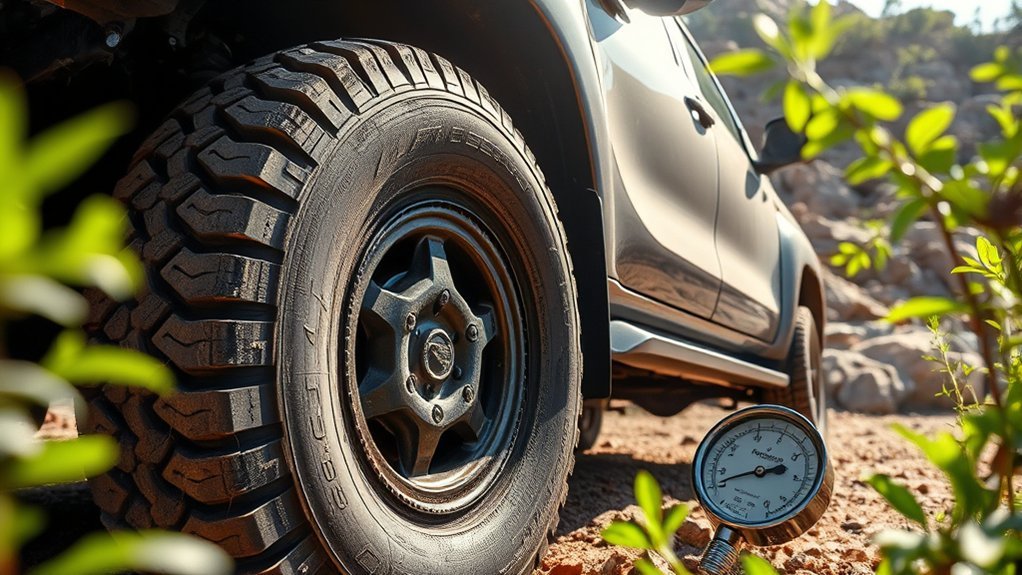
Good tire maintenance keeps your Hilux safer on the road and more capable off it. NHTSA TireWise highlights tire pressure, rotation, tread checks, and tire inspection as key parts of tire safety.
- Check pressure cold. The most accurate reading is before driving or after the tires have been parked long enough to cool.
- Inspect before and after trails. Look for cuts, exposed cords, bulges, missing chunks, nails, and damaged valve stems.
- Rotate regularly. Follow your Hilux service schedule or tire-shop advice, especially if you drive heavy loads or rough tracks.
- Carry a full-size spare. A small temporary spare is not ideal for remote off-road travel.
- Use valve caps. They help keep mud, sand, and water out of the valve stem.
- Do not ignore heat. If aired-down tires are hot to the touch after faster driving, stop, cool down, and reinflate as needed.
Tools for Accurate Tire Pressure Monitoring
A small tool kit makes tire pressure adjustment faster and safer. Keep these items in your Hilux before heading off-road:
- Digital tire pressure gauge: more precise than guessing from tire shape.
- Four-tire deflator or single deflator: helps air down evenly.
- Portable 4×4 compressor: essential for reinflating before the road.
- Tire plug kit: useful for temporary tread puncture repairs.
- Full-size spare and jack base: important on sand, mud, or uneven ground.
- TPMS reset knowledge: understand how your Hilux tire-pressure warning system behaves after airing down and reinflating.
Warning: Do not drive at highway speeds on aired-down tires. Underinflated tires can run hotter, wear unevenly, reduce handling, and increase the risk of tire failure.
[Products Worth Considering]

Monitor tire tread wear with a smart, color-coded depth gauge that shows clear condition ranges at a glance. The bar is range marked for fast, easy readings, helping you maintain safer traction and performance. Each gauge is portable with a pocket clip, and the set includes 20 units for daily use and sharing.

Upgrade your Toyota’s wheels with durable aluminum alloy valve stem caps that help protect valve cores from corrosion and direct exposure to road grime, clay, water, and snow. Rubber rings improve sealing to help prevent air leakage and maintain stable tire pressure for safer driving. These caps are easy to install or remove without tools and add a unique, stylish look to your car.

These aluminum alloy tire valve stem caps with an O-ring seal help protect valve stems from corrosion while adding a clean, stylish look to your vehicle. The universal fit works across cars, trucks, motorcycles, bicycles, and more, making them an easy upgrade for everyday driving and off-road use. Installation is quick, and the included four-pack keeps all your tires dressed and protected.
Stock Tires vs. Upgraded LT Tires
If your Hilux still runs the original tire size and load rating, Toyota’s placard/manual pressure is the correct starting point for road use. If you have changed to LT-metric tires, larger all-terrain tires, mud-terrain tires, or high-flotation sizes, the original placard may no longer match the tire’s load-inflation behavior.
In that case, use the tire manufacturer’s load-inflation data or ask a qualified tire professional to calculate safe road pressure. BFGoodrich specifically notes that upgraded tire sizes and LT/high-flotation tires may need different pressure guidance.
[Products Worth Considering]

The Topeak SmartGauge D2 delivers precise digital tire pressure readings for bikes, motorcycles, and sports equipment up to 250 psi (17 bar). Its rotating SmartHead works with both Presta and Schrader valves, so you can check pressure quickly without adapters. The LCD display makes it easy to read results in psi, bar, or kg/cm² with an included CR2032 battery for immediate use.

The ETENWOLF T600 digital tire pressure gauge delivers precise, manually calibrated readings to ANSI B40.7 Grade 2A standards with ±0.5% PSI accuracy. Its 360° rotating nozzle and display hold make it easy to check pressures from any angle, while a bleed button helps dial tires to the perfect level. With a 0–250 PSI range and support for PSI, BAR, and KPA, it’s a convenient tool for maintaining tire performance across many vehicles and seasons.

Get precise tire readings with the ETENWOLF T300 Plus digital gauge, calibrated to ANSI B40.7 Grade 2A for reliable accuracy. It measures across a wide 3–200 PSI range and includes thermal compensation for dependable performance from extreme cold to heat. The bright LED display, LED illumination, and replaceable AAA batteries make it easy to check pressures quickly, even in low light.
Common Queries About Hilux Tire Pressure for Off-Roading
The most common mistake is treating one PSI as correct for every Hilux. A lightly loaded double cab on stock tires, a work Hilux with tools in the tray, and a touring Hilux with steel barwork, drawers, canopy, rooftop tent, water, and recovery gear should not always run the same off-road pressure.
Use the terrain table as a starting point, then adjust in small steps. If traction improves and the tire still has good sidewall support, you are close. If the tire bulges heavily, steering becomes sloppy, or the rim is exposed to impacts, add pressure.
Frequently Asked Questions
What PSI should Toyota Hilux tires be on the road?
Use the cold tire pressure on your Hilux door placard or in the owner’s manual. Do not assume one PSI fits every Hilux, because pressure varies by tire size, model, load, and market.
Is 40 PSI too high for 4WD off-roading?
For most off-road driving, 40 PSI is too high because it reduces tire flex and can make the ride harsh on rocks, sand, and corrugations. It may be suitable only for certain loaded road-use situations if specified by the placard/manual or a tire professional.
What PSI should I air down to when off-roading?
Start around 24–28 PSI on dirt roads, 20–24 PSI on rocks, and 16–20 PSI in mud or sand. Drop lower only when needed, and treat 12 PSI or below as advanced low-speed use with higher bead and sidewall risk.
Should I use 32 or 35 PSI in my Hilux?
Use whichever pressure Toyota specifies for your exact Hilux and tire size. Some Hilux variants and tire sizes use pressures around this range, but others do not. The door placard and owner’s manual are the correct references.
Can I drive on pavement after airing down?
Only for a short, slow transition if needed. Before sustained pavement or highway driving, reinflate all tires to the Hilux’s recommended road pressure. Aired-down tires can overheat, wear quickly, and reduce handling on road.
Conclusion
The best Toyota Hilux tire pressure for off-roading is terrain-specific. Use the door placard or owner’s manual for road pressure, then air down conservatively for the trail: higher for dirt roads, moderate for rocks, lower for sand and mud, and very low only for slow, advanced situations. Carry the right tools, check pressure often, and always reinflate before returning to the road. That balance gives your Hilux better traction off-road without sacrificing tire safety on the way home.
Sources
- Toyota UK Magazine — Toyota tyre pressure and size guide — supports Hilux tire-size examples and the need to use model-specific pressure guidance.
- Toyota UK — Owner’s Manuals — supports checking the official owner’s manual for vehicle-specific tire pressure information.
- NHTSA — Tire Safety: Everything Rides On It — supports cold tire pressure, placard/manual guidance, inspection, load limits, and tire-failure prevention.
- FuelEconomy.gov — Keeping Your Vehicle in Shape — supports the fuel-economy impact of underinflated tires.
- BFGoodrich — Off-Road Guide: Tire Selection and Air Pressure — supports airing-down benefits, upgraded tire caution, and bead-unseating risk.