
An all-season tire is a year-round tire made for everyday driving in dry, wet, and light snowy conditions. It is built to be convenient, not extreme: you get steady road manners through changing weather, but you do not get the maximum summer grip of a summer tire or the deep-snow and ice control of a dedicated winter tire.
Quick Answer
An all-season tire is a practical tire designed for dry roads, rain, cool weather, and light snow. It suits mild to moderate climates where roads are usually clear, but it is not the best choice for regular ice, deep snow, mountain winter driving, or high-performance summer handling.
Key Takeaways
- All-season tires are best for drivers who want one set of tires for normal dry, wet, and light-snow driving.
- The M+S mark means mud-and-snow capability, but it does not equal the severe-snow three-peak mountain snowflake rating.
- Winter tires still outperform all-season tires on ice, packed snow, and deep snow.
- Some newer all-weather tires are year-round tires with 3PMSF certification, making them different from many traditional all-season tires.
- Correct pressure, regular rotation, alignment checks, and tread-depth checks help all-season tires last longer and perform more safely.
What Is an All-Season Tire?
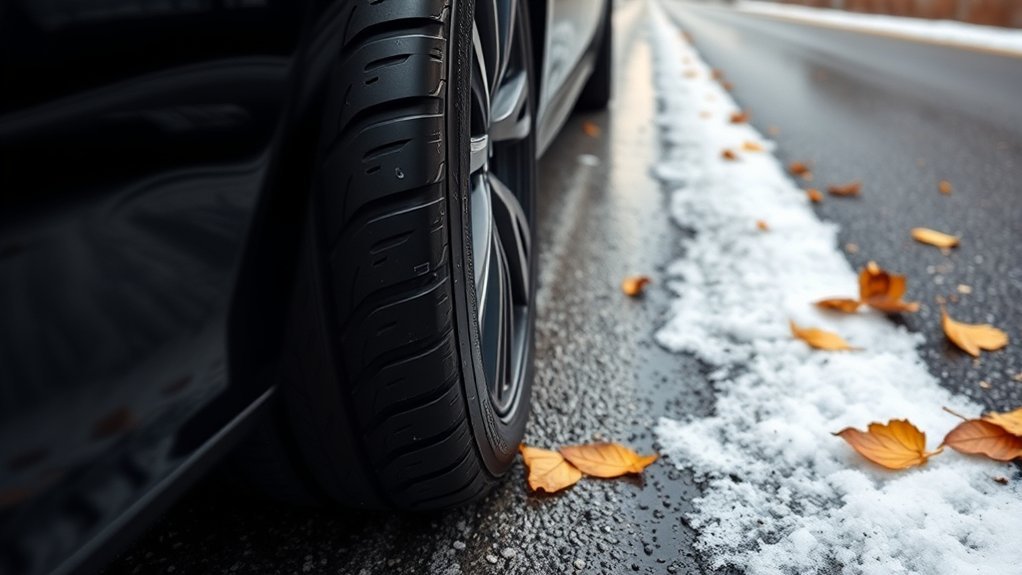
An all-season tire is a tire designed to handle a wide range of normal road conditions instead of specializing in one season. It uses a tread pattern and rubber compound that balance dry grip, wet braking, ride comfort, tread life, and light-snow traction.
The main benefit is convenience. You can usually keep the same set installed all year if your winters are mild and your roads are plowed quickly. That saves the time, storage space, and installation cost that come with switching between summer and winter tires.
Many all-season tires carry an M+S marking, which stands for mud and snow. That marking signals some mud-and-light-snow capability, but it is not the same as a severe-snow rating. For severe winter traction, look for the three-peak mountain snowflake symbol, often shortened to 3PMSF.
Note: Goodyear is widely credited with introducing the first all-season tire, the Tiempo, in 1977. The category grew because drivers wanted one tire that could handle more than one type of weather.
How All-Season Tires Perform in Every Season
All-season tires are built around compromise. They perform well enough in several conditions, but they do not dominate any single extreme. That makes them useful for commuters, family vehicles, crossovers, SUVs, and light trucks in areas with moderate weather.
Dry Road Performance
On dry pavement, all-season tires usually feel stable and predictable. Their tread blocks are designed to keep enough rubber on the road for normal braking, lane changes, and cornering. They are a good fit for everyday driving, but a dedicated summer tire normally gives sharper steering and stronger grip in warm performance driving.
Wet Road Performance
In rain, all-season tires rely on grooves and channels to move water away from the contact patch. A good all-season tire can provide dependable wet traction, but worn tread reduces hydroplaning resistance and increases stopping distance.
NHTSA reports that 511 people died in tire-related crashes in 2024, which is why tire pressure, tread depth, load limits, and proper maintenance matter for everyday safety.
Light Snow Handling
All-season tires can handle light snow, especially when roads are plowed, slushy, or only lightly covered. They are not built for repeated deep snow, icy hills, or severe winter storms. If your winter driving includes regular snowpack, freezing rain, mountain passes, or long rural roads, winter tires are the safer choice.
| Condition | All-season tire performance | Better choice |
|---|---|---|
| Dry roads | Good for daily driving | All-season or summer |
| Rain | Good when tread is healthy | All-season with strong wet ratings |
| Light snow | Acceptable | All-season or all-weather |
| Ice or deep snow | Limited control | Winter tire |
Cold Weather Performance
Cold weather is where all-season tires begin to lose their advantage. At about 45°F / 7°C and below, all-season and summer tire compounds can become less elastic, which reduces grip. Winter tires are designed to stay more flexible in low temperatures, giving them better braking and traction in true winter conditions.
Warning: Do not treat an M+S all-season tire as a replacement for winter tires if you regularly drive on ice, packed snow, steep snowy roads, or mountain passes. For those conditions, choose winter tires or a 3PMSF-rated tire that matches your local laws and driving needs.
All-Season Tires vs. Summer, Winter, and All-Weather Tires
Choosing the right tire gets easier when you understand what each category is built to do. All-season tires sit in the middle: more flexible than summer tires, less winter-capable than winter tires, and often less snow-focused than all-weather tires with 3PMSF certification.
| Tire type | Best for | Main limitation |
|---|---|---|
| All-season | Dry, wet, cool weather, and light snow | Not ideal for severe snow or ice |
| Summer | Warm-weather grip, steering, and braking | Poor choice for freezing weather, snow, and ice |
| Winter | Snow, ice, slush, and low temperatures | Faster wear and softer handling in warm weather |
| All-weather | Year-round driving with stronger winter capability | May not match a dedicated winter tire on ice or deep snow |
[Products Worth Considering]

Upgrade your beach cruiser or urban commuter with MOHEGIA 26x2.125 folding tires designed for reliable daily rides. This 2-pack set includes matching inner tubes, tire levers, and Schrader 32mm valves for easy setup and dependable performance. The tires are made for comfortable shock absorption and fold for simple transport, with widths that fit 1.75–2.125 in and a PSI range of 40–65.

Accurately measure tire tread depth with a calibrated gauge marked from 0 to 1 inch in 1/32 inch increments. The color-coded bar helps you quickly identify tread condition ranges, supporting safe driving for trucks, motorcycles, automobiles, and passenger vehicles.

Milton S-921 pencil tire pressure gauge helps you maintain optimal tire pressure for passenger cars with accurate readings in PSI and kPa. It features a built-in deflator valve for convenient pressure adjustments, plus a single chuck head and nylon indicator bar for easy use on the go. Built from durable plated brass and designed for reliable performance, it’s a practical road trip and cold-weather maintenance tool.
What M+S and 3PMSF Mean
The M+S marking means the tire has mud-and-snow characteristics, but it is a broad marking. The 3PMSF symbol means the tire meets a specific snow-traction performance requirement. Some all-weather tires and some newer all-season tires carry 3PMSF, but many traditional all-season tires do not.
If winter traction matters to you, do not rely on the product name alone. Check the tire sidewall and the manufacturer’s specifications for the actual markings.
When All-Season Tires Make the Most Sense
All-season tires make the most sense if you drive in a region with mild to moderate weather. They are especially practical if your winters are short, roads are plowed quickly, and you mostly deal with rain, cool mornings, dry pavement, and occasional light snow.
They are also a smart fit if you want fewer tire changes, predictable commuting comfort, and reasonable tread life. For many drivers, the convenience of one set of tires is the biggest reason to choose them.
Good Fit for All-Season Tires
- You drive mostly on dry or wet paved roads.
- Your area gets light snow, not frequent deep snow or ice.
- You want one tire set for commuting and family driving.
- You value comfort, tread life, and lower maintenance hassle.
- Your vehicle owner’s manual allows the tire type, load rating, and speed rating you choose.
Not the Best Fit for All-Season Tires
- You regularly drive on ice, packed snow, or steep winter roads.
- You live where winter tires are legally required during part of the year.
- You tow or haul near your vehicle’s load limits and need a specific tire rating.
- You drive aggressively in hot weather and want maximum cornering grip.
- You travel through mountain areas where chains or winter-rated tires may be required.
How to Choose the Right All-Season Tire
The best all-season tire is not the same for every driver. Instead of choosing by a generic “best tire” list, match the tire to your climate, vehicle, road conditions, and budget.
[Products Worth Considering]

Protect tire valves from water, dust, and sand to help prevent leaks and support safe driving. These universal stem caps install quickly by hand and feature durable aluminum alloy construction with an inner sealing ring for better air retention. Compatible with cars, SUVs, trucks, motorcycles, and bicycles for everyday convenience.

Measure tire tread depth quickly and accurately with this LUMITECO dial gauge that reads in 1/32" increments up to 14/32". The color-coded green/yellow/red zones make it easy to judge tire wear and know when replacement is needed. A rugged, compact design with a protective pouch helps keep the gauge ready for use on cars, trucks, motorcycles, and more.

TIRESHIELD PRO RV tire covers in a set of four deliver year-round protection against UV rays, cracking, fading, water, and snow. The StormLock-System helps keep the covers securely fastened through high wind, while heavy-duty, double-stitched construction supports long-lasting performance. Designed for universal fit, they’re intended for RV, camper, truck, car, and trailer tires within the 26–28.75 inch diameter range, with easy wipe-clean care and storage in the included bag.
Match the Tire to Your Climate
If you mostly drive in rain and dry weather, focus on wet braking, hydroplaning resistance, ride comfort, and treadwear. If you get occasional snow, look for strong light-snow reviews and consider whether an all-weather tire with 3PMSF would give you more confidence.
Check Size, Load Index, and Speed Rating
Your vehicle’s tire placard and owner’s manual tell you the correct tire size, recommended cold inflation pressure, load rating, and speed rating. Do not choose a tire only because it fits the wheel. The tire must also support the vehicle’s weight and performance requirements.
Pro Tip: The pressure printed on the tire sidewall is not the recommended pressure for your vehicle. Use the pressure listed on the driver-side door placard or in the owner’s manual, and check it when the tires are cold.
Compare UTQG, Warranty, and Real Test Results
The Uniform Tire Quality Grading system compares treadwear, traction, and temperature resistance for many passenger tires. It is useful, but it is not the whole story. Also compare mileage warranty, wet-braking performance, snow ratings, noise, ride comfort, and independent test results when available.
For vehicle-specific shopping, fitment still matters. A tire that works well on one SUV may not be the best match for another vehicle. If you drive a Toyota SUV or commuter sedan, size-specific guidance such as all-season tires for a RAV4 Prime, tires for a 2022 Toyota RAV4, RAV4 Hybrid tire options, Toyota RAV4 all-season tire choices, 2021 Toyota RAV4 tires, Honda Accord commuting tires, and budget RAV4 tires can help narrow the list after you confirm the correct size and rating.
Key Features to Compare in All-Season Tires
When you compare all-season tires, focus on the features that affect safety, comfort, and long-term value. A cheaper tire is not a good deal if it performs poorly in rain or wears unevenly because it is the wrong fit for your vehicle.
| Feature | What to check | Why it matters |
|---|---|---|
| Tread pattern | Grooves, siping, shoulder blocks | Affects wet grip, snow bite, noise, and handling |
| Wet performance | Wet braking and hydroplaning reviews | Rain is one of the most common real-world hazards |
| Winter marking | M+S or 3PMSF | Shows whether the tire is basic mud/snow or severe-snow rated |
| UTQG and warranty | Treadwear grade and mileage warranty | Helps compare expected wear, but does not guarantee real-world life |
| Load and speed rating | Vehicle placard and owner’s manual | Keeps the tire matched to your vehicle’s weight and performance needs |
[Products Worth Considering]

Replace worn tires quickly with this universal 4.80/4.00-8 tire and inner tube set designed for wheelbarrows and outdoor utility carts. The ribbed tread helps reduce turf damage while the natural rubber construction supports longer service life. Compatible with 15.5-inch outer diameter, 4-inch width, and 8-inch rim diameter wheels, it uses a straight TR-13 valve stem for easy installation. For best results, inflate with a manual pump and do not exceed 25 PSI.

The Continental Grand Prix 5000 is an allround road bike tire engineered for faster rolling, improved ride comfort, and enhanced puncture protection. It features a Vectran Breaker cut-protection layer, Lazer Grip micro-profile tread for confident cornering control, and Active Comfort Technology to damp vibration for smoother rides. BlackChili compound optimizes grip and speed for everyday performance and long-lasting confidence.

Monitor tire tread wear with a smart, color-coded depth gauge that shows clear condition ranges at a glance. The bar is range marked for fast, easy readings, helping you maintain safer traction and performance. Each gauge is portable with a pocket clip, and the set includes 20 units for daily use and sharing.
How to Get More Life From All-Season Tires
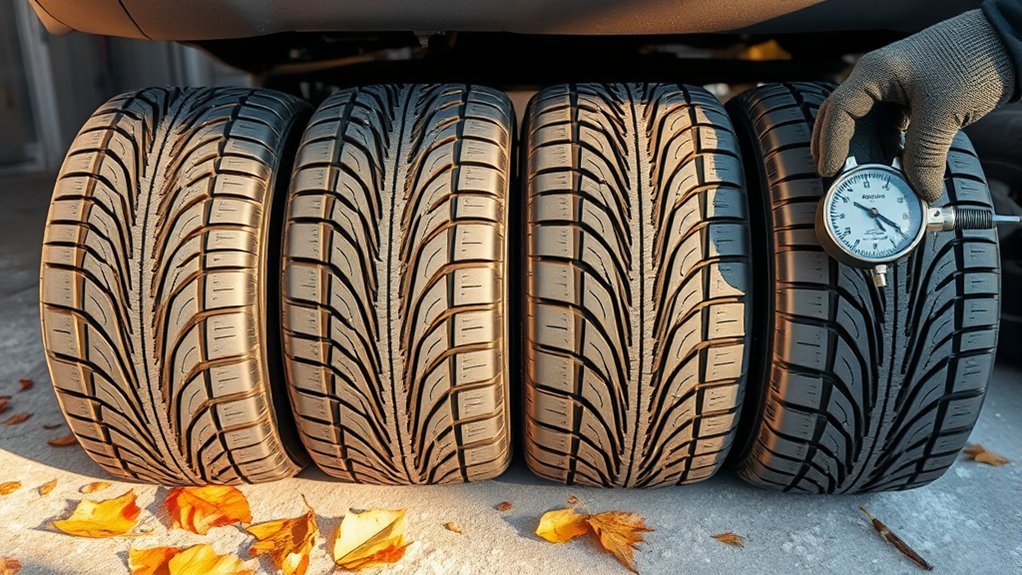
All-season tires last longer when they wear evenly and stay properly inflated. The basics are simple: check pressure, rotate on schedule, inspect tread, avoid overloading, and fix alignment problems before they destroy the tread pattern.
Maintenance Checklist
- Check tire pressure monthly: Use the vehicle manufacturer’s cold inflation pressure from the door placard or owner’s manual.
- Rotate regularly: Follow your owner’s manual. If no interval is listed, the U.S. Tire Manufacturers Association recommends rotation every 5,000 to 8,000 miles.
- Watch tread depth: Tires must be replaced when they reach the wear indicators, typically 2/32 inch, but wet traction can decline before that.
- Use 4/32 inch as a rain warning point: AAA recommends replacing tires at 4/32 inch because wet stopping performance has already begun to deteriorate.
- Use extra caution in snow: Transport Canada advises against using tires worn close to 4 mm / 5/32 inch on snow-covered roads.
- Check alignment and balance: Vibration, pulling, cupping, or uneven wear means the tire or suspension needs attention.
- Inspect for age and damage: Cracks, bulges, cuts, punctures, and exposed cords are reasons to have a tire checked immediately.
Frequently Asked Questions
What’s the difference between an all-season tire and a regular tire?
A “regular tire” is not a precise category. People usually use that phrase to mean the standard tires already on a vehicle. An all-season tire is a specific type of tire designed for year-round use in dry, wet, cool, and light snowy conditions.
What are the downsides of all-season tires?
The biggest downside is compromise. All-season tires do not grip as strongly as summer tires in warm performance driving, and they do not match winter tires on ice, packed snow, or deep snow. They are convenient, but they are not the best tire for severe conditions.
Can I use all-season tires year round?
Yes, you can use all-season tires year round if your climate is mild to moderate and you only face light winter conditions. If your area gets frequent ice, deep snow, or long periods below about 45°F / 7°C, winter tires or 3PMSF-rated all-weather tires may be safer.
What is the point of all-season tires?
The point of all-season tires is convenience. They give you one set of tires that can handle most normal driving conditions without seasonal swaps. They are ideal when you want balanced dry, wet, comfort, treadwear, and light-snow performance instead of maximum performance in one season.
Are all-season tires the same as all-weather tires?
No. Many all-weather tires are built as year-round tires with stronger winter capability, and many carry the 3PMSF severe-snow symbol. Traditional all-season tires may have M+S marking but often do not have 3PMSF certification.
When should I replace all-season tires?
Replace all-season tires when they reach the treadwear indicators, show damage, develop uneven wear, or no longer hold pressure. For extra wet-weather safety, consider shopping before the tread reaches 4/32 inch. For snow use, do not push worn tires close to 5/32 inch.
Conclusion
All-season tires are a smart choice if you want simple year-round traction for dry roads, rain, cool weather, and light snow. They work best in mild to moderate climates where winter roads are usually cleared quickly. They are not the right answer for every driver, though. If you face regular ice, packed snow, mountain passes, or legal winter-tire rules, choose a winter tire or a 3PMSF-rated all-weather tire instead.
Before you buy, check your vehicle placard, confirm the correct size and rating, compare wet and winter performance, and read the sidewall markings carefully. The right all-season tire should match your roads, not just your budget.
Sources
- NHTSA TireWise — tire types, UTQG ratings, tire pressure, maintenance, tread, aging, and tire-related crash data.
- Transport Canada: Using Winter Tires — 3PMSF meaning, winter tire guidance, low-temperature traction, and snow tread-depth cautions.
- U.S. Tire Manufacturers Association: Tire Care Essentials — rotation interval, pressure, alignment, and tire maintenance basics.
- Goodyear: All-Season Tires History — Goodyear Tiempo and the introduction of the all-season tire category in 1977.
- Tire Rack: Three-Peak Mountain Snowflake Symbol — explanation of 3PMSF and the rise of severe-snow-rated all-season/all-weather tires.
- AAA: Worn Tires and Wet-Road Safety — 4/32-inch tread-depth safety recommendation for wet conditions.