
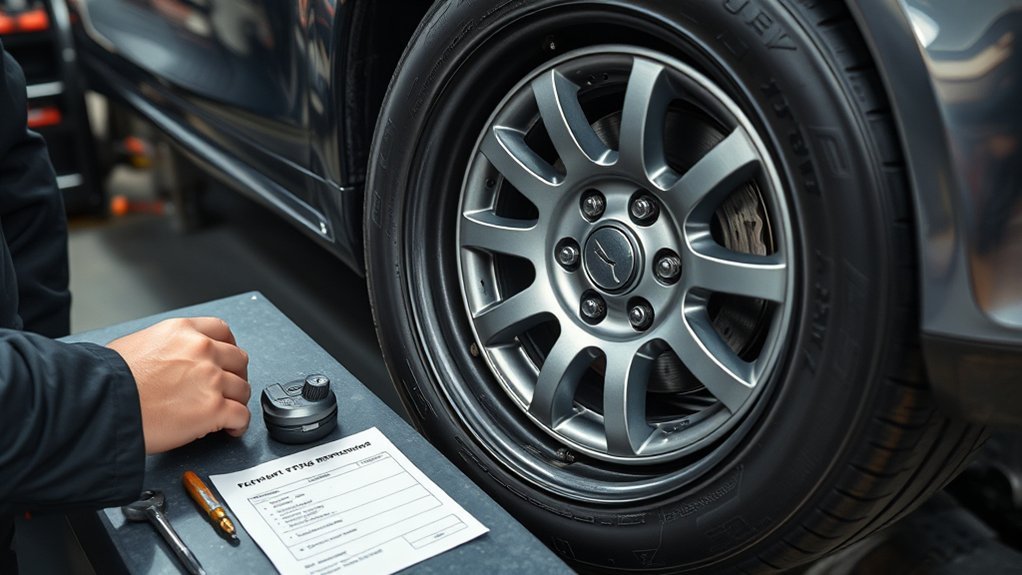
A TPMS sensor replacement cost can vary sharply depending on the vehicle, sensor type, labor rate, and relearn procedure. Current U.S. estimates show that buying the sensor itself can be much cheaper than paying for a complete installed repair, especially when tire removal, programming, and diagnostics are required.
Quick Answer
Expect TPMS replacement pricing to depend heavily on the vehicle and shop. RepairPal’s September 2026 national estimate is $240 to $299 for a TPMS sensor replacement service, while current tire-retailer listings show many common replacement sensors around $60 to $69 before vehicle-specific installation and programming.
Last checked: October 5, 2026. Dates and figures were verified against current sources.
Key Takeaways
- A part-only price is not the same as the installed cost because tire removal, service hardware, diagnosis, programming, or relearning may be added.
- Only direct TPMS systems use pressure sensors inside the wheels; indirect systems use wheel-speed and other vehicle data instead.
- OEM sensors are direct replacements, while many aftermarket sensors must be programmed, configured, or cloned before installation.
- A flashing TPMS lamp followed by a steady light commonly indicates a system malfunction rather than simply low tire pressure.
- Replacing a sensor during tire service can reduce duplicated tire-removal labor, especially when several original sensors are approaching the same age.
How Much Does a TPMS Sensor Cost?
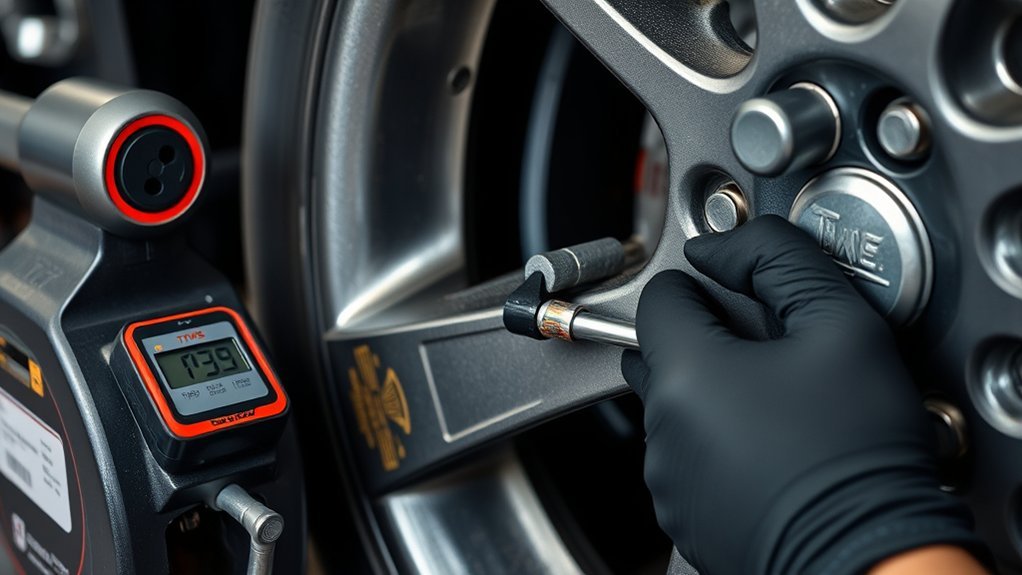
The price depends on whether you are comparing a sensor by itself or a complete replacement service. Those figures can be very different, so ask what a quote includes before comparing shops.
As of September 3, 2026, RepairPal’s TPMS replacement estimate lists an average total of $240 to $299. It breaks that estimate into $164 to $187 for parts and $77 to $112 for labor, before taxes, fees, location adjustments, or related repairs.
Retail sensor pricing can be lower. Current Discount Tire TPMS listings include several common sensors at about $60 to $69 each. Your exact part can cost more or less because frequency, valve design, vehicle coverage, and sensor technology vary.
| Published reference | Current figure | What it covers |
|---|---|---|
| RepairPal average | $240–$299 | Estimated complete replacement service |
| RepairPal parts | $164–$187 | Parts portion of its national estimate |
| RepairPal labor | $77–$112 | Labor portion of its national estimate |
| Current tire-retailer examples | About $60–$69 each | Sensor only, before vehicle-specific installation |
[Products Worth Considering]

Replace your worn or missing TPMS sensors with pre-programmed, direct-fit sensors for compatible Ford, Lincoln, and select Mazda models. Each sensor comes ready to activate with a scan tool, helping restore accurate tire pressure monitoring and trouble-free installation. Built with a long-life CR2032 battery and tested before factory release, this set provides dependable performance with a one-year warranty.

The VEHLIVE SU-50448 II TPMS relearn tool provides a fast activation reset to restore accurate tire pressure monitoring after sensor replacement or tire rotation. It supports 315 MHz and 433 MHz GM series sensors and helps clear dashboard pressure warnings. With simple two-button operation and horn-confirmed relearning order, you can reprogram sensors conveniently at home.
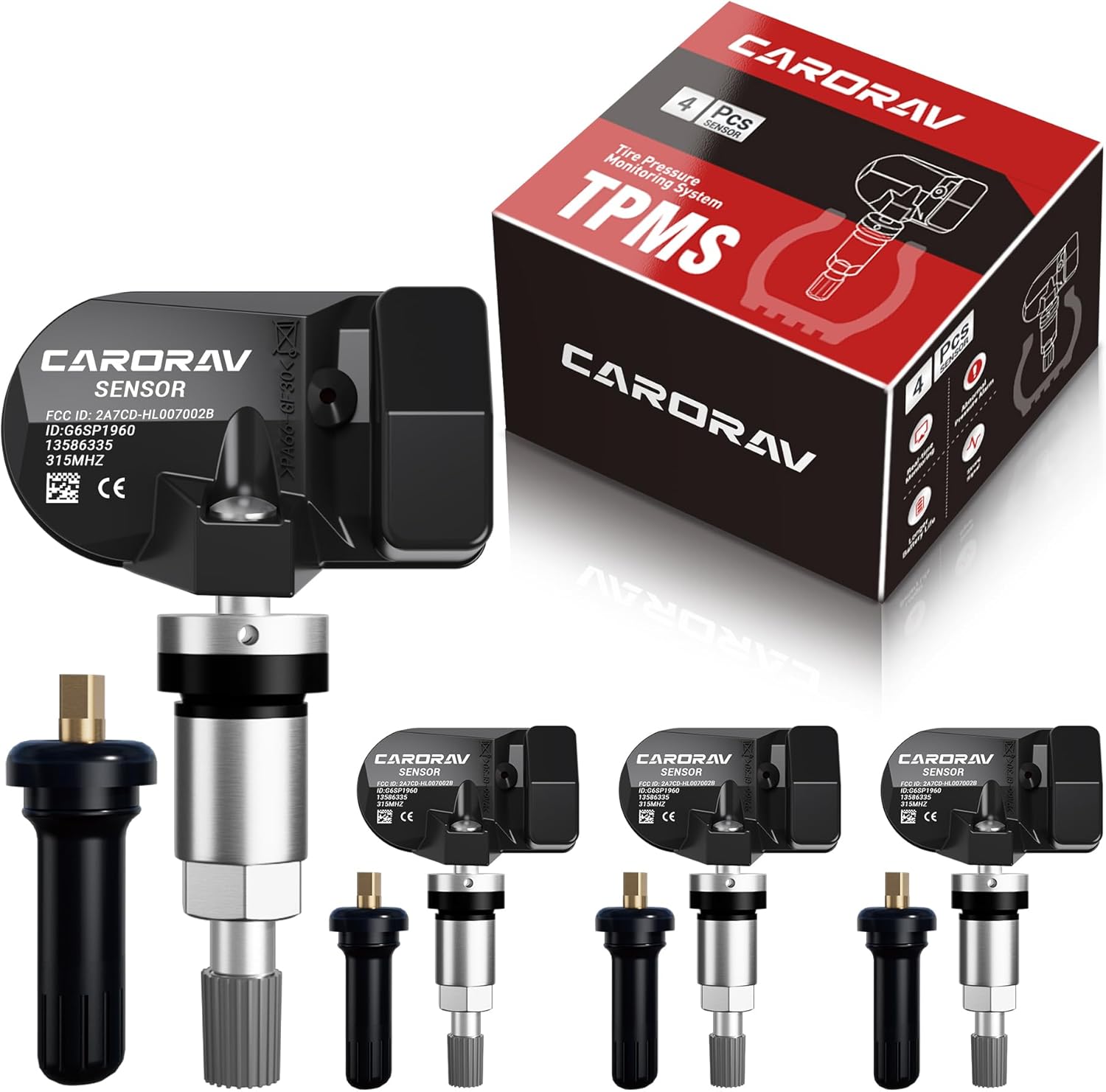
Replace worn or missing TPMS sensors with CARORAV pre-programmed GM-compatible sensors for a smoother installation experience. These 315MHz replacement sensors help monitor tire pressure in real time with long battery life, and they are designed to withstand harsh temperatures. Manual or OBDII relearn may be required to reset the system for proper recognition.
Direct vs. Indirect TPMS Changes What You Need to Buy
Before buying anything, confirm whether your vehicle has a direct or indirect system. According to NHTSA’s TireWise guidance, direct TPMS uses sensors located in the tires, while indirect TPMS relies on wheel-speed use and other vehicle sensors.
That distinction matters because an indirect TPMS does not have a pressure sensor inside each wheel to replace. If your indirect system has a warning or calibration problem, replacing a wheel-mounted TPMS sensor is not the solution.
For direct systems, compatibility matters. The replacement must match the vehicle’s required sensor protocol, frequency, valve style, and programming method. Verify the year, make, model, trim, and original sensor specification before ordering.
What Drives TPMS Sensor Replacement Cost?
The final bill usually reflects more than the sensor. Tire removal, mounting, balancing, valve-service hardware, programming, relearning, diagnosis, and local labor rates can all affect the total.
Most direct sensors sit inside the wheel. Replacing one normally requires removing the wheel and separating the tire from the rim far enough to remove and install the sensor safely.
Service hardware can add a small extra charge. Depending on the design, the technician may replace a seal, grommet, nut, valve core, or valve stem as part of the installation.
Programming is another cost variable. A universal programmable sensor may need the correct vehicle protocol written to it before use. After installation, the vehicle may also require a relearn so its control module recognizes the sensor ID.
Vehicle design matters too. Specialty wheels, unusual sensor mounting, corroded hardware, or systems that require additional scan-tool work can increase labor.
You can often avoid paying for tire removal twice by replacing a weak or failed sensor while the tire is already off for other scheduled tire work.
OEM vs. Aftermarket TPMS Sensors
OEM and aftermarket sensors can both work well when the part matches the vehicle. The main differences are how the sensor is configured, its vehicle coverage, warranty, and price.
ATEQ’s TPMS sensor replacement guidance describes OEM sensors as direct replacements with their IDs already written to the sensor. Many universal aftermarket sensors must instead be programmed or cloned with a TPMS tool before use.
- OEM sensor: Designed as a direct replacement for the original application and usually requires less part-selection uncertainty.
- Programmable aftermarket sensor: Can cover many vehicles, but the correct protocol must be programmed before installation.
- Multi-protocol or one-to-one aftermarket sensor: May already contain the needed protocol or be designed for a narrower group of applications.
Do not choose a sensor on price alone. Confirm the required frequency, communication protocol, valve configuration, relearn support, and wheel fit first.
How Much Does TPMS Labor Cost?
Labor varies by vehicle and shop because replacing a direct TPMS sensor involves tire work as well as electronic setup. RepairPal’s current national estimate assigns $77 to $112 of its average replacement cost to labor.
A tire shop may quote differently from a dealership or full-service repair facility. Some shops bundle mounting, balancing, programming, and relearning into one price, while others list those services separately.
Extra work may be required when hardware is corroded, the valve stem is damaged, the tire must be fully dismounted, or the vehicle needs an OBD or manufacturer-specific relearn procedure.
Ask whether your quote includes the sensor, service kit, tire mounting, balancing, programming, relearn, and final TPMS warning-light check. That makes shop-to-shop comparisons much more meaningful.
How Long Does TPMS Sensor Replacement Take?
Most straightforward TPMS sensor replacements are commonly quoted at about 30 to 60 minutes per wheel, although actual shop time varies with the vehicle, tire service required, and relearn method.
The physical sensor swap is only one part of the job. The technician may first scan the sensors, remove the wheel, break the tire bead, replace service hardware, reinstall the tire, balance the assembly, and then confirm that the vehicle recognizes the sensor.
- Direct replacement: The tire must usually be opened or removed from the wheel to reach the sensor.
- Programming: Universal sensors may need configuration before installation.
- Relearn: The vehicle may need a stationary, automatic, or OBD procedure after installation.
A busy shop can also extend your total visit even when the actual repair is simple. Confirming the correct replacement sensor before the appointment can prevent delays caused by incorrect parts.
Signs Your TPMS Sensor Is Failing
A failing TPMS sensor can cause missing readings, implausible pressure values, intermittent warnings, or a system-malfunction light. First check the actual tire pressures with an accurate gauge because a normal low-pressure warning does not automatically mean the sensor has failed.
NHTSA explains that a flashing TPMS warning for roughly 60 to 90 seconds followed by steady illumination can indicate a system malfunction. That sequence may repeat each time the vehicle starts until the problem is corrected.
Other clues include one wheel no longer reporting pressure, a warning that returns despite correct tire inflation, or a sensor that a TPMS scan tool cannot activate.
Age can also point toward battery failure. A current Discount Tire sensor listing states that TPMS batteries commonly last about 7 to 10 years or 100,000 miles and that the internal battery is not removable. When that battery dies, the complete sensor is replaced.
Corrosion, damaged valve hardware, impact damage, or problems after tire service can also produce TPMS faults. A technician can activate each direct sensor with a TPMS tool and compare the transmitted ID, pressure, battery status, and frequency where supported.
[Products Worth Considering]

Replace worn or missing TPMS sensors with a pre-programmed 4-pack designed for compatible GM vehicles. These 315MHz sensors provide real-time tire pressure monitoring and alert you if pressure is too high, too low, or if a rapid air leak occurs. Most installations are ready with minimal relearn effort after mounting, helping improve safety and driving confidence.

This TPMS relearn tool helps you quickly activate, match, and reset GM tire pressure sensors to keep the vehicle monitoring system working properly. It clears tire pressure alarms and dashboard warning lights after sensor replacement or tire rotation, and supports learning for common 315/433 MHz TPMS sensors. Designed for simple one-button operation, it can help you avoid unnecessary trips to repair shops.

Masoll Gen 2 external TPMS sensors are a DIY replacement set of 4 for select GM vehicles made after 2006, helping you shut off the TPMS warning light quickly. Simply screw the sensors onto the tire valves and sync to your car ECU using the included EL-50448 relearn tool. Dual-frequency 315/433 MHz design provides OEM-level performance with accurate readings and replaceable batteries for about two years.
Can You Drive With a Bad TPMS Sensor?
A vehicle will usually still drive with a failed TPMS sensor, but the system may no longer warn you properly about low pressure in the affected tire. That means you must monitor the tires manually until the fault is repaired.
Warning: Do not assume a TPMS light is only a bad sensor. Check all tire pressures first. A genuinely underinflated tire can overheat, affect handling and braking, damage the tire, and eventually fail.
Safety Risks While Driving
The main risk is losing reliable warning of a slow leak or significant pressure loss. NHTSA recommends checking tire pressure monthly with an accurate gauge even when the TPMS is working correctly.
- Underinflation increases tire flex and heat buildup.
- Low pressure can shorten tread life and affect vehicle handling.
- A damaged or leaking tire can worsen even when the vehicle still feels normal.
If the warning appears while driving, inspect the tires as soon as it is safe and measure pressure against the vehicle manufacturer’s cold-pressure specification on the tire placard.
Tire Pressure Warning Signs
A steady TPMS lamp and a flashing-then-steady lamp do not necessarily mean the same thing. A steady low-pressure warning normally tells you that one or more tires are significantly underinflated, while the flashing sequence can indicate a TPMS malfunction.
Cold weather can also cause a marginally low tire to trigger the warning temporarily. Pressure may rise as the tire warms, but you should still check it with a gauge rather than assuming the warning is harmless.
Do not rely on appearance alone. A tire can be significantly low without looking obviously flat.
What Does a TPMS Reset Cost?
A TPMS reset or relearn may be included with sensor installation, or a shop may charge separately. The original service range for a standalone reset is about $20 to $50, but the actual charge depends on the vehicle and the procedure required.
A reset is not the same as repairing a failed sensor. It tells the vehicle to initialize the system or recognize sensor IDs after pressure adjustment, tire rotation, tire replacement, or sensor service.
According to ATEQ’s TPMS relearn guidance, direct systems can use automatic, stationary, or OBD relearn procedures. Indirect systems instead use an initialization or calibration procedure because there are no pressure sensors inside the wheels.
- Automatic relearn: The vehicle learns sensor information after the required drive or operating conditions.
- Stationary relearn: The vehicle is placed in learn mode and sensors are triggered in a specified sequence.
- OBD relearn: A compatible scan or TPMS tool writes sensor information through the vehicle’s diagnostic connection.
The correct method is vehicle-specific. If a reset fails repeatedly, the next step is diagnosis rather than repeating the relearn indefinitely.
How to Save on TPMS Sensor Replacement
You can lower the total cost by confirming the failed component before buying parts, comparing complete installed quotes, and combining sensor work with scheduled tire service when practical.
| Tactic | Effect | Risk |
|---|---|---|
| Compare complete installed quotes | Shows the real parts, labor, and relearn cost | Low quotes may exclude programming or service hardware |
| Replace only the failed sensor | Minimizes immediate parts cost | Other same-age sensors may fail later |
| Bundle replacement with tire service | May avoid repeated tire-removal labor | Only useful when tire service is already due |
If one sensor was damaged recently and the others are much newer, replacing only the failed unit usually makes sense. If several original sensors are already near the end of their expected battery life, replacing more than one during the same tire-service visit may reduce repeat labor later.
Aftermarket sensors can also reduce parts cost, but make sure the shop confirms compatibility before installation. A cheap sensor that cannot be programmed to your vehicle can create a second repair bill.
Pro Tip: Ask the shop to scan all direct TPMS sensors before authorizing replacement. Knowing which sensors communicate, which report weak batteries, and which have failed can help you decide whether one sensor or several should be replaced.
Frequently Asked Questions
Can a TPMS Sensor Battery Be Replaced Separately?
Usually not. Direct TPMS sensors commonly use sealed internal batteries, so the complete sensor is replaced when the battery reaches the end of its service life. Replaceable valve stems or service hardware are different parts and can often be serviced separately.
Do All Four Sensors Need Replacement Together?
No. You can replace only the failed sensor. However, if all four are original and the same age, replacing several during one tire-service visit may reduce the chance of paying for repeated tire removal as the remaining batteries age.
Will a TPMS Light Fail Vehicle Inspection?
Not automatically in every U.S. jurisdiction. Inspection requirements are state-specific, and the federal TPMS standard is a vehicle safety requirement rather than one universal state inspection rule. Check the current inspection manual for the state where the vehicle is registered.
Can TPMS Sensors Be Reused With New Tires?
Yes. A working direct TPMS sensor can usually remain with the wheel when new tires are installed. The technician should inspect its valve hardware, seals, condition, and remaining battery status where the sensor and service tool can report it.
Does Tire Size Affect TPMS Sensor Compatibility?
Tire size usually does not determine the electronic compatibility of a direct TPMS sensor. The sensor still needs the correct vehicle protocol, frequency, valve or wheel fit, and relearn support. Alternate wheels or tires must also allow the vehicle’s TPMS to keep functioning correctly.
Conclusion
TPMS sensor replacement cost depends on the part, tire labor, programming, and the vehicle’s relearn procedure. Confirm whether your car uses direct or indirect TPMS first, then compare quotes that include the same services. If the TPMS light is flashing or pressure readings are unreliable, check the tires manually and have the system diagnosed rather than replacing parts by guesswork.
Sources
- National Highway Traffic Safety Administration — TireWise: Direct versus indirect TPMS, warning-light behavior, tire-pressure checks, and safety guidance.
- RepairPal TPMS Sensor Replacement Cost Estimate: September 2026 national parts, labor, and total replacement estimates.
- Discount Tire TPMS Sensor Catalog: Current retail sensor examples, frequencies, valve types, programming, and service-kit information.
- ATEQ TPMS Sensor Replacement Best Practices: Direct and indirect systems plus OEM and aftermarket sensor types.
- ATEQ TPMS Relearn Guidance: Automatic, stationary, OBD, and indirect-system initialization procedures.
- Discount Tire Dill TPMS Sensor Reference: Typical sensor battery lifespan and sealed-battery replacement information.
[Products Worth Considering]

Replace worn or malfunctioning GM TPMS sensors with this 433MHz pre-programmed sensor set designed for compatibility with many Chevrolet, Buick, GMC, and Cadillac models. It includes guidance for proper OBDII relearning/pairing after installation and supports reliable long-term operation with a high-performance CR2032 battery. Quality tested for durability and performance to help restore accurate tire pressure monitoring.

The UYYE TPMS relearn tool helps activate and relearn tire pressure monitor sensors quickly, typically in minutes. It supports TPMS learn mode resetting using a simple three-step process: enter learn mode, position the tool near the valve stem, and press the learn button. Designed for specific GM models, it streamlines sensor programming and reduces trips to dealers or tire shops.
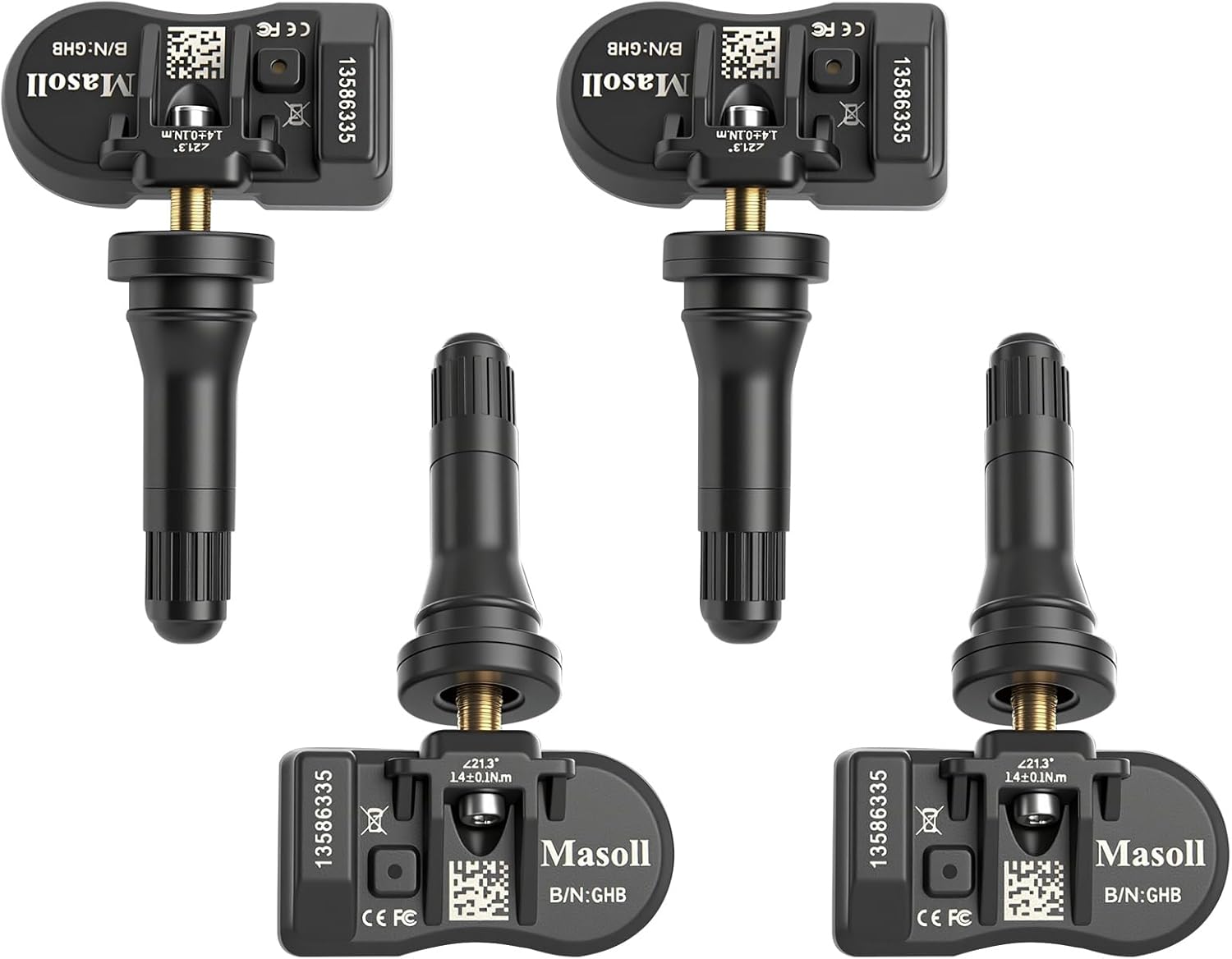
Masoll TPMS sensors are designed for most GM vehicles after 2006, helping you clear tire pressure warnings with OEM-level 315/433MHz compatibility. The 4-pack includes pre-programmed sensors, but re-learning is required after installation using a GM TPMS relearn tool or scan tool. Built with a dual-antenna design and a long-life CR2050 battery, these sensors deliver reliable performance in extreme temperatures with corrosion-resistant valve construction.
