

Tire mounting cost in the U.S. is commonly quoted as part of a mount-and-balance service rather than as mounting alone. For standard passenger tires, a realistic benchmark is about $15 to $50 per tire for mounting and balancing, but your final bill depends on the tire, wheel, shop, and services included. The best way to compare quotes is to look at the complete installed price instead of one low advertised fee.
Quick Answer
Expect roughly $15 to $50 per tire for professional mounting and balancing on many standard passenger vehicles. A four-tire job can therefore vary widely, especially when TPMS service, disposal, specialty tires, oversized wheels, or premium balancing are added. Some retailers bundle several of those services into one installation price.
Last checked: October 5, 2026. Dates and figures were verified against official sources.
Key Takeaways
- A current U.S. benchmark for mounting and balancing is about $15 to $50 per tire, although specialty applications can cost more.
- Mounting and balancing are different tasks, but many tire shops sell them together as one installation package.
- Sam’s Club currently lists a $20-per-tire installation package for most cars and light trucks, while Costco includes installation at no charge with eligible Costco-purchased tires.
- Run-flat, low-profile, oversized, damaged, or unusual wheel-and-tire combinations may require more labor or specialized equipment.
- Compare the complete price, including valve or TPMS service, balancing, disposal, shop fees, and any specialty-tire surcharge.
[Products Worth Considering]

A concentrated tire and tube mounting compound designed to help simplify mounting rubber tires and tubes on passenger, semi truck, construction, and OTR applications. Its ultra-thick formula packs beads effectively and includes rust inhibitors to help protect against corrosion during use.

Malco tire mounting and demounting lubricant is a ready-to-use tire lube formulated to reduce friction during tire installation for passenger cars, light trucks, farm tires, and heavy-duty equipment. It provides rust-inhibiting protection to help reduce corrosion on rims and wheels, and helps support proper tire bead seating during inflation to reduce air leakage. The silicone-free, soap-free formula is whitewall safe to help prevent discoloration on whitewall tires and sensitive sidewall markings.
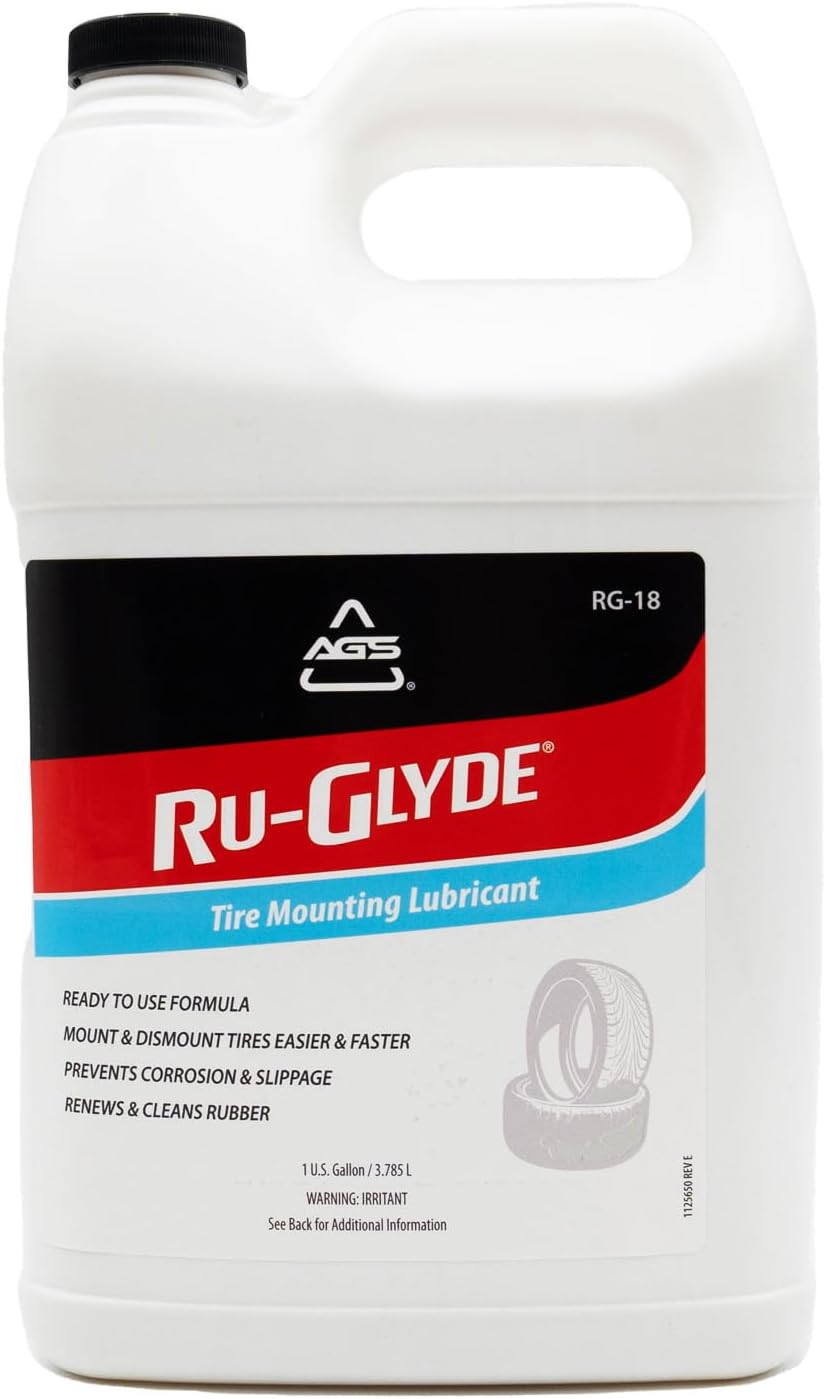
Ru-Glyde tire mounting lubricant from AGS seats tire beads smoothly on the first try with a thick, stay-put formula. It is ready to use with no mixing or dilution, helps prevent rim rust, and dries completely without causing bead slip residue. The water-based formula also conditions aged rubber, making it useful for sidewalls, gaskets, and door seals while remaining safe for tire, wheel, and technicians.
How Much Does Tire Mounting Cost?
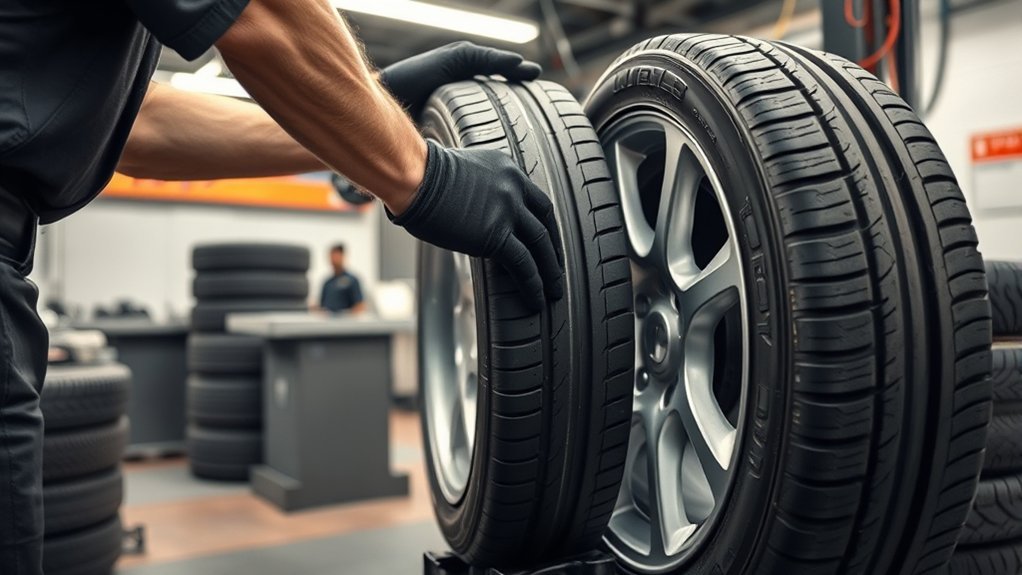
For U.S. drivers, $15 to $50 per tire is a useful current range for mounting and balancing together. AAA currently cites $15 to $50 per tire for mounting and balancing, with full-set installation costs varying further by vehicle and tire type.
Be careful with the wording on a quote. A shop advertising a low “mounting” price may be charging only for putting the tire on the wheel. Balancing, valve service, TPMS work, disposal, or installation of the wheel back on the vehicle may be separate.
Compare the complete installed price, not just the lowest mounting line item.
A typical tire installation involves removing the old tire, inspecting the wheel and bead area, mounting the replacement tire, inflating it, checking for leaks, balancing the wheel-and-tire assembly, and reinstalling the wheel when applicable.
Some retailers bundle almost all of those steps. Others use separate line items, which is why two quotes with very different advertised prices can end up with similar totals.
What Changes Tire Mounting Cost?
Your final tire mounting cost depends mainly on tire construction, wheel size, shop pricing, and which services are included. A basic passenger-car setup is normally easier to handle than a stiff run-flat, very low-profile tire, oversized truck tire, or custom wheel.
The condition of the wheel also matters. Corrosion, damaged bead seats, bent wheels, difficult removals, or faulty valve hardware can create extra work before the new tire can be installed correctly.
Tire Size And Type
Larger and more specialized tires can cost more to mount because they are heavier, stiffer, or harder to manipulate safely on a tire machine. Run-flat and low-profile tires are common examples because their sidewalls generally flex less than those on a conventional passenger tire.
Wheel diameter alone does not guarantee a surcharge. Some retailers use flat package pricing across many standard vehicles, while other installers vary the charge by wheel diameter, sidewall profile, vehicle, or installation difficulty.
Before buying replacement tires, confirm the correct size and specification for the vehicle. The National Highway Traffic Safety Administration recommends using the original tire size or another size approved by the vehicle manufacturer. The correct tire pressure also comes from the vehicle placard or owner’s manual, not the maximum pressure printed on the tire sidewall.
Labor And Service Fees
Labor pricing can change the total just as much as tire size. Independent shops, dealerships, tire chains, warehouse clubs, and mobile installers all use different pricing models.
One shop may charge a single installation fee that covers mounting, balancing, valve service, disposal, and future rotations. Another may show each service separately. Neither structure is automatically cheaper, so compare the final total for the same work.
Also ask whether a quoted price assumes you bought the tires from that retailer. Some businesses offer better package pricing with tires they sell and charge a different rate for tires purchased elsewhere.
Additional Balancing Costs
Mounting and balancing are separate procedures, but balancing is often bundled with tire installation. Mounting puts the tire onto the wheel; balancing corrects uneven weight in the assembled tire and wheel by adding weights where needed.
Some shops also offer road-force balancing for difficult vibration problems or certain performance applications. That is a different service from ordinary spin balancing and may cost extra.
When comparing estimates, ask whether the stated price covers both mounting and balancing. This prevents a low mounting quote from becoming much higher after the balance charge is added.
Tire Mounting Cost by Wheel Size
Tire mounting cost can rise with wheel size, but wheel diameter is only one factor. Tire sidewall stiffness, width, wheel design, vehicle type, and the shop’s pricing policy can matter just as much.
For that reason, do not assume every 20-inch tire costs more to mount than every 17-inch tire. The actual tire-and-wheel combination is more useful than diameter alone.
Standard Wheel Sizes
Common passenger-car wheel sizes are usually the easiest for tire shops to handle because technicians work with them regularly and standard tire equipment is designed around common fitments.
If your vehicle uses factory-size conventional tires and undamaged wheels, installation is normally straightforward. Your biggest price difference may come from what each shop includes rather than from the mounting process itself.
Ask for the total for all four tires and confirm whether balancing, ordinary valve service, TPMS service, disposal, and wheel installation are included.
Larger Wheel Sizes
Large wheels often use wider or lower-profile tires. These can require more care because there is less flexible sidewall between the wheel and tread.
A shop may use rim protectors, different machine attachments, or additional handling techniques to reduce the risk of wheel scratches or bead damage. Those requirements can lead to a surcharge at shops that price by difficulty.
However, some national retailers use installation packages rather than a strict wheel-size price chart. Always get a quote for your exact tire size and vehicle.
Specialty Wheel Sizes
Specialty applications such as run-flat tires, beadlock-style assemblies, oversized truck tires, dually setups, and custom wheels may need equipment or procedures beyond a routine passenger-car installation.
| Wheel Type | Typical Effect | Cost Impact |
|---|---|---|
| Run-flat | Stiffer sidewall can make mounting harder | May be higher |
| Beadlock | Extra hardware and specialized procedures | Often higher |
| Custom-fit | Extra fitment and wheel-protection care | May be higher |
If your setup is unusual, tell the shop the exact tire size, wheel type, and vehicle before booking. That lets the installer confirm that its equipment can handle the job and give you a more accurate quote.
What Shops Charge to Mount Tires
Shop pricing varies enough that there is no single nationwide tire mounting fee. Current retailer examples also show why comparing only one advertised number can be misleading: some prices include balancing and lifetime services, while others depend on where you bought the tires.
| Provider | Current Pricing Example | What to Know |
|---|---|---|
| Sam’s Club | $20 per tire for most cars and light trucks | Active membership required. Package includes mounting, balancing, TPMS reset when applicable, disposal, and several lifetime services. |
| Costco | Installation included at no charge with qualifying Costco Tire Center purchases | Installation is limited to tires purchased from Costco Tire Center. Additional component costs can apply. |
| Discount Tire | Varies by market and installation | Its installation package includes mounting, balancing, valve stems or TPMS rebuild kits, disposal, and life-of-tire maintenance. |
These examples are not perfectly interchangeable. A $20 package that includes balancing, disposal, TPMS reset, and lifetime maintenance cannot be compared directly with a $15 quote that covers mounting only.
Pro Tip: Ask each shop for the total cost for your exact vehicle and tire size, then compare the included services line by line.
Extra Fees That Raise Tire Mounting Cost
A low mounting quote can rise after the shop adds services that another retailer includes in its installation package. Common line items include valve hardware, TPMS service, disposal, specialty-tire handling, premium balancing, shop supplies, and taxes.
A cheap mounting quote is only useful if you know exactly what it includes.
Valve stems and TPMS service are easy to confuse. A conventional rubber valve stem is different from a wheel equipped with an electronic tire-pressure sensor. A TPMS-equipped wheel may need a service kit, reset, relearn, or sensor replacement depending on the vehicle and condition of the hardware.
Tire disposal also varies by retailer. Sam’s Club and Discount Tire include disposal in the installation packages described above, while other businesses may list recycling or disposal separately.
Specialty tire charges are another possible addition. Run-flat tires, oversized truck tires, unusually stiff low-profile tires, or expensive custom wheels may need more labor or special equipment.
Before approving the work, ask for an itemized estimate showing the complete installed total. This makes it much easier to spot a service that has been quoted twice or an optional add-on you do not need.
[Products Worth Considering]

The 22800 wheel stud installer makes replacing wheel studs quick and secure, saving time and effort during tire service. It uses a ratchet or impact wrench to pull new studs firmly into place, helping when existing studs are too long. Compatible with most automotive wheels and light-duty truck wheel studs, it’s designed for easy, tool-assisted installation.
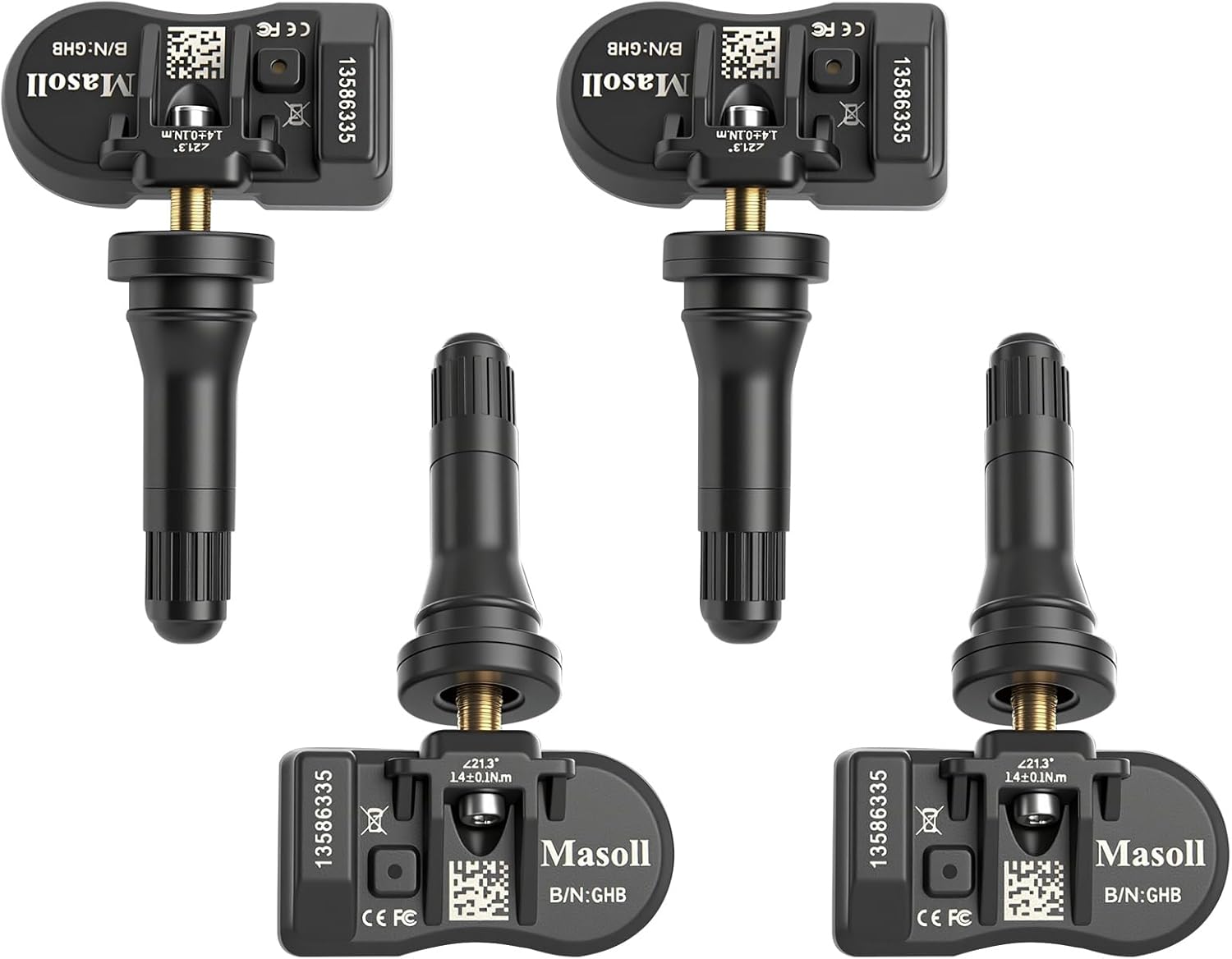
Masoll TPMS sensors are designed for most GM vehicles after 2006, helping you clear tire pressure warnings with OEM-level 315/433MHz compatibility. The 4-pack includes pre-programmed sensors, but re-learning is required after installation using a GM TPMS relearn tool or scan tool. Built with a dual-antenna design and a long-life CR2050 battery, these sensors deliver reliable performance in extreme temperatures with corrosion-resistant valve construction.

Replace worn or malfunctioning GM TPMS sensors with this 433MHz pre-programmed sensor set designed for compatibility with many Chevrolet, Buick, GMC, and Cadillac models. It includes guidance for proper OBDII relearning/pairing after installation and supports reliable long-term operation with a high-performance CR2032 battery. Quality tested for durability and performance to help restore accurate tire pressure monitoring.
Tire Mounting Cost vs. Balancing Costs
Mounting and balancing are not the same job. Mounting means installing the tire on the wheel and seating the bead. Balancing means correcting uneven weight after the tire and wheel are assembled.
Although they are technically separate services, many retailers combine them into a single installation package. Discount Tire, Sam’s Club, Costco, and other large tire sellers commonly include balancing with qualifying installations.
That distinction matters when comparing quotes. A shop offering $20 for mounting alone may cost more in the end than a $30 package that already includes balancing, ordinary valve service, and disposal.
Alignment is different again. Mounting and balancing work directly on the tire-and-wheel assembly, while an alignment adjusts suspension angles. Do not assume an alignment is included unless the quote specifically says so.
Can You Mount Tires Yourself?
You can mount tires yourself with suitable equipment and training, but it is not a simple alternative to paying a shop. Tire servicing involves heavy components, stored air pressure, bead seating, wheel compatibility, and the possibility of damaging a tire, wheel, valve, or TPMS sensor.
A basic DIY setup may involve a bead breaker, appropriate tire tools or a tire machine, approved mounting lubricant, valve tools, inflation equipment, and a way to balance the finished assembly. You also need to inspect the tire and wheel for damage and confirm that the sizes are compatible.
Professional safety procedures show why experience matters. The OSHA rim-wheel servicing standard requires trained workers to completely deflate tires before demounting, inspect wheel components, verify tire-and-wheel compatibility, use suitable tools, and remain outside the dangerous trajectory during inflation.
Warning: Tire inflation and bead seating can cause serious injury if the tire, wheel, tools, or procedure are wrong. If you do not have proper tire-service equipment and training, use a professional shop.
DIY mounting may save labor if you already own suitable equipment and know the procedure, but buying tools solely for an occasional tire change often removes much of the financial advantage. You would still need to balance the assembly correctly before normal driving.
How Can You Save on Tire Mounting Costs?
The easiest way to save is to compare complete installation packages rather than advertised mounting fees. A slightly higher package price can be cheaper overall if it includes balancing, valve service, disposal, rotations, or future rebalancing.
- Compare the total for four tires, including all required fees.
- Check whether installation costs less when you buy the tires from the same retailer.
- Ask whether lifetime rotation or rebalancing is included.
- Confirm any extra charge for run-flat, low-profile, oversized, or custom-wheel service.
- Ask whether bringing loose wheels instead of the whole vehicle changes the labor charge.
- Use manufacturer or retailer promotions when they reduce the total installed cost, not just the tire price.
If you buy tires online, add the local installation price before deciding that the online deal is cheaper. Shipping savings can disappear if the installer charges a higher rate for customer-supplied tires.
Also confirm your tire size before buying. Ordering the wrong tire can create return costs and delays that outweigh a small installation discount.
Frequently Asked Questions
How Long Does Tire Mounting Usually Take?
A standard four-tire installation commonly takes about 30 to 60 minutes after the vehicle enters the service bay. The job can take longer for specialty tires, TPMS problems, corroded wheels, damaged hardware, extra services, or a busy shop.
Do All Tires Fit Every Wheel?
No. The tire and wheel must have compatible dimensions, and the tire must also meet the vehicle’s required size, load, and other fitment specifications. Use the vehicle manufacturer’s approved tire size rather than choosing by wheel diameter alone.
Is Tire Mounting the Same as Tire Replacement?
No. Mounting is one part of tire replacement: it means fitting the tire onto the wheel. A complete replacement service can also include removing the old tire, balancing the new assembly, servicing the valve or TPMS hardware, and reinstalling the wheel.
Can Old Tire Valves Be Reused During Mounting?
Sometimes, but the correct choice depends on the valve system and its condition. Conventional rubber stems are commonly replaced during tire installation, while a working TPMS sensor may remain in service with new seals or other service-kit components when required.
Does Tire Mounting Include Disposal of Old Tires?
Sometimes. Disposal is included in some installation packages, including the current packages described by Sam’s Club and Discount Tire, while other shops charge a separate recycling or disposal fee. Ask whether disposal is included before comparing totals.
Do New Tires Need to Be Balanced?
Yes, new tires are normally balanced after mounting so the tire-and-wheel assembly rotates evenly. Mounting alone does not correct weight differences in the assembly, which is why professional installation packages commonly include both services.
Do Shops Charge More If You Bring Your Own Tires?
They can. Some shops offer discounted or bundled installation when you buy tires from them, while customer-supplied tires may receive a different labor rate. Ask for both prices before deciding where to purchase the tires.
Conclusion
A fair tire mounting cost depends on what the quote actually includes. Use roughly $15 to $50 per tire for mounting and balancing as a starting benchmark, then compare balancing, valve or TPMS service, disposal, specialty-tire charges, and future maintenance before choosing a shop. The lowest advertised mounting fee is not always the lowest installed price.
Sources
- AAA Automotive: Current U.S. mounting-and-balancing cost range.
- Sam’s Club Tire & Battery Center: Current installation package price and included services.
- Costco Tires & Auto: No-charge installation policy and included tire services.
- Discount Tire: Installation inclusions, balancing, valve/TPMS service, disposal, and lifetime maintenance.
- Discount Tire FAQs: Typical 30-to-60-minute installation time once a vehicle enters the service bay.
- National Highway Traffic Safety Administration: Tire-size compatibility and correct vehicle tire-pressure guidance.
- Occupational Safety and Health Administration: Professional rim-wheel mounting, demounting, inspection, compatibility, and inflation safety procedures.
[Products Worth Considering]

This TPMS sensor training and relearn reset tool is customized for Ford, Lincoln, and Mercury vehicles to help activate tire pressure programming after sensor replacement or tire rotation. It can activate individual tire pressure sensors with one-button operation, helping prevent TPMS warning light illumination. It is not a sensor programming tool and cannot program replacement sensors—use it to trigger/activate sensors only.

The VEHLIVE SU-50448 II TPMS relearn tool provides a fast activation reset to restore accurate tire pressure monitoring after sensor replacement or tire rotation. It supports 315 MHz and 433 MHz GM series sensors and helps clear dashboard pressure warnings. With simple two-button operation and horn-confirmed relearning order, you can reprogram sensors conveniently at home.

This 20-piece tire changer kit makes motorcycle and bike tire repairs easier with extended 14.5-inch spoons for leverage and access. Built from CrV steel with a corrosion-resistant chrome finish, it helps resist bending while protecting rims and tubes using smooth rounded spoons and included rim protectors. The all-in-one set includes valve removal and accessory tools for faster tire changes across motorcycles, bicycles, ATVs, and lawn equipment.
