
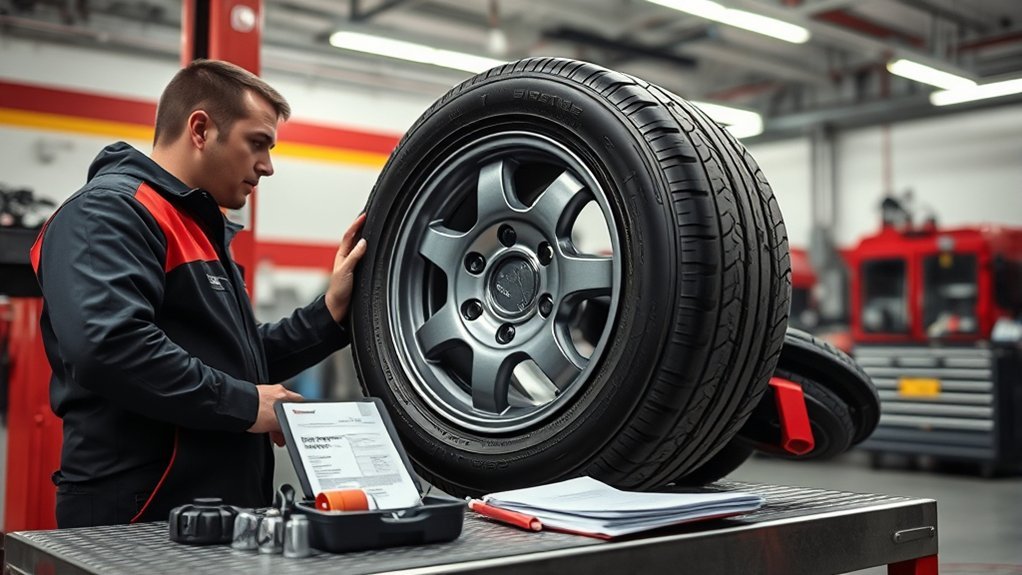
A Firestone tire patch cost is not a single nationwide flat rate. Firestone Complete Auto Care currently says a simple plug or patch on a basic touring tire can cost as little as $30, while repairs involving specialty performance tires can cost more. Whether the tire can safely be repaired depends on the puncture location, size, tread condition, and internal damage.
Quick Answer
Firestone currently says a simple plug or patch on a basic touring tire can be as low as $30; specialty performance-tire repairs can cost more. Eligible punctures are generally in the tread, no larger than 1/4 inch (6 mm), and must pass an inside-and-out inspection.
Last checked: October 5, 2026. Dates and figures were verified against official sources.
Key Takeaways
- A proper puncture repair requires the tire to be removed so the inside can be inspected.
- Industry guidance calls for filling the puncture channel and sealing the inner liner; a plug alone or patch alone is not a complete permanent repair.
- Sidewall and shoulder damage, overlapping repairs, and tires worn to 2/32 inch are generally not repairable.
- Optional road-hazard protection is different from the Firestone manufacturer’s limited warranty and may cover eligible puncture repairs.
- Run-flat tires are not automatically unrepairable, but Firestone applies additional restrictions and inspection requirements.
How Much Does a Firestone Tire Patch Cost?

As of October 5, 2026, Firestone Complete Auto Care’s tire repair information says a simple plug or patch on a basic touring tire can be as low as $30. A more complex repair on a specialty performance tire may cost more.
Firestone does not publish one nationwide maximum price for every puncture repair. Its official guidance says cost varies with the type of repair, where the damage is located, and the type of tire.
That makes a fixed $20-to-$40 estimate less reliable than the current Firestone starting point. Your store still needs to inspect the tire before confirming the service and final charge.
There is also an important distinction between repair cost and replacement cost. A sidewall puncture does not simply become a more expensive patch. If the damage falls outside Firestone’s repair limits, the tire normally needs replacement instead.
[Products Worth Considering]

This screw-in tire plug kit provides a fast, efficient way to repair punctures without flaring tools. Choose the correct plug size, then screw the rubber nail plug into the tire hole for a secure, sealed connection that helps prevent water intrusion. The 70-piece set is designed for universal emergency roadside use across cars, motorcycles, trucks, ATVs, bicycles, and more.
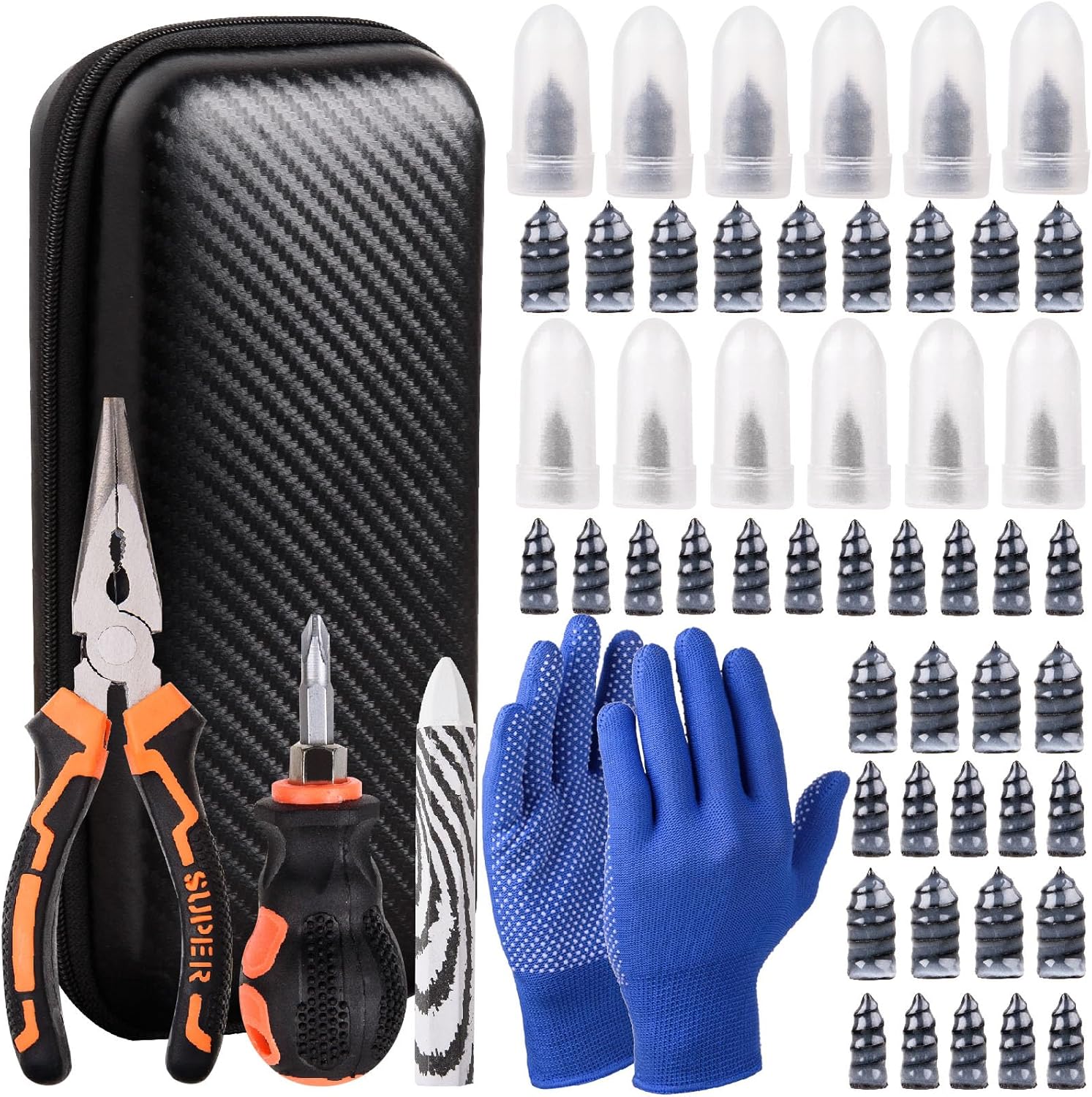
This tire sidewall puncture repair kit fixes flats fast without removing the tire, helping you get back on the road in minutes. It includes self-tapping repair nails, essential tools, gloves, and a portable storage bag for convenient roadside use. Designed for tubeless tires, it helps create a tight, leak-resistant seal for cars, motorcycles, trucks, SUVs, and ATVs.

This 60-piece tire repair nail kit provides a fast, do-it-yourself way to seal punctures on tubeless car, motorcycle, and SUV tires without removing the tire. Simply align, twist clockwise, and finish in seconds for a reliable sealing effect that helps prevent water intrusion. The kit includes tire glue and durable rubber-and-steel repair nails for strong adhesion and long-lasting repairs.
What’s Included in a Firestone Tire Patch?
A professional Firestone puncture repair starts with inspection. The technician removes the tire from the wheel, checks the outside and inner liner, and determines whether the injury meets repair requirements.
If the tire qualifies, Firestone describes a repair process that fills the puncture channel and seals the inside of the tire. Its tire patch guide describes removing the tire, preparing the damaged area, installing a rubber plug, applying the internal patch, remounting the tire, inflating it, rebalancing it, and checking for leaks.
Firestone’s service page also says technicians check the valve stem, bead seating, and tire balance. They may advise you if separate TPMS service is required.
This inspection matters because damage caused by driving while severely underinflated may be hidden inside the tire. Looking only at the nail or screw from the outside cannot confirm that the casing and inner liner remain safe.
When Can Firestone Patch a Tire?
Firestone generally considers a tire repairable when it has a single puncture in the repairable tread area, the injury is 1/4 inch (6 mm) or smaller, the repair will not overlap another repair, and the inner liner remains intact.
The tire must be removed from the wheel for a complete inspection. This allows the technician to look for internal abrasion, separation, heat damage, or other problems that may not be visible from outside.
Note: Have a trained tire technician inspect the tire off the wheel before treating a puncture as safely repairable. A hole that looks minor from outside can hide internal damage.
The Tire Industry Association’s repair guidance also limits puncture repairs to the central tread area and sets the same 1/4-inch maximum injury size.
If you drove a tire while flat or severely underinflated, tell the technician. Firestone warns that running a flat tire can compromise the sidewall and turn an otherwise small puncture into an unrepairable tire.
What Affects Firestone Tire Patch Pricing?
Firestone identifies three main pricing variables: the type of repair, the location of the damage, and the type of tire. The most important point is that some damage does not increase the patch price; it makes the tire ineligible for repair altogether.
Tire Damage Severity
Damage severity determines whether a repair is possible before it determines what you pay. A clean, small tread puncture may qualify, while a large or irregular gash usually requires replacement.
Firestone’s current service criteria specify a maximum puncture size of 1/4 inch (6 mm). It also checks whether the inner liner is intact and whether the new repair would overlap an existing repair.
Visible bulges, cuts, internal abrasion, separation, or damage caused by running flat can indicate structural harm. In those cases, a technician may reject the repair rather than perform a more expensive patch.
Repair Location Type
The puncture location is one of the clearest repair-or-replace factors. Damage in the central tread area may qualify, while shoulder and sidewall damage generally does not.
The shoulder is the outer transition between the tread and sidewall. Because this area flexes heavily and sits near the belt edge, industry repair guidance excludes it from the normal repairable zone.
This means a shoulder or sidewall puncture should not be treated as a premium version of a tread repair. It is normally a replacement situation.
Tire Type and Repair Complexity
Firestone specifically says tire type can affect repair pricing. Its current pricing example uses a basic touring tire as the lower-cost case and says more complex repairs on specialty performance tires can cost more.
| Repair factor | Firestone or industry guidance | Typical outcome |
|---|---|---|
| Basic touring tire | Simple repair can be as low as $30 | Lower-cost repair example |
| Specialty performance tire | More complex repair may cost more | Higher possible repair charge |
| Tread puncture ≤ 1/4 inch | May qualify after inspection | Repair possible |
| Shoulder or sidewall damage | Outside repairable area | Replacement |
| Tread at 2/32 inch | Not repairable under stated criteria | Replacement |
Wheel design, TPMS needs, and other vehicle-specific conditions can affect the work a shop recommends, but Firestone’s published tire-repair pricing guidance does not establish a separate price scale simply for driving a compact car, SUV, pickup, or van.
What Does Firestone Warranty Coverage Include?
Firestone’s manufacturer warranty and its road-hazard protection are different types of coverage. A normal nail or road-debris puncture should not automatically be described as a manufacturing-defect warranty claim.
The Firestone Gold Pledge Limited Warranty covers qualifying Firestone passenger and light-truck tires that become unusable for reasons within the manufacturer’s control, subject to its conditions and exclusions.
By contrast, optional Firestone Road Hazard Protection applies to qualifying road-hazard damage. Firestone says mounting and balancing of a covered repaired or replaced tire are free, coverage ends when the tire reaches 2/32 inch, and a covered tire cannot receive more than two repairs during the coverage period.
Road-hazard coverage can therefore be the relevant protection when a repairable puncture was caused by road debris, rather than by a manufacturing problem.
Keep your purchase records and the applicable warranty certificate. Coverage depends on the exact tire, purchaser, condition, and warranty terms in effect for your purchase.
When Won’t Firestone Patch a Tire?
Firestone will not repair every punctured tire. Its current service guidance excludes shoulder or sidewall damage, large or irregular gashes, and tires worn to 2/32 inch.
Other conditions can also rule out a safe repair, including an injury larger than 1/4 inch, an overlapping repair, an improper previous repair, or internal damage caused by operating the tire while flat.
- Sidewall or shoulder damage: outside the normal repairable tread zone.
- Puncture larger than 1/4 inch (6 mm): exceeds the standard passenger/light-truck repair limit.
- Overlapping repairs: a new repair cannot overlap an existing one.
- Tread at 2/32 inch: Firestone’s service criteria call for replacement.
- Internal or run-flat damage: abrasion, separation, or other structural damage can disqualify the tire.
If the tire is visibly flat, has a bulge or sidewall cut, or has been driven with very low pressure, avoid treating the puncture as a routine patch job until the tire has been professionally inspected.
[Products Worth Considering]

This tire repair patch tool kit helps you quickly seal small punctures using upgraded mushroom plugs and a built-in roller system that presses for even penetration. The tungsten buffing wheel and HSS twist drill bits prepare the damaged surface for stronger adhesion, while the crown-angle friendly plugs are designed to keep water and debris out. Ideal for puncture repairs on many vehicle types, from cars and trucks to bikes and scooters.

Steelman white tire marking crayons provide high-contrast, semi-permanent marks for repairing and inspecting tires and equipment. They write on wet or dry, smooth or coarse surfaces including rubber, metal, glass, and wood, making them ideal for puncture location and damage outlining. The lead- and zinc-free crayons resist weather and fading yet wipe away when you no longer need the marks.

Vigorder rubber cement glue delivers superior adhesion and cures quickly within about 30 seconds for seamless rubber bonding. Once cured, it helps provide a strong, durable, waterproof seal that holds up to vehicle weight, pressure, and heat. Suitable for cars, motorcycles, trucks, bicycles, and off-road tires, it’s designed for emergency patch and maintenance repairs.
Should You Patch, Plug, or Replace the Tire?
For a repairable puncture, the best long-term repair is not simply choosing a patch instead of a plug. Industry guidance calls for both filling the puncture channel and sealing the inner liner.
If the puncture falls outside the repairable area, exceeds the size limit, or has damaged the tire internally, replacement is the safer choice.
Patch Vs. Plug
A plug and a patch solve different parts of the puncture. A plug or stem fills the injury channel, while the patch seals the tire’s inner liner.
The Tire Industry Association says a plug by itself or a patch by itself is not an acceptable complete puncture repair. Firestone likewise describes a plug-and-patch combination for eligible flats.
Warning: Do not treat an outside-only string plug as a permanent professional repair. The tire should be removed so its interior can be inspected and the inner liner can be properly sealed.
- Plug only: fills the puncture channel but does not properly seal the inner liner as a complete professional repair.
- Patch only: seals the inner liner but leaves the puncture channel unfilled.
- Patch-plug or stem-and-patch repair: addresses both parts of a repairable puncture.
- Replacement: required when the tire falls outside safe repair limits.
Repairable Damage Limits
The standard repair limits are specific. Firestone says a qualifying tire should have a single tread puncture no larger than 1/4 inch (6 mm), no overlapping repair, and an intact inner liner.
Tire Industry Association guidance also says tires at their treadwear indicators or at 2/32 inch remaining tread depth should not be repaired. Shoulder and sidewall injuries are outside the normal repairable area.
A technician must inspect the inside because underinflation and run-flat operation can damage the casing even when the puncture itself meets the size limit.
When To Replace
Replace the tire when the injury cannot meet accepted repair limits or the tire no longer has enough structural integrity for a safe repair. Location and internal condition matter as much as the size of the visible hole.
- Sidewall or shoulder puncture
- Puncture larger than 1/4 inch
- Large or irregular cut or gash
- Repair that would overlap another repair
- Tread worn to 2/32 inch
- Internal abrasion, separation, or damage from running flat
A small nail hole in healthy tread may be repairable. A visually similar hole can require replacement if the tire was driven flat long enough to damage its interior.
How Can You Save on Firestone Tire Repair?
The best way to avoid unnecessary replacement cost is to deal with a slow leak before the tire is driven flat. Continued driving at very low pressure can damage the inner liner and sidewall, turning a repairable puncture into an unrepairable tire.
Check whether you purchased Firestone’s optional road-hazard coverage. An eligible repair may be covered, and Firestone’s current warranty page says mounting and balancing of qualifying repaired or replaced tires are included under that coverage.
You can also use Firestone’s free tire inspection to have tread depth, wear patterns, tire pressure, and related concerns checked before approving additional work.
Finally, compare the approved repair with the remaining tread life. Repairing a healthy tire with substantial usable tread is different from spending money on a tire already at its replacement threshold.
Frequently Asked Questions
Does Firestone Patch Run-Flat Tires?
Yes, some run-flat tires can be repaired, but only under specific conditions. Firestone’s run-flat repair guidance says a tire is not repairable if its sidewall says “Do Not Repair,” if it was operated below 15 psi, or if inspection reveals disqualifying abrasion, separation, or other damage.
How Long Does a Firestone Tire Patch Take?
Firestone does not publish a fixed average tire-repair time on its current service page. It says the technician will inspect the tire, confirm the needed services with you, and that service time varies depending on what the tire needs.
Can Firestone Patch a Tire With a Nail?
Yes, a nail puncture can be repairable if it is in the repairable tread area, is no larger than 1/4 inch, does not overlap another repair, and the inner liner remains intact. The tire still needs to be removed and inspected before a technician can approve the repair.
Do I Need an Appointment for Tire Patching?
Firestone offers online tire-repair appointments and says pre-booking can save time in the store. Its current tire-repair page does not state one universal walk-in policy for every location, so availability can depend on the individual service center.
Will a Patched Tire Affect Fuel Economy?
A properly repaired tire should not cause a meaningful fuel-economy change by itself. Keeping the tire at the vehicle manufacturer’s specified pressure and making sure the wheel is properly balanced are more important for normal rolling performance.
Does Firestone Road Hazard Protection Cover Tire Punctures?
Yes, eligible Firestone Road Hazard Protection can cover a repair when a covered tire is damaged by a qualifying road hazard and can still be safely repaired. This optional coverage is separate from the manufacturer’s limited warranty, and its conditions and repair limits still apply.
Conclusion
A Firestone tire repair can be a relatively inexpensive fix when the puncture meets the repair rules. The current published starting point is as low as $30 for a simple repair on a basic touring tire, but repairability comes first. Have the tire inspected promptly, especially if it has lost substantial pressure or the damage is near the shoulder or sidewall.
Sources
- Firestone Complete Auto Care — Tire Repair Services: Current pricing example, repair criteria, inspection process, and service-time guidance.
- Firestone Complete Auto Care — How to Patch a Tire: Repair steps, remounting, balancing, and leak testing.
- Tire Industry Association — Tire Repair: Industry repair zone, 1/4-inch limit, 2/32-inch tread limit, and patch-plus-plug guidance.
- Firestone Complete Auto Care — Tire & Wheel Warranty Options: Road-hazard repair limits, tread threshold, mounting, and balancing coverage.
- Firestone Tires — Full Warranty Information: Gold Pledge Limited Warranty and manufacturer-controlled failure coverage.
- Firestone Complete Auto Care — Tire FAQs: Run-flat repair restrictions and inspection requirements.
[Products Worth Considering]

Wykodra tire plugs provide quick vulcanizing repairs for tubeless tires, helping you seal punctures and get back on the road. The industrial-strength rubber creates a long-lasting, leak-resistant bond and is designed for emergency fixes without removing the tire. Choose between two standard plug sizes with color-matched options for small to larger damage across many vehicles and off-road uses.

TP-M13W combination repair unit kit includes wrapped stems with matching patches for fast, reliable tire repairs. It’s suitable for both radial and bias ply tires and is designed for chemical or heat vulcanization. Gray vulcanizing gum with blue backing helps create a strong bond, with the stem portion wrapped for added effectiveness.

This self-service tire repair nail kit includes 60 pieces (30 small + 30 large) to help seal punctures quickly without needing an auto shop visit. The nails are designed to fit different hole sizes and provide a tight connection with sealing glue to help prevent air and water intrusion. Suitable for cars, motorcycles, trucks, and other vehicles, it’s an easy, efficient way to patch roadside tire damage.
