
Toyota Tundra Wheel Spacer Sizing Guide: Safe Thicknesses and Risks
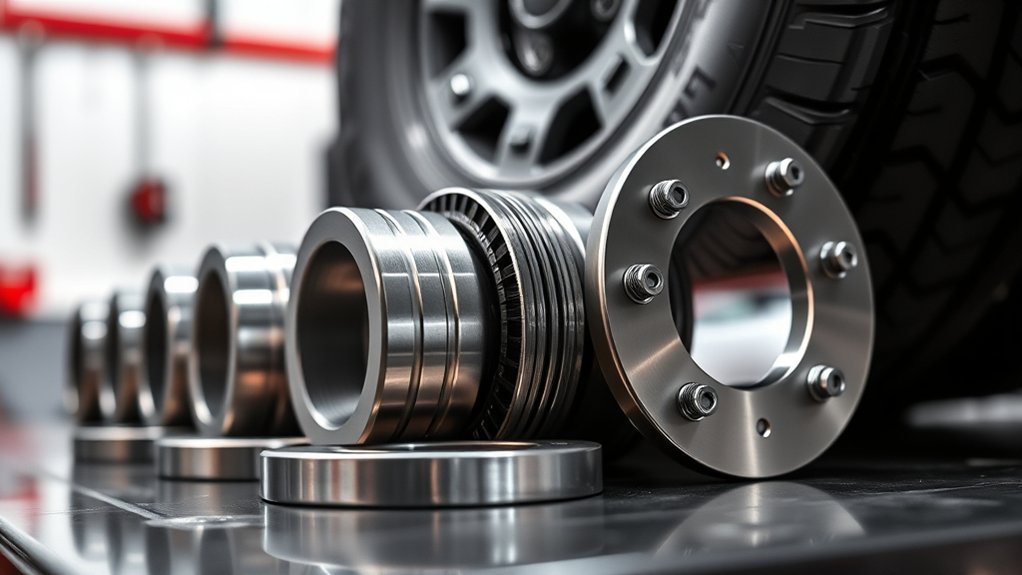
Choosing wheel spacers for a Toyota Tundra is not just about getting a wider stance. The safe size depends on your Tundra’s model year, bolt pattern, hub bore, wheel offset, tire size, suspension setup, and how carefully the spacers are installed. For many daily-driven Tundras, a 1-inch to 1.5-inch hub-centric spacer is the most practical range, but only if every fitment and torque check below passes.
Quick Answer
For most Toyota Tundra owners, the safest common wheel spacer range is 1 to 1.5 inches when the spacer is hub-centric, made for the exact truck, installed with a torque wrench, and rechecked after driving. Avoid using 2-inch-plus spacers for daily driving unless a qualified shop confirms clearance, stud engagement, and suspension condition.
Key Takeaways
- 1 to 1.5 inches is the most sensible spacer range for many daily-driven Tundras, but it is not automatically safe for every truck.
- Use hub-centric and wheel-centric bolt-on spacers made for your exact Tundra generation, wheel, hub bore, thread pitch, and bolt pattern.
- Confirm that the spacer sits flat, the wheel sits flat on the spacer, the factory studs do not interfere, and the tires clear the fenders and suspension at full steering lock.
- Use the Toyota owner’s manual and the spacer manufacturer’s instructions for torque values; do not guess by feel or use an impact gun for final tightening.
- Recheck the spacer and wheel hardware after the first short drive and again after the first 50 to 100 miles, or sooner if you feel vibration or hear noise.
At a Glance
| Time Required | About 45 to 90 minutes for a careful four-wheel spacer install, plus follow-up torque checks |
| Difficulty | Intermediate; beginner-friendly only if you already know safe jacking, wheel removal, and torque procedures |
| Tools Needed | Floor jack, jack stands, wheel chocks, correct socket, breaker bar, calibrated torque wrench, wire brush, brake cleaner, and spacer manufacturer’s instructions |
| Cost | Usually varies by spacer quality, thickness, material, hardware, and whether a shop performs the install |
What Are Wheel Spacers and Why Use Them?
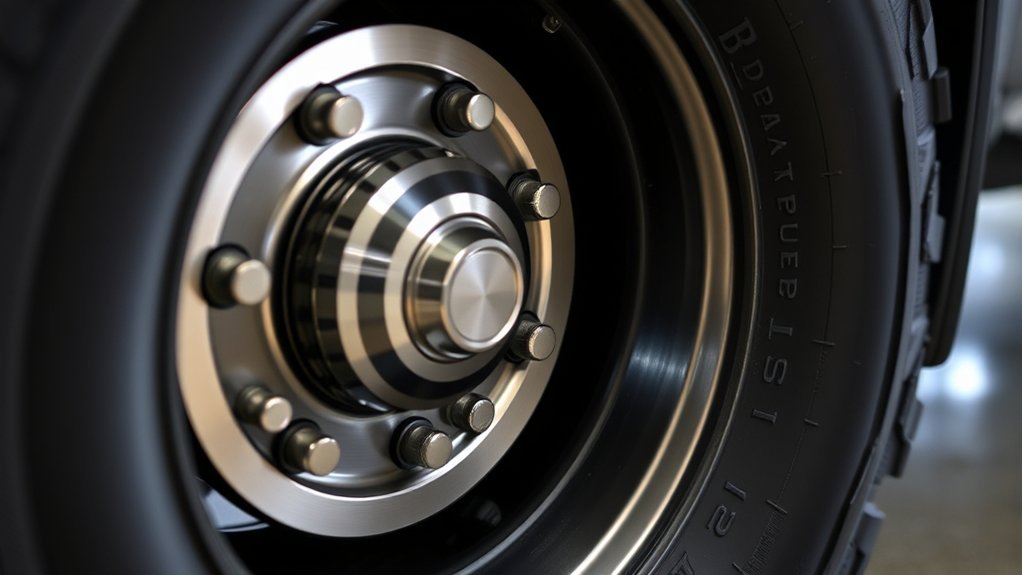
Wheel spacers fit between the wheel hub and the wheel. On a Toyota Tundra, they push the wheels outward to create a wider stance, add clearance between the tire and suspension, or help a wider tire fit without rubbing the upper control arm.
That wider stance can make the truck look more planted, and in some setups it can improve tire-to-suspension clearance. But a spacer also adds another bolted joint between the hub and wheel, so installation quality matters as much as spacer thickness.
Warning: Wheel spacers are not a cure for every fitment problem. If a tire or wheel hits suspension, brake, or body parts, confirm the real cause before adding spacer thickness. The NHTSA-hosted Aftermarket Wheel Installation Guidelines warn that spacers and adapters do not automatically resolve unsafe fitment conditions.
Choose the Right Wheel Spacer Size for Your Toyota Tundra
The right spacer size is the thinnest spacer that solves the clearance or stance goal without creating a new problem. For most Tundra owners, that means measuring before buying instead of starting with the thickest spacer available.
Recommended Spacer Thickness Options
| Spacer Thickness | Best Use | Safety Notes |
|---|---|---|
| 3 mm to 5 mm | Tiny brake or tire clearance adjustment | Only safe if lug nut thread engagement remains adequate; often requires extra care or longer studs. |
| 1 inch | Mild stance change and modest clearance gain | A conservative choice when the spacer is hub-centric and the wheel seats flat. |
| 1.25 to 1.5 inches | Common Tundra stance and larger-tire fitment range | Often the practical upper range for daily driving, but still requires clearance and stud-interference checks. |
| 1.75 to 2 inches | Aggressive stance or more tire clearance | Higher leverage on bearings and suspension; professional fitment inspection is strongly recommended. |
| Over 2 inches | Specialty builds, show stance, or off-road-only setups | Not recommended for normal daily driving unless the whole wheel, tire, suspension, and hardware package is built around it. |
Note: A 1.5-inch spacer is popular because it often clears factory studs on many bolt-on spacer designs, but it is not automatically safe. Your wheel must have the correct back-pad clearance or pockets if the original studs extend beyond the spacer face.
Effects on Vehicle Handling
Adding spacers increases track width, which can make a Tundra feel more stable in some situations. The trade-off is that the wheel centerline moves outward, increasing leverage on wheel bearings, steering components, and suspension parts.
Small to moderate spacers can work well when installed correctly. Very wide spacers can increase steering feedback, bump steer, tire rub, bearing load, and wear on front-end parts. After installation, a professional alignment is smart if tire wear, steering pull, or off-center steering appears.
Installation Safety Precautions
Before ordering spacers, confirm these details:
- Model-year fitment: Tundra bolt pattern, hub bore, thread pitch, and wheel hardware can vary by generation. Do not buy based on a universal “Tundra spacer” listing.
- Hub bore: The spacer should center tightly on the truck’s hub and provide the correct lip for the wheel.
- Bolt pattern: Match the truck and wheel exactly. A 6-lug Tundra spacer will not fit a 5-lug Tundra setup.
- Thread pitch and stud size: Match the spacer hardware to the truck and manufacturer instructions.
- Load rating: Use spacers from a manufacturer that publishes material, hardware, fitment, and installation instructions.
- Wheel pockets: Confirm the wheel back pad has enough space if factory studs protrude beyond the spacer face.
Pro Tip: If you are between two spacer sizes, choose the thinner spacer that clears the tire and suspension. Less thickness usually means less added leverage on the hub, bearings, and steering components.
What Thickness of Spacers Is Safe for Your Tundra?
A safe spacer thickness for a Toyota Tundra is usually 1 to 1.5 inches for a daily-driven truck, assuming the spacer is high-quality, hub-centric, correctly installed, and checked after driving. A thin slip-on spacer can also be safe in limited cases, but only if thread engagement remains adequate.
[Products Worth Considering]

【Fitment】2024+Tacoma, 2023+Sequoia, 2022+Tundra(ONLY FIT 6lug), 2024+Land Cruiser, 2024+GX550, 2022+LX600. Note: It is suitable for TOYOTA/LEXUS models above 2022.

【Fitments Include】Wheel Spacers 5x150 1.5" for 2008 for tundra Limited CrewMax Crew Cab Pickup 4-DR 5.7L V8 DOHC 32V || for 1998-2007 for Lx470 2008-2011 2013-2016 for Lx570

【Attention!!!】For safer driving,if the length of your original bolt is less than 27mm, please change the original nut to Extended(ET) lug nut.(B07DLX519N)especially for Tacoma and FJ. And please verify your vehicle compatibility in Product Description BEFORE purchasing or Contact customer service. Equipped with Thread Locker for fastening.
Safe Spacer Thicknesses
For a stock or lightly modified Tundra, use this simple rule: start with the smallest spacer that solves your specific clearance problem. If the tire only touches the upper control arm slightly, a smaller spacer may be enough. If you want a flush stance with wider tires, 1.25 to 1.5 inches is often where owners land, but that size still needs a full test fit.
Aftermarket wheel guidelines emphasize clean mounting surfaces, proper thread engagement, correct fasteners, and clearance checks. They also warn that wheel fitment must be checked at each mounting location and under steering movement, not just by looking at the truck while parked.
Common Thickness Recommendations
For a practical Tundra setup:
- Use 1 inch if you want a mild stance improvement and only need a little extra tire clearance.
- Use 1.25 to 1.5 inches if you are fitting wider tires and want a more noticeable stance while keeping daily-driveability in mind.
- Be cautious with 2 inches because it can create fender rub, added bearing load, and a more noticeable change in steering feel.
- Avoid more than 2 inches for normal road use unless a qualified shop has verified the full setup.
Installation Safety Considerations
The safest spacer is not just the right thickness. It must also seat correctly. The spacer should sit flush on the hub, the wheel should sit flush on the spacer, and no retainer clip, rust ridge, wheel weight, stud, or back-pad interference should hold the parts apart.
Toyota’s wheel guidance also warns against using the wrong wheel nuts, lubricating wheel bolts or wheel nuts, or using wheels that are not recommended for the vehicle. For exact torque, use your owner’s manual and the spacer manufacturer’s instructions. For example, Toyota’s 2025 Tundra Owner’s Manual maintenance data lists aluminum wheel torque at 97 ft·lbf and steel wheel torque at 154 ft·lbf for that manual, but your exact truck and wheel setup should control the final value.
Benefits of Wheel Spacers for Your Toyota Tundra
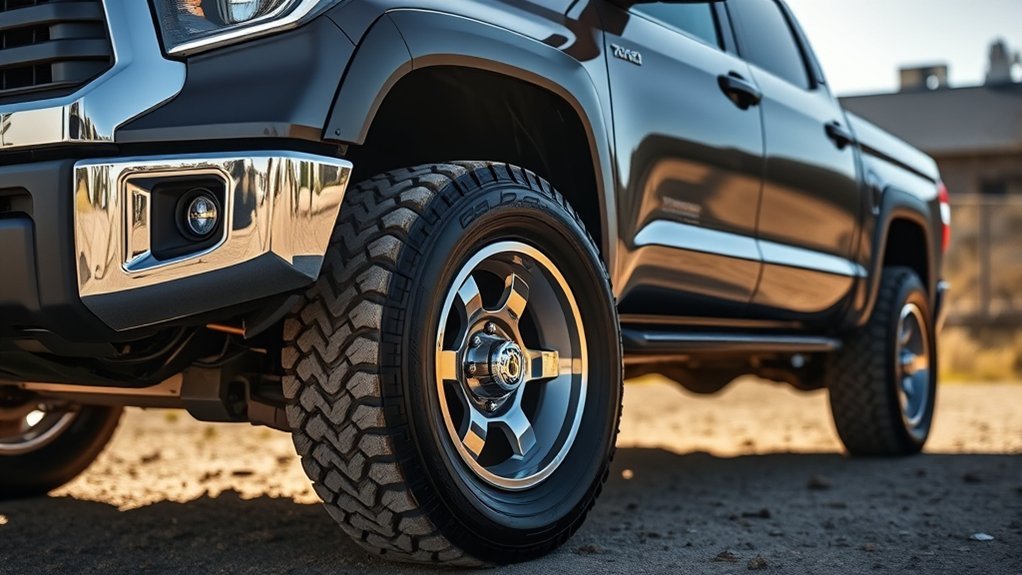
When chosen carefully, wheel spacers can help your Toyota Tundra in a few specific ways:
- Wider stance: Spacers push the wheels outward for a more planted look.
- Suspension clearance: They can move the inner tire sidewall away from the upper control arm or suspension parts.
- Larger tire fitment: They may help certain tire and wheel combinations clear the inside of the wheel well.
- Reversible modification: Bolt-on spacers can usually be removed if you return to stock wheels or a different wheel offset.
The key is moderation. A spacer should solve a measured fitment need, not compensate for the wrong wheel, wrong tire, or poor alignment.
Key Risks to Consider When Installing Wheel Spacers
Wheel spacers can be safe on a Tundra, but the risks are real when parts are cheap, mismatched, or installed carelessly.
- Loose hardware: Under-torqued or improperly seated hardware can loosen while driving.
- Wheel vibration: A lug-centric or poorly machined spacer can create vibration, especially at highway speed.
- Stud interference: Factory studs that protrude past the spacer face can stop the wheel from sitting flat.
- Insufficient thread engagement: Thin slip-on spacers can reduce how much lug nut thread grabs the stud.
- Added component load: Wider spacers increase leverage on bearings, ball joints, tie rods, and suspension bushings.
- Tire rub: Moving the tire outward can create fender, mud flap, bumper, or body mount contact.
The safest spacer setup is the one that seats flat, uses correct hardware, keeps proper thread engagement, clears at full steering lock, and gets re-torqued after the first drive.
Properly Installing Wheel Spacers for Safety
Use the instructions from your spacer manufacturer first. The steps below are a safety-focused overview for bolt-on Tundra spacers.
- Park safely. Work on level ground, set the parking brake, and chock the wheels.
- Lift and support the truck correctly. Use proper jack points and jack stands. Never rely on a jack alone.
- Remove the wheel. Inspect the studs, lug nuts, hub face, rotor face, and wheel mounting pad.
- Clean the mating surfaces. Remove rust, dirt, paint buildup, and debris so the spacer can sit flat.
- Remove interfering retainers if applicable. Do not remove brake-assembly fasteners that are meant to stay in place.
- Test-fit the spacer. It should sit fully flush against the hub with no rocking or gap.
- Install spacer hardware by hand first. Hand-thread the nuts before tightening to avoid cross-threading.
- Torque in stages with a criss-cross pattern. Use the spacer manufacturer’s torque value for spacer-to-hub hardware.
- Check factory stud protrusion. The original studs must not prevent the wheel from seating flat on the spacer.
- Mount the wheel. Hand-start the wheel nuts, snug in a criss-cross pattern, then torque to the correct wheel specification.
- Check clearance. Turn the steering from lock to lock and inspect tire-to-fender, tire-to-suspension, and tire-to-brake clearance.
- Drive slowly first. Stop immediately if you hear clicking, grinding, rubbing, or feel vibration.
- Re-torque. Recheck the spacer and wheel hardware after the first short drive and again after the first 50 to 100 miles, or according to the spacer maker’s instructions.
Warning: Do not use an impact gun for final tightening. Several spacer manufacturers specify hand tools, a torque wrench, clean flat mounting surfaces, and follow-up torque checks. If you do not have the right tools or experience, have a qualified shop install the spacers.
How to Choose a Quality Wheel Spacer Brand
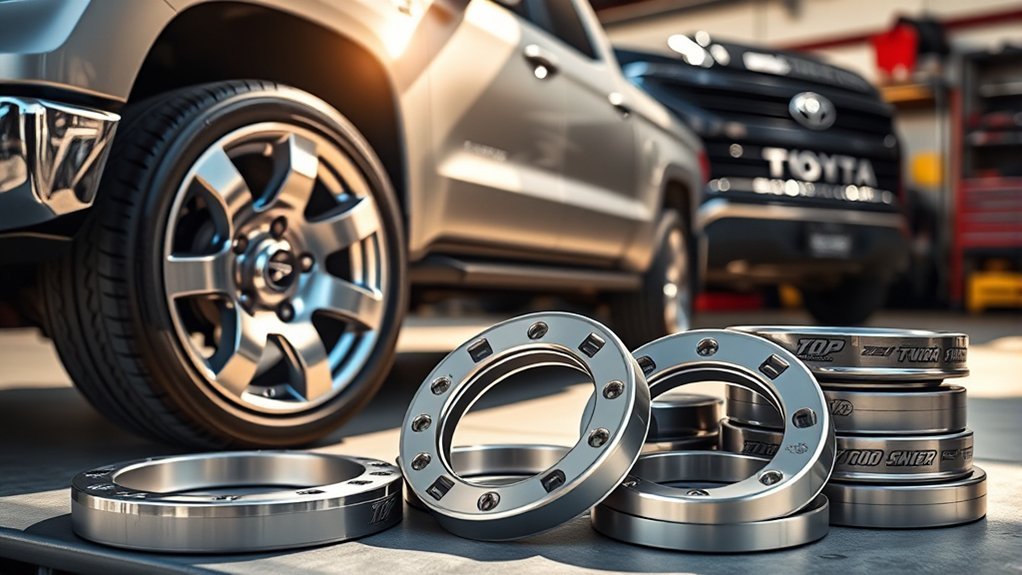
Instead of buying by brand name alone, look for a spacer company that publishes the details you need to verify safety. A quality Tundra spacer should include:
- Exact vehicle fitment: model year, bolt pattern, center bore, thread pitch, and compatible wheels.
- Hub-centric and wheel-centric design: the spacer should center on the hub and properly locate the wheel.
- High-quality material: commonly forged or billet aluminum from a known grade, with quality machining.
- Strong studs and hardware: look for published hardware grade and replacement availability.
- Written installation instructions: torque values, re-torque schedule, thread locker guidance, and warnings should be clear.
- Real customer support: you should be able to ask the company whether your wheel has enough pocket depth and whether your setup is compatible.
Manufacturers such as Spidertrax and Motorsport-Tech publish detailed installation instructions, which is a good sign. Regardless of brand, do not install spacers that arrive with vague specs, mismatched hardware, poor machining, or no torque guidance.
Maintaining Your Wheel Spacers Post-Installation
After installation, wheel spacers should become part of your regular wheel and suspension inspection routine.
- Recheck torque early: follow the spacer manufacturer’s re-torque schedule after the first drive and after the first 50 to 100 miles.
- Inspect during tire rotations: check spacer hardware, wheel studs, lug nuts, and mounting surfaces every time the wheels come off.
- Watch for vibration: new vibration after spacer installation usually means a seating, balance, centering, or torque problem.
- Look for rubbing: inspect inner fenders, mud flaps, bumper edges, body mounts, and suspension parts for fresh rub marks.
- Check tire wear: uneven wear can point to alignment changes, worn suspension, or tire contact.
- Inspect after off-roading or towing: rough roads, impacts, and heavy loads justify extra checks.
Troubleshooting Common Wheel Spacer Problems
| Problem | Likely Cause | What to Do |
|---|---|---|
| Highway vibration | Spacer not centered, dirty mounting face, wheel imbalance, or improper torque | Stop driving hard, recheck seating and torque, and have the wheel balance checked. |
| Clicking or clunking | Loose hardware or stud/wheel interference | Stop and inspect immediately. Do not keep driving until the cause is fixed. |
| Tire rub after install | Tire moved outward into fender, mud flap, bumper, or body mount | Check at full lock and suspension compression; consider thinner spacers or trimming. |
| Uneven tire wear | Alignment issue, worn front-end parts, or altered scrub radius | Inspect suspension and get an alignment. |
| Lug nuts move during re-torque | Hardware not seated or installation issue | Remove, inspect, clean, and reinstall according to manufacturer instructions. |
Alternative Solutions for Achieving a Wider Stance on Your Tundra
Wheel spacers are not the only way to widen a Toyota Tundra’s stance. In many cases, a different wheel or tire package is cleaner.
- Aftermarket wheels with the right offset: A lower-offset wheel can create the stance you want without adding a separate spacer joint.
- Correct tire sizing: A slightly narrower or better-fitting tire may clear suspension without pushing the wheel outward.
- Suspension upgrades: Lift kits, upper control arms, and alignment changes can improve clearance when chosen as a complete system.
- Fender trimming or mud flap adjustment: Minor rubbing can sometimes be solved without adding spacer thickness.
- Fender flares: If local rules require tire coverage, flares may be needed after widening the stance.
If you are buying new wheels anyway, compare the cost of spacers against wheels with the correct offset. A wheel designed for your stance goal may be the better long-term solution.
Frequently Asked Questions
What is the safe thickness of wheel spacers for a Toyota Tundra?
For many daily-driven Tundras, 1 to 1.5 inches is the most practical spacer range. That assumes the spacers are hub-centric, made for your exact model year, correctly torqued, and rechecked after driving. A thicker spacer adds more leverage and needs a professional fitment check.
Do 20 mm wheel spacers affect handling?
Yes. A 20 mm spacer moves the wheel outward by about 0.79 inch, which changes track width and scrub radius. It may improve inner tire clearance, but it can also change steering feel and increase load on front-end parts. Install only after confirming thread engagement, hub fit, and tire clearance.
Is a 3 mm wheel spacer safe?
A 3 mm spacer can be safe for a minor clearance adjustment only if the lug nuts still have enough thread engagement and the wheel remains properly centered. Because thin slip-on spacers reduce available stud length, check engagement carefully or ask a qualified shop before driving.
Are hub-centric spacers safer than lug-centric spacers?
Hub-centric spacers are usually the better choice for a Tundra because they help center the wheel on the hub instead of relying only on the lug nuts. They still must match the hub bore, wheel bore, bolt pattern, thread pitch, and load requirements.
Do wheel spacers damage wheel bearings?
A moderate, correctly installed spacer does not automatically destroy bearings, but any spacer that pushes the wheel outward increases leverage on the hub and bearing. The wider the spacer and heavier the tire, the more important it is to inspect bearings, ball joints, tie rods, and alignment.
Should I re-torque Toyota Tundra wheel spacers?
Yes. Re-torque according to the spacer manufacturer’s instructions after the first short drive and again after the first 50 to 100 miles. Also inspect after off-roading, towing, tire rotations, or any new vibration. If hardware moves during a torque check, remove and reinstall the spacer rather than ignoring it.
Conclusion
The safest Toyota Tundra wheel spacer size is usually the smallest spacer that solves your fitment problem. For many owners, that means a 1-inch to 1.5-inch hub-centric spacer from a reputable manufacturer, installed with clean mating surfaces, correct hardware, a torque wrench, and follow-up inspections. Avoid chasing the widest look without checking stud engagement, wheel pockets, fender clearance, suspension condition, and Toyota’s wheel guidance. When in doubt, use a thinner spacer, choose the correct wheel offset, or have the setup checked by a qualified shop.
Sources
- Toyota Owners Manual: 2025 Tundra Hybrid Maintenance Data — wheel sizes and Toyota wheel nut torque examples.
- Toyota Owners Manual: 2024 Tundra Wheels — wheel replacement cautions, wheel nut warnings, and wheel-tightness checks.
- NHTSA-hosted Aftermarket Wheel Installation Guidelines — thread engagement, flush mounting, clearance checks, and spacer/adapter cautions.
- Spidertrax M14 Wheel Spacer/Adapter Instructions — criss-cross tightening, no impact gun warning, and 50-mile spacer hardware check.
- Motorsport-Tech Wheel Spacer and Adapter Installation Instructions — clean mounting surfaces, torque wrench use, thread engagement, and re-torque guidance.

Related Articles
Toyota Tundra Tire and Wheel Package: What to Consider Before Buying
Unlock the secrets to choosing the perfect tire and wheel package for your Toyota Tundra—essential tips await to enhance your ride.
Read More
Do Bigger Tires Void a Toyota Tundra Warranty? Magnuson-Moss Act Explained
Bigger tires might not void your Toyota Tundra warranty, but understanding the Magnuson-Moss Act is crucial—discover how to protect your investment effectively.
Read More
Toyota Tundra Tire Rack Setup: Garage Storage Ideas for Seasonal Sets
Better tire storage for your Toyota Tundra awaits—discover essential tips to maximize space and protect your seasonal sets in the garage!
Read More