
You can find tire diameter from the sidewall by reading the tire size code, such as P225/70R16 91T. The last size number, 16, is the wheel or rim diameter, not the tire’s full outside diameter. To estimate overall tire diameter, calculate the sidewall height, double it, and add the rim diameter.
Quick Answer
Read the tire sidewall code from left to right. In P225/70R16, 225 is width in millimeters, 70 is sidewall height as a percentage of width, and 16 is rim diameter in inches. Overall tire diameter is: sidewall height × 2 + rim diameter, with units converted first.
Key Takeaways
- The last number in a tire size, such as the 16 in P225/70R16, is the rim diameter, not the full tire diameter.
- Overall tire diameter equals two sidewalls plus the wheel diameter.
- For metric tires, convert millimeters to inches before adding the rim diameter.
- Always compare the size, load index, and speed rating with your vehicle’s door placard or owner’s manual.
- Check DOT age, tread depth, pressure, damage, and winter symbols before deciding a tire is safe to use.
At a Glance
| Time Required | 3–5 minutes per tire |
| Difficulty | Easy |
| Tools Needed | None for reading size; calculator helpful for diameter; tire gauge and tread-depth gauge helpful for safety checks |
| Cost | Free if you are only reading and calculating the size |
How to Find Tire Size on the Sidewall
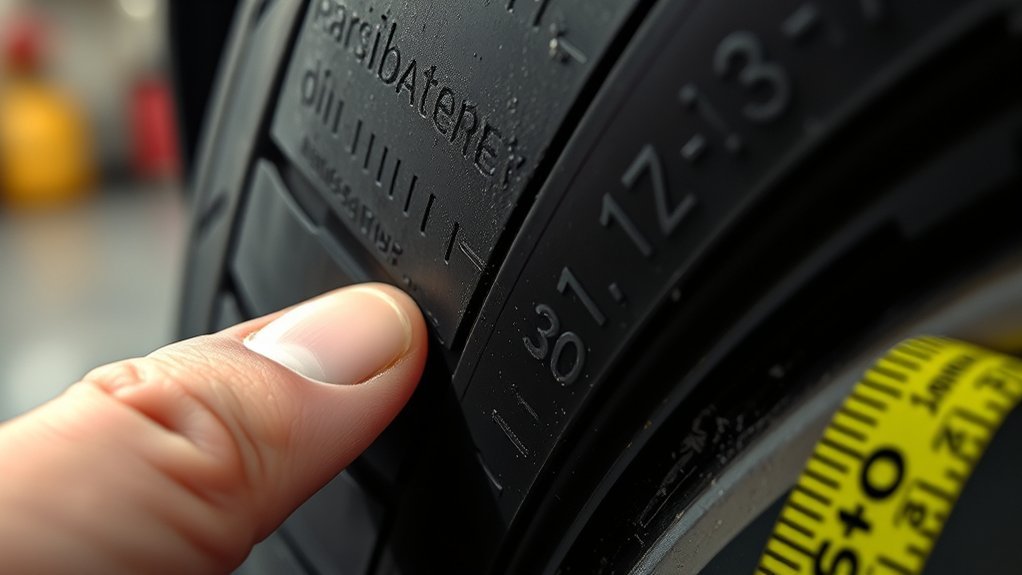
Look on the outer sidewall for a raised code that looks like P225/70R16 91T, 225/45R17 94W, or LT265/70R17. This code tells you the tire type, width, sidewall ratio, construction, rim diameter, load index, and speed rating.
A common passenger-tire code breaks down like this:
| Code Part | Example | What It Means |
|---|---|---|
| P | P225/70R16 | Passenger vehicle tire. LT means light truck; T can mean temporary spare. |
| 225 | 225 mm | Nominal section width from sidewall to sidewall. |
| 70 | 70% | Aspect ratio. The sidewall height is 70% of the tire width. |
| R | Radial | Construction type. Most modern passenger tires are radial. |
| 16 | 16 inches | Wheel or rim diameter the tire fits. |
| 91T | 91 load, T speed | Service description: load index plus speed rating. |
Before buying replacements, compare the sidewall size with the Tire and Loading Information Label on the driver’s door edge or door jamb, or with your owner’s manual. NHTSA recommends using the vehicle placard or owner’s manual to confirm the correct tire size for your car or truck.
Warning: Do not rely on diameter alone for fitment. A tire must also match the correct rim diameter, load index, speed rating, clearance, and vehicle manufacturer specifications.
What the Tire Diameter Number Means
The “diameter” number people notice on the sidewall is usually the rim diameter. In P225/70R16, the 16 means the tire fits a 16-inch wheel. It does not mean the tire is 16 inches tall.
The full outside diameter is larger because it includes the sidewall above the rim and the sidewall below the rim. That is why a P225/70R16 tire has a nominal overall diameter of about 28.4 inches, not 16 inches.
The rim number tells you wheel fit. The full tire diameter comes from two sidewalls plus that wheel diameter.
How to Read Tire Size Markings
Tire size markings tell you the width, aspect ratio, construction type, and rim diameter. Read them from left to right, then calculate overall tire diameter only after all units match.
| Marking | Meaning | Unit |
|---|---|---|
| 225 | Tire width | Millimeters |
| 70 | Aspect ratio | Percent of width |
| R | Radial construction | Construction code |
| 16 | Rim diameter | Inches |
How to Calculate Overall Tire Diameter
Use this formula for metric tire sizes such as 225/70R16:
Overall diameter in inches = ((tire width × aspect ratio ÷ 100) × 2 ÷ 25.4) + rim diameter
For the same formula in millimeters:
Overall diameter in millimeters = ((tire width × aspect ratio ÷ 100) × 2) + (rim diameter × 25.4)
Example for P225/70R16:
- Sidewall height: 225 × 0.70 = 157.5 mm.
- Convert sidewall height to inches: 157.5 ÷ 25.4 = 6.20 inches.
- Double the sidewall: 6.20 × 2 = 12.40 inches.
- Add rim diameter: 12.40 + 16 = 28.4 inches overall diameter.
Example for 225/45R17:
- Sidewall height: 225 × 0.45 = 101.25 mm.
- Convert to inches: 101.25 ÷ 25.4 = 3.99 inches.
- Double it: 3.99 × 2 = 7.98 inches.
- Add 17-inch rim diameter: 7.98 + 17 = about 25.0 inches overall diameter.
Note: Calculated diameter is nominal. Actual tire dimensions can vary by brand, tread design, measuring rim width, inflation, load, and wear. Use the tire manufacturer’s published specs when fitment is tight.
How Width and Aspect Ratio Affect Diameter
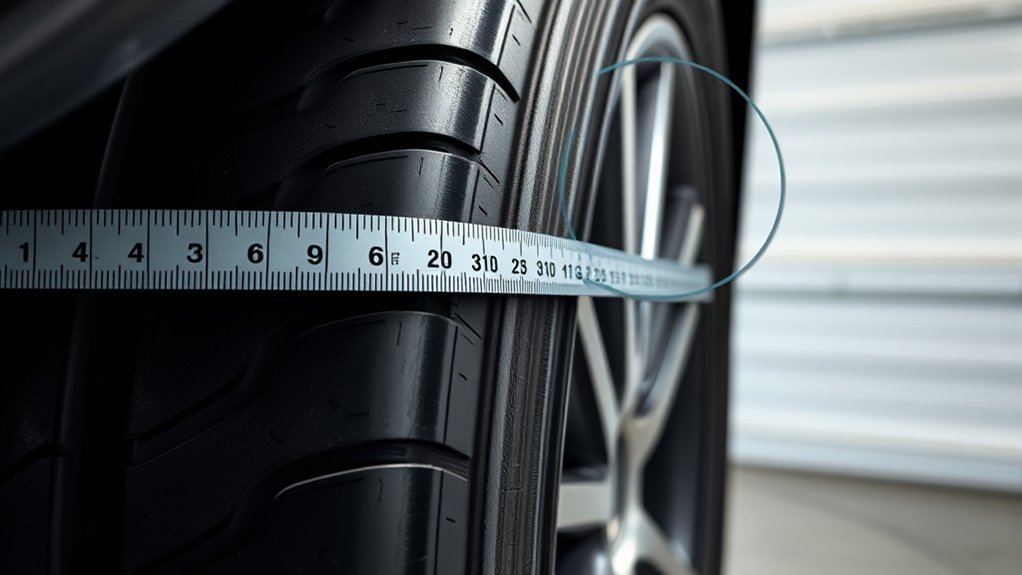
Width and aspect ratio directly shape overall tire diameter because they determine sidewall height. The sidewall sits on both sides of the wheel, so even a small change in sidewall height affects total diameter twice.
A wider tire can become taller if the aspect ratio stays the same. For example, a 255/70R16 has a taller sidewall than a 225/70R16 because 70% of 255 mm is more than 70% of 225 mm. But a wider tire with a lower aspect ratio can be similar in diameter to a narrower tire with a taller sidewall.
Pro Tip: When comparing two sizes, compare overall diameter, section width, load index, speed rating, and rim-width range. A tire that matches diameter may still rub or fail the load requirement.
Why Rim Diameter Matters for Fitment
Rim diameter is non-negotiable. A tire marked R16 must be mounted on a 16-inch wheel. A 16-inch tire cannot safely seat on a 15-inch or 17-inch wheel.
Rim diameter also affects ride and handling. Larger wheels often use lower-profile tires to keep overall diameter close to stock. That can improve steering response, but it can also reduce ride comfort and increase the risk of wheel damage on potholes.
Changing overall diameter can affect:
- Speedometer and odometer accuracy.
- ABS, traction-control, and stability-control behavior.
- Fender, suspension, and brake clearance.
- Effective gearing and acceleration.
- Ride comfort and steering feel.
For daily driving, the safest replacement is the tire size listed on the vehicle placard or an alternate size approved by the vehicle or tire manufacturer.
Metric, LT, and Flotation Tire Sizes
Metric, LT, and flotation tires use different sizing formats, so read the code before calculating diameter.
| Type | Example | How to Read It |
|---|---|---|
| P-metric | P225/70R16 | Passenger tire, 225 mm wide, 70% aspect ratio, radial, 16-inch rim. |
| Metric without prefix | 225/45R17 | Common passenger format without a P prefix. |
| LT-metric | LT265/70R17 | Light-truck tire. Check load range, load index, and inflation requirements carefully. |
| Flotation | 33×12.50R15 | About 33 inches overall diameter, 12.50 inches wide, radial, 15-inch rim. |
Flotation sizes are easier to read because the first number is already the nominal overall tire diameter in inches. Metric sizes require calculation.
Check Load Index and Speed Rating Next
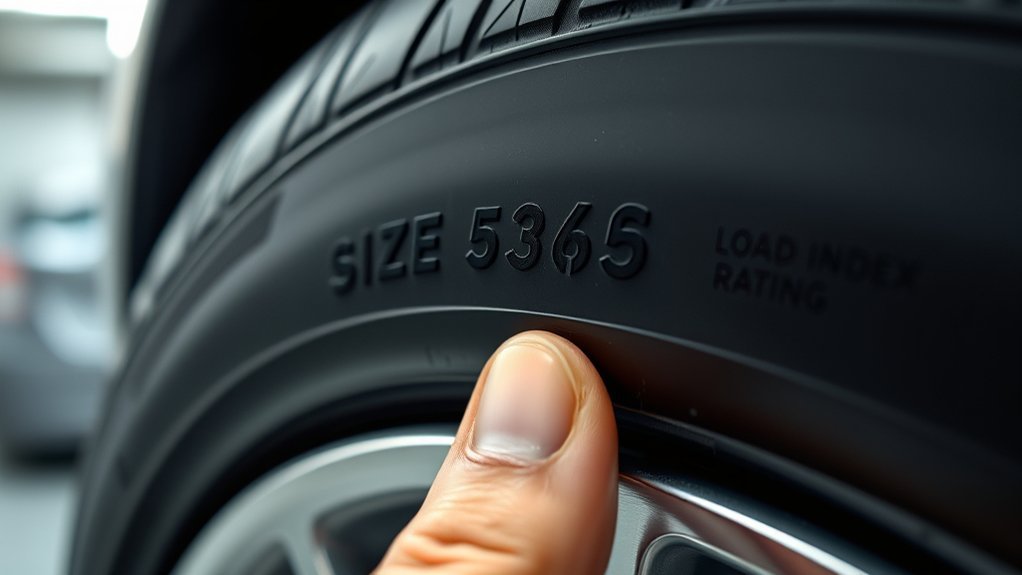
After rim diameter, look for the service description, such as 91T, 94W, or 104/101S. The number is the load index. The letter is the speed rating. Michelin explains that load and speed ratings define operating limits and should meet or exceed the vehicle manufacturer’s specifications.
[Products Worth Considering]

The SAFELIFE dial tire tread depth gauge measures tread depth in 1/32 inch increments with clear, easy-to-read 2-inch dial face. Color zones using a traffic light system help you quickly judge whether tread is low, marginal, or ample for safer driving. Built with a durable zinc cast body and a metal detect probe for precise, comfortable use across cars, motorcycles, trucks, and buses.

Monitor tire tread wear with a smart, color-coded depth gauge that shows clear condition ranges at a glance. The bar is range marked for fast, easy readings, helping you maintain safer traction and performance. Each gauge is portable with a pocket clip, and the set includes 20 units for daily use and sharing.

Measure tyre tread depth precisely with a digital gauge that reads in both MM and inches, helping you monitor safe driving conditions. The large LCD screen is easy to operate, and the compact tool fits for cars, trucks, and motorcycles. It provides high accuracy with a 0-25.4mm range and includes a 1-year warranty for added peace of mind.
Read Load Index
The load index tells you the maximum weight one tire can carry when properly inflated. For example, a load index of 91 equals 1,356 pounds or 615 kg per tire, according to standard load-index tables.
Do not assume a higher load index increases your vehicle’s payload. The vehicle’s axle ratings, suspension, brakes, and manufacturer limits still control how much the vehicle can safely carry.
Decode Speed Rating
The speed rating letter tells you the maximum speed the tire is designed to sustain under specified test conditions and load. Common examples include:
| Speed Rating | Maximum Speed |
|---|---|
| T | 118 mph |
| H | 130 mph |
| V | 149 mph |
| W | 168 mph |
| Y | 186 mph |
A speed rating is not permission to drive at that speed. It is a tire capability rating under controlled conditions. Always follow posted speed limits and your vehicle manufacturer’s tire requirements.
Match Ratings to Vehicle
Match the load index and speed rating to the original-equipment requirements on the door placard or in the owner’s manual. Going higher is often acceptable, but going lower can affect handling, heat resistance, load capacity, and safety. Winter tires may have special rules in some regions, so follow local regulations and the tire manufacturer’s guidance.
Use the DOT Code to Check Tire Age
Look for the DOT Tire Identification Number, often called the DOT code or TIN. The full code may appear on only one side of the tire, so check both sidewalls if you do not see the date.
For tires made in 2000 or later, the last four digits show the week and year of manufacture. For example:
- 2524 = 25th week of 2024.
- 0319 = 3rd week of 2019.
- 4714 = 47th week of 2014.
NHTSA says some vehicle and tire manufacturers recommend replacing tires that are six to 10 years old, regardless of treadwear. USTMA also notes that service life depends on storage, use, temperature, load, inflation, road hazards, and maintenance, so calendar age alone is not the only factor.
Locate the DOT Code
Find the letters DOT on the tire sidewall, then follow the letters and numbers to the date code at the end. If the date is facing inward, you may need to check the inner sidewall with a flashlight.
Decode Week and Year
Read the first two date digits as the production week and the last two as the year. A code ending in 2524 means the tire was made in week 25 of 2024.
Check Tire Age Safely
Inspect older tires more often, especially full-size spares, low-mileage vehicles, trailers, RVs, and vehicles stored in heat or sunlight. Look for cracks, hardening, bulges, vibration, pressure loss, or uneven wear. If any of those signs appear, have the tire inspected by a qualified tire professional.
Note: When buying “new” tires, check the DOT date and ask how the tire was stored. A recent date is helpful, but correct storage and manufacturer guidance matter too.
Spot Winter and Special Tire Symbols
Sidewall symbols tell you whether a tire is built for special use. The most common markings include:
- M+S, M/S, or M&S: Mud and Snow marking. This is based on design criteria and does not always mean verified severe-snow performance.
- 3PMSF: Three-Peak Mountain Snowflake. This indicates the tire has met standardized snow-traction testing for severe-snow service.
- XL, HL, or Reinforced: Higher-load construction than a standard tire of the same size.
- OE markings: Vehicle-specific original-equipment markings, such as codes used by some Porsche, Mercedes-Benz, BMW, Audi, Tesla, and other vehicle applications.
- Inside/Outside or Rotation arrows: Mounting direction for asymmetric or directional tread patterns.
Michelin explains that 3PMSF indicates verified winter performance, while M+S is based on manufacturer criteria. If you drive in severe winter conditions, look for the 3PMSF symbol rather than relying on M+S alone.
[Products Worth Considering]

The Milton S-693 straight foot dual head air chuck is designed for accurate tire pressure checks and quick, secure valve-core engagement with lock-on threads on both ends. With a 1/4" FNPT connection and a maximum 150 PSI rating, it’s built for use on inner duals and common vehicle tires, including trucks and RVs.

This tire inflator with pressure gauge delivers long-lasting performance with a durable rubber-protected gauge and sturdy build. The longer hose and 360 swivel air chuck help you seal the valve securely and keep your hands free while measuring, inflating, or deflating. It’s battery-free for reliable use and provides ±2 PSI accuracy in the mid-range for most typical tires, with universal compatibility for 1/4 NPT compressor outputs.

This metal-free wheel and tire cleaning brush uses dense, fluffy synthetic wool to safely clean rims, spokes, fenders, and engine areas without worrying about damaging surfaces. Its flexible, comfortable design helps you reach detailed areas while maintaining durability, and the extra absorbent fibers work well with wheel spray cleaners for faster cleanup. Reusable and washable performance helps prevent grime and build-up for cleaner vehicles and easier maintenance at home.
When to Replace Tires
Replace tires when tread depth reaches 2/32 inch or 1.6 mm, when treadwear indicators are flush with the tread, or when the tire has damage that affects safety. NHTSA says tires are not safe and should be replaced at 2/32 inch tread depth.
Use these checks:
- Tread depth: Use a tread-depth gauge or the penny test. If the top of Lincoln’s head is visible, replace the tire.
- Pressure: Check all tires, including the spare, at least monthly when cold.
- Damage: Look for cuts, punctures, cracks, bulges, bubbles, exposed cords, or embedded objects.
- Wear pattern: Feathering, cupping, shoulder wear, or one-sided wear can point to alignment, balance, suspension, or pressure problems.
- Age: Check the DOT/TIN date and follow the vehicle and tire manufacturer’s age guidance.
- Performance changes: Vibration, noise, pulling, repeated air loss, or harshness should be inspected by a tire professional.
NHTSA reported 511 motor vehicle traffic fatalities in tire-related crashes in 2024, making tire pressure, tread, age, and fitment checks real safety steps—not just maintenance chores.
[Products Worth Considering]

Get quick, reliable tire readings with a backlit digital gauge that seals easily to valve stems for accurate 0.1 increments. Switch units on demand and check pressure on cars, trucks, motorcycles, and bicycles using the included Presta-to-Schrader adapter. The gauge powers with AAA batteries and automatically shuts off to help save battery life.

A concentrated tire and tube mounting compound designed to help simplify mounting rubber tires and tubes on passenger, semi truck, construction, and OTR applications. Its ultra-thick formula packs beads effectively and includes rust inhibitors to help protect against corrosion during use.

Measure tire tread depth quickly and accurately with this LUMITECO dial gauge that reads in 1/32" increments up to 14/32". The color-coded green/yellow/red zones make it easy to judge tire wear and know when replacement is needed. A rugged, compact design with a protective pouch helps keep the gauge ready for use on cars, trucks, motorcycles, and more.
Frequently Asked Questions
How do you read tire size from the sidewall?
Read the code from left to right. In P225/70R16 91T, P means passenger tire, 225 is width in millimeters, 70 is aspect ratio, R means radial, 16 is rim diameter in inches, 91 is load index, and T is speed rating.
How do you calculate tire diameter?
For metric sizes, use: ((width × aspect ratio ÷ 100) × 2 ÷ 25.4) + rim diameter. For P225/70R16, the result is about 28.4 inches overall diameter.
Is the last number on a tire the tire diameter?
No. The last number in a common metric tire size is the wheel or rim diameter. In P225/70R16, the 16 means the tire fits a 16-inch wheel. The tire’s outside diameter must be calculated from the sidewall height plus rim diameter.
What is the 7 7 rule for tires?
The “7 7 rule” is not the main standard to follow. A safer approach is to check tire pressure and condition monthly, inspect tread depth regularly, read the DOT/TIN date, and follow the vehicle or tire manufacturer’s age guidance. Some manufacturers recommend replacement at six to 10 years regardless of treadwear.
Are tires measured in seconds?
No. Tires are measured by physical size, load capacity, speed rating, construction, tread depth, pressure, and age. A sidewall code gives width, aspect ratio, rim diameter, load index, speed rating, and DOT/TIN manufacturing date.
Can I use a different tire diameter than stock?
Sometimes, but only after checking overall diameter, rim width, load index, speed rating, clearance, and vehicle-system effects. Larger or smaller tires can change speedometer accuracy, ABS behavior, traction control, gearing, and rubbing clearance. Use manufacturer-approved alternate sizes when possible.
Conclusion
Reading a tire sidewall is simple once you know what each number means. The rim diameter tells you wheel fit, while the full tire diameter comes from sidewall height on both sides of the wheel. Decode the size, calculate diameter with the correct unit conversion, then confirm the load index, speed rating, DOT age, tread depth, and vehicle placard before you buy or install tires.
Sources
- NHTSA TireWise — tire size, vehicle placard guidance, tread depth, pressure checks, tire aging, DOT/TIN date, and tire-related crash safety context.
- Tire Rack: How Do I Calculate Tire Dimensions? — sidewall height, rim diameter, and overall tire diameter calculation method.
- Tire Rack: What Is Load Index? — load index explanation and load-index values such as 91 = 1,356 lb / 615 kg.
- Michelin: Tire Markings Explained — sidewall markings, DOT date, treadwear indicators, M+S, 3PMSF, OE markings, and wheel diameter.
- Michelin: Tire Load Rating and Speed Rating — service description, load rating, speed rating, and replacement guidance.
- U.S. Tire Manufacturers Association: Tire Facts — tire service-life factors, DOT/TIN manufacturing date, and tire-care guidance.
