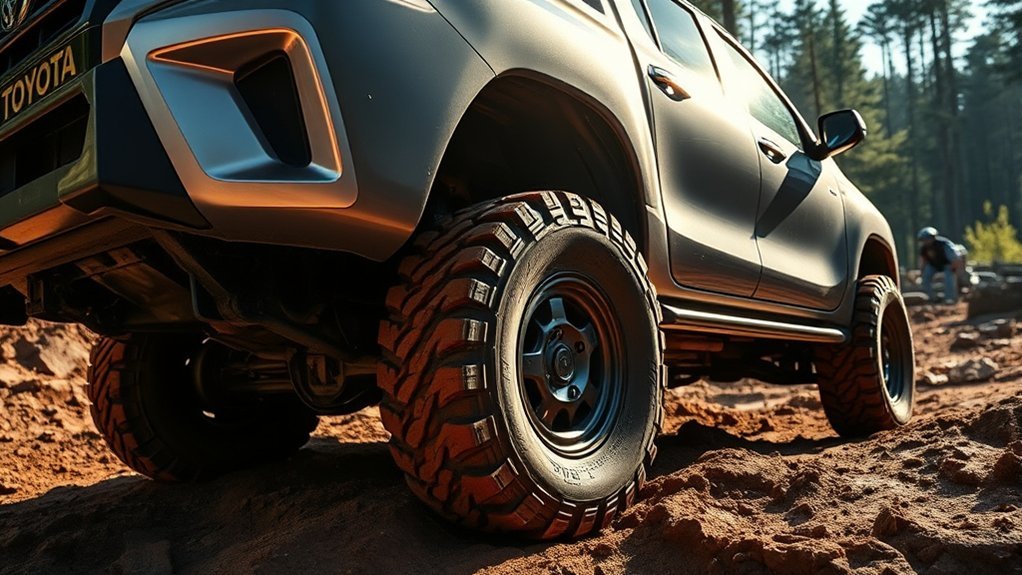
For most Toyota Hilux owners, the best off-road tires are quality all-terrain (A/T) tires in the factory size and load specification for the truck. A/T tires give the best balance for daily roads, gravel, sand, touring, and mild trails. Move to rugged-terrain (R/T) or mud-terrain (M/T) tires only when deep mud, sharp rock, ruts, or technical tracks are a regular part of your driving, and only after checking load rating, speed rating, wheel clearance, and legal fitment.
Last updated: August 18, 2026. Fitment examples were checked against Toyota Australia’s June 2026 HiLux specifications, and named tire families were checked against current manufacturer product pages.
Quick Answer
For most Toyota Hilux owners, choose an A/T tire in the factory size and required load specification. It gives the best road-to-trail balance. Choose R/T or M/T only for regular mud, rocks, ruts, or technical tracks, where the extra off-road bite is worth more noise, weight, and rolling resistance.
Key Takeaways
- Check the door-jamb tire placard for the factory tire size and recommended cold road pressure. If it does not show the required load index or speed rating, confirm those from the owner’s manual, original-equipment tire specification, or Toyota.
- Toyota Australia’s June 2026 HiLux specifications list 265/65R17 on many 17-inch 4×4 grades and 265/60R18 on 18-inch grades; other years, trims, and markets can differ.
- All-terrain tires suit mixed road and trail use; mud-terrain tires suit deeper mud and rough tracks but are louder and less refined on-road.
- Never reduce load capability below the manufacturer’s requirement, especially if you tow, carry tools, or run a canopy, drawers, or roof tent.
- Air down only for low-speed off-road driving, then reinflate before returning to sealed roads.
At a Glance
| Best Default Choice | A quality all-terrain tire in the factory size and required load specification |
| Verified 2026 Examples | Toyota Australia lists 265/65R17 on many 17-inch 4×4 HiLux grades and 265/60R18 on 18-inch grades; your placard remains the fitment reference for your truck |
| 17 vs 18 Inches | 265/65R17 has about 172 mm of sidewall versus 159 mm for 265/60R18, while their calculated overall diameters are almost identical |
| Choose M/T When | Deep mud, ruts, sharp rock, or low-speed technical terrain is a regular need, not an occasional trip |
How Do You Choose Off-Road Tires for a Toyota Hilux?
Before comparing tread patterns, open the driver’s door and read the tire placard. It is the first reference for the original tire size and recommended cold road pressure. If the placard does not show every rating you need, confirm the required load index and speed rating from the owner’s manual, original-equipment tire specification, or Toyota. Recheck fitment if your Hilux has a tray, canopy, suspension lift, aftermarket wheels, or heavy accessories.
Toyota Australia’s June 2026 new-generation HiLux specification table lists 265/65R17 on many 17-inch 4×4 grades and 265/60R18 on 18-inch grades. Treat those as verified examples, not universal Hilux sizes. Model year, trim, market, body style, wheel package, and drivetrain can change fitment, and the ninth-generation Hilux rollout also differs by market.
Use the size on your placard as the safest starting point. If you want a bigger tire, confirm wheel clearance, legal limits, speedometer error, spare-tire fitment, insurance rules, and load capability before buying. For a dedicated fitment discussion, see the maximum Toyota Hilux tire size without a lift guide.
Warning: Do not choose a tire that falls below the load capability or speed-rating requirement specified for your Hilux and local regulations. This is especially important if you tow, carry tools, fit a canopy, or drive remote tracks with extra fuel, water, and recovery gear.
Which Off-Road Tire Type Is Best for a Toyota Hilux?
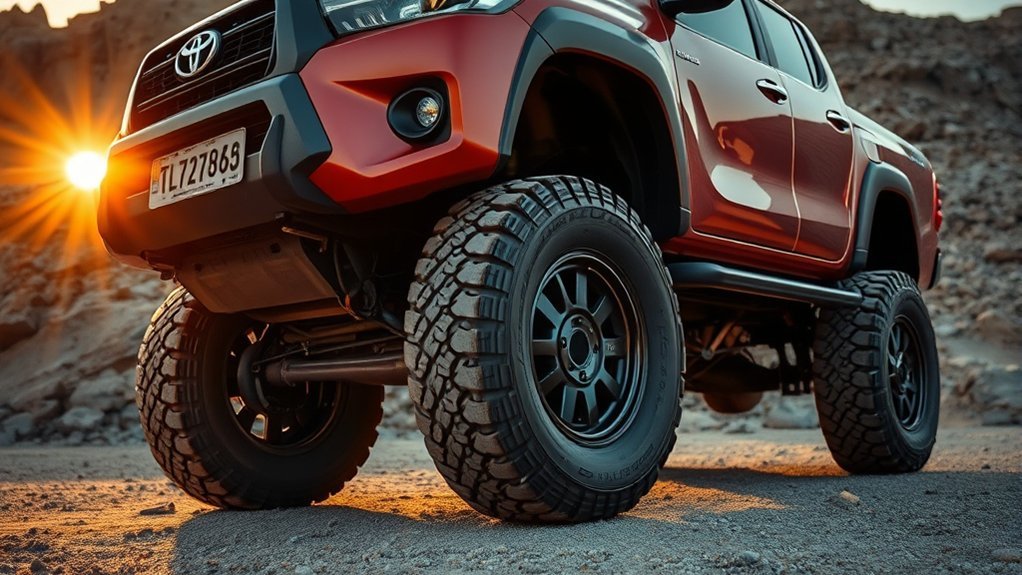
The right tire type depends on how much sealed-road driving you do and what terrain you need to cross. A daily-driven Hilux usually benefits from an A/T tire, while a truck that regularly works in deep mud or technical rock may justify a more aggressive R/T or M/T design.
| Tire Type | Best For | Main Trade-Off |
|---|---|---|
| Highway Terrain (H/T) | Mostly sealed roads, light gravel, comfort, fuel economy | Limited mud, rock, and deep-rut grip |
| All Terrain (A/T) | Daily driving, gravel, sand, farm tracks, touring, mild trails | Less self-cleaning in deep mud than M/T tires |
| Rugged Terrain (R/T) | Drivers who want a tougher look and more off-road bite than A/T tires | More noise and weight than many A/T tires |
| Mud Terrain (M/T) | Mud, ruts, rocks, low-speed technical trails, dedicated off-road use | Louder on-road, heavier, often less refined in wet-road braking and ride comfort |
For most Hilux owners, all-terrain tires are the best first upgrade because they balance sealed-road manners with gravel, sand, and trail traction. If you spend more time in mud, clay, rocky climbs, or rutted tracks, a rugged-terrain or mud-terrain tire may be worth the extra noise, weight, and fuel use.
[Products Worth Considering]

This 61-piece tire repair screw kit helps you fix punctures quickly by aligning the screw plugs and twisting clockwise, finishing the repair in seconds. The self-sealing plugs create a reliable seal for many roadside situations without needing a jack, wrench, or glue. It includes two plug sizes and a screwdriver in a portable case, making it a convenient option for cars, motorcycles, trucks, bikes, ATVs, and tractors.

Monitor tire tread wear with a smart, color-coded depth gauge that shows clear condition ranges at a glance. The bar is range marked for fast, easy readings, helping you maintain safer traction and performance. Each gauge is portable with a pocket clip, and the set includes 20 units for daily use and sharing.
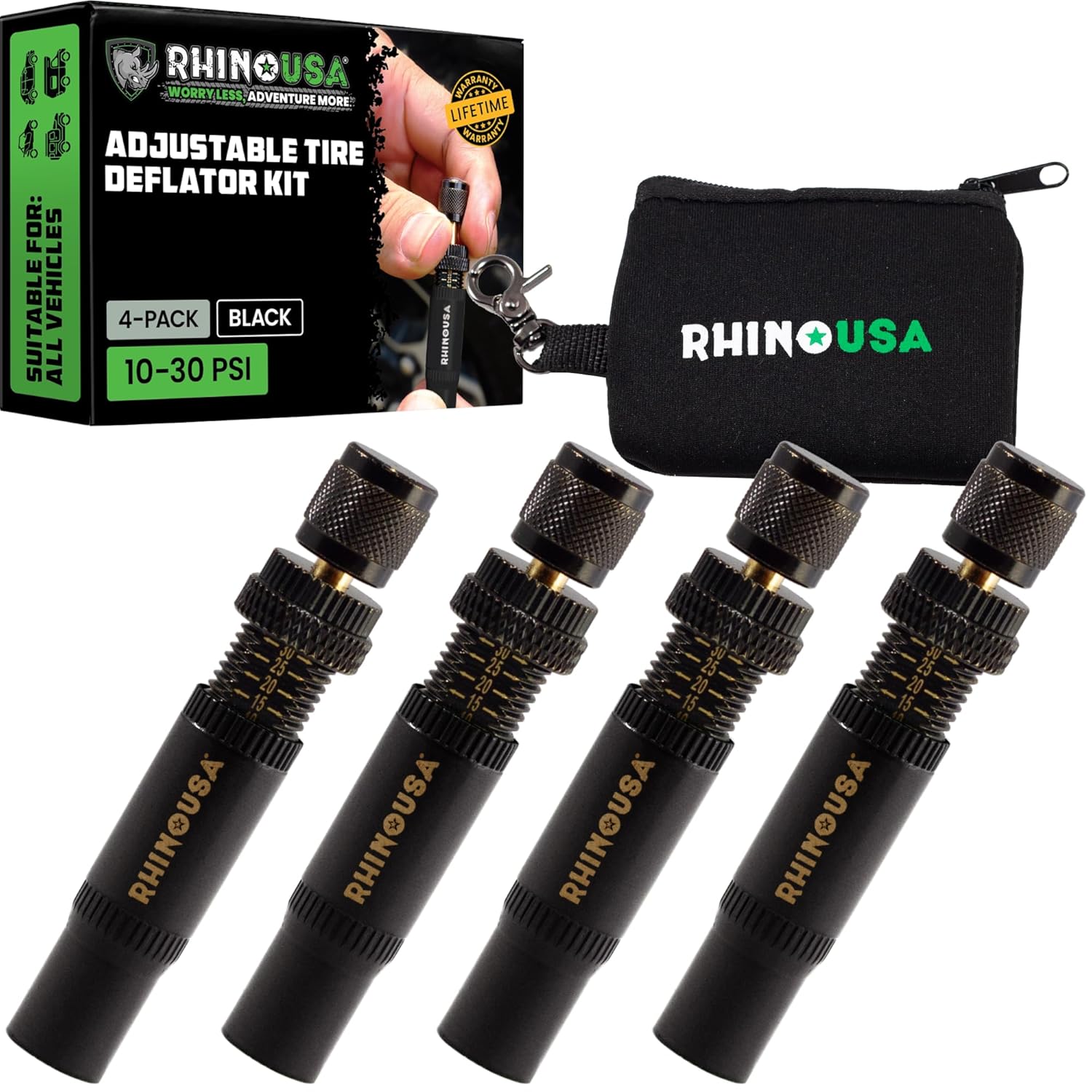
Use the Rhino USA adjustable tire deflators to air down all four tires at once by screwing one deflator onto each valve stem, letting you step away while the tires reach your preset pressure. Each deflator independently adjusts across a 10–30 PSI range with laser-etched indicators for quick setup and verification, making it ideal for beach, sand, and rocky off-road trails.
What Tire Size Is Best for Off-Roading on a Hilux?
The right tire size can improve off-road confidence, but bigger is not automatically better. A taller tire raises differential clearance by roughly half of the increase in overall tire diameter. A wider tire can change flotation and steering feel, but pressure, casing construction, vehicle load, and wheel width also affect how it behaves on sand. Oversized tires can rub guards, reduce braking performance, affect gearing, change speedometer accuracy, stress driveline parts, and make the spare harder to carry.
For the two verified Toyota Australia examples, 265/65R17 has a calculated sidewall height of about 172 mm and an overall diameter of about 776 mm. 265/60R18 has about 159 mm of sidewall and a calculated diameter of about 775 mm. That means the 17-inch setup gives about 13 mm more sidewall per side while keeping essentially the same overall diameter, which can provide more sidewall flex and impact cushioning at low off-road speeds.
| Size | Approx. Sidewall Height | Best Use |
|---|---|---|
| 265/65R17 | About 172 mm | Verified on many 17-inch Australian 4×4 grades; taller sidewall can favor rough-track cushioning |
| 265/60R18 | About 159 mm | Verified on Australian 18-inch grades; nearly the same overall diameter with less sidewall height |
Note: Tire size is only one part of fitment. Also match the required load capability and speed rating, the correct wheel diameter and width range, the intended construction type, and the on-road pressure specified for your exact Hilux.
[Products Worth Considering]

This ALL-TOP auto-stop tire deflator valve kit lets you air down off-road tires quickly without watching pressure, automatically stopping when your preset PSI is reached. Each valve is individually calibrated for reliable performance with an acceptable +/- 2 PSI tolerance. The adjustable deflator range covers 10 to 30 PSI and includes four valves plus valve caps and a zipper pouch for easy setup on trucks, SUVs, RVs, UTVs, and powersports.

These aluminum alloy tire valve stem caps with an O-ring seal help protect valve stems from corrosion while adding a clean, stylish look to your vehicle. The universal fit works across cars, trucks, motorcycles, bicycles, and more, making them an easy upgrade for everyday driving and off-road use. Installation is quick, and the included four-pack keeps all your tires dressed and protected.

Upgrade your Toyota’s wheels with durable aluminum alloy valve stem caps that help protect valve cores from corrosion and direct exposure to road grime, clay, water, and snow. Rubber rings improve sealing to help prevent air leakage and maintain stable tire pressure for safer driving. These caps are easy to install or remove without tools and add a unique, stylish look to your car.
How Do You Read Toyota Hilux Tire Specifications?
A tire marked 265/65R17 breaks down like this:
- 265 = section width in millimeters.
- 65 = aspect ratio, meaning the sidewall height is 65% of the tire width.
- R = radial construction.
- 17 = wheel diameter in inches.
After the size, you will usually see a load index and speed symbol, such as a number followed by a letter. The load index maps to a maximum load at the specified conditions, while the letter is the speed rating. Do not copy an example code from another Hilux or tire: use the rating required for your exact vehicle, tire construction, and local rules.
Also check whether the tire is a passenger construction, XL, LT, or light-truck-rated option. LT tires can provide stronger casing options for heavy loads and remote touring, but they may ride firmer and weigh more. Choose based on how your Hilux is actually used.
What Features Matter Most in Hilux Off-Road Tires?
Focus on four things: tread pattern, casing strength, sidewall protection, and compound. The best combination is the one that handles your usual terrain without adding more highway noise, weight, or ride stiffness than you need.
[Products Worth Considering]
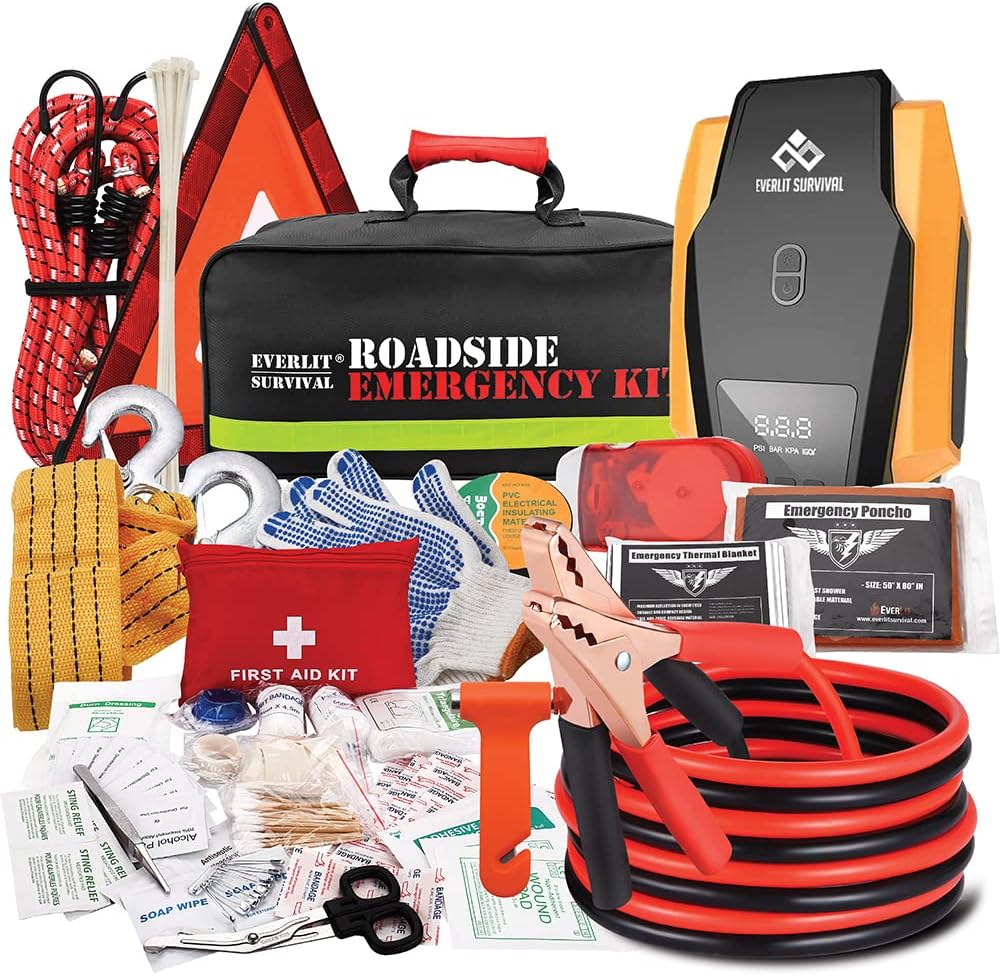
The Everlit Road Guardian emergency kit is designed for roadside breakdowns, combining essential safety gear and roadside tools in one compact bag. It includes a digital 12V auto tire inflator with preset and auto shutoff, plus 12-foot 8-gauge jumper cables to get you moving again. You also get a full 108-piece first aid kit, reflective warning tools, safety gloves, and emergency convenience items for safer travel.

Keep your tires properly inflated with this analog VONDIOR tire pressure gauge, designed for fast, easy readings without batteries. The swiveling, two-axis hose and large glow dial help you measure at any tire angle with instant visibility. Built with a protective rubber shield, it supports durable, low-maintenance use for cars and trucks.

This car emergency kit keeps essential roadside tools organized in a durable, portable bag so you can respond quickly during common driving emergencies. It includes battery jumper cables, a bright LED headlight, first aid supplies, a tire pressure gauge, and safety essentials like gloves and an emergency poncho. Designed for trunk or storage use, it helps you be prepared for dead batteries, minor malfunctions, and unexpected roadside issues.
Tread Patterns Importance
The tread pattern controls how the tire bites, clears mud, grips gravel, and behaves on sealed roads. Deeper and more open tread blocks usually give stronger off-road traction, especially in mud and loose surfaces. The downside is more road noise, more vibration, and sometimes reduced wet-road refinement.
For mixed driving, an A/T tread with strong shoulder blocks and good siping is usually enough. For mud, choose a tire with large voids that can self-clean. For rocks, look for tread and sidewall protection that helps resist chipping, tearing, and punctures.
Sidewall Durability Factors
Rocky tracks, ruts, sticks, shale, and corrugations can damage more than the tread. A reinforced casing and protected sidewall can improve resistance to cuts and impacts, but tougher light-truck constructions can also add weight and make the ride firmer.
| Feature | Why It Matters |
|---|---|
| Sidewall/Casing Reinforcement | Can improve resistance to cuts and impacts from rocks, roots, and trail debris. |
| Aspect Ratio | A taller sidewall can improve cushioning and low-speed flexibility off-road. |
| Shoulder Lugs | Add bite in ruts, mud, and loose side slopes. |
| Cut-Resistant Compound | Helps reduce chipping and tearing on gravel and sharp rock. |
| Regular Inspection | Finds cuts, bulges, nails, missing lugs, and uneven wear before they become failures. |
Which Off-Road Tires Should You Compare for a Toyota Hilux?
The best tire is the one sold in your exact Hilux size with the required load capability and speed rating. The product families below were current on manufacturer sites when this article was updated, but availability and size ranges differ by country. Treat them as a shortlist to compare with a reputable tire dealer, not as universal fitment approvals.
| Driving Style | Best Tire Type | Current Examples to Check in Your Size |
|---|---|---|
| Mostly road, occasional gravel | Mild all-terrain | Toyo Open Country A/T III, General Grabber A/TX, and similar road-friendly A/T tires |
| Touring and overlanding | Durable A/T or suitable LT construction | BFGoodrich All-Terrain T/A KO3, Toyo Open Country A/T III, Cooper Discoverer S/T MAXX |
| Mixed road, mud, work sites | Aggressive A/T or rugged-terrain | Goodyear Wrangler DuraTrac, Cooper Discoverer S/T MAXX, Toyo Open Country R/T Trail |
| Deep mud and technical tracks | Mud-terrain | Toyo Open Country M/T, BFGoodrich Mud-Terrain T/A KM3, General Grabber X3 |
If your Hilux is a daily driver, avoid buying more tire than you need. A very aggressive mud-terrain tire can add noise, rolling resistance, weight, and a firmer road feel. Compare the manufacturer’s exact size, load, speed, and construction data before choosing any named product.
Pro Tip: If you are unsure between A/T and M/T tires, choose A/T for your first set unless you already know you regularly drive deep mud or rocky low-speed trails. Most mixed-use Hilux owners benefit more from balanced traction than maximum mud aggression.
How Should You Maintain Hilux Off-Road Tires?
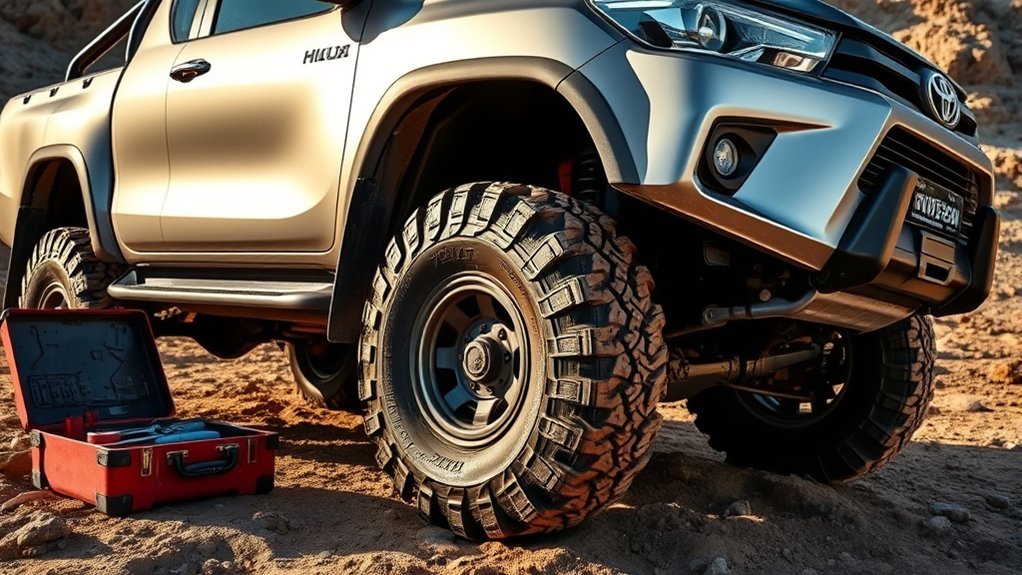
Check off-road tires regularly for pressure, damage, and uneven wear. NHTSA defines a cold tire as one that has not been driven for at least three hours and recommends checking pressure at least monthly. For sealed-road use, set cold pressure from the Hilux placard or owner’s manual, not from the maximum pressure molded on the tire sidewall.
- Check pressure cold: Use a reliable gauge at least monthly and before long trips, towing, or heavy loading.
- Inspect after every trail drive: Look for cuts, bulges, exposed cords, punctures, missing tread blocks, and stones trapped in grooves.
- Clean mud and stones: Packed mud can hide damage and make wheels vibrate at speed.
- Rotate regularly: Follow the vehicle or tire manufacturer’s rotation interval to reduce uneven wear.
- Watch tread depth: Legal minimum tread depth varies by country. In the UK, cars and light vans require at least 1.6 mm across the central three-quarters of the tread and around the full circumference, but off-road performance can drop before the legal limit.
- Recheck after impacts: If you hit a rock, pothole, or rut hard, inspect the sidewall and rim before driving fast.
Should You Air Down Off-Road?
Airing down can increase the tire’s footprint, improve comfort, and help traction on sand, corrugations, rocks, and loose climbs. There is no single safe off-road PSI for every Hilux: tire construction, wheel size, vehicle load, terrain, speed, and bead retention all change the risk. Lower pressure increases sidewall flex and the chance of rim damage or bead unseating if you drive too fast or turn sharply.
Air down only for low-speed off-road use, make conservative changes, and reinflate before returning to sealed roads. Use a portable compressor and accurate gauge. For terrain-specific principles without duplicating this selection guide, see Toyota Hilux off-road tire pressure guidance.
Warning: Never drive highway speeds on aired-down tires. Heat buildup and sidewall flex can damage the tire and increase the risk of failure.
What Off-Road Driving Tips Should New Hilux Owners Know?
Off-road adventures can be thrilling, but good tires still need good technique. Your Toyota Hilux will feel more controlled if you drive smoothly, plan your line, and avoid sudden throttle, braking, or steering inputs.
- Use low-range gearing when needed: Low range improves control on steep climbs, descents, sand, rocks, and slow technical terrain.
- Steer smoothly: Hold the wheel firmly but avoid jerky steering, especially on loose gravel or rutted tracks.
- Keep momentum, not speed: Momentum helps in sand and mud, but too much speed increases tire, rim, and suspension damage.
- Walk difficult sections first: Check depth, rocks, hidden holes, side slopes, and exit points before committing.
- Leave space: Keep distance from other vehicles so you can recover safely if someone gets stuck.
- Use recovery gear safely: Use manufacturer-approved or properly engineered rated recovery points and correctly rated recovery equipment. Never use a tow ball as a snatch-recovery point.
The right tire helps your Hilux grip, but pressure, line choice, load, and driver control often decide whether you drive through cleanly or get stuck.
What Should You Pack for a First Hilux Off-Road Trip?
Before you hit the trails, check that your tires match the trip. A short gravel road near home is very different from a remote beach run, clay track, mountain trail, or rocky overlanding route.
Essential Gear Checklist
Pack the basics before your first off-road drive:
- Air gear: Portable compressor, tire pressure gauge, valve caps, and deflator.
- Recovery equipment: Rated recovery boards, tow strap or kinetic rope, shackles, gloves, and shovel.
- Emergency supplies: First aid kit, water, torch, phone charger, paper map, and weather-appropriate clothing.
- Repair kit: Tire plug kit for tubeless tires, pliers, and a way to mark punctures.
- Communication: Tell someone your route and return time, especially if driving remote areas.
- Spare tire check: Make sure the spare matches your usable tire diameter and is inflated.
Understanding Tire Specifications
| Specification | What to Check |
|---|---|
| Tire Size | Match the placard first, such as 265/65R17 or 265/60R18 where specified. |
| Load Index | Must meet or exceed the vehicle requirement, especially for towing and payload. |
| Speed Rating | Use a rating allowed for your vehicle and local regulations. |
| Tread Depth | Check legal minimums locally and replace earlier if traction is poor. |
| Pressure | Use placard pressure on-road; adjust only temporarily for low-speed off-road terrain. |
How Do You Troubleshoot Common Hilux Off-Road Tire Problems?
| Problem | Likely Cause | What to Do |
|---|---|---|
| Rubbing on turns | Oversized tires, wrong wheel offset, mudflap or liner contact | Stop and inspect. Do not keep driving until clearance is confirmed. |
| Vibration after mud | Mud packed inside wheels or lost wheel weight | Clean wheels thoroughly and rebalance if vibration remains. |
| Sidewall cut | Sharp rock, stick, or low-pressure sidewall pinch | Fit the spare. Do not rely on a sidewall plug for normal road driving. |
| Uneven shoulder wear | Incorrect pressure, alignment issue, or aggressive cornering | Check pressure, rotate tires, and book an alignment. |
| Tire unseats from rim | Very low pressure, hard side load, or sharp steering input | Use safe recovery procedures and reinflate only if the tire and rim are undamaged. |
Frequently Asked Questions
Is the Toyota Hilux good for off-road driving?
Yes. A 4×4 Hilux can be capable off-road when it has suitable tires, correct pressures, careful line choice, and safe recovery equipment. Tire type and pressure matter because they affect the truck’s contact with loose, uneven, or soft terrain.
What tires should I put on my Hilux?
For mixed driving, start with a quality all-terrain tire in the factory size and required load specification. Choose a more aggressive R/T or M/T tire only if you regularly drive deep mud, sharp rock, ruts, or technical terrain and can accept the road-use trade-offs.
Is 265/65R17 a good off-road size for a Hilux?
It can be a strong all-round size when it is specified for your Hilux. Toyota Australia’s June 2026 specifications list 265/65R17 on many 17-inch 4×4 grades. Its calculated sidewall is about 172 mm, which gives more sidewall height than 265/60R18 while keeping almost the same overall diameter.
Are mud-terrain tires worth it on a daily-driven Hilux?
Usually only if you regularly need mud-terrain traction. M/T tires can add road noise, weight, rolling resistance, and a firmer feel. A/T tires are normally the better compromise for Hilux owners who split time between sealed roads, gravel, sand, and mild trails.
What tire pressure should I use off-road in a Hilux?
There is no universal off-road PSI for every Hilux. Tire construction, wheel size, load, terrain, speed, and bead retention all matter. Reduce pressure only for low-speed off-road use, make conservative changes, and reinflate to the specified road pressure before returning to sealed roads. See the Hilux off-road tire pressure guide for more detail.
What is the difference between 265/65R17 and 265/60R18 on a Hilux?
Their calculated overall diameters are almost identical: about 776 mm for 265/65R17 and 775 mm for 265/60R18. The main difference is sidewall height. The 17-inch size has about 172 mm of sidewall versus 159 mm for the 18-inch size, or roughly 13 mm more per side.
Can I fit bigger tires on my Toyota Hilux?
Possibly, but do not guess. Bigger tires can rub, affect braking and gearing, change speedometer accuracy, and create legal or insurance issues. Check wheel offset, suspension clearance, spare-tire fitment, load capability, and local rules before upgrading. The Hilux tire-size-without-a-lift guide covers that decision in more detail.
Conclusion
The best off-road tires for a Toyota Hilux match the truck’s approved fitment, load needs, terrain, and daily-road use. For most owners, a quality A/T tire in the correct factory size is the strongest starting point. Move to R/T or M/T only when your terrain regularly demands it and you have checked clearance, load capability, speed rating, pressure strategy, and local fitment rules.
Before buying, photograph your tire placard, note how the Hilux is normally loaded, and shortlist only tires that meet those requirements. Then compare tread type, casing, road manners, and local availability rather than choosing by appearance alone.
Sources
- Toyota Australia HiLux specifications: June 2026 new-generation HiLux wheel and tire-size reference.
- Toyota UK: All-new Hilux European debut: current ninth-generation Hilux rollout context for the UK and Europe.
- NHTSA TireWise: tire pressure, cold-pressure definition, maintenance, and vehicle-label guidance.
- Michelin tire markings explained: tire size, load index, speed rating, and sidewall-marking guidance.
- BFGoodrich All-Terrain T/A KO3: current manufacturer all-terrain product reference.
- BFGoodrich Terrain tire family: current manufacturer family reference including Mud-Terrain T/A KM3.
- Toyo Open Country A/T III: current manufacturer all-terrain product reference.
- Toyo Open Country R/T Trail: current manufacturer rugged-terrain product reference.
- Toyo Open Country M/T: current manufacturer mud-terrain product reference.
- General Grabber A/TX: current manufacturer all-terrain product reference.
- General Grabber X3: current manufacturer mud-terrain product reference.
- Cooper Discoverer S/T MAXX: current manufacturer product-family reference.
- Goodyear Wrangler DuraTrac: current manufacturer product-family reference.
- GOV.UK vehicle safety checks: UK tire tread-depth roadworthiness requirement.