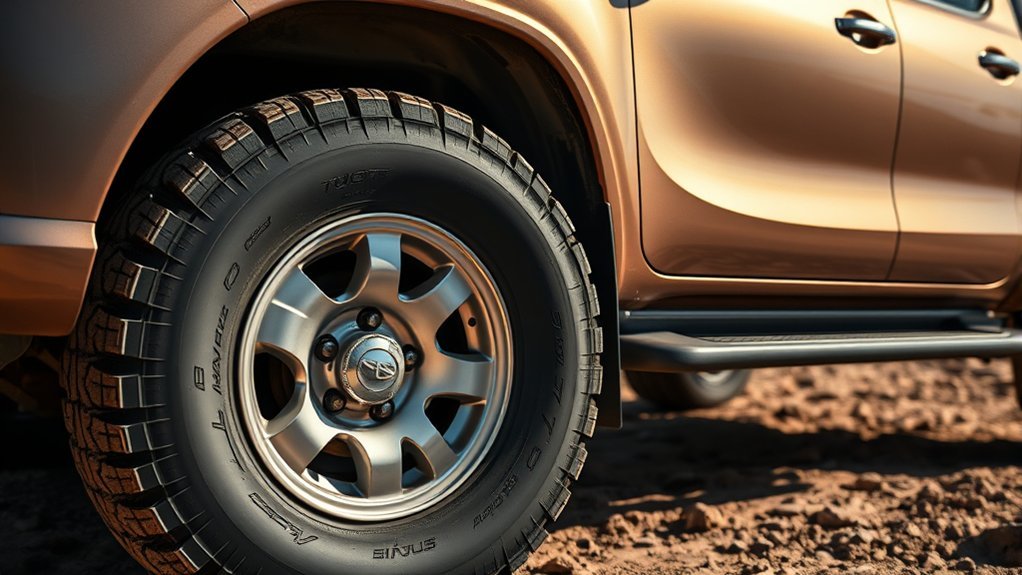
The biggest tire size you can fit on a Toyota Hilux without a lift kit depends on the Hilux generation, trim, wheel size, wheel offset, tire brand, suspension condition, and local road rules. A stock Hilux is not one universal fitment, so the safest starting point is always the tire placard on your vehicle, not a generic internet size.
Quick Answer
For many modern Toyota Hilux models, the safest no-lift choice is the factory size on the tire placard, often 265/65R17 or 265/60R18. A mild upgrade such as 265/70R17 may fit some stock Hilux setups, but it must be checked for rubbing, spare-wheel fitment, speedometer error, load rating, and legality before road use.
Key Takeaways
- There is no single “maximum Hilux tire size” that fits every model without a lift.
- Current factory examples include 265/65R17 on many 17-inch Hilux grades and 265/60R18 on many 18-inch grades.
- 265/70R17 is a common mild no-lift upgrade, but it is taller than stock and can rub depending on offset, tire shape, mud flaps, and suspension movement.
- 33-inch tires are usually not a simple no-lift fit and commonly require a lift, trimming, offset changes, and recalibration.
- Never fit a tire with a lower load index or speed rating than Toyota specifies for your Hilux.
Understanding the Impact of Tire Size on Your Toyota Hilux
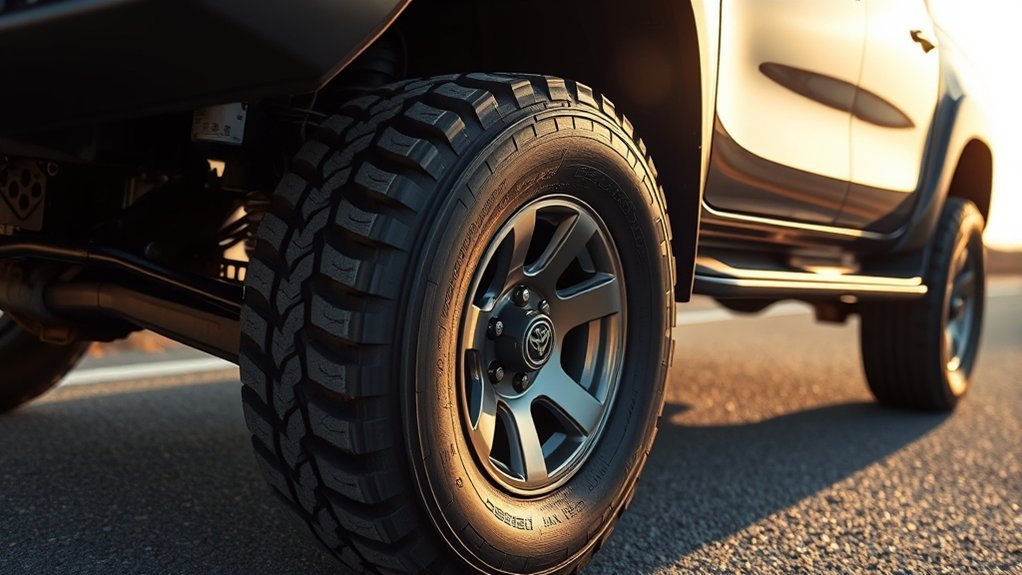
Changing tire size affects more than the way your Hilux looks. A larger tire can improve ground clearance and sidewall cushion off-road, but it can also change steering feel, braking distance, gearing, speedometer accuracy, fuel use, and the way the vehicle’s safety systems behave.
For a modern Hilux, common factory sizes include 265/65R17 and 265/60R18, depending on grade and wheel package. Toyota Australia’s current HiLux specification table lists 265/65R17 on many 17-inch wheel variants and 265/60R18 on many 18-inch wheel variants. You can check the current factory examples in the Toyota HiLux specifications, but always confirm your exact vehicle’s placard because specifications vary by market and can change.
Warning: A tire that clears while parked may still rub at full steering lock, in reverse, under braking, with a load in the tray, or when the suspension compresses off-road. Check clearance before driving at speed.
What Is the Biggest Tire Size for a Hilux Without a Lift?
For many stock Hilux models, the practical no-lift upper range is usually around a 31-inch to 32-inch overall tire diameter, with 265/70R17 being one of the most common mild upgrades from 265/65R17. However, “usually fits” is not the same as “guaranteed safe.” Tire shape, tread shoulder design, wheel offset, suspension sag, bull bars, mud flaps, and previous modifications can all change the result.
A 31×10.50 tire can be a workable size on some older Hilux setups with the correct 15-inch wheel, but it is not a universal recommendation for every Hilux. Many newer Hilux models use 17-inch or 18-inch wheels, so a 31×10.50R15 tire would not even match the wheel diameter unless the wheels were changed.
Common Hilux Tire Size Comparison
| Tire Size | Approx. Diameter | Typical Use | No-Lift Fitment Notes |
| 265/65R17 | About 30.6 in | Common factory 17-inch size | Safest if it matches your placard. |
| 265/60R18 | About 30.5 in | Common factory 18-inch size | Use when Toyota approved it for your exact wheel package. |
| 265/70R17 | About 31.6 in | Mild off-road upgrade | May fit many stock setups, but check rubbing, spare fitment, speedometer error, and legality. |
| 31×10.50 | About 31.0 in | Older 15-inch wheel setups | Not suitable for 17-inch or 18-inch wheels; requires the correct rim size and clearance check. |
| 33-inch tires | About 33.0 in | Serious off-road builds | Usually needs a lift, trimming, offset changes, and recalibration. |
[Products Worth Considering]

The SAFELIFE dial tire tread depth gauge measures tread depth in 1/32 inch increments with clear, easy-to-read 2-inch dial face. Color zones using a traffic light system help you quickly judge whether tread is low, marginal, or ample for safer driving. Built with a durable zinc cast body and a metal detect probe for precise, comfortable use across cars, motorcycles, trucks, and buses.

Monitor tire tread wear with a smart, color-coded depth gauge that shows clear condition ranges at a glance. The bar is range marked for fast, easy readings, helping you maintain safer traction and performance. Each gauge is portable with a pocket clip, and the set includes 20 units for daily use and sharing.

Keep your tires properly inflated with this analog VONDIOR tire pressure gauge, designed for fast, easy readings without batteries. The swiveling, two-axis hose and large glow dial help you measure at any tire angle with instant visibility. Built with a protective rubber shield, it supports durable, low-maintenance use for cars and trucks.
How to Determine Your Current Tire Size
Start by checking the tire placard on your Hilux, usually on the driver’s door jamb, door edge, fuel flap, or owner’s manual depending on market. This is more reliable than looking only at the tires currently fitted, because a previous owner may have already changed them.
You should also read the tire sidewall. A size such as 265/65R17 means:
- 265 — tire width in millimeters.
- 65 — sidewall height as a percentage of the width.
- R — radial construction.
- 17 — wheel diameter in inches.
The size code is only part of the decision. You must also match or exceed the original load index and speed rating. A tire with the same size but a weaker load rating may not be safe for payload, towing, or heavy off-road use.
Note: The number molded on the tire sidewall is not proof that the tire is legal or correct for your Hilux. Confirm the placard, rim size, load index, speed rating, and local modification rules before buying.
Best Tire Types for Optimal Performance in Your Hilux
The best tire type depends on where the Hilux spends most of its time. A bigger tire with the wrong tread pattern can perform worse than a factory-size tire with the right construction.
[Products Worth Considering]

Accurately measure tire tread depth with a calibrated gauge marked from 0 to 1 inch in 1/32 inch increments. The color-coded bar helps you quickly identify tread condition ranges, supporting safe driving for trucks, motorcycles, automobiles, and passenger vehicles.

This tire inflator with pressure gauge delivers long-lasting performance with a durable rubber-protected gauge and sturdy build. The longer hose and 360 swivel air chuck help you seal the valve securely and keep your hands free while measuring, inflating, or deflating. It’s battery-free for reliable use and provides ±2 PSI accuracy in the mid-range for most typical tires, with universal compatibility for 1/4 NPT compressor outputs.

The Tymate TM2 RV tire pressure monitoring system keeps you informed with a color LCD display, automatic backlight, and solar charging for dependable operation. It supports up to 10 tire positions with four pre-paired sensors, while offering multiple alarm modes for fast leak detection, pressure extremes, temperature alerts, and low-signal warnings. Built-in monitoring uses accurate readings and reliable 433.92MHz communication to help protect your RV, trailer, truck, or SUV.
Tire Performance Characteristics
Choose the tread pattern around your real driving, not just the toughest-looking option:
- Highway-terrain tires: Best for quiet road use, commuting, wet-road comfort, and fuel economy.
- All-terrain tires: A strong all-round choice for road, gravel, light mud, camping tracks, and touring.
- Mud-terrain tires: Better in deep mud and ruts, but usually noisier on-road and often less comfortable in daily use.
- Rugged-terrain tires: A middle ground between all-terrain and mud-terrain designs, useful for rough tracks without going fully aggressive.
For tire pressure, do not rely on one universal number. Use the cold pressure listed on your Hilux placard or owner’s manual. NHTSA’s TireWise safety guidance also recommends checking pressure when tires are cold, because heat from driving can give a misleading reading.
Terrain-Specific Recommendations
For mixed road and trail use, an all-terrain tire in the factory size or a carefully checked mild upgrade is usually the most balanced option. If you tow, carry tools, run a canopy, or load the tray often, prioritize load rating and heat resistance over extra width.
For regular mud, rocks, and ruts, a mud-terrain or rugged-terrain tire can help, but the heavier casing and aggressive shoulders increase the chance of rubbing when you go wider or taller. This is why one 265/70R17 tire may clear while another 265/70R17 with a squarer shoulder may touch the mud flap or body liner.
Ideal Tread Patterns
An ideal Hilux tread pattern should match the terrain:
- Daily road use: highway-terrain or mild all-terrain.
- Touring and gravel: all-terrain with a strong sidewall and suitable load rating.
- Wet, muddy trails: mud-terrain with open shoulder blocks.
- Rocky tracks: rugged-terrain or mud-terrain with reinforced sidewalls.
Pro Tip: If you want a no-lift upgrade, choose the tire model before assuming the size fits. Real-world clearance can change because different brands have different tread width, shoulder shape, and actual diameter even when the printed size is the same.
How to Check Tire Clearance Before You Drive
Before committing to a bigger size, test clearance carefully. This is especially important if you are moving from 265/65R17 to 265/70R17 or trying a wide 31-inch tire.
- Check the placard first. Confirm factory size, load index, speed rating, and cold pressure.
- Confirm the wheel size and offset. A more aggressive offset can push the tire outward and create rubbing at the guard or mud flap.
- Turn to full lock both ways. Check the front and rear of the tire, inner liner, mud flap, body mount area, and upper control arm clearance.
- Reverse at full lock slowly. Some rubbing appears only in reverse.
- Compress the suspension. Test with typical load in the tray and check for contact under compression.
- Check spare-wheel fitment. A larger tire may not fit in the factory spare location.
- Recheck after alignment. Caster and toe settings can slightly change tire position inside the guard.
- Verify speedometer and legality. Larger diameter tires can make the speedometer read lower than your real road speed.
When Should You Consider Upgrading Your Tires?
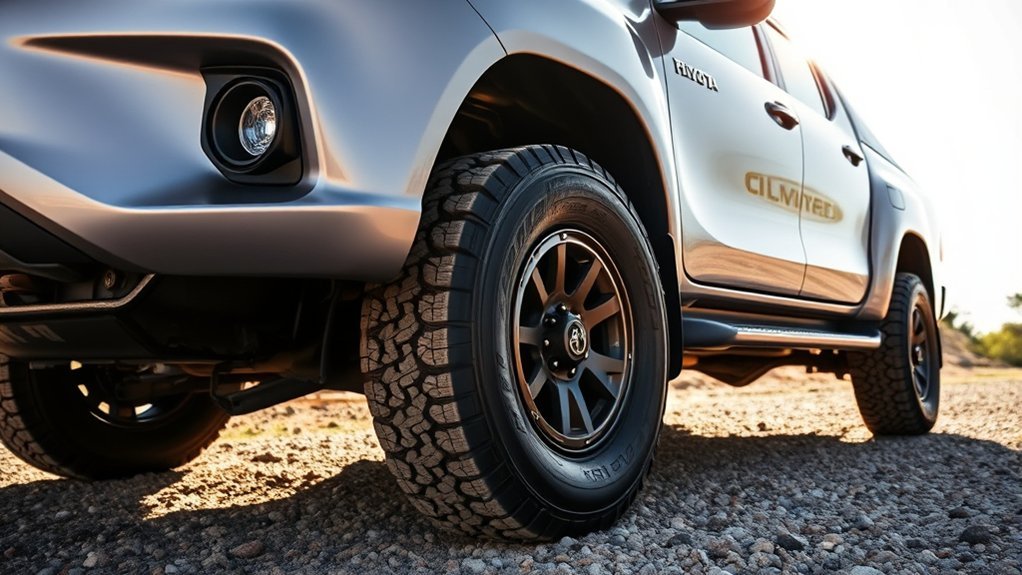
Upgrade your Hilux tires when the current set is worn, damaged, wrong for your driving conditions, or no longer suitable for your payload and towing needs. Worn tread, sidewall cuts, punctures, uneven wear, vibration, wandering, or poor wet-road grip are all reasons to inspect the tires immediately.
In the UK, cars and light vans must have at least 1.6 mm of tread across the central three-quarters of the tire and around the full circumference, according to the Highway Code. Other countries may have different legal limits, so check your local law. For off-road and wet-weather safety, many drivers replace tires before reaching the legal minimum.
Effects of Larger Tires on Vehicle Performance
Larger tires can help off-road, but they also create trade-offs. A taller tire effectively raises the gearing, which can reduce low-speed response. A heavier tire can increase braking effort, steering weight, and rolling resistance. A wider tire can improve flotation on soft surfaces but may follow road grooves more easily.
Expect these possible changes after upsizing:
- Speedometer error: a taller tire travels farther per rotation, so your indicated speed may be lower than your true speed.
- Fuel economy loss: heavier, wider, more aggressive tires can increase rolling resistance.
- Handling changes: taller sidewalls and extra weight can make steering feel slower.
- Braking changes: extra rotating mass can increase stopping distance.
- Clearance problems: rubbing can damage tires, liners, mud flaps, and bodywork.
- Drivetrain stress: large diameter changes can affect gearing, automatic transmission behavior, and drivability.
Risks of Exceeding Recommended Tire Size
Exceeding the recommended tire size can create safety and legal problems. The tire may rub the suspension, body, brake lines, inner guard, mud flap, or body mount. If the tire is too wide or the offset is wrong, it may also protrude beyond the guards, which can be illegal in some areas.
Load rating is just as important as size. The Tire Industry Association’s tire replacement guidance says replacement tires should follow the vehicle placard and should never use a lower load index than the original equipment tire listed on the placard or in the owner’s manual.
The safest tire upgrade is not the largest tire that barely fits. It is the largest tire that clears under load, keeps the correct rating, remains legal, and preserves predictable handling.
Tips for Proper Tire Maintenance
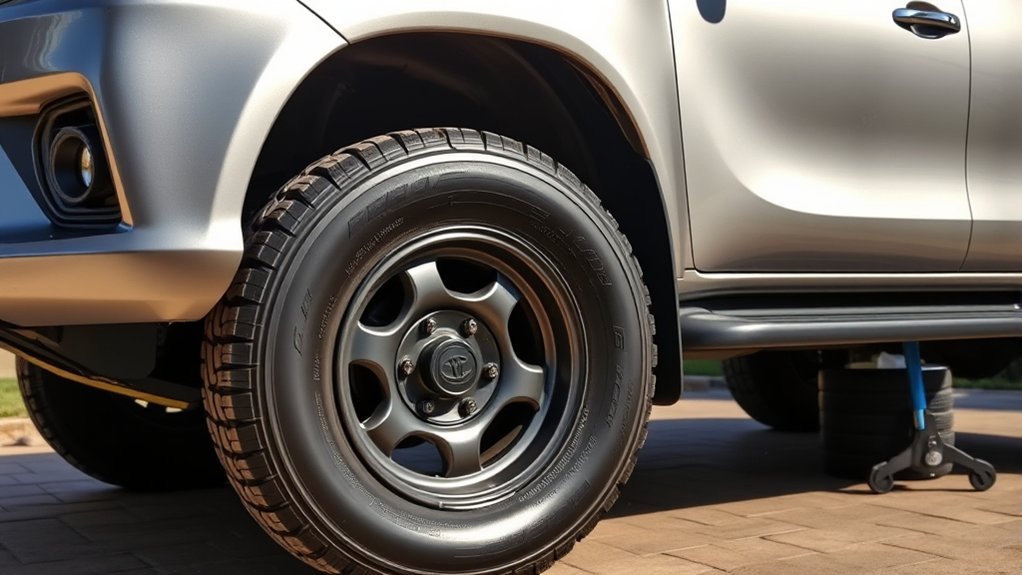
Good maintenance matters even more after fitting larger or more aggressive tires. Bigger all-terrain and mud-terrain tires are often heavier, so uneven pressure, poor alignment, or missed rotations can wear them quickly.
Regular Pressure Checks
Check tire pressure when the tires are cold, ideally before driving or after the vehicle has been parked for several hours. Use the cold pressure shown on the Hilux placard or owner’s manual, then adjust only according to Toyota’s guidance, tire manufacturer advice, or a qualified tire professional’s recommendation for your load and use.
Tread Depth Monitoring
Use a tread depth gauge and inspect all four tires, plus the spare. Look for uneven wear across the tread, feathering, cuts, bulges, exposed cords, embedded objects, and sidewall damage.
At a Glance
| Time Required | 10–20 minutes for a basic pressure, tread, and clearance check |
| Difficulty | Easy for inspection; professional help recommended for upsizing |
| Tools Needed | Tire pressure gauge, tread depth gauge, flashlight, tape measure, and your Hilux placard or owner’s manual |
| Cost | Low for inspection tools; higher if upsizing requires alignment, trimming, recalibration, or suspension work |
| Action | Frequency | Notes |
|---|---|---|
| Check Tire Pressure | Monthly and before long trips | Use the cold pressure on the placard or owner’s manual |
| Inspect for Damage | Every fuel stop or off-road trip | Look for cuts, bulges, punctures, and sidewall damage |
| Check Tread Depth | Monthly | Use a tread depth gauge and check local legal limits |
| Rotate Tires | Follow the owner’s manual or tire-shop advice | Helps even out wear, especially with aggressive tread patterns |
| Recheck Alignment | After new tires or suspension changes | Important when moving to a larger tire size |
Choosing the Right Tire Type for Your Hilux
For most Hilux owners, the best tire is not the biggest one. It is the tire that matches the vehicle’s load rating, wheel size, driving conditions, and legal requirements.
- Daily driver: stay close to the factory size and choose a highway-terrain or mild all-terrain tire.
- Touring and camping: choose an all-terrain tire with a strong casing and correct load index.
- Towing and payload: keep the correct size and load rating as the priority; do not use a lower-rated tire.
- Weekend off-road use: consider 265/70R17 only after a full clearance and legality check.
- Serious off-road build: plan for suspension, trimming, gearing, speedometer correction, and engineering approval if moving toward 33-inch tires.
Michelin’s tire-size change guidance recommends replacing tires with the same size or manufacturer-approved options and never choosing a tire with less load-carrying capacity than the one that came with the vehicle.
[Products Worth Considering]

Replace worn tires quickly with this universal 4.80/4.00-8 tire and inner tube set designed for wheelbarrows and outdoor utility carts. The ribbed tread helps reduce turf damage while the natural rubber construction supports longer service life. Compatible with 15.5-inch outer diameter, 4-inch width, and 8-inch rim diameter wheels, it uses a straight TR-13 valve stem for easy installation. For best results, inflate with a manual pump and do not exceed 25 PSI.

These aluminum alloy tire valve stem caps with an O-ring seal help protect valve stems from corrosion while adding a clean, stylish look to your vehicle. The universal fit works across cars, trucks, motorcycles, bicycles, and more, making them an easy upgrade for everyday driving and off-road use. Installation is quick, and the included four-pack keeps all your tires dressed and protected.

Measure tire tread depth quickly and accurately with this LUMITECO dial gauge that reads in 1/32" increments up to 14/32". The color-coded green/yellow/red zones make it easy to judge tire wear and know when replacement is needed. A rugged, compact design with a protective pouch helps keep the gauge ready for use on cars, trucks, motorcycles, and more.
When to Consult a Professional for Tire Changes?
Consult a tire professional before fitting a size that is not listed on your Hilux placard, especially if you are changing wheel offset, moving to a larger diameter, fitting mud-terrain tires, towing heavy loads, or driving in remote areas.
You should also get professional advice if you notice rubbing, vibration, steering pull, uneven tread wear, poor braking, reduced fuel economy, or a speedometer reading that no longer matches GPS speed. A qualified shop can check wheel alignment, rim width, load rating, offset, clearance, and whether recalibration or engineering approval is needed.
Frequently Asked Questions
Can you fit 33s on a Hilux without a lift?
Usually, 33-inch tires are not a simple no-lift fit on a Toyota Hilux. Some highly specific wheel and tire combinations may be made to work with trimming or other changes, but most stock Hilux setups need a suspension lift, offset changes, guard or mud-flap trimming, and speedometer correction before 33s are practical or legal.
What size tires can I put on my Hilux?
Use the size on your tire placard first. Many modern Hilux models use 265/65R17 or 265/60R18 depending on trim and wheel package. Mild upgrades such as 265/70R17 may fit some stock Hilux models, but you must confirm clearance, load index, speed rating, spare-wheel fitment, and local road rules.
Will 265/70R17 fit a Hilux?
265/70R17 is a common mild upgrade from 265/65R17 and may fit many Hilux setups without a lift, but it is not guaranteed. Check for rubbing at full lock, under suspension compression, in reverse, and with your normal payload. Also confirm speedometer error, legality, and spare-wheel fitment.
Is 31×10.50 the biggest Hilux tire without a lift?
Not for every Hilux. A 31×10.50 tire can suit some older 15-inch wheel setups, but many newer Hilux models use 17-inch or 18-inch wheels. The better answer is to compare overall diameter, rim size, offset, load rating, and clearance for your exact vehicle.
Do bigger tires affect the Hilux speedometer?
Yes. A taller tire travels farther with each rotation, so the speedometer may show a lower speed than the vehicle is actually traveling. This can affect legal compliance, cruise control behavior, and driver awareness, so check the error and recalibrate if needed.
What matters more: tire size or load rating?
Both matter, but load rating is critical for safety. Never fit a tire with a lower load index than Toyota specifies for your Hilux. This is especially important if you tow, carry tools, fit a canopy, drive off-road, or load the tray regularly.
Conclusion
The biggest tire size for a Toyota Hilux without a lift is not a single number. For many modern Hilux models, the safest answer is the factory placard size, commonly 265/65R17 or 265/60R18 depending on grade. A mild upgrade such as 265/70R17 can work on some stock setups, but it needs a full clearance check and must still meet load, speed, pressure, legal, and insurance requirements.
If you want the most trouble-free choice, stay with the factory size and choose the right tread pattern for your driving. If you want a bigger off-road look, treat 265/70R17 as a carefully checked upgrade, and treat 33-inch tires as a modified-build size rather than a simple no-lift swap.
Sources
- Toyota Australia HiLux specifications — current factory wheel and tire examples by grade.
- NHTSA TireWise — tire pressure, tread, maintenance, fuel economy, and safety guidance.
- Michelin guide to changing tire size or specifications — advice on manufacturer-approved replacement sizes.
- Michelin tire load rating and speed rating guide — explanation of load index, speed rating, and sidewall markings.
- Tire Industry Association tire replacement guidance — tire placard, load index, and replacement-tire guidance.
- GOV.UK Highway Code Annex 6 — tire inflation, tread-depth, and defect guidance for UK road use.