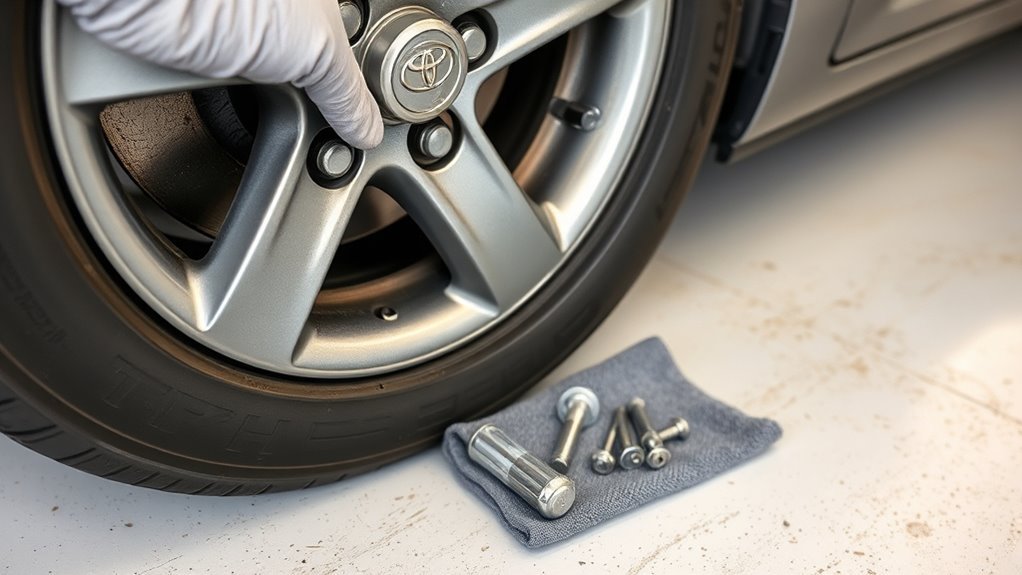
Toyota Camry TPMS sensor batteries are sealed inside the wheel sensors, so a weak battery usually means replacing the sensor, not opening it for a battery swap. Most owners can plan around a practical 5- to 10-year sensor battery window, but heat, mileage, driving pattern, sensor quality, and tire service history can make one sensor fail earlier than the others.
Quick Answer
Camry TPMS sensor batteries usually last about 5 to 10 years. When a battery gets weak, the normal fix is to replace the whole TPMS sensor, then clone, program, relearn, or register the sensor ID so your Camry recognizes it correctly.
Key Takeaways
- A failing TPMS battery often shows up as a blinking-then-solid TPMS light, missing sensor data, or one wheel reading that drops offline.
- Check tire pressure with a gauge before blaming a sensor, because TPMS is not a substitute for monthly tire-pressure checks.
- Most Camry TPMS sensors use sealed internal batteries, so replacement usually means installing a new sensor body.
- A pressure reset is not the same as registering a new sensor ID. The correct procedure depends on your Camry model year and sensor type.
At a Glance
| Time Required | 10–20 minutes for basic pressure checks and scanning; 45–90 minutes for sensor replacement, balancing, and relearn at a tire shop |
| Difficulty | Basic for checking pressure; moderate to advanced for replacement because the tire must be serviced safely |
| Tools Needed | Tire-pressure gauge, TPMS scan/programming tool, compatible sensor, tire machine, balancing equipment, valve service kit |
| Cost | Varies by sensor type, shop labor, tire dismounting, balancing, valve service parts, and relearn or programming fees |
How Long Do Camry TPMS Batteries Last?

Toyota Camry TPMS sensor batteries usually last about 5 to 10 years in normal use. That range is a planning estimate, not a guarantee. Some sensors last longer, while others fail earlier because of heat exposure, high mileage, sensor design, wheel damage, or rough tire service.
Most modern Camry TPMS systems use direct sensors that measure tire pressure from inside the wheel and send that data to the vehicle. NHTSA explains that TPMS can use sensors located in the tires or other vehicle data, depending on the system design. Many Camry models use direct pressure sensors mounted at the valve area.
When you estimate replacement timing, look at both age and symptoms. A 4-year-old sensor with stable readings may be fine. A 9-year-old sensor that drops offline, delays updates, or triggers a malfunction light deserves a TPMS scan before your next long trip.
A TPMS sensor battery is not a maintenance item you top off or recharge. Once the sealed battery weakens, the sensor body usually needs replacement and relearning.
What Drains Camry TPMS Batteries Faster?
TPMS battery life depends on age, temperature exposure, sensor design, driving time, transmission activity, and the condition of the sensor body. You cannot control every factor, but you can reduce surprise failures by checking tire pressure regularly and scanning older sensors during tire service.
Stop-And-Go Traffic
Frequent short trips and stop-and-go driving may contribute to more sensor wake cycles over several years. This does not mean every traffic light noticeably drains the battery. It simply means a Camry used for delivery-style driving, daily city congestion, or repeated short trips may show sensor aging sooner than a lightly used highway car.
The more practical takeaway is simple: if your Camry’s sensors are already older, ask the tire shop to scan them when you rotate tires or buy new tires. A scan can show whether one sensor has stopped responding before the warning light becomes a recurring problem.
Temperature Extremes
High heat can speed up electronic and battery aging, especially when the car spends years in hot parking lots or warm climates. Cold weather creates a different problem: it often lowers tire pressure and can trigger a TPMS warning even when the sensor is working.
That is why you should check pressure with a gauge before assuming the sensor failed. FMVSS No. 138 states that each tire should be checked monthly when cold and inflated to the pressure on the vehicle placard or tire inflation label. The same federal owner-manual language also says TPMS is not a substitute for proper tire maintenance.
Frequent RF Transmissions
Direct TPMS sensors send radio-frequency signals to the vehicle. Over time, every wake cycle, pressure update, and transmission uses part of the sealed battery’s capacity.
- More drive time can mean more sensor wake cycles.
- Older sensors may become less consistent before they fail completely.
- A TPMS scan tool can confirm which sensor is weak instead of guessing by tire position.
Note: A low-pressure warning is not automatically a dead sensor. Always check all four tires with a gauge before replacing TPMS parts.
Camry TPMS Light Patterns: Low Pressure vs Sensor Fault
The TPMS warning light pattern helps you decide what to check first. A solid warning light usually points to tire pressure. A blinking light that later stays on points more strongly to a TPMS malfunction, such as a dead sensor battery, an unregistered sensor ID, or an incompatible sensor.
| Light or Symptom | Likely Meaning | What to Do First |
| Solid TPMS light | One or more tires may be underinflated | Check cold pressure with a gauge and inflate to the door-placard PSI |
| Blinks for about a minute, then stays on | TPMS system malfunction | Check pressures, then scan the TPMS sensors and stored IDs |
| One wheel stops reporting | Weak sensor battery, damaged sensor, or registration issue | Scan that wheel and compare the reading with a handheld gauge |
What Are the Signs of a Failing TPMS Sensor?
A failing Camry TPMS sensor can look like a tire-pressure problem at first. The difference is that a tire-pressure issue usually matches the gauge reading, while a sensor issue often shows missing data, delayed data, or a malfunction pattern on the dash.
Blinking TPMS Warning Light
A blinking TPMS light is one of the clearest signs of a system fault. Under FMVSS No. 138, a combined TPMS malfunction telltale flashes for at least 60 seconds but no more than 90 seconds, then stays illuminated while the malfunction exists.
- Pull over safely if the light appears while driving.
- Check all four tire pressures with a gauge when the tires are cold or as soon as practical.
- If pressures are correct and the light still blinks at startup, scan the TPMS system for a failed sensor, missing ID, incorrect sensor, or communication fault.
A solid low-pressure light without the blinking sequence usually points first to low tire pressure. A blinking-then-solid sequence points more strongly to a TPMS malfunction.
Inconsistent Pressure Readings
Inconsistent pressure readings can also point to a weak sensor. You may see one wheel stop reporting, one reading lag behind the others, or a pressure value that does not match your gauge.
Do not rely on the dash display alone when the numbers seem wrong. Use a handheld gauge and compare each tire with the pressure listed on the driver-side door placard. If the gauge reading is normal but one TPMS reading keeps dropping out, the sensor may be near the end of its battery life.
Can You Replace a Camry TPMS Battery?
No, you usually cannot replace only the battery in a Toyota Camry TPMS sensor. Most OE-style sensors use a sealed internal battery, so a dead or weak battery means you replace the whole sensor assembly.
Schrader TPMS guidance on serviceable and replaceable TPMS components explains that many sensor bodies are sealed around the electronics and battery, so the battery and electronics cannot be accessed or replaced separately. That matches the normal repair path for most Camry owners: diagnose the failed sensor, replace the sensor, and complete the relearn or ID registration process.
Warning: Do not cut open a sealed TPMS sensor to replace the battery. A damaged sensor can leak at the valve stem, fail to transmit, or leave you with unreliable tire-pressure warnings.
Some aftermarket sensors are programmable or cloneable. That does not make the battery serviceable, but it can make replacement easier because a shop may clone the old sensor ID or program a new sensor for your Camry’s year and TPMS frequency.
Do You Need a TPMS Reset or Sensor ID Registration?
A Camry TPMS reset and a TPMS sensor registration are not always the same repair. A reset or initialization usually tells the vehicle what the correct tire-pressure baseline should be. Sensor ID registration tells the vehicle which sensor IDs belong to the car.
This distinction matters after sensor replacement. If you install a new sensor with a new ID, the car may not recognize it until that ID is registered with a compatible TPMS tool, scan tool, or Toyota-compatible diagnostic software. If a shop clones the old sensor ID into a programmable sensor, the vehicle may recognize it more easily because the ID did not change.
- Use a pressure reset or initialization after correcting tire pressure, rotating tires on some systems, or following the owner’s manual procedure for your model year.
- Use sensor ID registration after installing a new sensor that has a new ID code.
- Use cloning when a compatible programmable sensor copies the old sensor’s ID before installation.
Camry TPMS procedures vary by model year, market, trim, and sensor type. Always check the owner’s manual for your exact car, and ask the shop whether they can read, program, and verify the sensor before the tire goes back on the vehicle.
What to Do When One TPMS Sensor Fails?
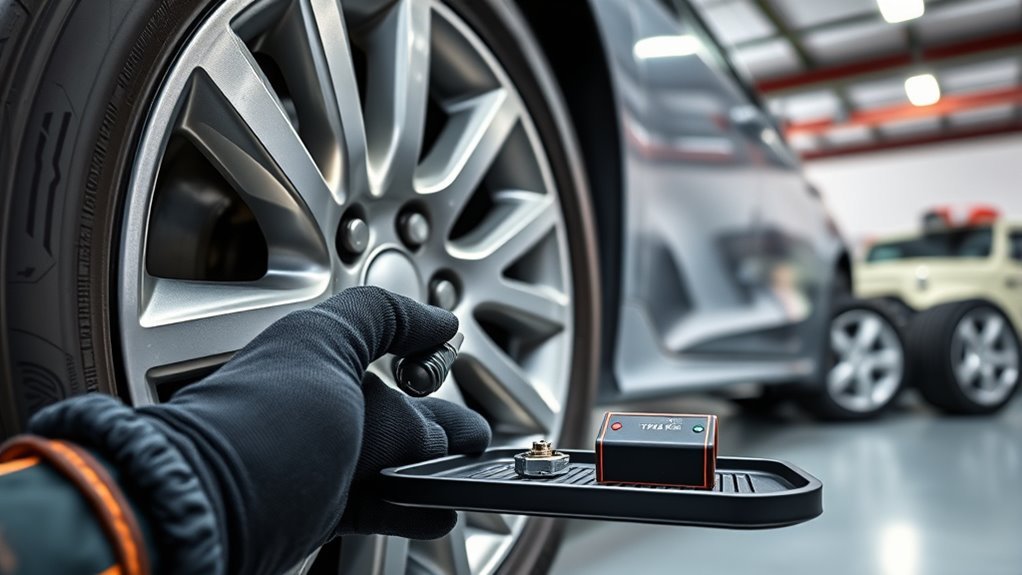
When one TPMS sensor fails, start with diagnosis instead of replacing parts at random. A TPMS scan tool can read sensor IDs, pressure data, temperature data, signal response, and fault status. That tells you whether the issue is one dead sensor, a missing registration, a damaged valve, or a tire-pressure problem.
- Check all four tire pressures with a gauge and adjust them to the placard pressure.
- Watch the dash pattern at startup: solid light suggests low pressure first; blinking then solid suggests a malfunction.
- Inspect the tire and valve stem for nails, leaks, cracks, corrosion, or damage from recent tire service.
- Scan each wheel sensor and compare signal status, IDs, and readings.
- Replace only the failed sensor if the other sensors are newer and scan normally.
- Consider replacing all four sensors if they are the same age and already near the 7- to 10-year range.
If your tires are already being replaced, that is a smart time to inspect or replace aging sensors because the tire is already off the wheel. Ask the shop to include new sealing components when needed, then verify that the system reads correctly before you leave.
[Products Worth Considering]

Replace your worn or missing TPMS sensors with pre-programmed, direct-fit sensors for compatible Ford, Lincoln, and select Mazda models. Each sensor comes ready to activate with a scan tool, helping restore accurate tire pressure monitoring and trouble-free installation. Built with a long-life CR2032 battery and tested before factory release, this set provides dependable performance with a one-year warranty.
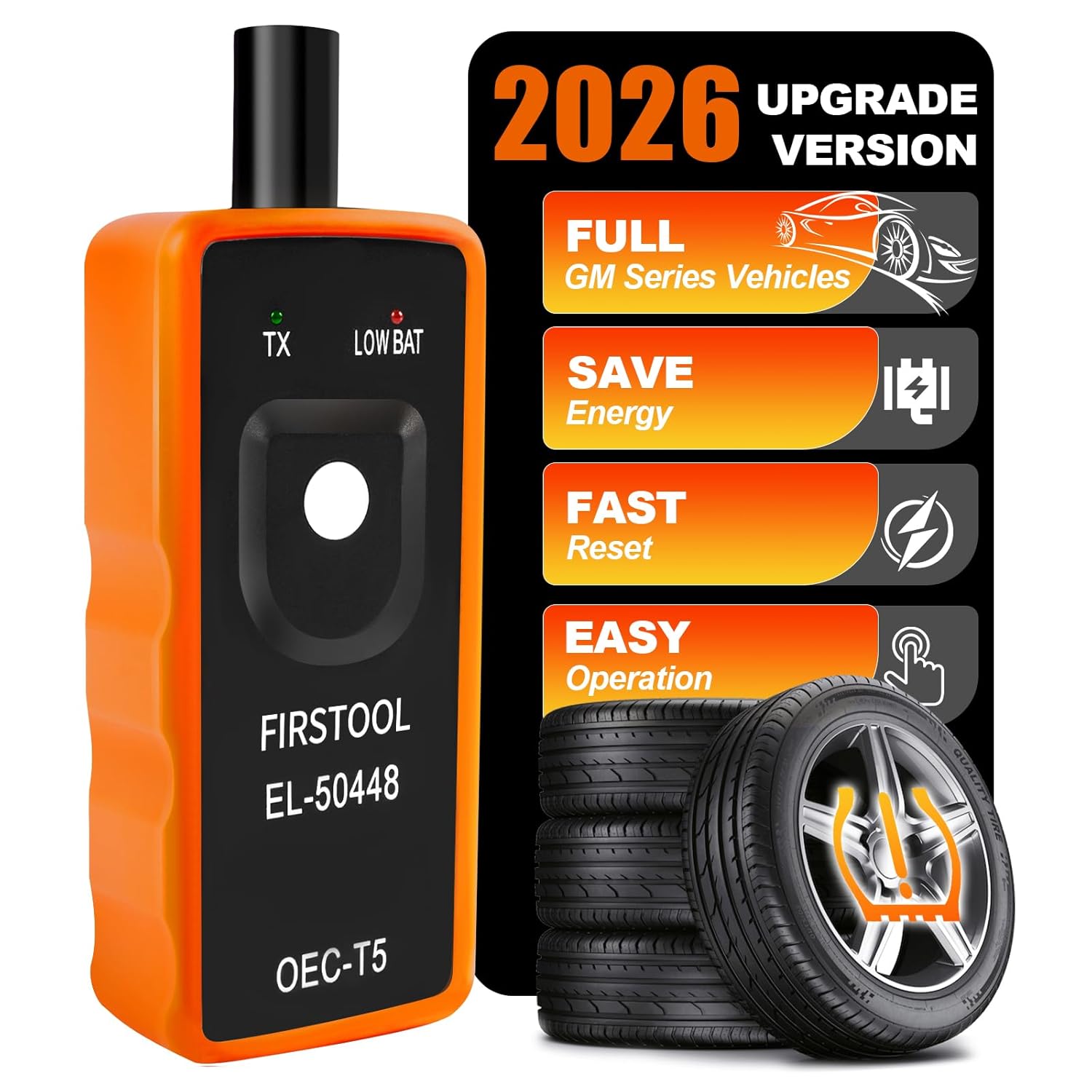
This TPMS relearn tool helps you quickly activate, match, and reset GM tire pressure sensors to keep the vehicle monitoring system working properly. It clears tire pressure alarms and dashboard warning lights after sensor replacement or tire rotation, and supports learning for common 315/433 MHz TPMS sensors. Designed for simple one-button operation, it can help you avoid unnecessary trips to repair shops.

This GM TPMS relearn and reset tool (EL-50448) helps you activate and reset OE/OEM compatible tire pressure sensors for many Chevrolet, GMC, Buick, and Cadillac vehicles. It includes a pre-installed 9V alkaline battery for ready-to-use performance and features a one-button design for quick DIY TPMS relearn. Use it to clear the TPMS warning light, set the correct dashboard tire pressure, and test sensor operation.
How to Replace and Relearn Camry TPMS Sensors
Replacing Camry TPMS sensors starts with tire service because the sensor sits inside the wheel at the valve stem. If you do not have tire-changing equipment and TPMS programming tools, let a tire shop handle the physical replacement and system relearn.
- Confirm the fault. Check cold tire pressure with a gauge, then scan all TPMS sensors.
- Choose the right sensor. Match the sensor to your Camry model year, wheel type, valve style, and required TPMS frequency.
- Confirm the programming method. Decide whether the new sensor will be cloned, programmed, or registered as a new ID.
- Dismount the tire safely. The tire bead must be broken so the sensor can be removed from the valve area.
- Install the new sensor. Use the correct valve stem, nut, grommet, washer, cap, and torque specification for that sensor design.
- Inflate and check for leaks. Set pressure to the door-placard specification, not the number printed on the tire sidewall.
- Program or relearn the system. Use a compatible TPMS scan tool, programming tool, or Toyota-compatible diagnostic software.
- Verify the repair. Make sure the TPMS light turns off and each wheel reports a reasonable pressure value.
Pro Tip: If your Camry has four original sensors of the same age and one battery has failed, ask for a quote on replacing all four while the tires are already off. It can prevent paying repeat tire labor later.
[Products Worth Considering]
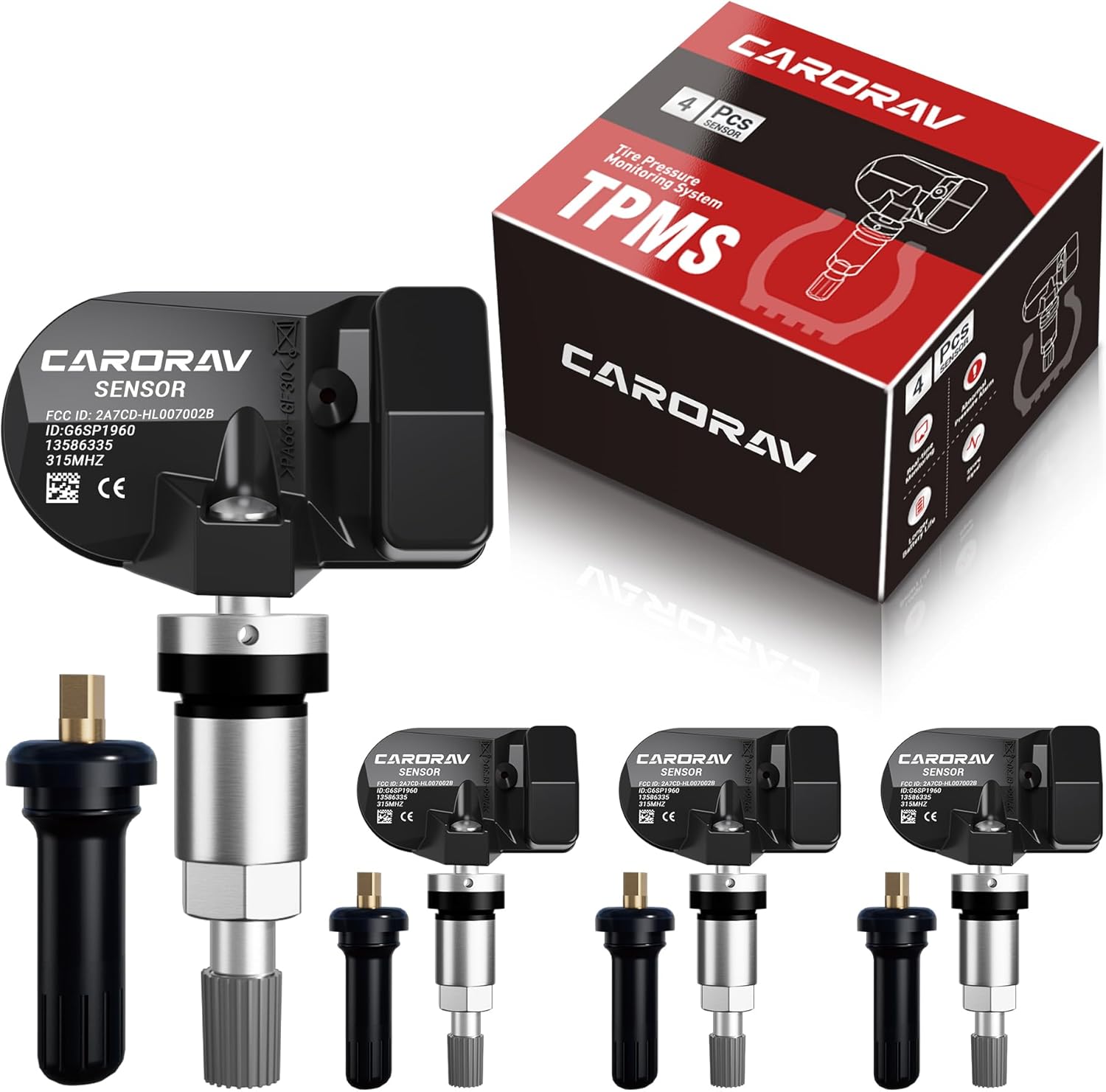
Replace worn or missing TPMS sensors with CARORAV pre-programmed GM-compatible sensors for a smoother installation experience. These 315MHz replacement sensors help monitor tire pressure in real time with long battery life, and they are designed to withstand harsh temperatures. Manual or OBDII relearn may be required to reset the system for proper recognition.

The UYYE TPMS relearn tool helps activate and relearn tire pressure monitor sensors quickly, typically in minutes. It supports TPMS learn mode resetting using a simple three-step process: enter learn mode, position the tool near the valve stem, and press the learn button. Designed for specific GM models, it streamlines sensor programming and reduces trips to dealers or tire shops.

The AICEL TPMS relearn tool helps you quickly reset or relearn tire pressure sensors after replacement, tire rotation, or resolving tire pressure alarms. It provides an activation reset function so your vehicle’s TPMS can operate optimally, saving time and money on frequent visits to an auto shop. Designed for easy use on most vehicles, it works by placing the tool near the valve stem and using the learn button.
Troubleshooting After TPMS Sensor Replacement
If the TPMS light stays on after replacement, the new sensor may not be registered correctly, the pressure may still be wrong, or the sensor may not match your Camry. Work through the basics before assuming the new part is defective.
- Recheck pressure: Set all tires to the driver-door placard pressure when cold.
- Scan the sensor IDs: Confirm the vehicle sees the new sensor and that the ID matches the programmed record.
- Check compatibility: Aftermarket sensors must match the Camry’s model year, TPMS frequency, and system requirements.
- Check the valve seal: A damaged grommet, loose nut, corroded stem, or reused service kit can cause a slow leak.
- Confirm the relearn: A pressure reset may not register a new sensor ID on every model year.
- Drive if required: Some systems need a short drive after initialization or relearn before the light clears.
- Inspect the spare only if applicable: Some vehicles monitor a spare tire, while others do not.
Programmable TPMS sensors can work well when installed correctly, but they still need the right programming and verification functions. If the tool cannot read the new sensor, fix that before reinstalling the wheel or returning the vehicle to service.
[Products Worth Considering]
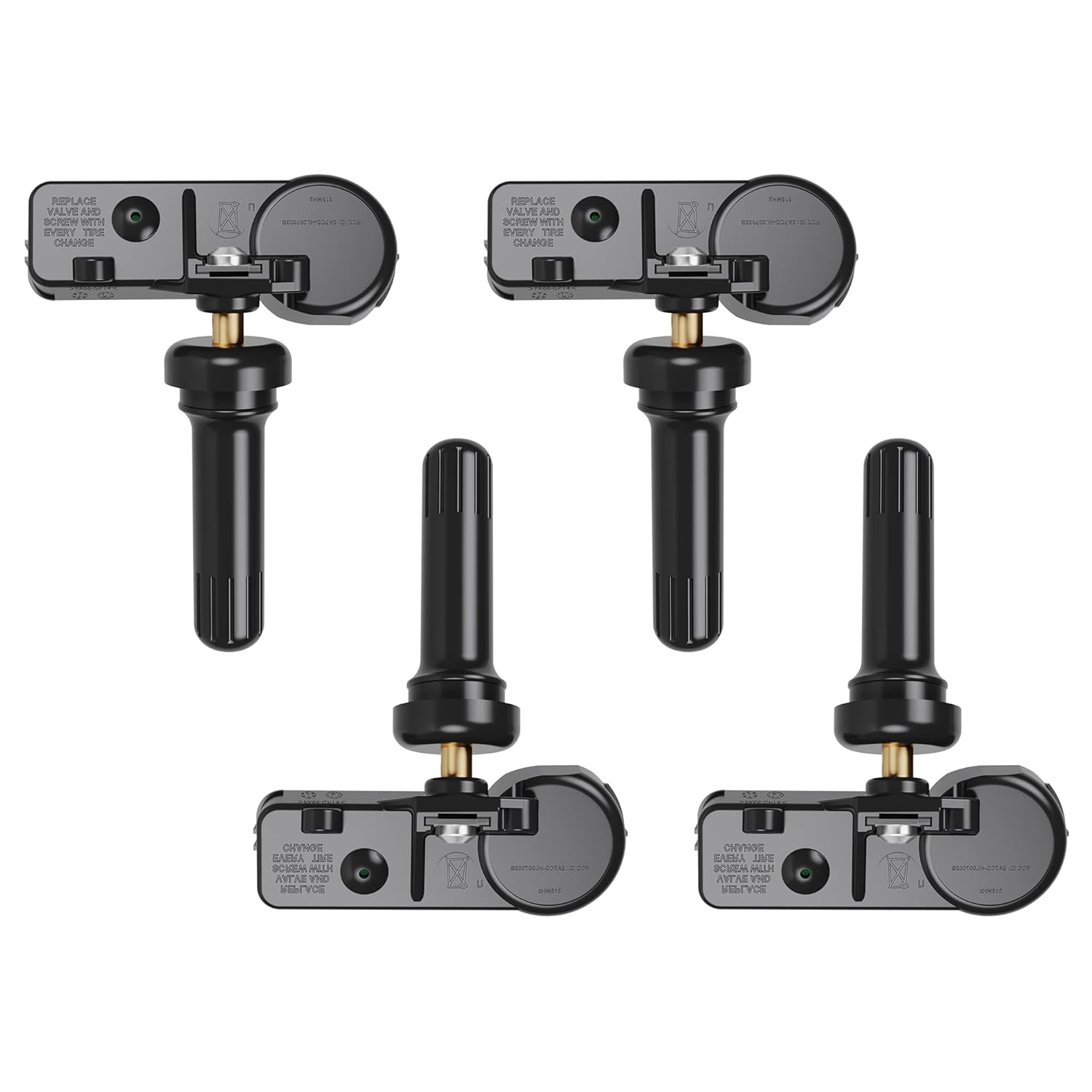
Replace worn or faulty TPMS sensors with this brand new 315MHz GM-compatible replacement set for select Chevy, GMC, Buick, Cadillac, and similar vehicles. These sensors are pre-programmed for your make/model/year and typically only require activation with a scan tool. Built for long service life with a high-temperature battery, they help maintain reliable tire pressure monitoring for safer driving.

Masoll Gen 2 external TPMS sensors are a DIY replacement set of 4 for select GM vehicles made after 2006, helping you shut off the TPMS warning light quickly. Simply screw the sensors onto the tire valves and sync to your car ECU using the included EL-50448 relearn tool. Dual-frequency 315/433 MHz design provides OEM-level performance with accurate readings and replaceable batteries for about two years.
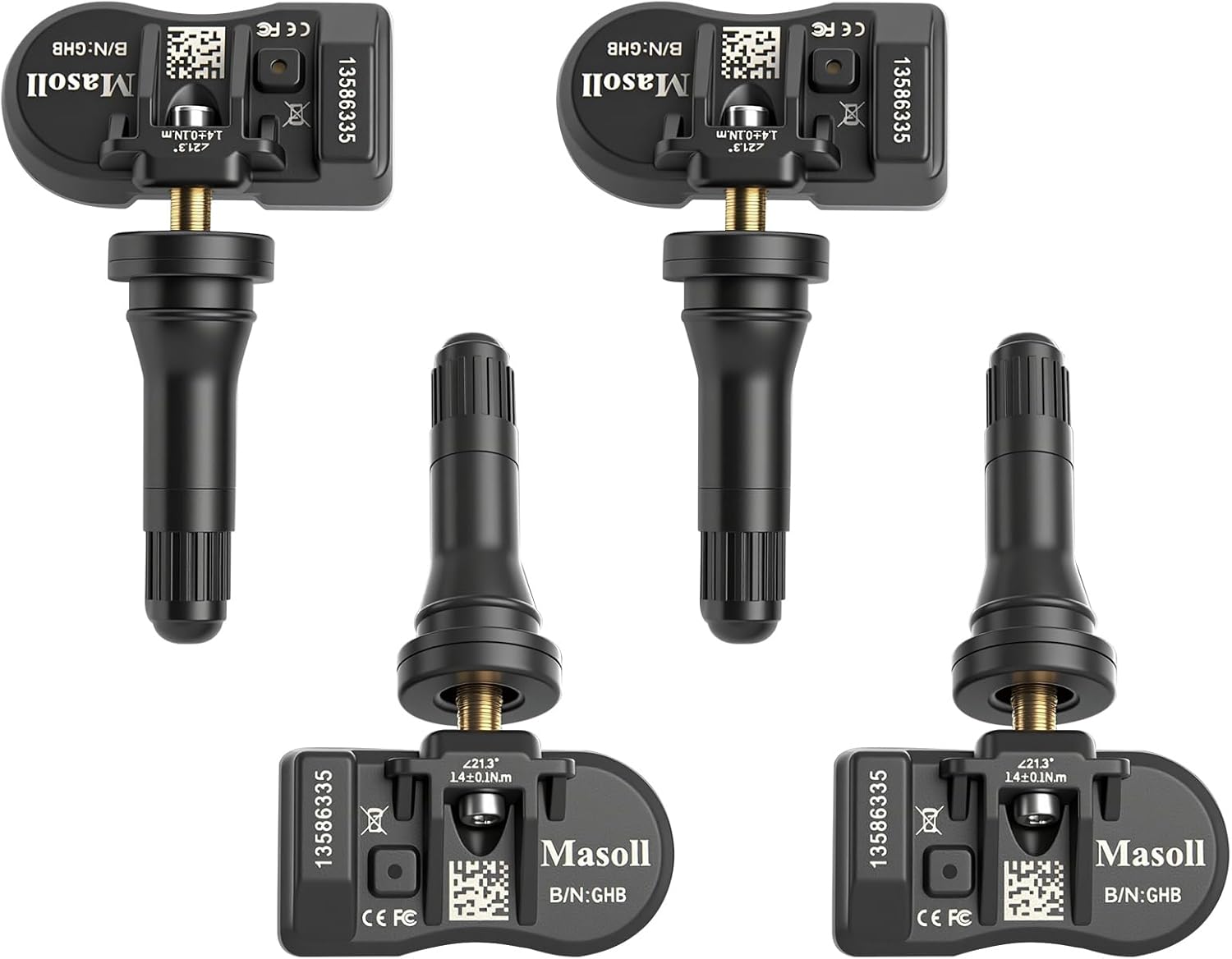
Masoll TPMS sensors are designed for most GM vehicles after 2006, helping you clear tire pressure warnings with OEM-level 315/433MHz compatibility. The 4-pack includes pre-programmed sensors, but re-learning is required after installation using a GM TPMS relearn tool or scan tool. Built with a dual-antenna design and a long-life CR2050 battery, these sensors deliver reliable performance in extreme temperatures with corrosion-resistant valve construction.
Frequently Asked Questions
How much does a Camry TPMS sensor replacement cost?
The final cost depends on the sensor brand, whether you choose OE or aftermarket parts, shop labor, tire dismounting, balancing, valve service parts, and relearn or programming fees. Ask for an itemized quote that separates the sensor, valve service kit, labor, and programming.
Does cold weather affect Camry tire pressure readings?
Yes. Cold weather can lower tire pressure and trigger the TPMS light even when the sensor is working. Check the tires with a gauge when they are cold, then inflate them to the pressure listed on the driver-side door placard.
Can aftermarket TPMS sensors work on a Toyota Camry?
Yes, aftermarket TPMS sensors can work if they match your Camry’s model year, frequency, valve type, and system requirements. The sensor must also be cloned, programmed, or registered correctly before the vehicle can read it reliably.
Will low tire pressure damage the TPMS sensor?
Low tire pressure does not usually damage the TPMS sensor directly. The bigger risk is tire damage, heat buildup, poor handling, and uneven wear. Fix low pressure right away and inspect the tire for punctures, valve leaks, or wheel damage.
How can I check which Camry tire has low pressure?
If your Camry shows individual tire pressures, check the display first. If it only shows a warning light, use a tire-pressure gauge on all four tires and compare each reading with the pressure listed on the door placard.
Should I replace one TPMS sensor or all four?
Replace one sensor if the others are newer and scan normally. Consider replacing all four if they are original, similar in age, and already near the end of their expected battery life, especially when you are already buying tires.
Can I drive with the TPMS light blinking?
You can usually drive to a safe place or repair shop, but you should check tire pressure first. A blinking-then-solid light means the TPMS may not warn you correctly about low pressure, so do not ignore it before a long trip.
Conclusion
In your Camry, TPMS sensor batteries usually last about 5 to 10 years, but age, heat, drive time, sensor quality, and tire service history can shorten that range. If the TPMS light blinks for about a minute and then stays on, treat it as a system fault until a scan proves otherwise.
Start with the simple checks: verify tire pressure with a gauge, inflate to the door-placard pressure, and look for tire or valve-stem damage. If the readings remain inconsistent or one sensor does not respond, replace the faulty sensor and complete the correct relearn or ID registration. That keeps your tire-pressure warnings useful instead of leaving you guessing.
Sources
- NHTSA TireWise: Tire Safety Ratings and Awareness — TPMS basics, monthly pressure checks, cold tire pressure, and warning-light guidance
- 49 CFR § 571.138, FMVSS No. 138 — TPMS warning threshold, malfunction-light behavior, and required owner-manual tire-pressure language
- Schrader TPMS: Serviceable vs. Replaceable TPMS Components — sealed TPMS sensor bodies, non-serviceable batteries, and valve service kit guidance
- Schrader TPMS: What Is TPMS and How Does TPMS Work? — direct TPMS basics and pressure-sensing transmitters
- Schrader TPMS: Tire Pressure in Cold Weather — cold-weather pressure drops and door-placard inflation guidance
- Tadiran Batteries: TPMS Sensor Battery Life — general 5- to 10-year TPMS battery range and temperature-related battery factors