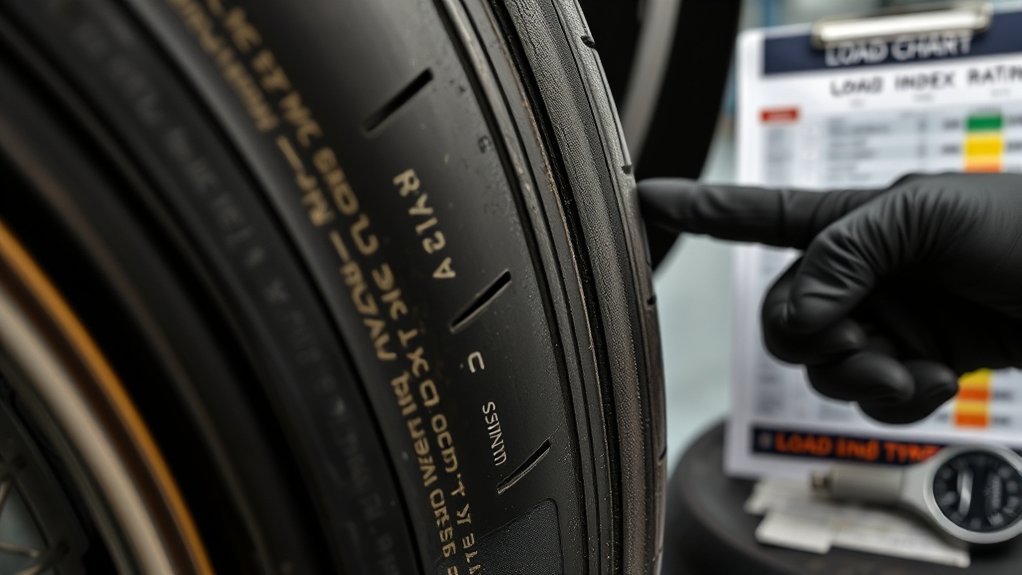
A tire marked 99H tells you two key things about that tire’s service description: how much weight it can carry and the maximum speed category it was built to handle under specified conditions. The 99 is the load index, and the H is the speed rating. You’ll usually see this code after the tire size, such as 205/55 R17 99H.
Quick Answer
99H means the tire has a 99 load index, which equals 1,709 lb (775 kg) per tire, and an H speed rating, which means the tire is rated for up to 130 mph (about 210 km/h) under specified load and inflation conditions.
Key Takeaways
- 99 is the tire’s load index, meaning the tire can carry 1,709 lb (775 kg) when properly inflated and used within its rated conditions.
- H is the speed rating, meaning the tire is built for a maximum rated speed of 130 mph under specified conditions.
- The code appears after the tire size in the service description, such as 205/55 R17 99H.
- Replacement tires should meet or exceed the load index and speed rating listed on your vehicle placard or owner’s manual.
- A higher tire rating does not increase your vehicle’s legal payload, axle rating, or towing limit.
What Does 99H Mean on a Tire?
A tire marked 99H combines two ratings. The number 99 is the load index, which corresponds to 1,709 lb (775 kg) per tire. The letter H is the speed rating, which means the tire is rated for up to 130 mph under specified load and inflation conditions.
In plain English, 99H is not the tire size by itself. It is the service description at the end of the size code. For example, in 205/55 R17 99H, the 205/55 R17 part describes the tire size, while 99H describes load and speed capability.
| Code | What It Means | Practical Meaning |
|---|---|---|
| 99 | Load index | 1,709 lb / 775 kg per tire |
| H | Speed rating | Up to 130 mph / about 210 km/h under specified conditions |
Note: A tire’s speed rating is a capability rating, not permission to exceed posted speed limits or drive beyond road, weather, vehicle, or tire-condition limits.
What a 99 Load Index Supports
A 99 load index means one tire can support up to 1,709 lb (775 kg) when it is properly inflated and used within its rated conditions. On a four-tire vehicle, that does not mean you can simply multiply the number and treat it as your vehicle’s payload rating. Your vehicle is still limited by its gross vehicle weight rating, axle ratings, suspension, brakes, wheels, and manufacturer specifications.
| Item | Meaning |
|---|---|
| 99 load index | 1,709 lb / 775 kg per tire |
| Applies per tire | Not the same as total vehicle payload |
| Requires proper inflation | Load capacity depends on correct pressure and tire condition |
| Must meet vehicle specs | Check the door placard and owner’s manual before replacing tires |
A 99 load index gives the tire a 1,709 lb rating, but it does not increase the vehicle’s maximum allowable load.
What the H Speed Rating Means
The H speed rating means the tire is rated for speeds up to 130 mph under specified conditions. Tire makers use speed ratings to describe how a tire handles heat and load at sustained speeds. That matters because heat buildup is one of the major stresses a tire faces during highway driving.
H Rating Speed Limit
An H-rated tire is designed for a maximum rated speed of 130 mph. That does not mean you should drive at that speed on public roads. It simply tells you the tire’s tested speed category when the tire is properly inflated, correctly loaded, undamaged, and used within its intended service conditions.
H Rating Benefits
Compared with lower speed ratings such as S or T, H-rated tires are often used on sedans, coupes, and crossovers that need a balance of ride comfort, heat resistance, and responsive handling. The rating itself does not guarantee better grip, but H-rated tire models are commonly built for more stable highway performance than lower-rated touring tires.
H Rating Safety Factors
Speed rating works together with load index, inflation pressure, tire condition, road temperature, and vehicle weight. If a tire is overloaded, underinflated, damaged, or badly worn, it may not perform as expected even if the sidewall says 99H.
Warning: Do not replace an H-rated tire with a lower speed rating unless your vehicle manufacturer, tire professional, or winter-tire guidance specifically allows it. If a lower-rated tire is used, the vehicle should not be driven above that tire’s maximum rated speed.
Where to Find 99H on the Sidewall
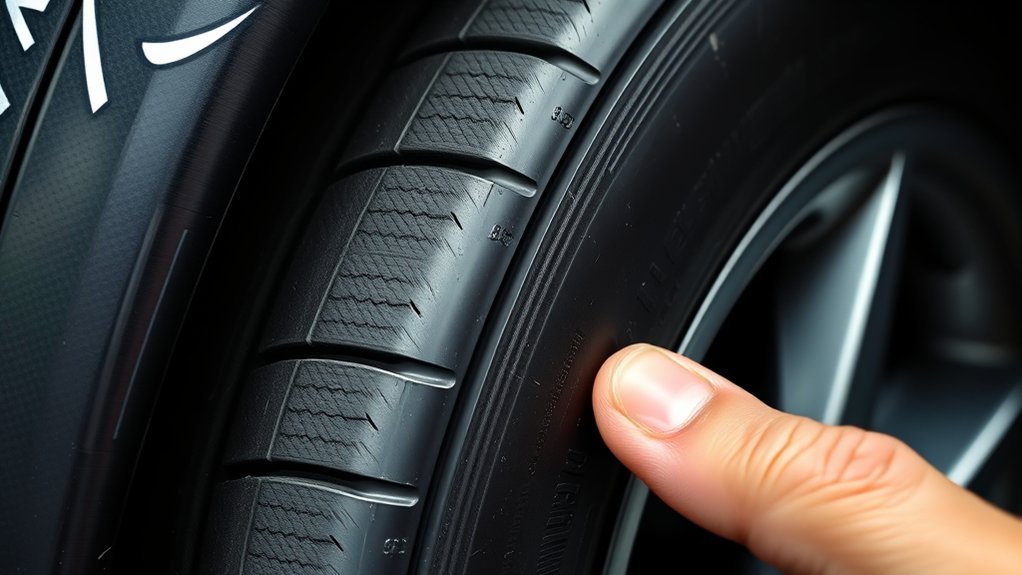
You’ll usually find the 99H marking on the tire sidewall after the tire size. Look for a sequence similar to 205/55 R17 99H, 225/60 R18 99H, or 245/45 R17 99H. The tire size appears first, followed by the load index and speed rating.
| Marking | Meaning | Location in the Code |
|---|---|---|
| 205/55 R17 | Tire size | First part of the sidewall size code |
| 99 | Load index | After the rim size |
| H | Speed rating | Immediately after the load index |
How to Check Whether 99H Matches Your Vehicle
Before buying replacement tires, compare the tire’s service description with your vehicle’s required tire information. The safest source is usually the Tire and Loading Information Label on the driver’s door edge or door jamb, followed by the owner’s manual.
- Check the tire placard. Look for the original tire size, cold tire pressure, and load information.
- Check the owner’s manual. Some vehicles list approved alternate tire sizes or special winter-tire guidance.
- Match or exceed the load index. If the vehicle requires 99, do not install a lower load index unless the manufacturer allows it.
- Match or exceed the speed rating. If the vehicle requires H, a higher rating such as V may be acceptable, but a lower rating can change handling and speed limits.
- Check extra markings. If the original tire is marked XL, run-flat, or has an OE marking, make sure the replacement is compatible.
Pro Tip: Check all four tires, not just one. Previous replacements may have left the vehicle with mixed brands, sizes, load indexes, or speed ratings.
[Products Worth Considering]
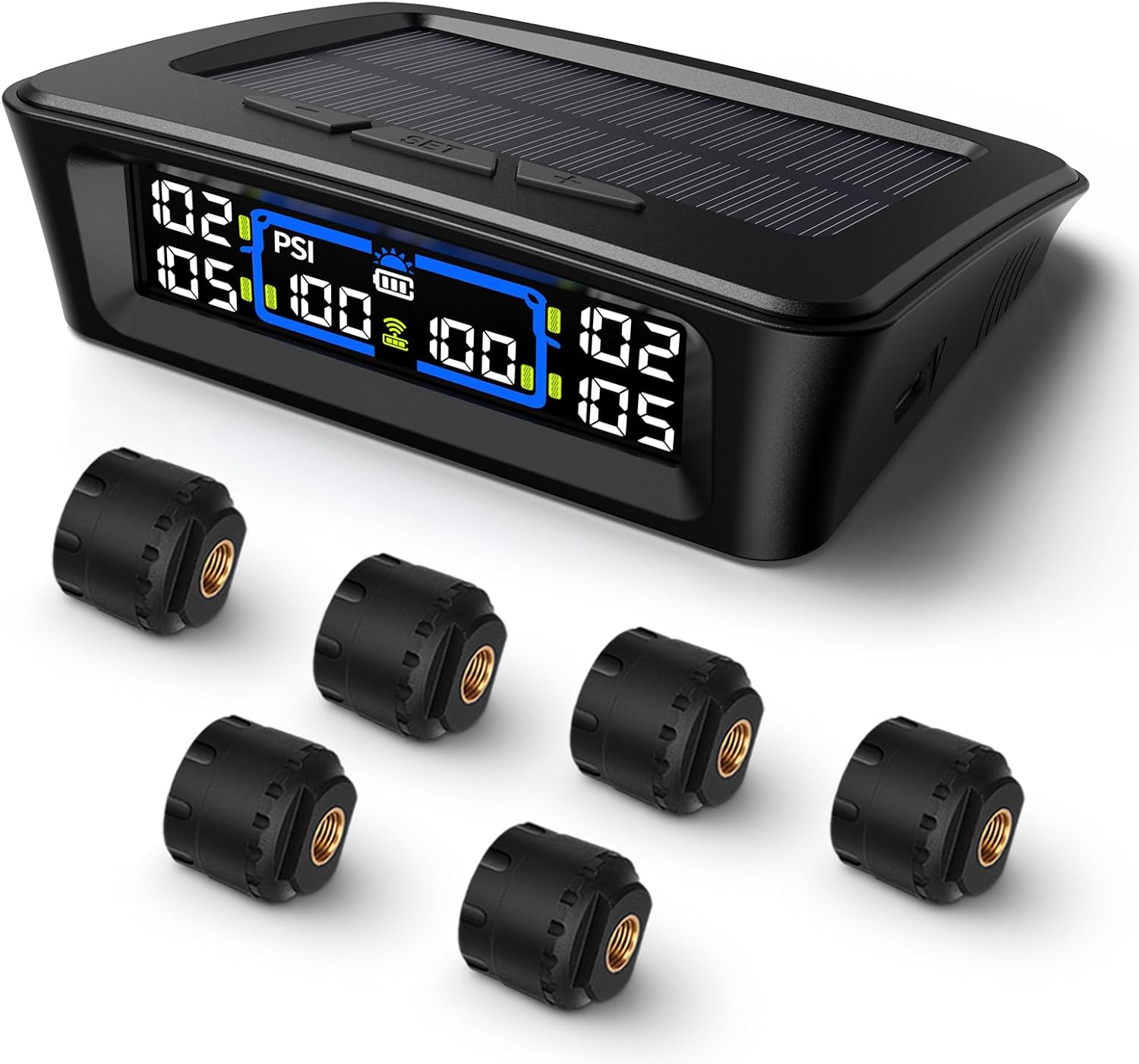
The Tymate TM12 RV TPMS delivers real-time tire pressure and temperature monitoring with a stable 433Hz display for safer long-distance driving. It supports simultaneous monitoring across vehicle and trailer zones, includes six alarm modes for pressure, temperature, leakage, battery, and signal loss, and features easy DIY installation with auto calibration. Power is supplied via USB-C charging or solar recharging, with a wide 0–144 PSI range and up to 50 ft signal coverage for RVs and towable trailers.

The 22800 wheel stud installer makes replacing wheel studs quick and secure, saving time and effort during tire service. It uses a ratchet or impact wrench to pull new studs firmly into place, helping when existing studs are too long. Compatible with most automotive wheels and light-duty truck wheel studs, it’s designed for easy, tool-assisted installation.
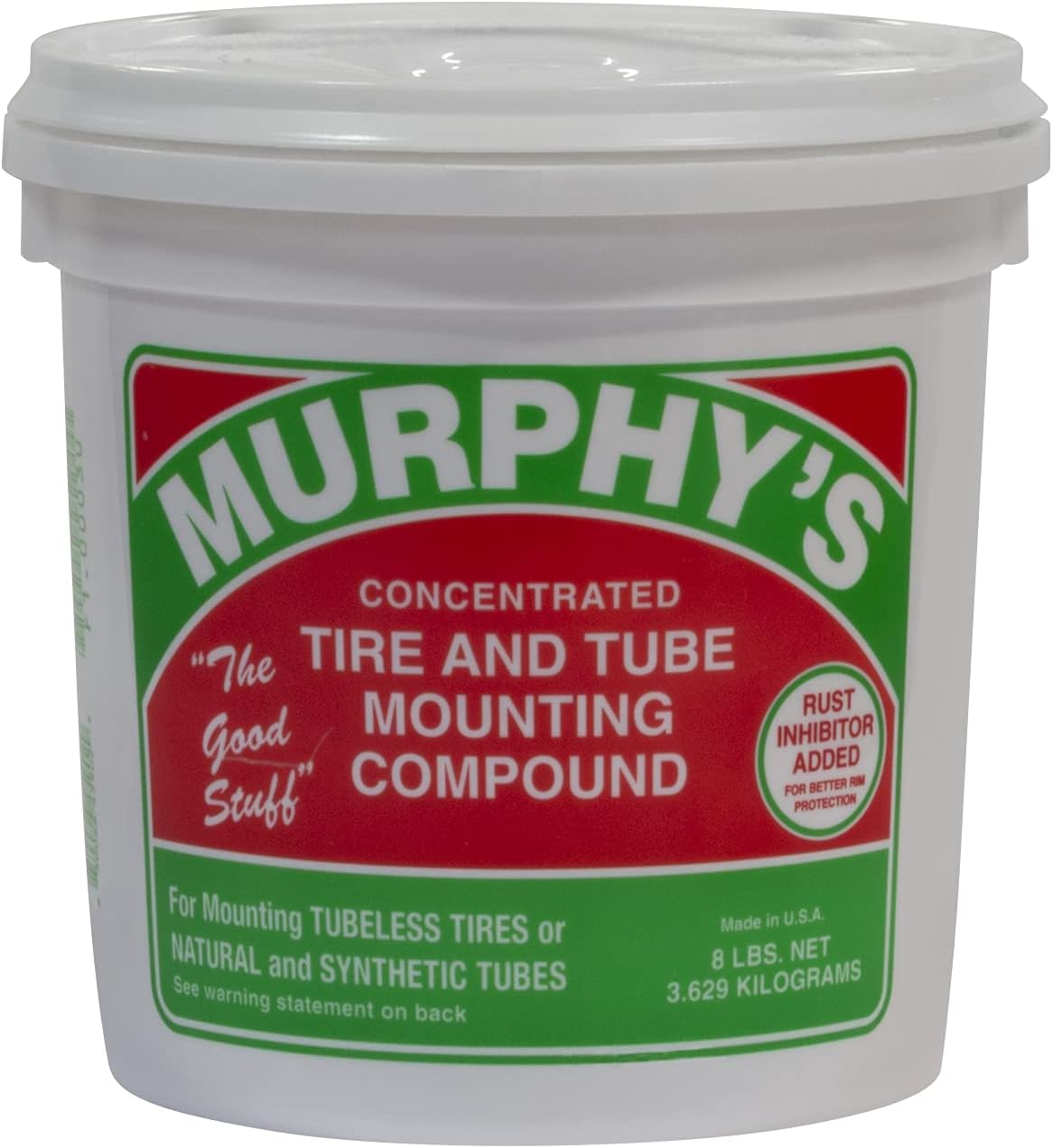
A concentrated tire and tube mounting compound designed to help simplify mounting rubber tires and tubes on passenger, semi truck, construction, and OTR applications. Its ultra-thick formula packs beads effectively and includes rust inhibitors to help protect against corrosion during use.
Can You Use a Different Rating?
You can often use a tire with a higher load index or speed rating than the original specification, as long as the tire size, wheel fitment, load type, and vehicle requirements still match. You should be much more careful with a lower rating because it can reduce the tire’s load capacity, speed capability, heat resistance, and handling margin.
[Products Worth Considering]
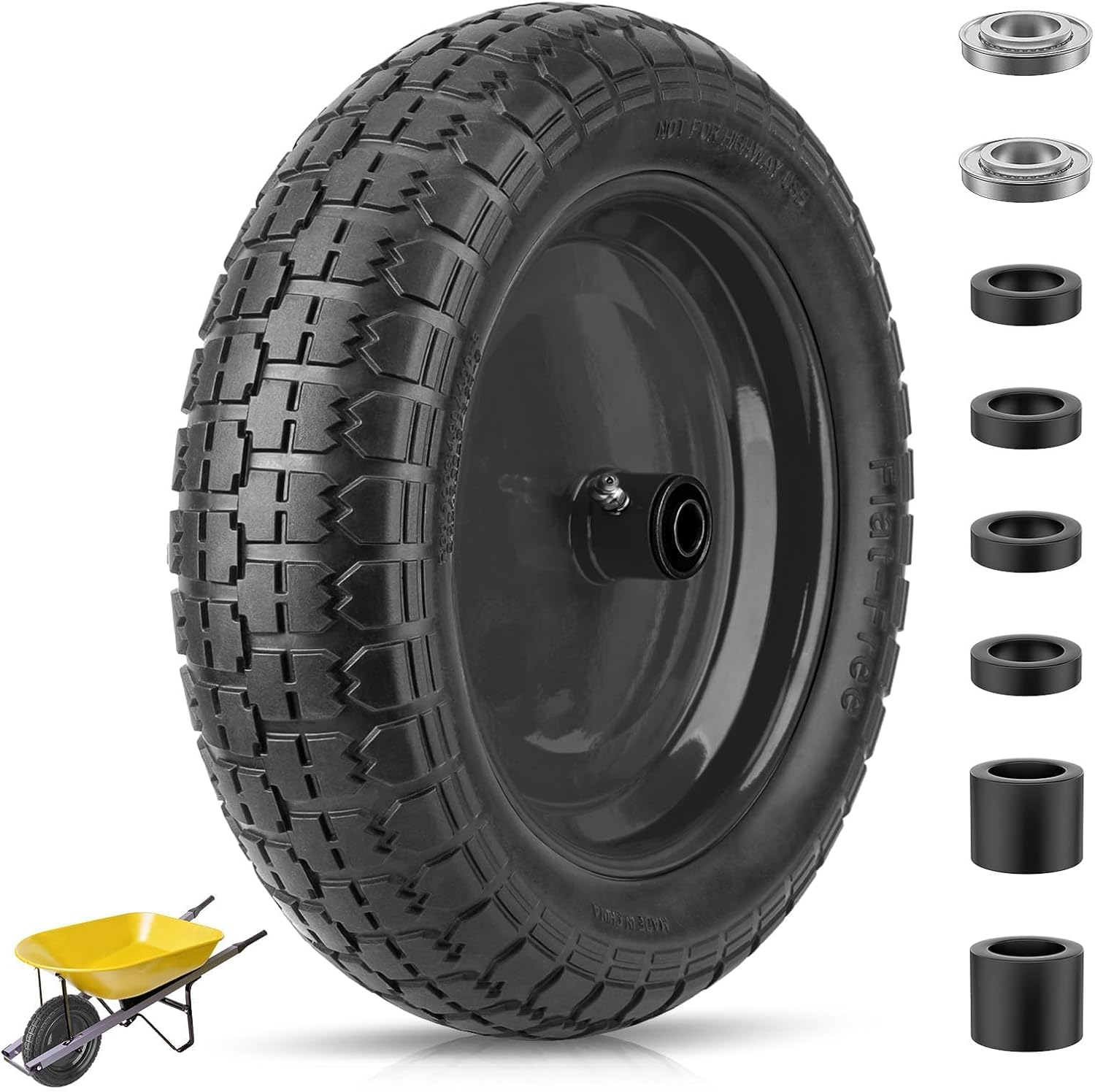
This flat-free TICONN wheelbarrow tire features durable polyurethane foam construction that never needs inflation, helping prevent punctures and reducing maintenance on rough outdoor terrain. With a 300 lb max load capacity and stable steel rim design, it supports safer transport for yard work and hauling tasks. An adapter kit with ball bearings and nylon spacers is included for easier fit and customization across common wheelbarrow and cart axle setups.

The Continental Grand Prix 5000 is an allround road bike tire engineered for faster rolling, improved ride comfort, and enhanced puncture protection. It features a Vectran Breaker cut-protection layer, Lazer Grip micro-profile tread for confident cornering control, and Active Comfort Technology to damp vibration for smoother rides. BlackChili compound optimizes grip and speed for everyday performance and long-lasting confidence.

This manual duck head tire changer kit makes tire installation and removal simpler by letting you embed the duck head into the tire with applied pressure. The integrated design and durable steel construction help reduce friction and improve efficiency and safety during use. Suitable for 16–21 inch wheels, it’s convenient for cars, trucks, SUVs, and ATV tires, with 24-hour after-sales support.
Higher Ratings Are Usually Okay
If your vehicle calls for 99H, moving to 99V or 99W usually keeps the same load capacity while increasing the speed category. Moving from 99H to 100H increases load index while keeping the same speed category. Still, the replacement tire must fit the wheel, suspension, and vehicle requirements.
| Replacement Option | What Changes | General Guidance |
|---|---|---|
| 99H | Baseline rating | Use if it matches the vehicle placard/manual |
| 99V | Same load, higher speed category | Usually acceptable if size and fitment match |
| 100H | Higher load, same speed category | May be acceptable, but does not increase vehicle payload |
Lower Ratings Carry Risk
A lower-rated tire may reduce the vehicle’s safe operating margin. For example, replacing 99H with 98H lowers load capacity, while replacing 99H with 99T keeps the same load index but lowers the speed category. Either change should be avoided unless the vehicle manufacturer or a qualified tire professional confirms it is appropriate.
Match OEM Specs
The best default is simple: match the tire size, load index, speed rating, and special markings listed by the vehicle manufacturer. If you upgrade, confirm that the change does not affect clearance, ride quality, load capacity, speed limits, handling, warranty requirements, or tire-pressure guidance.
Avoid Mixing Ratings Unless Approved
Mixing different speed ratings, load indexes, tire types, or tread patterns can change how the vehicle responds during braking, cornering, and wet-road driving. If mixed tires are unavoidable for a short time, the lowest-rated tire becomes the limiting tire, and you should replace or match the set as soon as practical.
How 99H Compares to Other Ratings
A 99H tire sits in a practical middle ground for many passenger vehicles. It carries more load than a 98H tire and has a higher speed category than 99S or 99T, while staying below performance-focused ratings such as V, W, and Y.
| Code | Load Capacity | Speed Rating | Main Difference |
|---|---|---|---|
| 98H | 1,653 lb / 750 kg | 130 mph | Lower load capacity than 99H |
| 99S | 1,709 lb / 775 kg | 112 mph | Same load, lower speed category |
| 99T | 1,709 lb / 775 kg | 118 mph | Same load, lower speed category |
| 99H | 1,709 lb / 775 kg | 130 mph | Balanced passenger-vehicle rating |
| 99V | 1,709 lb / 775 kg | 149 mph | Same load, higher speed category |
| 100H | 1,764 lb / 800 kg | 130 mph | Higher load capacity than 99H |
[Products Worth Considering]

Upgrade your wheels with MIKKUPPA closed-end lug nuts designed for reliable fit and corrosion resistance. The one-piece, cold-forged and heat-treated steel construction helps resist rust and stripping, while the integrated finish delivers a durable black appearance. Built to OEM standards with a conical 60-degree seat, these nuts provide a secure solution for compatible Ford, Honda, Jeep, and Chevrolet models.
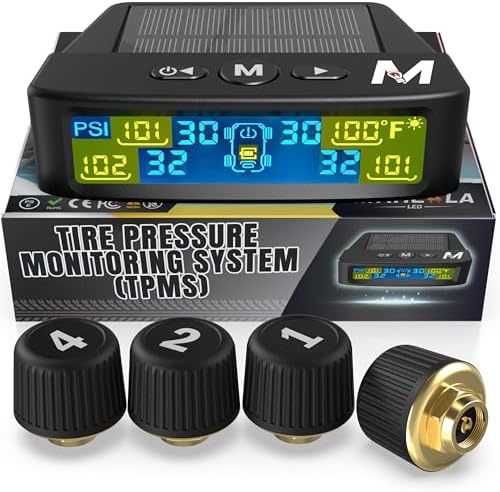
Marcala’s TPMS set of four sensors helps you monitor tire pressure and temperature in real time while driving, with updates every second. The bright color LCD uses auto-dimming for easy viewing, powered by dual solar and USB charging, and offers six alarm modes. Built for trailers, RVs, campers, trucks, and towing setups, the sensors support monitoring 1-4 wheels up to 98 PSI with IP67 waterproof protection.

Milton S-921 pencil tire pressure gauge helps you maintain optimal tire pressure for passenger cars with accurate readings in PSI and kPa. It features a built-in deflator valve for convenient pressure adjustments, plus a single chuck head and nylon indicator bar for easy use on the go. Built from durable plated brass and designed for reliable performance, it’s a practical road trip and cold-weather maintenance tool.
Load Index vs. Load Range: Don’t Mix Them Up
99H contains a load index and a speed rating. That is different from load range, which is usually shown with letters such as C, D, E, F, G, or H on light truck, trailer, and commercial tires. Load range describes tire strength and pressure category, while load index gives a more specific load-carrying number.
This is why Load Range H is not the same thing as an H speed rating. In 99H, the H is about speed. In Load Range H, the H is about tire construction and load/pressure category.
Common Mistakes to Avoid With 99H Tires
- Buying the same size but a lower rating. A tire can match the size but still have a lower load index or speed rating.
- Assuming 1,709 lb is vehicle payload. The 99 rating is per tire, not a new vehicle load limit.
- Ignoring XL or run-flat markings. If your original tires have special markings, match those requirements unless a professional confirms an alternative.
- Mixing speed ratings across the vehicle. This can affect handling balance and makes the lowest-rated tire the limiting tire.
- Using damaged or underinflated tires. A tire’s rating depends on proper inflation, condition, and use.
Frequently Asked Questions
What does 99H mean on a tire?
99H means the tire has a 99 load index and an H speed rating. The 99 load index equals 1,709 lb (775 kg) per tire, and the H speed rating means the tire is rated for up to 130 mph under specified conditions.
Are T or H tires better?
Neither is automatically better. H tires have a higher speed rating than T tires, so they are often used on vehicles that need stronger highway-speed capability and handling response. T tires may be suitable for many everyday vehicles if the placard or owner’s manual allows them.
Which is better, S or H speed rating?
H is the higher speed rating. An S-rated tire is rated up to 112 mph, while an H-rated tire is rated up to 130 mph. Use the rating required by your vehicle rather than choosing only by the letter.
What does 99S mean for tires?
99S means the tire has the same 99 load index as 99H, so it carries 1,709 lb (775 kg) per tire, but it has an S speed rating instead of H. S is rated up to 112 mph, which is lower than H.
Can I use 99V instead of 99H?
Usually, yes, if the tire size, load type, wheel fitment, and vehicle requirements match. A 99V tire has the same load index as 99H but a higher speed rating. Always confirm the replacement with the vehicle placard, owner’s manual, or a tire professional.
Can I mix 99H with another rating?
It is best to avoid mixing ratings unless your vehicle manufacturer or a qualified tire professional approves it. Mixed ratings can change handling balance, and the vehicle should be treated as limited by the lowest-rated tire.
Is 99H the same as XL?
No. 99H is the load index and speed rating. XL means Extra Load, which indicates a reinforced tire designed to carry more load at higher inflation pressure than a standard-load tire of the same size. A tire can be marked 99H and also be marked XL, but the terms mean different things.
Which load range is better, G or H?
Load Range H is generally a heavier-duty category than Load Range G, but “better” depends on the tire size, vehicle, axle load, inflation pressure, and use case. Do not confuse Load Range H with the H speed rating in 99H; they are different systems.
Conclusion
A 99H tire has a 99 load index, rated for 1,709 lb (775 kg) per tire, and an H speed rating, rated for up to 130 mph under specified conditions. You’ll find the code after the tire size on the sidewall. When replacing tires, match or exceed your vehicle’s required load index and speed rating, confirm the tire size and special markings, and use the tire placard or owner’s manual as your final guide.
Sources
- Tire Rack — What Is Load Index? — backs the 99 load index value of 1,709 lb / 775 kg.
- Michelin — Tire Load Rating & Speed Rating Explained — backs speed-rating definition, H rating, and replacement guidance.
- Continental Tires — Tire Markings — backs sidewall marking sequence, load index, and speed rating explanation.
- NHTSA TireWise — Tire Safety Ratings and Awareness — backs tire placard, owner’s manual, and tire safety guidance.
- Discount Tire — Load Range vs. Load Index — backs the distinction between load range and load index.