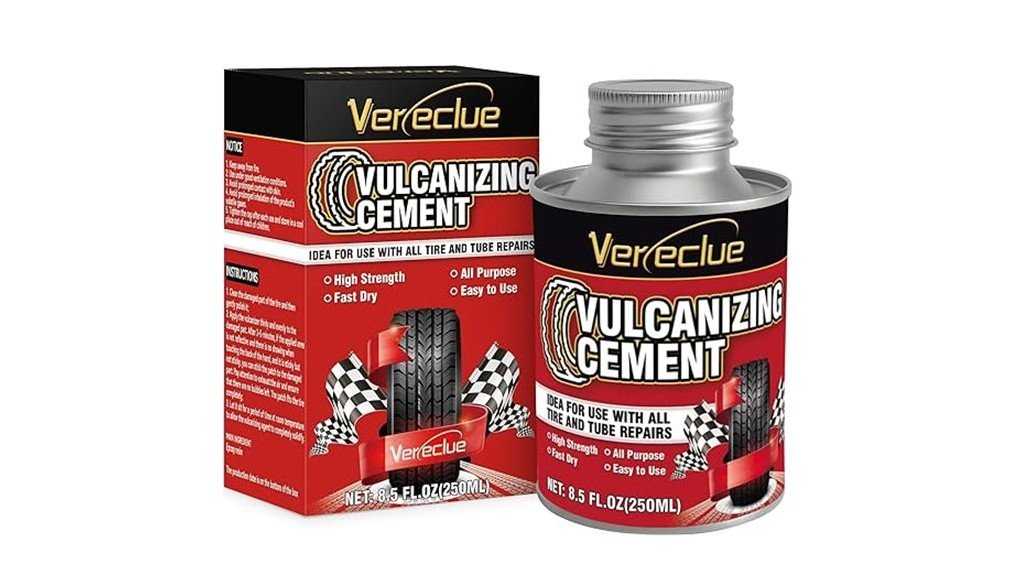
Vereclue Chemical Vulcanizing Cement Review: Fast Tire Patch Glue for Tubes and Small Repairs
A small tire or tube puncture only turns into a good repair when you use the right patch, the right surface prep, and the right cement. Vereclue Chemical Vulcanizing Cement is a clear, brush-applied rubber cement made for tire patches, plugs, bicycle inner tubes, and other rubber repair work.
This review focuses on the 8.5 fl oz can linked in the article. The same Amazon listing also shows a 17 fl oz size option, so you should check the selected size before buying.
The main appeal is simple: you get more cement than a tiny patch-kit tube, plus a brush built into the can lid for thin, even coverage. The main limit is just as clear: this cement is not water resistant, and it should not be used as a fix for sidewall damage, exposed belts, large cuts, or any structural tire problem.
Quick Verdict
Rating: 8/10, Recommended with caveats
Best For: DIY users patching clean, dry rubber surfaces with the correct patch or plug.
Bottom Line: Vereclue Chemical Vulcanizing Cement is a practical brush-top tire repair glue for small rubber patch jobs, bicycle tubes, and plug-assisted repairs. It is not a complete tire patch kit, and it is not a safe answer for wet surfaces, sidewalls, or damaged tire structure.
[Products Worth Considering]

This screw-in tire plug kit provides a fast, efficient way to repair punctures without flaring tools. Choose the correct plug size, then screw the rubber nail plug into the tire hole for a secure, sealed connection that helps prevent water intrusion. The 70-piece set is designed for universal emergency roadside use across cars, motorcycles, trucks, ATVs, bicycles, and more.

This chemical vulcanizing cement promotes rubber vulcanization at room temperature, helping create durable tire repairs without heat. The included brush makes application easy, and the quick-drying formula with accelerators helps the repair cure faster for reliable patch or plug sealing. It’s suitable for cars, motorcycles, and bikes, supporting repairs for both inner tubes and outer tires.

This chemical vulcanizing cement cures rubber at room temperature, creating a strong bond for reliable tire patch and plug repairs. The fast-drying formula helps reduce vulcanization time, while the built-in brush makes application quick and even. Suitable for car, motorcycle, and bicycle tires, it supports repairs for tubeless tires, outer tires, and inner tubes.
Key Specs
| Specification | Detail |
|---|---|
| Brand | Vereclue |
| Product name | Chemical Vulcanizing Cement, Clear Tire Repair Glue |
| ASIN | B0DGGNT9YL |
| Part number | LTLHJV1 |
| Product type | Chemical vulcanizing cement for rubber and tire repair |
| Reviewed size | 8.5 fluid ounces |
| Other size shown | 17 fluid ounces, shown as a size option on the same listing |
| Item form | Liquid |
| Color | Clear |
| Container type | Can with brush attached inside the cover |
| Full cure time listed | 5 minutes |
| Application wait time listed | Apply thinly and evenly, wait 3 to 5 minutes, then apply the patch |
| Water resistance | Not water resistant |
| Compatible material | Rubber |
| Viscosity level listed | Low |
| Item package quantity | 1 |
| Included components | The listing states “Non”; product bullets describe a brush attached inside the cover |
| Listed use cases | Rubber repair and tire repair for automobile, motorcycle, and bicycle tires, including inner tubes, outer tires, and vacuum tires |
| Safety note | Not for sidewall damage, exposed belts, large tears, or structural tire damage |
What Is Vereclue Chemical Vulcanizing Cement?
Vereclue Chemical Vulcanizing Cement is a room-temperature rubber repair adhesive. It is made to help rubber or elastomer materials bond during tire and tube repair without using a heat press.
The listing says it can be used with repair patches and plugs. That matters because this product is the cement, not a full repair kit with patches, rollers, reamers, plugs, or tire removal tools included.
For the 8.5 fl oz version, the value is the larger brush-top can. You get a clear liquid cement that can be spread over a prepared rubber repair area, then paired with the correct patch or plug for the repair you are doing.
Before You Buy: This is not a safe shortcut for sidewall damage, tire belt damage, large cuts, or tires that keep losing air after repair. For a road tire with safety-critical damage, use a qualified tire repair service or replace the tire.
Who Should Buy It?
Best For
- Bike owners patching bicycle inner tubes with compatible rubber patches.
- DIY users who already have the correct tire plugs, patches, and repair tools.
- Garage or shop users who want a brush-top can instead of a small squeeze tube.
- People working on clean, dry rubber surfaces where a thin coat can be applied evenly.
Skip If
- You need a complete tire patch kit with patches, tools, and instructions.
- You need a water-resistant adhesive for wet or exposed conditions.
- Your tire has sidewall damage, exposed belts, large tears, or repeated air loss.
Feature-by-Feature Review
Room-temperature vulcanizing action
The product is listed as a chemical vulcanizing cement that works at room temperature. The Amazon instructions say to apply it thinly and evenly, wait 3 to 5 minutes, then apply the patch.
That short wait time can help when you are repairing a bicycle tube, a small rubber puncture area, or a plug-and-patch style repair where the rest of your repair parts are ready. Thick coats, cold conditions, humidity, or poor surface prep can still hurt the bond, so you should follow the product label and the patch maker’s directions.
Brush-top application
The listing says a brush is attached inside the cover. That is useful because tire cement works best as a thin, even layer, not as a heavy puddle of glue.
A brush-top can is also easier to control than a soft tube when you are coating a larger patch area. The tradeoff is storage: keep the lid closed tightly after use so the cement does not dry out faster than expected.
Rubber and tire compatibility
Amazon lists the specific uses as rubber repair and tire repair. The description names automobile, motorcycle, and bicycle tires, plus vacuum tires, outer tires, and inner tubes.
This broad listed compatibility does not mean every tire problem can be repaired. The cement should be matched with the correct patch or plug, and the repair must be in a safe location on the tire. If the damage is outside the repairable tread area, treat the tire as unsafe until a professional checks it.
Clear liquid in a can
The product information lists the cement as a clear liquid in a can. It also lists low viscosity, an 8.5 ounce unit count for the reviewed size, and a package quantity of one.
The clear finish is useful because it does not add a dark layer around the repair area, but appearance should not be your main concern. A good repair depends more on clean rubber, correct surface prep, proper tack time, firm patch pressure, and post-repair inspection.
Not water resistant
Water resistance is the biggest product limitation. The listing states that the water resistance level is not water resistant, so this cement should be applied only to dry rubber.
If the tube or tire area is wet, dirty, oily, or still leaking moisture, do not rush the repair. Dry and prepare the surface first, then keep the repaired area protected while the bond forms.
Pro Tip: Lay out the patch, plug, roller, scraper, and inflation tools before opening the can. That gives you time to apply one thin coat, wait the listed 3 to 5 minutes, and place the patch without scrambling.
How to Use It Correctly
Start with the repair instructions for your patch or plug. Vereclue Chemical Vulcanizing Cement is only one part of the repair, so the patch type, tire type, damage location, and tool setup still matter.
- Clean the surface: Remove dirt, water, loose rubber, and debris before applying cement.
- Dry the rubber: This cement is not water resistant, so wet rubber is a poor bonding surface.
- Prepare the repair area: Roughen or buff the rubber only when your patch instructions call for it.
- Use a thin coat: The listing says to apply the cement thinly and evenly.
- Wait for tack time: The listed wait is 3 to 5 minutes before placing the patch.
- Press firmly: Seat the patch or plug according to the repair kit instructions, then check for air loss before use.
Compatibility and Safety
This cement touches tire and tube rubber, so safety depends on more than the adhesive itself. A bicycle inner tube patch is a different repair from a motorcycle or car tire repair, and a road tire carries much higher risk if the repair is done in the wrong place.
Use this product only on compatible rubber surfaces and only with the correct patch or plug. Do not use it to hide sidewall cracks, exposed belts, deep cuts, bead damage, bulges, or repeated leaks. Those problems can point to tire structure damage, not just a small puncture.
Because the listing describes the cement as not water resistant, store and apply it in dry conditions. Keep the can closed when not in use, avoid skin and eye contact, and follow the label directions for ventilation, storage, cleanup, and disposal.
How It Performs in Real Use
For bicycle inner tubes
This is one of the clearest use cases. The listing includes bicycle tires and inner tubes, and the brush-top design makes it easier to coat the patch area evenly. You still need a compatible tube patch, and the tube should be clean, dry, and lightly prepared according to the patch instructions.
For car and motorcycle tire repair
The listing says the cement is suitable for automobile and motorcycle tires, but that should be read with caution. Use it only as part of a proper repair method and only when the puncture location, size, and tire condition are repairable.
For garage and shop use
The 8.5 fl oz can makes more sense if you patch tires or tubes more than once. A brush-top can is easier to use on repeated repairs than tiny single-use tubes, but it should be closed tightly after each job.
For emergency backup use
This product can be helpful to keep with repair supplies, but it is not a complete roadside solution. You still need plugs or patches, tire tools, a way to inflate the tire, and enough time for the cement and repair unit to bond correctly.
What Buyers Are Saying
Based on visible Amazon customer review themes at review time:
- Praise: Several reviewers say the adhesive works well for tire patching, plugs, and bicycle tube repairs.
- Praise: Buyers often describe it as good quality rubber cement and a good value for the amount in the can.
- Watch-out: Ease of use is mixed, with some buyers saying instructions are not clear. A visible review also warns that it should not be relied on for stressed or damaged tire areas.
Pros and Cons
Pros
- 8.5 fl oz can gives you more cement than most small patch-kit tubes.
- Brush attached inside the cover helps with thin, even application.
- Listed for automobile, motorcycle, and bicycle tire repair.
- Works with compatible rubber patches and plugs when the surface is prepared correctly.
- Short listed tack time of 3 to 5 minutes can speed up small repair jobs.
Cons
- Not water resistant, so it is a poor choice for wet rubber or damp repair conditions.
- Not a full tire patch kit, since patches, plugs, and tools are still needed.
- Not suitable for sidewall damage, exposed belts, large tears, or structural tire problems.
Is It Worth the Price?
Vereclue Chemical Vulcanizing Cement is worth considering if you regularly patch bicycle tubes, small tire punctures, or rubber repair areas and want more cement than a tiny patch-kit tube provides. The 8.5 fl oz can is a practical mid-range value for repeated small repairs, especially if you already own patches, plugs, and tire tools.
It is a weaker value if you only need one emergency repair, need a complete kit, or need an adhesive that can handle wet conditions. It is also not a substitute for tire inspection after serious damage.
You get the most value from it when your repair process is already organized. If you need instructions, patches, plugs, rollers, and surface-prep tools in one purchase, a complete tire patch kit may be a better starting point.
[Products Worth Considering]

Vigorder rubber cement glue delivers superior adhesion and cures quickly within about 30 seconds for seamless rubber bonding. Once cured, it helps provide a strong, durable, waterproof seal that holds up to vehicle weight, pressure, and heat. Suitable for cars, motorcycles, trucks, bicycles, and off-road tires, it’s designed for emergency patch and maintenance repairs.

The AUTOWN tire repair kit is designed to quickly fix punctures and plug flats with professional-quality steel components. It includes a T-handle and spiral probe tool for easy tire access, plus a compact storage case for convenient carry. Suitable for many vehicles including cars, motorcycles, ATVs, RVs, trailers, and trucks, it helps restore airtight performance for reliable roadside repairs.
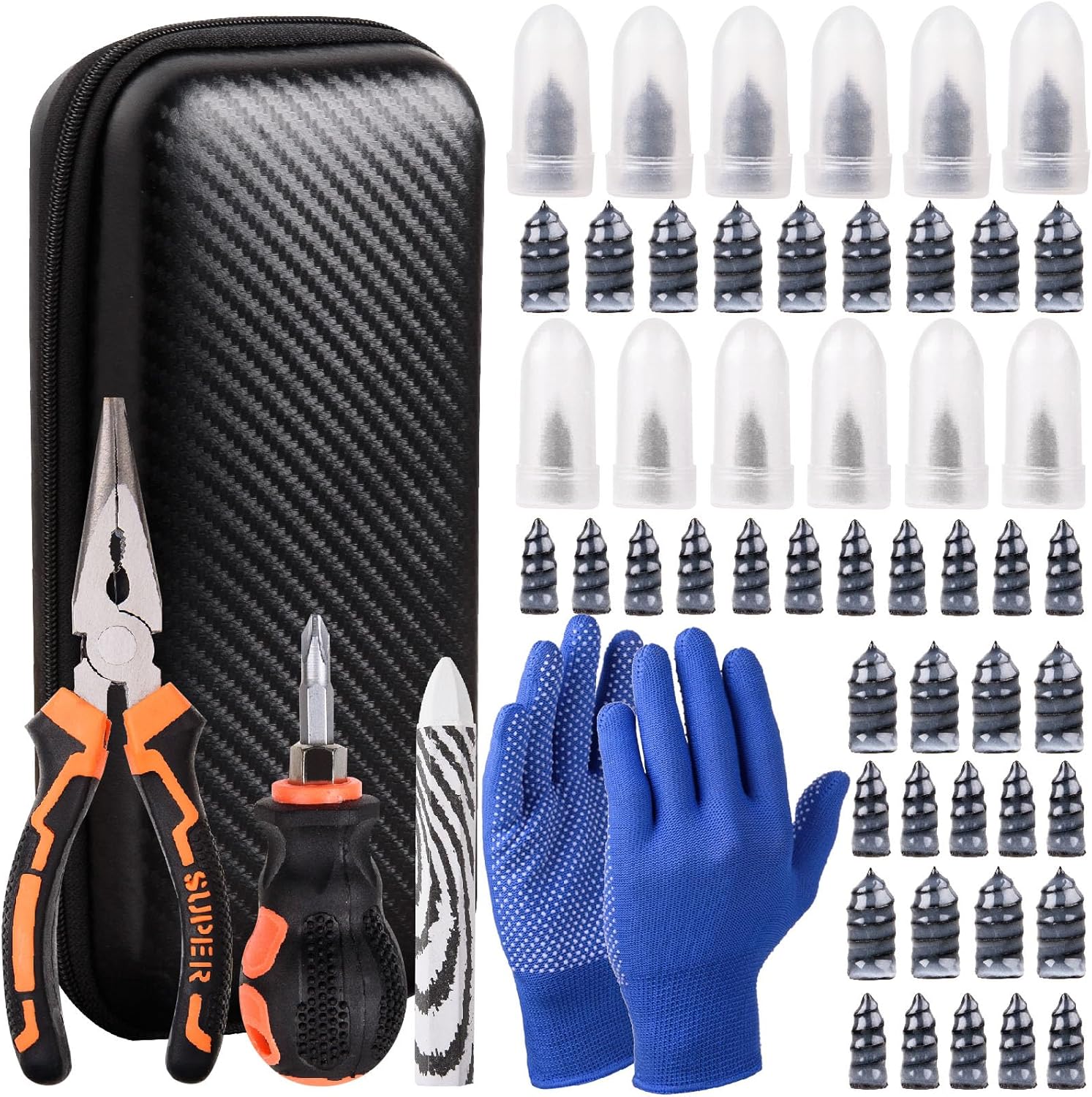
This tire sidewall puncture repair kit fixes flats fast without removing the tire, helping you get back on the road in minutes. It includes self-tapping repair nails, essential tools, gloves, and a portable storage bag for convenient roadside use. Designed for tubeless tires, it helps create a tight, leak-resistant seal for cars, motorcycles, trucks, SUVs, and ATVs.
How It Compares to Alternatives
X-tra Seal Chemical Vulcanizing Cement is a shop-style option often paired with X-tra Seal repair units or inserts. Slime Rubber Cement 8 oz is worth comparing if you already use Slime plug or patch kits and want a familiar companion product.
Park Tool VP-1 is a better fit for many bicycle riders because it includes patches, vulcanizing fluid, sandpaper, and compact instructions in one small kit. Vereclue makes the most sense if you want a larger brush-top can of cement and already have the correct repair pieces.
[Products Worth Considering]

Get back on the road fast with this compact tire plug repair kit for tubeless tires. It includes self-vulcanizing rubber plugs, T-handle rasp and insert tools, and a storage box that fits in your glove compartment for easy access. Also included are a 4-way valve steam tool set with valve cores and caps for added roadside convenience.

Rhino USA’s 86-piece tire repair kit provides everything you need for quick, emergency flat repairs, including a reamer and plug insertion tool plus 60 reusable tire plugs. The heavy-duty, metal-handled design helps you fix punctures from nails and screws on tubeless tires for cars, trucks, motorcycles, ATVs, UTVs, and more. A high-visibility compact case stores easily for on-the-go use, with illustrated instructions to help you complete repairs with confidence.

The AUTOWN 31-piece flat tire repair kit helps you quickly fix punctures and get back on the road. It includes a T-handle and spiral probe for easy plug insertion, plus a portable storage case for convenient carry. Designed for multiple vehicle types, this kit supports repairs for cars, motorcycles, ATVs, tractors, and more with reliable sealing.
Frequently Asked Questions
Does Vereclue Chemical Vulcanizing Cement work on bicycle inner tubes?
Yes. The listing includes bicycle tires and inner tubes in its intended uses. For best results, the tube should be clean, dry, and patched with a compatible rubber patch.
Can you use it on car and motorcycle tires?
The listing says it is suitable for automobile and motorcycle tires. That does not mean every tire problem is safe to repair, so avoid sidewall damage, exposed belts, large cuts, bulges, and any damage that affects tire structure.
How long does it take to cure?
Product information lists the full cure time as 5 minutes. The listing also says to apply a thin, even coat, wait 3 to 5 minutes, then apply the patch.
Is it water resistant?
No. Amazon product information lists the water resistance level as not water resistant. Use it on dry rubber and keep the repair area dry while the bond forms.
Does it include a brush?
The product bullets say a brush is attached inside the cover. The item details also list included components as “Non,” so treat the brush as part of the can lid, not as a separate accessory kit.
Can it be used on wet rubber?
No. Wet rubber is a poor surface for this tire cement, and the listing says the product is not water resistant. Clean and dry the area before applying cement.
Is it a complete tire patch kit?
No. The reviewed product is the cement. You still need the correct patch, plug, roller, scraper, tire tools, and inflation method for the repair you are doing.
Who should skip this tire repair cement?
Skip it if you need a certified repair on a high-speed road tire, a full patch kit, or an adhesive for wet conditions. Also skip it for sidewall damage, exposed belts, large tears, or tires that keep losing air after repair.
The Bottom Line
Vereclue Chemical Vulcanizing Cement is a useful choice for small, clean, dry rubber tire and tube repairs when you already have the right patch or plug. Its main strengths are the 8.5 fl oz brush-top can, short listed wait time, and broad listed compatibility with car, motorcycle, and bicycle tire repairs.
Skip it if you need a water-resistant adhesive, a complete patch kit, or a repair for serious tire damage. For sidewall damage or safety-critical tire repairs, use a professional repair or replacement instead.