If your Toyota Tacoma pulls to one side, start with the basics before you assume the truck needs major suspension work. Uneven tire pressure, tire wear, wheel alignment, brake drag, worn steering parts, or a damaged tire can all make a Tacoma drift left or right. A slight drift on a crowned road can be normal, but a steady pull on a flat road needs attention.
Quick Answer
A Toyota Tacoma usually pulls to one side because of uneven tire pressure, uneven tire wear, wheel alignment problems, brake drag, or worn suspension and steering parts. Check cold tire pressure first, inspect the tread, note when the pull happens, then get an alignment and suspension inspection if the issue remains.
Key Takeaways
- A Tacoma that pulls on a straight, level road often has a tire, alignment, brake, bearing, steering, or suspension problem.
- Check tire pressure when the tires are cold and use the pressure on the driver-door placard or your owner’s manual, not the tire sidewall maximum.
- An off-center steering wheel, feathered tread, one-sided tire wear, or vibration often points toward alignment or tire wear issues.
- Pulling only while braking can signal brake drag, a sticking caliper, uneven pads, or front-end looseness.
- Lift kits, larger tires, wheel spacers, and off-road impacts can change steering geometry and make alignment problems more noticeable.
At a Glance
| Time Required | 10 to 30 minutes for basic checks; longer if a shop inspects alignment, brakes, bearings, and suspension. |
| Difficulty | Easy for tire-pressure and visual checks; moderate to professional for alignment, brake, bearing, and suspension diagnosis. |
| Tools Needed | Accurate tire-pressure gauge, tread-depth gauge or penny, flashlight, torque wrench if you remove wheels, and a professional alignment rack if the pull remains. |
| Cost | Often free for basic tire checks; shop costs vary for alignment, brake repair, tire replacement, or suspension work. |
Identifying Symptoms of Pulling in Your Tacoma
You may notice your Tacoma drifting left or right when you loosen your grip on the steering wheel. Test this only on a safe, flat, straight road with light traffic. Many roads slope slightly for drainage, so a mild drift on one road may not prove a mechanical problem.
A true pull feels consistent. You may need to hold the steering wheel off-center to keep the truck straight, or the truck may move toward one side as soon as you relax your hands. Pay attention to whether the pull happens while cruising, braking, accelerating, or driving over bumps.
- Pulls all the time: often points to tire pressure, tire wear, alignment, or steering geometry.
- Pulls only while braking: often points to brake drag, uneven brake force, a sticking caliper, or worn front-end parts.
- Pulls after a tire rotation: may point to tire wear patterns, tire conicity, or a tire with internal damage.
- Pulls after hitting a curb or pothole: may point to alignment, bent parts, or damaged suspension components.
- Pulls after a lift kit or larger tires: may point to altered steering geometry or an alignment that no longer suits the setup.
Warning: Do not ignore a sudden strong pull, steering vibration, visible tire damage, grinding noise, or a pull that appears while braking. Stop driving when it is safe and have the truck inspected before the problem affects control.
Check Tire Pressure and Tire Condition First
Tire pressure is the easiest thing to check and one of the most common causes of poor handling. The National Highway Traffic Safety Administration recommends checking tire pressure at least once a month when the tires are cold. It also says the correct pressure comes from the Tire and Loading Information Label or the owner’s manual, not the maximum pressure printed on the tire sidewall.
- Park long enough for a cold reading. Check pressure after the Tacoma has been parked for at least three hours.
- Find the correct pressure. Use the driver-door placard or your year-specific Tacoma owner’s manual.
- Check all four tires. Include the spare if your Tacoma carries one, especially before a trip or off-road drive.
- Match the recommended pressure. Keep left and right tires equal unless the placard or manual gives different front and rear pressures.
- Inspect the tread and sidewalls. Look for cupping, feathering, one-sided wear, bulges, cuts, exposed cords, or objects stuck in the tire.
Fuel economy can also suffer when tire pressure is low. FuelEconomy.gov says proper inflation can improve gas mileage by 0.6% on average and up to 3% in some cases. It also notes that underinflated tires can reduce mileage by about 0.2% for every 1 psi drop in the average pressure of all tires.
[Products Worth Considering]

Keep your tires properly inflated with this analog VONDIOR tire pressure gauge, designed for fast, easy readings without batteries. The swiveling, two-axis hose and large glow dial help you measure at any tire angle with instant visibility. Built with a protective rubber shield, it supports durable, low-maintenance use for cars and trucks.

Monitor tire tread wear with a smart, color-coded depth gauge that shows clear condition ranges at a glance. The bar is range marked for fast, easy readings, helping you maintain safer traction and performance. Each gauge is portable with a pocket clip, and the set includes 20 units for daily use and sharing.

The Ziopetru adjustable magnetic wheel alignment tool helps you check and restore camber and caster positioning after removing and reinstalling undercarriage components. With a clear leveling/bubble measurement system and an easy zeroing adjustment knob, it supports precise horizontal angle checking. The strong magnetic base mounts to metal surfaces for convenient use at home on cars, motorcycles, trucks, vans, and SUVs.
Causes of Pulling in Your Tacoma
When your Toyota Tacoma pulls to one side, do not assume one single cause. Tires, alignment, brakes, wheel bearings, steering parts, suspension parts, road surface, and modifications can all create similar symptoms.
| Possible Cause | Common Sign | What to Do |
|---|---|---|
| Uneven tire pressure | Truck drifts toward the lower or weaker tire | Check cold pressure and adjust to the placard |
| Uneven tire wear or tire conicity | Pull changes after tire rotation or new tires | Inspect tread and ask a tire shop to road-force test or rotate strategically |
| Wheel alignment | Off-center steering wheel, uneven tread, steady pull | Request a four-wheel alignment and before-and-after printout |
| Brake drag or sticking caliper | Pulling while braking, hot wheel, burning smell | Have brakes inspected before continuing long drives |
| Wheel bearing or hub issue | Growling noise, vibration, looseness, uneven wear | Have the bearing, hub, and wheel assembly checked |
| Worn steering or suspension parts | Clunks, wandering, unstable steering, repeated alignment loss | Inspect ball joints, tie rods, control arms, bushings, shocks, and U-bolts |
Misalignment Issues
Alignment refers to the angle of the wheels and how the tires contact the road. A shop usually checks camber, caster, and toe. Bridgestone lists uneven tread wear, pulling left or right, off-center steering, and steering vibration as signs that alignment should be checked.
A Tacoma can lose alignment after hitting a curb, pothole, trail obstacle, or deep rut. Worn suspension parts can also make the alignment change again after the shop sets it. If your Tacoma keeps pulling after repeated alignments, ask the technician to inspect the parts before setting the angles again.
Tire Condition Problems
Tire condition problems can feel exactly like alignment problems. A tire with uneven tread, internal belt damage, or conicity can make the truck pull even when the alignment numbers look acceptable. If the pull changes direction after rotating tires side to side or front to rear, the tires deserve closer inspection.
| Tire Problem | What You May Notice | Best Fix |
|---|---|---|
| Low pressure on one side | Slow drift or heavier steering | Inflate to the recommended cold pressure |
| Feathered or one-sided wear | Noise, vibration, or pull | Align the truck and replace badly worn tires |
| Damaged belt or bulge | Shake, hop, wobble, or visible sidewall swelling | Replace the tire immediately |
| Tire conicity | Pull appears after new tires or changes after rotation | Have the tire shop inspect, rotate, road-force test, or replace the tire |
Brake Drag and Wheel Bearing Problems
If your Tacoma pulls mainly while braking, look beyond basic alignment. A sticking brake caliper, uneven brake pad wear, contaminated rotor, collapsed brake hose, or seized slide pin can make one side slow the truck harder than the other. After a short drive, a dragging brake may also make one wheel feel much hotter than the others.
A worn wheel bearing can create a growling or humming noise that changes with speed or steering load. It can also cause looseness, vibration, and uneven tire wear. Because bearing and brake problems affect control, have a technician inspect them if you notice noise, heat, grinding, or a braking pull.
Lift Kits, Larger Tires, and Off-Road Use
Lift kits, leveling kits, larger tires, aggressive tread, wheel spacers, and changed wheel offset can all make a Tacoma more sensitive to road grooves and steering geometry. Off-road driving can also loosen or stress suspension parts. If your Tacoma is modified, use a shop familiar with lifted trucks and ask whether the caster, camber, and toe settings suit your setup.
Pro Tip: Ask for the alignment printout. The before-and-after readings show whether camber, caster, and toe were actually corrected and whether one side remains outside specification.
How Wheel Alignment Can Change Your Driving Experience
Proper wheel alignment can make your Tacoma feel steadier, more predictable, and easier to keep centered in the lane. NHTSA says a wheel alignment helps maximize tire life and prevents a vehicle from veering right or left on a straight, level road.
A good alignment does more than center the steering wheel. It helps the tires contact the road evenly, which supports better handling, more even wear, and more predictable steering.
Alignment does not fix every pull. If the tires are worn unevenly, a brake caliper is dragging, or a control-arm bushing has play, the truck may still drift after the alignment. That is why the best repair starts with tires and inspection, then moves to alignment.
[Products Worth Considering]

Measure tire tread depth quickly and accurately with this LUMITECO dial gauge that reads in 1/32" increments up to 14/32". The color-coded green/yellow/red zones make it easy to judge tire wear and know when replacement is needed. A rugged, compact design with a protective pouch helps keep the gauge ready for use on cars, trucks, motorcycles, and more.

The SAFELIFE dial tire tread depth gauge measures tread depth in 1/32 inch increments with clear, easy-to-read 2-inch dial face. Color zones using a traffic light system help you quickly judge whether tread is low, marginal, or ample for safer driving. Built with a durable zinc cast body and a metal detect probe for precise, comfortable use across cars, motorcycles, trucks, and buses.

This universal wheel alignment tool helps you accurately restore tire tilt angles after tire or suspension repairs using an adjustable camber gauge. It features a powerful magnetic base that firmly attaches to brake rotors for stationary, slip-free readings, improving consistency during measurement. Built from durable PC plastic, it resists wear and corrosion and is compact enough for car, truck, RV, and motorcycle alignment tasks.
Simple Diagnostic Checklist Before You Book Alignment
Use this order to narrow down the cause before you spend money on parts or repeat alignments.
- Confirm the road is not the cause. Test on more than one flat, straight road because road crown can make any vehicle drift slightly.
- Check cold tire pressure. Use the driver-door placard or owner’s manual pressure.
- Inspect the tires. Look for bulges, cuts, uneven tread, feathering, cupping, exposed cords, or mismatched tire sizes.
- Review recent changes. Note any new tires, rotations, lifts, leveling kits, wheel spacers, curb hits, potholes, or trail impacts.
- Notice when it pulls. Pulling while cruising differs from pulling while braking or accelerating.
- Listen and feel. Grinding, growling, clunking, vibration, or heat from one wheel points to deeper mechanical checks.
- Get a professional inspection. If the issue remains, ask the shop to inspect tires, brakes, bearings, steering, suspension, and alignment together.
[Products Worth Considering]
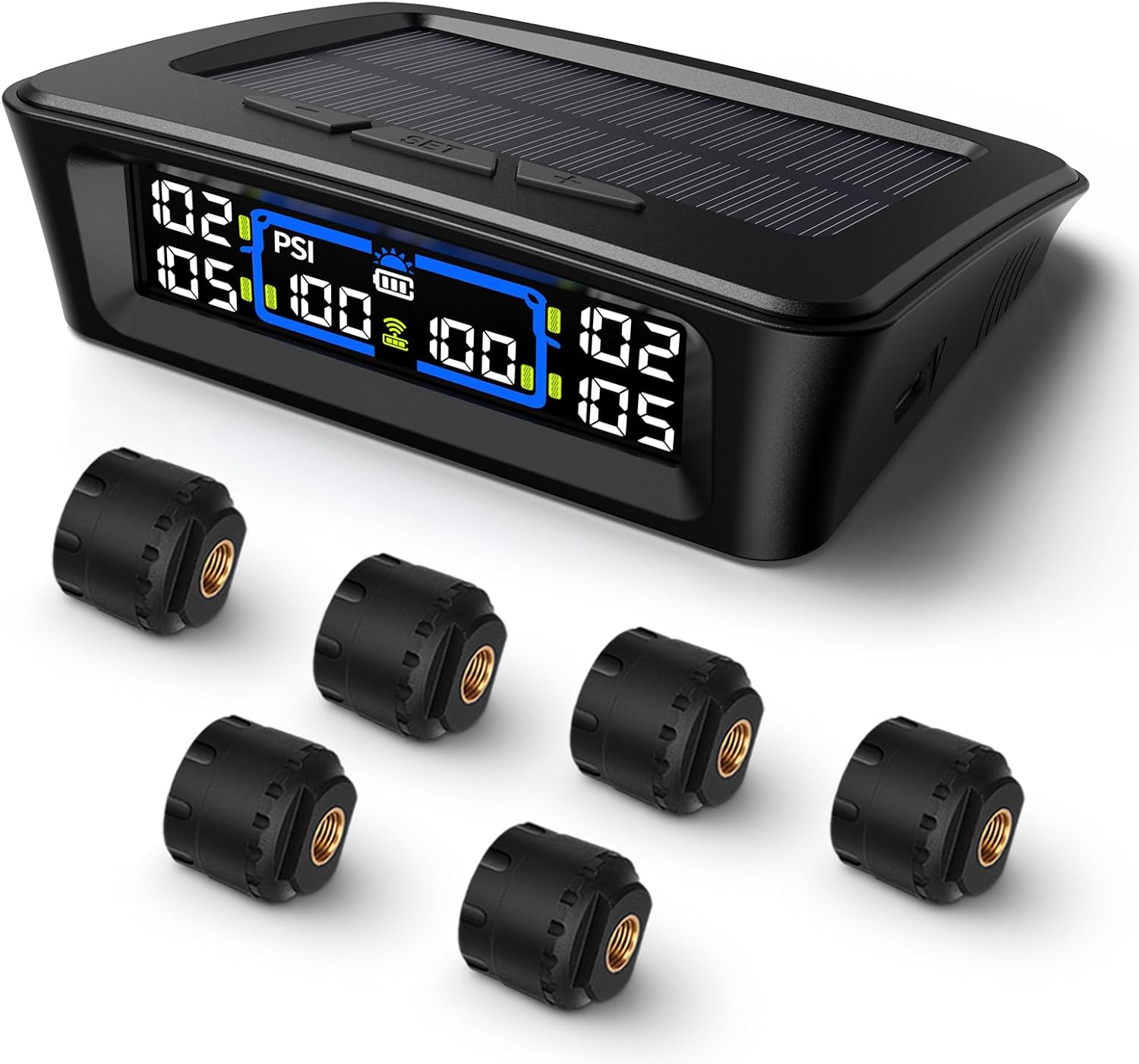
The Tymate TM12 RV TPMS delivers real-time tire pressure and temperature monitoring with a stable 433Hz display for safer long-distance driving. It supports simultaneous monitoring across vehicle and trailer zones, includes six alarm modes for pressure, temperature, leakage, battery, and signal loss, and features easy DIY installation with auto calibration. Power is supplied via USB-C charging or solar recharging, with a wide 0–144 PSI range and up to 50 ft signal coverage for RVs and towable trailers.

These pre-assembled 15x6.00-6 front tire and wheel assemblies are designed for quick replacement on riding lawn mowers and lawn tractors. Built with natural rubber pneumatic tires and turf-friendly tread for solid traction and improved shock absorption. A thickened welded rim and 3/4" sintered iron bushing help provide stable, heavy-duty support for everyday mowing use.

Steelman white tire marking crayons provide high-contrast, semi-permanent marks for repairing and inspecting tires and equipment. They write on wet or dry, smooth or coarse surfaces including rubber, metal, glass, and wood, making them ideal for puncture location and damage outlining. The lead- and zinc-free crayons resist weather and fading yet wipe away when you no longer need the marks.
When to Consult a Professional for Alignment Issues
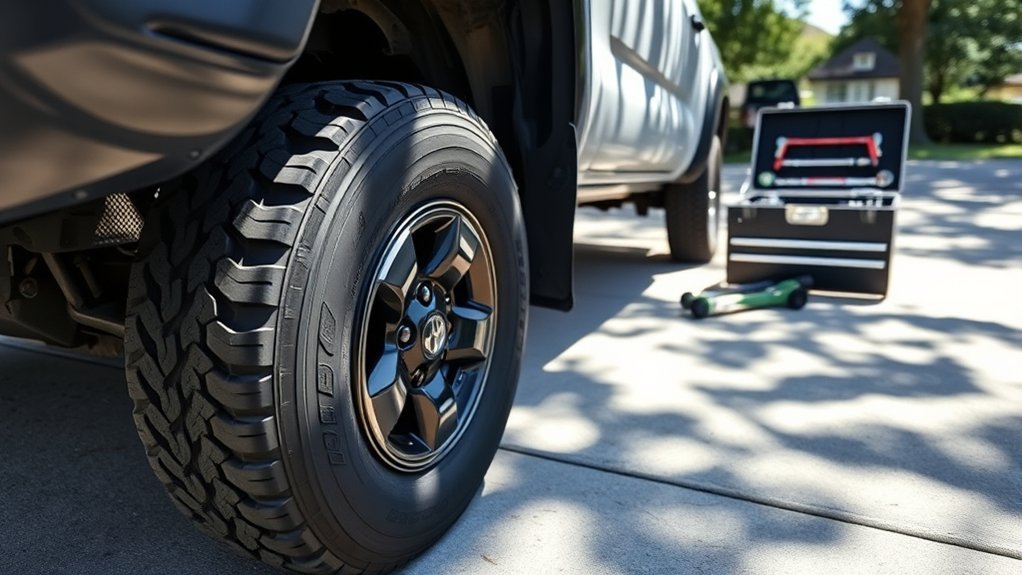
If your Toyota Tacoma keeps pulling after you correct tire pressure and inspect the tires, schedule a professional inspection. A trained technician can check the alignment angles, tire condition, brakes, wheel bearings, steering linkage, and suspension parts together.
Signs of Alignment Problems
Common alignment signs include uneven tread wear, an off-center steering wheel, a steady pull on a level road, or vibration. The issue becomes more likely if the symptoms started after new tires, a tire rotation, a curb strike, off-road driving, or suspension work.
- One front tire shows more inner or outer shoulder wear than the other.
- The steering wheel sits off-center when the truck drives straight.
- The Tacoma wanders and needs constant correction.
- The pull becomes worse at highway speed.
- The truck recently received a lift, leveling kit, larger tires, or new suspension parts.
Importance of Expert Diagnosis
A proper diagnosis prevents repeated alignments that do not solve the real issue. If a tire has a shifted belt, a brake is dragging, or a suspension bushing has play, the alignment may look good on paper while the Tacoma still pulls on the road.
| Symptom | Recommended Action |
|---|---|
| Pulling to one side on a flat road | Check tires first, then request alignment and suspension inspection |
| Uneven tire wear | Inspect tire condition and alignment angles |
| Pulling during braking | Inspect calipers, pads, rotors, hoses, bearings, and front-end parts |
| Pull after a lift kit or larger tires | Use a shop familiar with modified Tacoma suspension geometry |
| Grinding, growling, clunking, or hot wheel | Stop long-distance driving and get a safety inspection |
When to Seek Help
Seek help right away if the pull is sudden, severe, or paired with vibration, braking problems, tire damage, clunking, or a burning smell. Also schedule an inspection if the truck has been aligned more than once and still pulls. That usually means the shop needs to look deeper than the alignment rack.
How to Prevent Pulling Issues in Your Tacoma
Prevention starts with consistent tire and suspension care. Check pressure monthly when the tires are cold, inspect tread during the same check, and use your Tacoma’s driver-door placard or year-specific owner’s manual for the correct pressure.
Rotate your tires according to your owner’s manual. NHTSA says that if the manufacturer recommends rotation, many vehicles use a 5,000- to 8,000-mile interval or sooner if uneven wear appears. Rotation can help reduce irregular wear and maintain tire fuel efficiency.
Schedule an alignment after new suspension parts, a curb hit, a hard pothole impact, uneven tire wear, or major off-road use. If your Tacoma is lifted or runs larger tires, choose a shop that understands modified truck alignment. Also keep loads balanced, avoid overloading the truck, and recheck pressure before towing, hauling, or trail driving.
Frequently Asked Questions
How do you fix a Toyota Tacoma that pulls to one side?
Start by checking cold tire pressure and tire condition. Then confirm the pull on a flat road, inspect for uneven tread wear, and note whether it happens while braking or accelerating. If the pull remains, get a professional inspection of the alignment, brakes, bearings, steering, and suspension.
Can low tire pressure make a Tacoma pull?
Yes. If one tire is noticeably lower than the opposite tire, the Tacoma can drift or feel heavier on one side. Check pressure when the tires are cold and inflate them to the pressure listed on the driver-door placard or in the owner’s manual.
Why does my Tacoma still pull after an alignment?
A Tacoma can still pull after an alignment if a tire has internal damage, tire conicity, uneven wear, brake drag, a worn bearing, or loose suspension parts. Ask the shop for the alignment printout and request a tire, brake, bearing, steering, and suspension inspection.
How can you tell if a Tacoma wheel bearing is bad?
Common signs include growling or humming that changes with speed, vibration, looseness at the wheel, uneven tire wear, or noise that changes when you steer left or right. A mechanic can lift the truck and check the bearing, hub, and related parts safely.
Why does my truck pull only when braking?
A braking-only pull often points to uneven brake force, a sticking caliper, worn pads, rotor problems, a collapsed brake hose, or loose front-end parts. Treat this as a safety issue and have the brake and steering systems inspected.
Conclusion
A Toyota Tacoma that pulls to one side usually has a fixable tire, alignment, brake, bearing, steering, or suspension issue. Start with cold tire pressure and a careful tire inspection, then look at when the pull happens. If the truck still drifts, ask a qualified shop to inspect the whole front end and provide alignment readings.
Do not rely on guesswork or repeated alignments if the same problem keeps coming back. A clear diagnostic order saves time, protects your tires, and helps keep your Tacoma stable on the road.
Sources
- NHTSA TireWise — tire pressure, tread checks, tire safety, rotation, and alignment guidance.
- FuelEconomy.gov: Keeping Your Vehicle in Shape — fuel-economy effects of proper tire inflation.
- Bridgestone Tire Alignment Guide — alignment symptoms and camber, toe, and caster basics.
- Toyota Owners Manuals and Warranties — year-specific Toyota owner’s manual lookup.