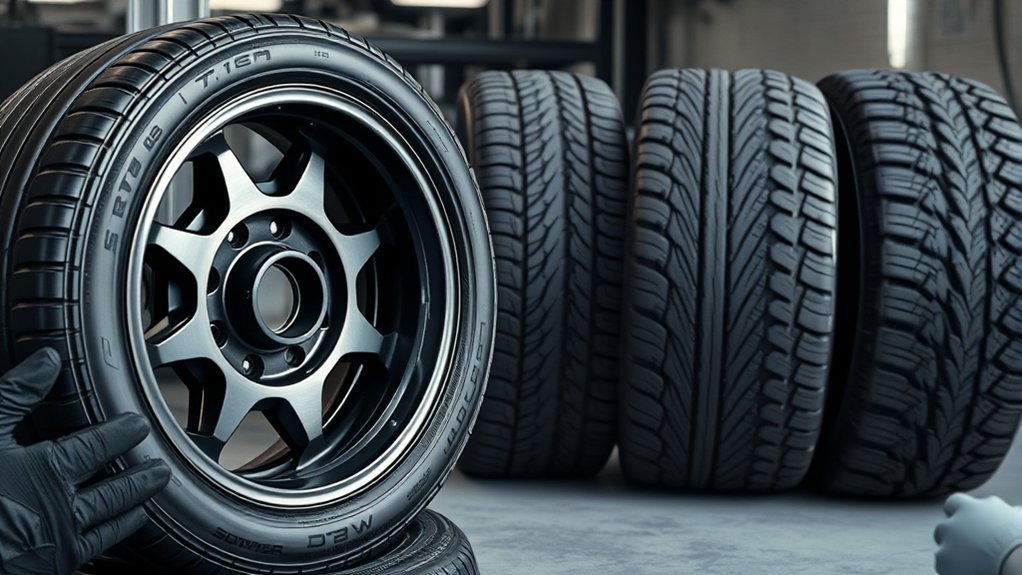
A tire is the rubber covering around a wheel that supports a vehicle’s weight, cushions road impact, keeps the vehicle in contact with the road, and helps it steer, brake, and accelerate safely. You may also see the British spelling, tyre. On the sidewall, tire markings show size, construction, load capacity, speed rating, and manufacturing information.
Quick Answer
A tire is a rubber cushion fitted around a wheel. It carries the vehicle’s load, holds air pressure, provides traction, absorbs road shock, and affects braking, handling, fuel economy, ride comfort, and safety. “Tire” is the standard U.S. spelling; “tyre” is the standard British spelling for the same vehicle part.
Key Takeaways
- A tire supports load, keeps the wheel in contact with the road, and helps control traction, braking, steering, comfort, and efficiency.
- Use tire for American English and tyre for British English when referring to the rubber part fitted around a wheel.
- Tire size codes identify width, aspect ratio, construction, rim diameter, load index, and speed rating.
- Replace tires at 2/32 inch tread depth, sooner if damage appears, and according to the age limits set by your tire or vehicle manufacturer.
- Check cold tire pressure monthly, inspect tread and sidewalls, rotate tires on schedule, and do not rely on TPMS as a substitute for manual checks.
At a Glance
| Time Required | About 10–15 minutes for a basic monthly tire check |
| Difficulty | Easy for pressure and tread checks; use a tire professional for damage, alignment, balancing, or repair questions |
| Tools Needed | Tire pressure gauge, tread-depth gauge or penny, flashlight, owner’s manual, and the tire placard on the driver’s doorjamb |
| Cost | Usually $5–$20 for a basic gauge; professional inspection costs vary by shop and service |
What Does Tire Mean?
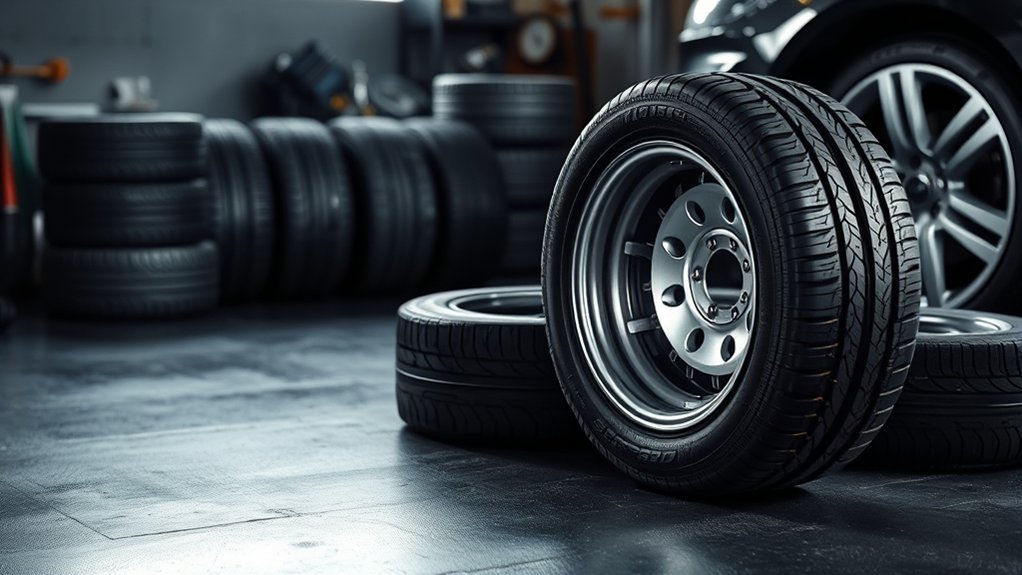
As a noun, a tire is the rubber cushion fitted around a wheel, usually filled with compressed air. It helps the wheel roll while carrying the vehicle’s load and maintaining contact with the road. Merriam-Webster defines a tire as a rubber cushion that fits around a wheel, and Britannica describes it as a continuous band that encircles the rim of a wheel.
On a car, SUV, truck, trailer, motorcycle, bicycle, or aircraft, the tire does more than “cover” the wheel. It affects braking distance, steering response, ride comfort, road noise, fuel economy, and stability. The right tire must match the vehicle manufacturer’s required size, load rating, speed rating, and use case.
In everyday language, tire can also be a verb meaning to become tired, to make someone tired, or to lose patience with something. For example, “Long trips tire the driver” and “I tire of repeated delays” both use tire as a verb.
Warning: Tires are safety-critical parts. Do not drive on a tire with exposed cords, a bulge, a sidewall puncture, severe cracking, or tread worn to 2/32 inch. Have questionable damage inspected by a qualified tire professional.
Tire vs. Tyre: Spelling Differences
Tire and tyre refer to the same vehicle component, but the spelling depends on the audience. Use tire in American English and tyre in British English. The plural forms follow the same pattern: tires in American English and tyres in British English. The Cambridge Dictionary lists tyre as the UK form and tire as the U.S. form.
For a U.S. automotive blog, “tire” is usually the best choice. If you write for the UK, Australia, New Zealand, or many Commonwealth readers, “tyre” is more natural. For global content, choose one spelling style and use it consistently throughout the article.
Tire as a Verb
As a verb, tire means to become fatigued or to cause fatigue. It can describe physical tiredness, mental weariness, or loss of patience.
- Physical fatigue: “The steep hill began to tire the cyclists.”
- Mental fatigue: “Repetitive work can tire your attention.”
- Loss of interest: “Readers may tire of the same example repeated too often.”
Do not use tire as the adjective when you mean “feeling tired.” Say “I am tired,” not “I am tire.” Say “I tire quickly” when you want the verb form.
Parts of a Tire
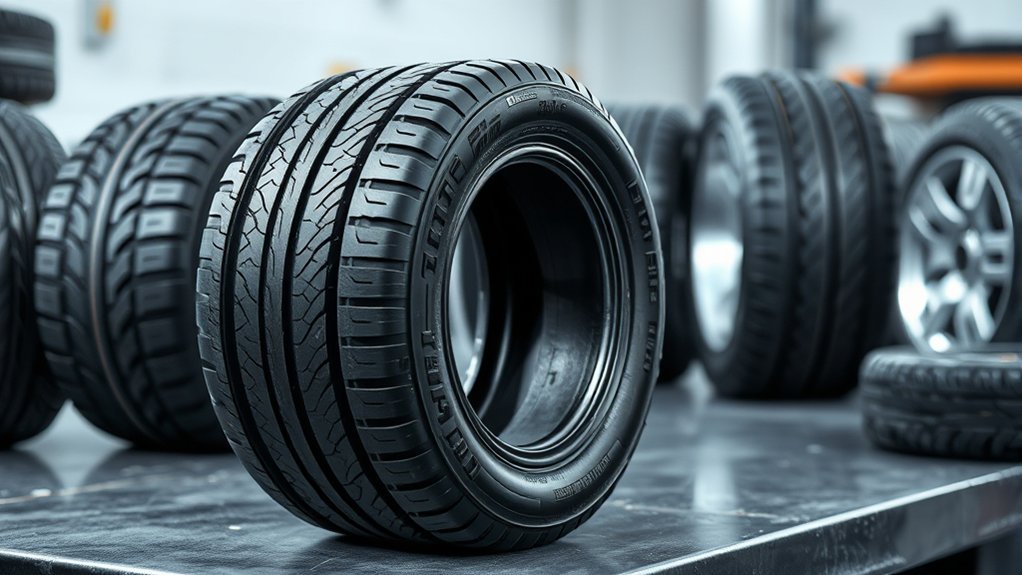
A tire works because several parts share the load, hold air, resist heat, and create grip. The main parts include the tread, sidewall, bead, belts, body plies, and inner liner.
Tread
The tread is the outer rubber layer that touches the road. Its blocks, grooves, and sipes help manage grip, water evacuation, snow traction, road noise, and wear. A tire with too little tread cannot move water away effectively, which increases the risk of hydroplaning on wet roads.
Sidewall
The sidewall connects the tread area to the bead. It flexes as the tire rolls, helps absorb bumps, and carries important markings such as tire size, load index, speed rating, DOT/TIN information, and sometimes UTQG ratings. Cuts, bubbles, and deep cracks in the sidewall can signal structural damage.
Bead
The bead is the reinforced edge that locks the tire onto the wheel rim. It helps form the air seal on tubeless tires. A damaged bead can cause leaks or mounting problems.
Belts and Body Plies
Steel belts and fabric body plies help the tire keep its shape, carry load, resist punctures, and maintain stability. In many modern passenger tires, the “R” in a size code means radial construction, where the body cords run radially across the tire.
Inner Liner
The inner liner is the air-retaining layer inside many tubeless tires. It helps slow air loss and keeps pressure more stable between checks.
Tire Size Numbers Explained
A tire size such as P215/65R15 95H is not random. Each part of the code tells you how the tire is built and what it can safely carry when used correctly. Always confirm the required size on the vehicle’s tire placard or owner’s manual, not only on the old tire.
Tire Size Format
| Code Part | Meaning | Example |
|---|---|---|
| P | Passenger vehicle tire prefix | P215/65R15 |
| 215 | Section width in millimeters | 215 mm wide |
| 65 | Aspect ratio, or sidewall height as a percentage of width | Sidewall height is 65% of 215 mm |
| R | Radial construction | Common passenger tire construction |
| 15 | Wheel rim diameter in inches | Fits a 15-inch wheel |
| 95H | Load index and speed rating | Load code 95 with H speed symbol |
Reading Width and Aspect Ratio
The first three-digit number gives the tire’s width in millimeters. A wider tire can create a wider contact patch, but it must still match the wheel, suspension, and vehicle specifications. The next two-digit number is the aspect ratio. A lower aspect ratio usually means a shorter sidewall and sharper handling feel; a higher aspect ratio usually gives more sidewall cushion and ride comfort.
Changing width or aspect ratio can change overall tire diameter, speedometer accuracy, clearance, braking behavior, and drivetrain load. For normal replacement, use the size listed on the door placard or owner’s manual unless a qualified tire professional confirms a safe alternative.
Load and Speed Codes
The load index is a numeric code that represents how much weight one tire can carry at the correct pressure. The speed rating is a letter that represents the tire’s tested speed capability under controlled conditions. These ratings are not permission to overload the vehicle or drive faster than the law allows.
Never choose a replacement tire with a lower load index or speed rating than the vehicle manufacturer requires unless the manufacturer or a qualified tire professional confirms that it is safe for your specific vehicle and use.
Other Sidewall Markings to Know
DOT/TIN Date Code
The DOT Tire Identification Number, often called the TIN, helps identify the tire and its manufacturing date. On many tires, the last four digits show the week and year the tire was made. For example, a code ending in 3520 means the tire was manufactured in the 35th week of 2020. The full TIN may appear on only one side of the tire, so check both sidewalls.
UTQG Ratings
Many passenger vehicle tires sold in the United States also carry UTQG ratings for treadwear, traction, and temperature resistance. These ratings help shoppers compare tires within the same general category, but they do not replace the vehicle manufacturer’s required size, load rating, speed rating, or seasonal tire guidance.
Note: The maximum pressure molded on a tire sidewall is not the normal recommended inflation pressure for your vehicle. Use the cold tire pressure listed on the vehicle tire placard or in the owner’s manual.
Common Tire Types and Uses
Different tire types are built for different vehicles, loads, climates, and driving habits. Match the tire to the vehicle first, then choose the tread category that fits your weather and road conditions.
- Passenger tires: Common on cars, crossovers, minivans, and some SUVs. They balance ride comfort, traction, tread life, and efficiency.
- LT tires: Light Truck tires are built for higher loads, towing, hauling, and truck use. They may ride firmer than passenger tires.
- ST tires: Special Trailer tires are designed for trailer loads and trailer stability. They are not the same as passenger vehicle tires.
- Metric tires: Tires with no P, LT, or ST prefix. These are common on many vehicles and still carry size, load, and speed information.
- All-season tires: Designed for a broad mix of dry, wet, and light winter conditions. They are convenient but not the best choice for severe snow and ice.
- Winter tires: Built with cold-weather compounds and tread patterns for snow, slush, and ice. They are more effective than all-season tires in deep snow.
- Summer tires: Designed for warm-weather dry and wet grip. They are not meant for freezing temperatures, snow, or ice.
- All-terrain tires: Common on trucks and SUVs that split time between pavement and light off-road use.
- EV-oriented tires: Many electric-vehicle tires are tuned for low rolling resistance, heavier vehicle weight, instant torque, tread life, and cabin noise. For example, Bridgestone’s EV tire information highlights load, torque, rolling resistance, range, and noise as EV tire concerns.
Additionally, selecting the right tire type can significantly affect fuel economy and performance, especially when load rating, size, and rolling resistance match the vehicle’s needs.
[Products Worth Considering]

ETENWOLF’s tire pressure gauge helps you quickly and accurately check tire PSI across cars, trucks, motorcycles, bikes, and more. It’s manually calibrated to ANSI B40.1 Grade A for reliable readings, includes a large glow dial for easy nighttime viewing, and features a 360-degree swivel chuck for use at any valve angle. The gauge also works consistently in extreme hot or cold weather.

Measure tire tread depth quickly and accurately with this LUMITECO dial gauge that reads in 1/32" increments up to 14/32". The color-coded green/yellow/red zones make it easy to judge tire wear and know when replacement is needed. A rugged, compact design with a protective pouch helps keep the gauge ready for use on cars, trucks, motorcycles, and more.

Monitor tire tread wear with a smart, color-coded depth gauge that shows clear condition ranges at a glance. The bar is range marked for fast, easy readings, helping you maintain safer traction and performance. Each gauge is portable with a pocket clip, and the set includes 20 units for daily use and sharing.
How Tires Grip the Road
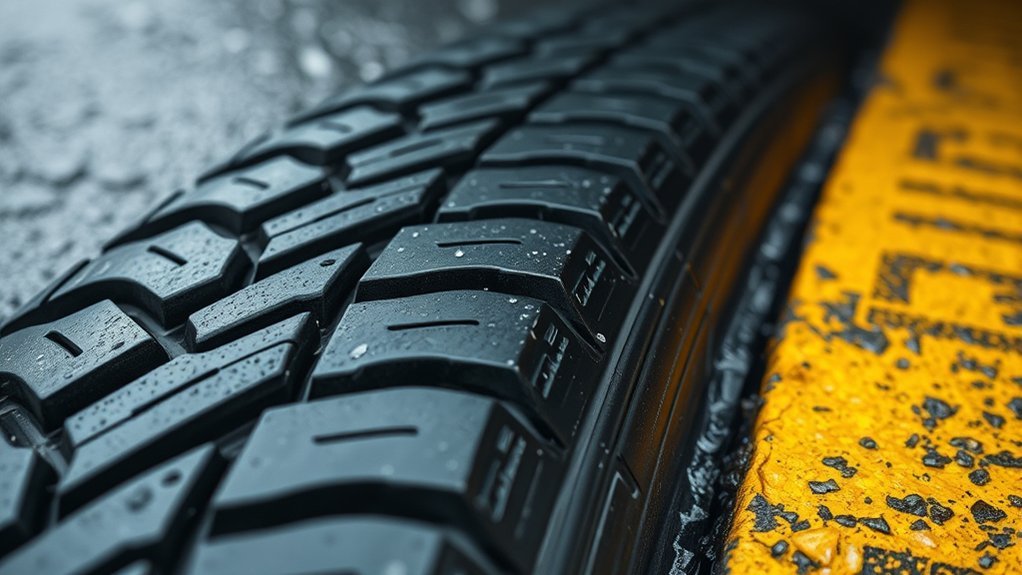
Tires grip the road through the contact patch, tread pattern, rubber compound, tire pressure, load, temperature, and road surface. Dry pavement, rain, snow, ice, gravel, and heat all change how the tire behaves.
Tire Tread and Traction
The tread helps the tire maintain grip by putting rubber against the road and moving water away from the contact patch. Deep grooves can improve wet traction and reduce hydroplaning risk, while tread blocks, sipes, and rubber compounds help with braking, cornering, and snow grip.
| Tread Type | Best Use | Important Limit |
|---|---|---|
| All-season | Mixed dry, wet, and mild winter driving | Not ideal for severe snow or ice |
| Winter | Cold weather, snow, slush, and ice | Can wear faster in warm weather |
| Summer | Warm dry and wet pavement | Not for freezing temperatures, snow, or ice |
| All-terrain | On-road and light off-road use | May create more road noise or rolling resistance |
Additionally, selecting dedicated winter tires can improve grip in snowy conditions when your climate and vehicle use justify them.
Road Surface Contact
The tire’s contact patch is small, but it does a large job. Underinflation can create excess heat, poor handling, shoulder wear, and lower fuel economy. Overinflation can reduce ride comfort and concentrate wear near the center of the tread. Heavy loads, hard braking, aggressive cornering, and high heat also stress the tire.
For safe road contact, keep pressure at the vehicle’s recommended cold setting, avoid overloading the vehicle, slow down in rain or snow, and replace tires before the tread is too shallow to move water effectively.
NHTSA reported 511 motor vehicle traffic fatalities in tire-related crashes in 2024, which is a reminder that tire condition is a real safety issue, not just a maintenance detail.
When to Replace Your Tires
You should replace a tire when it reaches the legal and safety minimum tread depth, shows unsafe damage, can no longer hold pressure, has aged beyond manufacturer guidance, or causes clear performance problems such as vibration, pulling, or reduced wet traction.
[Products Worth Considering]

The SAFELIFE dial tire tread depth gauge measures tread depth in 1/32 inch increments with clear, easy-to-read 2-inch dial face. Color zones using a traffic light system help you quickly judge whether tread is low, marginal, or ample for safer driving. Built with a durable zinc cast body and a metal detect probe for precise, comfortable use across cars, motorcycles, trucks, and buses.
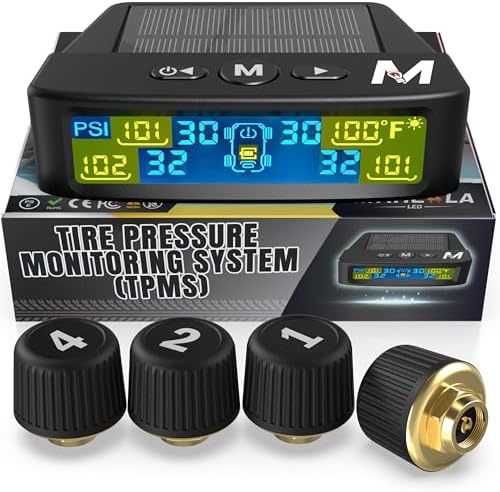
Marcala’s TPMS set of four sensors helps you monitor tire pressure and temperature in real time while driving, with updates every second. The bright color LCD uses auto-dimming for easy viewing, powered by dual solar and USB charging, and offers six alarm modes. Built for trailers, RVs, campers, trucks, and towing setups, the sensors support monitoring 1-4 wheels up to 98 PSI with IP67 waterproof protection.

Milton S-921 pencil tire pressure gauge helps you maintain optimal tire pressure for passenger cars with accurate readings in PSI and kPa. It features a built-in deflator valve for convenient pressure adjustments, plus a single chuck head and nylon indicator bar for easy use on the go. Built from durable plated brass and designed for reliable performance, it’s a practical road trip and cold-weather maintenance tool.
Replace at 2/32 Inch Tread Depth
NHTSA says tires are not safe and should be replaced when tread is worn to 2/32 inch. You can check this with a tread-depth gauge or the penny test. Place a penny into a tread groove with Lincoln’s head upside down and facing you. If you can see the top of Lincoln’s head, the tire is at or below the replacement point.
For wet roads or winter driving, traction can decline before 2/32 inch. If you drive in heavy rain, snow, or mountain conditions, consider replacing earlier based on tire type, climate, and professional advice.
Replace for Damage
Replace or professionally inspect a tire immediately if you see any of these signs:
- Bulges, bubbles, or blisters on the sidewall
- Cracks that open deeply in the tread or sidewall
- Cuts or gashes that expose fabric or steel cords
- A sidewall puncture
- Tread separation, missing chunks, or severe uneven wear
- Repeated pressure loss after reinflation
- Vibration, thumping, pulling, or handling changes after an impact
Replace for Age
Tire age matters even when tread looks good. Rubber and internal materials can degrade from heat, sunlight, oxygen, storage conditions, and time. Michelin recommends a professional inspection at least once a year after five years of use and replacement at ten years from the tire’s manufacture date, including spare tires. NHTSA also notes that some vehicle and tire manufacturers recommend replacing tires that are six to ten years old, regardless of treadwear.
Use the DOT/TIN date code to check age, and follow the most conservative guidance from your vehicle manufacturer, tire manufacturer, and tire professional.
Do Spare Tires Age?
Yes. Spare tires age even if they are rarely used. A full-size spare should not become a long-term replacement for worn tires unless it is the correct size, correct rating, properly inflated, not too old, and in safe condition. Compact temporary spares usually have speed and distance limits printed on the tire or in the owner’s manual.
How to Care for Your Tires
Good tire care is simple, but it must be regular. A few minutes each month can help prevent uneven wear, poor fuel economy, blowouts, and avoidable replacement costs.
[Products Worth Considering]

Accurately measure tire tread depth with a calibrated gauge marked from 0 to 1 inch in 1/32 inch increments. The color-coded bar helps you quickly identify tread condition ranges, supporting safe driving for trucks, motorcycles, automobiles, and passenger vehicles.

The TYAMATE TM8 solar-powered wireless TPMS delivers real-time tire pressure and temperature monitoring with six alarm modes for safer driving. A vibrant color LCD display shows readings clearly while windshield mounting keeps it hands-free and easy to read. With a wide 0–87 PSI range, strong 433.92 MHz signal transmission, and quick sensor pairing, it’s ideal for RV, sedan, SUV, MPV, and truck use.

Keep your tires properly inflated with this analog VONDIOR tire pressure gauge, designed for fast, easy readings without batteries. The swiveling, two-axis hose and large glow dial help you measure at any tire angle with instant visibility. Built with a protective rubber shield, it supports durable, low-maintenance use for cars and trucks.
Check Cold Tire Pressure Monthly
Check the pressure of all tires, including the spare, at least once a month when the tires are cold. “Cold” usually means the vehicle has not been driven for at least three hours. Use the recommended pressure on the vehicle tire placard or owner’s manual, not the maximum pressure molded on the tire sidewall.
Note: Tire Pressure Monitoring Systems are helpful, but they usually warn only when a tire is significantly underinflated. They do not replace monthly checks with an accurate gauge.
Inspect Tread and Sidewalls
Look for low tread, uneven wear, nails, glass, cuts, bulges, cracks, exposed cords, and objects stuck in grooves. Uneven wear can point to underinflation, overinflation, worn suspension parts, alignment problems, or failure to rotate.
Rotate on Schedule
Rotate tires according to your owner’s manual. Many vehicles fall around a 5,000–8,000-mile rotation interval, while the Tire Industry Association gives a general 5,000–7,000-mile range depending on the vehicle. Some vehicles with staggered tire sizes, directional tires, or special fitments need a specific rotation pattern or may not be rotatable front to rear.
Balance and Align When Needed
Balancing helps prevent vibration. Alignment helps tires wear evenly and keeps the vehicle from pulling left or right. Have the vehicle inspected if you notice vibration, steering pull, uneven wear, or a handling change after hitting a pothole or curb.
Store Tires Correctly
If you store seasonal tires off the vehicle, keep them in a cool, dry, clean place away from direct sunlight, ozone sources, petroleum products, and standing water. Clean them before storage and keep them protected from weather.
Pro Tip: Check tire pressure when you fuel up on the first weekend of each month. Pairing the task with a routine habit makes it easier to remember.
What to Do If a Tire Blows Out
A blowout can be frightening, but the right response helps you keep control. Hold the steering wheel firmly with both hands, avoid slamming on the brakes, ease off the accelerator gradually, keep the vehicle as stable as possible, and pull off the road only when it is safe. Turn on hazard lights and move away from traffic before calling for help or changing a tire.
After a blowout, replace the damaged tire and have the wheel, suspension, and surrounding components inspected if the event was severe.
Frequently Asked Questions
What does the slang tire mean?
In casual speech, “tire” can mean to become bored, weary, or emotionally drained by a person, topic, or routine. For example, “I tire of this argument” means “I am losing patience with this argument.”
What is the other meaning of tire?
Besides the vehicle part, “tire” is a verb meaning to become tired, to make someone tired, or to wear out someone’s patience. “The workout tired me” and “I tire of delays” both use the verb meaning.
Does tire mean tired?
“Tire” can mean “to become tired” when used as a verb, but it is not the adjective. Say “I tire quickly” for the verb and “I am tired” for the adjective.
What does it mean to tire of someone?
To tire of someone means to lose interest, patience, or emotional energy because of repeated behavior or repeated interactions. It usually points to mental or emotional fatigue rather than physical tiredness.
Is tire or tyre correct?
Both are correct. Use “tire” in American English and “tyre” in British English when referring to the rubber part around a wheel.
When should a tire be replaced?
Replace a tire when tread reaches 2/32 inch, when sidewall or tread damage appears, when it cannot hold pressure, when it ages beyond manufacturer guidance, or when vibration, pulling, or reduced traction suggests a problem.
Where do I find the right tire size for my vehicle?
Check the Tire and Loading Information Label on the driver’s doorjamb or the owner’s manual. The old tire’s sidewall can help, but the placard and manual are the safer source for the correct replacement size and pressure.
Conclusion
A tire is more than a rubber ring around a wheel. It carries the vehicle, holds air, grips the road, affects braking and steering, and plays a major role in safety. Use “tire” for American English and “tyre” for British English, read the sidewall before replacing a tire, and follow the vehicle placard for size and pressure. Check pressure and tread monthly, rotate tires on schedule, and replace any tire that is worn, damaged, too old, or no longer performing safely.
Sources
- NHTSA TireWise — tire safety, pressure, tread depth, rotation, TPMS, tire aging, and tire-related crash data
- Michelin: When to Replace Tires — age, tread, damage, inspections, DOT code, and ten-year replacement guidance
- Tire Industry Association: Tire Rotation — tire rotation interval and rotation-pattern basics
- Merriam-Webster: Tire — noun and verb definitions of “tire”
- Cambridge Dictionary: Tyre — British spelling and definition of “tyre”
- Bridgestone EV Tires — EV tire considerations such as load, torque, range, rolling resistance, and road noise