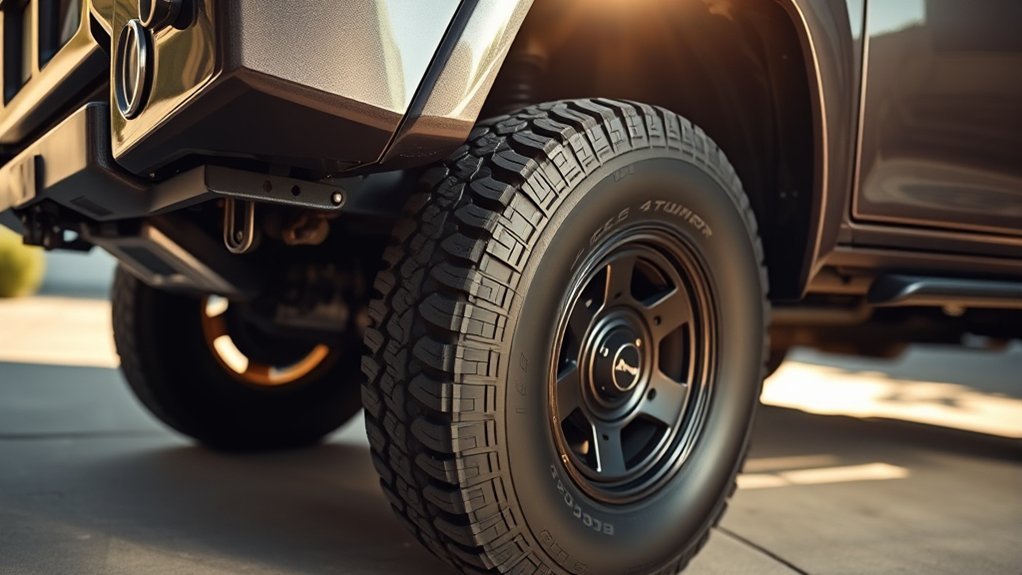
Yes, 275/70R17 tires usually fit a stock fifth-generation Toyota 4Runner from 2010 to 2024 when you keep factory 17-inch wheels and factory-style offset. The fit is not automatic for every 4Runner, though. Trim, wheel offset, tire model, alignment, mud flaps, worn suspension, and how hard you turn or flex the suspension can all affect clearance.
Quick Answer
A 275/70R17 tire is a mild upgrade for many stock 2010–2024 Toyota 4Runners. It is about 32.2 inches tall, roughly 0.55 inch taller than a 265/70R17. Expect possible light rubbing at full steering lock, especially near the front fender liner, mud flap, or bumper edge.
Key Takeaways
- Best fit: 275/70R17 tires are usually easiest on 2010–2024 4Runners with stock 17-inch wheels.
- Main risk: light rubbing can happen during full-lock turns, reversing, driveway dips, or off-road suspension flex.
- Small size jump: the tire adds about 0.28 inch of ground clearance compared with a 265/70R17.
- Pressure matters: use the door-jamb Tire and Loading Information Label or a tire shop load table as your starting point.
- 2025+ caveat: sixth-generation 4Runner fitment should be checked separately because the platform, trims, wheels, and factory tire packages changed.
At a Glance
| Time Required | 30–60 minutes to check clearance before installation; longer if trimming or alignment is needed |
| Difficulty | Easy for inspection; moderate if trimming fender liners or adjusting alignment |
| Tools Needed | Tape measure, flashlight, chalk or painter’s tape, tire pressure gauge, floor jack if checking full suspension movement |
| Cost | Free for inspection; usually $50–$200+ for minor trimming or alignment, depending on shop rates |
Does the 275/70R17 Fit a Stock 4Runner?
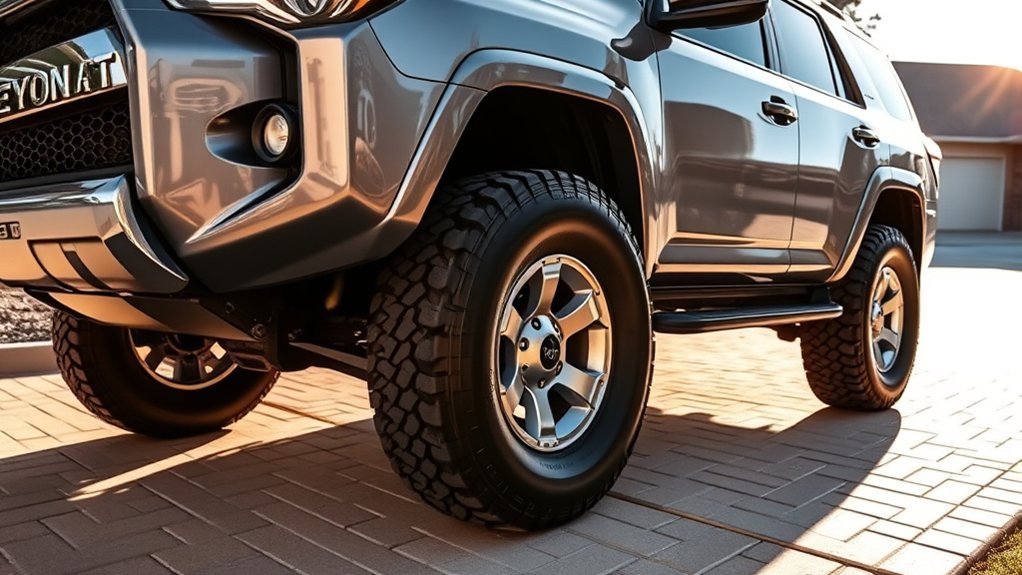
A 275/70R17 is often considered one of the safer upsizes for a stock fifth-generation 4Runner because it is only slightly larger than the common 265/70R17 factory size. The 275/70R17 measures about 32.2 inches tall, while a 265/70R17 measures about 31.6 inches tall. That means the upgrade adds about 0.55 inch of total tire diameter and about 0.28 inch of extra ground clearance.
That small increase is why many owners can run this size without a lift. Still, you should treat it as a test-fit size, not a guaranteed bolt-on for every setup. A tire with a square shoulder, aggressive sidewall lugs, or wider actual section width may rub more than another tire with the same printed size.
Warning: Do not ignore tire rubbing. If the tire contacts the fender liner, bumper cover, suspension, brake line, body mount, or mud flap, fix the clearance issue before normal driving or trail use.
Fitment by 4Runner Generation
The phrase stock 4Runner needs context. Fitment advice for a 2010–2024 fifth-generation 4Runner should not automatically be applied to a 2025 or newer sixth-generation model.
| 4Runner model | 275/70R17 fitment note |
|---|---|
| 2010–2024 fifth generation | Usually a realistic stock-suspension upgrade on factory 17-inch wheels, but check for rubbing at full lock and under suspension compression. |
| 2025+ sixth generation | Do not assume the same fitment. Toyota introduced a new sixth-generation 4Runner, and some trims use different factory wheel and tire packages. |
| Aftermarket wheels | Offset changes can push the tire outward or inward, which may create rubbing even when the same tire fits on stock wheels. |
For newer models, Toyota notes that the 2025 4Runner is an all-new sixth-generation vehicle and that the Trailhunter uses 33-inch Toyo Open Country A/T tires with Old Man Emu shocks that raise the vehicle from the factory. You can review Toyota’s official release here: Toyota 2025 4Runner press release.
User Experiences With 275/70R17 Tires
Owner reports are generally positive for 275/70R17 tires on fifth-generation 4Runners, especially when the truck has factory wheels, healthy suspension, and no aggressive negative offset. The most common pattern is simple: the tires fit during normal road driving, but light rubbing may show up during full-lock steering, reversing, steep driveway entries, or off-road articulation.
The key is to avoid treating someone else’s result as a guarantee. Two 4Runners can behave differently because of alignment, caster, suspension sag, bumper position, mud flaps, tire brand, tread shoulder shape, and wheel offset.
Pro Tip: Before buying all four tires, ask the tire shop to mount one front tire and cycle the steering from lock to lock. This catches most rubbing problems before you commit to the full install.
Common Rubbing Issues With 275/70R17 Tires
Most rubbing with this size happens near the front of the vehicle, not the rear. Listen for scraping, plastic tapping, or a rubber-on-plastic sound while turning slowly in a parking lot.
- Front fender liners: The tire may touch the plastic liner at full lock, especially in reverse.
- Mud flaps: Factory or aftermarket mud flaps can sit close to the tire shoulder.
- Front bumper cover: The lower bumper edge can rub if the tire has a square shoulder or if wheel offset pushes the tire outward.
- Body mount area: More common with larger sizes like 285/70R17, but still worth checking on aggressive wheel setups.
- Upper control arm or sway bar: This depends heavily on wheel offset and tire width, so inspect the inside clearance too.
- Spare tire location: Confirm that the matching spare fits under the rear before relying on it for long trips.
If you only hear light plastic contact, a small fender liner adjustment may solve it. If you see rubber marks on metal, suspension parts, brake lines, or structural areas, stop and correct the fitment before driving farther.
Why Upgrade to 275/70R17 KO2 Tires?
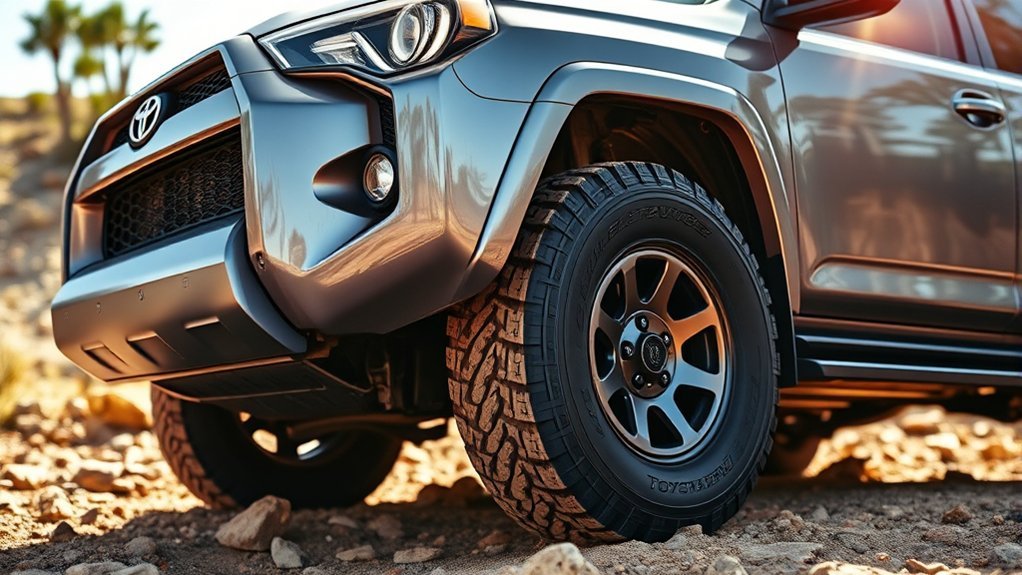
Many 4Runner owners choose 275/70R17 all-terrain tires because the size gives the truck a fuller stance without jumping to the more difficult 285/70R17 fitment. The BFGoodrich All-Terrain T/A KO2 is a popular example because it is built for mixed road and trail use. BFGoodrich lists the KO2 as an all-weather, severe snow rated tire with a 50,000-mile mileage warranty. You can check the current product information on the official BFGoodrich KO2 page.
BFGoodrich also offers the newer All-Terrain T/A KO3, so shoppers comparing current all-terrain tires should also review the official BFGoodrich KO3 page before buying.
[Products Worth Considering]

The SAFELIFE dial tire tread depth gauge measures tread depth in 1/32 inch increments with clear, easy-to-read 2-inch dial face. Color zones using a traffic light system help you quickly judge whether tread is low, marginal, or ample for safer driving. Built with a durable zinc cast body and a metal detect probe for precise, comfortable use across cars, motorcycles, trucks, and buses.

Measure tire tread depth quickly and accurately with this LUMITECO dial gauge that reads in 1/32" increments up to 14/32". The color-coded green/yellow/red zones make it easy to judge tire wear and know when replacement is needed. A rugged, compact design with a protective pouch helps keep the gauge ready for use on cars, trucks, motorcycles, and more.

Keep your tires properly inflated with this analog VONDIOR tire pressure gauge, designed for fast, easy readings without batteries. The swiveling, two-axis hose and large glow dial help you measure at any tire angle with instant visibility. Built with a protective rubber shield, it supports durable, low-maintenance use for cars and trucks.
Improved Off-Road Capability
A good all-terrain tire can improve grip on gravel, dirt, snow, mud, and rocky trails. The benefit comes more from the tread pattern, compound, shoulder design, and sidewall construction than from the size increase alone.
- More traction: Aggressive all-terrain tread blocks can bite better on loose surfaces.
- Slight clearance gain: Compared with 265/70R17, 275/70R17 adds about 0.28 inch of ground clearance.
- Stronger trail feel: LT all-terrain tires can resist cuts and punctures better than many highway tires, depending on load range and model.
- Better stance: The tire fills the wheel wells more without usually requiring the same trimming as 285/70R17.
Enhanced Aesthetic Appeal
Choosing 275/70R17 tires can make your 4Runner look more planted and rugged. The difference is visible, but not extreme, which is why this size appeals to owners who want a balanced daily driver and weekend trail setup.
| Feature | 265/70R17 | 275/70R17 |
|---|---|---|
| Approx. diameter | 31.6 in | 32.2 in |
| Approx. section width | 10.4 in | 10.8 in |
| Visual stance | Factory look | Slightly fuller and more aggressive |
| Fitment risk | Lowest | Usually mild, but check for rubbing |
How Load Ratings Affect Ride Quality
Load rating affects comfort, weight, steering feel, and trail durability. A heavier LT tire can feel tougher off-road, but it may also ride firmer, add road noise, and reduce fuel economy compared with a lighter passenger-rated tire.
Load Ratings Explained
Load range is often described with old-style ply ratings, but that does not mean the tire has that exact number of physical plies. In general, Load Range C is a 6-ply rating, Load Range D is an 8-ply rating, and Load Range E is a 10-ply rating.
| Load range | Common feel | Best use case |
|---|---|---|
| C | Lighter and more comfortable | Daily driving and light trail use |
| D | Balanced | Mixed daily and trail use when available |
| E | Firmer and heavier | Heavier loads, towing, sharp rocks, and stronger sidewall needs |
Impact on Comfort
If you drive mostly pavement, a lighter tire can feel smoother and more responsive. If you carry armor, drawers, camping gear, a rooftop tent, or tow often, a higher load range may make more sense. The right choice depends on how your 4Runner is actually used.
For pressure, do not copy a random number from a forum. Start with the Toyota door-jamb placard, your owner’s manual, or a tire professional using load tables for your exact tire. The NHTSA TireWise guide says the correct tire pressure is found on the Tire and Loading Information Label or in the owner’s manual, and that tire pressure should be checked cold.
Note: Airing down can help off-road ride comfort and traction, but it is for low-speed trail use. Air back up to safe road pressure before highway driving.
Comparing Tire Sizes: 275/70R17 vs. Others
Understanding the size difference helps you predict rubbing, speedometer change, and ride feel.
| Tire size | Approx. diameter | Difference vs. 265/70R17 | Fitment note |
|---|---|---|---|
| 265/70R17 | 31.6 in | Baseline | Common factory size on many fifth-gen 4Runners |
| 275/70R17 | 32.2 in | About 1.7% taller | Usually mild fitment risk on factory 17-inch wheels |
| 285/70R17 | 32.7 in | About 3.5% taller | More likely to need lift, trimming, caster adjustment, or body mount clearance |
With 275/70R17 tires, your speedometer may read slightly low. When the speedometer shows 60 mph, your real speed may be close to 61 mph, depending on tire wear and calibration.
[Products Worth Considering]

Monitor tire tread wear with a smart, color-coded depth gauge that shows clear condition ranges at a glance. The bar is range marked for fast, easy readings, helping you maintain safer traction and performance. Each gauge is portable with a pocket clip, and the set includes 20 units for daily use and sharing.

Upgrade your 2024-2026 Tesla Model 3 Highland with REEVAA all-weather mud flaps designed for seamless fit along the original body lines. The set of four delivers strong splash protection against mud, gravel, and road debris while using OEM-grade durable materials. Installation is non-destructive with original hole positions and snap-in clips, and the aerodynamic design helps minimize impact on efficiency.

The Trivd Frol 1/2" air impact wrench delivers high performance torque up to 1500 ft-lbs with a twin hammer impact mechanism for strong, balanced blows. It features an ergonomic grip, compact lightweight design, and quick-stop control with 3 forward speeds up to 8000 RPM plus a reverse speed. Built for demanding automotive repair and tire shop work, the rear exhaust helps keep debris away from the surface.
How to Modify for the Best Fit
You may not need major modifications for 275/70R17 tires, but small changes can make the setup cleaner and quieter. Start with inspection before cutting or buying suspension parts.
[Products Worth Considering]

This manual duck head tire changer kit makes tire installation and removal simpler by letting you embed the duck head into the tire with applied pressure. The integrated design and durable steel construction help reduce friction and improve efficiency and safety during use. Suitable for 16–21 inch wheels, it’s convenient for cars, trucks, SUVs, and ATV tires, with 24-hour after-sales support.

Accurately measure tire tread depth with a calibrated gauge marked from 0 to 1 inch in 1/32 inch increments. The color-coded bar helps you quickly identify tread condition ranges, supporting safe driving for trucks, motorcycles, automobiles, and passenger vehicles.
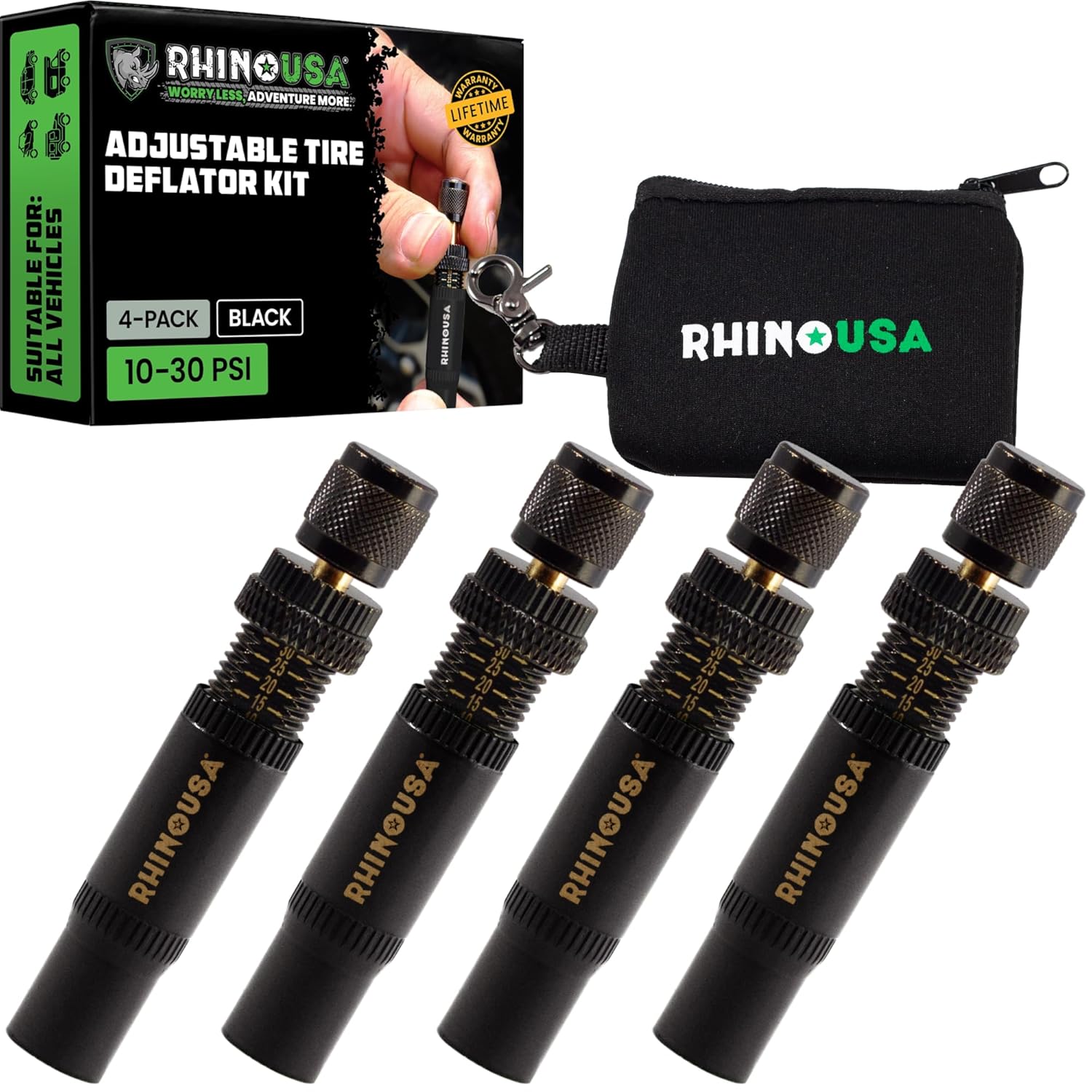
Use the Rhino USA adjustable tire deflators to air down all four tires at once by screwing one deflator onto each valve stem, letting you step away while the tires reach your preset pressure. Each deflator independently adjusts across a 10–30 PSI range with laser-etched indicators for quick setup and verification, making it ideal for beach, sand, and rocky off-road trails.
Trimming Fender Liners
If rubbing happens only on the plastic liner, a small liner push or trim may fix it. Use a flashlight to find the contact mark, then trim as little as possible.
- Mark the rub point: Look for shiny plastic, rubber marks, or fresh scuffs.
- Turn both directions: Check full lock left and right, both forward and reverse.
- Trim slowly: Remove only the contact area, then retest.
- Secure loose plastic: A loose liner can rub even when the tire size is fine.
Adjusting Tire Pressure
Tire pressure can affect ride comfort, steering feel, tread wear, and heat buildup. Start with the vehicle label or a shop-recommended pressure based on the tire’s load rating. Check pressure when the tires are cold, then monitor tread wear over the first few thousand miles.
If the center of the tread wears faster, pressure may be too high. If both shoulders wear faster, pressure may be too low. If one edge wears faster, check alignment.
Upgrading Suspension Components
A lift is usually not required just to try 275/70R17 tires on a fifth-gen 4Runner with factory wheels, but suspension work may help if your setup rubs or if you plan to wheel hard.
- Alignment: More positive caster can help pull the tire away from the rear of the front fender opening.
- Leveling kit: A mild front lift can improve clearance, but it does not fix every rub point.
- Upper control arms: Aftermarket UCAs can help alignment range on lifted setups.
- Fresh suspension: Worn or sagging suspension can reduce clearance and make rubbing worse.
How to Check Tire Clearance Before Installation
Before installing 275/70R17 tires, check clearance with your current tires and inspect the areas most likely to rub. A tire shop can also test-fit one tire on the front axle.
- Park on level ground: Straighten the steering wheel and measure current clearance around the front tires.
- Check full lock: Turn the wheel fully left and right while someone watches the fender liner, mud flap, bumper edge, and inside sidewall clearance.
- Inspect inner clearance: Look near the upper control arm, sway bar, brake line, and frame-side areas.
- Test in reverse: Light rubbing often appears when backing up at full lock.
- Check compression: If possible, inspect clearance with the suspension loaded, such as on a ramp or driveway transition.
- Confirm the spare: Make sure the matching 275/70R17 spare fits under the rear and can be removed when needed.
| Check area | What to look for | Common fix |
|---|---|---|
| Front fender liner | Plastic scuffing or tapping noise | Heat reshape, push liner forward, or small trim |
| Mud flap | Rub at rear of front tire | Remove, trim, or replace with lower-profile flap |
| Bumper edge | Front-side rub during steering | Minor bumper trim or liner adjustment |
| Inside sidewall | Contact near UCA or sway bar | Different offset, alignment correction, or tire model change |
Aesthetic Improvements With 275/70R17 Tires
Installing 275/70R17 tires gives your 4Runner a fuller wheel-well look without making the truck appear heavily modified. The stance is more noticeable with an all-terrain tread because the shoulder blocks and sidewall design add visual weight.
A 275/70R17 tire is a balanced upgrade: large enough to change the stance, but usually not so large that it forces the same trimming and lift work as 285/70R17.
The result works well if you want a practical daily driver that still looks trail-ready. For the cleanest look, match the tire size with correct alignment, even tread wear, and a full-size matching spare.
Recommendations for Future Tire Upgrades
If you want to keep your 4Runner close to stock, 275/70R17 is a sensible upper-middle option. If you want to go larger later, plan the upgrade instead of stacking random parts.
- For daily comfort: Choose a lighter all-terrain tire and avoid overbuying load range if you do not tow, carry armor, or drive rocky trails.
- For trail durability: Consider a stronger LT tire, but expect more weight and a firmer ride.
- For 285/70R17: Plan for more clearance work, alignment/caster correction, and possible trimming.
- For 2025+ models: Check fitment data for your exact trim, wheel size, and suspension package before ordering.
- After installation: Recheck torque, pressure, rubbing, and alignment. Watch for uneven wear during the first 500–1,000 miles.
NHTSA recommends using the owner’s manual or Tire and Loading Information Label for correct tire size and pressure, and it notes that proper inflation, rotation, balance, and alignment help tire life and safety. You can review its tire safety guidance here: NHTSA TireWise.
Frequently Asked Questions
Will 275/70R17 fit on a stock 4Runner?
Yes, 275/70R17 tires usually fit many stock 2010–2024 Toyota 4Runners with factory 17-inch wheels. Light rubbing can still happen at full steering lock, in reverse, or during off-road suspension flex, so always test-fit and inspect clearance.
Do I need a lift for 275/70R17 tires?
Usually, no lift is needed for many fifth-generation 4Runners on factory wheels. A small lift, liner adjustment, or alignment change may help if your tire model has aggressive shoulders or if your setup rubs.
Is 265 or 275 better for a 4Runner?
Choose 265/70R17 if you want the easiest fit, lighter steering, and lowest rubbing risk. Choose 275/70R17 if you want a fuller stance and a little more clearance while still keeping fitment easier than 285/70R17.
Will 275/70R17 tires affect the speedometer?
Yes, slightly. A 275/70R17 is about 1.7 percent taller than a 265/70R17, so your actual speed may be about 61 mph when the speedometer shows 60 mph, depending on tread depth and calibration.
What size tires will fit on a lifted 4Runner?
Many lifted fifth-generation 4Runners can fit 285/70R17 tires, but the lift alone does not guarantee clearance. Wheel offset, caster, fender liner position, mud flaps, and body mount clearance still matter.
Conclusion
Fitting 275/70R17 tires on a stock 4Runner is usually a practical upgrade for many 2010–2024 fifth-generation models, especially with factory 17-inch wheels. The size gives you a fuller stance, a small clearance gain, and stronger tire options without jumping straight to the more difficult 285/70R17 fitment. The smart move is to test-fit, check full-lock clearance, use the correct tire pressure guidance, and fix any rubbing before daily driving or trail use.
Sources
- NHTSA TireWise – tire size label, tire pressure, tread, rotation, and maintenance safety guidance
- Toyota USA Newsroom: 2025 Toyota 4Runner – sixth-generation 4Runner context and Trailhunter 33-inch tire package
- BFGoodrich All-Terrain T/A KO2 – KO2 tire category, severe snow rating, warranty, and product positioning
- BFGoodrich All-Terrain T/A KO3 – current KO3 comparison option for all-terrain shoppers