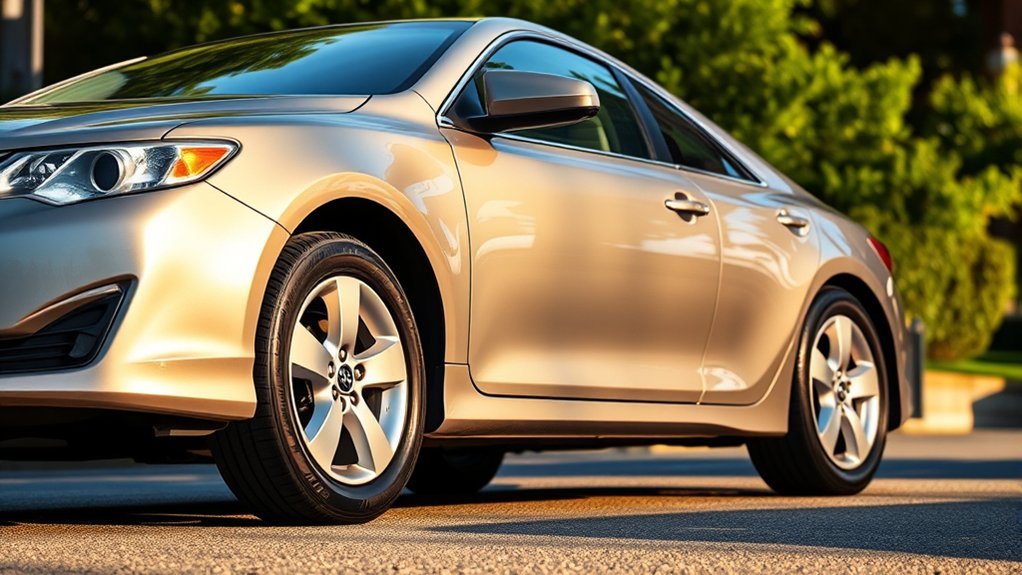
If your Toyota Camry has 16-inch wheels, the correct tire size depends on the model year, trim, wheel package, and the tire label on your specific car. Many older Camrys used 215/60R16, while many later base or hybrid 16-inch applications used 205/65R16. The safest move is to use the driver-side door placard or owner’s manual as the final authority before buying.
Quick Answer
Common Toyota Camry 16-inch tire sizes include 215/60R16 on many older 16-inch trims and 205/65R16 on many later base or hybrid trims. Do not choose by rim diameter alone. Confirm the exact size, pressure, load rating, and speed rating on your Camry’s tire placard.
Key Takeaways
- 215/60R16 is common on many older Camry trims with 16-inch wheels.
- 205/65R16 is common on many later 16-inch Camry applications, especially some base and hybrid trims.
- Toyota Camry SE, XSE, XLE, TRD, and some V6 trims often use larger wheels, depending on year and package.
- Always match the full tire size, load index, speed rating, and tire pressure shown on the driver-side door label or owner’s manual.
Understanding the Importance of 16-Inch Tires for Your Camry
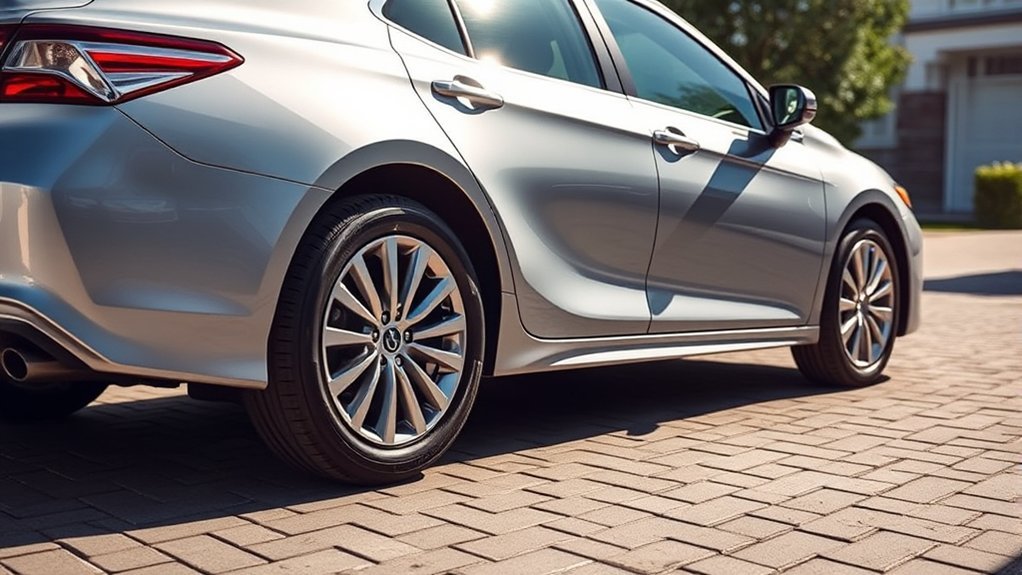
Choosing the right 16-inch tire size for a Toyota Camry affects comfort, steering feel, braking, fuel economy, and speedometer accuracy. A 16-inch wheel usually leaves more tire sidewall than a larger 17-, 18-, or 19-inch wheel. That extra sidewall can help absorb potholes and rough pavement, which is one reason many Camry owners like 16-inch setups for daily driving.
That does not mean every 16-inch tire will fit. The number after the “R” only tells you the wheel diameter. You still need the correct tire width, sidewall ratio, load index, speed rating, and inflation pressure for your exact Camry.
Warning: Never buy tires by rim diameter alone. A tire marked R16 fits a 16-inch rim, but it still may be unsafe or incorrect for your Camry if the width, sidewall height, load rating, speed rating, or outside diameter does not match Toyota’s specifications.
Toyota Camry 16-Inch Tire Sizes by Model Year and Trim
The chart below gives a practical overview of common 16-inch Camry tire applications. Use it as a starting point, not as a substitute for your tire placard. Toyota, tire retailers, and safety agencies all point owners back to the vehicle’s own tire label and manual for the final correct size.
| Camry model years | Common 16-inch applications | Common 16-inch tire size | Important note |
|---|---|---|---|
| 2002-2006 | Many LE, XLE, and selected higher trims with 16-inch wheels | 215/60R16 | Some base trims used smaller wheels, so verify your placard. |
| 2007-2011 | Many CE, LE, XLE, and Hybrid 16-inch configurations | 215/60R16 | SE trims commonly used larger 17-inch wheels. |
| 2012-2017 | Many L, LE, and Hybrid LE 16-inch configurations | 205/65R16 | Sport and higher trims often used larger wheels. |
| 2018-2024 | Some Hybrid LE and efficiency-focused 16-inch configurations | 205/65R16 | For example, Toyota’s 2023 Camry brochure lists the LE Hybrid with 16-inch steel wheels, while other trims use larger wheels. |
For a current factory reference, Toyota’s 2023 Camry eBrochure lists the LE Hybrid with 16-inch steel wheels and shows larger wheel sizes on other trims. For safety, NHTSA advises drivers to check the owner’s manual or the Tire and Loading Information Label on the driver-side door area when choosing replacement tires.
[Products Worth Considering]

Measure tyre tread depth precisely with a digital gauge that reads in both MM and inches, helping you monitor safe driving conditions. The large LCD screen is easy to operate, and the compact tool fits for cars, trucks, and motorcycles. It provides high accuracy with a 0-25.4mm range and includes a 1-year warranty for added peace of mind.

Upgrade your wheels with MIKKUPPA M12x1.5 mag seat lug nuts built for secure, corrosion-resistant performance. These closed-end chrome lug nuts are a direct replacement for select Toyota models, including Camry, Corolla, RAV4, Sienna, Avalon, Highlander, Matrix, Venza, and Prius. Triple-chromium plating and cold-forged, heat-treated steel help deliver strength for daily driving and replacement needs.

Keep your tires properly inflated with this analog VONDIOR tire pressure gauge, designed for fast, easy readings without batteries. The swiveling, two-axis hose and large glow dial help you measure at any tire angle with instant visibility. Built with a protective rubber shield, it supports durable, low-maintenance use for cars and trucks.
How to Read a Camry Tire Size Like 215/60R16
A tire size looks confusing at first, but each part has a clear meaning:
- 215 or 205 is the tire width in millimeters.
- 60 or 65 is the aspect ratio, which means the sidewall height as a percentage of the tire width.
- R means radial construction.
- 16 means the tire fits a 16-inch wheel.
For example, 215/60R16 is wider and has a slightly different sidewall profile than 205/65R16. Both are 16-inch tire sizes, but they are not automatically interchangeable. Changing between them can affect outside diameter, speedometer reading, ride height, ABS behavior, and clearance.
Note: The tire pressure printed on a tire sidewall is the tire’s maximum pressure, not the recommended pressure for your Camry. Use the pressure listed on the vehicle placard or in the owner’s manual.
Compatibility: Are 16-Inch Wheels Interchangeable Among Trims?
Some 16-inch Camry wheels can interchange within compatible years and trims, but you should never assume a wheel fits just because it came from another Camry. Wheel compatibility depends on more than diameter.
Before swapping wheels, check these fitment points:
- Bolt pattern and lug hardware: The wheel must match the hub and lug design for your Camry.
- Wheel width and offset: Incorrect offset can push the tire too far inward or outward, causing rubbing or poor handling.
- Center bore: The wheel must seat correctly on the hub or use the right hub-centric solution.
- Brake clearance: Smaller wheels may not clear larger brake calipers on some trims.
- Load rating: The wheel and tire must be rated to carry the vehicle safely.
- TPMS compatibility: Your tire pressure monitoring sensors may need to be transferred, programmed, or replaced.
- Overall tire diameter: A tire that is too tall or too short can affect speedometer accuracy and vehicle systems.
Pro Tip: If you are changing from 17-inch or 18-inch wheels to 16-inch wheels, test-fit the wheel before mounting a full tire set. Brake clearance is the common deal-breaker on swaps.
[Products Worth Considering]

The Tymate TM12 RV TPMS delivers real-time tire pressure and temperature monitoring with a stable 433Hz display for safer long-distance driving. It supports simultaneous monitoring across vehicle and trailer zones, includes six alarm modes for pressure, temperature, leakage, battery, and signal loss, and features easy DIY installation with auto calibration. Power is supplied via USB-C charging or solar recharging, with a wide 0–144 PSI range and up to 50 ft signal coverage for RVs and towable trailers.

The TYAMATE TM8 solar-powered wireless TPMS delivers real-time tire pressure and temperature monitoring with six alarm modes for safer driving. A vibrant color LCD display shows readings clearly while windshield mounting keeps it hands-free and easy to read. With a wide 0–87 PSI range, strong 433.92 MHz signal transmission, and quick sensor pairing, it’s ideal for RV, sedan, SUV, MPV, and truck use.

These aluminum alloy tire valve stem caps with an O-ring seal help protect valve stems from corrosion while adding a clean, stylish look to your vehicle. The universal fit works across cars, trucks, motorcycles, bicycles, and more, making them an easy upgrade for everyday driving and off-road use. Installation is quick, and the included four-pack keeps all your tires dressed and protected.
Common Trims Featuring 16-Inch Wheels in the Camry Lineup
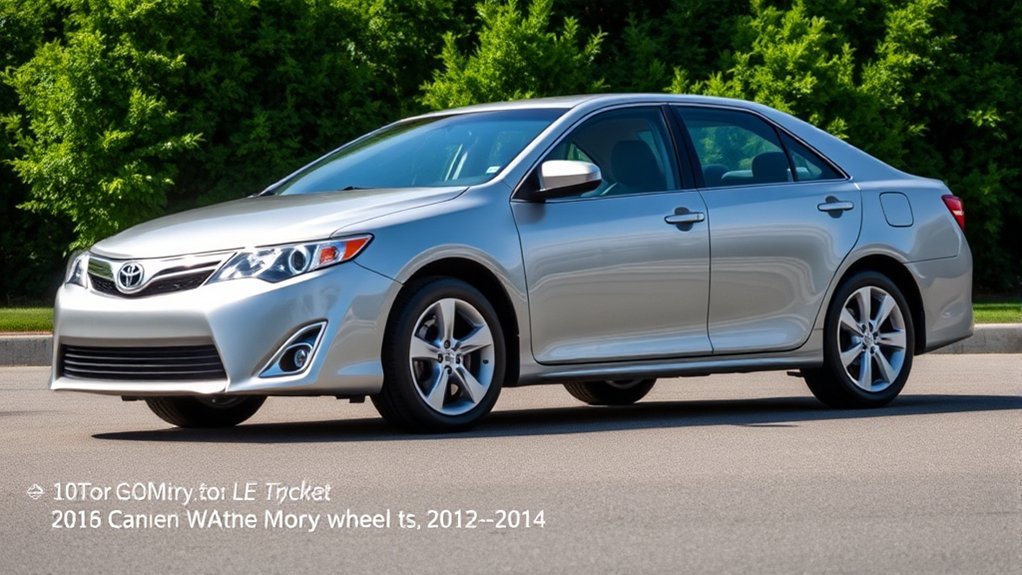
Camry tire sizes vary by year, trim, market, and package. Still, a few patterns are useful when you are shopping for replacements:
| Trim pattern | What it often means | What to check |
|---|---|---|
| Older LE and XLE 16-inch trims | Often use 215/60R16 | Check whether your trim originally had 15-, 16-, or 17-inch wheels. |
| 2007-2011 Hybrid and non-SE trims | Many 16-inch applications use 215/60R16 | SE trims commonly step up to 17-inch wheels. |
| Later L, LE, and Hybrid LE 16-inch trims | Often use 205/65R16 | Wheel package and hybrid trim matter. |
| SE, XSE, XLE, V6, and TRD trims | Often use larger wheels | Do not downsize without checking brake clearance and approved sizes. |
Why Choosing the Correct 16-Inch Tire Can Improve Your Camry
The right 16-inch tire can make your Camry feel quieter, smoother, and more predictable. The taller sidewall found on many 16-inch tire setups can cushion rough roads better than a low-profile tire on a larger wheel. Replacement tires in 16-inch sizes may also cost less than larger sizes, depending on brand and model.
However, tire performance is not only about size. Tread design, rubber compound, tire pressure, alignment, and load rating all matter. A high-quality touring tire in the correct size can feel more stable and comfortable than a cheap tire in the same size.
- Ride comfort: More sidewall can help absorb bumps.
- Cost: Common 16-inch sizes are often easier to find and may be more budget-friendly.
- Fuel economy: Correct pressure and low rolling resistance matter more than size alone.
- Handling: Proper tire construction and fitment keep steering response predictable.
Finding the Right Tire Size for Your Camry Made Easy
Use this quick process before ordering tires:
- Open the driver-side door: Look for the Tire and Loading Information Label on the door edge or door pillar.
- Write down the full tire size: Include width, aspect ratio, rim size, load index, and speed rating if shown.
- Check the owner’s manual: Use it to confirm approved tire sizes and tire pressure.
- Match the tire pressure: Use Toyota’s recommended cold tire pressure, not the maximum pressure on the tire sidewall.
- Confirm all four tires: Using mixed sizes or mismatched ratings can affect handling, traction control, ABS, and TPMS behavior.
[Products Worth Considering]
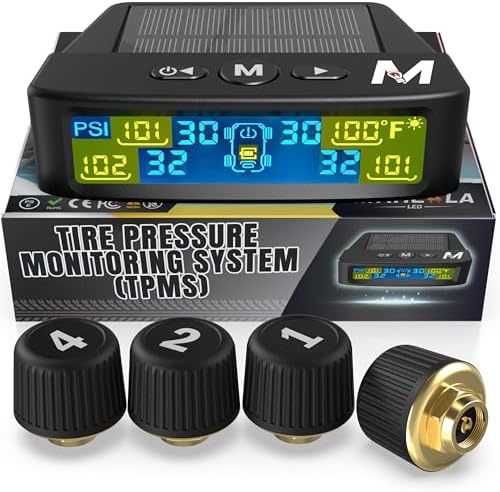
Marcala’s TPMS set of four sensors helps you monitor tire pressure and temperature in real time while driving, with updates every second. The bright color LCD uses auto-dimming for easy viewing, powered by dual solar and USB charging, and offers six alarm modes. Built for trailers, RVs, campers, trucks, and towing setups, the sensors support monitoring 1-4 wheels up to 98 PSI with IP67 waterproof protection.

Monitor tire tread wear with a smart, color-coded depth gauge that shows clear condition ranges at a glance. The bar is range marked for fast, easy readings, helping you maintain safer traction and performance. Each gauge is portable with a pocket clip, and the set includes 20 units for daily use and sharing.
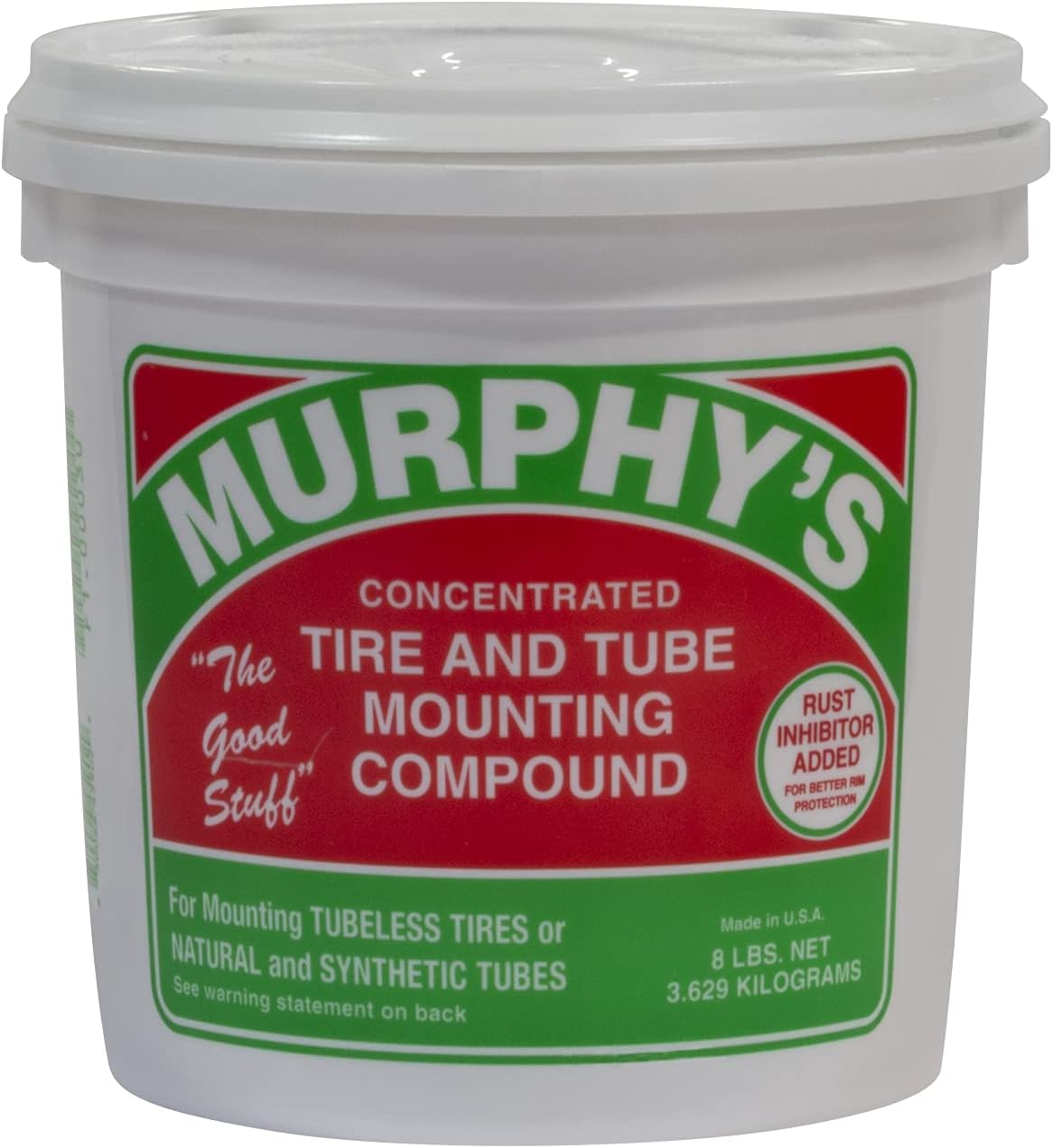
A concentrated tire and tube mounting compound designed to help simplify mounting rubber tires and tubes on passenger, semi truck, construction, and OTR applications. Its ultra-thick formula packs beads effectively and includes rust inhibitors to help protect against corrosion during use.
Top Tips for Maintaining Your Toyota Camry’s 16-Inch Tires
Good maintenance helps your Camry’s tires last longer and keeps the car safer in wet, hot, or rough conditions.
- Check pressure monthly when cold: Tire pressure changes with temperature, and underinflation can increase heat, wear, and fuel use.
- Rotate on schedule: Follow your Toyota maintenance guide. NHTSA notes that many vehicles with manufacturer-recommended rotation use intervals around 5,000 to 8,000 miles.
- Watch tread depth: Replace tires at the legal minimum of 2/32 inch, and consider replacing earlier if wet traction has dropped.
- Inspect for damage: Look for sidewall bulges, cuts, cracking, uneven wear, nails, and vibration.
- Keep alignment in check: If the car pulls, the steering wheel is off-center, or the tire edges wear quickly, get the alignment inspected.
- Service TPMS issues quickly: The tire pressure monitoring system helps warn you about low pressure, but it does not replace manual pressure checks.
Frequently Asked Questions
Can I put any 16-inch tire on a 16-inch Camry rim?
No. The tire must fit the 16-inch rim, but it also must match the correct width, aspect ratio, load index, speed rating, and recommended pressure for your Camry. Use the driver-side tire label or owner’s manual before buying.
What is the most common Toyota Camry 16-inch tire size?
Two common sizes are 215/60R16 on many older 16-inch Camry trims and 205/65R16 on many later base or hybrid 16-inch applications. Your exact year and trim can differ, so always verify the placard.
Did the 2023 Toyota Camry come with 16-inch tires?
Yes, Toyota’s 2023 Camry brochure lists the LE Hybrid with 16-inch steel wheels. Other 2023 Camry trims used larger wheels, so do not assume every 2023 Camry takes a 16-inch tire.
Can I switch from 17-inch wheels to 16-inch wheels on a Camry?
Sometimes, but only if the 16-inch wheel clears the brakes and matches the correct bolt pattern, wheel width, offset, center bore, load rating, tire outside diameter, and TPMS requirements. A tire shop or Toyota dealer can confirm fitment before you buy.
Where do I find the correct tire pressure for my Camry?
Use the Tire and Loading Information Label on the driver-side door area or the owner’s manual. Check pressure when the tires are cold. Do not use the maximum pressure molded into the tire sidewall as your normal setting.
Conclusion
The best 16-inch tire for your Toyota Camry is the size Toyota approved for your exact year, trim, and wheel package. Many older 16-inch Camrys use 215/60R16, while many later base or hybrid 16-inch applications use 205/65R16. Use online charts only as a starting point. The driver-side placard and owner’s manual should make the final decision for safe fitment, correct pressure, and reliable performance.
Sources
- Toyota 2023 Camry eBrochure — backs current Camry trim and wheel-size examples, including LE Hybrid 16-inch wheels.
- NHTSA Tire Safety — backs tire-size verification, pressure checks, tread depth, tire rotation, and tire maintenance safety guidance.
- Toyota 2023 Camry Warranty & Maintenance Guide — backs Toyota scheduled maintenance context, including recurring tire rotation service.