
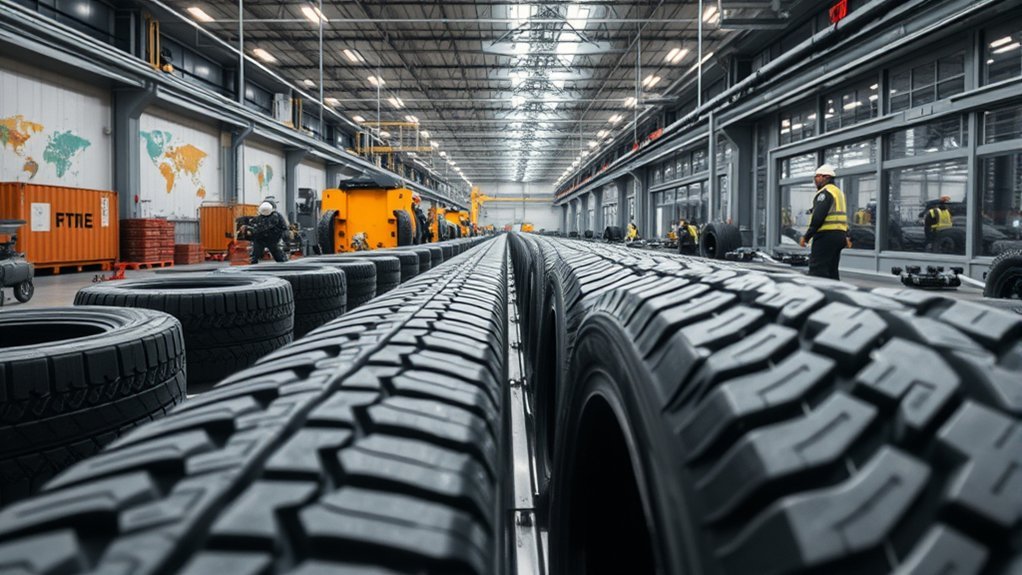
Cooper Tires are made at several facilities, including verified plants in the United States, Serbia, and China, while the wider Goodyear manufacturing network also operates tire plants in countries such as Mexico. The exact factory can vary by tire, size, market, and production schedule, so the most reliable way to identify your tire’s origin is to read its DOT Tire Identification Number (TIN) and decode the plant code.
Quick Answer
Cooper Tires are not made in just one country. Current U.S. government records list active Cooper tire plants in Findlay, Ohio; Texarkana, Arkansas; Tupelo, Mississippi; Kruševac, Serbia; and Kunshan, China. Because production can vary by model and size, check the first group of your tire’s DOT/TIN code to identify its actual factory.
Key Takeaways
- Cooper Tire has been part of The Goodyear Tire & Rubber Company since Goodyear completed its acquisition in June 2021.
- NHTSA currently lists active Cooper-named tire facilities in Ohio, Arkansas, Mississippi, Serbia, and China.
- Goodyear also operates a much larger global manufacturing network, so Cooper production should not be treated as a fixed model-to-country list.
- The first two or three characters in the Tire Identification Number identify the manufacturing plant.
- Manufacturing country alone does not tell you whether one tire is better than another; fit, specifications, condition, testing, warranty, and intended use matter more.
Where Are Cooper Tires Made?
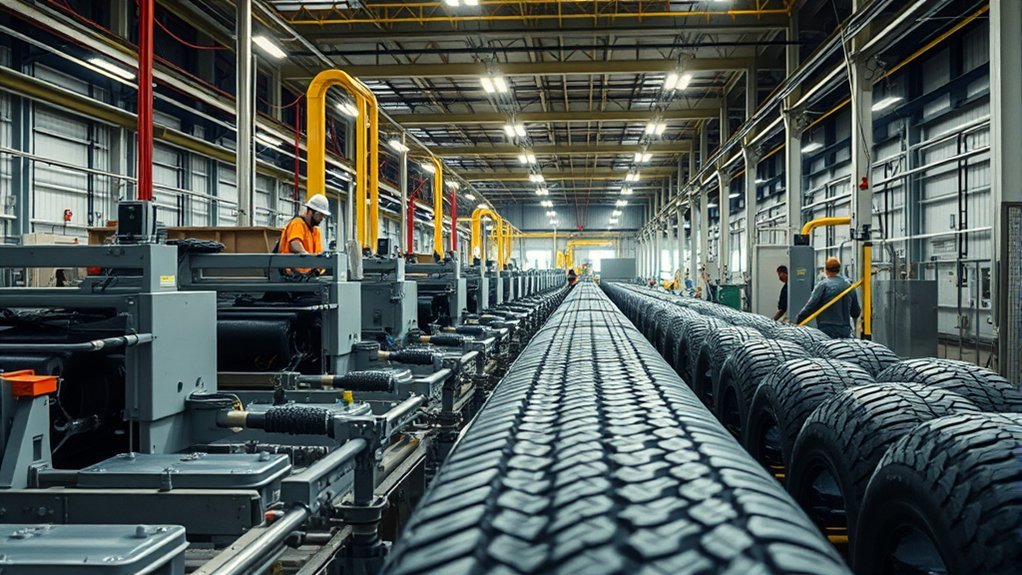
Cooper is an American tire brand, but its tires are not limited to one factory or one country. Goodyear completed its acquisition of Cooper Tire & Rubber Company on June 7, 2021, bringing Cooper into Goodyear’s much larger manufacturing and distribution system.
Current records from the U.S. National Highway Traffic Safety Administration identify active Cooper tire manufacturing facilities in the United States, Serbia, and China. Goodyear’s broader manufacturing footprint also includes plants in Mexico and many other countries.
That does not mean every Cooper tire model is produced in every location. Production assignments can differ by tire size, market, equipment, capacity, and supply needs. For that reason, a static online list cannot reliably tell you where every individual Cooper tire was made.
The most reliable origin check is the tire itself: its DOT Tire Identification Number contains a factory code that identifies where that specific tire was manufactured.
Who Owns Cooper Tires Today?
Cooper Tire is owned by The Goodyear Tire & Rubber Company. The acquisition was completed in 2021, so current Cooper manufacturing should be viewed as part of Goodyear’s overall production system rather than the old standalone Cooper network.
Goodyear’s 2025 annual filing reported manufacturing operations across dozens of facilities worldwide. Its Americas tire network included plants in the United States, Canada, Mexico, Brazil, Chile, Colombia, and Peru, while its European and Asia-Pacific operations included plants in countries such as Serbia and China.
This broader network gives Goodyear flexibility to adjust production as products, demand, tooling, and regional needs change. That is one reason you should verify the factory on a specific Cooper tire instead of assuming that every example of a particular model comes from the same country.
Are Cooper Tires Made in the USA?
Yes. Cooper tires are still manufactured in the United States. NHTSA’s Manufacturer Information Database currently lists active Cooper tire plants in Findlay, Ohio; Texarkana, Arkansas; and Tupelo, Mississippi.
U.S. Manufacturing Sites
| Location | Current NHTSA status | TIN plant code |
|---|---|---|
| Findlay, Ohio | Active | 1UP / older UP |
| Texarkana, Arkansas | Active | 1UT / older UT |
| Tupelo, Mississippi | Active | 1U9 / older U9 |
You can verify these facilities through NHTSA’s records for the Findlay plant, Texarkana plant, and Tupelo plant.
Note: Goodyear closed a separate Tall Timbers tire-mold facility in Findlay in 2026. That should not be confused with the Cooper tire manufacturing plant at 701 Lima Avenue, which NHTSA’s current manufacturer database lists as active.
Global Production Network
Cooper also has verified manufacturing operations outside the United States. NHTSA currently lists Cooper Tire & Rubber Company Serbia in Kruševac as an active tire facility, with plant code 1U3 and older code U3.
In China, NHTSA lists Cooper (Kunshan) Tire Co., Ltd. in Kunshan, Jiangsu as active, with plant code 1RM and older code RM.
Goodyear also reports tire manufacturing operations in Mexico as part of its Americas network. However, its public corporate filings do not provide consumers with a permanent Cooper-model-by-Mexican-plant list. If you are trying to confirm whether a specific Cooper tire was made in Mexico or another country, use the TIN on that tire rather than relying only on a brand-wide country list.
Country Of Origin
The important distinction is between the brand’s manufacturing footprint and the origin of an individual tire. Cooper can have manufacturing capability across several regions while your exact tire comes from only one factory.
| Verified location | How to confirm |
|---|---|
| Findlay, Ohio, USA | TIN code 1UP / UP |
| Texarkana, Arkansas, USA | TIN code 1UT / UT |
| Tupelo, Mississippi, USA | TIN code 1U9 / U9 |
| Kruševac, Serbia | TIN code 1U3 / U3 |
| Kunshan, Jiangsu, China | TIN code 1RM / RM |
These codes are more useful than assuming that one tire model always comes from the same factory. Production can change over time, and different sizes within a model family may be sourced differently.
Which Cooper Tires Come From Each Plant?
There is no dependable public Cooper chart that permanently assigns every current tire model and size to one factory. That is an important limitation because production can move as tooling, capacity, demand, and regional supply requirements change.
A Cooper model sold in several sizes may therefore have more than one manufacturing source. Two tires with the same model name may even have different factory codes if they were built in different sizes, production periods, or markets.
Instead of trying to memorize a plant-by-model list, check the actual Tire Identification Number before drawing a conclusion about origin.
Pro Tip: If country of origin matters to you, inspect the sidewall before installation or ask the retailer for the DOT/TIN plant code on the exact tires being sold. Do not rely only on the model name or an online stock photo.
How Cooper Tires Are Made
Cooper does not publicly document every factory’s proprietary production sequence, but modern radial tires generally follow the same major stages used throughout the tire industry: material selection, compound mixing, component preparation, tire building, curing, inspection, and testing.
The U.S. Tire Manufacturers Association explains that tire manufacturing combines natural and synthetic rubber with materials such as carbon black, silica, oils, steel, textiles, and other compounds selected for specific performance needs.
Tire Manufacturing Process
- Materials are selected and mixed. Different rubber compounds are prepared for the tread, sidewall, inner liner, and other components.
- Components are formed. Tread rubber, sidewalls, steel belts, body plies, beads, and inner-liner materials are prepared to their required dimensions.
- The tire is assembled. The components are built together in layers to form an uncured or “green” tire.
- The tire is cured. Heat and pressure inside a mold vulcanize the rubber, bond the components, and form the final tread pattern and sidewall markings.
- The finished tire is inspected. Tires are checked after curing, while selected tires may receive additional destructive or non-destructive testing.
USTMA notes that passenger and light-truck tire curing commonly takes roughly 12 to 15 minutes at temperatures above 300°F, although the exact process varies by tire design and application.
Quality Testing Steps
Quality control is more complicated than simply checking where the tire was built. Tire manufacturers use inspections and testing to determine whether finished products meet design requirements and applicable safety standards.
According to USTMA, every tire is inspected after production, while sample tires may be X-rayed, cut apart, run on test wheels, or road-tested to evaluate characteristics such as construction, handling, mileage, and traction.
This is why manufacturing country by itself is a weak shortcut for judging quality. A better evaluation considers the tire’s intended use, size and load rating, warranty, condition, performance characteristics, manufacturing date, and whether it is appropriate for your vehicle.
Does Where Cooper Tires Are Made Affect Quality?
Manufacturing location can affect logistics, labor, sourcing, and production costs, but the country name alone does not tell you whether a Cooper tire will perform well.
| Factor | Why it matters |
|---|---|
| Tire specification | Determines intended load, speed, vehicle, and use |
| Manufacturing controls | Help keep dimensions and construction consistent |
| Materials and compound design | Influence grip, wear, ride, and temperature performance |
| Inspection and testing | Help identify production defects and verify performance |
| Tire age and condition | Can matter more to a buyer than the country stamped on the tire |
| Correct fitment | Ensures the tire meets the vehicle’s size, load, and speed requirements |
If you are comparing two Cooper tires, start with their specifications and intended use. Then compare warranty coverage, tread design, winter or all-terrain ratings where relevant, independent testing, price, and manufacturing date. Use country of origin as additional information rather than a stand-alone quality score.
How to Read a Cooper Tire Made-In Label
The easiest standardized clue to a Cooper tire’s factory is its DOT Tire Identification Number. Cooper’s own TIN guide explains that the first group of two or three characters identifies the factory where the tire was made.
- Find “DOT” on the sidewall. The complete TIN may appear on only one side, so check the inner sidewall if necessary.
- Read the first two or three characters after DOT. This is the plant identifier.
- Compare the plant code with an authoritative manufacturer database. NHTSA’s Manufacturer Information Database provides plant records and assigned codes.
- Check the final four digits. They show the week and year of manufacture. For example, 2526 means the tire was manufactured during the 25th week of 2026.
A written country-of-origin marking may also appear on a tire, but do not confuse that wording with the TIN. The TIN uses an encoded factory identifier rather than spelling out the city or country in its first group.
Warning: Do not use the DOT date code or plant code to decide whether a tire fits your vehicle. Always match the required tire size, load index, speed rating, inflation specifications, and other vehicle-manufacturer requirements.
What Cooper Tire Origin Means for Value?
Origin can influence shipping expense, manufacturing cost, supply availability, and a buyer’s preference for domestic production. It does not determine value on its own.
| Factor | Value impact |
|---|---|
| Manufacturing location | May affect sourcing, availability, and buyer preference |
| Tread-life warranty | Can reduce the financial risk of premature wear on eligible tires |
| Correct application | Helps you avoid paying for a tire poorly suited to your driving |
| Wet, snow, or off-road capability | Can matter more than manufacturing country for real-world use |
| Price and expected service life | Determine your practical cost over time |
For most buyers, the best Cooper tire is the one that fits the vehicle correctly, matches the driving conditions, has suitable performance characteristics, and provides acceptable warranty coverage at a reasonable price. If U.S. manufacturing is personally important to you, use the plant code to confirm that requirement before installation.
Frequently Asked Questions
Do Cooper Tires Offer a Treadwear Warranty?
Yes. Many Cooper replacement tires have treadwear protection, but mileage limits and eligibility vary by model and size. Cooper states that its treadwear coverage is prorated and subject to warranty conditions, so check the warranty for the exact tire you are considering.
Which Cooper Tire Models Are Best for Snow?
Cooper’s current winter range includes the Discoverer True North, Discoverer Snow Claw, Discoverer Snow Claw LT, and Evolution Winter. The right choice depends on your vehicle, tire size, typical snow and ice conditions, and whether you want a studless or studdable design. Several of these models carry the Three-Peak Mountain Snowflake designation.
How Often Should Cooper Tires Be Rotated?
Cooper recommends thinking about tire rotation every 6,000 to 8,000 miles for most drivers. Rotate sooner if you notice irregular wear, and follow your vehicle owner’s manual and any specific rotation requirements in the tire warranty.
Are Cooper Tires Good for Off-Road Driving?
Some Cooper tires are designed specifically for all-terrain or off-road use, while others are intended mainly for highway driving. Choose by tire line and application rather than by brand alone, and make sure the tire’s size, load rating, and intended terrain match your vehicle and driving.
Where Can I Buy Authentic Cooper Tires?
You can buy Cooper tires through Cooper and Goodyear dealer networks and established tire retailers. Before installation, confirm that the tire size and specifications match your vehicle, inspect the DOT/TIN and manufacture date, and keep your purchase receipt for warranty purposes.
Who Makes Cooper Tires Now?
Cooper Tire is part of The Goodyear Tire & Rubber Company. Goodyear completed its acquisition of Cooper Tire & Rubber Company on June 7, 2021.
Can the Same Cooper Tire Model Be Made in Different Countries?
Potentially, yes. Manufacturing assignments can vary by size, market, production period, tooling, and capacity. Do not assume every tire carrying the same model name came from the same plant. Check the TIN on the individual tire for its factory code.
Conclusion
Cooper Tires are made through a global manufacturing system rather than at one factory. Current government records verify active Cooper plants in Findlay, Texarkana, Tupelo, Kruševac, and Kunshan, while Cooper’s position inside Goodyear gives the brand access to a much larger international manufacturing network.
If you specifically want an American-made Cooper tire, or simply want to know where your tire came from, check the first group of its DOT/TIN and identify the corresponding plant. That gives you a much more reliable answer than assuming every Cooper model has one fixed country of origin.
Manufacturing origin is useful information, but it should be only one part of your buying decision. Correct fitment, tire type, performance, warranty, age, maintenance, and driving conditions are usually more important to the tire’s real-world value.
Sources
- The Goodyear Tire & Rubber Company — Cooper acquisition — confirms that Goodyear completed its acquisition of Cooper Tire & Rubber Company in June 2021.
- Goodyear 2025 Form 10-K — documents Goodyear’s current regional manufacturing footprint and Cooper’s role within its brand portfolio.
- NHTSA Manufacturer Information Database — Findlay — verifies the active Cooper Findlay tire plant and its DOT/TIN plant code.
- NHTSA Manufacturer Information Database — Texarkana — verifies the active Cooper Texarkana tire plant and its DOT/TIN plant code.
- Cooper Tire — Tire Identification Number guide — explains how the factory and manufacturing-date information appears in the TIN.
- U.S. Tire Manufacturers Association — How a Tire Is Made — supports the manufacturing, curing, inspection, and testing process described above.

