
If you want to pass your Ohio driving test the first time, focus less on tricks and more on showing safe, predictable control. Bring the correct documents, use a roadworthy vehicle, know the Ohio maneuverability course, make complete stops, signal correctly, check traffic before every move, and follow the examiner’s directions. This guide follows the current Ohio Class D Driving and Skills Test; rules in other states can differ.
Quick Answer
To improve your chance of passing the Ohio driving test, practice the exact skills the BMV tests: stopping and starting, turning, backing, proper lane use, signals, following distance, and the forward-and-reverse maneuverability course. Bring your TIPIC and any age- or status-specific forms, use a safe vehicle, and avoid rushed or unsafe decisions.
Key Takeaways
- Ohio’s Class D test has two parts: a road test and a maneuverability test.
- Bring your TIPIC plus any BMV 5791 affidavit or driver-training documentation required for your age or license status.
- Practice complete stops, turns, backing, signals, lane position, traffic observation, and safe following distance.
- Ohio’s maneuverability course uses a 9-foot-by-20-foot box plus a center marker.
- Bumping a maneuverability marker costs points; running over, knocking down, or displacing a marker is an immediate failure.
- Do not assume one small deduction means you failed. Ohio uses a point system, although certain unsafe or disqualifying actions can end the test immediately.
At a Glance
| Time Required | Practice time varies by experience; test appointment length varies by location and conditions. |
| Difficulty | Moderate if you have practiced both normal road driving and the Ohio maneuverability course. |
| Tools Needed | Valid TIPIC, required BMV forms/certificates for your situation, and a vehicle in good condition. |
| Cost | Varies. Driver training, vehicle use, and license-issuance fees depend on your age and situation. |
Warning: This article follows Ohio’s Class D rules because the maneuverability test described here is the Ohio BMV course. If you are testing in another state, check your own licensing agency before relying on distances, documents, scoring, or test maneuvers.
What Examiners Look for on Test Day

Ohio’s driving exam is designed to show whether you can exercise ordinary and reasonable control of a vehicle. According to the Ohio Bureau of Motor Vehicles, the Driving and Skills Test has a road portion and a maneuverability portion.
During the road portion, the BMV says you may be asked to:
- Stop and start.
- Turn around and back up.
- Perform turns.
- Use your vehicle’s turn signals.
- Drive in the correct lane.
- Maintain a safe following distance.
That means the examiner is watching more than whether you reach the end of the route. Your observation, timing, steering, braking, lane position, signals, and judgment all matter.
Do not assume parallel parking is a separate Ohio test item simply because many driving-test guides mention it. The Ohio BMV’s current published road-test list does not identify parallel parking as a separate required maneuver. Practice parking because it is a useful everyday skill, but put extra attention on the tasks Ohio actually lists.
Ohio’s standard Class D examination is divided into a road test and a maneuverability test, and a driver may not receive more than 25 minus points in either portion and still pass.
The scoring rule comes from Ohio Administrative Code Rule 4501:1-1-10. Certain actions can still cause an immediate failure, so do not treat the point limit as permission to take risks.
Get Your Documents and Car Ready
Prepare your paperwork before test day. The exact requirements depend on your age and license status, so use the current Ohio BMV checklist rather than relying on a generic list.
For the Driving and Skills Test, Ohio BMV currently requires the applicant to present a TIPIC. Applicants who are under age 21, and certain applicants who hold a limited-term Non-Renewable/Non-Transferable TIPIC, must also present the completed BMV 5791 Fifty-Hour Affidavit. Driver-education documentation may also be required or requested depending on your situation.
If you are under 18, the BMV says you must complete approved driver education, complete at least 50 hours of supervised driving including 10 night hours, hold the TIPIC for at least six months, and pass the Driving and Skills Tests.
Ohio’s current rules also require applicants ages 18 through 20 to complete approved Class D driver education and log 50 hours of supervised practice, including at least 10 hours at night. See the current Ohio BMV driver-license requirements before your appointment.
Note: Keep your vehicle’s current registration and proof of financial responsibility available as appropriate, but do not confuse general legal paperwork with the BMV’s specific test-appointment checklist. Check your appointment confirmation and the Ohio BMV page before leaving home.
Your test vehicle must also be in good condition. The BMV performs an inspection before testing. Before leaving home, check:
- Brake lights and headlights.
- Turn signals.
- Brakes.
- Tires and visible tire damage.
- Windshield visibility and wipers.
- Mirrors.
- Seat belts.
- Doors and windows.
- Dashboard warning lights or obvious mechanical problems.
- License plate condition and visibility.
If you plan to use an instructor’s car, a family car, or another borrowed vehicle, make sure you have permission to use it and that you are comfortable controlling it. Familiarity helps, but roadworthiness matters more than who owns the vehicle.
Pro Tip: Do a short pre-test drive in the same vehicle. Adjust the seat and mirrors, learn the brake feel, practice smooth starts, and make sure you know how to operate the signals, defroster, wipers, parking brake, and hazard lights without searching for the controls.
[Products Worth Considering]

Activ Life LED bike wheel lights add bright white illumination to your ride while improving visibility from every angle. The 2-pack features a constant glow or dynamic flash mode for safer night cycling, with a quick tool-free setup that fits standard bike wheels. Made for durable, weather-ready performance, these spoke lights are a stylish safety upgrade for riders of all ages.
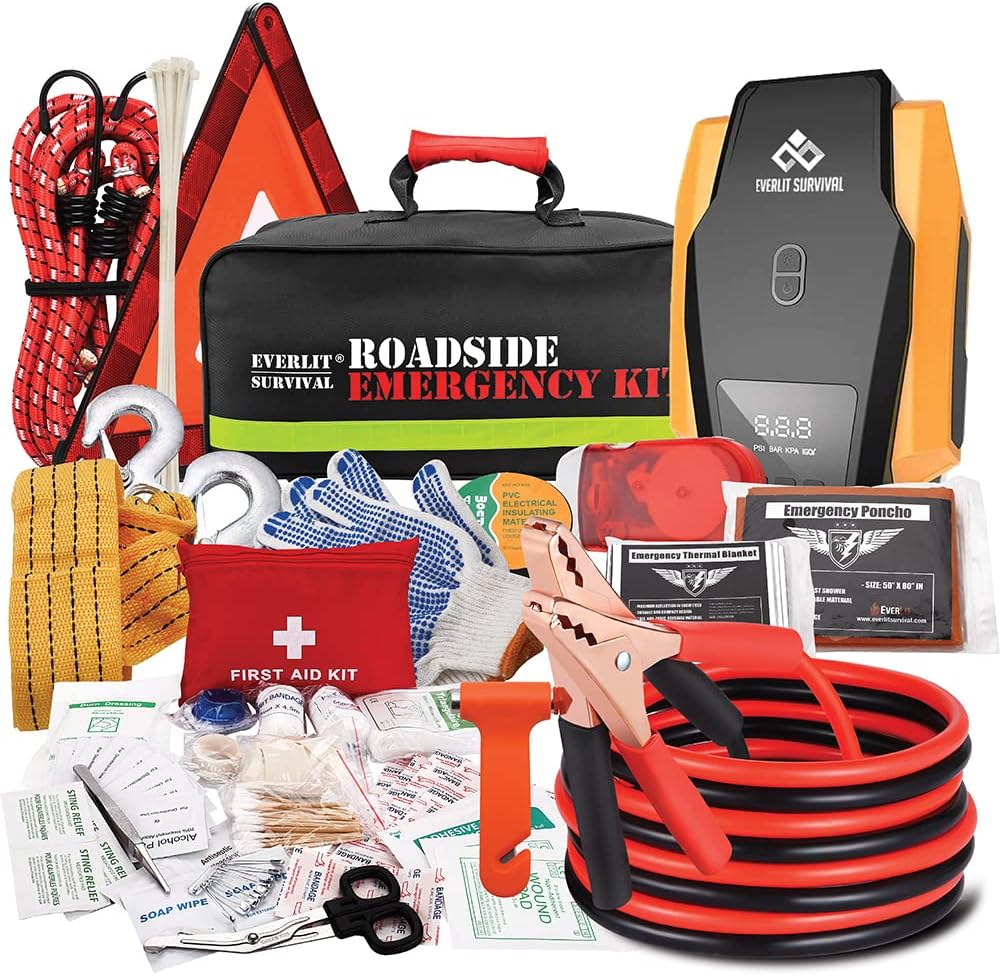
The Everlit Road Guardian emergency kit is designed for roadside breakdowns, combining essential safety gear and roadside tools in one compact bag. It includes a digital 12V auto tire inflator with preset and auto shutoff, plus 12-foot 8-gauge jumper cables to get you moving again. You also get a full 108-piece first aid kit, reflective warning tools, safety gloves, and emergency convenience items for safer travel.

These glow-in-the-dark tire valve caps add a fluorescent look to your vehicle while helping protect valve stems from wear and tear. They’re made for long-lasting luminous effects after charging in sunlight, making night rides more noticeable. Universal fit works for cars, SUVs, trucks, motorcycles, and bicycles for easy, quick customization.
Practice the Skills That Matter Most
Your practice should look like the test. Repeating random driving for hours is less useful than deliberately practicing the actions the examiner will score.
- Accelerate gently. Avoid sudden throttle inputs when pulling away from a stop.
- Brake early and smoothly. Give yourself enough distance to stop without a last-second lurch.
- Steer with control. Stay centered in your lane and avoid unnecessary corrections.
- Practice backing. Look where the vehicle is going and control your speed.
- Practice turns. Enter and leave the correct lane without cutting corners or swinging wide.
- Practice observation. Scan mirrors regularly and check blind spots when a movement could put another road user beside you.
- Practice complete stops. Stop where the law requires, then check traffic before proceeding.
- Practice the Ohio marker course. Do both the forward and reverse phases until your steering inputs are predictable.
Ask an experienced supervising driver or licensed instructor to watch for repeat mistakes. One useful practice session should identify a few specific habits to correct rather than simply adding more miles.
[Products Worth Considering]

The SPTA wheel and tire brush kit makes it easy to remove dirt from wheels, rims, and hard-to-reach areas without needing a high pressure washer. Ergonomic handles and soft, chemical-resistant bristles help you clean faster while reducing the risk of scratching. The set is versatile for cars, trucks, motorcycles, bicycles, RVs, boats, and more.

Steelman white tire marking crayons provide high-contrast, semi-permanent marks for repairing and inspecting tires and equipment. They write on wet or dry, smooth or coarse surfaces including rubber, metal, glass, and wood, making them ideal for puncture location and damage outlining. The lead- and zinc-free crayons resist weather and fading yet wipe away when you no longer need the marks.

The Big Rig Defense Tire Thumper is a truck tire pressure checker that lets you quickly check multiple tires by giving them a firm whack. Listen for a reassuring thump and feel the stick bounce when a tire is fully inflated, helping you get back on the road safely. It features a comfortable, glove-friendly handle and a secure wrist strap for confident use on busy routes.
Master the Driving Portion of the Road Test
From the moment you begin moving, drive as though every decision needs to be clear to another road user. The examiner should not have to guess whether you saw a stop sign, checked traffic, or intend to change direction.
Keep both speed and steering appropriate for conditions. Follow posted speed limits, but remember that a posted limit is not a target when weather, traffic, visibility, or road conditions require a lower safe speed.
Maintain enough space behind the vehicle ahead to stop safely. Ohio law does not establish a universal “three-second” statutory minimum for ordinary passenger vehicles. Instead, Ohio Revised Code Section 4511.34 says you must not follow more closely than is reasonable and prudent considering speed, traffic, and roadway conditions.
A time-gap method can still be useful during practice. Choose a fixed point, wait until the vehicle ahead passes it, and make sure you have a comfortable gap before your vehicle reaches the same point. Increase the gap in rain, darkness, poor visibility, or other conditions that increase stopping distance.
Watch for signs, pedestrians, bicycles, vehicles entering from side streets, and changing traffic signals. Observation should be continuous rather than a dramatic mirror check only when you think the examiner is watching.
[Products Worth Considering]

Mighty Patch for Tired Eyes helps visibly awaken and de-puff under eyes with soothing hydrogel comfort. Infused with niacinamide, tri-hyaluronic acid, panthenol, and allantoin, the patches cool the eye area and refresh the look of tired eyes. Contoured to fit and designed not to slip, they’re worn for 30+ minutes or until clear for a quick morning pick-me-up.

This 1/2-inch drive breaker bar delivers powerful leverage for loosening and tightening stubborn lug nuts and automotive fasteners. The 180-degree flex head helps you reach tight spaces at the angle you need, making tire and brake jobs easier. A spring-loaded ball detent design holds 1/2-inch sockets securely while the chrome-moly head provides durable strength for everyday use.

Fran Wilson Nourish My Eyes eye pads are a convenient at-home spa treatment designed to soothe tired eyes, reduce puffiness, and help diminish the look of dark circles. Infused with a cucumber, green tea, and mulberry extract blend, they provide targeted hydration and a cooling, refreshing under-eye experience. Simply apply for 5–15 minutes to help restore a more bright, refreshed appearance.
Pass the Ohio Maneuverability Test
Ohio’s maneuverability test is not a generic parking exercise. The BMV uses a specific marker layout and a two-step forward-and-reverse procedure.
The course starts with a 9-foot-by-20-foot box formed by four markers. The examiner directs you to steer to the right or left of a center marker. You then reverse the process and back through the box.
Forward Box Entry
For step one, drive forward through the box while staying controlled and clear of the markers. Follow the examiner’s direction to go to the right or left of the center marker.
- Drive forward through the 9-by-20-foot box.
- Steer toward the side of the center marker specified by the examiner.
- Straighten the vehicle after clearing the marker.
- Stop when your rear bumper is even with the center marker.
- Finish generally parallel with the course.
Use small steering corrections. Looking too close to the front bumper often leads to overcorrection; keep your eyes moving between your intended path, the markers, and the vehicle’s position.
Do not stop unnecessarily to repeatedly check your location. Ohio BMV lists stopping during the maneuver as a point deduction.
Reverse Marker Exit
Step two begins from the stopped position at the end of the forward maneuver.
- Shift into reverse and back past the center marker.
- Use controlled steering to return the vehicle toward the box.
- Straighten the vehicle.
- Back through the box without striking the markers.
- Stop with your bumper even with the two rear markers and generally parallel with the course.
Look in the direction of travel while also using your mirrors to understand the vehicle’s position. Keep the speed low enough that you can make small corrections instead of sudden steering movements.
Warning: Ohio BMV treats different marker mistakes differently. Stopping, bumping a marker, misjudging your stopping distance, or finishing out of parallel alignment can deduct points. Running over or knocking down a marker, or moving it out of its designated area, is an immediate failure.
After the measured maneuver is finished, remove the vehicle from the testing area carefully. The BMV specifically warns that the test is not complete until you leave the course without running over markers or committing another disqualifying action.
Nail Lane Changes and Turn Signals
Before turning or moving laterally, make sure the movement can be completed safely. Check your mirrors, check the relevant blind spot when necessary, signal, and move only when you have enough room.
Ohio’s signal rule is more specific than “signal for five seconds.” Under Ohio Revised Code Section 4511.39, when a signal is required, it must be given continuously during at least the last 100 feet traveled before turning or moving right or left.
Mirror Checks and Signals
Do not force yourself to look at a mirror on an arbitrary five- or eight-second countdown. Instead, build a regular scan that helps you understand what is ahead, beside, and behind you.
- Check the roadway ahead for traffic controls and hazards.
- Scan rearview and side mirrors regularly.
- Before moving right or left, confirm that the movement is safe.
- Check the appropriate blind spot when another road user could be hidden beside you.
- Signal early enough to meet Ohio’s legal requirement and clearly communicate your intention.
- Cancel the signal when the maneuver is complete if the vehicle does not cancel it automatically.
The goal is not exaggerated head movement for the examiner. The goal is genuine awareness.
Smooth Lane Change Timing
A good lane change should be planned before you move the steering wheel. Check whether there is room, signal, confirm the space is still open, then steer gradually into the new lane.
| Step | What to Do |
|---|---|
| Observe | Check traffic, mirrors, and the relevant blind spot. |
| Signal | Give the legally required advance signal. |
| Move | Keep a steady, appropriate speed and steer smoothly. |
| Finish | Center the vehicle in the new lane and cancel the signal if needed. |
Handle Stops, Turns, and Right-of-Way
Rolling through a stop sign is an avoidable error. Under Ohio Revised Code Section 4511.43, you must stop at a clearly marked stop line. If there is no stop line, stop before entering the near-side crosswalk. If neither exists, stop at the nearest point where you can see approaching traffic before entering the intersecting roadway.
- Brake early and come to a complete stop in the correct location.
- Check left, right, and ahead for traffic and pedestrians.
- Yield to vehicles that have the right-of-way.
- Before a left turn, yield to oncoming traffic that creates an immediate hazard.
- Proceed only when the movement can be made safely.
Do not rush because another driver is waiting behind you. The examiner is evaluating your decisions, not how quickly you can clear an intersection.
Avoid Common Driving Test Mistakes
Most preventable test errors come from breaking a basic safety routine. Practice each maneuver in the same order until the safe checks become automatic.
| Mistake | Better Habit |
|---|---|
| Rolling stop | Stop completely in the legally correct location before proceeding. |
| Poor observation | Scan traffic and check mirrors/blind spots before changing position. |
| Late or missing signal | Signal early enough to meet Ohio law and communicate clearly. |
| Wrong speed | Follow the posted limit while adjusting for traffic and conditions. |
| Wide or cut turn | Slow before the turn and enter the proper lane smoothly. |
| Following too closely | Leave a reasonable and prudent gap for the current conditions. |
| Marker overcorrection | Use low speed and small steering corrections on the maneuverability course. |
If you misunderstand an examiner’s direction, ask for clarification instead of guessing. Do not argue about the instruction while driving; keep control of the vehicle your first priority.
Stay Calm on Test Day
Arrive early enough to check in, organize your documents, adjust the vehicle, and avoid starting the test while rushed. The Ohio BMV does not publish a universal “20 minutes early” requirement on its current test page, so follow the arrival instructions in your appointment confirmation.
Arrive Early Prepared
- Confirm your appointment location and time before leaving.
- Bring your TIPIC and all required age- or status-specific forms.
- Check the vehicle’s lights, signals, tires, mirrors, brakes, and safety equipment.
- Adjust your seat and mirrors before the examiner begins the test.
- Put away your phone and remove distractions.
A small personal time buffer is useful because it gives you room for traffic, parking, or check-in delays without treating an unofficial arrival time as a BMV rule.
Breathe and Focus
If you are nervous, slow your breathing before the test starts. Think about the next driving task instead of calculating whether every small movement is costing points.
A minor deduction does not automatically mean failure. Ohio’s scoring system allows some minus points, although certain actions can cause an immediate failure. If something minor goes wrong, recover safely and continue following the examiner’s directions.
Follow Instructions Calmly
Listen for the complete instruction before acting. Do not make an unsafe movement simply because you think the examiner wants it immediately.
- Listen to the direction.
- Identify the safe place and time to perform it.
- Check traffic and signals.
- Complete the maneuver smoothly.
- If the instruction is unclear, ask the examiner to repeat or clarify it.
The test measures whether you can operate safely, not whether you can react recklessly to a command.
If You Don’t Pass, Do This Next
If you do not pass, use the examiner’s score or feedback to identify what actually caused the problem. Do not spend the next practice session repeating skills you already perform well.
| Step | Why It Helps | Your Action |
|---|---|---|
| Review feedback | Shows which skills lost points | Write down the exact mistakes while they are fresh. |
| Practice weak skills | Targets the reason you failed | Repeat the maneuver under safe supervision. |
| Check retest rules | Prevents an invalid appointment | Follow the age- and license-specific Ohio BMV requirements. |
Under Ohio Administrative Code Rule 4501:1-1-11, a person who fails a road or maneuverability portion cannot retake that test until the second calendar day after the failure. The BMV currently summarizes this for applicants under 21 as a two-day wait.
If you are applying for an initial Ohio driver license and are 21 or older, there is an additional rule. If you fail the road or maneuverability test and have not completed qualifying driver training during the previous 12 months, Ohio law requires an approved abbreviated adult driver-training course before a second or later attempt. See Ohio Revised Code Section 4507.21.
You generally do not have to repeat a road or maneuverability portion you already passed while your TIPIC remains valid. Confirm your individual status with the BMV before scheduling another test.
Pro Tip: If the maneuverability course caused the failure, practice the exact 9-by-20-foot Ohio layout instead of improvising with random parking spaces. Consistent marker dimensions make steering reference points much easier to learn.
What Happens After You Pass?
After passing both the driving and maneuverability portions, Ohio BMV says you may proceed to a deputy registrar license agency to have the appropriate driver license issued. You will surrender the TIPIC during the licensing process.
The BMV generally requires you to purchase the license within 60 days of passing. Check the current acceptable-document requirements before visiting the deputy registrar because the documents needed to purchase the license are not necessarily identical to what you carried into the road test.
Accessibility Accommodations
If you need a disability accommodation, the Ohio Department of Public Safety advises requesting it before test day. Same-day accommodations may not always be available. The current accommodation instructions are listed on the Ohio BMV driver-testing page.
Frequently Asked Questions
What’s the easiest way to pass an Ohio driving test?
Practice the exact skills Ohio BMV tests rather than looking for shortcuts. Be comfortable with stops, starts, turns, backing, signals, lane position, following distance, and the Ohio maneuverability course. Arrive with the correct documents and use a vehicle you can control smoothly.
What is the most common reason people fail the driving test?
Ohio BMV does not publish one universal “most common failure” on its test page. Instead of relying on that claim, focus on preventable errors such as unsafe observation, incomplete stops, poor lane position, incorrect signaling, following too closely, and maneuverability mistakes.
What is the quickest way to get ready for the Ohio driving test?
Start with a mock test that covers the BMV’s published road skills and maneuverability course. Record every mistake, then spend your remaining practice time on those weak areas. Do not rush into an appointment before meeting your age-specific training and supervised-driving requirements.
Is missing a stop sign the No. 1 reason for failing?
There is no current Ohio BMV source identifying missed stop signs as the single No. 1 reason for failure. A missed stop can be serious, however. At a stop sign, stop in the legally required location, check traffic and pedestrians, yield as required, and proceed only when safe.
How many points can you lose on the Ohio driving test?
Ohio Administrative Code says an applicant passes a standard four-wheel-vehicle examination as long as the applicant does not receive a minus score exceeding 25 points in either part of the examination. Certain disqualifying actions can still cause an immediate failure.
What happens if I hit a cone or marker during Ohio’s maneuverability test?
A simple bump is a point deduction according to Ohio BMV. Running over or knocking down a marker, or moving it out of its designated area, is an immediate failure. Stopping, poor stopping distance, and poor final alignment can also cost points.
How soon can I retake an Ohio driving test after failing?
Ohio rules prevent a failed road or maneuverability portion from being retaken until the second calendar day after the failure. Applicants age 21 or older may also have to complete abbreviated adult driver training before another attempt if they meet the conditions in Ohio law.
Conclusion
You improve your chances of passing the Ohio driving test by making safe habits repeatable. Prepare the required documents, use a roadworthy vehicle, practice the BMV’s actual road-test skills, learn the 9-by-20-foot maneuverability course, stop completely, signal correctly, observe traffic before moving, and leave enough following distance for the conditions.
If you make a small mistake, keep driving safely unless the examiner tells you to stop. A deduction does not automatically mean failure. If you do not pass, use the score and feedback to guide your next practice session, follow Ohio’s retest and training rules, and return when the weak skills are consistently under control.
Sources
- Ohio Bureau of Motor Vehicles — Driver License & Driving and Skills Test — test structure, required items, maneuverability course, marker deductions, failure rules, and age-specific guidance.
- Ohio Administrative Code Rule 4501:1-1-10 — road-test structure and 25-minus-point scoring standard.
- Ohio Administrative Code Rule 4501:1-1-11 — retest timing and treatment of previously passed test portions.
- Ohio Revised Code Section 4507.21 — current driver-training, supervised-driving, and adult post-failure training requirements.
- Ohio Revised Code Section 4511.39 — Ohio turn and lateral-movement signal requirements.
- Ohio Revised Code Section 4511.43 — stop-sign positioning and right-of-way requirements.