
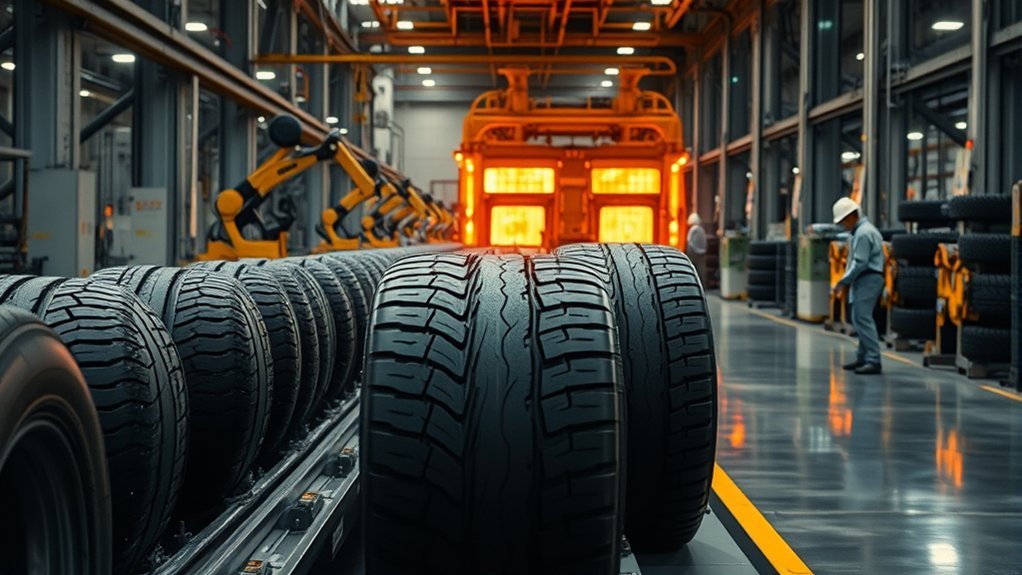
Hankook tires are made through a global manufacturing network that currently spans eight plants in five countries: South Korea, China, Hungary, Indonesia, and the United States. The exact origin of a tire can vary by product and size, so the safest way to confirm where your own Hankook tire was made is to check its country-of-origin marking and tire identification information.
Quick Answer
Hankook manufactures tires in South Korea, China, Hungary, Indonesia, and the United States. Its eight production plants include two in Korea, three in China, one in Hungary, one in Indonesia, and one in Clarksville, Tennessee. The exact factory can vary by tire model and size.
Key Takeaways
- Hankook currently lists eight tire plants across South Korea, China, Hungary, Indonesia, and the United States.
- South Korean production is centered at the Daejeon and Geumsan plants.
- Hankook’s three Chinese plants are in Jiaxing, Jiangsu, and Chongqing.
- The company’s European tire-production site is in Rácalmás, Hungary.
- Hankook’s U.S. plant is in Clarksville, Tennessee, where expanded passenger/light-truck and truck/bus production is being ramped up in 2026.
- A model-family name alone does not prove country of origin; verify the specific tire’s markings before buying if origin matters to you.
Where Are Hankook Tires Made?
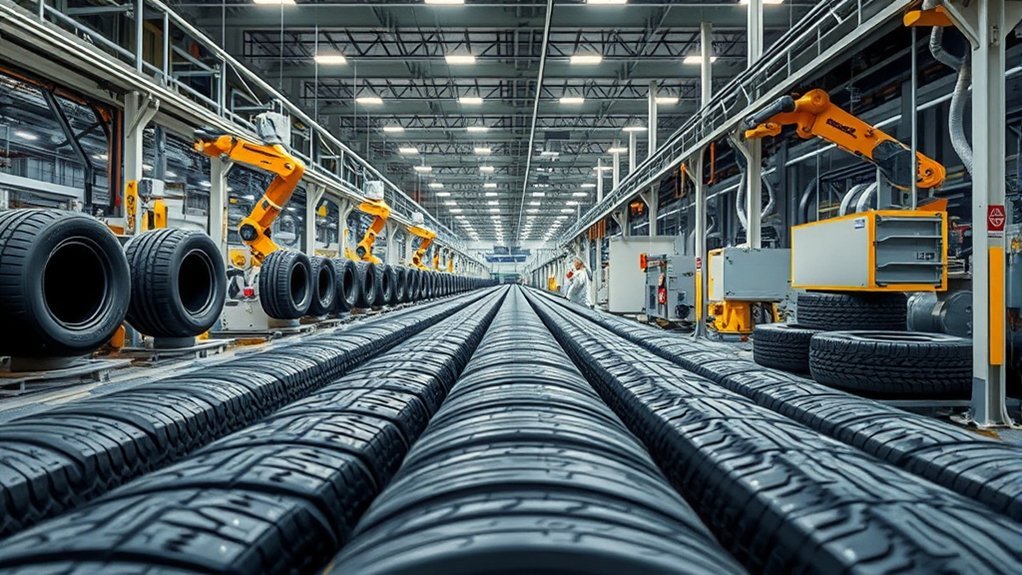
Hankook tires are manufactured at plants in South Korea, China, Hungary, Indonesia, and the United States. According to Hankook Tire & Technology’s current company overview, the company operates eight global plants and has annual production capacity of about 100 million tires.
Hankook’s manufacturing roots are in South Korea, where the company began in 1941. Its production network has since expanded across Asia, Europe, and North America to serve local original-equipment and replacement-tire markets.
The factories support passenger cars, SUVs, pickups, vans, trucks, and other vehicle categories. Hankook also develops different product families for performance, comfort, SUV use, winter driving, commercial vehicles, and electric vehicles.
Hankook currently lists eight tire plants in five countries, giving the company production bases in Asia, Europe, and North America.
Where Are Hankook’s Factories Located?
Hankook’s current global network identifies eight tire-production plants. The network includes two plants in South Korea, three in China, one in Hungary, one in Indonesia, and one in the United States.
Global Manufacturing Network
Hankook spreads production across major automotive regions so it can manufacture closer to important markets rather than relying on one country. This can shorten shipping routes, give the company more flexibility when demand changes, and support regional original-equipment and replacement-tire supply.
Production location does not mean every market receives the same size or specification. Tire availability can vary by region because vehicles, regulations, weather, and customer demand differ.
For that reason, it is better to compare an exact tire model, size, load index, speed rating, and production marking than to judge a tire only by the country where it was made.
Key Factory Locations
| Country | Hankook plant locations | Regional role |
|---|---|---|
| South Korea | Daejeon; Geumsan | Two domestic production bases near Hankook’s Korean R&D network |
| China | Jiaxing; Jiangsu/Huai’an; Chongqing | Three production sites serving China and surrounding markets |
| Hungary | Rácalmás | Hankook’s European tire-production site |
| Indonesia | Cikarang/Bekasi, West Java | Production base serving Asia-Pacific and other export markets |
| United States | Clarksville, Tennessee | North American production of passenger, light-truck, and expanding truck/bus tire lines |
This eight-plant structure gives Hankook manufacturing capacity close to several of its largest markets. It can also reduce dependence on one production region when shipping conditions, tariffs, or demand change.
Which Hankook Tires Are Made in Korea?
Hankook operates two major tire plants in South Korea: Daejeon and Geumsan. Korean factories manufacture Hankook tires for domestic and export markets, but you should not assume that an entire product family comes only from Korea.
For example, you may encounter Korean-made versions from familiar Hankook families such as:
- Ventus performance tires
- Dynapro SUV and pickup tires
- Kinergy touring and comfort-focused tires
However, the words Ventus, Dynapro, or Kinergy by themselves do not prove that a tire was made in Korea. Hankook can manufacture products for different regions and specifications at more than one production site.
Note: If Korean origin matters to you, verify the exact tire and size rather than relying on the product-family name or an online photo from another seller.
The most reliable choice is to inspect the actual tire’s country-of-origin information and its manufacturing identification before purchase or installation.
Where Are Hankook Tires Made in the U.S. and Europe?
In the United States, Hankook manufactures tires at its plant in Clarksville, Tennessee. In Europe, its tire-production plant is in Rácalmás, Hungary.
| Region | Manufacturing location | Current focus |
|---|---|---|
| United States | Clarksville, Tennessee | Passenger and light-truck production plus expanded truck/bus capacity |
| Europe | Rácalmás, Hungary | European passenger/SUV supply with additional truck/bus capacity under expansion |
Hankook’s August 2026 results update says the company is continuing to strengthen supply through expansions in both Tennessee and Hungary.
In Tennessee, the expanded passenger/light-truck and truck/bus lines have entered production and are being ramped up. That makes the Clarksville operation more important to Hankook’s North American supply than it was when the original plant opened.
Hungary remains Hankook’s European manufacturing base. Other European Hankook locations include sales offices, headquarters, technical operations, and testing facilities, but those should not be confused with additional European tire factories.
Do Hankook Tires Vary by Country?
Yes. Hankook’s tire availability and specifications can vary by market, even when customers recognize the same broader product-family name.
When comparing Hankook tires from different countries, match the exact model, size, load index, speed rating, and specification rather than relying on the family name alone.
You may see differences in available sizes, certification markings, efficiency labels, speed ratings, or market-specific versions. Regional product choices can also reflect local weather, road conditions, vehicle mix, and regulatory requirements.
- Sizing: A size sold in one market may not be offered in another.
- Labeling: Certification marks and consumer labels can differ by country or region.
- Specification: Closely related versions may be designed for different vehicles or market requirements.
These differences do not automatically mean that one country’s tire is better. They mean you should compare the exact tire specification before deciding whether two products are equivalent.
Does Country of Origin Affect Hankook Quality?
The country of manufacture can tell you where a Hankook tire was produced, but it is not a reliable quality ranking by itself.
Hankook operates its plants as part of one global production and engineering network. Individual factories can use different production lines, suppliers, or equipment, but the more useful comparison for you is the specific tire model and specification.
A performance tire, touring tire, winter tire, or SUV tire is designed for a particular use. Its tread design, compound, load capacity, speed rating, age, storage condition, and suitability for your vehicle generally tell you more than the country name alone.
If two tires have different origins, compare their exact specifications and manufacturing dates rather than assuming one factory automatically produces a better tire.
How Can You Check Where Your Hankook Tires Were Made?
Start by inspecting the sidewall of the actual tire. Look for a country-of-origin marking and the DOT Tire Identification Number (TIN).
For tires covered by current U.S. rules, 49 CFR §574.5 places the plant code in the first group of the TIN. That code identifies the manufacturing plant or manufacturer assigned the code.
Do not confuse the plant code with the date code. The National Highway Traffic Safety Administration explains that the last four digits of the TIN show the week and year the tire was manufactured. For example, a date code ending in 2526 means the tire was produced in the 25th week of 2026.
- Inspect both sidewalls for the full DOT/TIN marking.
- Look at the first group after the DOT marking for the plant code.
- Use the final four digits only to determine the manufacturing week and year.
- Check any explicit country-of-origin marking on the tire.
- If you still need confirmation, ask Hankook or the tire dealer to identify the plant from the specific tire code.
Note: The final four TIN digits are the date code, not the factory code. The plant-identification group appears at the beginning of the TIN.
Pro Tip: If you care about a particular country of origin, inspect the actual tires before installation. An online listing or photo may show a different size or production batch from the tires you receive.
If the sidewall is dirty, clean it gently and use good lighting. The full TIN may appear on only one side of the tire, so you may need to inspect the inner sidewall as well.
Why Does Hankook’s Global Manufacturing Matter?
Hankook’s manufacturing network matters because it gives the company production capacity close to major automotive markets in Asia, Europe, and North America.
For buyers, nearby production can support steadier regional availability and shorter supply routes. For Hankook, several plants give it more flexibility when demand, tariffs, logistics, or regional vehicle production changes.
Global Production Reach
With eight plants rather than one central factory, Hankook can distribute production across several regions. That makes the company’s manufacturing system less dependent on a single site or shipping route.
- Several plants can contribute to global production capacity.
- Regional manufacturing can reduce long-distance transport for some markets.
- Production can be aligned more closely with local vehicle and tire demand.
For you as a buyer, this network can translate into wider availability, although the exact model and size stocked in your country will still depend on the local market.
Regional Supply Advantages
Regional factories give Hankook more options for serving nearby dealers, automakers, and distributors. The Tennessee plant supports North America, while the Hungary plant serves Europe and the Indonesian and Chinese plants support important Asian markets.
Shorter supply routes can reduce some logistics exposure, while multiple production countries can help Hankook respond to trade barriers or disruptions in one region.
This does not guarantee that every Hankook tire will be locally made. Inventory can still move between regions depending on product, size, capacity, and demand.
Quality Across Markets
A global manufacturing network requires common engineering targets and manufacturing controls, but buyers should still judge a tire by the exact product rather than by broad assumptions about a country.
- Check the model and size specified for your vehicle.
- Confirm load and speed ratings.
- Check the production date and tire condition.
- Compare performance characteristics that matter for your climate and driving.
Country of origin is useful information, but it works best as one part of a larger tire comparison.
Frequently Asked Questions
How Old Is Hankook Tire?
Hankook Tire & Technology traces its inception to 1941. That means 2026 marks 85 years since the company began.
Is Hankook a Korean Company?
Yes. Hankook Tire & Technology is a South Korean company. Its global headquarters is in Seongnam, Gyeonggi-do, South Korea, and it operates Korean tire plants in Daejeon and Geumsan.
What Does “Made In” Mean on Hankook Tires?
A country-of-origin marking identifies the declared manufacturing origin of the finished tire. It does not necessarily mean every raw material or component used in that tire came from the same country.
Does Hankook Make Tires for Electric Vehicles?
Yes. Hankook’s iON family is dedicated to electric vehicles, with products designed around EV requirements such as load support, noise control, efficiency, and driving performance.
Are Hankook Tires Sold Worldwide?
Yes. Hankook says it supplies tires to more than 160 countries. The models and sizes offered can differ from one market to another.
How Many Tire Plants Does Hankook Have?
Hankook currently lists eight global tire plants: two in South Korea, three in China, and one each in Hungary, Indonesia, and the United States.
Are Any Hankook Tires Made in the USA?
Yes. Hankook manufactures tires at its Clarksville, Tennessee plant. Its expanded U.S. operation includes passenger and light-truck production as well as truck and bus tire capacity.
Conclusion
Hankook makes tires at eight plants across South Korea, China, Hungary, Indonesia, and the United States. Korea remains an important part of the company’s manufacturing base, while Clarksville, Tennessee serves North America and Rácalmás, Hungary serves European production. Because the factory can vary by tire and specification, check the actual sidewall rather than assuming a model name tells you where it was made. And when reading the DOT/TIN, remember that the plant code is at the beginning while the last four digits show the manufacturing week and year.
Sources
- Hankook Tire & Technology — Global Network — factory names and locations.
- Hankook Tire & Technology — Company Overview — company history, eight-plant network, production capacity, and global sales reach.
- Hankook Tire — Q2 2026 Results Update — current Tennessee and Hungary expansion information.
- 49 CFR §574.5 — Tire Identification Requirements — official TIN plant-code structure.
- NHTSA TireWise — tire identification and four-digit production-date guidance.
- Hankook iON — Hankook’s dedicated electric-vehicle tire line.

