
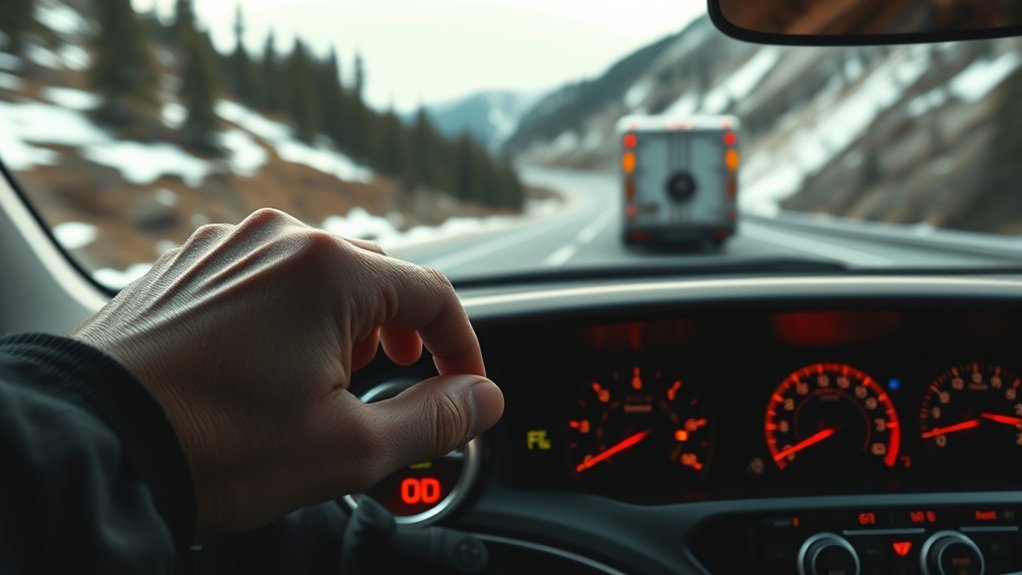
O/D Off means your automatic transmission’s overdrive range has been disabled or limited. On many older vehicles, that keeps the transmission out of its tallest cruising gear; on others, it may block one or more overdrive ratios. Use it selectively when lower gears give you better control, then return to normal overdrive operation when conditions improve.
Quick Answer
O/D Off means the transmission is being kept out of its normal overdrive cruising range. It can help when towing, climbing or descending steep grades, or when the transmission repeatedly shifts between gears. For steady, normal driving, leave overdrive available unless your vehicle’s owner’s manual says otherwise.
Key Takeaways
- A steady O/D OFF indicator normally means you have disabled the transmission’s overdrive range; it does not automatically mean something is broken.
- Use O/D Off only when lower gears are useful, such as during repeated gear hunting, certain towing situations, or steep grades.
- Keep overdrive available during normal cruising so the transmission can select its taller, lower-RPM ratios when appropriate.
- A flashing O/D or O/D OFF indicator is different from a steady indicator and should be checked according to your vehicle’s owner’s manual.
- Modern vehicles may use Tow/Haul mode, manual range selection, or automatic shift programming instead of a dedicated O/D button.
What Does O/D Off Mean?
The O/D Off indicator means the vehicle is not allowing its normal overdrive cruising range to operate. On many older automatic transmissions, pressing the O/D button prevents a shift into the top overdrive gear.
Technically, overdrive refers to a tall transmission ratio intended for efficient cruising. Modern multi-speed transmissions may have more than one overdrive ratio, so saying O/D Off always blocks only the single “highest gear” is too simple. The exact behavior depends on the transmission design.
If you accidentally press the O/D switch during normal driving, you may notice that the engine runs at a higher RPM at speeds where the transmission would normally select a taller ratio. That does not normally damage the vehicle by itself, although it can increase noise and fuel consumption during steady cruising.
Note: O/D controls are vehicle-specific. Some cars remember the setting, some reset it after the ignition is cycled, and many newer vehicles do not have a dedicated O/D button at all. Check the owner’s manual for your exact year, make, and model.
Why Does Overdrive Help on Highways?
During steady highway cruising, an automatic transmission can use a taller gear to keep the engine at a lower RPM while maintaining road speed. That usually means less engine noise and can improve fuel efficiency compared with unnecessarily holding a lower gear.
Overdrive is especially useful once you are at a stable speed and the engine does not need strong acceleration or heavy-load pulling power. The transmission can select a taller ratio and let the engine operate more comfortably.
Overdrive is primarily a cruising tool: it lets the transmission use taller ratios when the engine does not need the extra leverage of a lower gear.
There is no universal percentage by which overdrive improves MPG. Fuel use varies with speed, vehicle design, terrain, load, weather, tires, and driving behavior. FuelEconomy.gov also shows that driving speed and driving style can materially affect fuel economy.
For that reason, leave overdrive available during normal open-road cruising unless your owner’s manual or the current driving situation calls for a different mode.
When Should You Turn O/D Off?
Turn O/D off when preventing an overdrive shift gives you more useful control than allowing the transmission to keep selecting its tallest cruising ratio.
Common examples include a transmission that repeatedly shifts up and down on a grade, certain towing situations, or a steep descent where a lower gear provides useful engine braking.
- Long or steep climbs: O/D Off may prevent repeated shifting between overdrive and a lower gear.
- Towing or heavy loads: Use O/D Off only when your owner’s manual recommends it or when it helps control repeated gear hunting.
- Steep descents: Holding a lower ratio can increase engine braking and reduce how much you rely on the service brakes.
- Slow, rolling traffic: O/D Off may help if the transmission repeatedly shifts between ratios, but it is not automatically required in city traffic.
- Uneven or demanding terrain: A lower gear may give more predictable throttle response, but O/D Off does not create additional tire traction.
Pro Tip: Do not use O/D Off simply because you are driving slowly. Use it when the transmission’s normal shift pattern is working against the load or terrain, then return to the normal setting when that condition ends.
[Products Worth Considering]
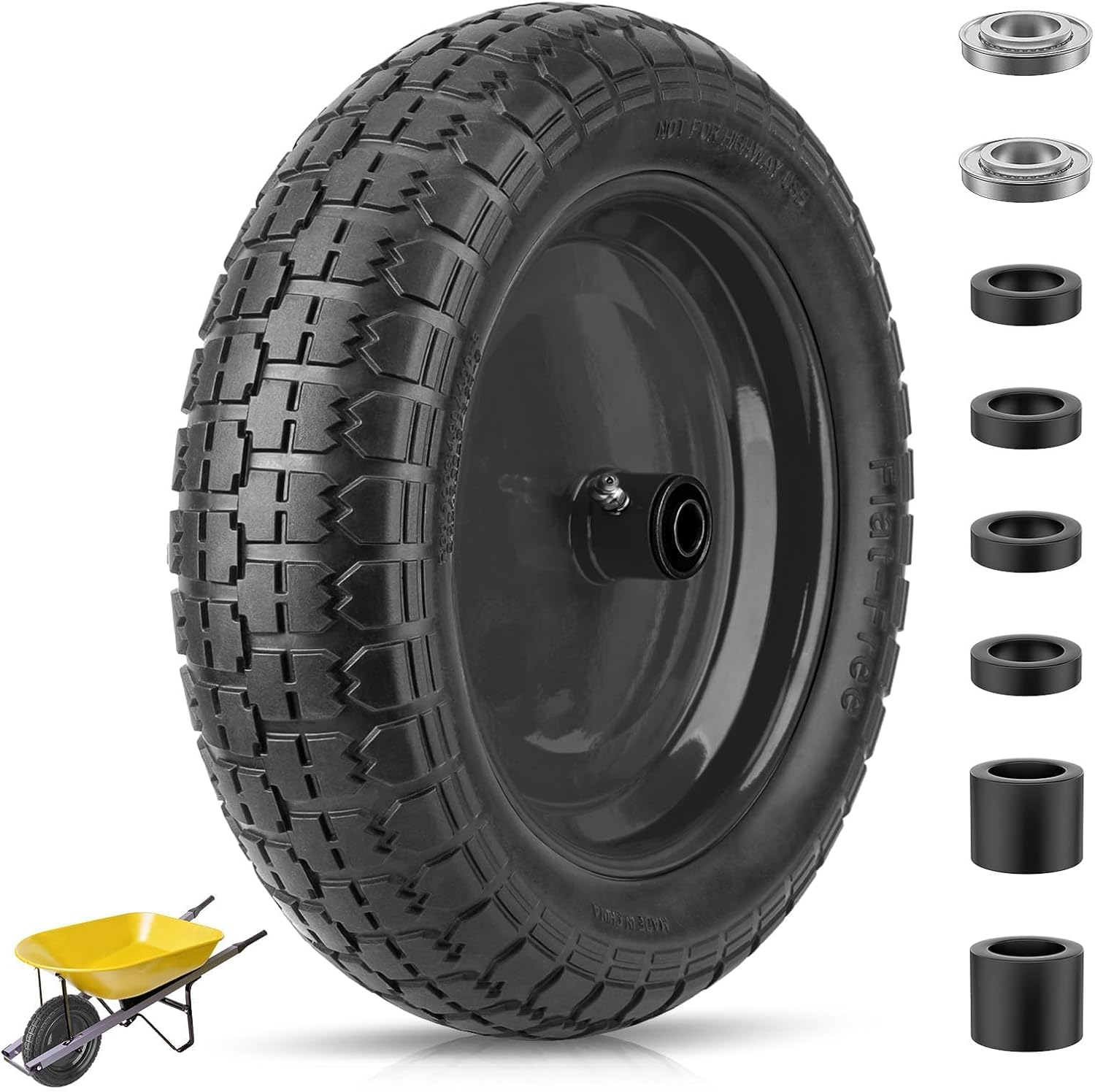
This flat-free TICONN wheelbarrow tire features durable polyurethane foam construction that never needs inflation, helping prevent punctures and reducing maintenance on rough outdoor terrain. With a 300 lb max load capacity and stable steel rim design, it supports safer transport for yard work and hauling tasks. An adapter kit with ball bearings and nylon spacers is included for easier fit and customization across common wheelbarrow and cart axle setups.

The VEHLIVE SU-50448 II TPMS relearn tool provides a fast activation reset to restore accurate tire pressure monitoring after sensor replacement or tire rotation. It supports 315 MHz and 433 MHz GM series sensors and helps clear dashboard pressure warnings. With simple two-button operation and horn-confirmed relearning order, you can reprogram sensors conveniently at home.

Keep your tires properly inflated with this analog VONDIOR tire pressure gauge, designed for fast, easy readings without batteries. The swiveling, two-axis hose and large glow dial help you measure at any tire angle with instant visibility. Built with a protective rubber shield, it supports durable, low-maintenance use for cars and trucks.
Should You Use O/D Off for Towing?
Sometimes. On older automatic transmissions with a dedicated O/D switch, disabling overdrive can help if the transmission repeatedly shifts between overdrive and the next-lower gear while towing.
However, O/D Off is not a universal towing rule. Many newer vehicles use Tow/Haul mode, manual range selection, or transmission software designed specifically for towing. Follow the towing and transmission instructions in your exact owner’s manual rather than assuming O/D should always be disabled.
[Products Worth Considering]

This TPMS relearn tool helps you quickly activate, match, and reset GM tire pressure sensors to keep the vehicle monitoring system working properly. It clears tire pressure alarms and dashboard warning lights after sensor replacement or tire rotation, and supports learning for common 315/433 MHz TPMS sensors. Designed for simple one-button operation, it can help you avoid unnecessary trips to repair shops.

Secure your vehicle during transport with this 4-pack of heavy-duty tire tie down straps designed for trailers and hauling. The ratchet system with flat hooks and D-rings helps you tension the straps quickly, while the wheel-friendly design protects tires. With high break strength and corrosion-resistant hardware, these straps provide reliable, confidence-inspiring tie-down security for cars, trucks, and UTVs.

Steelman white tire marking crayons provide high-contrast, semi-permanent marks for repairing and inspecting tires and equipment. They write on wet or dry, smooth or coarse surfaces including rubber, metal, glass, and wood, making them ideal for puncture location and damage outlining. The lead- and zinc-free crayons resist weather and fading yet wipe away when you no longer need the marks.
Towing Strain Reduction
When a loaded vehicle repeatedly upshifts and downshifts, holding a lower gear can make power delivery steadier. On an older vehicle, O/D Off may be the control used to accomplish that.
The benefit is not that higher RPM automatically protects the transmission. Instead, limiting unnecessary gear hunting may reduce repeated shift activity and help the vehicle stay in a more suitable ratio for the load.
You may also get more immediate throttle response on a grade because the engine is already operating at a higher RPM instead of waiting for a downshift.
Preventing Gear Hunting
Gear hunting is repeated shifting back and forth between two ratios because the taller gear cannot comfortably maintain the required speed or load.
If that happens while towing, an appropriate lower range, O/D Off setting, or Tow/Haul mode can help keep the transmission from continually chasing a taller ratio.
- More consistent power delivery
- Fewer unnecessary shifts
- Better control on long grades
- More predictable engine braking
- Less distraction from repeated shifting
Which control you should use depends on the vehicle. Manufacturer instructions take priority over generic O/D advice.
When Is O/D Off Useful on Hills and in Traffic?
O/D Off can be useful on hills when the transmission cannot stay comfortably in its overdrive range. Holding a lower gear may reduce repeated shifting and keep the engine in a more responsive RPM range.
In stop-and-go traffic, however, you normally do not need to disable overdrive simply because traffic is slow. Consider it only if your particular transmission repeatedly shifts between ratios in a way that makes the vehicle less smooth or controllable.
On flat roads and during steady cruising, leave overdrive available so the transmission can select the most appropriate ratio automatically.
[Products Worth Considering]

The UYYE TPMS relearn tool helps activate and relearn tire pressure monitor sensors quickly, typically in minutes. It supports TPMS learn mode resetting using a simple three-step process: enter learn mode, position the tool near the valve stem, and press the learn button. Designed for specific GM models, it streamlines sensor programming and reduces trips to dealers or tire shops.

A concentrated tire and tube mounting compound designed to help simplify mounting rubber tires and tubes on passenger, semi truck, construction, and OTR applications. Its ultra-thick formula packs beads effectively and includes rust inhibitors to help protect against corrosion during use.

The Tymate TM12 RV TPMS delivers real-time tire pressure and temperature monitoring with a stable 433Hz display for safer long-distance driving. It supports simultaneous monitoring across vehicle and trailer zones, includes six alarm modes for pressure, temperature, leakage, battery, and signal loss, and features easy DIY installation with auto calibration. Power is supplied via USB-C charging or solar recharging, with a wide 0–144 PSI range and up to 50 ft signal coverage for RVs and towable trailers.
Hill Climb Control
During a long climb, O/D Off can help an older automatic hold a lower gear instead of repeatedly attempting an overdrive upshift and then immediately downshifting again.
- More consistent acceleration on a grade
- Less repeated upshifting and downshifting
- More immediate power when the engine is already in a lower ratio
- More predictable transmission behavior
- Useful engine braking when a lower gear is also held on the descent
Once the grade eases and the vehicle can cruise without hunting between gears, restore normal overdrive operation.
Stop-And-Go Shifting
In most ordinary city traffic, you can leave overdrive enabled and allow the automatic transmission to manage its own gears.
If your vehicle repeatedly shifts between its upper ratios as traffic speeds rise and fall, O/D Off may make the response more consistent on some older transmissions. That is a comfort and shift-control benefit, not a general requirement for urban driving.
When traffic clears, return to the normal setting so the transmission can use its taller ratios as road speed increases.
When O/D Helps
O/D Off helps most when the transmission is trying to use a tall cruising gear even though the current road or load makes a lower ratio more suitable.
- Uphill driving: may reduce repeated gear hunting
- Towing: may help on older vehicles when the manual recommends it
- Steep descents: can help you hold a lower ratio for engine braking
- Changing traffic speeds: may help only if the transmission repeatedly shifts between upper ratios
- Demanding terrain: may provide more predictable gear holding
Use O/D Off for gear control rather than as a permanent driving mode.
Can You Drive Safely With O/D Off?
Yes. In a vehicle designed with an O/D Off control, driving with overdrive disabled is normally safe when you are using the feature as intended.
The most noticeable difference is that the engine may run at a higher RPM once road speed becomes high enough that the transmission would otherwise select overdrive. That can increase noise and fuel consumption during extended cruising.
For towing, grades, or repeated gear hunting, that higher-RPM lower gear may be useful because it gives the drivetrain more mechanical leverage and can improve engine braking.
For ordinary highway driving, let the transmission use its normal overdrive range unless the owner’s manual says otherwise.
A steady O/D OFF indicator generally describes the selected transmission mode. A flashing indicator is a different situation and deserves attention.
What Does a Flashing O/D Light Mean?
A flashing O/D or O/D OFF light should not be treated the same as a steady O/D OFF indicator. On vehicles that use the light as a transmission warning, flashing can mean the transmission control system has detected a fault.
The exact meaning is model-specific, so check your owner’s manual before assuming one particular cause.
Warning: If the O/D light flashes and you also notice slipping, harsh shifts, delayed engagement, unusual noises, a burning smell, or loss of drive, reduce the load on the vehicle and arrange diagnosis promptly. Do not continue towing or hard driving while a transmission warning is active.
Flashing Light Warning
A flashing indicator can be associated with an electrical, sensor, control-system, temperature, or internal transmission problem, depending on the vehicle.
- Check the owner’s manual for the exact warning definition.
- Look for obvious fluid leaks beneath the vehicle.
- Note whether the transmission slips, shifts harshly, or engages late.
- Have diagnostic trouble codes scanned.
- Arrange professional diagnosis if the warning continues or returns.
Do not assume that adding transmission fluid will solve the problem. Many modern transmissions require a specific temperature and service procedure to verify fluid level correctly.
Possible Transmission Issue
If the O/D light flashes because the transmission control module has detected a fault, continuing to place the vehicle under heavy load may make an existing problem worse.
Symptoms such as slipping, delayed engagement, harsh shifting, reduced-power operation, or overheating make prompt inspection more important.
If the vehicle drives normally and the light stops flashing, you should still check the model-specific manual and retrieve any stored diagnostic codes before assuming the problem is gone.
Get Vehicle Inspected
Persistent or repeated flashing deserves a proper diagnostic check. A technician can scan transmission-related modules, inspect wiring and connectors, evaluate fluid condition using the correct procedure, and determine whether the warning came from a sensor, control problem, overheating event, or internal transmission fault.
- Record when the warning appeared.
- Note the vehicle speed and whether you were towing or climbing.
- Check for visible leaks.
- Record any slipping, delayed engagement, or harsh shifts.
- Have transmission-related diagnostic codes read.
If you suspect a broader vehicle defect, you can also check your VIN or year, make, and model using the NHTSA recall and safety-information database.
How Do You Turn O/D Back On?
On a vehicle with a dedicated O/D switch, you normally turn overdrive back on by pressing that switch again. The O/D OFF indicator should go out when overdrive becomes available.
The switch may be on the shift lever, console, or another control location. Do not rely on one universal button symbol because manufacturers label and position the control differently.
Some vehicles reset the setting after the ignition is switched off, while others may retain or handle the transmission mode differently. Check the exact owner’s manual if the light does not respond as expected.
If a steady O/D OFF light will not go out after you operate the correct switch, or if it begins flashing, treat that as a reason to consult the vehicle-specific instructions and investigate further.
How Does Overdrive Work in Tundras and Other Automatics?
Older automatic vehicles, including some older trucks, may give you a dedicated O/D switch that prevents the transmission from entering its normal overdrive range.
Do not assume that every Toyota Tundra works that way. Transmission controls have changed by generation. Current vehicles may manage high gears through automatic programming, selectable drive modes, Tow/Haul mode, or manual range selection instead of a separate O/D button.
For example, Toyota lists selectable driving and TOW/HAUL modes among the features of the 2026 Tundra SR5. That is why operating advice should be based on the exact model year rather than generic instructions written for older transmissions.
You can use Toyota’s official owner-manual resource or Nissan’s official Manuals & Guides resource to find model-specific instructions.
Common O/D Off Mistakes to Avoid
The biggest mistake is treating O/D Off as either a performance mode that should stay enabled all the time or a fuel-saving mode. It is neither. It is simply one way certain transmissions limit access to their overdrive range.
| Situation | Typical approach | Why |
|---|---|---|
| Normal city driving | Leave normal transmission operation available | O/D Off is usually unnecessary unless the transmission is hunting between upper gears |
| Steady highway cruising | Keep overdrive available | Allows taller cruising ratios and lower engine RPM when appropriate |
| Towing | Follow the owner’s manual; use O/D Off or Tow/Haul if specified | Towing strategy varies greatly by transmission and model |
| Long steep climb | Consider a lower range if the transmission repeatedly hunts | Helps maintain a suitable gear |
| Steep descent | Use an appropriate lower gear or mode | Provides engine braking |
Also avoid assuming that a steady O/D OFF light and a flashing O/D light mean the same thing. A steady indicator generally reports the selected mode; flashing may be a warning on vehicles designed to use the indicator diagnostically.
Frequently Asked Questions
Should I drive with O/D Off or on?
For normal driving, leave overdrive available so the automatic transmission can select its taller cruising ratios when appropriate. Turn O/D Off only when a lower gear is useful, such as during repeated gear hunting, certain towing situations, or steep grades, and follow your owner’s manual.
Why would you ever turn overdrive off?
You may turn overdrive off to keep an older automatic transmission in a lower ratio when it repeatedly shifts between gears, when you need more engine braking on a descent, or when the manufacturer recommends it for a particular load or towing condition.
What causes O/D to turn off automatically?
An automatic transmission may decide not to enter an overdrive ratio during acceleration, heavy load, cold operation, or other conditions, but that is not necessarily the same as activating the driver-facing O/D OFF setting. Indicator behavior and automatic reset logic vary by vehicle.
Is it okay to drive with overdrive on all the time?
For most normal driving, yes. Leaving overdrive available lets the transmission choose its cruising gears automatically. You only need to intervene when the vehicle’s manual or a specific road, load, or towing condition calls for a lower range or another transmission mode.
Can driving with O/D Off damage the transmission?
Using a factory O/D Off function as intended does not normally damage the transmission. Leaving it off unnecessarily at higher cruising speeds can keep engine RPM higher and may increase fuel use and noise, so return to normal operation when you no longer need the lower gear range.
Does O/D Off save gas?
Usually not during steady cruising. Disabling overdrive can keep the engine at a higher RPM than necessary. Fuel economy varies by vehicle and driving conditions, so there is no reliable universal percentage for the fuel penalty or benefit.
Conclusion
When you see O/D Off, it generally means your automatic transmission has been told not to use its normal overdrive cruising range. That can be useful when a lower gear gives you steadier control, prevents repeated gear hunting, or provides extra engine braking.
For ordinary cruising, leave overdrive available unless your vehicle’s manual says otherwise. And if the O/D indicator starts flashing instead of staying steadily illuminated, treat that as a possible warning rather than a normal mode indication and check the vehicle-specific instructions promptly.
Sources
- Nissan Manuals & Guides — official model- and year-specific owner information.
- Toyota Manuals and Warranties — official Toyota owner-manual resource for vehicle-specific controls and operating instructions.
- Toyota 2026 Tundra — current Tundra information, including selectable driving and TOW/HAUL modes on applicable trims.
- FuelEconomy.gov — Driving More Efficiently — U.S. DOE/EPA information on how speed and driving behavior affect fuel economy.
- NHTSA Recall Lookup — official recall, investigation, complaint, and manufacturer-communication search.
