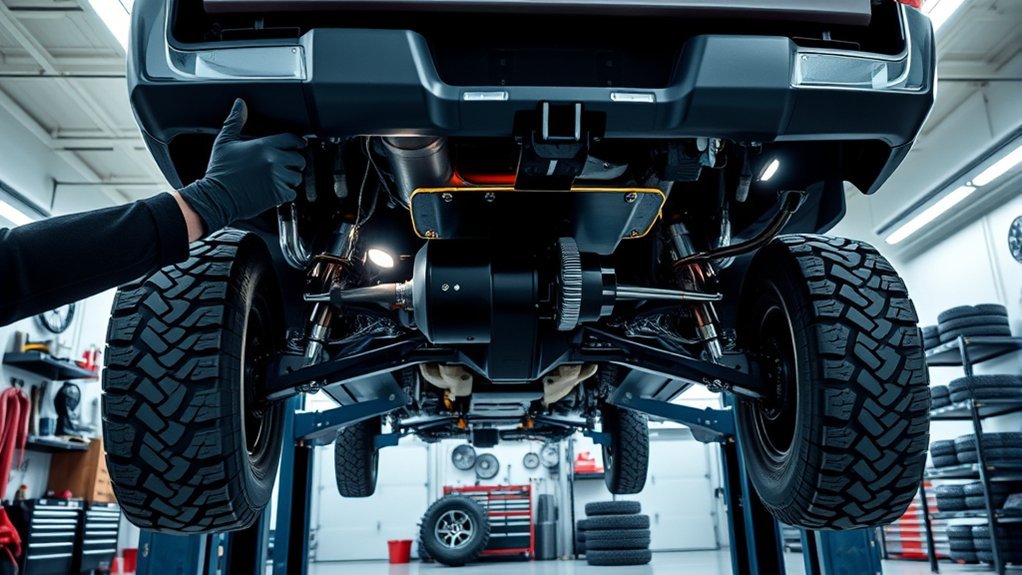
Installing 35-inch tires can make your Toyota Tacoma more capable off-road, but the extra diameter, weight, and rolling resistance also change how the truck accelerates, shifts, climbs, and cruises. Regearing can restore mechanical leverage, but the correct ratio depends on your Tacoma’s generation, transmission, current axle ratio, measured tire diameter, vehicle weight, and intended use.
Quick Answer
Many Tacomas benefit from regearing after moving to 35-inch tires, especially automatic trucks, heavy overland builds, tow vehicles, and trucks that hunt between gears. Ratios such as 4.56, 4.88, and 5.29 are possible, but no single ratio fits every Tacoma. Verify your axle, transmission, existing ratio, and actual tire diameter before ordering parts.
Key Takeaways
- A 35-inch tire reduces the effective numerical gear ratio and usually makes the engine work harder during acceleration and hill climbing.
- Use your Tacoma’s actual axle ratio and the tire manufacturer’s measured diameter, not a generic “stock” ratio or nominal tire size.
- A 4WD Tacoma must use matching front and rear final-drive ratios.
- Regearing may improve throttle response and reduce gear hunting, but it cannot remove the tire’s added weight, drag, or braking demands.
- Differential setup requires precise pinion depth, tooth contact, backlash, and bearing preload, so professional installation is strongly recommended.
- Follow the gear manufacturer’s break-in and fluid-change instructions before towing, hard acceleration, or difficult off-road use.
At a Glance
| Time Required | Allow a full professional shop appointment, followed by the gear manufacturer’s break-in period and early fluid service. |
| Difficulty | Advanced differential work. Incorrect setup can cause noise, overheating, bearing failure, or ring-and-pinion damage. |
| Information Needed | Model year, engine, transmission, 2WD or 4WD, axle identification, current ratio, locker type, measured tire diameter, vehicle weight, and intended use. |
| Parts Cost | As checked July 17, 2026, several front-and-rear 2016–2023 Tacoma gear packages list for about $1,070 to $1,504 before labor, fluids, tax, calibration, lockers, or repairs. |
Why Regearing Matters for 35-Inch Tires in Your Tacoma
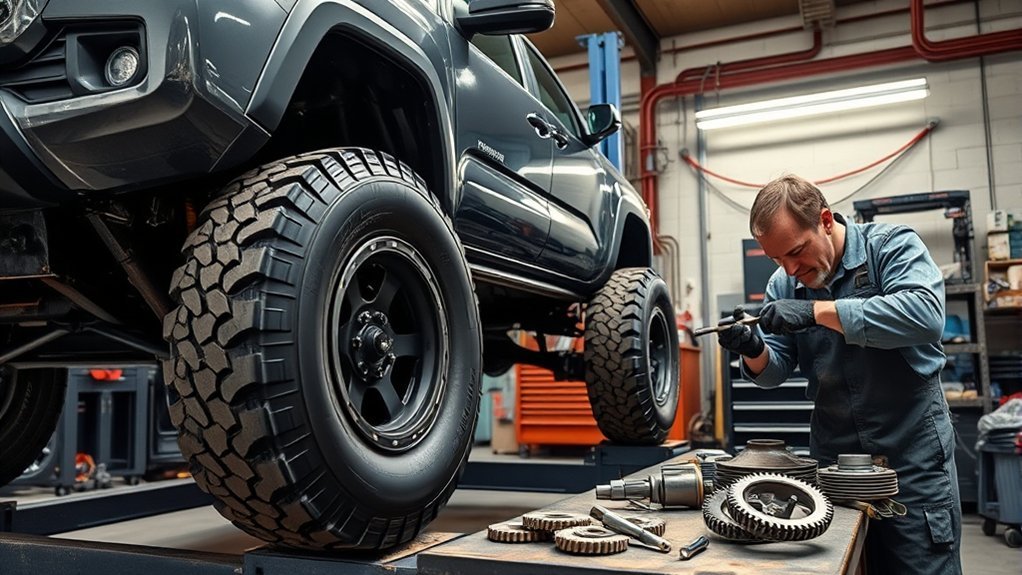
Your axle ratio controls how many driveshaft or pinion rotations occur for each wheel rotation. A numerically higher ratio, such as 4.88 instead of 4.10, multiplies torque more before it reaches the tires.
A taller tire travels farther with every rotation. When you install 35s without changing the axle gears, the truck behaves as though it has a numerically lower final-drive ratio. Engine RPM at a given true road speed normally drops, while the engine and transmission need more throttle to produce the same wheel force.
The tire’s added mass also requires more energy during acceleration and braking. Aggressive tread, extra width, lower pressure, heavy wheels, roof equipment, bumpers, armor, and camping gear can add further load. This is why two Tacomas with the same nominal tire size may need different ratios.
Larger tires may also increase rolling resistance. Regearing can restore leverage, but it does not make the heavier tire disappear or remove its aerodynamic and braking effects.
Regearing restores mechanical leverage. It does not erase the weight, drag, clearance, braking, and steering demands created by 35-inch tires.
[Products Worth Considering]
This flat-free TICONN wheelbarrow tire features durable polyurethane foam construction that never needs inflation, helping prevent punctures and reducing maintenance on rough outdoor terrain. With a 300 lb max load capacity and stable steel rim design, it supports safer transport for yard work and hauling tasks. An adapter kit with ball bearings and nylon spacers is included for easier fit and customization across common wheelbarrow and cart axle setups.

These aluminum alloy tire valve stem caps with an O-ring seal help protect valve stems from corrosion while adding a clean, stylish look to your vehicle. The universal fit works across cars, trucks, motorcycles, bicycles, and more, making them an easy upgrade for everyday driving and off-road use. Installation is quick, and the included four-pack keeps all your tires dressed and protected.

Keep your tires properly inflated with this analog VONDIOR tire pressure gauge, designed for fast, easy readings without batteries. The swiveling, two-axis hose and large glow dial help you measure at any tire angle with instant visibility. Built with a protective rubber shield, it supports durable, low-maintenance use for cars and trucks.
Signs You May Need to Regear Your Tacoma
You do not need to judge the truck from tire diameter alone. Pay attention to how it behaves after the complete tire, wheel, suspension, armor, and cargo setup is installed.
Slower Acceleration and Heavy Throttle Demand
A common sign is noticeably weaker acceleration from a stop or while entering traffic. You may need much more throttle than before, especially with an automatic transmission or a heavily loaded truck.
Before blaming the gears, confirm tire pressure, engine condition, brake drag, alignment, and wheel weight. A truck that pulls or resists rolling may have a separate problem. For example, misaligned wheels can reduce performance while creating a handling problem.
Gear Hunting and Difficulty Holding Speed on Hills
An automatic Tacoma may repeatedly downshift on mild grades, into headwinds, or while carrying normal cargo. The transmission may struggle to hold its highest gear because the engine no longer operates in a useful torque range.
A manual-transmission Tacoma may require more clutch slip from a stop or more frequent downshifts. Either condition suggests that the effective gearing may be too tall for the completed build.
Heat, Frequent Downshifts, and Reduced Low-Speed Control
Larger tires do not directly create higher RPM at the same road speed. They initially lower RPM for a given true speed. However, the transmission may respond by downshifting frequently, which produces repeated RPM increases and additional heat.
Off-road, an unsuitable ratio can also reduce controlled low-speed response. You may need more throttle to climb an obstacle, increasing wheelspin and making smooth power delivery harder.
When Regearing May Be Optional
You may tolerate the stock gearing if the truck is light, the measured tire diameter is below the advertised size, the terrain is flat, and you rarely tow or carry heavy equipment. Some manual-transmission trucks also feel more acceptable than comparable automatics.
Acceptable does not always mean ideal. Test the completed build during highway cruising, hill starts, low-speed trail work, and normal cargo use before deciding.
How to Pick the Right Gear Ratio for Your Tacoma
A ratio calculator gives you a starting point, not a final answer. Yukon Gear recommends considering the year, engine, transmission, axle, current ratio, tire size, factory equipment, added weight, driving style, and intended use before selecting gears.
[Products Worth Considering]

Universal magnetic jack pad with aluminum grooved design to protect vehicle pinch welds during lifting. Durable nylon pad inserts are upgraded and secured with screws to resist damage and keep in place. Designed to fit most single vehicle pinpoint welds for safer, stable jacking when changing tires, repairs, or performing oil changes.

Malco tire mounting and demounting lubricant is a ready-to-use tire lube formulated to reduce friction during tire installation for passenger cars, light trucks, farm tires, and heavy-duty equipment. It provides rust-inhibiting protection to help reduce corrosion on rims and wheels, and helps support proper tire bead seating during inflation to reduce air leakage. The silicone-free, soap-free formula is whitewall safe to help prevent discoloration on whitewall tires and sensitive sidewall markings.
This universal magnetic jack pad is designed to protect pinch welds when lifting vehicles, helping prevent seam damage or warping. Crafted from solid aluminum with a nylon pad insert, it provides reinforced structural support and a secure fit for most single-vehicle pinch welds. Slotted for strong magnet holding, it supports safe jacking for cars, SUVs, trucks, and more.
Verify the Truck Before Comparing Ratios
Record the following information before ordering any gear set:
- Your Tacoma’s exact model year and generation.
- Engine and transmission.
- Two-wheel drive or four-wheel drive.
- Front and rear differential models.
- Factory locker, aftermarket locker, limited-slip, or open differential.
- Current axle ratio, confirmed through the axle code, build records, tooth count, or driveshaft-rotation test.
- Actual mounted tire diameter or manufacturer-listed revolutions per mile.
- Approximate completed vehicle weight, including armor, passengers, cargo, and accessories.
- Typical highway speed, terrain, towing frequency, and off-road use.
Warning: A four-wheel-drive Tacoma must have matching front and rear final-drive ratios. Never regear only one axle and then engage 4WD. The resulting speed difference can bind and damage the transfer case, driveshafts, axles, or differentials.
Also confirm that the chosen gear set fits your exact carrier, pinion spline count, locker, and axle housing. Product listings for 2005–2015 and 2016–2023 Tacomas show different axle combinations and available ratios, so year alone is not enough.
Calculate a Factory-Equivalent Starting Ratio
You can estimate the ratio that restores approximately the original engine RPM with this formula:
Estimated new ratio = current ratio × new measured tire diameter ÷ original measured tire diameter
For example, suppose a truck has 3.91 gears, a 31.6-inch original tire, and a mounted 34.5-inch replacement tire:
3.91 × 34.5 ÷ 31.6 = 4.27
A nearby available ratio, such as 4.30, would roughly restore the original relationship between engine speed and road speed. However, it would not compensate fully for extra tire weight, armor, cargo, towing, or poor aerodynamics. A deeper ratio may provide better real-world drivability.
Pro Tip: Use the tire manufacturer’s measured diameter or revolutions-per-mile specification. Many tires sold as “35s” measure less than 35 inches after mounting and loading.
Comparing 4.56, 4.88, and 5.29
| Ratio | Where It May Fit | Main Trade-off |
|---|---|---|
| 4.56 | May suit a lighter build, certain earlier-generation configurations, manual transmissions, or drivers seeking a modest correction. | May still feel tall with heavy 35s, armor, frequent towing, steep grades, or an automatic that already hunts between gears. |
| 4.88 | A common middle option for many 35-inch tire builds where balanced highway and trail performance matters. | Raises cruise RPM more than 4.56 and may not provide enough leverage for every heavy automatic build. |
| 5.29 | May suit heavy overland trucks, frequent hills, technical trails, towing use, or builds where strong low-speed response is the priority. | Produces higher highway RPM and may add noise or fuel use if it is deeper than the build requires. |
These are planning ranges, not prescriptions. For example, current Revolution Gear packages for some 2016–2023 Tacoma axles offer 4.56, 4.88, and 5.29, while certain 2005–2015 packages list 4.56 and 4.88. Your available choices depend on the specific front and rear differentials.
For 2024 and newer Tacomas, do not copy an earlier-generation recommendation. Confirm that the parts and installation procedure explicitly support your exact fourth-generation axle, powertrain, locker, and electronic systems.
Consider Highway RPM Before Choosing
A deeper numerical ratio improves leverage but also raises engine RPM at a given road speed. Ask the installer to calculate expected RPM using your transmission’s top-gear ratio, transfer-case ratio, selected axle ratio, and measured tire diameter.
Compare that result with your normal highway speed. A trail-focused truck may benefit from 5.29, while a light daily driver covering long, flat highway distances may favor a less aggressive option.
Cost of Regearing Your Tacoma
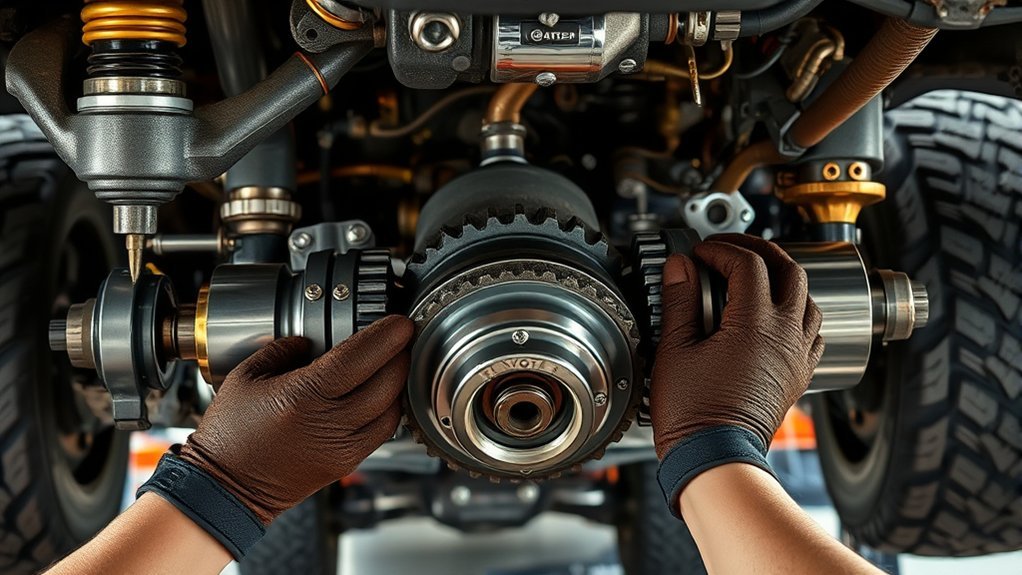
Regearing a 4WD Tacoma normally involves front and rear ring-and-pinion sets, master installation kits, bearings or seals when needed, gear oil, shop supplies, and skilled labor. Your price can rise if the truck needs a new carrier, locker, damaged bearings, axle repairs, calibration, or additional fabrication.
As a current parts snapshot, checked July 17, 2026:
- A 2016–2023 Tacoma front-and-rear package for certain 8-inch rear configurations listed for about $1,071 before labor.
- A 2016–2023 package for certain 8.75-inch rear configurations listed for about $1,504 before labor.
- A 2005–2015 package for certain open-carrier configurations listed for about $1,208 before labor.
Product prices can change, and these packages do not fit every Tacoma. Treat them as examples rather than quotes.
[Products Worth Considering]

This manual duck head tire changer kit makes tire installation and removal simpler by letting you embed the duck head into the tire with applied pressure. The integrated design and durable steel construction help reduce friction and improve efficiency and safety during use. Suitable for 16–21 inch wheels, it’s convenient for cars, trucks, SUVs, and ATV tires, with 24-hour after-sales support.

Replace or upgrade your zero-turn lawn mower tires with a universal fit flat-free tire and wheel assembly in a convenient 2-pack. Smooth tread front-caster style helps turning with reduced turf damage, while flat-free design eliminates the maintenance and downtime of air-filled flats. The included adapter kit supports 5/8-inch axles and hub lengths from 3.4 to 5 inches for compatibility across most ZTR mowers.

This 13-inch flat-free wheelbarrow tire uses solid polyurethane foam construction with steel rims, so it will not puncture, rot, or go flat. The anti-skid tread improves stability and maneuverability across garden, lawn, and mixed terrain. It includes pre-installed 5/8-inch bearings plus extra 3/4-inch bearings and a versatile adapter kit to fit compatible wheel sizes and cart hubs.
What an Itemized Quote Should Include
Ask each differential shop to identify these costs separately:
- Front and rear gears: Exact manufacturer, ratio, axle fitment, and warranty.
- Installation kits: Bearings, seals, shims, crush sleeves, ring bolts, and other required hardware.
- Labor: Front differential removal, rear differential setup, assembly, inspection, and road testing.
- Locker or carrier work: New locker, carrier replacement, wiring, air lines, or bearing changes.
- Fluids and service: Initial lubricant, friction modifier when required, and the early break-in fluid change.
- Calibration: Tire-size, speedometer, shift-strategy, TPMS, or other electronic adjustments when supported.
- Unexpected repairs: Worn bearings, damaged housings, seals, CV axles, driveshaft joints, or previous setup errors.
Do not rely on a fixed national labor range. Differential rates vary greatly by region, axle design, shop experience, and the truck’s existing condition.
Professional Installation and Gear Break-In
Ring-and-pinion installation requires more than replacing two gears. The installer must establish correct pinion depth, gear-tooth contact pattern, backlash, pinion-bearing preload, carrier-bearing preload, and fastener torque.
Small setup errors can cause whining, overheating, metal contamination, bearing damage, or rapid gear failure. Choose a shop that regularly builds Toyota differentials and can document the final pattern and measurements.
Questions to Ask the Installer
- How many Tacoma front and rear differentials has the shop regeared?
- Does the shop verify axle and locker compatibility before ordering?
- Which gear and bearing brands will it install?
- Will the technician provide the final backlash and tooth-pattern results?
- What labor and parts warranties apply?
- What lubricant and break-in procedure does the gear manufacturer require?
- When should the first fluid change occur?
- Who pays if the new gears whine or overheat because of setup?
Break In the New Gears Correctly
Follow the instructions supplied by your gear manufacturer and installer. Procedures vary, so their written requirements take priority over general online advice.
Yukon and Revolution both recommend controlled heat cycles after installation. Their guidance includes short initial drives, full cooling periods, gentle acceleration, limited speed, and avoiding towing or severe off-road use during the early break-in period.
Both also recommend an early lubricant change, commonly near 500 miles, to remove break-in material. Use the oil type and additives specified for your gear set, differential, locker, and climate.
Note: A gear set can run hotter during its first drives. Stop and contact the installer if you notice strong burning odors, leaks, severe heat, grinding, repeated clunks, or a new howl that changes under acceleration or deceleration.
What You May Need to Modify for 35-Inch Tires
Regearing addresses leverage, not physical fitment. A lift kit alone does not guarantee clearance because the tire can still contact the cab mount, body seam, fender liner, bumper, firewall area, upper control arm, sway bar, or frame while turning and compressing the suspension.
Your fitment plan should evaluate:
- Actual tire width and mounted diameter.
- Wheel width, offset, and backspacing.
- Alignment caster and camber settings.
- Upper control arm, sway bar, frame, and body-mount clearance.
- Full left and right steering lock.
- Full suspension compression and droop.
- Clearance while reversing, braking, and turning on uneven ground.
- Bump-stop position and shock travel.
- Spare-tire location and clearance.
Some builds need liner reshaping, mud-flap removal, bumper trimming, body-mount modification, or professionally fabricated clearance. Do not automatically hammer the pinch weld or firewall. Inspect the area for wiring, seams, mounts, corrosion protection, brake components, and structural consequences first.
Warning: Cutting, welding, or reshaping a body mount, firewall area, frame component, or structural seam can affect safety and durability. Use a qualified fabrication shop and comply with local inspection, tire-coverage, and vehicle-modification laws.
Check More Than Tire Clearance
Heavy 35-inch tires place extra demand on wheel bearings, steering joints, ball joints, tie rods, CV axles, brakes, and suspension parts. Inspect worn components before adding the larger tires.
Confirm that each tire and wheel has enough load capacity for the truck’s axle ratings and actual loaded weight. Never use larger tires to justify exceeding the Tacoma’s GVWR, GAWR, payload, or towing limits.
Use an appropriate cold inflation pressure for the new tire’s size, construction, and load. Do not copy a random off-road PSI or assume the original door-placard number transfers directly to every non-original tire. Maintaining proper tire pressure still matters for heat, load capacity, wear, steering response, and braking.
Complete a professional alignment after suspension or clearance changes. Continue regular alignment checks because large tires can make small geometry problems more noticeable and expensive.
Performance Benefits and Trade-offs After Regearing
A correctly selected and installed ratio can make your Tacoma feel more responsive with 35-inch tires. Typical benefits include:
- Stronger acceleration from a stop.
- Less throttle demand during normal driving.
- Reduced automatic-transmission gear hunting.
- Better speed control on hills.
- Improved low-speed response on trails.
- More usable power while carrying cargo or towing within factory limits.
However, a regear does not guarantee better fuel economy. The tires still add rotating mass, tread deformation, frontal exposure, and possible aerodynamic drag. A deeper ratio also raises cruise RPM.
Fuel use may improve if the original setup constantly downshifted or operated outside an efficient engine range. It may stay similar or worsen if the selected ratio is unnecessarily deep, highway speed is high, or the tires and accessories create substantial drag.
Regearing also does not strengthen every drivetrain component. Aggressive traction with large tires can increase torque loads on axle shafts, CV joints, driveshafts, lockers, and differential housings.
On four-wheel-drive trucks, maintain consistent rolling radii across all four tires. Use matching models, sizes, and similar tread depths to reduce driveline stress.
Calibration and Post-Installation Checks
A larger tire travels farther per revolution, so the speedometer and odometer may read low unless the vehicle can be recalibrated. Transmission shift behavior and some driver-assistance functions may also respond differently.
Ask a Toyota specialist whether your model year supports tire-size calibration through approved software or a compatible correction module. Confirm actual road speed with a reliable GPS comparison after installation.
Check the following after the regear and tire installation:
- No fluid leaks around the front or rear differential.
- No new howl, whine, grinding, rumbling, or repeated clunk.
- No steering contact at full lock.
- No tire contact through full suspension travel.
- Correct wheel-nut torque after the initial driving interval.
- Correct TPMS operation and registered sensors.
- Stable braking without pulling or vibration.
- Correct alignment and even steering-wheel position.
- Completed break-in fluid change and inspection.
Return to the installer promptly if noise changes between acceleration and deceleration. That pattern can help identify an incorrect gear setup, bearing issue, or preload problem.
Join the Tacoma Community: Get Support for Your Upgrade
Tacoma owner groups can help you compare real-world builds, but match advice to your exact generation, engine, transmission, axle, tire, weight, and terrain. A ratio that works well for a light manual truck may not suit a heavy automatic overland build.
Useful community questions include:
- Complete build details: What tire model, measured diameter, wheel offset, suspension, armor, and loaded weight does the owner run?
- Driving conditions: Does the truck spend most of its time on flat highways, mountain roads, technical trails, or towing?
- Before-and-after behavior: What changed in cruise RPM, shift frequency, hill response, noise, and fuel use?
- Installer experience: Which shop completed the work, and how did it handle break-in, warranty, and follow-up service?
- Clearance details: Was suspension travel tested, and which exact areas required modification?
Community reports can narrow your options, but they should not replace axle verification or professional measurements. Understanding the complete tire fitment requirements helps you separate relevant builds from incomplete comparisons.
Frequently Asked Questions
How expensive is it to regear a Tacoma?
Expect a complete 4WD regear to cost several thousand dollars after front and rear gears, installation kits, skilled labor, fluids, tax, and calibration. As checked July 17, 2026, several parts-only front-and-rear packages listed for roughly $1,070 to $1,504. Lockers, carriers, worn bearings, repairs, and regional labor can raise the installed total substantially.
Do I need to regear with 35-inch tires?
Not every Tacoma owner considers it mandatory, but many trucks benefit from it. Regearing becomes more valuable when the truck accelerates poorly, hunts between gears, climbs hills slowly, carries heavy equipment, tows, or needs stronger low-speed trail control. Test the completed build and compare calculated ratios before deciding.
How do I know whether my Tacoma needs a regear?
Look for weaker acceleration, repeated automatic downshifts, difficulty maintaining speed on hills, heavy throttle demand, poor low-speed control, or excessive clutch work. First rule out low tire pressure, alignment problems, engine faults, brake drag, and overloaded vehicle weight.
Should I choose 4.88 or 5.29 gears for 35s?
A lighter daily driver may favor 4.88, while a heavy automatic build, tow vehicle, mountain truck, or technical trail rig may benefit from 5.29. Compare expected highway RPM, transmission behavior, build weight, axle availability, and driving priorities with a Tacoma differential specialist.
Can I regear only the rear axle on a 4WD Tacoma?
No, not if you intend to use four-wheel drive. The front and rear axles must have matching final-drive ratios. A two-wheel-drive Tacoma normally requires rear-axle work only, but you must still verify its exact differential and carrier compatibility.
Will regearing improve my Tacoma’s MPG?
It may improve real-world efficiency when the current setup causes constant downshifting or heavy throttle use, but no improvement is guaranteed. Tire weight, tread, width, pressure, vehicle height, accessories, driving speed, terrain, and the selected ratio all influence fuel consumption.
Conclusion
Regearing can make a Tacoma with 35-inch tires feel more responsive, controlled, and useful under load. However, 4.56, 4.88, and 5.29 are options rather than universal answers.
Start with your truck’s actual ratio, axle configuration, transmission, measured tire diameter, completed weight, and intended use. Calculate a factory-equivalent ratio, then decide whether your build needs additional leverage beyond that baseline.
Use matching front and rear ratios on a 4WD Tacoma, choose a qualified differential installer, verify tire clearance through full steering and suspension travel, recalibrate supported systems, and follow the gear manufacturer’s break-in procedure. A complete plan protects drivability and reduces the risk of an expensive setup failure.
Sources
- Toyota Tacoma Manuals and Warranties — model-specific owner manuals, factory guidance, and warranty information.
- Toyota 2024 Tacoma Maintenance Data — factory-listed tire sizes, pressures, wheel specifications, and service data.
- Yukon Gear: How to Select the Right Gear Ratio — factors that determine ratio selection and why calculators are only a starting point.
- Yukon Gear: Breaking In Your Ring and Pinion — controlled heat cycling, lubricant, towing, and early fluid-service guidance.
- Revolution Gear 2016–2023 Tacoma Gear Package — example axle compatibility, available ratios, included components, and current parts pricing.
- Revolution Gear: Gear Set Break-In — break-in driving, cooling periods, load restrictions, and initial lubricant-change guidance.