By TubeTyre · Last updated: July 8, 2026 · Fact-checked against current source pages on July 8, 2026
A Toyota Tacoma regear means changing the differential gear ratio so larger tires, added armor, towing weight, or off-road gear do not make the truck feel sluggish. Regearing does not add engine horsepower. It restores torque multiplication at the wheels, helps the transmission stay in a better range, improves low-speed control, and can make a modified Tacoma feel closer to stock again. Most light 33-inch tire setups start the 4.88 conversation, while heavier 33-inch builds, mountain driving, towing, and many 35-inch tire setups often push the decision toward 5.29 gears.
Quick Answer
You should consider regearing your Tacoma if larger tires, steel armor, camping weight, towing, or steep terrain make it feel slow, hunt between gears, or struggle on hills. A light daily-driven 33-inch tire setup often works well with 4.88 gears. Heavier 33-inch builds, frequent towing, mountain driving, and 35-inch tires often point toward 5.29 gears. Confirm the final ratio with a Tacoma differential specialist before ordering parts.
Key Takeaways
- Regearing helps restore drivability after larger tires effectively make the truck’s gearing taller.
- 4.88 gears are often a balanced choice for lighter daily-driven 33-inch tire setups; 5.29 gears are common for heavier builds, towing, steep terrain, or 35-inch tires.
- On 4WD Tacomas, the front and rear differential ratios must match.
- MPG may improve, stay similar, or decrease depending on driving speed, tire weight, terrain, and build weight.
- A quality install and proper break-in are critical because poor setup can cause gear noise, overheating, or premature failure.
At a Glance
| Time Required | Usually 1–3 shop days, depending on parts, axle setup, and whether lockers are added. |
| Difficulty | Advanced drivetrain work. Best handled by a differential specialist. |
| Tools Needed | Professional setup tools, press, dial indicator, torque wrench, gear marking compound, bearing tools, and axle-specific service knowledge. |
| Cost | Commonly about $2,400–$4,000+ installed for both axles. Parts packages alone can run well above $1,000 before labor, fluids, tax, and optional lockers. |
Fast Ratio Guide
| Tacoma Setup | Ratio to Discuss | Best Fit |
|---|---|---|
| Stock or mild 32-inch tires | Often no regear, or 4.56 for specific builds | Daily driving and light trail use |
| Light 33-inch tire setup | 4.88 | Daily driver, moderate trails, lighter cargo |
| Heavy 33-inch or 35-inch setup | 5.29, or 4.88 for some highway-heavy builds | Armor, drawers, rooftop tent, towing, mountains, technical trails |
Use this table as a starting point, not a parts-ordering rule. Your transmission, axle type, factory locker status, tire weight, cruising speed, and future tire plans can change the right answer.
What’s in This Guide
What Is a Toyota Tacoma Regear and Why Does It Matter?
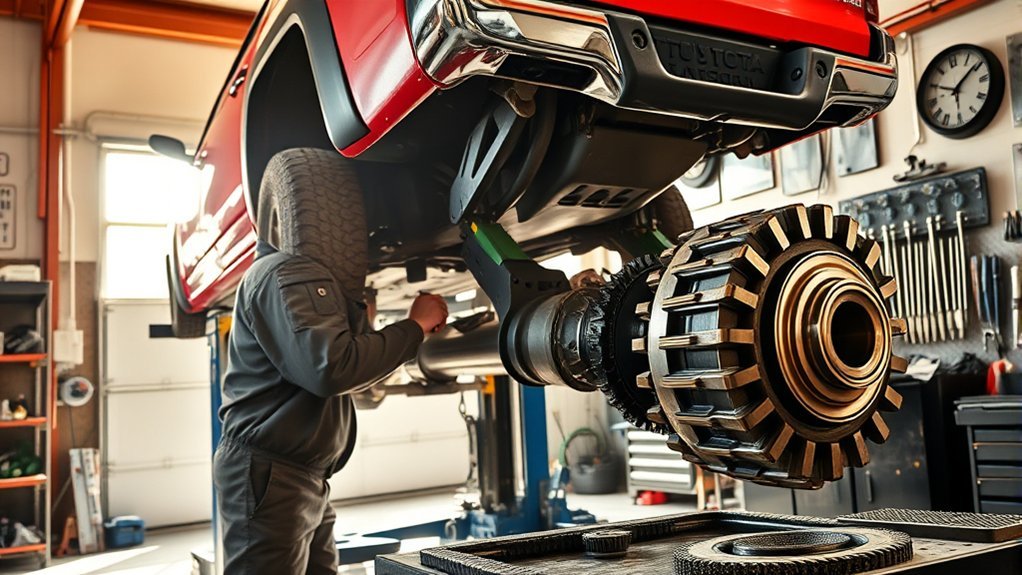
Regearing your Toyota Tacoma means replacing the ring-and-pinion gears inside the differential with a different ratio. That ratio controls how many times the driveshaft turns for one full rotation of the wheels. A numerically higher ratio, such as 4.88 or 5.29, gives more torque multiplication at the wheels but also raises engine RPM at a given road speed.
This matters because larger tires change the truck’s effective gearing. When tire diameter increases, each wheel rotation moves the truck farther down the road. That can make the Tacoma feel slower off the line, weaker on hills, and more likely to hunt between gears. Regearing helps bring the engine and transmission back into a more useful operating range.
Regearing is most important after changes like larger tires, steel bumpers, skid plates, drawer systems, rooftop tents, towing equipment, or a heavy overland setup. It can also help drivers who spend a lot of time in mountains, sand, mud, rocks, or slow technical terrain.
Note: Regearing does not increase engine horsepower. It changes torque multiplication and wheel speed, which can make the truck feel stronger and more responsive with the same engine.
How Does Regearing Impact Performance and Drivability?
Regearing affects how easily your Tacoma moves the tire and vehicle weight. The right ratio can improve low-speed control, throttle response, hill climbing, towing feel, and off-road crawl behavior. The wrong ratio can make the truck buzzy on the highway or still feel undergeared after an expensive install.
Acceleration and Torque Benefits
When you upgrade your Tacoma with larger tires or additional weight, you might notice slower acceleration and more downshifting. Regearing helps restore the torque multiplication that was lost when the tire diameter increased. This can make merging, passing, climbing grades, and crawling off-road feel more controlled.
| Benefit | What You May Notice |
|---|---|
| Acceleration | Quicker takeoffs and less lazy throttle response |
| Torque multiplication | Better hill climbing, towing feel, and low-speed control |
| Transmission behavior | Less gear hunting when the ratio is matched correctly |
Fuel Efficiency Improvements
Fuel economy is one of the most misunderstood parts of regearing. A correct ratio can help the engine work less hard in some situations, especially when larger tires made the gearing too tall. That can improve drivability and may improve MPG for some drivers.
However, MPG is never guaranteed. Taller, heavier tires, roof racks, armor, lift height, wind resistance, highway speed, terrain, and driving style can cancel out any efficiency gain. Government fuel-economy guidance from FuelEconomy.gov also notes that real-world mileage varies because of driving conditions, vehicle condition, fuel variation, vehicle variation, and engine break-in.
Highway RPM and Driving Feel
A numerically higher gear ratio raises RPM at highway speed. That is often helpful for an overloaded or oversized-tire Tacoma because it keeps the engine from lugging. But if you choose too aggressive of a ratio for your setup, the truck may feel busier on the freeway, especially with a manual transmission or a light daily-driver build.
Pro Tip: Before choosing gears, ask your installer to estimate highway RPM for your exact tire size, transmission, and target cruising speed. A ratio that feels perfect on trails may feel too short for long freeway commutes.
Is It Time to Regear Your Tacoma?
It may be time to regear if your Tacoma felt good when stock but became sluggish after tires, armor, camping gear, or towing equipment were added. The bigger and heavier the build, the more likely the stock ratio will feel compromised.
| Factor | Why It Matters | Recommended Action |
|---|---|---|
| Larger tires | Raises effective gearing and reduces leverage | Compare tire size and build weight before choosing gears |
| Added weight | Makes the engine and transmission work harder | Consider a numerically higher ratio |
| Towing or mountain driving | Requires stronger low-speed pull and better grade control | Discuss 4.88 vs. 5.29 with a Tacoma gear specialist |
| Mostly stock truck | May not need the expense or higher RPM | Fix maintenance issues first and confirm the need |
Signs Your Tacoma Needs a Regear
If your Tacoma is modified and feels weaker than it should, watch for the signs below. One symptom alone does not prove you need gears, but several together are a strong clue.
Reduced Acceleration Performance
Slow takeoff, lazy throttle response, and a heavy feeling after installing larger tires are common signs that the current gearing is too tall for the setup. Regearing can help the truck feel more responsive by giving the wheels more mechanical advantage.
Difficulty Merging Into Traffic
If merging onto the highway now requires much more throttle than before, your gearing may not be matched to your tires and weight. The truck may also downshift late or feel like it needs to be pushed hard just to keep up with traffic.
Struggling on Inclines
Hills make gearing problems obvious. If the Tacoma cannot hold speed on grades, needs excessive throttle, or constantly downshifts, regearing may help.
| Signs of Struggling | Possible Solution |
|---|---|
| Excessive throttle needed | Check tire size, weight, and current axle ratio |
| Sluggish acceleration | Consider a numerically higher ratio |
| High throttle with low road speed | Regear for better torque multiplication |
| Frequent downshifting on grades | Discuss 4.88 or 5.29 gears with a shop |
Gear Hunting or Transmission Heat
Automatic Tacomas may hunt between gears when the tire size and axle ratio no longer match the load. This can be annoying on flat roads and worse in hills or headwinds. Regearing may reduce hunting, but it is still smart to inspect transmission health, tire pressure, brakes, and engine performance before spending money.
Before You Choose Gears: Tire Size, Weight, and Use
The best gear ratio depends on more than tire diameter. A light daily driver on 33-inch tires is different from a Tacoma carrying steel armor, drawers, a bed rack, water, recovery gear, and a rooftop tent.
- Tire diameter: Larger tires usually need more ratio.
- Tire weight: Heavy all-terrain or mud-terrain tires are harder to turn than light tires of the same size.
- Build weight: Armor, racks, tents, tools, and camping gear push the decision toward more gear.
- Transmission: Manual and automatic trucks can feel different with the same ratio.
- Driving style: Freeway commuting, towing, rock crawling, and mountain travel all favor different compromises.
- Future plans: If 35-inch tires or more armor are coming soon, plan the gears around the final build, not today’s temporary setup.
Warning: On a 4WD Tacoma, the front and rear differential gear ratios must match. Do not regear only one axle on a 4WD truck unless the vehicle will not be operated in 4WD until the matching axle is completed.
Best Regearing Ratios for Tacoma Modifications
No single Tacoma regear ratio fits every build. Revolution Gear & Axle explains that a ring-and-pinion ratio is calculated from ring gear teeth divided by pinion gear teeth, and that higher numerical ratios help acceleration while lowering top-speed potential. Its Toyota gear catalog also lists Toyota performance gear options, including 4.56, 4.88, and 5.29, which gives owners several ways to balance acceleration, cruising RPM, and mileage efficiency.
| Setup | Common Ratio Direction | Best For |
|---|---|---|
| Stock tires to mild 32-inch tires | Often no regear, or 4.56 for specific builds | Mild daily drivers and light trail use |
| Light 33-inch tire setup | 4.88 is often the balanced choice | Daily driving, moderate trails, lighter cargo |
| Heavy 33-inch tire setup | 4.88 or 5.29 depending on weight and terrain | Armor, racks, drawers, camping gear, hills |
| 35-inch tires | 5.29 is commonly considered | Overland builds, towing, mountain roads, technical off-road use |
| 35-inch+ or unusual builds | Specialist calculation required | Highly modified trucks where axle strength, brakes, and drivetrain limits also matter |
Choosing the right ratio is about compromise. A numerically higher ratio can feel stronger around town and off-road, while a less aggressive ratio may be quieter and calmer on long highway trips. If you are torn between two ratios, choose based on your real use: daily freeway driving favors moderation, while towing, steep grades, heavy gear, and technical trails favor more gear.
[Products Worth Considering]

The 22800 wheel stud installer makes replacing wheel studs quick and secure, saving time and effort during tire service. It uses a ratchet or impact wrench to pull new studs firmly into place, helping when existing studs are too long. Compatible with most automotive wheels and light-duty truck wheel studs, it’s designed for easy, tool-assisted installation.

The Trivd Frol 1/2" air impact wrench delivers high performance torque up to 1500 ft-lbs with a twin hammer impact mechanism for strong, balanced blows. It features an ergonomic grip, compact lightweight design, and quick-stop control with 3 forward speeds up to 8000 RPM plus a reverse speed. Built for demanding automotive repair and tire shop work, the rear exhaust helps keep debris away from the surface.

Keep your tires properly inflated with this analog VONDIOR tire pressure gauge, designed for fast, easy readings without batteries. The swiveling, two-axis hose and large glow dial help you measure at any tire angle with instant visibility. Built with a protective rubber shield, it supports durable, low-maintenance use for cars and trucks.
What’s the Cost of Regearing Your Tacoma?
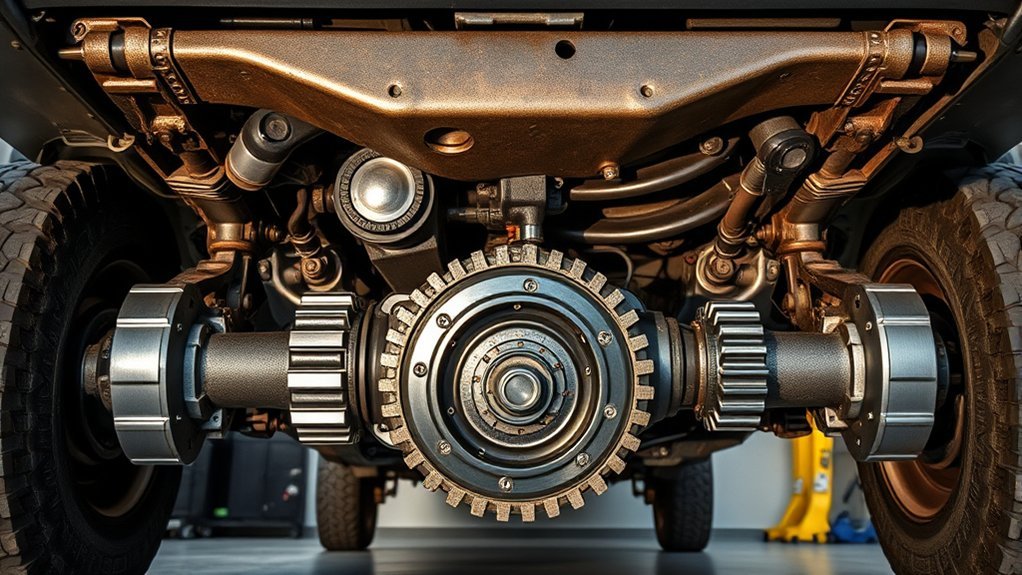
The cost to regear a Tacoma depends on whether the truck is 2WD or 4WD, which axle housings it has, whether it has a factory locker, whether you add aftermarket lockers, and local labor rates. A realistic budget for many 4WD Tacoma owners is about $2,400 to $4,000 or more for both axles installed.
As of this July 8, 2026 fact-check, East Coast Gear Supply listed several Toyota Tacoma gear packages that include front and rear ring-and-pinion gears plus front and rear master install kits. Examples on that page ranged from about $1,038 for some older Tacoma packages to about $1,468 for some 2016–2020 factory e-locker packages before shop labor, fluids, tax, and optional lockers.
| Cost Item | What It Includes | Budget Notes |
|---|---|---|
| Ring-and-pinion gears | Front and rear gear sets for 4WD trucks | Varies by axle, generation, ratio, and brand |
| Master install kits | Bearings, shims, seals, and setup parts | Often included in full gear packages |
| Labor | Differential removal, setup, pattern check, and reassembly | Skilled labor is the major variable |
| Optional lockers | ARB, Eaton, or other traction upgrades | Often cheaper to add during the regear than later |
| Fluids and follow-up service | Gear oil and early break-in oil change | Do not skip the break-in service |
[Products Worth Considering]

These aluminum alloy tire valve stem caps with an O-ring seal help protect valve stems from corrosion while adding a clean, stylish look to your vehicle. The universal fit works across cars, trucks, motorcycles, bicycles, and more, making them an easy upgrade for everyday driving and off-road use. Installation is quick, and the included four-pack keeps all your tires dressed and protected.
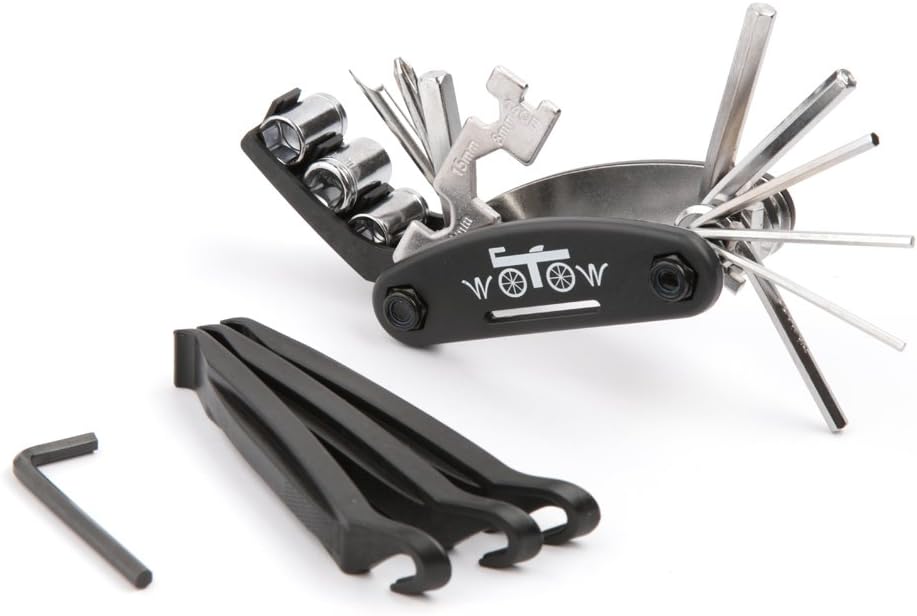
This WOTOW 16-in-1 bicycle multitool is built from corrosion-resistant chrome-vanadium steel for reliable, high-torque performance on the road or trail. It includes multiple hex sizes, a socket extension rod, flat wrench options, a spoke tool, a slot and cross screwdriver, plus three nylon tire levers to help you remove inner tubes and fix flats quickly. The compact folded design makes it easy to carry in a saddlebag or pocket, while an extra Allen wrench helps tighten or loosen stubborn hardware.
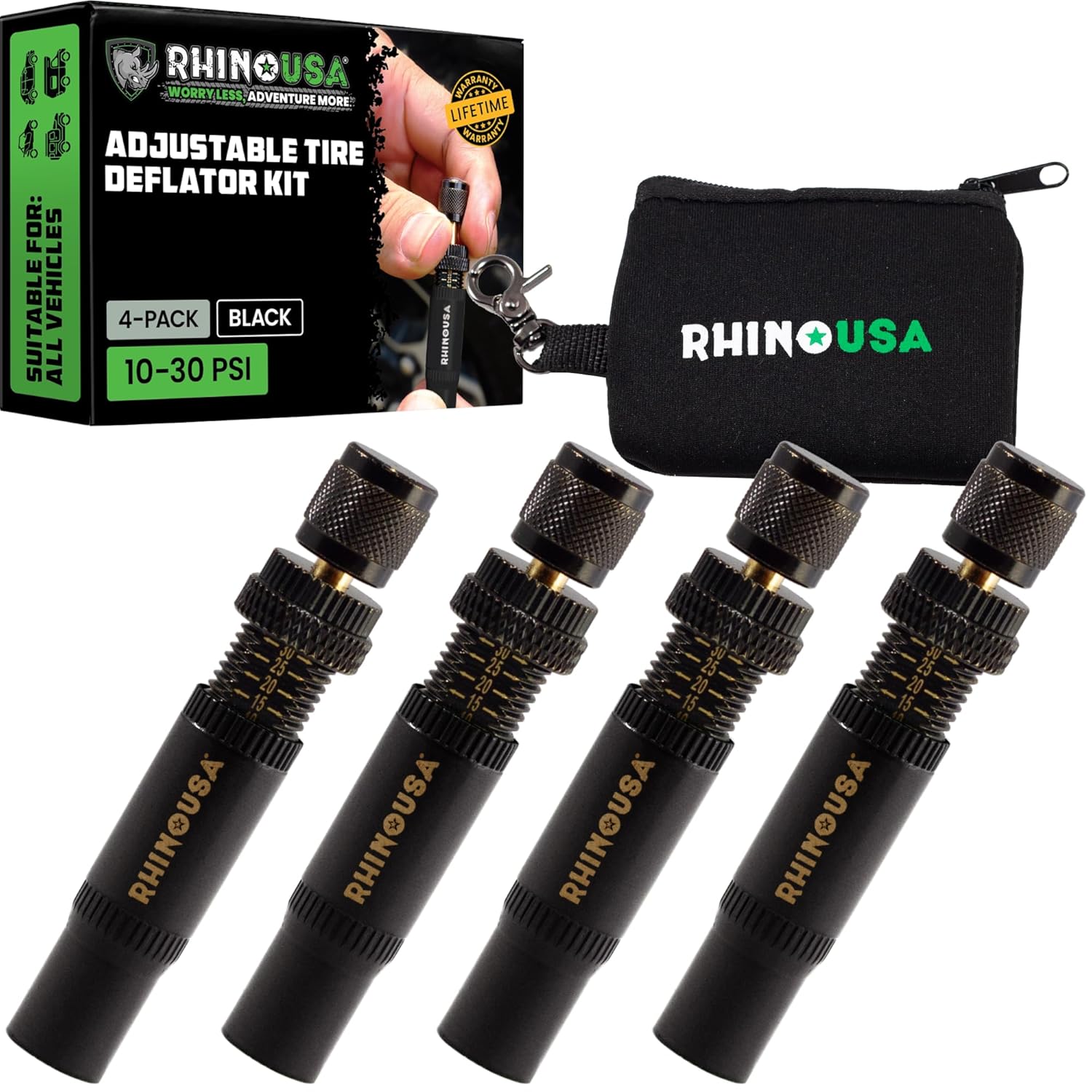
Use the Rhino USA adjustable tire deflators to air down all four tires at once by screwing one deflator onto each valve stem, letting you step away while the tires reach your preset pressure. Each deflator independently adjusts across a 10–30 PSI range with laser-etched indicators for quick setup and verification, making it ideal for beach, sand, and rocky off-road trails.
Fuel Efficiency Improvements From Regearing
Regearing can improve fuel economy when the truck was badly over-tired or overloaded for the stock ratio. By helping the engine operate in a better range, the truck may need less throttle in hills, traffic, or mixed driving.
Still, it is not honest to promise a fixed MPG gain. A Tacoma with 35-inch mud-terrain tires, a roof rack, armor, and camping gear may still use more fuel than a stock truck even after a perfect regear. Regearing should be viewed first as a drivability and control upgrade. Any MPG improvement is a bonus, not a guarantee.
The best reason to regear a modified Tacoma is not a promised MPG number. It is getting back the response, control, and usable power band that larger tires and added weight took away.
Key Benefits of Regearing Your Tacoma
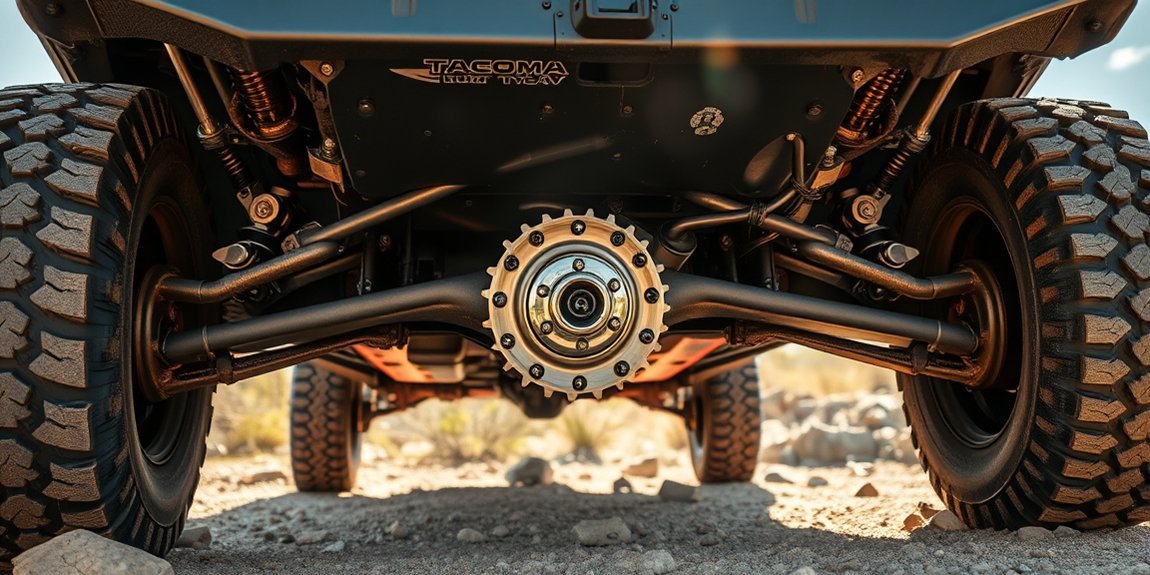
Regearing your Tacoma offers a range of benefits that go beyond fuel economy. By matching the axle ratio to your tires and build weight, you can restore acceleration, improve low-speed power, and make the truck easier to drive on-road and off-road.
- Better takeoff: The truck feels less lazy from a stop.
- Improved hill control: The engine does not have to fight as hard to hold speed on grades.
- Less gear hunting: The transmission may stay in a more useful gear instead of constantly shifting.
- Improved towing feel: More torque multiplication can help with low-speed pull, though factory tow ratings and payload limits still matter.
- Better off-road control: Slow-speed crawling and throttle modulation can feel smoother.
- Reduced drivetrain strain from lugging: A properly matched ratio can help avoid forcing the engine and transmission to work outside their preferred range.
What Can Go Wrong If Regearing Is Done Poorly?
Differential setup is precise work. The installer must set backlash, bearing preload, pinion depth, and gear contact pattern correctly. If the setup is wrong, the result can be gear whine, overheating, oil contamination, vibration, seal leaks, or premature failure.
Warning: Do not choose an installer based only on the lowest price. A poor differential setup can turn an expensive upgrade into an even more expensive repair.
Warranty risk is also worth planning before the install. Under federal warranty rules, a warrantor generally cannot condition warranty coverage on authorized parts or service when those parts or services are not provided free. However, the rule also allows a warrantor to deny liability when it can show that an unauthorized part or service caused the defect or damage. Keep parts invoices, ratio details, installer paperwork, fluid records, and break-in documentation in case a future drivetrain claim needs review.
How to Get Started With Regearing?
Getting started with regearing your Tacoma is easier when you approach it like a build plan instead of a single part purchase.
- Confirm your current setup. Write down your Tacoma year, trim, transmission, 2WD/4WD status, axle type, current tire size, actual tire diameter, and whether you have a factory rear locker.
- List your real build weight. Include bumpers, skid plates, sliders, winch, rack, tent, drawers, water, tools, recovery gear, and towing habits.
- Decide your final tire size. Do not regear for 33s if you know you are moving to 35s soon.
- Ask for ratio recommendations. Get advice from a shop that regularly works on Tacoma differentials, not just a general repair shop.
- Price the full job. Ask whether the quote includes front and rear gears, install kits, fluids, seals, taxes, break-in oil change, and any speedometer or calibration work.
- Plan the break-in period. Do not schedule towing, long highway trips, or hard off-roading immediately after the install.
Note: Larger tires can also affect speedometer and odometer accuracy. Ask your installer whether calibration is needed for your tire size and model year.
[Products Worth Considering]

Tiakia’s mini high-pressure frame pump delivers up to 260 PSI for faster, more efficient inflations with an optimized intake volume. It features a double-head valve design compatible with Schrader and Presta, plus a conversion for Donlop, making it versatile for bikes and many inflatables. The lightweight anodized aluminum build includes a mounting bracket for convenient carry, while the flexible high-pressure hose and IPX4 waterproof body support outdoor use.
A concentrated tire and tube mounting compound designed to help simplify mounting rubber tires and tubes on passenger, semi truck, construction, and OTR applications. Its ultra-thick formula packs beads effectively and includes rust inhibitors to help protect against corrosion during use.

Universal magnetic jack pad with aluminum grooved design to protect vehicle pinch welds during lifting. Durable nylon pad inserts are upgraded and secured with screws to resist damage and keep in place. Designed to fit most single vehicle pinpoint welds for safer, stable jacking when changing tires, repairs, or performing oil changes.
After Installation: Break-In and Maintenance
New ring-and-pinion gears need a careful break-in period. Follow the exact process from your gear manufacturer and installer. Many procedures include short initial drives, cooling cycles, gentle throttle, moderate speed early on, no towing, no racing, no hard off-roading, and an early oil change. [VERIFY: confirm the specific break-in interval for the exact gear brand installed.]
- Drive gently for the first short heat cycles.
- Let the differential cool between early drives.
- Avoid towing and hard off-road use during the break-in period.
- Follow the gear manufacturer’s oil and mileage instructions.
- Plan a differential fluid change around the first 500 miles if your installer or gear manufacturer recommends it.
After break-in, listen for gear whine, clunks, leaks, or vibration. A slight change in drivetrain sound may be normal, but loud whine or worsening noise should be checked quickly.
Frequently Asked Questions
Is regearing a Tacoma worth it?
Regearing is worth it when larger tires, heavy armor, towing weight, or mountain driving make the Tacoma feel weak, gear-hungry, or hard to control at low speed. It is usually not worth the cost for a mostly stock truck unless you have a specific drivability problem that maintenance checks cannot explain.
Should I choose 4.88 or 5.29 gears for a Tacoma?
Choose based on tire size, weight, terrain, and highway use. A light daily-driven Tacoma on 33-inch tires often fits 4.88 well. A heavier overland build, frequent towing setup, mountain driver, or 35-inch tire setup often points toward 5.29. Confirm with a Tacoma drivetrain specialist before ordering parts.
How much does it cost to regear a Toyota Tacoma?
Many 4WD Tacoma owners should budget about $2,400 to $4,000 or more for both axles installed. Parts packages alone can exceed $1,000 before labor, oil, seals, tax, calibration, optional lockers, and follow-up service. Get an itemized quote before approving the job.
Will regearing my Tacoma improve MPG?
It can, but it is not guaranteed. Regearing may help if larger tires made the truck work outside its ideal range. However, heavier tires, lifts, roof racks, armor, high speeds, and aggressive driving can reduce MPG even after regearing.
Can I regear only the rear differential on a 4WD Tacoma?
No, not if you plan to use 4WD. A 4WD Tacoma needs matching front and rear axle ratios. Mismatched ratios can damage drivetrain components when 4WD is engaged.
Does regearing void my Toyota warranty?
Regearing should not automatically void the whole vehicle warranty. Federal warranty rules generally prohibit tying coverage to authorized parts or service when they are not provided free. However, warranty coverage can be denied for a defect or damage caused by the aftermarket part, installation, or service. Keep complete paperwork.
How long does Tacoma regear break-in take?
Follow the gear manufacturer’s instructions, but many break-in procedures include gentle short drives, cooling cycles, no towing or hard off-roading early on, and a differential fluid change around the first 500 miles. Ask your installer for the exact process for your gear brand. [VERIFY: confirm brand-specific break-in schedule.]
Conclusion
Regearing your Toyota Tacoma can be one of the most noticeable upgrades after larger tires, added armor, towing equipment, or overland weight. The goal is not to add horsepower. It is to restore the torque multiplication and drivability that your modifications changed.
The best results come from choosing the right ratio for your tire size, build weight, transmission, and driving style. For many Tacoma owners, that means comparing 4.88 and 5.29 carefully instead of assuming one ratio fits every truck. Budget for quality parts, skilled labor, proper break-in, and follow-up fluid service. Done correctly, a regear can make your Tacoma feel smoother, stronger, and more enjoyable both on the road and on the trail.
Sources
- FuelEconomy.gov – Your Mileage Will Vary – supports the warning that MPG results vary by driving conditions, vehicle condition, fuel, and other factors.
- eCFR – 16 CFR § 700.10 Prohibited tying – supports the warranty explanation for authorized service, replacement parts, and damage caused by unauthorized parts or service.
- Revolution Gear & Axle – Ring and Pinion Gears – supports the explanation of how ring-and-pinion gears transfer torque and how ratio changes affect acceleration.
- Revolution Gear & Axle – Toyota Differential Gears – supports available Toyota gear ratio options such as 4.56, 4.88, and 5.29.
- Revolution Gear & Axle – Gear Set Break-In – supports general break-in guidance for new ring-and-pinion gears. [VERIFY: source page should be manually checked if your crawler cannot access it.]
- East Coast Gear Supply – Toyota Tacoma Gear Packages – supports examples of Tacoma gear package configurations and parts pricing.