

Tires can make a noticeable difference in road noise, but there is no single cause. Tread pattern, pavement texture, speed, inflation pressure, wear, tire construction, and your vehicle’s sound insulation all affect what reaches the cabin. The quietest setup comes from choosing the right tire for your vehicle and keeping it properly maintained.
Quick Answer
Tires affect road noise through tread-to-pavement impacts, airflow through the tread grooves, vibration, and resonance inside the tire. Quiet tires often use varied tread-block spacing and, on some vehicles, internal acoustic foam. Correct pressure, even wear, proper balance, and smoother pavement can also make the ride noticeably quieter.
Key Takeaways
- Tire noise comes from several sources, including tread impact, airflow, vibration, and resonance inside the tire cavity.
- Road surface and driving speed can change tire-related cabin noise substantially.
- Varied tread-block spacing can reduce strong repeating tones that make a tire sound louder or more noticeable.
- Use the vehicle manufacturer’s recommended cold tire pressure and follow its rotation schedule to limit irregular wear.
- Acoustic foam can reduce certain types of interior resonance, but it does not eliminate the noise created where the tread meets the pavement.
- The EU tire-noise label measures external pass-by noise, so an A rating does not automatically mean the quietest tire inside your cabin.
What Causes Tire Noise?

Tire noise begins mainly where the tread meets the road surface. Small bumps and texture in the pavement repeatedly deform the tread and tire structure, creating vibration. Michelin notes that road quality, vehicle speed, and the vehicle itself all influence the noise heard inside the cabin.
Part of the sound also comes from the tread pattern. As tread blocks contact and leave the road, they create repeated impacts. Air can also be compressed and released through tread grooves, adding another source of sound.
A third source is tire-cavity resonance. Because a tire contains compressed air, the cavity can amplify certain vibrations. Those vibrations can travel through the wheel and suspension into the cabin. This is the type of noise that internal acoustic-foam systems are mainly designed to reduce.
Wear matters too. A tire with irregular wear may develop a repeating hum, roar, or vibration because the tread is no longer contacting the pavement evenly. Cupping, feathering, alignment problems, imbalance, worn suspension parts, or incorrect inflation can all contribute to irregular wear.
Incorrect pressure can also change how the tire flexes and contacts the road. The effect on sound is not identical for every tire, but maintaining the correct pressure helps the tire operate as designed. NHTSA recommends checking tire pressure at least monthly when the tires are cold and using the pressure shown on the vehicle’s Tire and Loading Information label or in the owner’s manual.
Warning: Do not use the maximum pressure molded on the tire sidewall as your normal inflation target. Use the vehicle manufacturer’s recommended cold PSI shown on the driver’s-door placard or in the owner’s manual.
How Tread Design Affects Tire Noise
Tread design has a major effect on the character of tire noise. Large blocks, wide grooves, aggressive voids, and repeating tread elements can create stronger impact or airflow sounds, especially as speed increases.
One important technique is varying the spacing or size of tread blocks. Michelin explains that tread blocks of identical width can produce a repeating frequency, while using blocks of different widths helps prevent one frequency from dominating.
This is why variable pitch blocks can help reduce road noise and soften the sharp tonal character you may hear from some tread patterns.
A quieter tread does not simply have fewer grooves. Engineers can vary tread-block size and spacing so the tire does not repeatedly excite one strong audible frequency.
- Large voids and aggressive tread features can create more noticeable impact and airflow noise.
- Varied tread-block spacing helps spread sound energy across different frequencies instead of concentrating it into one tone.
- Higher vehicle speeds generally make tire- and pavement-related noise more noticeable.
- The road surface can overwhelm differences between tires; coarse pavement will often sound much louder than smooth asphalt.
If you want quiet driving, look for a tread designed to balance noise control with the grip, wet-weather drainage, climate capability, and handling your vehicle needs. A visually smooth tread is not automatically the best or safest choice.
Which Tires Are Quietest?
There is no single tire that is the quietest for every vehicle. Tire size, suspension tuning, wheel diameter, vehicle weight, road surface, and cabin insulation all affect the result. A tire that is exceptionally quiet on one vehicle may sound different on another.
For a quiet ride, start with touring or comfort-oriented tires that are approved for your vehicle and use noise-control features such as optimized tread-block spacing, closed or semi-closed shoulder designs, and vibration-damping construction.
Some tires also use internal acoustic foam. Continental states that its ContiSilent technology can reduce certain particularly annoying components of rolling noise perceived inside the vehicle by up to 9 dB(A). That is a manufacturer claim for the specific technology, not a guarantee that every foam-equipped tire will reduce total cabin noise by 9 dB.
Michelin reports approximately a 20% reduction in interior noise with Michelin Acoustic Technology. Michelin also notes that the technology is developed for specific original-equipment vehicle applications, so you should confirm availability and compatibility rather than assuming any Michelin tire includes the foam system.
Note: Acoustic foam mainly targets resonance inside the tire cavity. It cannot remove all tread-impact, pavement, wind, suspension, or vehicle-structure noise.
Bridgestone’s current Turanza family, for example, is positioned around a quiet, comfortable ride and reduced road vibration. Rather than choosing solely by a marketing name, compare tires that meet your vehicle’s required size, load index, speed rating, climate needs, and performance requirements.
[Products Worth Considering]

This professional wheel and rim cleaning brush set lifts brake dust, grime, and dirt with soft, scratch-free microfiber and synthetic wool fibers. The rim brush bends up to 360 degrees for easy access to hard-to-reach areas around spokes, lips, and faces. Ideal for thorough cleaning of car, truck, motorcycle, bicycle, RV, and more wheel and tire surfaces.

This tire inflator with pressure gauge delivers long-lasting performance with a durable rubber-protected gauge and sturdy build. The longer hose and 360 swivel air chuck help you seal the valve securely and keep your hands free while measuring, inflating, or deflating. It’s battery-free for reliable use and provides ±2 PSI accuracy in the mid-range for most typical tires, with universal compatibility for 1/4 NPT compressor outputs.

Monitor tire tread wear with a smart, color-coded depth gauge that shows clear condition ranges at a glance. The bar is range marked for fast, easy readings, helping you maintain safer traction and performance. Each gauge is portable with a pocket clip, and the set includes 20 units for daily use and sharing.
How to Use the EU Tire Noise Label
The EU tire label can help you compare external rolling noise. The European Commission lists an external rolling-noise value in dB(A) and a noise class ranging from A to C, although C is now limited to particular tire categories.
However, the European Commission makes an important distinction: this rating measures the sound perceived by a person outside the vehicle as it passes. It does not directly rate tire-cavity resonance or total noise inside your cabin.
Pro Tip: Use the EU noise label as one comparison point, not your only one. For cabin comfort, also look for manufacturer information about interior-noise technology and independent tests performed in the same tire size and vehicle class.
Tire Maintenance Tips That Reduce Noise
Keeping your tires properly maintained can prevent irregular wear and vibration that make an otherwise normal tire sound much louder.
[Products Worth Considering]

Adam’s Pro Tire Hex Grip applicators are molded foam sponges designed for precise, even tire dressing application. The ergonomic grip helps you spread product without overapplying, reducing sling that can splash onto paint and helping keep your hands clean during wheel and trim detailing. They’re durable, washable, and reusable for repeated detailing sessions.

The JACO FlowPro Tire Inflator measures, inflates, and airs down tires up to 100 PSI with battery-free operation and ±2% accuracy after calibration. It features a glowing pressure dial for night visibility, a heavy-duty steel build with a hybrid hose, and a precision push-to-inflate thumb trigger. The patented Lightning Air Chuck locks on for a secure seal, and the kit includes quick-connect hardware for easy inline use with your air compressor.
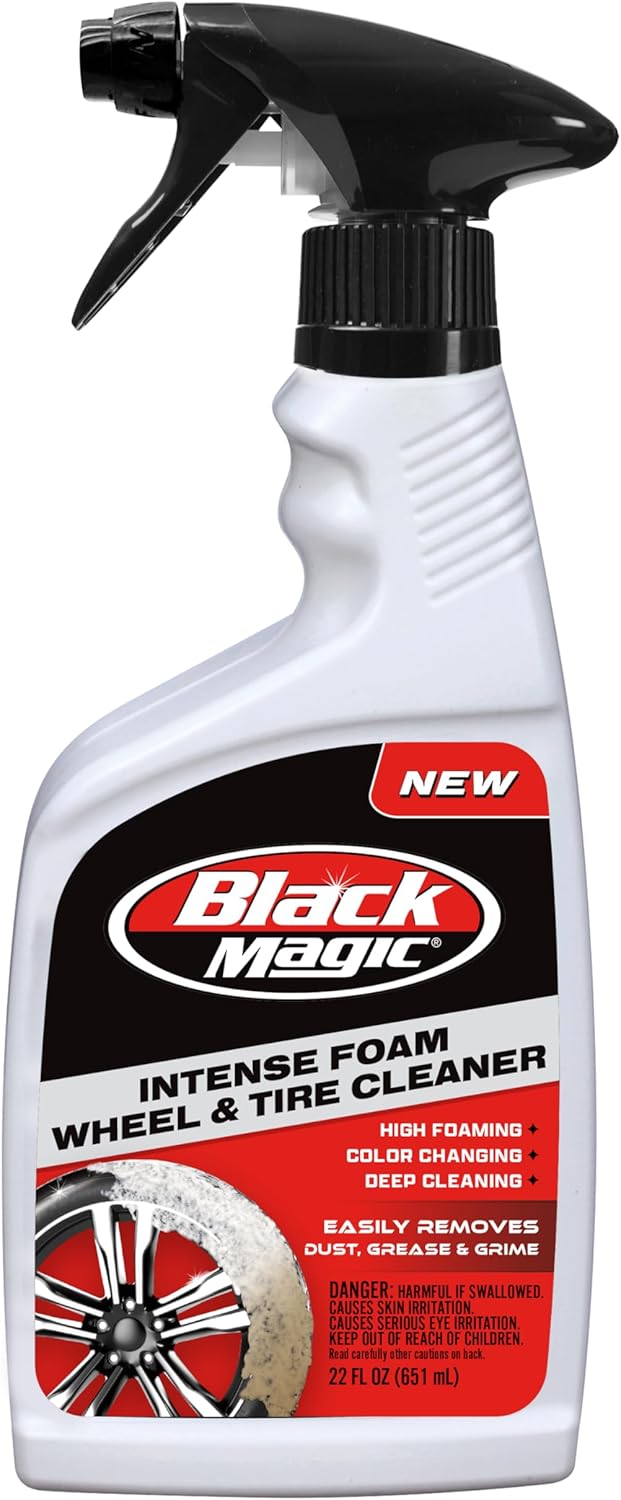
Black Magic Intense Foam Wheel & Tire Cleaner uses a high-foaming action to lift away dirt, grime, and brake dust without scrubbing. The color-changing formula helps show contaminants being dissolved as foam turns from white to brown. Safe for all wheel types and even wheel wells, it leaves a like-new, slick finish with a fresh cherry scent.
1. Check Tire Pressure When the Tires Are Cold
NHTSA recommends checking all tires, including the spare, at least once a month when they are cold. “Cold” generally means the vehicle has not been driven for at least three hours. Inflate them to the pressure listed on the vehicle placard or in the owner’s manual.
Correct tire pressure is primarily a safety and tire-performance requirement. It also helps the tread contact the road in the way the vehicle manufacturer intended.
2. Rotate Tires on the Correct Schedule
Rotation can reduce irregular wear, but there is no universal 5,000-mile rule for every vehicle. NHTSA advises checking the owner’s manual and notes that, when recommended by the vehicle manufacturer, a typical rotation interval is about 5,000 to 8,000 miles or sooner if uneven wear appears.
Some vehicles use different front and rear tire sizes or directional fitments that limit how tires can be rotated. Follow the approved rotation pattern for your vehicle.
3. Check Balance and Alignment
An imbalanced wheel can cause vibration, while poor alignment can contribute to irregular tread wear. New tires should be balanced when installed. If you develop steering-wheel vibration, unusual tread wear, or a new rhythmic hum, have the tires, wheels, and alignment inspected rather than assuming the tire model itself is noisy.
4. Inspect the Tread for Irregular Wear and Debris
Look across the entire tread, not just the center. Uneven high and low spots, feathered edges, severe shoulder wear, embedded stones, or damaged tread can change the sound a tire makes on the road.
NHTSA also recommends checking tread condition monthly. If a tire has cuts, bulges, severe irregular wear, or other visible damage, have it inspected before continuing normal driving.
How to Tell If the Noise Is Really From the Tires
A humming or roaring sound does not always mean you need quieter tires. Use the pattern of the noise to narrow down the source.
- Noise changes dramatically with pavement: Tire tread and road texture are likely major contributors.
- Noise began after tire rotation: Previously uneven tread may now be in a position where you hear it more clearly.
- Rhythmic noise increases with road speed: Inspect tread wear, balance, and the wheel/tire assembly.
- Steering vibration accompanies the sound: Have wheel balance, tire condition, and suspension components checked.
- Noise remains after tire problems are ruled out: Ask a qualified technician to inspect wheel bearings, alignment, suspension, and other rotating components.
A sudden new sound deserves more attention than a tire that has always produced a mild, consistent hum. Inspect the tires for damage, pressure loss, foreign objects, and unusual wear before assuming the change is normal.
Tire Tech That Makes Rides Quieter
Modern tire engineers use several methods to control tire noise. One is variable tread pitch, which changes the size or spacing of tread blocks so they do not repeatedly generate the same dominant frequency.
Another method is internal acoustic foam. Continental’s ContiSilent and Michelin Acoustic Technology are examples of systems designed to reduce resonance that travels from the tire cavity into the vehicle.
Tire construction and compound design also affect vibration, grip, rolling resistance, wear, and comfort. However, you should be cautious with broad claims that one rubber compound is automatically quieter than another. The complete tire—including its tread, casing, dimensions, intended vehicle, and operating conditions—determines the final result.
If you are replacing tires, fitment comes before noise. Continental’s tire-size guidance says replacement tires should follow the size, load index, and speed-rating specifications recommended by the vehicle or tire manufacturer. Using an unapproved size merely because it has a quieter reputation can affect handling, clearance, load capacity, and speedometer accuracy.
[Products Worth Considering]

This 13-inch flat-free wheelbarrow tire uses solid polyurethane foam construction with steel rims, so it will not puncture, rot, or go flat. The anti-skid tread improves stability and maneuverability across garden, lawn, and mixed terrain. It includes pre-installed 5/8-inch bearings plus extra 3/4-inch bearings and a versatile adapter kit to fit compatible wheel sizes and cart hubs.

The VEHLIVE SU-50448 II TPMS relearn tool provides a fast activation reset to restore accurate tire pressure monitoring after sensor replacement or tire rotation. It supports 315 MHz and 433 MHz GM series sensors and helps clear dashboard pressure warnings. With simple two-button operation and horn-confirmed relearning order, you can reprogram sensors conveniently at home.

The Big Rig Defense Tire Thumper is a truck tire pressure checker that lets you quickly check multiple tires by giving them a firm whack. Listen for a reassuring thump and feel the stick bounce when a tire is fully inflated, helping you get back on the road safely. It features a comfortable, glove-friendly handle and a secure wrist strap for confident use on busy routes.
Frequently Asked Questions
How to Reduce Road Noise From Tires While Driving?
Keep the tires at the vehicle manufacturer’s recommended cold pressure, maintain even tread wear, rotate them according to the owner’s manual, correct balance or alignment problems, and choose a comfort-oriented tire approved for your vehicle. Driving more slowly on coarse pavement can also reduce the amount of tire and road noise you hear.
What Is the 3% Rule for Tires?
There is no general rule saying tire pressure must stay within 3% of the manufacturer’s PSI. Tire pressure should follow the vehicle’s recommended cold PSI. A “3% rule” is sometimes used informally when discussing changes in overall tire diameter, but it is not a universal fitment standard. Use only sizes approved by the vehicle, wheel, and tire manufacturers.
What Is the Best Tire to Reduce Road Noise?
There is no universal quietest tire. Look for a touring or comfort-oriented tire in the correct size, load index, and speed rating with noise-optimized tread design. Acoustic-foam technology can also reduce certain interior resonance frequencies on compatible vehicles. If an EU label is available, use its external-noise rating as one comparison point rather than a direct cabin-noise score.
Can Tires Make a Difference in Road Noise?
Yes. Tread pattern, tire construction, wear, pressure, wheel size, pavement, speed, and vehicle insulation all affect the sound you hear. Changing from an aggressive or irregularly worn tire to a well-designed touring tire can noticeably change cabin noise, although results vary by vehicle and road surface.
Do Tires Get Louder as They Wear?
They can. Normal tread changes may alter the sound slightly, while irregular wear such as cupping or feathering can create a much stronger hum or roar. If a tire becomes noticeably louder, inspect the tread, pressure, balance, alignment, and suspension rather than assuming the extra noise is normal aging.
Does Tire Pressure Affect Road Noise?
Yes, pressure changes tire flexing and how the tread contacts the road, so it can change vibration and perceived noise. The effect varies by tire and surface. Do not adjust pressure merely to make a tire quieter; maintain the cold PSI specified by the vehicle manufacturer for safe, predictable performance.
Conclusion
Tires do not all produce the same amount or type of road noise. Tread pattern, pavement, speed, pressure, wear, tire construction, and cavity resonance can all change what you hear inside the vehicle. For a quieter ride, start with the correct tire fitment, maintain the manufacturer’s recommended pressure, prevent irregular wear, and choose a tire engineered for comfort rather than relying on one marketing claim or noise number.
Acoustic technologies can make a meaningful difference in compatible applications, but even the best quiet tire cannot eliminate noise created by rough pavement or other vehicle components. If a tire suddenly becomes louder, inspect the tires and wheel system instead of treating the change as normal.
Sources
- National Highway Traffic Safety Administration — TireWise — tire pressure, tread inspection, balancing, alignment, and rotation guidance.
- European Commission — Tyres and the EU Energy Label — external rolling-noise ratings, dB(A), pressure, and the distinction between external noise and tire-cavity noise.
- Michelin — Acoustic Technology — tire-cavity resonance, varied tread-block widths, road and speed effects, and Michelin’s acoustic-foam technology.
- Continental — Tire Technologies — ContiSilent technology and its manufacturer-stated interior rolling-noise reduction.
- Continental — Tire Size Guide — replacement tire size, load index, speed rating, and approved fitment guidance.

