
What Is a Full Size Spare and Why 4Runner Owners Prefer It
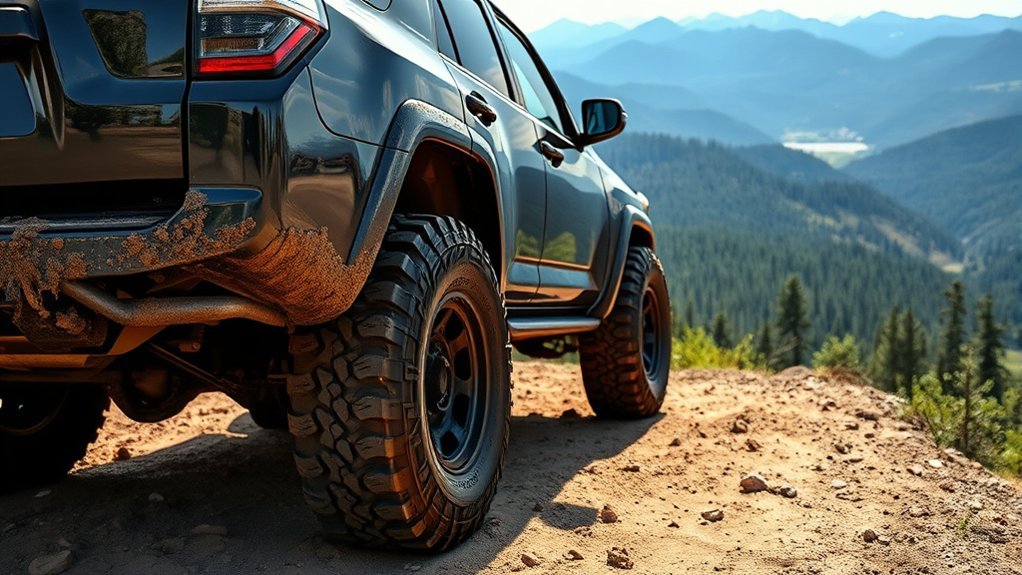
A full-size spare tire is one of the simplest upgrades that can make a Toyota 4Runner more prepared for road trips, trail days, and remote flat-tire situations. The key is not just carrying a bigger spare; it is carrying a spare that matches your vehicle’s tire size, wheel fitment, load needs, tire pressure requirements, and storage clearance.
Quick Answer
Yes, a full-size spare is worth it for most 4Runner owners, especially if you drive off-road, tow, travel long distances, or run upgraded tires. It helps maintain safer handling and reduces the risk of driveline stress from mismatched rolling diameter. Always match the spare to your door placard, owner’s manual, and current tire setup.
Key Takeaways
- A full-size spare should closely match your main tires in overall diameter, load rating, speed rating, and wheel fitment.
- Toyota’s 2024 4Runner brochure lists a full-size spare mounted under the body as standard, but 2025+ models are a new generation, so owners should verify their exact trim and placard.
- TPMS is helpful, but it is not a replacement for checking tire pressure manually at least monthly and before long trips.
- A spare can age out even if it has never touched the road; inspect the DOT date, sidewalls, tread, valve stem, and inflation pressure.
At a Glance
| Time Required | 10–20 minutes to inspect; longer if buying or mounting a new spare |
| Difficulty | Easy inspection; moderate fitment research for aftermarket wheels or larger tires |
| Tools Needed | Tire pressure gauge, tread gauge or penny, flashlight, tire inflator, lug wrench, jack, wheel-lock key if equipped |
| Cost | Usually $0 for inspection; more if you need a matching tire, wheel, TPMS sensor, mount, balance, or carrier modification |
What Is a Full-Size Spare Tire and Why Does It Matter?
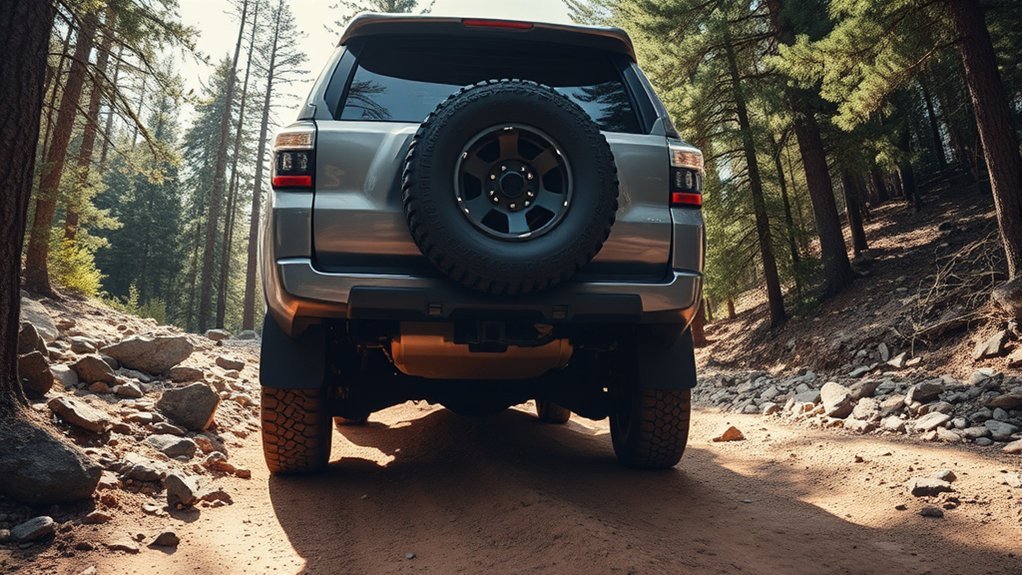
A full-size spare is a spare tire and wheel assembly that is close enough to your regular tire size to be used more normally than a compact temporary spare. For a 4Runner, the best setup is usually a spare that matches the tires already on the vehicle in overall diameter, load rating, speed rating, and wheel fitment.
This matters because a mismatched spare can change handling, braking feel, traction-control behavior, and rolling speed at one corner of the vehicle. On a 4WD or full-time 4WD setup, a big difference in tire diameter can also add unnecessary driveline stress, especially if the spare is used for a long distance or while the vehicle is loaded.
A full-size spare is not a license to ignore tire damage. It is a safer bridge that helps you get off the trail, finish a remote leg of a trip, or reach a tire shop without depending on a small temporary spare.
Warning: Never crawl under a 4Runner that is supported only by a jack. Use the jack points and tire-changing steps in your owner’s manual, chock the vehicle when possible, and replace or repair the damaged tire as soon as you safely can.
[Products Worth Considering]
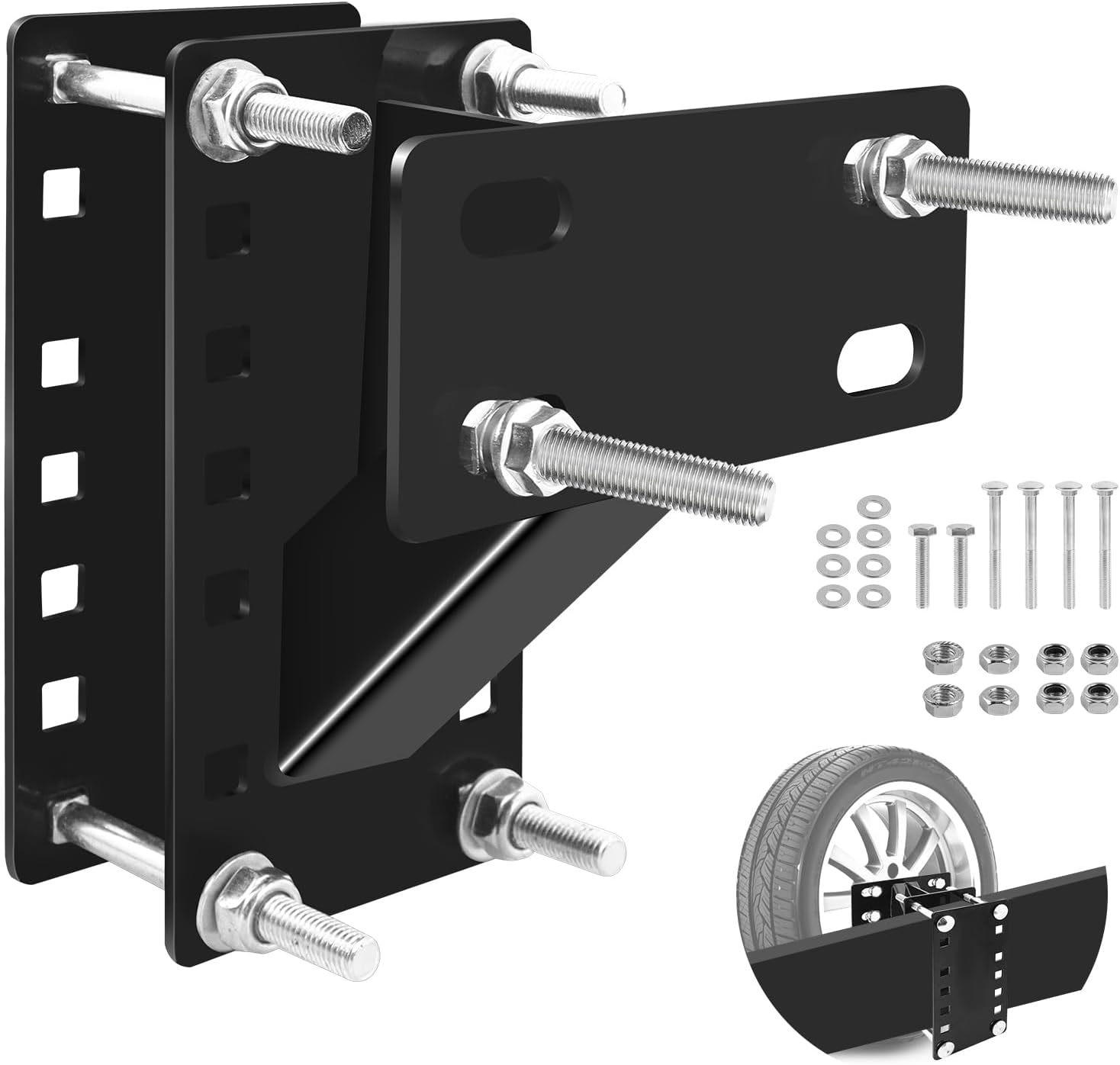
This universal spare tire mount carrier holder is built for utility trailers and boat trailers, offering a secure fit for 4, 5, and 6 lug wheels. It supports multiple bolt pattern sizes and a heavy-duty load capacity while resisting rust with a durable finish. The design allows easy installation and lets you choose the steel beam height for a better fit.

Secure a full-size spare on your trailer with this powder-coated steel spare tire mount bracket. It fits most 4-, 5-, and 6-lug wheel bolt patterns and mounts to trailer tongues up to 4 in wide and 5 in tall. Built for reliable carry with a max 150 lb load rating and includes zinc-plated hardware for straightforward installation.

Universal magnetic jack pad with aluminum grooved design to protect vehicle pinch welds during lifting. Durable nylon pad inserts are upgraded and secured with screws to resist damage and keep in place. Designed to fit most single vehicle pinpoint welds for safer, stable jacking when changing tires, repairs, or performing oil changes.
Benefits of Using a Full-Size Spare for 4Runner Owners
For 4Runner owners, the main benefit of a full-size spare is consistency. A spare that closely matches your other tires helps the vehicle behave more predictably after a flat, especially when you are driving on gravel, snow, sand, or uneven trail surfaces.
- Better compatibility: A matching spare keeps overall rolling diameter close to the other tires, which helps reduce handling imbalance and driveline stress.
- More confidence off-road: A full-size spare is better suited for rough roads and trail exits than a small emergency spare.
- More practical tire rotation: If the spare is the same tire and wheel type, you may be able to include it in a five-tire rotation.
- Fewer emergency limits: Many compact spares have strict speed and distance limits. A properly matched full-size spare gives you more flexibility, although you should still drive cautiously after a flat.
The best spare tire is not simply the biggest one that fits. It is the one that safely matches your 4Runner’s actual tire size, load rating, wheel fitment, tire pressure, and storage location.
Choosing the Right Spare Tire Size for Your 4Runner
Start with the tire information placard on the driver-side door jamb and your Toyota owner’s manual. That placard gives the factory tire size and cold tire pressure for your vehicle. If you have aftermarket tires, compare the spare to the tires currently installed, not just the factory size.
For many 2010–2024 4Runner trims, common factory sizes include P265/70R17 on 17-inch wheel trims and P245/60R20 on certain 20-inch wheel trims. Toyota’s 2024 4Runner brochure also lists a full-size spare tire mounted under the body as standard for the 2024 lineup.
For 2025 and newer 4Runners, do not assume older 5th-gen fitment advice applies. Toyota identifies the 2025 model as an all-new sixth-generation 4Runner, with new trims and equipment, including Trailhunter and updated TRD models. Check your exact model year, trim, tire placard, and current tire setup before buying a spare.
Note: Tire size math matters. A 265/70R17 is about 31.6 inches tall, while a 285/70R17 is about 32.7 inches tall. That difference can affect underbody storage clearance, rubbing, gearing feel, and spare compatibility.
Ensuring Compatibility of Your Spare Tire
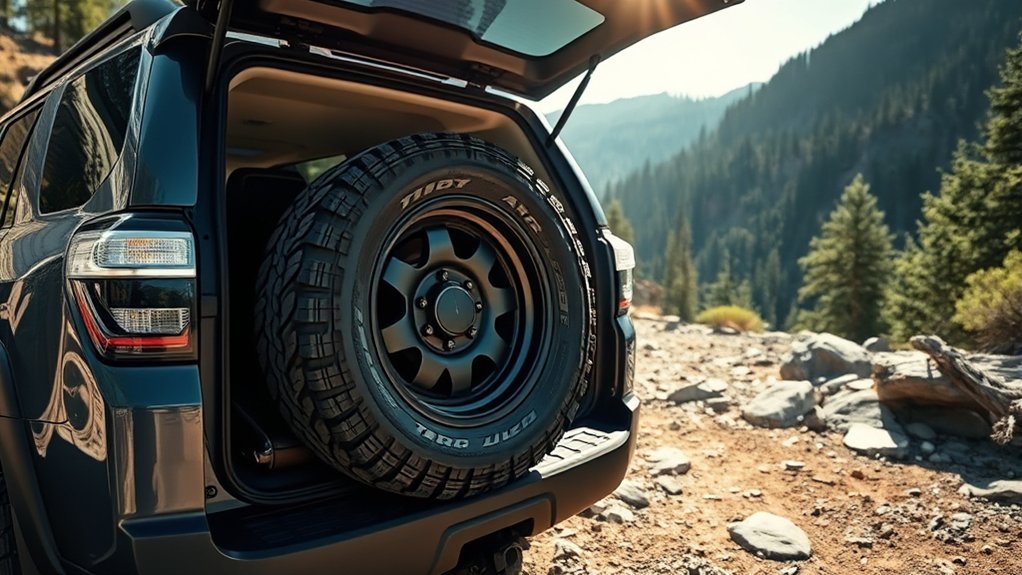
Before buying or installing a spare, check more than the tire size printed on the sidewall. Wheel fitment, tire load rating, TPMS, and storage clearance all matter.
Matching Tire Sizes
Try to keep the spare’s overall diameter as close as possible to the four tires on the ground. Matching width is helpful, but diameter is the bigger concern for rolling speed and driveline behavior. If your current tires are heavily worn and your spare is brand new, the spare may still have a larger rolling diameter even when the printed size is the same.
Use this quick checklist:
- Tire size: Match the sidewall size or stay as close as the tire manufacturer and Toyota guidance allow.
- Load rating: Use a tire that can safely carry the vehicle load.
- Speed rating: Match or exceed the recommended rating when practical.
- Tread type: Avoid mixing a tiny street tire with aggressive off-road tires unless it is only for a short emergency drive.
- Wear level: A five-tire rotation can help keep all tires closer in diameter if the spare truly matches.
Wheel Design Considerations
The spare wheel must fit the hub, brake components, lug pattern, and mounting hardware. OEM wheels are often the easiest route because they are built for the vehicle, but aftermarket wheels can work when their specifications are correct.
| Check | Why It Matters |
|---|---|
| Bolt pattern and center bore | The wheel must mount properly and sit centered on the hub. |
| Offset and backspacing | Wrong offset can affect brake clearance, body clearance, and handling. |
| Wheel diameter | The wheel must clear brake components and match the tire you plan to run. |
| Underbody storage | Oversized spares may contact the panhard bar, hitch, bumper, exhaust, or hoist hardware. |
TPMS Compatibility Requirements
The Tire Pressure Monitoring System helps warn you when a tire is significantly under-inflated, but it does not replace manual pressure checks. Federal TPMS rules also warn that replacement or alternate tires and wheels can prevent TPMS from working properly, so always confirm function after changing wheels, tires, or sensors.
- Use compatible sensors: If your spare wheel will be part of your rotation, install a compatible TPMS sensor.
- Register or relearn sensors when needed: Some setups require programming after sensor replacement or rotation.
- Check the spare manually: Not every vehicle displays live spare pressure, and even TPMS-equipped vehicles still need manual checks.
- Avoid relying on sealant: Liquid tire sealants can interfere with tire pressure warning valves and transmitters, so follow Toyota’s flat-tire guidance before using them.
What Are 4Runner Owners Saying About Full-Size Spares?
Most 4Runner owners who travel off pavement prefer a true matching spare, not just a spare that technically holds air. The reason is simple: when a flat happens far from a tire shop, the spare may need to handle dirt, rocks, washboard roads, highway speeds after the trail, and a loaded cargo area.
4Runner Community Preferences
Common owner preferences include:
- Same tire as the other four: Best for five-tire rotation and consistent traction.
- Same wheel size: Helps avoid clearance and TPMS complications.
- All-terrain tread: Useful for drivers who regularly leave pavement.
- Easy access: Underbody storage keeps the cargo area open, while rear swing-out carriers make oversized spares easier to access.
Benefits of Full-Size Spares
A matching spare gives you a better chance of finishing the trip without treating the spare as a fragile temporary tire. That matters most when you are towing, carrying gear, driving at night, or leaving an off-road area where roadside assistance may not arrive quickly.
The biggest benefit is not appearance; it is predictable behavior. When the spare matches the other tires, braking, steering, traction control, and 4WD operation are less likely to feel uneven.
Spare Tire Compatibility Concerns
The most common concern is whether a larger aftermarket tire will fit in the factory underbody location. Some owners can store a larger spare underneath, while others run into clearance issues depending on tire size, wheel width, offset, hitch setup, exhaust position, and carrier hardware.
Before assuming a 33-inch or 285/70R17 spare will fit, test-fit the actual tire and wheel. A tire from one brand can measure differently from the same printed size from another brand.
Pro Tip: If you upgrade tire size, buy the spare at the same time as the other four tires. That makes it easier to match brand, model, load rating, tread depth, and overall diameter.
Common Myths About Off-Roading With Spare Tires
Off-roading makes spare-tire mistakes more expensive because a flat often happens where heat, rocks, low pressure, and uneven traction already stress the tires.
- Myth: Any spare is fine if it fits the hub. Reality: fitment is only one part of safety. Diameter, load rating, tread, pressure, and condition matter too.
- Myth: A full-size spare can be ignored for years. Reality: underbody spares are exposed to water, dirt, heat, UV reflection, and road debris.
- Myth: TPMS means the spare is ready. Reality: TPMS warnings happen only after pressure is already low enough to trigger the system, and the spare may not be monitored the same way as the four road tires.
- Myth: The biggest spare is always best. Reality: an oversized spare that does not fit securely or rubs under the vehicle can create a new problem.
Why You Should Monitor Your Spare Tire Pressure
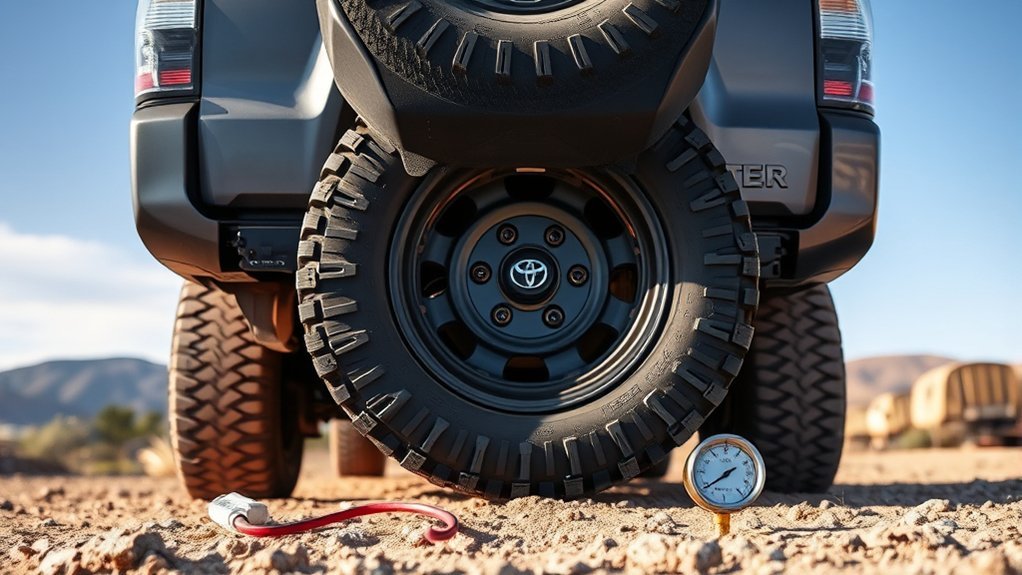
NHTSA recommends checking tire pressure at least once a month, including the spare, and checking pressure before long trips. Use the pressure listed on your 4Runner’s tire placard or owner’s manual, and check when the tire is cold.
A low spare is a common emergency surprise. A full-size spare with low pressure can overheat, handle poorly, wear quickly, or fail when you need it most.
- Check pressure cold: Cold means the vehicle has been parked long enough for the tire to cool, usually at least three hours.
- Use a real gauge: Do not rely only on a visual check.
- Inspect the valve stem: Cracked or leaking valve stems can slowly flatten a spare.
- Look for sidewall cracks: Underbody spares can age even when unused.
- Check the DOT date code: Tire age matters, even with deep tread.
[Products Worth Considering]

This spare tire tool kit is designed for the 2004 to 2018 Ford F-150 to help you loosen and tighten wheel lug nuts and manage the spare tire and provided jack functions from underneath the vehicle. It includes the lug nut wrench and extension pieces plus a convenient storage carrying case for organized transport. The jack itself is not included.

Keep RV, trailer, or truck dual-axle tires protected with waterproof, UV-resistant covers that help guard against sunlight, snow, rust, and dirt. The dual tire covers are easy to install with a rope/bungee fastener for a stable fit that won’t easily slip. Designed for 27–30 inch diameter wheels, they help maintain tire condition through harsh weather.
Aftermarket Options for Full-Size Spares
Aftermarket full-size spares can be a smart upgrade when your 4Runner is running larger all-terrain tires, LT tires, or non-factory wheels. The safest approach is to match the spare to your current tire model and wheel specs whenever possible.
Before buying, confirm:
- Tire diameter: Match the tires on the vehicle as closely as possible.
- Load index: Choose a tire that can support your loaded 4Runner.
- Wheel specs: Confirm bolt pattern, center bore, offset, width, and brake clearance.
- TPMS: Decide whether the spare needs a sensor and whether it must be registered.
- Storage fit: Test the tire in the factory location before a long trip.
If the spare no longer fits under the body, common alternatives include a rear swing-out carrier, hitch-mounted carrier, or roof storage. Each has trade-offs: rear carriers add weight, hitch carriers affect departure angle, and roof storage raises the center of gravity.
Storing and Maintaining Your Spare Tire
A spare tire needs the same attention as the four tires on the ground. Underbody storage is convenient, but it also hides the spare from daily view, which makes neglect more likely.
- Lower the spare twice a year: Make sure the hoist works and the tire is not stuck in place.
- Clean the wheel and hardware: Remove mud, salt, and debris from the rim, cable, and carrier.
- Check the tire age: Bridgestone recommends replacing spare tires more than 10 years old, even if they look new.
- Inspect tools: Verify the jack, lug wrench, wheel-lock key, and spare-lowering tools are in the vehicle.
- Practice at home: Learn how to lower the spare before you are stuck on a shoulder or trail.
Final Thoughts: Investing in a Reliable Spare Tire
A reliable full-size spare is not just an off-road accessory. It is part of your safety plan. For 4Runner owners who travel far from tire shops, drive in bad weather, tow, or run upgraded tires, a properly matched spare can reduce stress and help you recover from a flat with fewer compromises.
The right spare is the one that fits your exact model year, trim, wheel setup, tire size, storage location, and driving needs. Check your placard, confirm fitment, monitor pressure, and replace the spare when it is damaged or aged out.
Frequently Asked Questions
Is it worth having a full-size spare?
Yes. A full-size spare is worth it if you drive off-road, take long trips, tow, live far from tire shops, or run upgraded tires. It helps keep tire diameter, handling, and traction more consistent after a flat.
What 4Runners should I be careful with when choosing a spare?
Be careful with any 4Runner that has non-factory wheels, larger tires, suspension changes, a hitch, a rear bumper, or a relocated spare carrier. Also be careful applying 5th-gen advice to 2025+ 4Runners because the 2025 model introduced a new generation.
What is the 50/50 rule on spare tires?
The “50/50 rule” is a common shorthand for many compact temporary spares: no more than about 50 miles and no faster than about 50 mph. Always follow the limit printed on the spare tire and the instructions in your owner’s manual, because limits vary.
Can I include my full-size spare in tire rotation?
Yes, but only if the spare matches the other tires closely enough in size, wheel type, tread pattern, load rating, and TPMS setup. A five-tire rotation can help keep tread depth more even, but it should follow the tire maker’s and Toyota’s rotation guidance.
How often should I check my 4Runner spare tire?
Check the spare at least monthly and before long trips. Confirm cold tire pressure, tread condition, sidewall condition, DOT date code, valve stem condition, and that the jack and lug tools are still in the vehicle.
Conclusion
Investing in a full-size spare tire for your 4Runner is a smart move when it is matched and maintained correctly. A compact spare may be enough for a short paved-road emergency, but a properly fitted full-size spare gives you more confidence on long trips, rough roads, and trail exits.
Before you buy, verify your tire placard, owner’s manual, wheel specs, TPMS needs, and underbody clearance. Then keep the spare inflated, inspected, and ready. The best spare is the one you can trust when the flat happens miles from help.
Sources
- Toyota 2024 4Runner eBrochure — backs up 2024 factory tire-size examples and full-size spare listing.
- Toyota USA Newsroom: 2025 Toyota 4Runner — confirms the all-new sixth-generation 2025 4Runner and current trim/equipment context.
- Toyota Owners: If You Have a Flat Tire — supports Toyota-specific flat-tire and TPMS caution guidance.
- NHTSA Tire Safety Checklist — supports monthly pressure checks, spare tire checks, and cold-pressure guidance.
- 49 CFR 571.138: Tire Pressure Monitoring Systems — supports TPMS limitations and replacement-wheel/tire warnings.
- Bridgestone Tire Replacement Guidance — supports spare tire age and 10-year replacement guidance.

Related Articles

Best Toyota 4Runner Tires Under $150 2026 – Top Budget All-Terrain Tires
You use your Toyota 4Runner for a mix of highway miles and off-road adventures, so choosing capable all‑terrain tires that cost less than $150…
Read More
Best Budget Tires for Toyota 4Runner 2026 – Top Affordable Performance Tires
You rely on your Toyota 4Runner for a mix of daily driving and weekend adventures, and the tires you choose shape safety, comfort, and…
Read More
Best On Road All Terrain Tires for Toyota 4Runner 2026 – Top Highway-Friendly A/T Tires
You want all-terrain tires that let your 2026 Toyota 4Runner feel planted and quiet on the highway while still offering capable off-road traction when…
Read More