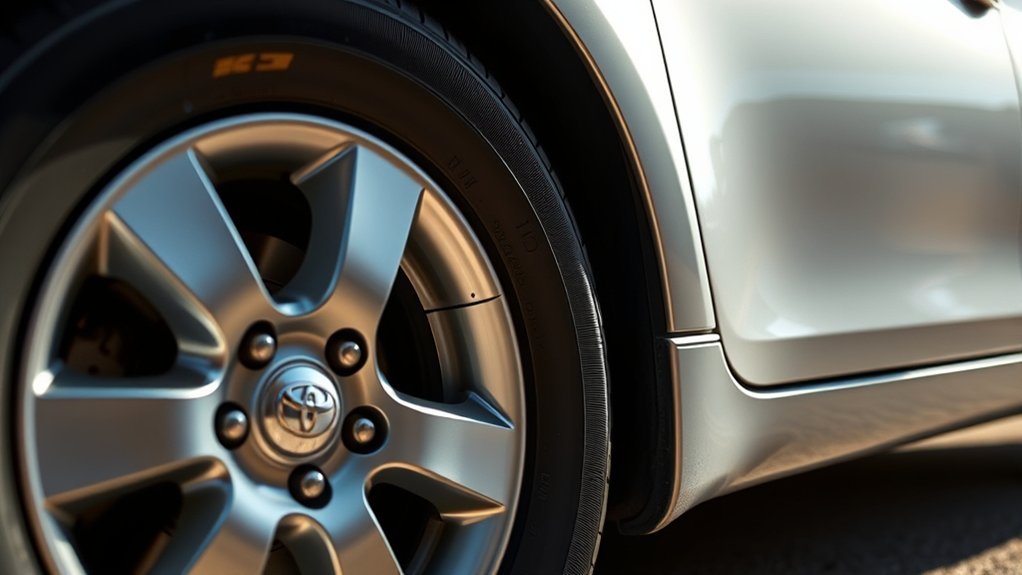
For most 2010 Toyota Camry models, the correct factory tire size is P215/60R16. The sport-focused SE and SE V6 use P215/55R17. Before buying tires, check the tire and loading information label on the driver-side door pillar because it is the best source for your exact vehicle.
Quick Answer
The 2010 Toyota Camry tire size is usually P215/60R16 94V for Base, LE, LE V6, XLE, XLE V6, and Hybrid models. The SE and SE V6 usually use P215/55R17 93V. Always confirm the size on your driver-side door label before ordering replacements.
Key Takeaways
- Most 2010 Camry trims use P215/60R16, while SE trims use P215/55R17.
- Use the tire placard on the driver-side door pillar as the final source for size and cold tire pressure.
- Match the tire size, load index, speed rating, rim size, and TPMS requirements when replacing tires.
- Rotate your tires every 5,000 to 7,500 miles, or sooner if your tires show uneven wear.
- Replace tires at 2/32 inch tread depth, or earlier if they show cracks, bulges, punctures, or uneven wear.
Overview of 2010 Toyota Camry Tire Specifications

The 2010 Toyota Camry uses two main factory tire sizes, depending on trim and wheel package. Toyota’s owner manual lists P215/60R16 94V and P215/55R17 93V among the standard tire specifications, along with a T155/70D17 temporary spare for vehicles equipped with a compact spare.
The size matters because it affects ride height, speedometer accuracy, braking feel, fuel economy, steering response, and tire clearance. A tire that looks close can still be wrong if the load rating, speed rating, rim fitment, or overall diameter does not match your Camry.
2010 Toyota Camry Tire Size by Trim
The table below gives the common factory tire size by trim. Use it as a guide, then confirm your own car by checking the tire placard on the driver-side door pillar.
| Trim | Factory Tire Size | Best Fit For |
| Base | P215/60R16 94V | Daily driving and comfort |
| LE / LE V6 | P215/60R16 94V | Comfort, fuel economy, and replacement availability |
| SE / SE V6 | P215/55R17 93V | Sharper steering and sportier handling |
| XLE / XLE V6 | P215/60R16 94V | Smooth ride and quiet highway cruising |
| Hybrid | P215/60R16 94V | Fuel-efficient commuting and balanced ride comfort |
Note: Some market packages and previous-owner wheel swaps can change what is on your car today. The door placard and wheel fitment should always override a generic online trim chart.
[Products Worth Considering]

Monitor tire tread wear with a smart, color-coded depth gauge that shows clear condition ranges at a glance. The bar is range marked for fast, easy readings, helping you maintain safer traction and performance. Each gauge is portable with a pocket clip, and the set includes 20 units for daily use and sharing.

Keep your tires properly inflated with this analog VONDIOR tire pressure gauge, designed for fast, easy readings without batteries. The swiveling, two-axis hose and large glow dial help you measure at any tire angle with instant visibility. Built with a protective rubber shield, it supports durable, low-maintenance use for cars and trucks.

The SAFELIFE dial tire tread depth gauge measures tread depth in 1/32 inch increments with clear, easy-to-read 2-inch dial face. Color zones using a traffic light system help you quickly judge whether tread is low, marginal, or ample for safer driving. Built with a durable zinc cast body and a metal detect probe for precise, comfortable use across cars, motorcycles, trucks, and buses.
How to Read Your Camry Tire Size
A tire size such as P215/60R16 94V gives you more than the tire’s width. Here is what each part means:
- P means passenger-car tire.
- 215 is the tire section width in millimeters.
- 60 is the sidewall height as a percentage of the width.
- R means radial construction.
- 16 means the tire fits a 16-inch wheel.
- 94 is the load index.
- V is the speed rating.
When replacing your tires, match the full size and rating, not just the first part of the code. For example, a P215/60R16 tire with a lower load index or speed rating may not match Toyota’s original specification.
Why Choosing the Right Tire Size Matters
The right tire size helps your Camry steer, brake, and ride the way Toyota designed it to. A wrong size can change the tire’s rolling diameter, which can affect your speedometer, ABS behavior, traction control inputs, and clearance around the fenders or suspension.
Correct tire size is not only about the number on the sidewall. You also need the correct load rating, speed rating, wheel size, tire pressure, and clearance.
Using the factory size is the safest route for most drivers. It keeps replacement simple, protects ride quality, and helps avoid rubbing or warning-light issues after installation.
How to Locate Your 2010 Camry’s Tire Size
You can find the correct tire size for your 2010 Toyota Camry in three places. Start with the tire and loading information label on the driver-side door pillar. Toyota’s manual says this label displays the recommended cold tire inflation pressure and tire size.
- Driver-side door label: This is the best source for your exact Camry.
- Owner’s manual: Use the manual to confirm Toyota’s tire and wheel specifications.
- Current tire sidewall: This tells you what is installed now, but it may not be the original size if a previous owner changed wheels.
Warning: Do not assume the current tire is correct just because it fits the wheel. Confirm the size, load index, speed rating, and tire pressure label before buying replacements.
Available Tire Options for Each Trim of the 2010 Camry

Once you know your factory size, choose a tire type based on how and where you drive. For most Camry owners, a quality all-season touring tire in the correct size is the most practical choice. It gives you a good mix of ride comfort, tread life, wet grip, and low road noise.
- All-season touring tires: Best for daily driving, commuting, and highway comfort.
- Grand touring tires: Good if you want a quieter ride and better wet-road performance.
- Performance all-season tires: Better match for SE trims if you want sharper steering feel.
- Winter tires: Best for regular snow, ice, and freezing temperatures.
If you drive a Hybrid, look for tires that balance low rolling resistance with wet traction. If you drive an SE, do not choose a soft comfort tire only by price because it may reduce the steering response the SE trim was designed to deliver.
[Products Worth Considering]

Replace your worn or missing TPMS sensors with pre-programmed, direct-fit sensors for compatible Ford, Lincoln, and select Mazda models. Each sensor comes ready to activate with a scan tool, helping restore accurate tire pressure monitoring and trouble-free installation. Built with a long-life CR2032 battery and tested before factory release, this set provides dependable performance with a one-year warranty.

The TYAMATE TM8 solar-powered wireless TPMS delivers real-time tire pressure and temperature monitoring with six alarm modes for safer driving. A vibrant color LCD display shows readings clearly while windshield mounting keeps it hands-free and easy to read. With a wide 0–87 PSI range, strong 433.92 MHz signal transmission, and quick sensor pairing, it’s ideal for RV, sedan, SUV, MPV, and truck use.

Accurately measure tire tread depth with a calibrated gauge marked from 0 to 1 inch in 1/32 inch increments. The color-coded bar helps you quickly identify tread condition ranges, supporting safe driving for trucks, motorcycles, automobiles, and passenger vehicles.
Recommended Tire Pressure for a 2010 Camry
Your correct tire pressure is printed on the driver-side tire label. Toyota’s manual shows that the 2010 Camry can use different cold tire pressure values depending on engine, wheel, and configuration. For example, the manual lists 30 psi, 32 psi, and 34 psi examples across different configurations.
Check pressure when the tires are cold. Toyota defines a cold reading as after the vehicle has been parked for at least three hours or driven less than 1 mile. The tire pressure monitoring system helps warn you about low pressure, but Toyota also says it does not replace routine pressure checks.
Pro Tip: Keep a small tire pressure gauge in the glove box and check all four tires plus the spare at least once a month.
Maintaining Your 2010 Camry Tires
Good tire maintenance helps your Camry ride smoothly and keeps the tread wearing evenly. It also helps you catch damage before it becomes a roadside problem.
Tire Pressure Maintenance
Check tire pressure at least once a month and before long trips. Underinflated tires can reduce fuel efficiency, shorten tire life, increase heat buildup, and hurt handling. Overinflated tires can make the ride harsher and may cause uneven tread wear.
Use the pressure on the door label, not the maximum pressure molded into the tire sidewall. The sidewall number is the tire’s maximum cold inflation pressure, not Toyota’s normal driving recommendation.
Regular Tire Rotation
Toyota recommends rotating tires every 5,000 to 7,500 miles to help equalize wear and extend tire life. Front tires on a front-wheel-drive Camry often wear faster because they handle steering, braking, and most driving force.
Ask your installer to inspect tread depth, sidewall condition, valve stems, wheel balance, and alignment signs during each rotation. Uneven inner-edge wear, cupping, vibration, or pulling can point to alignment, suspension, or balance problems.
Tread Depth and Replacement
The National Highway Traffic Safety Administration says tires are not safe and should be replaced when tread is worn to 2/32 inch. You should also replace a tire if you see sidewall bulges, deep cuts, exposed cords, repeated air loss, or severe cracking.
A tread depth gauge gives the most accurate reading. Check the inner, center, and outer tread blocks because uneven wear can hide on one side of the tire.
Benefits of Choosing OEM-Size Tires for Your Camry
Choosing the original equipment size does not mean you must buy the same tire brand your Camry had when new. It means you stay with Toyota’s intended size, load index, speed rating, and wheel fitment.
- Better fitment: The tire clears the fender, strut, and suspension as designed.
- Predictable handling: Steering, braking, and stability systems work with the expected tire diameter.
- Better ride balance: The factory size helps preserve the Camry’s comfort and road noise levels.
- Simpler replacement: Tire shops can more easily match the correct size and rating.
You can choose a different brand, tread pattern, or tire category as long as the tire matches your Camry’s size and rating needs.
[Products Worth Considering]
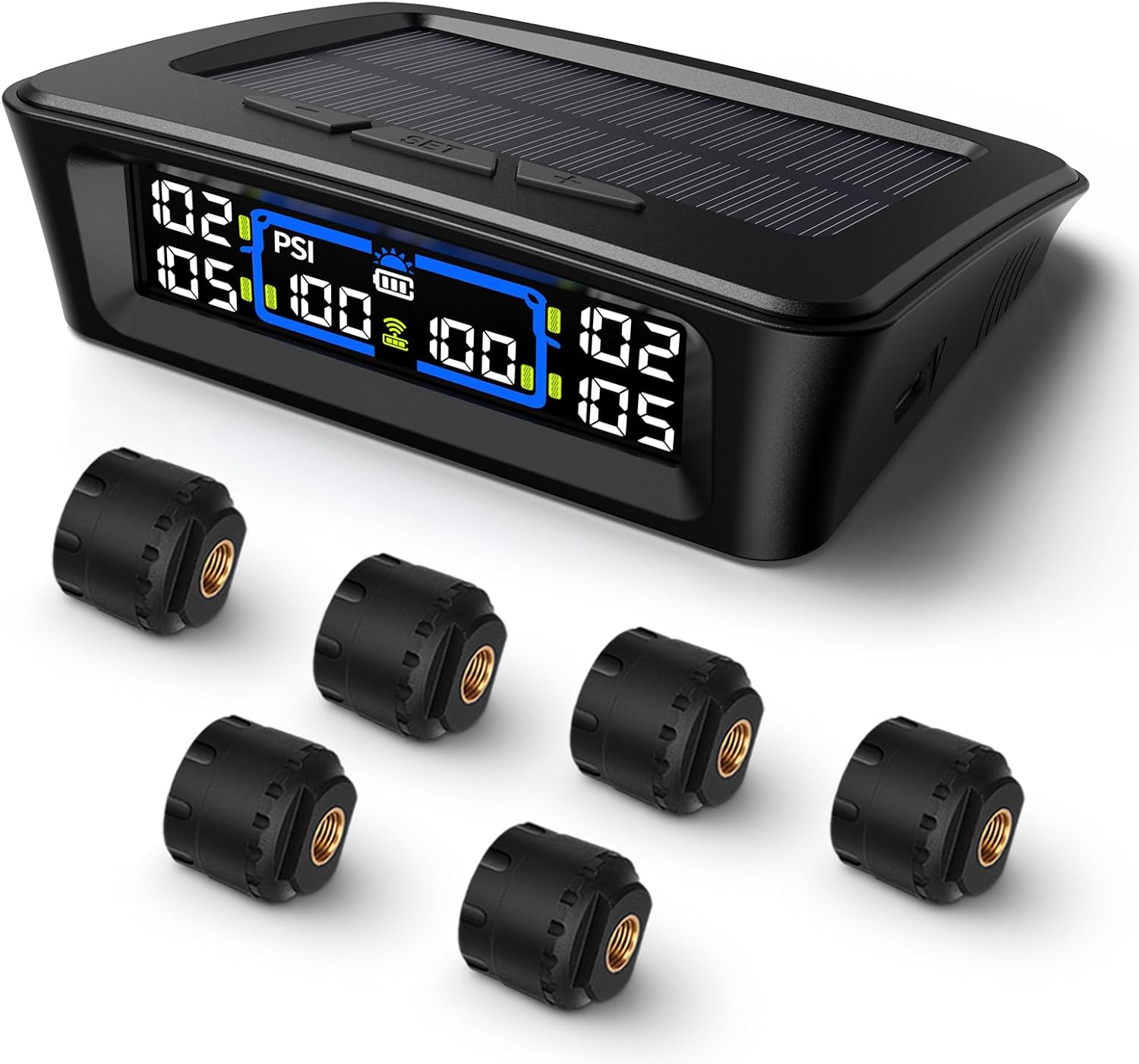
The Tymate TM12 RV TPMS delivers real-time tire pressure and temperature monitoring with a stable 433Hz display for safer long-distance driving. It supports simultaneous monitoring across vehicle and trailer zones, includes six alarm modes for pressure, temperature, leakage, battery, and signal loss, and features easy DIY installation with auto calibration. Power is supplied via USB-C charging or solar recharging, with a wide 0–144 PSI range and up to 50 ft signal coverage for RVs and towable trailers.

Replace worn or missing TPMS sensors with a pre-programmed 4-pack designed for compatible GM vehicles. These 315MHz sensors provide real-time tire pressure monitoring and alert you if pressure is too high, too low, or if a rapid air leak occurs. Most installations are ready with minimal relearn effort after mounting, helping improve safety and driving confidence.

Measure tire tread depth quickly and accurately with this LUMITECO dial gauge that reads in 1/32" increments up to 14/32". The color-coded green/yellow/red zones make it easy to judge tire wear and know when replacement is needed. A rugged, compact design with a protective pouch helps keep the gauge ready for use on cars, trucks, motorcycles, and more.
Safe Tips for Changing Tire Sizes
You can change tire sizes on a 2010 Camry, but you need to do it carefully. Larger wheels with lower-profile tires may sharpen steering feel, but they can also make the ride firmer and increase the risk of wheel damage from potholes.
Before changing size, verify these items:
- Overall tire diameter: Keep it close to the factory diameter to protect speedometer and system accuracy.
- Load index: Do not choose a tire with a lower load index than Toyota specified.
- Speed rating: Match or exceed the original rating unless a tire professional confirms a safe alternative.
- Rim width: Make sure the tire fits the wheel width.
- Offset and clearance: Check for rubbing at full steering lock and over bumps.
- TPMS: Make sure tire pressure monitoring sensors are installed and handled correctly when wheels are changed.
Warning: If you are not sure about wheel offset, load rating, or clearance, do not guess. Ask a qualified tire shop to confirm fitment before installation.
Frequently Asked Questions
Can I use different tire brands on my Camry?
Yes, you can use a different tire brand as long as all four tires match the correct size, load index, speed rating, and tire type. For best handling, use four matching tires instead of mixing brands or tread patterns on the same axle.
How often should I rotate my Camry’s tires?
Toyota recommends rotating tires every 5,000 to 7,500 miles, though the best timing can vary by road conditions and driving habits. Rotate sooner if you see uneven wear or feel vibration.
What is the recommended tire pressure for my 2010 Camry?
Use the cold tire pressure printed on the driver-side door label. Toyota’s manual shows different pressure examples depending on configuration, including 30 psi, 32 psi, and 34 psi, so do not rely on one universal number.
Do tire warranties vary by size or brand?
Yes. Tire warranties vary by brand, model, treadwear rating, tire category, and seller terms. Read the warranty details before buying, especially if you choose performance tires, winter tires, or a non-OE size.
How do I know when to replace my tires?
Replace tires when tread reaches 2/32 inch, when treadwear bars are flush with the tread, or when you see deep cuts, bulges, exposed cords, severe cracking, or repeated air loss. Check tread depth in several spots across each tire.
Can I put 17-inch SE wheels on an LE or XLE?
It may be possible if the wheel size, offset, tire size, load rating, speed rating, and TPMS setup are correct. The common SE tire size is P215/55R17, but you should still confirm clearance and fitment with a qualified tire shop.
Sources
- Toyota 2010 Camry Owner’s Manual — tire size, tire pressure, tire label location, TPMS, and wheel specifications.
- Toyota Canada 2010 Camry Specifications — trim-level tire and wheel specifications.
- Toyota Scheduled Maintenance Guide — recommended tire rotation interval.
- NHTSA TireWise — tread depth, monthly tire checks, and tire safety guidance.
- Transport Canada Riding on Air — tire label location, pressure checks, tread wear, and tire damage guidance.
Conclusion
The correct 2010 Toyota Camry tire size is usually P215/60R16 94V for Base, LE, XLE, V6 comfort trims, and Hybrid models, while the SE and SE V6 usually use P215/55R17 93V. Check your driver-side door label before ordering because it gives the final size and cold pressure for your exact vehicle.
Choose tires that match the proper size, load index, speed rating, and wheel fitment. Then keep them properly inflated, rotate them on schedule, and replace them when tread depth or damage makes them unsafe.