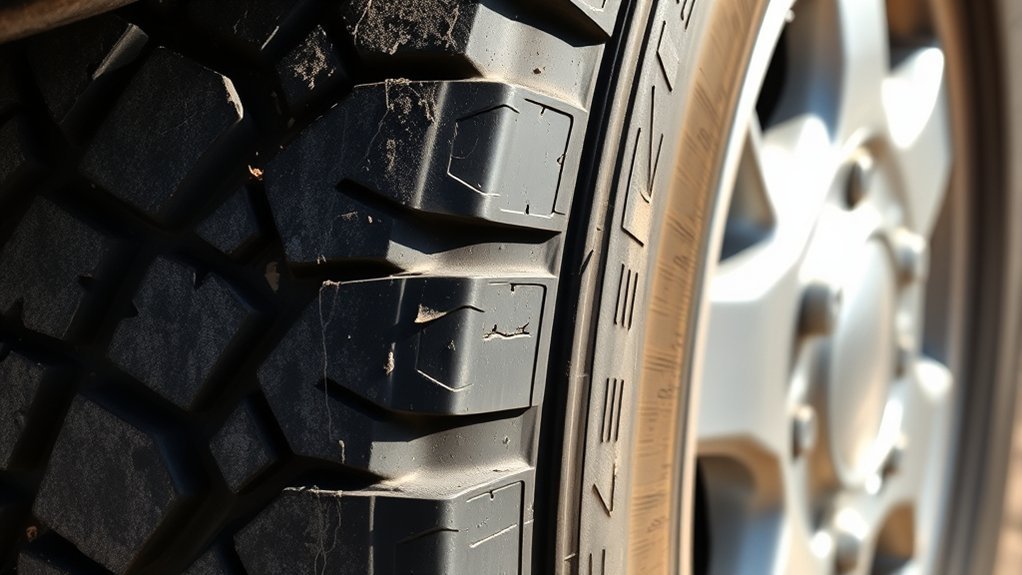
Knowing when to replace your Toyota Hilux tires comes down to more than mileage. You need to check tread depth, tire age, sidewall condition, air pressure, uneven wear, vibration, and how the truck feels on wet roads, gravel, or loaded trips. A worn or damaged tire can reduce grip, increase stopping distance, and raise the risk of a blowout.
Quick Answer
Replace your Toyota Hilux tires when tread reaches 2/32 inch, about 1.6 mm, or sooner if you see sidewall bulges, cracks, exposed cords, repeated pressure loss, severe uneven wear, vibration, or poor wet-road grip. Also inspect older tires closely, because some tire and vehicle makers recommend replacement after six to 10 years regardless of tread depth.
Key Takeaways
- Use a tread-depth gauge for the most accurate reading, and replace tires at 2/32 inch, about 1.6 mm, or when treadwear bars sit flush with the tread.
- Check the tire age code on the sidewall, because old rubber can become unsafe even when the tread still looks usable.
- Use the Hilux tire placard or owner’s manual for tire pressure, not a generic PSI number or the maximum pressure on the tire sidewall.
- Do not keep driving on a tire with a bulge, exposed cord, deep sidewall cut, rapid air loss, or strong vibration.
- For 4×4 Hilux models, keep tire size, load rating, tread type, and wear level closely matched to protect handling and drivetrain components.
At a Glance
| Time Required | 10 to 15 minutes for a basic monthly tire check |
| Difficulty | Easy for inspection; use a tire shop for mounting, balancing, alignment, or suspected internal damage |
| Tools Needed | Tread-depth gauge, tire pressure gauge, flashlight, gloves, and the vehicle’s tire placard or owner’s manual |
| Cost | Usually free if you already own a gauge; low cost for basic gauges; replacement cost depends on tire size and type |
Understanding Tire Tread Depth for Your Toyota Hilux
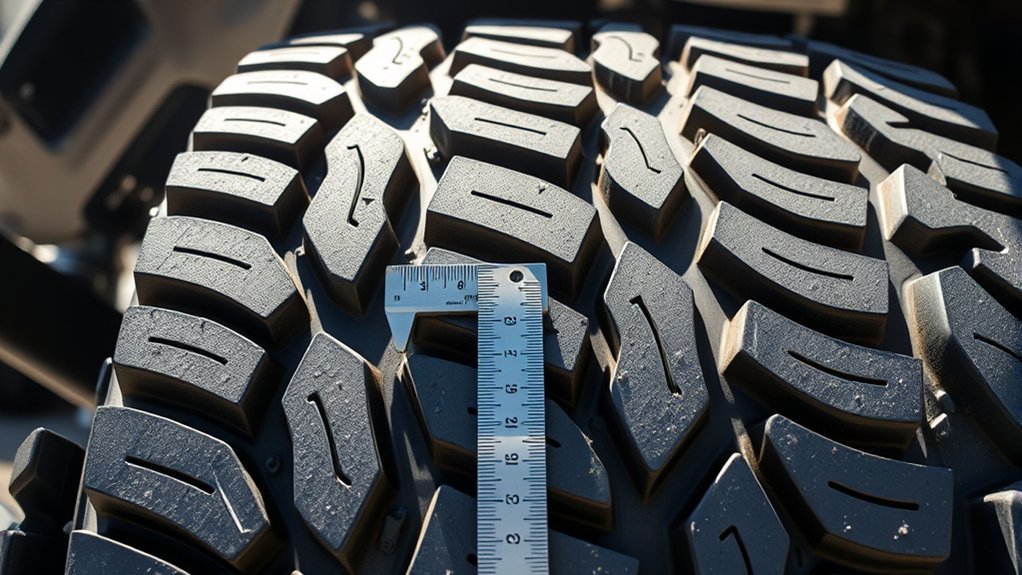
Start with tread depth because it directly affects traction, braking, and water evacuation. The National Highway Traffic Safety Administration says tires are not safe and should be replaced when tread is worn down to 2/32 inch. That equals about 1.6 mm, which also matches the minimum tread depth used for cars and light vans in the UK Highway Code.
Use a tread-depth gauge if you have one. Measure the inner, center, and outer grooves on each tire because one edge can wear faster than the rest. If any main groove is at or below the minimum, replace the tire instead of judging only the deepest-looking groove.
You can also use the penny test as a quick check. Place a penny into the tread with Lincoln’s head upside down and facing you. If you can see the top of Lincoln’s head, the tire is worn to the replacement point. This is useful in the United States, but a gauge gives a clearer reading, especially if you drive outside the U.S. or need to meet local tyre laws.
Note: Treadwear bars are built into the grooves. When those bars sit level with the surrounding tread, the tire has reached its wear limit and should be replaced.
How to Identify Aging Signs in Your Toyota Hilux Tires
Tread depth is not the only reason to replace Toyota Hilux tires. Rubber ages over time because of heat, sunlight, storage conditions, road chemicals, and normal use. NHTSA notes that tire aging happens when rubber and other tire components change over time due to service, storage, and environmental conditions.
Check the tire’s date code on the sidewall. On many tires, the DOT Tire Identification Number ends with four digits that show the week and year of manufacture. For example, a code ending in 2421 means the tire was made in the 24th week of 2021. If the date code appears only on the inner sidewall, you may need a tire shop to inspect it safely.
Some vehicle and tire manufacturers recommend replacing tires after six to 10 years, regardless of treadwear. Treat that as a serious inspection window, not a promise that every tire is safe until year 10. If your Hilux often sits outside, carries heavy loads, tows, drives off-road, or runs in hot climates, aging signs can appear earlier.
How to Spot Uneven Wear Patterns on Your Tires
Uneven wear can tell you that something is wrong before a tire fails. Look across the full tread width, not just the outside shoulder. A Hilux that pulls, shakes, or wears one tire faster than the others may need pressure correction, rotation, balancing, alignment, or suspension work.
Common Causes of Uneven Wear
The most common causes include incorrect tire pressure, poor alignment, worn suspension parts, missed rotations, heavy loads, and rough roads. Potholes, gravel, curbs, and off-road impacts can also bend wheels or disturb alignment.
| Wear Pattern | Possible Cause | What to Do |
|---|---|---|
| Both outer edges worn | Underinflation or heavy cornering | Set cold pressure to the placard value and inspect for heat damage. |
| Center tread worn faster | Overinflation or wrong pressure for load | Correct pressure and check whether the tire is already too worn. |
| One shoulder worn | Alignment issue, bent part, or worn suspension | Book an alignment and suspension inspection. |
| Cupping or scalloping | Bad shocks, imbalance, worn bearings, or suspension movement | Have the tire, wheel, and suspension checked before replacing tires. |
Signs of Alignment Issues
Alignment trouble often shows up as one-sided tread wear, a steering wheel that sits off-center, or a Hilux that drifts left or right on a straight road. NHTSA notes that alignment helps maximize tire life and prevents a vehicle from veering on a straight, level road.
- Bald spots or extra wear on one edge of the tire
- A visible difference between inner and outer tread depth
- The truck pulls to one side on a straight road
- The steering wheel sits crooked when driving straight
- Uneven wear returns quickly after rotation
Importance of Regular Inspections
Inspect your tires at least once a month, before long trips, after hard off-road use, and before towing or carrying heavy loads. NHTSA recommends checking tire pressure when tires are cold, meaning the vehicle has not been driven for at least three hours.
Do a simple walkaround: check pressure, tread depth, sidewalls, valve stems, treadwear bars, and the spare. If one tire looks different from the others, do not ignore it. Small problems usually cost less to fix before they damage the tire beyond repair.
Spotting Damage That Needs Quick Fixing
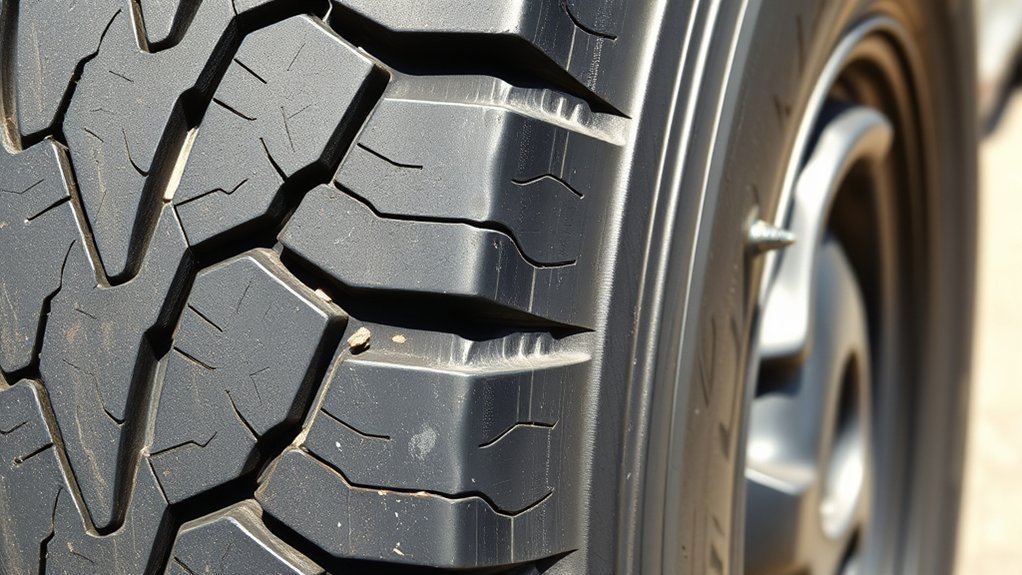
Damage can make a tire unsafe even when tread depth still looks fine. Check both sidewalls and the tread surface for cuts, cracks, punctures, bulges, blisters, exposed cords, embedded metal, and objects stuck in the grooves.
[Products Worth Considering]

Measure tire tread depth quickly and accurately with this LUMITECO dial gauge that reads in 1/32" increments up to 14/32". The color-coded green/yellow/red zones make it easy to judge tire wear and know when replacement is needed. A rugged, compact design with a protective pouch helps keep the gauge ready for use on cars, trucks, motorcycles, and more.

Monitor tire tread wear with a smart, color-coded depth gauge that shows clear condition ranges at a glance. The bar is range marked for fast, easy readings, helping you maintain safer traction and performance. Each gauge is portable with a pocket clip, and the set includes 20 units for daily use and sharing.

The SAFELIFE dial tire tread depth gauge measures tread depth in 1/32 inch increments with clear, easy-to-read 2-inch dial face. Color zones using a traffic light system help you quickly judge whether tread is low, marginal, or ample for safer driving. Built with a durable zinc cast body and a metal detect probe for precise, comfortable use across cars, motorcycles, trucks, and buses.
Common Tire Damages
- Sidewall bulges: Usually mean internal tire structure has weakened. Replace the tire immediately.
- Cracks or dry rot: Can appear from age, sunlight, heat, or long storage.
- Deep cuts: Need professional inspection, especially near the sidewall or shoulder.
- Punctures: Some tread-area punctures can be repaired, but sidewall punctures usually require replacement.
- Exposed cords: Replace the tire and do not continue normal driving.
- Repeated air loss: Could mean a puncture, valve leak, bead leak, cracked wheel, or internal damage.
Warning: Do not keep driving on a tire with a sidewall bulge, exposed cord, deep sidewall cut, or rapid pressure loss. Use the spare only if it is safe and properly inflated, or call roadside help.
Signs of Urgent Issues
Get professional help right away if a tire will not hold pressure, the steering wheel shakes strongly, the truck suddenly pulls, or you hear rhythmic thumping from one wheel. NHTSA advises drivers to consult a tire service professional when they notice pressure loss, noise, vibration, physical damage, irregular wear, or other tire performance changes.
| Issue | Likely Risk | Action Needed |
|---|---|---|
| Sidewall bulge | Internal structural damage | Replace immediately. |
| Deep cut or exposed cord | Loss of tire strength | Do not continue normal driving. |
| Repeated pressure loss | Leak or internal damage | Inspect and repair or replace. |
| Strong vibration | Imbalance, separation, bent wheel, or suspension issue | Stop driving at high speed and get a tire inspection. |
Understanding How Vibration and Noise Signal Tire Problems
Vibration and noise often point to tire or wheel problems. A light shake after new tires may mean the wheels need balancing. A shake that gets worse with speed may point to imbalance, cupping, tire separation, a bent rim, or worn suspension parts.
- Vibration at highway speed: Check balance, wheel damage, tire roundness, and suspension wear.
- Rhythmic thumping: Inspect for tread separation, a flat spot, or a damaged tire belt.
- Growling or humming: Check tread wear patterns and wheel bearings.
- Pulling to one side: Check pressure first, then alignment, brake drag, and tire damage.
- TPMS warning: Check pressure with a gauge as soon as possible. TPMS does not replace regular maintenance.
If the truck shakes suddenly or feels unstable, slow down smoothly and pull over when safe. Do not slam the brakes. NHTSA recommends keeping the vehicle balanced and controllable during a blowout or rapid air loss.
When to Replace One, Two, or All Four Hilux Tires
You do not always need four new tires, but you do need a safe match. The replacement tire should match the correct size, load index, speed rating, construction type, and intended use shown in your Hilux owner’s manual or tire placard.
| Situation | Best Choice | Why It Matters |
|---|---|---|
| One tire is damaged but the others are nearly new | Replace one matching tire if tread depth and specs closely match. | Keeps handling balanced without wasting good tires. |
| Two tires on one axle are worn | Replace both tires on that axle. | Helps braking, cornering, and wet grip stay predictable. |
| All four tires are old, low, or unevenly worn | Replace the full set. | Restores consistent grip and ride quality. |
| 4×4 Hilux with mismatched tread depth or tire type | Match all four as closely as possible. | Reduces drivetrain stress and keeps traction systems working predictably. |
Pro Tip: If you replace only two tires, ask your tire technician where they should be fitted for your Hilux, tire type, drivetrain, and local road conditions. Many shops place the better pair on the rear for wet-road stability.
[Products Worth Considering]

ETENWOLF’s tire pressure gauge helps you quickly and accurately check tire PSI across cars, trucks, motorcycles, bikes, and more. It’s manually calibrated to ANSI B40.1 Grade A for reliable readings, includes a large glow dial for easy nighttime viewing, and features a 360-degree swivel chuck for use at any valve angle. The gauge also works consistently in extreme hot or cold weather.

ETENWOLF’s calibrated tire pressure gauge delivers accurate readings for cars, trucks, motorcycles, bikes, SUVs, RVs, and ATVs across a 0–75 PSI range. The large glow dial improves visibility in low light, while the 360° swivel chuck makes it easy to check valve pressure from any angle. It’s designed to stay accurate even in extreme hot or cold weather.

Accurately measure tire tread depth with a calibrated gauge marked from 0 to 1 inch in 1/32 inch increments. The color-coded bar helps you quickly identify tread condition ranges, supporting safe driving for trucks, motorcycles, automobiles, and passenger vehicles.
The Importance of Regular Tire Inspections
Regular tire inspections help you catch tread wear, low pressure, sidewall damage, and alignment problems before they become expensive or dangerous. NHTSA says poor tire maintenance, including not having enough air and failing to rotate tires, can lead to a flat tire, blowout, or tread separation.
Use this monthly inspection routine:
- Check cold tire pressure with a gauge, including the spare.
- Compare the pressure to the Hilux tire placard or owner’s manual.
- Measure tread depth across each tire.
- Look for cracks, cuts, bulges, nails, screws, and exposed cords.
- Compare wear patterns from left to right and front to rear.
- Check whether the spare tire is inflated, aged, and usable.
- Book balancing or alignment if the truck shakes, pulls, or wears tires unevenly.
When to Seek Professional Help for Your Toyota Hilux Tires?
You should get professional help when the problem goes beyond a simple pressure top-up or visual check. A trained tire technician can inspect the inside of the tire, check wheel balance, confirm alignment, and identify damage you cannot see from the outside.
- Visible sidewall bulges, cracks, blisters, or exposed cords
- Deep cuts, shoulder damage, or sidewall punctures
- Pressure loss that returns after inflation
- Uneven tread wear across the tire width
- Strong vibration, humming, thumping, or pulling
- Old tires approaching the six- to 10-year inspection window
- New tires that shake after installation
- Any tire used after a hard curb strike, pothole impact, or off-road hit
Do not assume a tire is safe just because it still holds air. Internal belt damage, sidewall weakness, and tread separation can be hard to see without dismounting the tire.
Tire Maintenance Tips for Longevity
Good maintenance can help your Hilux tires last longer and wear more evenly. It also keeps the truck safer when towing, carrying tools, driving on gravel, or handling wet roads.
- Use the correct pressure: Find the cold tire pressure on the vehicle placard or in the owner’s manual. The number on the tire sidewall is usually a maximum pressure, not the daily-use recommendation.
- Check pressure cold: Measure before driving or after the truck has been parked for at least three hours.
- Rotate on schedule: Follow your Hilux owner’s manual. If the manufacturer recommends rotation, NHTSA lists 5,000 to 8,000 miles as a common interval or sooner if uneven wear appears.
- Balance new tires: New tires should be balanced when installed to reduce shaking and uneven wear.
- Check alignment: Get an alignment after hard impacts, suspension work, repeated pulling, or visible one-sided wear.
- Avoid overloading: Heavy loads create heat and stress. Stay within the vehicle and tire load limits.
- Inspect after off-road driving: Rocks, ruts, and sharp debris can cut tread blocks or damage sidewalls.
- Store spare tires properly: Keep the spare inflated and inspect its age, cracks, and tread before you need it.
Your tires are the only part of your Hilux touching the road, so tread depth, pressure, age, and damage checks should be part of routine safety maintenance.
[Products Worth Considering]

Measure tyre tread depth precisely with a digital gauge that reads in both MM and inches, helping you monitor safe driving conditions. The large LCD screen is easy to operate, and the compact tool fits for cars, trucks, and motorcycles. It provides high accuracy with a 0-25.4mm range and includes a 1-year warranty for added peace of mind.

This 12-inch LUMITECO dual head tire pressure gauge features an integrated straight-on chuck and a 30° reverse chuck to reach hard-to-access dual wheel valves. Its 10–150 PSI / 1–10 BAR range with a clear, two-sided scale helps you quickly check tire pressure for safer, smoother driving. Heavy-duty construction and a simple no-battery design make it a reliable tool for trucks, cars, RVs, and motorcycles.

The 22800 wheel stud installer makes replacing wheel studs quick and secure, saving time and effort during tire service. It uses a ratchet or impact wrench to pull new studs firmly into place, helping when existing studs are too long. Compatible with most automotive wheels and light-duty truck wheel studs, it’s designed for easy, tool-assisted installation.
Frequently Asked Questions
How often should I rotate my Toyota Hilux tires?
Follow your Hilux owner’s manual first. If Toyota recommends rotation for your model and tire setup, a common interval is about every 5,000 to 8,000 miles, or sooner if you see uneven wear. Some tire setups may have a specific rotation pattern.
What tire pressure should I maintain for my Hilux?
Use the pressure shown on your Hilux tire placard or in the owner’s manual. Do not rely on a universal 30 to 35 PSI range, and do not use the maximum PSI printed on the tire as the normal driving pressure. Check pressure when the tires are cold.
Can I mix different tire brands on my Hilux?
It is safer to use the same brand, model, size, load rating, speed rating, and tread type across the truck when possible. If you must replace one tire, match it as closely as possible to the remaining tires. On 4×4 models, mismatched tires can affect handling and drivetrain behavior.
What is the lifespan of Toyota Hilux tires?
There is no single mileage that fits every Hilux tire. Tire life depends on tire type, load, pressure, alignment, road surface, driving style, rotation, climate, and age. Replace tires when tread depth, damage, pressure loss, vibration, or age makes them unsafe, even if the mileage seems low.
How do I choose the right tires for my Hilux?
Start with the tire size, load rating, and speed rating listed on the tire placard or in your owner’s manual. Then choose a tread type that fits how you use the truck: highway tires for road comfort, all-terrain tires for mixed use, mud-terrain tires for rough off-road work, or winter-rated tires for snow and ice.
Should I replace Hilux tires before they reach 2/32 inch?
You may need to replace them earlier if you often drive in heavy rain, tow, carry loads, drive off-road, or notice poor grip. The 2/32-inch mark is a minimum safety threshold, not a comfort or performance target.
Can a punctured Hilux tire be repaired?
Some punctures in the main tread area can be repaired if the damage is small and the tire has not been driven while flat. Sidewall punctures, shoulder damage, large cuts, exposed cords, and internal damage usually require replacement. Have a tire shop inspect it before repair.
Conclusion
Replace your Toyota Hilux tires when tread depth reaches 2/32 inch, about 1.6 mm, or when age, damage, pressure loss, uneven wear, vibration, or weak wet-road grip makes them unsafe. Check your tires monthly, use the correct cold pressure from the placard or owner’s manual, and inspect the spare too. If you see a bulge, exposed cord, deep sidewall cut, or repeated pressure loss, stop treating it as routine wear and get professional help immediately.
Sources
- NHTSA TireWise: Tire Safety Ratings and Awareness — backs tread depth, penny test, pressure checks, tire aging, rotation, TPMS, blowout guidance, and professional inspection advice.
- GOV.UK Highway Code Annex 6 — backs tyre inflation, 1.6 mm tread-depth requirement for cars and light vans, cold pressure checks, and defect warnings.
- NHTSA Recalls — supports checking whether a tire or vehicle has an active safety recall.