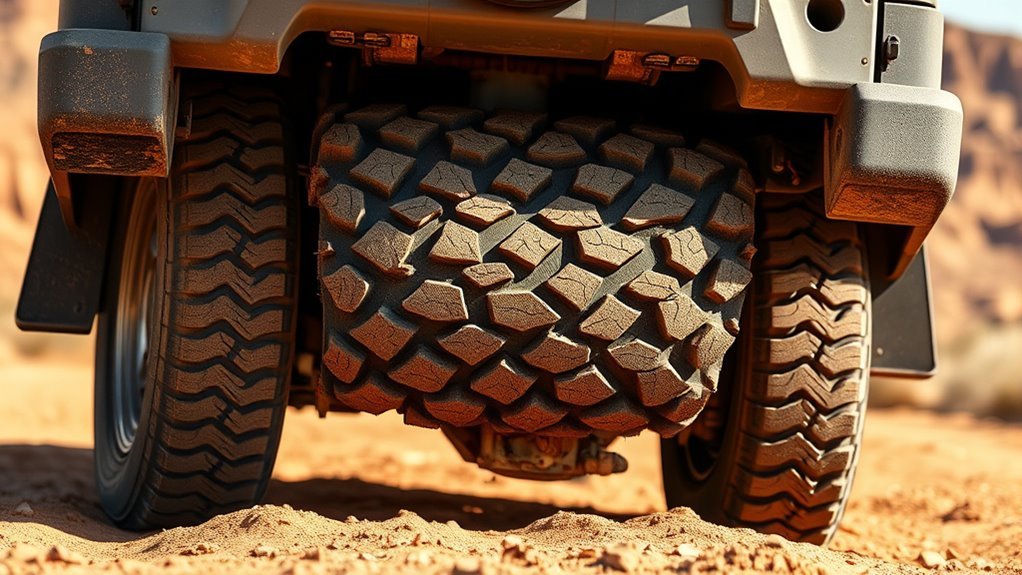
Your 4Runner’s scalloped tire wear, often called tire cupping, usually points to a mechanical or maintenance problem rather than a normal tire-aging issue. Worn shocks or struts, wheel imbalance, alignment problems, loose steering parts, and incorrect tire pressure can make the tread hit the road unevenly. If you feel vibration, hear a rhythmic rumble, or see scooped low spots in the tread, inspect the tires and suspension before the damage spreads.
Quick Answer
4Runner tire cupping is usually caused by worn suspension parts, tire/wheel imbalance, poor alignment, incorrect inflation, or loose steering components. Minor cupping may improve after the root cause is fixed, but deep scallops, exposed cords, bulges, or low tread depth mean the tire should be replaced.
Key Takeaways
- Cupping looks like repeating scooped or scalloped low spots across the tread.
- The most common causes are worn shocks or struts, imbalance, alignment issues, loose suspension parts, and incorrect tire pressure.
- A rotation or balance may reduce vibration, but it will not regrow tread that has already worn away.
- Do not keep driving at highway speed if the vibration is severe or the tire has cords, bulges, cracks, or tread separation.
- Use your door-jamb tire label and model-year owner’s manual for pressure and rotation guidance.
At a Glance
| Time Required | 10 to 20 minutes for a basic tire check; 1 to 2 hours for shop diagnosis, balancing, or alignment |
| Difficulty | Easy for visual checks; moderate to advanced for suspension inspection; professional for alignment and road-force balancing |
| Tools Needed | Tire pressure gauge, tread-depth gauge or penny, flashlight, gloves, jack and jack stands for deeper checks, torque wrench, and your owner’s manual |
| Cost | Basic checks are free if you own the tools; shop costs vary for balancing, alignment, suspension repair, or tire replacement |
Is Your 4Runner Tire Cupping? Here’s What It Means
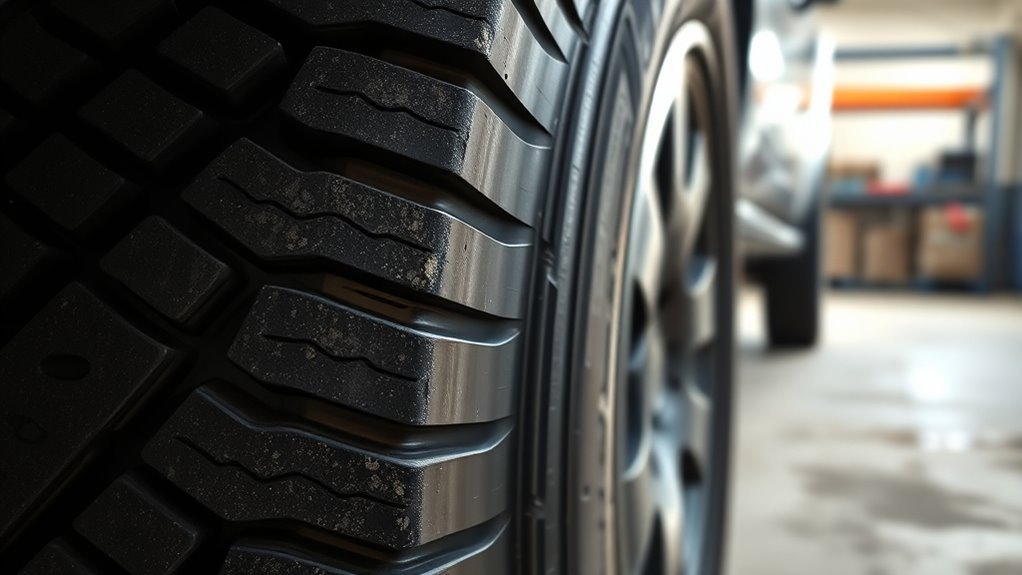
Tire cupping is an uneven wear pattern where parts of the tread look scooped, dipped, or scalloped. You may notice it before you see it. A cupped tire often makes a low rhythmic hum, creates vibration through the steering wheel or seat, or feels rougher as speed increases.
On a 4Runner, cupping matters because the vehicle is heavy, often used on rough roads, and may see towing, trail driving, or loaded cargo. Those conditions can stress shocks, bushings, ball joints, steering linkage, and tires. When one part lets the tire bounce or scrub instead of rolling smoothly, the tread can wear in patches.
Cupping is different from simple low tread. Low tread wears evenly across the tire. Cupping creates a repeating high-low pattern. Feathering feels like sharp edges across the tread blocks. One-sided shoulder wear usually points more toward camber, toe, or worn parts on one side.
Warning: Do not keep driving at highway speed if the tire has exposed cords, a sidewall bulge, deep cracks, tread separation, or severe vibration. Install the spare if it is safe to do so, slow down, and have the tire inspected.
What Causes 4Runner Tire Cupping? What to Check First
Your 4Runner’s tire cupping can come from one issue or a combination of small issues. Start with the simplest checks first, then move toward parts that need a lift or professional equipment.
1. Incorrect Tire Pressure
Check tire pressure when the tires are cold. Use the Tire and Loading Information Label on the driver’s door jamb, not the maximum pressure printed on the tire sidewall. NHTSA recommends monthly pressure checks because TPMS may not warn you until a tire is already significantly underinflated.
Underinflation can make the shoulders work harder. Overinflation can reduce the contact patch and make the center of the tire take more load. Either condition can make existing suspension or balance problems show up faster.
2. Tire and Wheel Imbalance
A tire/wheel assembly that is out of balance can shake at speed and wear certain tread areas faster. NHTSA notes that balancing helps wheels rotate properly and prevents shaking or vibration. If a normal balance does not solve the problem, ask a tire shop about road-force balancing.
3. Alignment Problems
Toe and camber problems can make the tread scrub across the road instead of rolling cleanly. You may also notice the 4Runner pulling to one side, the steering wheel sitting off-center, or the tread feeling sharp in one direction. A professional alignment check is the right fix because you cannot confirm alignment by sight alone.
4. Worn Shocks, Struts, Bushings, or Ball Joints
Weak dampers allow the tire to bounce after bumps. Loose bushings, ball joints, wheel bearings, or steering components can also let the tire move in ways it should not. Toyota’s 4Runner maintenance guidance includes checks of ball joints, dust covers, steering linkage, boots, and tire wear during maintenance, with many of these checks best handled by a qualified technician.
5. Off-Road Use, Towing, and Heavy Loads
Rough roads, washboard trails, heavy cargo, and towing can speed up uneven wear if pressure, alignment, or suspension condition is already marginal. After a hard trail day or a pothole impact, inspect the tires and recheck pressure. If vibration starts soon after, schedule a balance and alignment check.
4Runner Tire Cupping: 5 Early Warning Signs to Watch For
You can often catch tire cupping before the tread is ruined. Look and listen for these warning signs:
- Steering wheel vibration: A shake that gets worse at highway speed often points to imbalance, tire damage, or worn front-end parts.
- Rhythmic road noise: A cupped tire may create a humming or rumbling sound that rises and falls with vehicle speed.
- Scooped tread patches: Run your hand lightly over the tread. Cupping feels like a repeating high-low pattern.
- Pulling or wandering: If the 4Runner drifts on a flat road, alignment or steering wear may be involved.
- Reduced grip or rough braking feel: Uneven tread contact can make the vehicle feel less settled, especially during quick maneuvers or wet braking.
Note: A mild hum does not always mean tire cupping. Aggressive all-terrain tires, uneven pavement, bad wheel bearings, and brake issues can also make noise. Match the sound with a tread inspection before replacing parts.
Can Cupped 4Runner Tires Be Fixed? Repair vs. Replacement
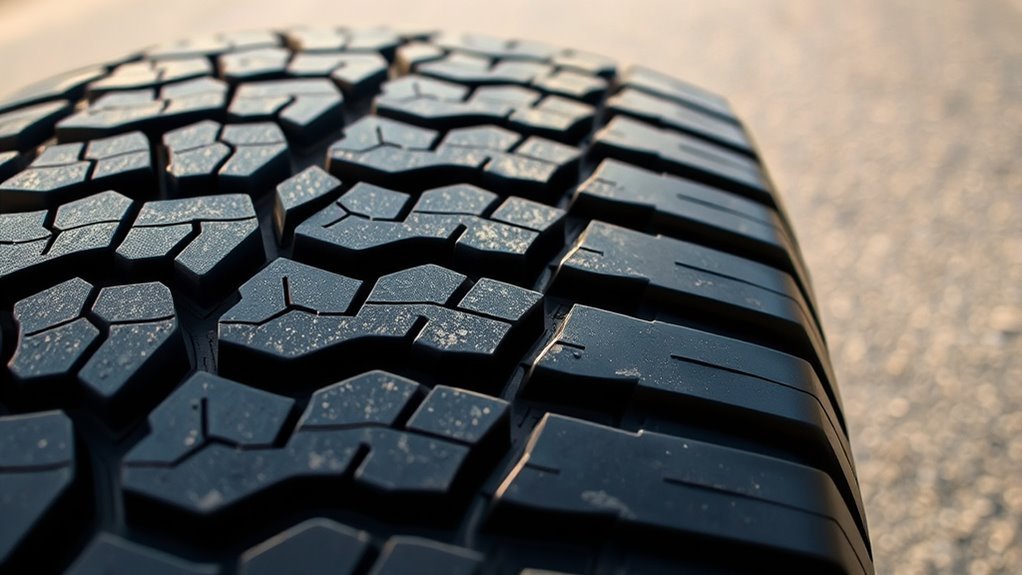
A cupped tire cannot grow the missing rubber back. The real question is whether the wear is minor enough to keep using the tire after the cause is fixed.
Start with tread depth. NHTSA says tires should be replaced when tread reaches 2/32 inch. You should also replace a tire if you see exposed cords, belt material, sidewall bulges, cracks, puncture damage near the sidewall, or tread separation.
If cupping is light, tread depth is healthy, and there is no structural damage, a shop may correct the root cause, rebalance the tires, rotate them, and monitor wear. The tire may still make some noise because the tread surface is already uneven.
If cupping is deep, the vibration remains after balancing, or the tire is worn near its limit, replacement is the safer choice. Replacing tires without fixing the cause, however, only starts the same wear pattern again.
[Products Worth Considering]

Steelman white tire marking crayons provide high-contrast, semi-permanent marks for repairing and inspecting tires and equipment. They write on wet or dry, smooth or coarse surfaces including rubber, metal, glass, and wood, making them ideal for puncture location and damage outlining. The lead- and zinc-free crayons resist weather and fading yet wipe away when you no longer need the marks.

Monitor tire tread wear with a smart, color-coded depth gauge that shows clear condition ranges at a glance. The bar is range marked for fast, easy readings, helping you maintain safer traction and performance. Each gauge is portable with a pocket clip, and the set includes 20 units for daily use and sharing.

Measure tire tread depth quickly and accurately with this LUMITECO dial gauge that reads in 1/32" increments up to 14/32". The color-coded green/yellow/red zones make it easy to judge tire wear and know when replacement is needed. A rugged, compact design with a protective pouch helps keep the gauge ready for use on cars, trucks, motorcycles, and more.
How to Fix 4Runner Tire Cupping: DIY vs. Professional
Use this order so you do not waste money on tires before fixing the root cause.
[Products Worth Considering]

The Ziopetru adjustable magnetic wheel alignment tool helps you check and restore camber and caster positioning after removing and reinstalling undercarriage components. With a clear leveling/bubble measurement system and an easy zeroing adjustment knob, it supports precise horizontal angle checking. The strong magnetic base mounts to metal surfaces for convenient use at home on cars, motorcycles, trucks, vans, and SUVs.

The Topeak SmartGauge D2 delivers precise digital tire pressure readings for bikes, motorcycles, and sports equipment up to 250 psi (17 bar). Its rotating SmartHead works with both Presta and Schrader valves, so you can check pressure quickly without adapters. The LCD display makes it easy to read results in psi, bar, or kg/cm² with an included CR2032 battery for immediate use.

Vigorder rubber cement glue delivers superior adhesion and cures quickly within about 30 seconds for seamless rubber bonding. Once cured, it helps provide a strong, durable, waterproof seal that holds up to vehicle weight, pressure, and heat. Suitable for cars, motorcycles, trucks, bicycles, and off-road tires, it’s designed for emergency patch and maintenance repairs.
DIY Checks You Can Do First
- Check cold tire pressure: Set all tires to the door-jamb specification unless your owner’s manual gives different instructions for your setup.
- Measure tread depth: Check several spots across each tire. Compare the inner edge, center, and outer edge.
- Feel the tread: A repeating dip pattern suggests cupping. Sharp sawtooth edges suggest feathering.
- Inspect for damage: Look for bubbles, cracks, nails, exposed cords, and uneven shoulder wear.
- Review rotation history: If rotations were skipped, uneven wear may be more advanced on one axle.
When to Use a Tire Shop or Mechanic
- Balance the tires: Do this if vibration appears at certain speeds or started after tire installation.
- Ask about road-force balancing: Use it when normal balancing does not solve a shake.
- Check alignment: Do this after new tires, suspension work, hard impacts, pulling, or uneven wear.
- Inspect suspension and steering: Have the shop check shocks, struts, bushings, ball joints, tie rods, wheel bearings, and steering linkage.
- Replace damaged tires: Do not rely on rotation to hide severe cupping or structural tire damage.
Pro Tip: If you buy new tires, schedule balancing and alignment at the same time, then ask the shop to inspect shocks, ball joints, bushings, and tie rods before the new tread starts wearing unevenly.
Preventing 4Runner Tire Cupping: A Simple Maintenance Plan
The best prevention plan is simple: keep the tires inflated, rotated, balanced, aligned, and supported by healthy suspension parts. Many 4Runner maintenance schedules, including Toyota’s 2024 U.S. 4Runner Warranty & Maintenance Guide, list tire rotation at 5,000 miles or 6 months. Always confirm the schedule for your model year, tire type, and driving conditions.
| Maintenance Task | Frequency | What to Do |
|---|---|---|
| Tire pressure check | Monthly at minimum | Check cold pressure and adjust to the door-jamb label. Recheck before long trips, towing, off-road driving, or major temperature swings. |
| Tire rotation | Every 5,000 to 8,000 miles, or your manual’s interval | Use the rotation pattern in your owner’s manual. Include the spare only if it matches the tire size, type, wear level, and manual guidance. |
| Tread inspection | Monthly | Look for scallops, feathering, one-sided wear, punctures, cracks, and tread depth near 2/32 inch. |
| Wheel balance | With new tires or when vibration appears | Balance all tire/wheel assemblies. Ask about road-force balancing if the shake continues. |
| Alignment check | After new tires, impacts, suspension work, pulling, or uneven wear | Correct toe, camber, and caster to the proper specifications for your model and setup. |
| Suspension and steering inspection | At service visits and after rough off-road use | Inspect shocks, struts, bushings, ball joints, tie rods, wheel bearings, steering linkage, and dust boots. |
[Products Worth Considering]

The Trivd Frol 1/2" air impact wrench delivers high performance torque up to 1500 ft-lbs with a twin hammer impact mechanism for strong, balanced blows. It features an ergonomic grip, compact lightweight design, and quick-stop control with 3 forward speeds up to 8000 RPM plus a reverse speed. Built for demanding automotive repair and tire shop work, the rear exhaust helps keep debris away from the surface.

Replace or upgrade your zero-turn lawn mower tires with a universal fit flat-free tire and wheel assembly in a convenient 2-pack. Smooth tread front-caster style helps turning with reduced turf damage, while flat-free design eliminates the maintenance and downtime of air-filled flats. The included adapter kit supports 5/8-inch axles and hub lengths from 3.4 to 5 inches for compatibility across most ZTR mowers.

This universal wheel alignment tool helps you accurately restore tire tilt angles after tire or suspension repairs using an adjustable camber gauge. It features a powerful magnetic base that firmly attaches to brake rotors for stationary, slip-free readings, improving consistency during measurement. Built from durable PC plastic, it resists wear and corrosion and is compact enough for car, truck, RV, and motorcycle alignment tasks.
Frequently Asked Questions
What is the most likely cause of scalloped or cupped tires?
The most likely causes are worn shocks or struts, wheel imbalance, alignment problems, loose suspension or steering parts, and incorrect tire pressure. On a 4Runner, off-road use, towing, and heavy cargo can make these issues show up faster.
Can an alignment fix cupped tires?
An alignment can fix one cause of cupping, but it cannot restore tread that has already worn away. If the tire is only lightly cupped, fixing the alignment and rotating or balancing the tire may make it usable. Deep cupping usually means replacement.
Is it safe to drive a 4Runner with cupped tires?
Light cupping may be safe for short local driving after inspection, but severe vibration, exposed cords, bulges, cracking, tread separation, or very low tread makes the tire unsafe. Avoid highway speeds and have the tire inspected right away.
How do I know if my 4Runner tire is cupped?
Look for repeating scooped patches across the tread. You may also feel a high-low pattern when you run your hand over the tire. Common driving symptoms include a rhythmic rumble, vibration at speed, and rougher ride quality.
How often should I rotate 4Runner tires to prevent cupping?
A common rotation interval is every 5,000 to 8,000 miles, and Toyota’s 2024 U.S. 4Runner maintenance guide lists tire rotation at 5,000 miles or 6 months. Your best interval is the one in your model-year manual, especially if you tow, carry heavy loads, or drive off-road.
Should I replace all four tires if one tire is cupped?
Not always. Replace the damaged tire if it is unsafe, but match tire size, load rating, speed rating, tread type, and tread depth as closely as possible. On 4WD systems, mismatched tire circumference can cause drivetrain stress, so ask a tire professional if only replacing one or two tires.
Conclusion
4Runner tire cupping is a warning sign, not just a cosmetic tread issue. Start with pressure, tread depth, rotation history, and visible damage. Then check balance, alignment, shocks, struts, bushings, ball joints, wheel bearings, and steering linkage. If the tire is deeply scalloped or structurally damaged, replace it after fixing the cause. That approach protects your tires, ride quality, braking stability, and suspension parts.
Sources
- Toyota 2024 4Runner Warranty & Maintenance Guide — supports 4Runner tire rotation, steering linkage, and maintenance inspection guidance.
- NHTSA TireWise — supports pressure checks, tread-depth safety, tire balance, alignment, and rotation guidance.
- Bridgestone Tire Cupping Guide — supports causes, symptoms, and repair-versus-replacement guidance for cupped tire wear.
- Michelin Tire FAQ — supports cupping causes, vibration warnings, and irreversible uneven-wear guidance.
- Michelin Wheel Alignment and Balancing Guide — supports balance and alignment effects on ride quality and tread wear.