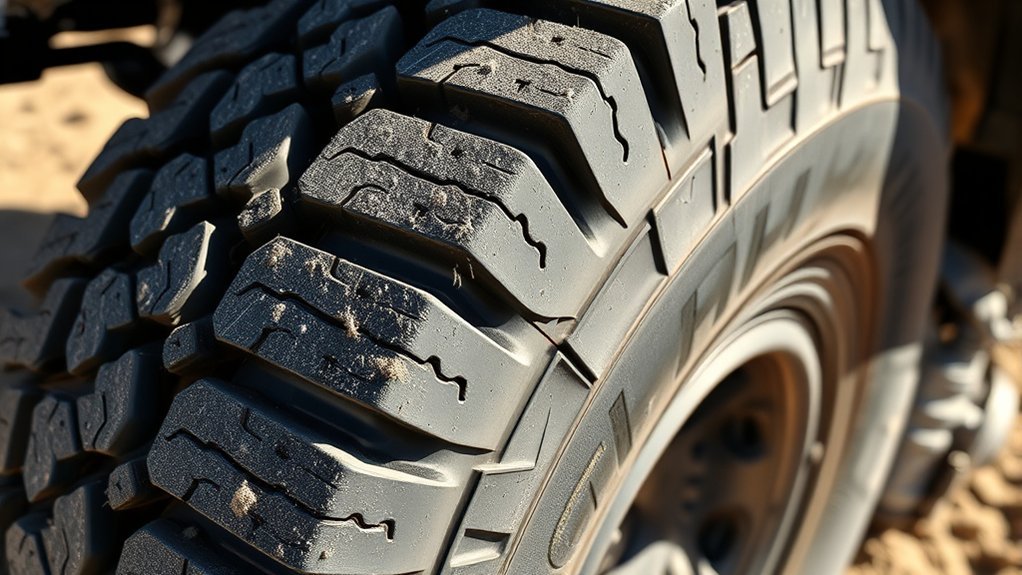
Tire cupping on your 4Runner shows up as scalloped, wavy, or scooped-out spots in the tread. It is more than a cosmetic tire issue: cupping usually means the tire is not staying in steady contact with the road because of a pressure, balance, alignment, steering, suspension, wheel, or rotation problem.
Quick Answer
4Runner tire cupping is uneven, scalloped tread wear that often causes humming, vibration, or a rough ride. Check cold tire pressure against the driver-door placard first, then inspect tread depth, balance, alignment, shocks, steering parts, and rotation history before deciding whether the tire can stay in service.
Key Takeaways
- Cupped tires usually point to a root cause such as worn shocks, loose steering parts, misalignment, imbalance, incorrect pressure, damaged wheels, or skipped rotations.
- Do not use a universal PSI number. Set your tires to the cold pressure listed on your 4Runner’s tire placard or owner’s manual.
- Cupped tread usually cannot be made perfectly smooth again, but fixing the root cause can prevent the next set of tires from wearing the same way.
- If cupping comes with strong vibration, visible damage, low tread, pulling, or poor braking traction, have the tires and suspension inspected before continuing normal driving.
At a Glance
| Time Required | 10–20 minutes for a driveway check; longer if a shop performs balancing, alignment, or suspension inspection. |
| Difficulty | Easy for visual checks and pressure checks; professional help recommended for alignment, balancing, steering, and suspension diagnosis. |
| Tools Needed | Tire pressure gauge, tread-depth gauge or penny, flashlight, gloves, and a service appointment if vibration, pulling, or suspension wear is suspected. |
| Cost | Visual and pressure checks are free if you own a gauge. Shop costs vary for balancing, alignment, suspension repair, or tire replacement. |
Understanding Tire Cupping: Causes, Effects, and Solutions for Your 4Runner
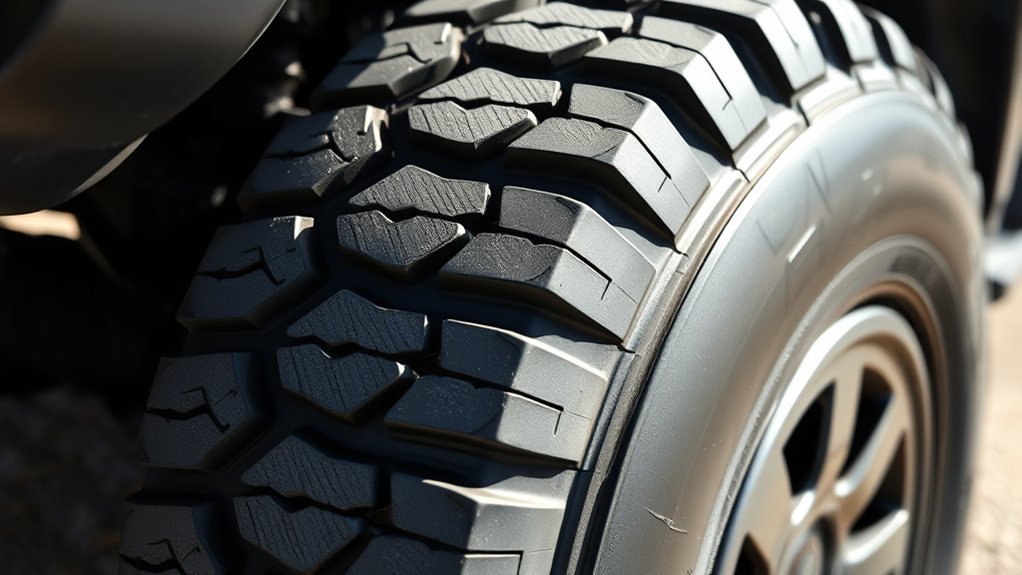
Tire cupping, also called scalloping, is an irregular wear pattern where sections of tread become higher and lower than the surrounding tread. Instead of wearing evenly across the tire, the tread develops small dips that may look like waves, bowls, or shallow craters.
On a Toyota 4Runner, this can be more noticeable if you drive on rough roads, tow, carry heavy gear, run aggressive all-terrain or mud-terrain tires, or air down for off-road trails and forget to re-inflate afterward. The tire itself is not always the original problem. Cupping is often a symptom of something else that lets the tire bounce, scrub, or hit the road unevenly.
The most reliable first step is to check the basics: pressure, tread depth, tire rotation history, balance, alignment, shocks, steering linkage, ball joints, control-arm bushings, and wheel condition. NHTSA tire-safety guidance recommends checking tire pressure at least monthly when tires are cold and using the pressure listed on the vehicle label or owner’s manual, not the pressure molded on the tire sidewall.
Note: The maximum PSI printed on the tire sidewall is not your everyday inflation target. Use the cold tire pressure on your 4Runner’s driver-door tire placard or the pressure listed in the owner’s manual for your exact tire size and load setup.
Identifying Early Signs of Tire Cupping
The earlier you catch tire cupping, the better your chance of saving the remaining tread and preventing damage to new tires. Do a slow visual and hand check when the tires are cold and the 4Runner is parked safely on level ground.
Common Visual Indicators
Look for uneven, scalloped dips along the tread blocks. These may appear as repeating high and low spots around the tire. On aggressive all-terrain or mud-terrain tires, cupping can hide between large tread blocks, so use a flashlight and inspect the full circumference of each tire.
- Small scooped-out dips on the tread surface
- One tread block worn lower than the next
- Feathered or rough tread edges
- Uneven wear on only one tire, one axle, or one side of the vehicle
- Tread that feels bumpy when you run your hand lightly over it
Driving Performance Changes
Cupped tires often become noisy before they look severe. You may hear a rhythmic humming, droning, or growling sound that changes with road speed. The 4Runner may also vibrate through the steering wheel, seat, or floor. If the vehicle pulls to one side, the steering wheel is off-center, or the vibration started after a pothole hit, trail impact, tire installation, or rotation, schedule a tire and suspension inspection.
Warning: Do not ignore sudden vibration, a strong pull, visible tire damage, exposed cords, a bulge, or very low tread. Slow down, avoid hard braking or sharp steering, and have the tire inspected before returning to normal driving.
Common Causes of Tire Cupping
Cupping is rarely random. It usually comes from a condition that makes the tire lose smooth, even contact with the road. The most common causes include:
- Worn shocks or struts: If the shock absorber cannot control wheel movement, the tire can bounce and slap the pavement, creating high and low tread spots.
- Loose steering or suspension parts: Worn tie-rod ends, ball joints, control-arm bushings, or wheel bearings can let the tire move in ways it was not designed to move.
- Wheel misalignment: Incorrect toe, camber, or caster can make the tire scrub instead of rolling cleanly.
- Out-of-balance tire and wheel assembly: An imbalanced assembly can vibrate at speed and contribute to uneven contact.
- Incorrect tire pressure: Underinflation and overinflation both change the contact patch and can speed up abnormal tread wear.
- Skipped tire rotations: Front, rear, steering, braking, and drive-axle loads are different. Rotations help even out those wear patterns.
- Damaged wheels or brake problems: Bent wheels, uneven brake grab, or other mechanical issues can cause abnormal tread wear.
- Hard use: Frequent off-road driving, heavy loads, towing, hard braking, pothole impacts, and aggressive cornering can accelerate wear if maintenance is already behind.
The U.S. Tire Manufacturers Association tire care guide lists improper inflation, wheel misalignment, lack of rotation, out-of-balance tire and wheel assemblies, damaged wheels, brake problems, worn shocks, and loose steering or suspension systems as conditions that can cause abnormal tread wear.
Is It Safe to Drive on Cupped 4Runner Tires?
Light cupping may not make the tire immediately unsafe, but it should still be inspected because it points to a root problem. Severe cupping can reduce ride quality, traction, braking confidence, and steering feel. It can also mask other issues, such as a bad wheel bearing or worn suspension part.
Do not judge safety by tread depth alone. A tire with enough tread can still need replacement if it has deep scalloping, a vibration that cannot be corrected, exposed cords, sidewall damage, cracking, a bulge, or poor wet-road traction. NHTSA also states that tires are not safe and should be replaced when the tread is worn down to 2/32 of an inch.
How to Diagnose Tire Cupping on a 4Runner
Use this order so you do not replace tires before fixing the cause.
Step 1: Inspect All Four Tires
Check the tread face, inner shoulder, outer shoulder, and sidewalls. Compare front to rear and left to right. One cupped tire may point to a local issue, while cupping across several tires may suggest pressure, rotation, alignment, or use-pattern problems.
Step 2: Check Cold Tire Pressure
Use a reliable tire gauge when the 4Runner has been parked for at least three hours. Set pressure to the tire placard or owner’s manual specification. If you run LT tires, upsized tires, or aftermarket wheels, ask a qualified tire shop to confirm the correct pressure for your load and tire construction.
Pro Tip: If you air down for trails, carry an inflator and re-inflate before highway driving. Driving long distances at trail pressure can overheat tires, change the contact patch, and speed up irregular wear.
Step 3: Check Balance and Wheel Condition
If vibration appears at certain speeds, after tire installation, after a rotation, or after a hard impact, have the tire and wheel assemblies balanced. Ask the shop to inspect for bent wheels, uneven tire wear, and tire damage while the wheels are off the vehicle.
Step 4: Check Alignment
Have the alignment checked if the 4Runner pulls, the steering wheel is off-center, the tires wear unevenly, or the vehicle recently hit a pothole, curb, rock, or trail obstacle. Alignment should also be checked after suspension work or ride-height changes.
Step 5: Inspect Suspension and Steering
Ask the technician to inspect shocks, struts, ball joints, control-arm bushings, tie-rod ends, wheel bearings, and steering linkage. Replacing cupped tires without fixing worn parts can make the new tires cup again.
Step 6: Decide Whether the Tire Can Stay in Service
Cupped tread usually will not become perfectly smooth again. If the tread depth is healthy, the tire has no structural damage, and the noise is minor, a shop may recommend correcting the cause and monitoring the tire. If cupping is deep, loud, or paired with vibration, low tread, damage, or poor traction, replacement is the safer choice.
How Cupped Tires Affect Your 4Runner’s Performance and Safety
When you notice cupped tires on your 4Runner, it is not just an appearance issue. Uneven tread contact can affect comfort, control, and wear on other components.
| Effect | What You May Notice | Why It Matters |
|---|---|---|
| Tire Noise | Humming, droning, or rhythmic rumbling | Can distract the driver and hide other mechanical sounds |
| Handling Issues | Pulling, wandering, or less stable cornering | May point to alignment, suspension, or steering problems |
| Vibration | Shake through the steering wheel, seat, or floor | Can increase driver fatigue and may signal imbalance or worn parts |
| Reduced Traction | Less confidence in rain, braking, or emergency maneuvers | Uneven tread contact can reduce grip when you need it most |
| Higher Repair Costs | Tires cup again after replacement | The root cause must be fixed or the new tires can wear the same way |
Proven Strategies to Manage and Prevent Tire Cupping
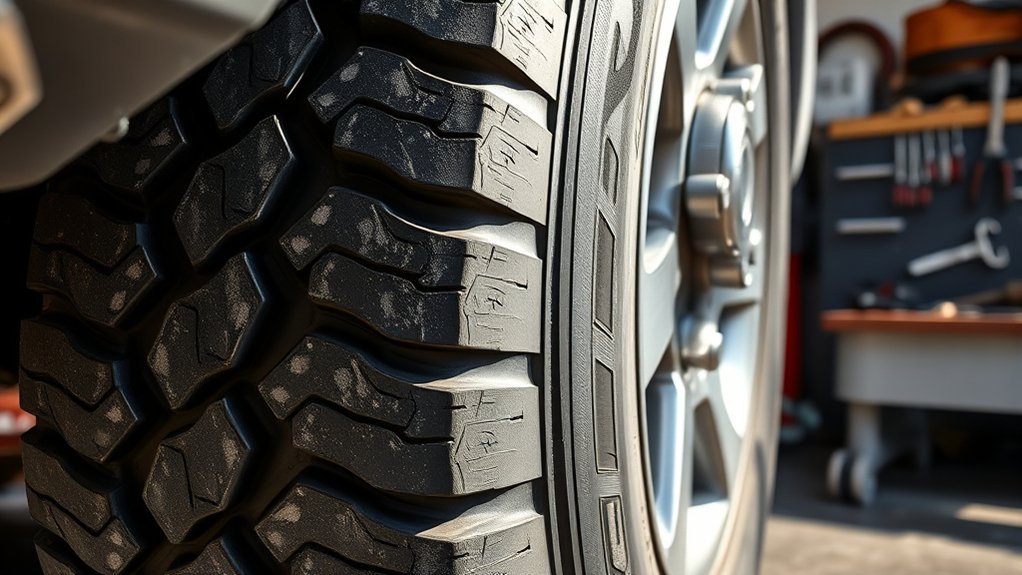
The best way to prevent cupping is to keep each tire rolling straight, balanced, properly inflated, and supported by healthy suspension parts. These habits make the biggest difference.
[Products Worth Considering]

Vigorder rubber cement glue delivers superior adhesion and cures quickly within about 30 seconds for seamless rubber bonding. Once cured, it helps provide a strong, durable, waterproof seal that holds up to vehicle weight, pressure, and heat. Suitable for cars, motorcycles, trucks, bicycles, and off-road tires, it’s designed for emergency patch and maintenance repairs.

Measure tire tread depth quickly and accurately with this LUMITECO dial gauge that reads in 1/32" increments up to 14/32". The color-coded green/yellow/red zones make it easy to judge tire wear and know when replacement is needed. A rugged, compact design with a protective pouch helps keep the gauge ready for use on cars, trucks, motorcycles, and more.

The Ziopetru adjustable magnetic wheel alignment tool helps you check and restore camber and caster positioning after removing and reinstalling undercarriage components. With a clear leveling/bubble measurement system and an easy zeroing adjustment knob, it supports precise horizontal angle checking. The strong magnetic base mounts to metal surfaces for convenient use at home on cars, motorcycles, trucks, vans, and SUVs.
Routine Tire Maintenance Practices
- Rotate on schedule: Toyota’s 2024 4Runner Warranty & Maintenance Guide schedules maintenance every 5,000 miles or six months and includes tire rotation in the maintenance log. Check your own model-year guide for the exact schedule.
- Check tread monthly: Look for cupping, uneven shoulder wear, cuts, bulges, exposed cords, and treadwear bars.
- Balance when needed: Rebalance tires after new tire installation, vibration, hard impacts, or wheel service.
- Record what changed: Note the mileage, tire position, pressure, and any noise or vibration after each rotation.
Suspension System Inspections
Inspect shocks, struts, ball joints, bushings, tie rods, wheel bearings, and steering linkage whenever cupping appears. A worn shock or loose joint can make the tire bounce and wear unevenly. If you have recently installed a lift, changed control arms, added heavy armor, changed wheel offset, or switched tire size, schedule a professional alignment and suspension check.
Optimal Tire Pressure Management
Proper tire pressure is essential, but the correct number depends on your specific 4Runner, tire size, load, and tire construction. Toyota tells owners to check the Specifications section of the owner’s manual or the Tire Information placard, usually on the driver-side door post. Check pressure cold at least monthly and before long trips, towing, heavy loads, or off-road travel.
Do not rely only on TPMS. The U.S. Tire Manufacturers Association explains that TPMS warnings often appear only after a tire is significantly underinflated, so a monthly gauge check is still needed.
Alignment and Balancing After Impacts
A 4Runner that sees potholes, washboard roads, rocks, ruts, or curb strikes needs extra attention. If cupping appears soon after an impact, do not just rotate the tires and hope the noise goes away. Ask for a balance check, wheel inspection, and alignment check so the tire does not keep wearing unevenly.
Best Practices for Tire Maintenance on Your 4Runner
Use your owner’s manual and tire placard as the final authority, then build your routine around these basics:
| Maintenance Task | Recommended Frequency | Why It Helps |
|---|---|---|
| Tire pressure check | Monthly, before long trips, and after airing down | Keeps the contact patch correct and helps prevent irregular wear |
| Tread and sidewall inspection | Monthly | Catches cupping, cuts, bulges, cracking, and low tread early |
| Tire rotation | Follow your Toyota maintenance guide; many schedules use 5,000-mile service intervals | Helps even out front/rear and drive-axle wear |
| Wheel balance | When vibration appears or after tire/wheel service | Reduces speed-related vibration and uneven contact |
| Alignment check | When pulling, uneven wear, steering changes, impacts, or suspension work occur | Prevents the tire from scrubbing across the road |
| Suspension and steering inspection | When cupping, clunks, vibration, looseness, or uneven tire wear appears | Finds worn parts before they ruin more tires |
[Products Worth Considering]

Measure tyre tread depth precisely with a digital gauge that reads in both MM and inches, helping you monitor safe driving conditions. The large LCD screen is easy to operate, and the compact tool fits for cars, trucks, and motorcycles. It provides high accuracy with a 0-25.4mm range and includes a 1-year warranty for added peace of mind.

Monitor tire tread wear with a smart, color-coded depth gauge that shows clear condition ranges at a glance. The bar is range marked for fast, easy readings, helping you maintain safer traction and performance. Each gauge is portable with a pocket clip, and the set includes 20 units for daily use and sharing.

These pre-assembled 15x6.00-6 front tire and wheel assemblies are designed for quick replacement on riding lawn mowers and lawn tractors. Built with natural rubber pneumatic tires and turf-friendly tread for solid traction and improved shock absorption. A thickened welded rim and 3/4" sintered iron bushing help provide stable, heavy-duty support for everyday mowing use.
When to Replace Cupped Tires on a 4Runner
Replace cupped tires if any of these conditions apply:
- Tread is at or below 2/32 inch anywhere on the tire.
- Cupping is deep enough to cause persistent vibration or loud noise.
- The tire has a bulge, exposed cords, sidewall damage, cracking, or puncture damage that cannot be repaired properly.
- The tire no longer grips well in rain, braking, or evasive maneuvers.
- A shop finds internal tire damage, belt separation, or a structural problem.
- You have a 4WD setup and replacement would leave tire sizes, tread depths, or tread patterns mismatched beyond manufacturer or tire-shop guidance.
If only one tire is cupped, replacing all four is not automatically required. The right answer depends on tread depth, tire age, cupping severity, drivetrain setup, and whether the remaining tires match closely enough for safe 4WD operation.
[Products Worth Considering]

Replace or upgrade your zero-turn lawn mower tires with a universal fit flat-free tire and wheel assembly in a convenient 2-pack. Smooth tread front-caster style helps turning with reduced turf damage, while flat-free design eliminates the maintenance and downtime of air-filled flats. The included adapter kit supports 5/8-inch axles and hub lengths from 3.4 to 5 inches for compatibility across most ZTR mowers.

The SAFELIFE dial tire tread depth gauge measures tread depth in 1/32 inch increments with clear, easy-to-read 2-inch dial face. Color zones using a traffic light system help you quickly judge whether tread is low, marginal, or ample for safer driving. Built with a durable zinc cast body and a metal detect probe for precise, comfortable use across cars, motorcycles, trucks, and buses.

The Topeak SmartGauge D2 delivers precise digital tire pressure readings for bikes, motorcycles, and sports equipment up to 250 psi (17 bar). Its rotating SmartHead works with both Presta and Schrader valves, so you can check pressure quickly without adapters. The LCD display makes it easy to read results in psi, bar, or kg/cm² with an included CR2032 battery for immediate use.
Frequently Asked Questions
Should I replace all tires when one is cupped?
Not automatically. If one tire is lightly cupped and the tread is still safe, a shop may recommend fixing the cause and monitoring it. Replace tires if cupping is severe, tread is low, damage is present, vibration remains, or your 4WD setup requires closer tire matching.
Can tire cupping be fixed?
The uneven tread usually cannot be restored to perfect shape. You can often fix the cause, such as bad alignment, imbalance, worn shocks, incorrect pressure, or loose steering parts. After that, the tire may be monitored or replaced depending on severity.
What does a cupped tire sound like on a 4Runner?
A cupped tire often makes a humming, droning, growling, or rhythmic thumping noise that changes with road speed. Because wheel bearings can also make a growling sound, do not diagnose by noise alone. Inspect the tread and have the tire, wheel bearing, and suspension checked if the sound persists.
Can bad shocks cause 4Runner tire cupping?
Yes. Worn shocks or struts can fail to control wheel movement, which lets the tire bounce and contact the road unevenly. That bouncing can create scalloped tread wear, especially on heavy SUVs, rough roads, or vehicles with oversized tires.
Will rotating tires stop cupping?
Rotation can help prevent small wear differences from getting worse, but it will not fix a bad shock, loose part, bent wheel, imbalance, or alignment problem. If cupping has already started, rotate only after you inspect and correct the root cause.
Conclusion
Tire cupping on a 4Runner is a warning sign, not just a tread pattern. Start with cold tire pressure, tread inspection, and rotation history, then check balance, alignment, shocks, steering parts, wheels, and brakes. Fix the cause before buying new tires, and use your Toyota maintenance guide and door placard as the final reference for service intervals and pressure settings. A little early attention can save your tires, protect your suspension, and keep your 4Runner driving the way it should.
Sources
- NHTSA TireWise: Tire Safety Ratings and Awareness — supports cold-pressure checks, monthly inspection, tread-depth replacement threshold, balancing, alignment, and rotation guidance.
- Toyota Support: Recommended Tire Pressure — supports using the owner’s manual or Tire Information placard for the correct vehicle pressure.
- Toyota 2024 4Runner Warranty & Maintenance Guide — supports Toyota maintenance intervals and tire-rotation placement in the maintenance log.
- U.S. Tire Manufacturers Association: Tire Care Essentials — supports pressure, tread, rotation, alignment, and TPMS guidance.
- U.S. Tire Manufacturers Association Tire Care & Safety Guide — supports mechanical causes of abnormal tire wear, including misalignment, imbalance, worn shocks, damaged wheels, brake problems, and loose steering/suspension parts.
- Bridgestone: Tire Cupping — supports cupping causes, prevention steps, and replacement/repair limitations.