
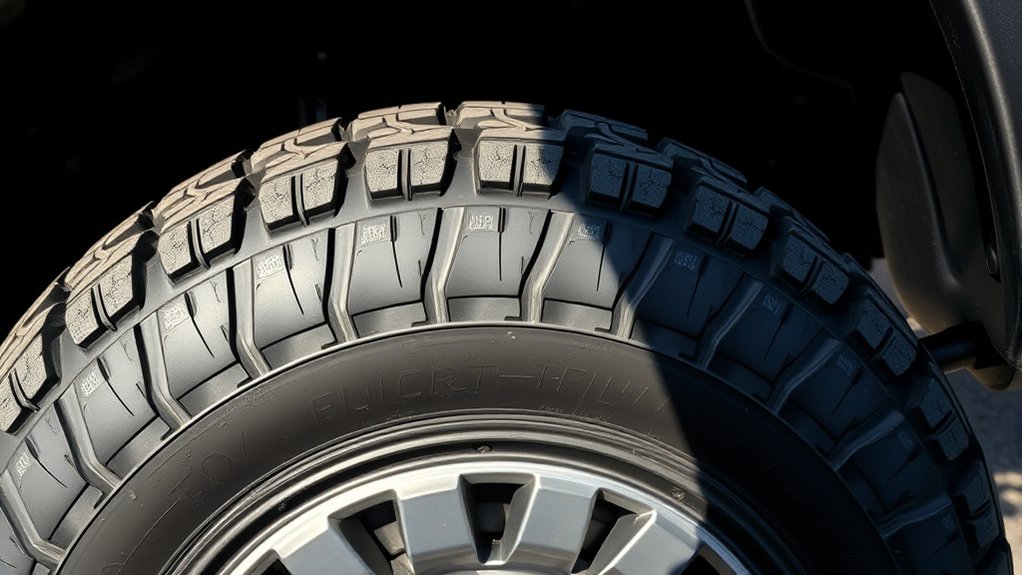
Tire cupping on your Toyota Tacoma means the tread has developed uneven, scalloped low spots instead of wearing smoothly across the tire. You may feel vibration through the steering wheel or seat, hear louder road noise, or see small scooped patches around the tread. The usual causes include poor wheel alignment, worn shocks or suspension parts, tire imbalance, incorrect tire pressure, hard off-road use, or driving too long without rotation.
Quick Answer
Toyota Tacoma tire cupping is usually caused by uneven tire contact with the road. Start by checking tire pressure, tread depth, and visible tire damage. Then have the tires balanced, the alignment checked, and the shocks, struts, ball joints, tie rods, bushings, and wheel bearings inspected before replacing the tires.
Key Takeaways
- Cupped tires usually show a repeating scalloped or scooped tread pattern every few inches.
- Misalignment, worn shocks, loose steering parts, tire imbalance, and incorrect pressure are the most common causes.
- Tacomas used for towing, hauling, gravel roads, trail driving, lift kits, or oversized tires need closer tire and suspension checks.
- Fix the cause before installing new tires, or the new set can start cupping too.
- Do not keep driving on tires with exposed cords, bulges, tread separation, rapid pressure loss, or severe vibration.
At a Glance
| Time Required | 10 minutes for a visual check; 45–90 minutes for professional balance, alignment, and suspension inspection. |
| Difficulty | Basic for spotting symptoms; professional tools are needed for balancing, alignment, and suspension diagnosis. |
| Tools Needed | Tire pressure gauge, tread depth gauge or penny, flashlight, and a qualified shop for balance, alignment, and suspension checks. |
| Cost | Visual inspection is free. Shop cost depends on whether you need balancing, alignment, suspension repair, or tire replacement. |
What Is Tire Cupping and Why It Matters?
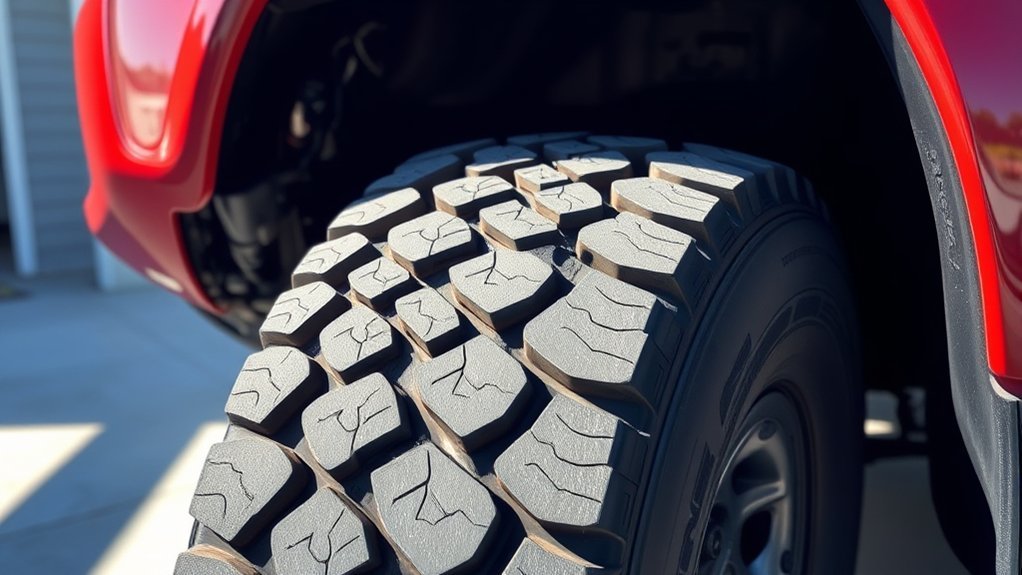
Tire cupping, also called tire scalloping, is an irregular tread wear pattern where parts of the tread look scooped out every few inches. Instead of a smooth, even surface, the tire develops a repeating high-low pattern that you can often see or feel by running your hand lightly over the tread.
According to Bridgestone, cupping usually happens when a vehicle or tire condition prevents smooth, consistent road contact. On a Tacoma, that can involve alignment angles, tire balance, worn shocks, loose steering parts, incorrect pressure, or a combination of issues.
Cupping matters because the tire may no longer roll smoothly. You may feel vibration at highway speeds, hear a humming or thumping noise, or notice that your Tacoma pulls, wanders, or feels less planted. If you ignore the root cause, the wear can spread and shorten the life of the tire set.
Warning: Stop driving and get the tire inspected right away if you see exposed cords, sidewall bulges, tread separation, deep cracks, rapid pressure loss, or severe vibration. Those signs can point to tire damage that is no longer safe for normal road use.
Common Causes of Tire Cupping in Toyota Tacoma
Tire cupping in your Toyota Tacoma usually starts when the tire bounces, scrubs, or carries load unevenly across the tread. The cause may be one problem, but many trucks have more than one issue at the same time. For example, a worn shock can make an existing balance problem feel worse, while a small alignment change can accelerate wear on tires that already have uneven tread.
Misalignment Issues
Wheel alignment controls how your tires meet the road. If the toe, camber, or caster angles sit outside specification, the tire can scrub instead of rolling cleanly. That can create feathering, edge wear, or scalloped patches, especially if the truck also has loose steering or worn suspension parts.
Common alignment warning signs include pulling to one side, an off-center steering wheel, uneven tread wear, and steering that feels vague after hitting a pothole, curb, rut, or trail obstacle. Alignment is also worth checking after suspension repairs, lift-kit installation, new tires, or a hard impact.
| Alignment Issue | What It Can Do to Tires |
|---|---|
| Toe out or toe in | Creates scrub, feathering, and fast irregular wear |
| Camber out of spec | Loads one side of the tread more than the other |
| Caster or thrust-angle problem | Can cause pulling, wandering, or uneven tire contact |
Worn Suspension Components
Worn shocks, struts, bushings, ball joints, tie rod ends, control-arm parts, or wheel bearings can let the tire move more than it should. When the tire bounces or changes angle as it rolls, the tread can hit the pavement unevenly and form a cupped pattern.
This issue is common on high-mileage trucks, lifted Tacomas, and trucks that spend time on washboard roads, gravel, job sites, or trails. Extra payload, towing, and oversized tires can also add stress to suspension and steering parts. If you only replace the tires without fixing loose or worn parts, the next set may wear the same way.
Tire Imbalance and Wheel Runout
An unbalanced tire and wheel assembly can create repeated vibration as it spins. Over time, that vibration can contribute to uneven contact and make cupping more noticeable. Balance should be checked if the vibration started after a tire rotation, new tire installation, wheel repair, pothole hit, or trail impact.
A bent wheel, damaged tire, mud packed inside the wheel, or uneven tire construction can also create a similar vibration. That is why a shop should inspect the wheel and tire together instead of assuming alignment is the only cause.
Incorrect Tire Pressure
Incorrect tire pressure changes the shape of the tire’s contact patch. Underinflation can add heat and shoulder wear, while overinflation can reduce the tire’s ability to absorb bumps. NHTSA recommends checking tire pressure at least once a month when tires are cold and using the pressure listed on the driver-door label or in the owner’s manual, not the maximum pressure printed on the tire sidewall.
If your Tacoma has TPMS, do not rely on it as your only tire check. NHTSA notes that TPMS is not a substitute for regular tire maintenance because the warning may not appear until pressure is already significantly low.
How to Identify Tire Cupping Symptoms
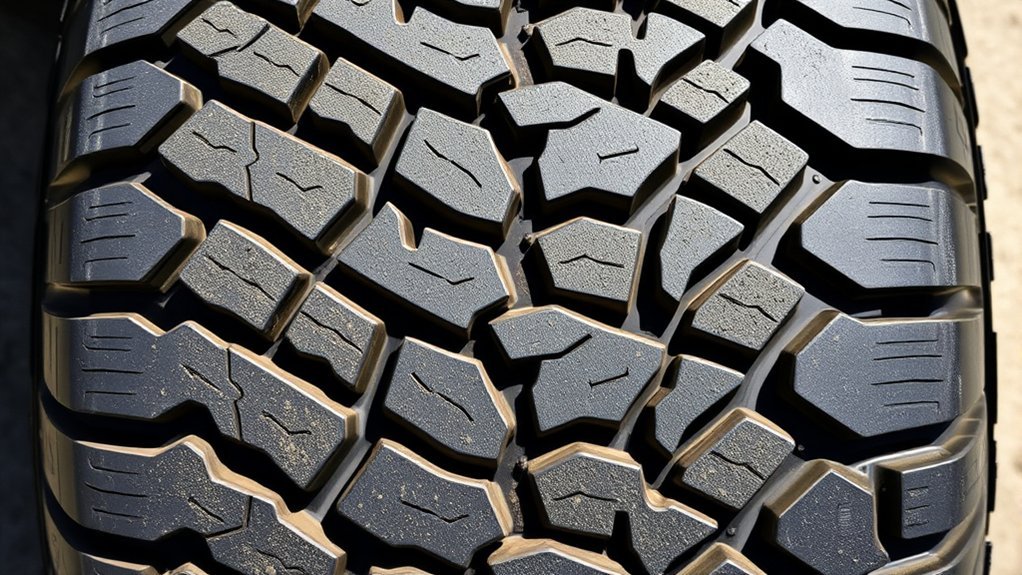
You can often spot tire cupping before it becomes severe. Park your Tacoma on level ground, turn the steering wheel to expose the front tread, and inspect each tire with a flashlight. Look for repeated scooped patches, alternating high and low tread blocks, or a wavy pattern around the tire.
Then run your hand gently across the tread surface. A cupped tire may feel uneven, choppy, or bumpy instead of smooth. Use gloves if the tread is sharp or damaged, and do not touch any exposed cords or separated rubber.
You may also notice these driving symptoms:
- Steering wheel vibration that gets stronger at certain speeds
- Seat or floor vibration from a rear tire problem
- Humming, droning, or thumping road noise
- Pulling, drifting, or wandering on a straight road
- Uneven tread depth from one tire to another
- New vibration after tire rotation, balancing, or an impact
Tire cupping can be confused with feathering, one-edge wear, center wear, or normal all-terrain tire noise. If you are not sure what pattern you see, have a tire shop or alignment technician inspect all four tires before replacing anything.
The Role of Suspension and Shocks in Tire Wear
Your Tacoma’s suspension keeps the tires pressed against the road with controlled movement. When shocks or struts lose damping ability, the tire can bounce after bumps instead of staying planted. That bouncing can create repeated high-impact spots on the tread.
Impact of Worn Shocks
Worn shocks do not always leak visibly, but they can still lose control. If your Tacoma keeps bouncing after a bump, dives more than usual during braking, squats heavily while accelerating, or feels unsettled on rough roads, the shocks may need inspection.
Worn shocks can lead to:
- Erratic tire contact and faster irregular tread wear
- More vibration through the steering wheel, seat, or floor
- Longer settling time after bumps or dips
- Reduced stability when towing, hauling, or driving on uneven roads
- Extra stress on other suspension and steering parts
Importance of Suspension Maintenance
Suspension maintenance protects both tire life and handling. A technician should inspect shocks, struts, bushings, tie rods, ball joints, control arms, wheel bearings, and springs if cupping appears. The goal is to find looseness, leaks, worn rubber, damaged joints, bent parts, or play that changes the tire’s road contact.
| Component | Signs of Wear | Recommended Action |
|---|---|---|
| Shocks | Bouncing, leaking, nose dive, poor control | Inspect and replace if worn |
| Struts | Uneven tire wear, noise, weak damping | Inspect during suspension service |
| Bushings | Cracking, splitting, clunking, looseness | Replace if damaged |
| Tie rods and ball joints | Play, clunks, wandering, uneven wear | Replace before alignment if loose |
| Alignment | Pulling, off-center steering, irregular wear | Adjust after worn parts are repaired |
Note: Do the suspension and steering inspection before the final alignment. Aligning a truck with loose tie rods, worn ball joints, or weak shocks can hide the real problem only temporarily.
How Misalignment Affects Tire Wear and Performance
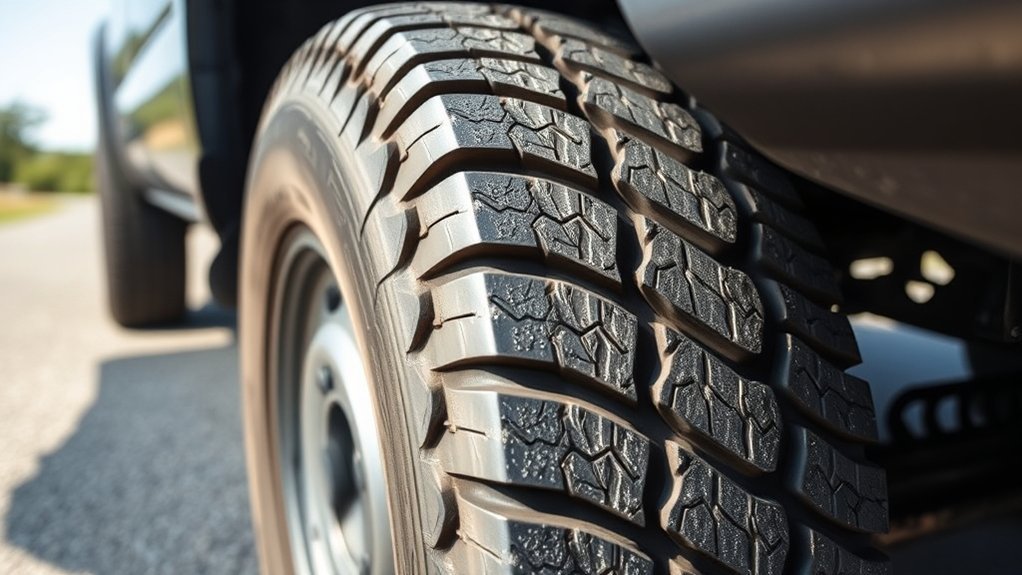
Misalignment affects how each tire points and how much load each tread area carries. When the angles are wrong, the tire can drag slightly across the pavement. That scrub creates heat and uneven wear, and it can turn a small tread irregularity into a bigger cupping problem.
NHTSA says tire balancing and wheel alignment help maximize tire life and vehicle safety. It also notes that wheel alignment helps prevent a vehicle from veering right or left on a straight, level road.
On a Tacoma, alignment can change after:
- Hitting a curb, pothole, rock, rut, or trail obstacle
- Installing a lift kit, leveling kit, or aftermarket control arms
- Changing tire size or wheel offset
- Replacing shocks, tie rods, ball joints, or control-arm parts
- Towing or hauling heavy loads often
- Driving many miles on washboard or rough roads
If you drive a lifted Tacoma or use oversized tires, ask the alignment shop to check that the final settings work with your suspension setup. A truck can be “within range” on a printout but still need closer inspection if it pulls, wanders, or keeps wearing tires unevenly.
Diagnosing Tire Cupping and Vibration Issues
Use a simple order of checks so you do not replace good parts or miss the real cause. Start with the tire because visible damage can make the truck unsafe. Then move to pressure, balance, alignment, and suspension.
- Inspect the tread and sidewalls. Look for scalloped tread, exposed cords, cracks, bulges, nails, cuts, or tread separation.
- Check cold tire pressure. Use the driver-door Tire and Loading Information Label or your Tacoma owner’s manual for the correct cold PSI.
- Measure tread depth. NHTSA says tires are not safe and should be replaced when tread reaches 2/32 inch.
- Road-test carefully. Note whether the vibration is in the steering wheel, seat, or floor, and when it starts.
- Rotate only if safe. If the tire has severe cupping or visible damage, inspect before rotating it to another position.
- Balance the tires. Check for missing weights, bent wheels, mud packed in wheels, or tire/wheel runout.
- Inspect suspension and steering. Check shocks, bushings, ball joints, tie rods, control arms, springs, and wheel bearings.
- Align the truck. Do this after loose or worn parts are repaired.
- Decide whether to replace the tires. Severe cupping, unsafe tread depth, exposed cords, or persistent vibration usually means replacement.
Pro Tip: Ask the shop for the alignment printout and keep it with your tire records. If cupping returns, the before-and-after numbers can help identify whether the problem is alignment drift, worn parts, or tire balance.
Top Maintenance Tips to Extend Your Tire Life
Good maintenance cannot fix a damaged tire, but it can reduce the chance of cupping returning. The main habits are simple: keep pressure correct, rotate on schedule, balance when needed, inspect suspension, and align the truck when symptoms or service events call for it.
Regular Tire Rotation
Rotating your tires helps spread wear more evenly. NHTSA recommends checking your owner’s manual for the correct rotation interval and pattern. If the manufacturer recommends it, rotating every 5,000 to 8,000 miles, or sooner when uneven wear appears, can help reduce irregular wear.
Tire rotation is especially helpful if your Tacoma sees mixed use: weekday commuting, weekend trails, towing, gravel roads, or heavy cargo. These conditions do not load all four tires equally.
Suspension System Checks
Check the suspension any time you notice cupping, clunking, bouncing, pulling, or vibration. You should also inspect it after major off-road impacts, hard pothole hits, lift-kit work, steering repairs, or new tire installation.
For a Tacoma that works hard, combine tire service with a basic underbody check. Look for leaking shocks, torn bushings, damaged boots, loose tie rods, bent brackets, wheel-bearing play, and uneven ride height. Fix these issues before buying new tires.
Choosing the Right Tires for Your Tacoma
The right tire for your Toyota Tacoma depends on your model year, trim, wheel size, load needs, and driving style. Do not assume one tire size fits every Tacoma. Use the Tire and Loading Information Label on the driver’s door area and your Toyota owner’s manual to confirm the correct size, load rating, pressure, and service guidance.
Choose tires based on how you actually use the truck:
- Mostly pavement: Highway-terrain or all-season tires usually ride quieter and wear more evenly.
- Mixed pavement and trails: All-terrain tires add grip but may need closer rotation and pressure checks.
- Mud or rocky trails: More aggressive tread can be useful, but it may create more noise and irregular wear if not rotated often.
- Towing or hauling: Make sure the tire load rating matches your truck and payload needs.
- Lifted or modified trucks: Confirm clearance, alignment range, wheel offset, and suspension geometry before installing larger tires.
Cheap tires, mismatched tires, incorrect load ratings, and poor installation can all make vibration harder to diagnose. When replacing cupped tires, balance the new set and align the truck after fixing worn suspension or steering parts.
[Products Worth Considering]

These aluminum alloy tire valve stem caps with an O-ring seal help protect valve stems from corrosion while adding a clean, stylish look to your vehicle. The universal fit works across cars, trucks, motorcycles, bicycles, and more, making them an easy upgrade for everyday driving and off-road use. Installation is quick, and the included four-pack keeps all your tires dressed and protected.

Monitor tire tread wear with a smart, color-coded depth gauge that shows clear condition ranges at a glance. The bar is range marked for fast, easy readings, helping you maintain safer traction and performance. Each gauge is portable with a pocket clip, and the set includes 20 units for daily use and sharing.

The Ziopetru adjustable magnetic wheel alignment tool helps you check and restore camber and caster positioning after removing and reinstalling undercarriage components. With a clear leveling/bubble measurement system and an easy zeroing adjustment knob, it supports precise horizontal angle checking. The strong magnetic base mounts to metal surfaces for convenient use at home on cars, motorcycles, trucks, vans, and SUVs.
Solutions for Tire Cupping Problems
The best fix depends on how bad the cupping is and what caused it. Mild cupping may become less noticeable after you correct the cause, rotate the tires, and rebalance them. Severe cupping usually will not wear smooth enough to restore a quiet ride, especially if the tread has deep high-low spots.
Use this repair order:
- Remove unsafe tires from service. Replace tires with exposed cords, bulges, tread separation, or tread worn to 2/32 inch.
- Set cold pressure correctly. Use the driver-door placard or owner’s manual.
- Balance all affected tires. Include wheel inspection for bends, runout, mud buildup, or missing weights.
- Inspect suspension and steering. Replace worn shocks, loose tie rods, bad ball joints, damaged bushings, or worn bearings.
- Perform alignment after repairs. Ask for a printout and check that the steering wheel is centered.
- Rotate on schedule. Follow your Tacoma’s manual and tire manufacturer guidance.
- Recheck wear after a few hundred miles. If vibration or cupping returns, the root cause is still present.
If only one tire is cupped, do not assume the tire is the only problem. A single bad shock, bent wheel, loose component, or alignment issue can damage one tire faster than the others. If all four tires show irregular wear, look harder at rotation history, tire pressure, balance, and overall alignment.
[Products Worth Considering]

Replace or upgrade your zero-turn lawn mower tires with a universal fit flat-free tire and wheel assembly in a convenient 2-pack. Smooth tread front-caster style helps turning with reduced turf damage, while flat-free design eliminates the maintenance and downtime of air-filled flats. The included adapter kit supports 5/8-inch axles and hub lengths from 3.4 to 5 inches for compatibility across most ZTR mowers.

Vigorder rubber cement glue delivers superior adhesion and cures quickly within about 30 seconds for seamless rubber bonding. Once cured, it helps provide a strong, durable, waterproof seal that holds up to vehicle weight, pressure, and heat. Suitable for cars, motorcycles, trucks, bicycles, and off-road tires, it’s designed for emergency patch and maintenance repairs.

Accurately measure tire tread depth with a calibrated gauge marked from 0 to 1 inch in 1/32 inch increments. The color-coded bar helps you quickly identify tread condition ranges, supporting safe driving for trucks, motorcycles, automobiles, and passenger vehicles.
Can Cupped Tires Be Fixed or Should You Replace Them?
Cupped tires cannot be “repaired” in the same way a small puncture can be patched. The tread has already worn unevenly. What you can fix is the cause of the cupping. After that, a mildly cupped tire may quiet down somewhat as it continues to wear, but it may never feel perfectly smooth again.
Replace the tire if the cupping is deep, the vibration remains strong after balancing, the tire has structural damage, or tread depth is near the legal safety limit. Also replace tires in axle pairs or full sets when needed to keep handling predictable, especially if tread depth differs greatly from side to side.
[Products Worth Considering]

Measure tire tread depth quickly and accurately with this LUMITECO dial gauge that reads in 1/32" increments up to 14/32". The color-coded green/yellow/red zones make it easy to judge tire wear and know when replacement is needed. A rugged, compact design with a protective pouch helps keep the gauge ready for use on cars, trucks, motorcycles, and more.

ETENWOLF T300 is a calibrated digital tire pressure gauge for accurate readings from 3 to 200 PSI across light and heavy-duty vehicles. It includes thermal compensation for reliable performance in extreme cold or heat, with an auto shut-off to extend battery life and an LED for easier reading. The sturdy design supports rugged everyday use, making it ideal for pickups, RVs, and industrial applications.

The SAFELIFE dial tire tread depth gauge measures tread depth in 1/32 inch increments with clear, easy-to-read 2-inch dial face. Color zones using a traffic light system help you quickly judge whether tread is low, marginal, or ample for safer driving. Built with a durable zinc cast body and a metal detect probe for precise, comfortable use across cars, motorcycles, trucks, and buses.
What Tacoma Owners Wish They Knew About Tire Cupping
Many Tacoma owners notice cupping only after the truck gets noisy. By that point, the tread pattern may already be set. The earlier you check vibration, pressure, tread depth, and suspension play, the better your chance of saving the tires.
- Do not skip balance checks. A tire can look fine but still shake at speed.
- Do not align over worn parts. Replace loose steering or suspension parts first.
- Do not guess tire pressure. Use the door placard and check pressure when tires are cold.
- Do not ignore modifications. Lift kits, bigger tires, and wheel offset changes can affect alignment and wear.
- Do not wait for TPMS. Check pressure manually every month.
- Do not install new tires before fixing the cause. New tires can cup quickly if the truck still has the same problem.
The safest fix is not just replacing cupped tires. It is finding why the tire stopped rolling smoothly in the first place.
Frequently Asked Questions
What is the most likely cause of scalloped or cupped tires?
The most likely causes are worn shocks or suspension parts, wheel misalignment, tire imbalance, incorrect tire pressure, or a combination of these issues. On a Tacoma, off-road use, towing, lift kits, and oversized tires can also make irregular tread wear appear sooner.
Can I keep driving with cupped tires?
You may be able to drive briefly to a tire shop if the cupping is mild and there is no severe vibration or visible damage. Do not keep driving on tires with exposed cords, bulges, tread separation, rapid pressure loss, or strong vibration.
Will an alignment fix tire cupping?
An alignment can stop one cause of cupping, but it will not restore tread that has already worn into a scalloped pattern. You may also need balancing, suspension repair, steering repair, or tire replacement.
How often should I rotate Tacoma tires to prevent cupping?
Follow your Tacoma owner’s manual and tire manufacturer guidance. NHTSA says that when the vehicle manufacturer recommends rotation, 5,000 to 8,000 miles is a common interval, or sooner if uneven wear appears.
Why do my Tacoma tires cup after installing a lift kit?
A lift kit can change suspension geometry, tire angle, and steering behavior. If the alignment is not corrected, or if the new tires are heavier or larger, the truck may develop vibration and uneven wear faster.
Conclusion
Tire cupping on a Toyota Tacoma is a warning sign, not just a cosmetic tread issue. The tire is telling you that road contact is uneven, and the cause may be alignment, balance, shocks, steering parts, suspension wear, tire pressure, or truck modifications.
Start with a careful tire inspection, check cold pressure, measure tread depth, and note any vibration or noise. Then have the tires balanced, the alignment checked, and the suspension inspected before buying new tires. When you fix the cause first, your Tacoma will ride smoother, handle better, and give the next set of tires a much better chance of wearing evenly.
Sources
- NHTSA TireWise — tire pressure, tread depth, rotation, balance, alignment, tire size, TPMS, and tire-safety guidance.
- Bridgestone Tire Cupping Guide — definition, common causes, symptoms, and prevention of tire cupping.
- Toyota Manuals and Warranties — official Toyota owner’s manual access for vehicle-specific tire and maintenance information.
