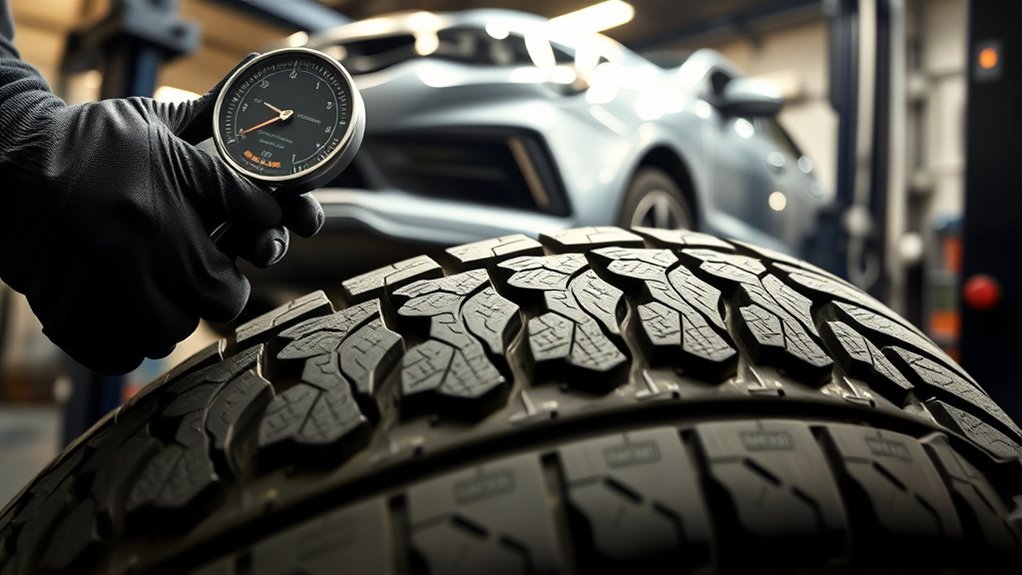
Tire cupping on a Hyundai Sonata means the tread has worn into uneven, scalloped dips instead of staying smooth and even. You may hear a rhythmic humming noise, feel vibration through the steering wheel or seat, or see patchy low spots around the tread. The fix is not just replacing tires. First, find the cause: pressure, balance, alignment, suspension wear, or missed rotations.
Quick Answer
Hyundai Sonata tire cupping is usually caused by worn shocks or struts, wheel imbalance, poor alignment, incorrect tire pressure, or skipped rotations. Check cold tire pressure first, inspect tread depth and damage, then have the wheels balanced, alignment checked, and suspension inspected before replacing badly cupped tires.
Key Takeaways
- Tire cupping looks like small scooped or scalloped dips around the tread and often causes humming, rumbling, or vibration.
- The most common causes are worn suspension parts, out-of-balance wheels, incorrect alignment, wrong tire pressure, and delayed tire rotations.
- Hyundai recommends rotating tires every 12,000 km or 7,500 miles, or sooner if irregular wear appears.
- A tire with severe cupping, visible cord, bulges, or tread at the wear bars should be inspected immediately and may need replacement.
At a Glance
| Time Required | 10–15 minutes for a home inspection; same-day shop diagnosis in most cases; repair time depends on alignment, balancing, suspension, or tire replacement needs. |
| Difficulty | Easy to inspect at home; professional-level for wheel balancing, alignment, and suspension repair. |
| Tools Needed | Tire pressure gauge, tread depth gauge or penny, flashlight, gloves, and a qualified shop with a wheel balancer and alignment rack. |
| Cost | Low for pressure and tread checks; moderate for balancing or alignment; higher if shocks, struts, steering parts, or tires must be replaced. |
Understanding Tire Cupping in Your Hyundai Sonata
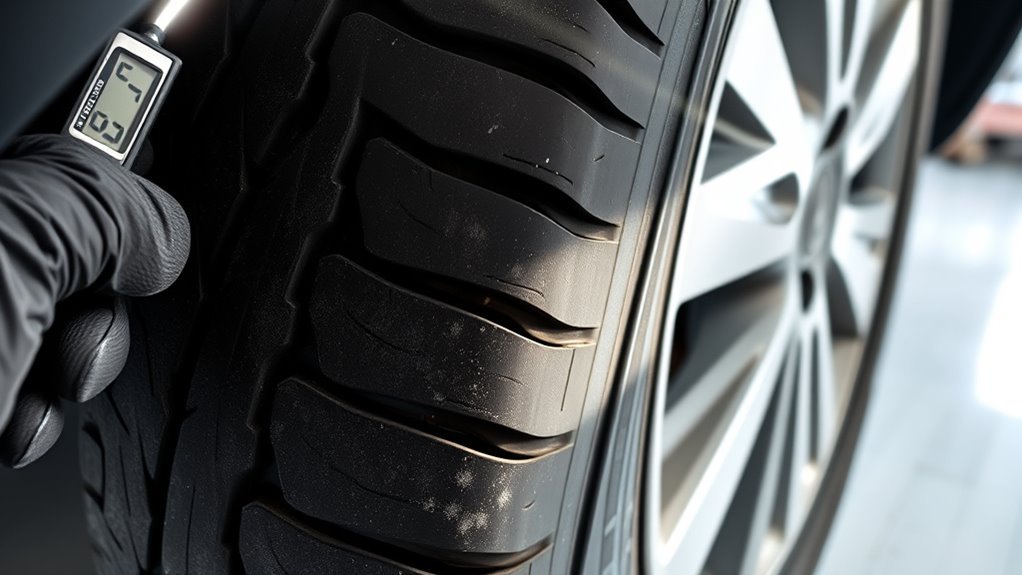
Tire cupping, also called tire scalloping, is an irregular tread wear pattern where parts of the tread look scooped out every few inches. On a Sonata, it may show up as a humming or rumbling sound that changes with road speed, vibration in the steering wheel, or a rougher ride than usual.
The important point is this: cupping is usually a symptom, not the root problem. According to Bridgestone tire maintenance guidance, tire cupping often starts when the tire does not maintain smooth, consistent contact with the road. That can happen because of tire, wheel, alignment, suspension, or maintenance issues.
Note: Cupping is not the same as every type of uneven tire wear. Feathering, heel-toe wear, edge wear, and center wear can look different and point to different causes. If the wear pattern is not obvious, have a tire technician inspect it.
Causes of Tire Cupping in Hyundai Sonatas
Tire cupping in Hyundai Sonatas often comes from one or more problems that make the tire bounce, vibrate, scrub, or carry weight unevenly. Finding the actual cause matters because new tires can cup again if the suspension, balance, pressure, or alignment problem is left unfixed.
Worn Shocks, Struts, or Suspension Parts
Worn shocks, struts, bushings, ball joints, or steering components can let the tire move too much instead of staying planted on the road. That repeated bouncing can create high and low spots in the tread. If your Sonata feels floaty, bouncy, unstable over bumps, or noisy on uneven pavement, ask the shop to inspect the suspension before blaming the tires alone.
Wheel Balance Problems
An out-of-balance tire and wheel assembly can cause repeated vibration as the wheel spins. Over time, that vibration may contribute to uneven tread wear or make existing cupping more noticeable. Balance is especially worth checking after a tire installation, tire rotation, pothole hit, or wheel repair.
Alignment Issues
Poor alignment can make a tire scrub across the road instead of rolling straight. The result may be pulling, off-center steering, rapid shoulder wear, feathering, or cupping-like irregular wear. The U.S. Tire Manufacturers Association notes that misaligned wheels can cause uneven, rapid tread wear and should be corrected when signs such as pulling appear.
Incorrect Tire Pressure
Underinflation or overinflation changes the tire’s contact patch. That can increase heat, reduce control, and create irregular wear. Use the cold tire pressure listed on your Sonata’s Tire and Loading Information label on the driver’s side door edge or door post, not the maximum PSI printed on the tire sidewall.
Skipped or Delayed Tire Rotations
Front and rear tires do different jobs, especially on front-wheel-drive vehicles. Front tires handle more steering and much of the braking load, so they often wear faster. Hyundai’s owner guidance says to rotate the tires every 12,000 km or 7,500 miles, or sooner if irregular wear develops. NHTSA also advises checking the owner’s manual and rotating sooner if uneven wear appears.
Signs of Tire Cupping: What to Look For
Start with a slow visual and hand inspection of each tire. Run your hand lightly over the tread surface and look for repeated dips, scallops, or patchy low spots. Use caution because damaged tread can have sharp edges or exposed material.
- Scalloped tread: Small scooped-out dips appear around the tire, often every few inches.
- Rhythmic humming or rumbling: The sound often rises with vehicle speed and may be mistaken for a wheel bearing.
- Steering wheel or seat vibration: Vibration may point to balance problems, cupping, bent wheels, or worn suspension parts.
- Pulling or drifting: This can signal alignment trouble, tire damage, or uneven tire pressure.
- Rough ride: A bouncy or choppy ride can happen when cupped tires or weak dampers are present.
Warning: Do not ignore severe vibration, visible fabric or cord, sidewall bulges, tread separation, or tires worn to the treadwear indicators. Hyundai’s tire guidance says tires with bumps, bulges, visible fabric, or visible cord should be replaced.
How to Fix Tire Cupping Issues
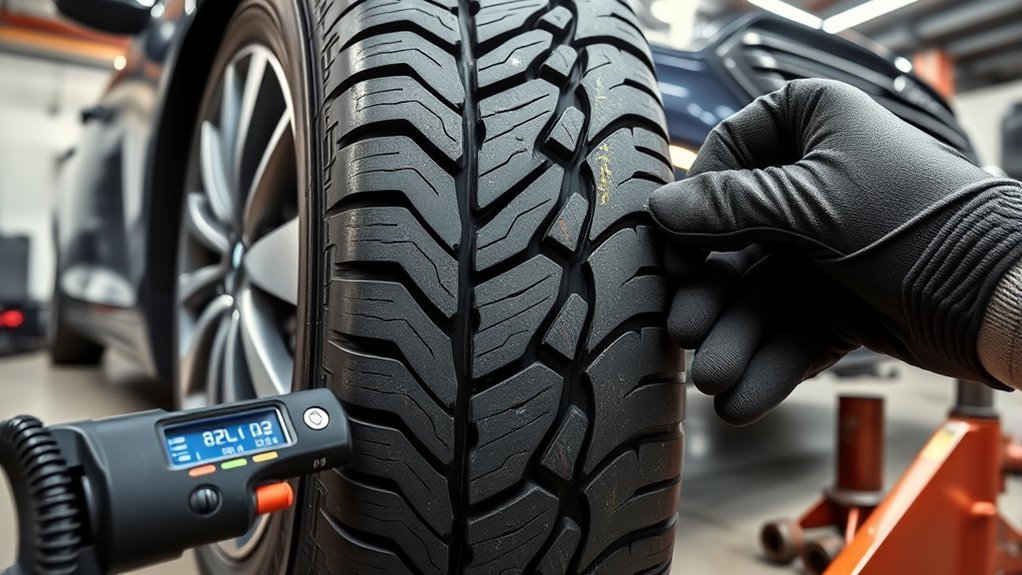
Fixing tire cupping on a Hyundai Sonata means correcting the cause first, then deciding whether the damaged tires can stay in service. A tire that is already cupped will not grow the missing tread back. Minor noise may improve after rotation and correction of the root cause, but severe cupping usually means tire replacement.
- Check cold tire pressure. Park the Sonata for at least three hours, then set all tires to the PSI on the driver-side door label. NHTSA recommends checking pressure at least once a month when tires are cold.
- Inspect tread depth and damage. Look for scallops, exposed cords, bulges, nails, cracks, and treadwear indicators. USTMA says tires should be replaced when tread reaches 2/32 inch or the wear bars are flush with the tread.
- Have the wheels balanced. If you feel vibration or the cupping appeared after tire service, balancing should be checked.
- Check alignment. Alignment is especially important if the Sonata pulls, the steering wheel is off-center, or the tread is wearing faster on one side.
- Inspect shocks, struts, steering, and suspension. Ask for a hands-on inspection for worn, loose, leaking, or damaged components.
- Rotate only if the tires are safe. If the tires have usable tread and no dangerous damage, rotate them according to Hyundai guidance or the tire shop’s recommendation for your drivetrain and tire type.
- Replace badly cupped tires. If the tire is noisy, heavily scalloped, low on tread, or damaged, replacement is the safest long-term fix.
Pro Tip: Do not buy new tires until the shop checks balance, alignment, and suspension. New tires can develop the same cupping pattern if the root cause is still on the car.
[Products Worth Considering]

The SAFELIFE dial tire tread depth gauge measures tread depth in 1/32 inch increments with clear, easy-to-read 2-inch dial face. Color zones using a traffic light system help you quickly judge whether tread is low, marginal, or ample for safer driving. Built with a durable zinc cast body and a metal detect probe for precise, comfortable use across cars, motorcycles, trucks, and buses.

Measure tire tread depth quickly and accurately with this LUMITECO dial gauge that reads in 1/32" increments up to 14/32". The color-coded green/yellow/red zones make it easy to judge tire wear and know when replacement is needed. A rugged, compact design with a protective pouch helps keep the gauge ready for use on cars, trucks, motorcycles, and more.

Accurately measure tire tread depth with a calibrated gauge marked from 0 to 1 inch in 1/32 inch increments. The color-coded bar helps you quickly identify tread condition ranges, supporting safe driving for trucks, motorcycles, automobiles, and passenger vehicles.
Can You Drive With Cupped Tires?
You may be able to drive a short distance to a repair shop if the cupping is mild and there are no bulges, exposed cords, severe vibrations, or low-tread warnings. However, cupped tires can reduce comfort, increase noise, and make it harder for the tire to maintain even contact with the road.
If the steering wheel shakes badly, the car wanders, the tire has visible damage, or the tread is near the wear bars, treat it as a safety issue. Slow down, avoid highway speeds if possible, and have the tire inspected as soon as you can.
When to Replace Cupped Tires
Replacement is usually the right choice when cupping is deep enough to cause constant noise or vibration, when the tire is worn to 2/32 inch, when treadwear indicators are flush, or when there is visible cord, fabric, bulging, or tread separation. Replacement is also smart if the cupping remains noisy after the underlying mechanical problem has been corrected.
Monthly tire checks are not just about tire life. Pressure, tread depth, visible damage, rotation, balancing, and alignment all affect how safely your Sonata stays connected to the road.
[Products Worth Considering]

Monitor tire tread wear with a smart, color-coded depth gauge that shows clear condition ranges at a glance. The bar is range marked for fast, easy readings, helping you maintain safer traction and performance. Each gauge is portable with a pocket clip, and the set includes 20 units for daily use and sharing.

Malco tire mounting and demounting lubricant is a ready-to-use tire lube formulated to reduce friction during tire installation for passenger cars, light trucks, farm tires, and heavy-duty equipment. It provides rust-inhibiting protection to help reduce corrosion on rims and wheels, and helps support proper tire bead seating during inflation to reduce air leakage. The silicone-free, soap-free formula is whitewall safe to help prevent discoloration on whitewall tires and sensitive sidewall markings.

AstroAI’s heavy-duty digital tire pressure gauge delivers quick, accurate readings with 0.1 increments and a secure valve-stem seal. It features a green backlit LCD and built-in flashlight for easy use in low light, plus an ergonomic non-slip stainless-steel design. The wide 0–230 PSI range works across common vehicle tires, with unit selection and an auto shut-off to save battery.
Preventing Tire Cupping in Your Hyundai Sonata
Preventing tire cupping is easier than fixing it after the tread has already been damaged. Build these habits into your Sonata maintenance routine:
- Check tire pressure monthly. Use a gauge when the tires are cold and follow the driver-side door label.
- Inspect tread monthly. Look for uneven wear, high and low spots, cracks, bulges, punctures, and exposed material.
- Rotate on schedule. Follow Hyundai’s 7,500-mile guidance or rotate sooner if uneven wear appears.
- Balance when needed. Balance tires at installation and whenever vibration appears after service or road impact.
- Check alignment after symptoms. Pulling, uneven wear, off-center steering, or a hard pothole hit are good reasons to schedule an alignment check.
- Inspect suspension during tire service. Worn shocks, struts, bushings, and steering parts can ruin good tires quickly.
- Use the correct tire size and load rating. Match the owner’s manual, tire placard, or a qualified tire professional’s recommendation.
[Products Worth Considering]

The Ziopetru adjustable magnetic wheel alignment tool helps you check and restore camber and caster positioning after removing and reinstalling undercarriage components. With a clear leveling/bubble measurement system and an easy zeroing adjustment knob, it supports precise horizontal angle checking. The strong magnetic base mounts to metal surfaces for convenient use at home on cars, motorcycles, trucks, vans, and SUVs.

Replace or upgrade your zero-turn lawn mower tires with a universal fit flat-free tire and wheel assembly in a convenient 2-pack. Smooth tread front-caster style helps turning with reduced turf damage, while flat-free design eliminates the maintenance and downtime of air-filled flats. The included adapter kit supports 5/8-inch axles and hub lengths from 3.4 to 5 inches for compatibility across most ZTR mowers.

This manual duck head tire changer kit makes tire installation and removal simpler by letting you embed the duck head into the tire with applied pressure. The integrated design and durable steel construction help reduce friction and improve efficiency and safety during use. Suitable for 16–21 inch wheels, it’s convenient for cars, trucks, SUVs, and ATV tires, with 24-hour after-sales support.
Troubleshooting Hyundai Sonata Tire Cupping Symptoms
| What You Notice | Likely Cause | Best Next Step |
| Humming or rumbling that gets louder with speed | Cupped tire, uneven tread, or wheel bearing noise | Inspect tread by hand and have a shop confirm the noise source. |
| Steering wheel vibration | Wheel balance, tire damage, bent wheel, or uneven tread | Check tire condition and schedule wheel balancing. |
| Car pulls to one side | Alignment, tire pressure mismatch, or tire damage | Set cold pressure first, then check alignment if pulling remains. |
| Repeated scalloped dips around the tread | Cupping from suspension, balance, alignment, pressure, or rotation issues | Inspect suspension, balance wheels, check alignment, and replace unsafe tires. |
| Wear mostly on one shoulder | Alignment issue or chronic underinflation | Correct pressure and schedule an alignment check. |
Frequently Asked Questions
How do you get rid of tire cupping on a Hyundai Sonata?
You get rid of tire cupping by fixing the cause first. Check cold tire pressure, inspect tread and damage, balance the wheels, check alignment, and inspect shocks, struts, steering, and suspension parts. If the tire is badly scalloped, noisy, low on tread, or damaged, replacement may be needed.
What is the most common cause of cupped tires?
There is not one universal cause. Worn shocks or struts, out-of-balance wheels, poor alignment, incorrect tire pressure, and skipped rotations can all cause or worsen cupping. On a Sonata, a technician should check the tires, wheels, alignment, and suspension together.
What is the most likely cause of scalloped or cupped tires?
Scalloped or cupped tires often point to a tire that is not staying in steady contact with the road. Worn suspension parts and wheel imbalance are common suspects, but alignment and tire pressure should also be checked before replacing the tires.
Can tire cupping be fixed without replacing the tires?
Sometimes minor cupping can become less noticeable after the root cause is corrected and the tires are rotated, but the missing tread cannot be restored. Severe cupping, low tread, visible damage, or ongoing vibration usually means the affected tires should be replaced.
How often should Hyundai Sonata tires be rotated?
Hyundai recommends rotating tires every 12,000 km or 7,500 miles, or sooner if irregular wear develops. Always follow the owner’s manual and any tire-specific instructions, especially if your Sonata has directional tires or different front and rear tire sizes.
Is it safe to drive with cupped tires?
Mild cupping may allow a short drive to a repair shop, but severe vibration, visible cord, bulges, tread separation, or tread worn to the indicators is not safe to ignore. Have the tire inspected before normal driving, especially highway driving.
What kind of car is prone to tire cupping?
Any car can develop tire cupping if it has worn suspension parts, wheel imbalance, poor alignment, incorrect tire pressure, or neglected tire rotations. The issue is not limited to the Hyundai Sonata, but regular Sonata maintenance helps prevent it.
Conclusion
Tire cupping in your Hyundai Sonata is a warning sign that the tire is wearing unevenly and may not be staying in smooth contact with the road. Do not treat it as normal tire noise. Check pressure and tread first, then have the balance, alignment, and suspension inspected. Once the cause is fixed, replace any tire that is badly cupped, damaged, or worn to its limits. Staying ahead of tire pressure checks, rotations, and suspension inspections will help your Sonata ride smoother, stay quieter, and use its tires more evenly.
Sources
- Hyundai Owner’s Manual — Tire Rotation — Hyundai tire rotation interval, balance check, abnormal wear causes, and tire replacement warnings.
- NHTSA — June Is Tire Safety Month — Monthly tire pressure, tread, damage, rotation, balancing, and alignment safety guidance.
- NHTSA TireWise — Federal tire safety and consumer tire-care information.
- U.S. Tire Manufacturers Association — Tire Care Essentials — Tire pressure, tread depth, rotation, and alignment best practices.
- Bridgestone — Tire Cupping: Causes, Problems and Prevention — Cupping definition, causes, repair limits, and prevention guidance.
- Tire Industry Association — Tire Rotation — Tire rotation intervals and common rotation patterns.