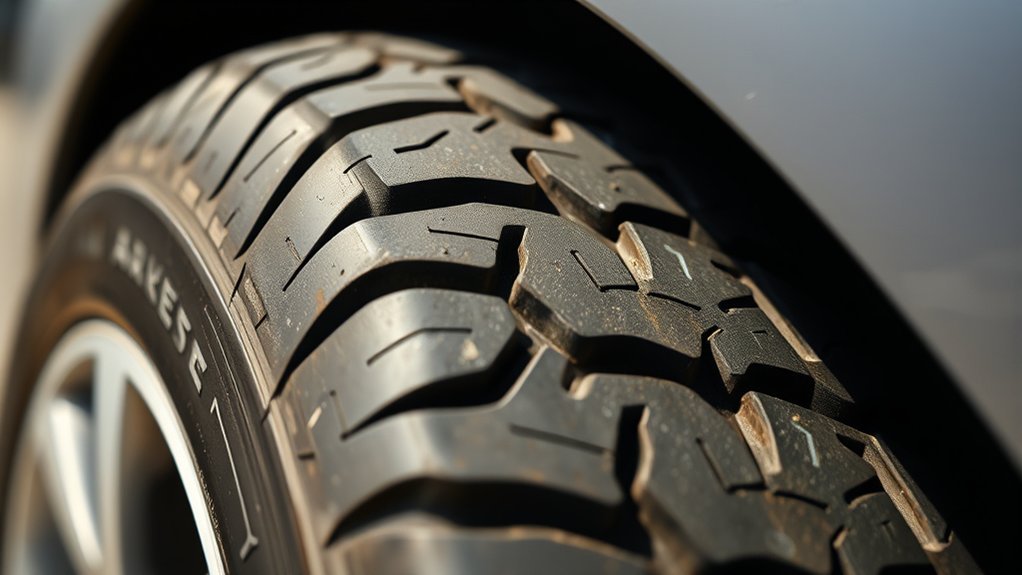
Tire cupping on a Honda Accord means the tread has worn in repeating high-and-low spots instead of staying smooth across the tire. You may notice a scalloped tread pattern, a humming or growling sound, vibration at highway speed, or a rougher ride. Cupping usually points to an underlying problem such as worn shocks or struts, wheel imbalance, poor alignment, improper inflation, or skipped tire rotations.
Quick Answer
Honda Accord tire cupping is most often caused by worn suspension parts, wheel imbalance, alignment problems, incorrect tire pressure, or long gaps between tire rotations. Fix the root cause first, then replace the tire if the tread is deeply scalloped, noisy, vibrating, damaged, or at 2/32 inch of tread depth.
Key Takeaways
- Cupped tires have uneven scalloped dips that can cause noise, vibration, reduced grip, and faster tire wear.
- The most common causes are worn shocks or struts, wheel imbalance, alignment issues, incorrect pressure, and delayed rotation.
- Check tire pressure cold using the PSI on your Accord’s driver-door placard, not a generic number.
- After inflating, replacing, or rotating tires on many Accord models, recalibrate the TPMS through the vehicle’s menu.
- Severely cupped tires usually cannot be restored; correcting the cause prevents the new tires from wearing the same way.
At a Glance
| Time Required | 10–20 minutes for a basic driveway inspection; 30–90 minutes for a shop inspection, balance check, or alignment check. |
| Difficulty | Easy for inspection; professional help recommended for alignment, balancing, suspension, and tire replacement. |
| Tools Needed | Tire pressure gauge, tread depth gauge or penny, flashlight, gloves, and a safe flat parking spot. |
| Cost | DIY inspection is low-cost. Shop diagnosis, balancing, alignment, suspension work, and tire replacement vary by location, tire size, tire brand, and repair needs. |
Understanding Tire Cupping: The Risks and Solutions
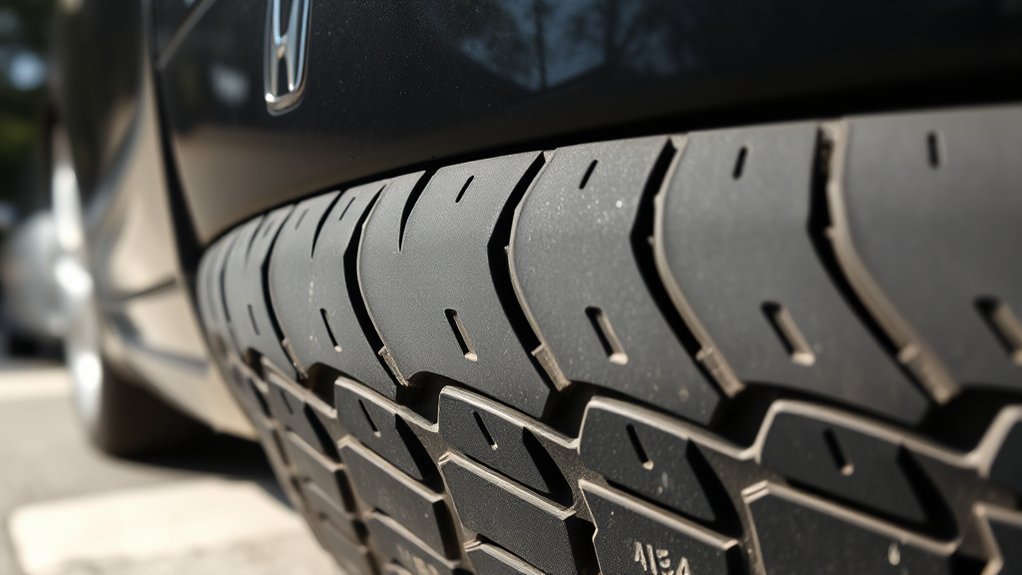
Tire cupping, also called scalloping, happens when sections of tread wear lower than the surrounding tread. Instead of a smooth contact patch, the tire develops dips that can slap the road as the wheel turns. That can create a rhythmic hum, vibration, or rough ride.
The safety risk depends on severity. Light cupping may mainly cause noise. Deep cupping can reduce contact with the road, worsen wet traction, and make braking or handling less predictable. If you see exposed cords, a sidewall bulge, tread separation, severe vibration, or tread at 2/32 inch, the tire should be replaced rather than driven normally.
According to NHTSA TireWise, tire maintenance such as proper inflation, rotation, balance, and alignment helps tires last longer and improves safety. For a Honda Accord, the best approach is simple: inspect the tire, find the root cause, correct the mechanical issue, and then decide whether the tire is still usable.
Warning: Do not keep driving at highway speed on a tire with exposed cords, a bubble, a split, a flat condition, severe vibration, or tread at 2/32 inch. Use a spare if equipped and safe to do so, or arrange roadside assistance.
Main Causes of Tire Cupping in Honda Accords
Honda Accord tire cupping usually comes from a problem that makes the tire bounce, scrub, or hit the pavement unevenly. The most common causes include:
- Worn shocks or struts: Weak damping lets the tire bounce instead of staying planted. Michelin notes that cupping can point to worn parts, wheel balance problems, or suspension and steering service needs.
- Wheel imbalance: An out-of-balance tire can hop at speed, creating repeating high-low wear spots.
- Alignment outside specification: Incorrect toe or camber can make the tire scrub instead of rolling cleanly. Rear toe problems can be especially easy to miss because the steering wheel may still feel straight.
- Incorrect tire pressure: Underinflation or overinflation changes the tire’s contact patch and can speed up uneven wear.
- Delayed tire rotation: Front-wheel-drive Accords put different loads on front and rear tires. Rotating tires helps distribute wear more evenly.
- Worn bushings, ball joints, control arms, or wheel bearings: Loose or worn components can let the tire move in ways it should not.
- Low-quality, damaged, or out-of-round tires: A tire defect or impact damage can make vibration and uneven tread wear worse.
Warning Signs Your Back Tires Are Cupping
Rear tire cupping on a Honda Accord can be harder to notice than front tire cupping because it may not shake the steering wheel. Look and listen for these signs:
- Scalloped tread: Repeating scooped or dipped areas around the tire, often easier to feel than see.
- Humming, growling, or droning noise: The sound often gets louder with speed and may be mistaken for a wheel bearing.
- Seat or floor vibration: Rear cupping may show up as vibration through the seat instead of the steering wheel.
- Uneven rear wear: One rear tire may look worse than the other if rear toe, camber, or a suspension part is off.
- Bouncy or floaty ride: Worn rear shocks or struts can let the tire hop, especially over rough pavement.
Run your hand lightly across the tread from front to back and side to side. A healthy tread feels even. A cupped tire feels like a series of high and low patches. Use gloves if the tread has sharp edges or debris.
How to Spot Tire Cupping Like a Pro
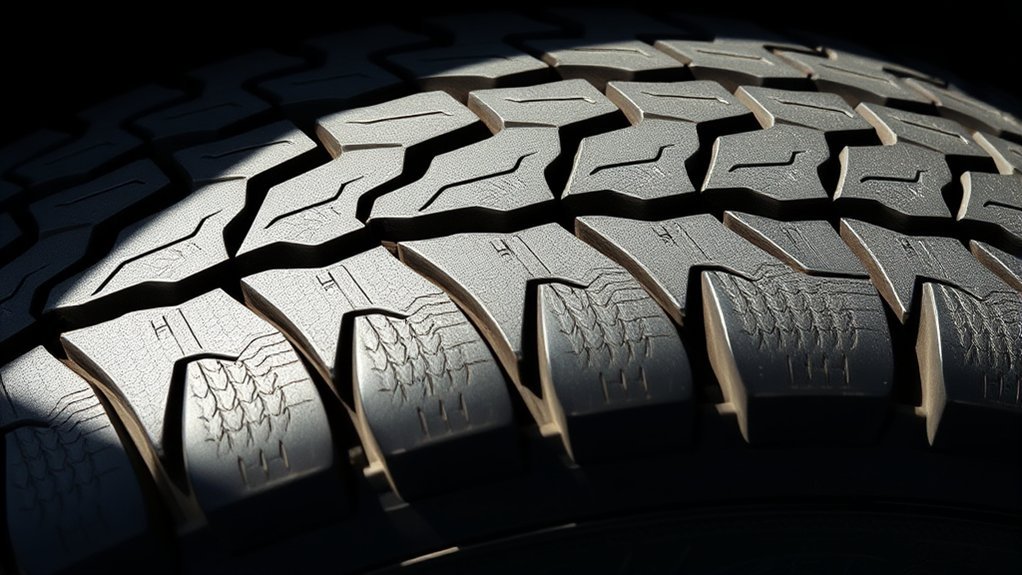
Use this order so you do not mistake cupping for another tire problem:
- Park safely and inspect all four tires. Look for scallops, bald spots, cracks, punctures, bubbles, or exposed cords.
- Measure tread depth. Use a tread depth gauge in multiple grooves and in several spots around each tire. Replace tires at 2/32 inch; consider replacing sooner if you drive often in rain or snow.
- Check cold tire pressure. Use the PSI listed on your Accord’s driver-door Tire and Loading Information label. Do not rely on the maximum PSI molded on the tire sidewall.
- Compare tire wear patterns. Cupping looks like dips or scallops. Feathering feels smooth in one direction and sharp in the other. Inner-edge wear often points to alignment or suspension geometry.
- Note when vibration happens. Vibration at a specific speed often suggests balance. Pulling, crooked steering, or edge wear suggests alignment. A growl that changes when turning can suggest a wheel bearing.
- Have a shop inspect balance, alignment, and suspension. Ask for a printout of alignment readings and have shocks, struts, bushings, ball joints, tie rods, and wheel bearings checked.
Note: Many Honda Accord models use an indirect TPMS that compares wheel rotation rather than displaying the exact PSI in each tire. Honda says to recalibrate TPMS after inflating, changing, or rotating tires.
Cupping vs. Other Tire Wear Patterns
Not every uneven tire is cupped. Use these quick comparisons before deciding what repair you need:
- Cupping or scalloping: Dipped patches around the tire. Commonly linked to worn suspension parts, imbalance, alignment, or irregular rotation history.
- Feathering: Tread blocks feel smooth one way and sharp the other. Often linked to toe alignment problems.
- Inner-edge or outer-edge wear: One shoulder wears faster than the rest. Often linked to camber, toe, worn parts, or underinflation.
- Center wear: The middle wears faster than both shoulders. Often linked to overinflation or tire/wheel fit issues.
- Both-shoulder wear: Both edges wear faster than the center. Often linked to underinflation, overloading, or aggressive cornering.
If the pattern is confusing, have a tire technician inspect it. A wrong diagnosis can lead to replacing tires without fixing the cause, which allows the new tires to cup again.
Repair or Replace Cupped Tires?
Cupped tread cannot grow back. A shop can correct the cause of cupping, but it cannot fully restore rubber that has already worn away. The decision comes down to tread depth, severity, vibration, noise, and whether the tire has damage.
[Products Worth Considering]

Accurately measure tire tread depth with a calibrated gauge marked from 0 to 1 inch in 1/32 inch increments. The color-coded bar helps you quickly identify tread condition ranges, supporting safe driving for trucks, motorcycles, automobiles, and passenger vehicles.

Monitor tire tread wear with a smart, color-coded depth gauge that shows clear condition ranges at a glance. The bar is range marked for fast, easy readings, helping you maintain safer traction and performance. Each gauge is portable with a pocket clip, and the set includes 20 units for daily use and sharing.

Measure tire tread depth quickly and accurately with this LUMITECO dial gauge that reads in 1/32" increments up to 14/32". The color-coded green/yellow/red zones make it easy to judge tire wear and know when replacement is needed. A rugged, compact design with a protective pouch helps keep the gauge ready for use on cars, trucks, motorcycles, and more.
Repair Options Available
If cupping is light and the tire still has safe tread depth, these steps may help prevent it from getting worse:
- Set all tires to the correct cold PSI from the driver-door placard.
- Rebalance the tire and wheel assembly.
- Rotate tires according to Honda’s Maintenance Minder or your tire manufacturer’s interval.
- Perform a four-wheel alignment if wear suggests toe or camber is out of specification.
- Replace worn shocks, struts, bushings, ball joints, tie rods, or wheel bearings before installing new tires.
- Recalibrate the TPMS after pressure adjustment, tire rotation, or tire replacement on applicable Accord models.
Pro Tip: If you replace cupped tires, ask the shop to check alignment and suspension before the new tires go on. New tires can develop the same wear pattern if the root cause is still there.
When to Replace Tires
Replace cupped tires if any of these apply:
- The tread is at or below 2/32 inch.
- The tire has exposed cords, cracks, bulges, tread separation, or sidewall damage.
- The cupping is deep enough to cause strong vibration or loud road noise.
- The vehicle feels unstable, bouncy, or difficult to control.
- The tire cannot be balanced properly.
- A tire professional says the tire is unsafe.
The NHTSA tire safety checklist recommends monitoring tread depth and replacing tires when the tread is too low. Federal inspection standards also treat very low tread as a safety issue, with 2/32 inch used as a key minimum threshold for many tires.
Cost Considerations for Repairs
The cost depends on what caused the cupping. A pressure correction may cost nothing. Balancing and alignment are usually less expensive than suspension repairs or a full set of tires. Tire replacement cost depends on tire size, brand, speed rating, and whether you replace two or four tires.
For best results, do not budget only for the tire. Budget for diagnosis too. If worn shocks, struts, bushings, or alignment caused the cupping, replacing only the tire can waste money because the new tread may start wearing unevenly again.
Maintenance Tips to Prevent Tire Cupping
Preventing tire cupping on a Honda Accord is mostly about keeping the tire flat, balanced, and stable on the road.
- Check tire pressure monthly: Check pressure when the tires are cold and inflate to the driver-door placard PSI.
- Rotate tires on schedule: Honda advises rotating tires according to the vehicle’s maintenance messages. Many drivers rotate around regular oil-service intervals, but your Maintenance Minder and tire warranty paperwork should guide the final interval.
- Recalibrate TPMS: After inflation, tire rotation, tire replacement, or tire repair, recalibrate the TPMS if your Accord requires it.
- Balance tires when needed: Balance after tire installation and any time you feel speed-related vibration.
- Check alignment: Get an alignment check after hitting a curb or pothole, after suspension work, after new tires, or when you see uneven wear.
- Inspect suspension: Worn shocks, struts, bushings, control arms, ball joints, and wheel bearings can all contribute to uneven tire contact.
- Avoid overloading: Stay within the load rating on the tire placard and tire sidewall.
[Products Worth Considering]

The SAFELIFE dial tire tread depth gauge measures tread depth in 1/32 inch increments with clear, easy-to-read 2-inch dial face. Color zones using a traffic light system help you quickly judge whether tread is low, marginal, or ample for safer driving. Built with a durable zinc cast body and a metal detect probe for precise, comfortable use across cars, motorcycles, trucks, and buses.

Steelman white tire marking crayons provide high-contrast, semi-permanent marks for repairing and inspecting tires and equipment. They write on wet or dry, smooth or coarse surfaces including rubber, metal, glass, and wood, making them ideal for puncture location and damage outlining. The lead- and zinc-free crayons resist weather and fading yet wipe away when you no longer need the marks.

Replace or upgrade your zero-turn lawn mower tires with a universal fit flat-free tire and wheel assembly in a convenient 2-pack. Smooth tread front-caster style helps turning with reduced turf damage, while flat-free design eliminates the maintenance and downtime of air-filled flats. The included adapter kit supports 5/8-inch axles and hub lengths from 3.4 to 5 inches for compatibility across most ZTR mowers.
How Proper Alignment and Suspension Prevent Tire Cupping
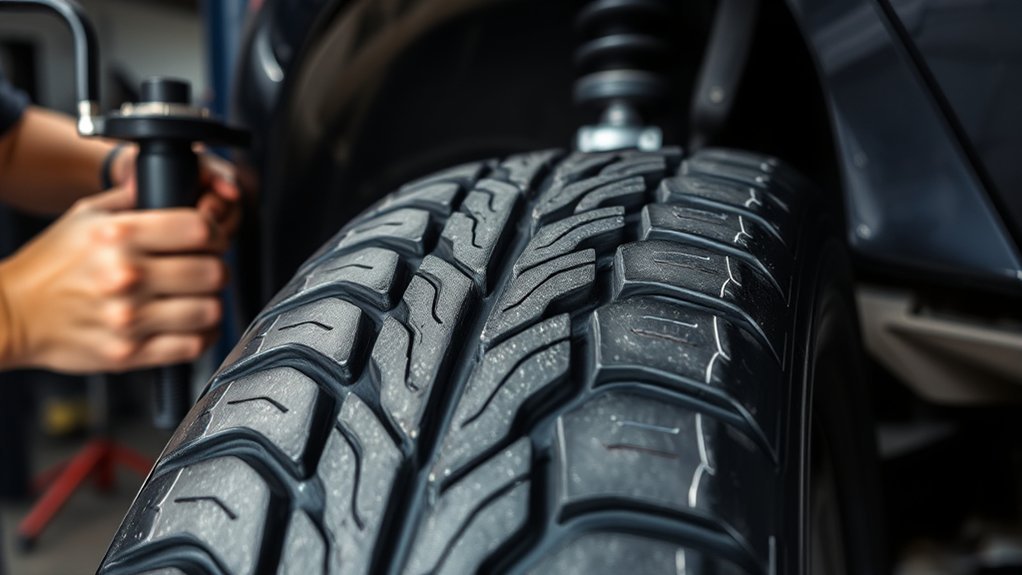
Alignment controls how the tires meet the road. Suspension controls how well the tires stay planted. When either system is off, the tire may scrub, bounce, or load unevenly.
On a Honda Accord, rear-tire cupping often deserves a full four-wheel alignment check because rear toe or camber can wear tires even when the steering wheel feels normal. Front tire cupping can also come from worn struts, loose steering components, imbalance, or toe settings outside specification.
Ask the shop for a before-and-after alignment printout. The printout should show camber, caster, and toe readings compared with Honda specifications. If a reading cannot be brought into range, a bent or worn part may need repair before the alignment will hold.
[Products Worth Considering]

The Ziopetru adjustable magnetic wheel alignment tool helps you check and restore camber and caster positioning after removing and reinstalling undercarriage components. With a clear leveling/bubble measurement system and an easy zeroing adjustment knob, it supports precise horizontal angle checking. The strong magnetic base mounts to metal surfaces for convenient use at home on cars, motorcycles, trucks, vans, and SUVs.

Keep your tires properly inflated with this analog VONDIOR tire pressure gauge, designed for fast, easy readings without batteries. The swiveling, two-axis hose and large glow dial help you measure at any tire angle with instant visibility. Built with a protective rubber shield, it supports durable, low-maintenance use for cars and trucks.

Check tire pressure with the Milton S-925 pencil gauge built for trucks, RVs, and bicycles. It features a single-head chuck with a built-in deflator valve, and it displays readings in both PSI and kPa for convenient use. The gauge is designed for accurate, repeatable pressure checks within its working range.
Extend Your Tire Life: Best Practices for Safety
Good tire care protects the tire, the suspension, and your ability to stop and steer. NHTSA recommends checking tire pressure regularly, inspecting for uneven wear, avoiding overload, and checking tires before long trips.
Regular Tire Rotation
Rotation helps spread wear across all four tires. Honda owner guidance says to rotate tires according to maintenance messages and to follow the correct pattern for directional or non-directional tires. Directional tires should only move front to back on the same side unless they are dismounted and remounted correctly.
Keep tire rotation receipts if your tires have a mileage warranty. Tire manufacturers may require proof of rotation, pressure maintenance, and alignment checks before approving a treadwear claim.
Proper Tire Inflation
Use a reliable tire pressure gauge at least once a month and before road trips. Check pressure when the tires are cold, ideally before driving more than a mile or two. For the correct PSI, use the Tire and Loading Information label on the driver-door jamb. For example, some 2018 Accord tire sizes list 32–33 psi cold, but your exact year, trim, and tire size matter.
Do not use the tire sidewall’s maximum pressure as your normal setting. That number is the tire’s maximum limit, not Honda’s recommended cold inflation pressure for your Accord.
Suspension System Maintenance
Suspension parts wear gradually, so cupping can appear before a driver notices a major handling problem. Have the suspension checked if your Accord bounces after bumps, feels floaty, pulls, clunks, wears tires unevenly, or vibrates at highway speed.
Common parts to inspect include shocks, struts, control arm bushings, ball joints, tie rods, sway bar links, and wheel bearings. Replacing worn parts early helps the tire maintain even contact with the road.
Frequently Asked Questions
Can tire cupping affect fuel efficiency in my Honda Accord?
Yes. Cupped tires can increase rolling resistance, vibration, and drag, especially if the cause is poor alignment, imbalance, or underinflation. The bigger safety concern is reduced ride quality, grip, and braking consistency, so do not ignore the wear pattern.
How often should I check my tire pressure?
Check tire pressure at least once a month and before long trips. Use a gauge when the tires are cold, then inflate to the PSI listed on the driver-door placard for your specific Honda Accord.
What tools do I need to inspect my tires?
Use a tire pressure gauge, a tread depth gauge or penny, a flashlight, and gloves. These tools help you check inflation, tread depth, visible damage, and high-low tread spots.
Is tire cupping covered under warranty?
Usually not if the cupping was caused by alignment, worn suspension, improper inflation, imbalance, lack of rotation, overloading, or road damage. Tire warranties vary, so check your tire manufacturer’s warranty booklet and keep maintenance records.
Can I drive safely with cupped tires temporarily?
Light cupping may allow short-term driving, but you should schedule an inspection soon. Do not drive normally if the tire has severe vibration, exposed cords, sidewall bulges, tread separation, a flat condition, or tread at 2/32 inch.
Should I rotate cupped rear tires to the front?
Do not move badly cupped or vibrating rear tires to the front without a professional inspection. Moving a noisy or damaged tire to the steering axle can make vibration and handling worse. Have the tire, balance, alignment, and suspension checked first.
Conclusion
Tire cupping on a Honda Accord is a warning sign, not just a cosmetic tread issue. The tire is telling you that something is letting it bounce, scrub, or wear unevenly. Start with a safe inspection, check cold tire pressure, measure tread depth, and look for scalloped high-low spots. Then have the balance, alignment, suspension, and wheel bearings checked before replacing tires.
The best prevention plan is simple: maintain the correct tire pressure, rotate on schedule, recalibrate TPMS when required, balance tires when vibration appears, and repair worn suspension parts early. That keeps your Accord smoother, safer, and less likely to destroy a new set of tires prematurely.
Sources
- NHTSA TireWise — tire pressure, tire inspection, rotation, balance, alignment, and tire safety guidance.
- NHTSA Summer Driving Tire Safety — tread depth checks and tire replacement safety guidance.
- Honda Accord Tire Rotation — Honda tire rotation guidance and TPMS recalibration note for applicable models.
- Honda Accord TPMS Calibration Guide — recalibration after inflating, changing, or rotating tires.
- Bridgestone Tire Cupping Guide — cupping causes, repair limits, and prevention.
- Michelin Tread Problems: Cups — worn parts, balance, suspension, and steering diagnostics for cupped tires.