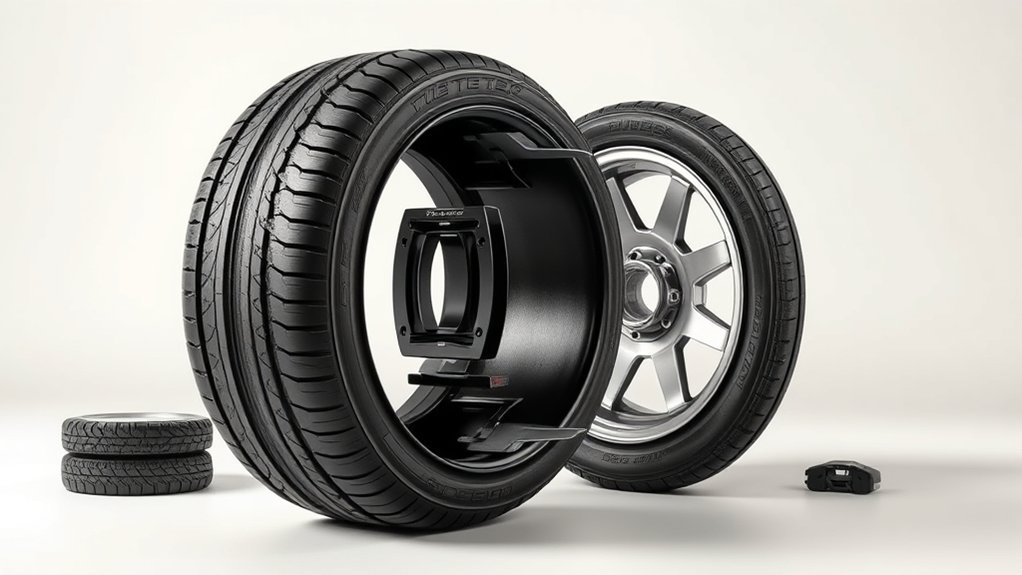
A car tire works by combining pressurized air, reinforced layers, flexible rubber, and a tread pattern that grips the road. The air carries much of the vehicle load, while the tire’s belts, plies, bead, sidewall, and tread control shape, comfort, braking, cornering, and water evacuation. When you understand how these parts work together, you can read tire numbers, choose the right replacement tire, and maintain your tires more safely.
Quick Answer
A car tire works by trapping pressurized air inside a reinforced rubber structure. That pressure helps support the vehicle, while the tread creates grip, the sidewalls flex over bumps, the bead seals against the wheel, and the belts stabilize the tire’s shape during braking, cornering, and highway driving.
Key Takeaways
- Air pressure and reinforced internal layers help a tire carry vehicle weight.
- The contact patch is the small tread area that handles acceleration, braking, and cornering.
- Tread grooves and sipes help move water away and reduce hydroplaning risk.
- The correct tire pressure is on the vehicle placard or owner’s manual, not the tire sidewall maximum.
- Tread depth, tire age, alignment, rotation, and sidewall condition all affect safety and tire life.
What Tire Numbers Mean
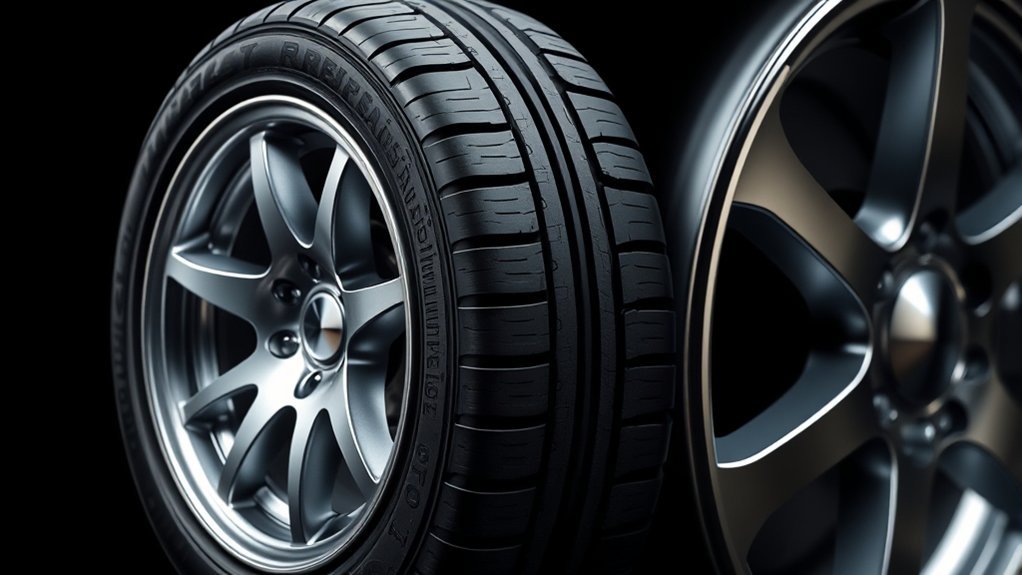
Tire sidewall codes tell you the tire’s size, construction, load rating, speed rating, date code, and other fitment details. A common size such as P215/65R16 tells you the tire type, width, sidewall height, construction, and wheel diameter. Michelin explains that tire markings identify the tire type, size, construction, load rating, speed rating, and other performance or regulatory information.
| Code Part | What It Means |
| P or LT | P means passenger car. LT means light truck and is used for heavier-duty applications. |
| 215 | Nominal section width in millimeters, measured across the tire from sidewall to sidewall. |
| 65 | Aspect ratio. The sidewall height is 65% of the tire’s width. |
| R | Radial construction, the common construction type for modern passenger vehicles. |
| 16 | Wheel diameter in inches. This must match the wheel size. |
| Load index and speed rating | These show how much weight the tire can carry when properly inflated and the maximum speed it can support under specified conditions. |
| DOT date code | The final four digits show the week and year the tire was made. For example, 0324 means the third week of 2024. |
The section width affects steering feel and stability. The aspect ratio affects ride comfort because it changes how tall the sidewall is. A lower-profile tire usually feels more responsive, while a taller sidewall can cushion bumps better. The wheel diameter must match the rim exactly, and the load index and speed rating should meet or exceed your vehicle manufacturer’s requirements.
Note: Do not use the tire sidewall’s “MAX PRESS” number as your normal tire pressure. That marking shows the tire’s maximum pressure, while your vehicle’s recommended cold pressure is listed on the driver-side tire placard or in the owner’s manual.
Why Tire Size Matters
Tire size affects acceleration, braking, steering response, ride comfort, fuel use, and speedometer accuracy. Wider tires can increase the amount of rubber near the road, which can improve dry cornering grip on the right vehicle setup. Narrower tires may reduce rolling resistance and can work better in some winter conditions because they cut through slush more easily.
NHTSA reported 511 traffic fatalities in tire-related crashes in 2024, which is why correct size, pressure, tread depth, and tire condition matter for everyday safety.
Aspect ratio also changes how a tire feels. Lower-profile tires usually respond faster to steering input, but they can ride firmer and offer less protection from pothole impacts. Larger overall tire diameter can change gearing, acceleration, clearance, and speedometer readings. To maintain safety, NHTSA recommends buying the same size as the vehicle’s original tires or another size approved by the vehicle manufacturer.
What Are the Main Tire Parts?
A tire is a layered structure, not just a ring of rubber. USTMA explains that modern tires combine rubber compounds, steel, fabric, carbon black, silica, oils, and other materials, with separate compounds used for different parts of the tire. Each part has a specific job.
| Tire Part | Main Job |
| Inner liner | Acts like an air-retaining layer inside a tubeless tire. |
| Body plies | Provide strength and flexibility so the tire can carry load and absorb road impact. |
| Steel belts | Stabilize the tread area, improve durability, and help the tire keep its shape. |
| Bead | Uses steel wire bundles to lock the tire to the wheel rim and help maintain an airtight seal. |
| Sidewall | Connects the tread to the bead, protects the casing, and flexes over bumps. |
| Tread | Touches the road and provides the pattern, compound, and grooves that affect traction. |
| Grooves and sipes | Help evacuate water and create biting edges for wet, snowy, or slippery surfaces. |
The bead anchors the tire to the rim, the inner liner helps hold air, and the body plies give the tire its load-carrying strength. Steel belts sit under the tread to support the contact area, while the sidewall flexes as you drive over rough surfaces. The tread is the road-facing layer, but its performance depends on every layer underneath it.
Warning: Replace a tire or have it inspected immediately if you see exposed cords, a bulge, a deep sidewall cut, repeated pressure loss, or cracking. A tire can be unsafe even when the tread still looks usable.
How a Tire Works on the Road
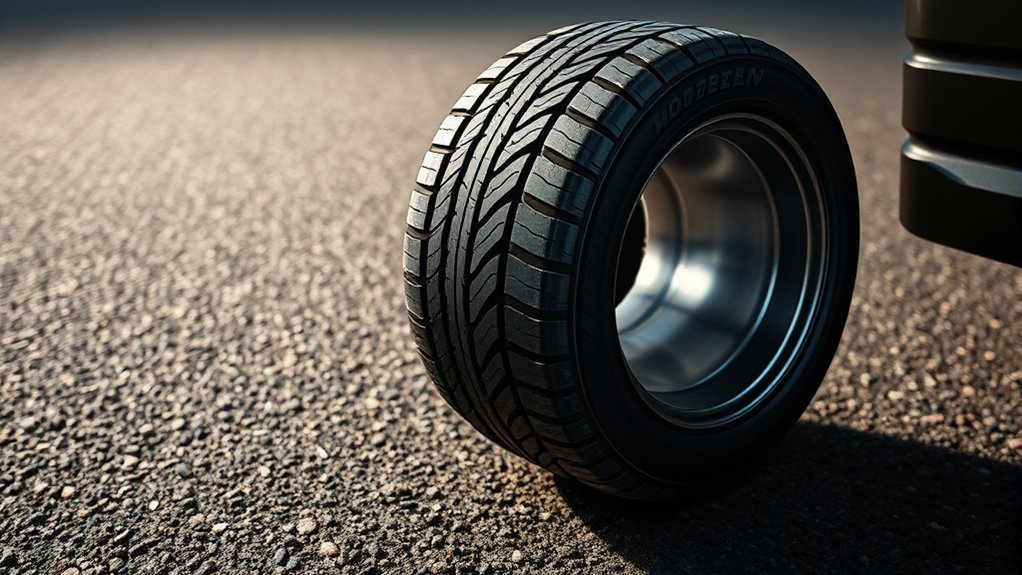
As your vehicle moves, the tire constantly deforms and returns to shape. The small area where the tread touches the road is called the contact patch. That patch handles acceleration, braking, cornering, and steering forces, so even a small tire problem can change how the vehicle feels.
1. Air pressure and casing carry the load
The air inside the tire pushes outward, while the plies, belts, bead, and sidewall hold the structure together. This combination lets the tire support thousands of pounds across four contact patches. Underinflation makes the sidewall flex too much, which creates heat, uneven wear, poor fuel efficiency, and a higher risk of failure.
2. The tread creates grip
The tread compound and pattern determine how the tire interacts with pavement. Softer compounds can improve grip, but they may wear faster. Harder compounds can last longer, but they may not grip as strongly in certain conditions. Tread blocks, grooves, and sipes also affect road noise, water movement, and snow traction.
3. Grooves move water away
On wet roads, grooves help move water out from under the contact patch. Hydroplaning happens when water builds up faster than the tread can disperse it, causing the tire to skim across water instead of gripping the road. Worn tread, high speed, standing water, and underinflation can all raise that risk.
4. Sidewalls absorb impact
The sidewall flexes when the tire hits small bumps, potholes, and road seams. This flex improves ride comfort and keeps the tread in better contact with the road. A taller sidewall usually cushions impacts better, while a shorter sidewall often feels sharper but firmer.
5. Belts and plies stabilize the tire
Steel belts and body plies help the tire keep its shape at speed. They also support the tread area during braking and cornering. If these internal layers separate or become damaged, the tire can vibrate, bulge, lose pressure, or fail suddenly.
Why Tread Pattern and Tread Depth Matter
Tread pattern affects how a tire performs in rain, snow, dry weather, and light off-road use. Wide grooves help clear water. Smaller sipes create extra biting edges for wet or snowy surfaces. Larger tread blocks can improve dry stability, but they may also change road noise and ride feel.
Tread depth matters because shallow tread cannot move water as well. NHTSA says tires are not safe and should be replaced when tread reaches 2/32 of an inch. You should check tread at least once a month when you check tire pressure. Built-in treadwear indicators also show when the tread is worn down to the replacement point.
- Wet roads: Deeper grooves help evacuate water and maintain grip.
- Snow: Sipes and winter-focused tread blocks create more biting edges.
- Dry roads: Stable tread blocks can improve steering response and braking feel.
- Uneven wear: Feathering, cupping, or one-edge wear can point to alignment, balance, pressure, or suspension problems.
[Products Worth Considering]

Keep your tires properly inflated with this analog VONDIOR tire pressure gauge, designed for fast, easy readings without batteries. The swiveling, two-axis hose and large glow dial help you measure at any tire angle with instant visibility. Built with a protective rubber shield, it supports durable, low-maintenance use for cars and trucks.

Milton S-921 pencil tire pressure gauge helps you maintain optimal tire pressure for passenger cars with accurate readings in PSI and kPa. It features a built-in deflator valve for convenient pressure adjustments, plus a single chuck head and nylon indicator bar for easy use on the go. Built from durable plated brass and designed for reliable performance, it’s a practical road trip and cold-weather maintenance tool.

Measure tyre tread depth precisely with a digital gauge that reads in both MM and inches, helping you monitor safe driving conditions. The large LCD screen is easy to operate, and the compact tool fits for cars, trucks, and motorcycles. It provides high accuracy with a 0-25.4mm range and includes a 1-year warranty for added peace of mind.
How Tire Pressure Changes Performance
Correct tire pressure keeps the contact patch more even. Too little air lets the sidewalls flex excessively and can wear the outer edges. Too much air can reduce cushioning and may concentrate wear near the center of the tread. Either condition can reduce comfort, traction, and tire life.
NHTSA says proper tire pressure affects safety, tire durability, and fuel consumption. It also recommends checking all tires, including the spare, at least once a month when the tires are cold. “Cold” means the vehicle has not been driven for at least three hours.
Pro Tip: Keep a tire pressure gauge in your vehicle and check pressure before long trips. TPMS is helpful, but it usually warns only after a tire is significantly underinflated, so it should not replace monthly checks.
Seasonal Tires vs. All-Season Tires
Seasonal tires use compounds and tread patterns designed for specific temperatures and road conditions. Winter tires use softer, flexible compounds and tread designs that work best in cold temperatures, snow, and ice. Continental notes that winter tire compounds are formulated to stay soft and pliable below about 7°C or 46°F.
Summer tires use rubber compounds designed for warmer conditions and responsive dry or wet handling. All-season tires try to balance comfort, tread life, wet grip, and light snow ability, but they do not match a dedicated winter tire in harsh winter conditions or a summer tire in warm performance driving.
Note: Choose tires for your actual climate, not just the name on the sidewall. In areas with regular snow, ice, or long freezing periods, dedicated winter tires are usually the safer choice.
[Products Worth Considering]

The 22800 wheel stud installer makes replacing wheel studs quick and secure, saving time and effort during tire service. It uses a ratchet or impact wrench to pull new studs firmly into place, helping when existing studs are too long. Compatible with most automotive wheels and light-duty truck wheel studs, it’s designed for easy, tool-assisted installation.

Accurately measure tire tread depth with a calibrated gauge marked from 0 to 1 inch in 1/32 inch increments. The color-coded bar helps you quickly identify tread condition ranges, supporting safe driving for trucks, motorcycles, automobiles, and passenger vehicles.

Measure tire tread depth quickly and accurately with this LUMITECO dial gauge that reads in 1/32" increments up to 14/32". The color-coded green/yellow/red zones make it easy to judge tire wear and know when replacement is needed. A rugged, compact design with a protective pouch helps keep the gauge ready for use on cars, trucks, motorcycles, and more.
How to Maintain Tires for Safety and Longer Life
A tire works best when you keep its pressure, tread, alignment, balance, and age in check. NHTSA identifies pressure, tread, balance, alignment, and rotation as core tire-maintenance areas. These checks help prevent uneven wear, poor fuel economy, vibration, and avoidable tire failure.
- Check pressure monthly: Use the cold pressure listed on the vehicle placard or in the owner’s manual.
- Inspect tread monthly: Replace tires at 2/32 inch tread depth or sooner if wet traction becomes poor.
- Rotate when recommended: NHTSA says some vehicles should rotate tires every 5,000 to 8,000 miles, or sooner if uneven wear appears. Always confirm your vehicle’s manual because some staggered setups should not be rotated front to rear.
- Watch tire age: Tire aging can affect low-mileage cars, spare tires, collector cars, and vehicles stored in hot or sunny conditions.
- Check the DOT date code: The last four digits show the week and year of manufacture.
- Fix vibration or pulling: Shaking, pulling, cupping, or one-sided wear can point to balance, alignment, suspension, or tire damage.
- Do not ignore TPMS: If the warning light turns on, check pressure as soon as possible. If it flashes and stays on, the system may need inspection.
Some vehicle and tire manufacturers recommend replacing tires that are six to 10 years old, regardless of treadwear. Age alone does not tell the whole story, so inspect older tires carefully and follow the tire or vehicle manufacturer’s service-life guidance.
[Products Worth Considering]

Steelman white tire marking crayons provide high-contrast, semi-permanent marks for repairing and inspecting tires and equipment. They write on wet or dry, smooth or coarse surfaces including rubber, metal, glass, and wood, making them ideal for puncture location and damage outlining. The lead- and zinc-free crayons resist weather and fading yet wipe away when you no longer need the marks.

The Topeak SmartGauge D2 delivers precise digital tire pressure readings for bikes, motorcycles, and sports equipment up to 250 psi (17 bar). Its rotating SmartHead works with both Presta and Schrader valves, so you can check pressure quickly without adapters. The LCD display makes it easy to read results in psi, bar, or kg/cm² with an included CR2032 battery for immediate use.

This tire inflator with pressure gauge delivers long-lasting performance with a durable rubber-protected gauge and sturdy build. The longer hose and 360 swivel air chuck help you seal the valve securely and keep your hands free while measuring, inflating, or deflating. It’s battery-free for reliable use and provides ±2 PSI accuracy in the mid-range for most typical tires, with universal compatibility for 1/4 NPT compressor outputs.
Frequently Asked Questions
What is tire speed rating?
A tire speed rating is the maximum speed a tire can carry its rated load under specified test conditions. It appears as a letter, such as H, V, W, or Y, after the load index. Your replacement tire should meet or exceed the rating recommended by the vehicle manufacturer.
How long do tires last?
Many properly cared-for tires can last roughly 40,000 to 80,000 miles, but tire life varies by tire design, driving style, road surface, inflation, rotation, alignment, climate, and age. Replace tires earlier if they show unsafe tread depth, sidewall damage, bulges, cracking, vibration, or repeated pressure loss.
What causes tire hydroplaning?
Hydroplaning happens when water builds up between the tire and road faster than the tread can push it away. Speed, standing water, worn tread, shallow grooves, and low tire pressure can all increase the chance of losing traction.
Where do I find the correct tire pressure?
Find the correct cold tire pressure on the vehicle’s Tire and Loading Information Label, usually on the driver-side door edge or doorjamb, or in the owner’s manual. Do not use the tire sidewall maximum as the normal operating pressure.
When should I replace a tire?
Replace a tire when tread reaches 2/32 inch, when treadwear indicators are flush with the tread, or when you see exposed cords, bulges, deep cuts, cracking, uneven wear, repeated pressure loss, or vibration. Older tires may also need replacement based on manufacturer age guidance.
Do all-season tires work in winter?
All-season tires can handle mild conditions and light snow, but they are a compromise. In regular snow, ice, or freezing temperatures, dedicated winter tires usually provide better cold-weather traction because their compounds and tread patterns are designed for those conditions.
Conclusion
A car tire works as a complete system. Air pressure supports the load, the bead seals the tire to the wheel, the plies and belts add strength, the sidewalls absorb impacts, and the tread grips the road. The best tire is not just the right size. It also needs the right load rating, speed rating, pressure, tread depth, seasonal design, and age condition for your vehicle and climate.
For safer driving, check pressure monthly when tires are cold, inspect tread and sidewalls, rotate tires when your vehicle manufacturer recommends it, and replace damaged or worn tires before they fail. A few minutes of tire care can improve grip, fuel efficiency, ride comfort, and overall safety.
Sources
- National Highway Traffic Safety Administration – TireWise — tire pressure, tread depth, tire size, rotation, TPMS, tire aging, and tire-related crash safety data
- Michelin – Tire Markings Explained — tire sidewall codes, tire width, aspect ratio, construction, wheel diameter, load rating, speed rating, max pressure, and DOT date code
- U.S. Tire Manufacturers Association – How a Tire Is Made — tire materials, inner liner, plies, belts, bead, tread, sidewall, curing, and expected tire mileage context
- U.S. Tire Manufacturers Association – Tire Care & Safety — pressure, tread, rotation, alignment, tire replacement, recall registration, and age guidance
- Continental Tires – Winter Tires in Summer — winter tire compound behavior below 7°C, seasonal tire differences, rolling resistance, and handling considerations