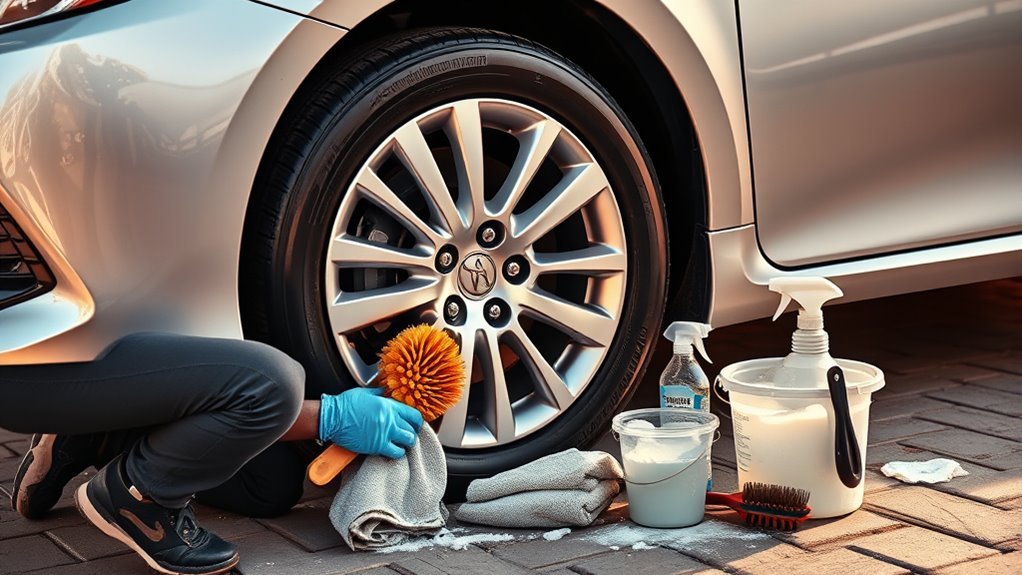
Cleaning Toyota Camry tires is mostly about using the right cleaner, light agitation, and patience. Work on cool tires, remove loose grit first, clean the wheels before the final tire dressing, and never try to cover cracks, bulges, or tire damage with shine. A safe process keeps the rubber looking clean without staining the wheels, slinging dressing onto paint, or sending harsh runoff down the driveway.
Quick Answer
To clean Camry tires safely, rinse away loose dirt, use a rubber-safe tire cleaner, scrub the sidewalls with a medium-soft brush, rinse fully, dry the rubber, then apply a thin water-based dressing to the sidewall only. Avoid bleach, strong solvents, abrasive powders, and dressing on the tread or brakes.
Key Takeaways
- Use a pH-balanced or non-acid cleaner labeled safe for tires and your wheel finish.
- Rinse first so loose grit does not scratch the wheels or grind into the rubber.
- Scrub sidewalls with a medium-soft tire brush; skip steel, wire, and overly stiff brushes.
- Do not dress cracked, bulging, deeply cut, or damaged tires; have them inspected instead.
- Apply tire dressing thinly to the sidewall only, then wipe off excess to reduce sling.
At a Glance
| Time Required | 20–35 minutes for all four tires and wheels |
| Difficulty | Easy beginner DIY job |
| Tools Needed | Hose or pressure washer, tire cleaner, wheel-safe cleaner, medium-soft tire brush, wheel brush, microfiber towels, foam dressing applicator |
| Cost | About $10–$35 if you already own towels and brushes |
Choose Safe Tire Cleaning Products
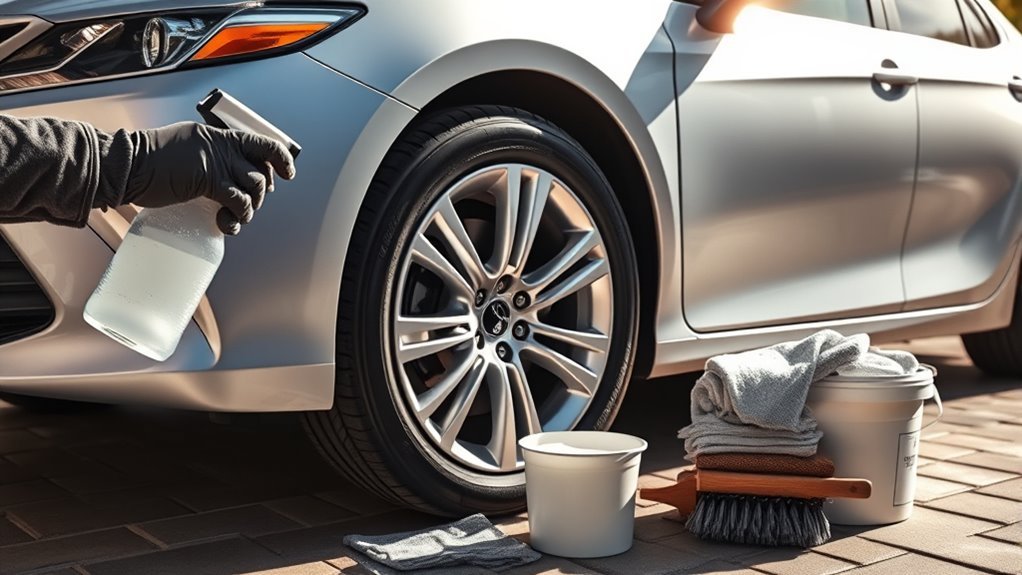
Start with a pH-balanced tire cleaner, a non-acid wheel-and-tire cleaner, or a rubber-safe foaming cleaner. The label should clearly say it is safe for tires, rubber, and the wheel finish on your Camry. Many Camry wheels are painted, machined, clear-coated, or gloss black, so do not assume every aggressive wheel cleaner is safe.
For a manufacturer-backed cleaning baseline, Toyota tells owners to clean each component in a way that matches its material and to rinse dirt away before washing. You can review Toyota’s exterior-cleaning guidance in the 2025 Toyota Camry owner manual. For tire and wheel products, choose cleaners labeled for OEM clear-coated, painted, or chrome wheels, such as a non-acid wheel-and-tire cleaner designed for automotive use.
Warning: Do not use bleach, gasoline, kerosene, paint thinner, strong solvents, wire brushes, steel wool, or abrasive household powders on Camry tires. They can stain wheels, leave residue, or damage rubber and finishes. If a cleaner does not say it is safe for tires or wheels, skip it.
[Products Worth Considering]

This oesee 8-piece wheel care kit helps you clean, scrub, and dry wheels safely with purpose-built brushes and towels. The scratch-free microfiber wheel brush lifts brake dust and grime, while the stiff pro-grip tire brush removes tire browning and embedded dirt. A twist loop microfiber drying towel and an applicator help achieve a streak-free finish and cleaner, more even product application.

Clean wheels and rims with soft feathered bristles that safely remove dirt and road grime while helping restore original luster. The short non-slip handle makes it easy to scrub in tight wheel wells, and the brush is suitable for vehicles and hard-to-reach areas. It can also be soaked and rubbed to help restore bristles to their shape after use.

This 3-piece wheel and tire brush set makes it easy to clean light, medium, and heavy dirt from wheels, rims, tires, and exterior surfaces. It includes both soft and stiff bristle options for gentle scrubbing and tough grime removal, helping lift brake dust and road buildup. The long-handle design supports comfortable cleaning across cars, trucks, SUVs, RVs, motorcycles, and more, with simple care instructions to restore brush shape.
Supplies You Need Before You Start
- Rubber-safe tire cleaner or foaming tire cleaner
- Wheel-safe cleaner matched to your wheel finish
- Medium-soft tire brush for sidewalls
- Soft wheel brush for spokes, lug areas, and rim barrels
- Hose, spray nozzle, or pressure washer on a controlled setting
- Two microfiber towels: one for wheels, one for final drying
- Foam applicator pad for tire dressing
- Water-based tire dressing for the sidewall only
- Nitrile gloves if you have sensitive skin
[Products Worth Considering]

This metal-free wheel and tire cleaning brush uses dense, fluffy synthetic wool to safely clean rims, spokes, fenders, and engine areas without worrying about damaging surfaces. Its flexible, comfortable design helps you reach detailed areas while maintaining durability, and the extra absorbent fibers work well with wheel spray cleaners for faster cleanup. Reusable and washable performance helps prevent grime and build-up for cleaner vehicles and easier maintenance at home.

This wheel brush kit delivers pro-level cleaning at home, lifting dirt, grime, and brake dust to help restore wheel appearance. It includes multiple brush styles and applicator pads for tackling different wheel surfaces, with gentle, metal-free bristles designed to reduce scratching risk. The flat and double-ended brushes are built for comfort and reach, making wheel care easier for cars, trucks, and RVs.
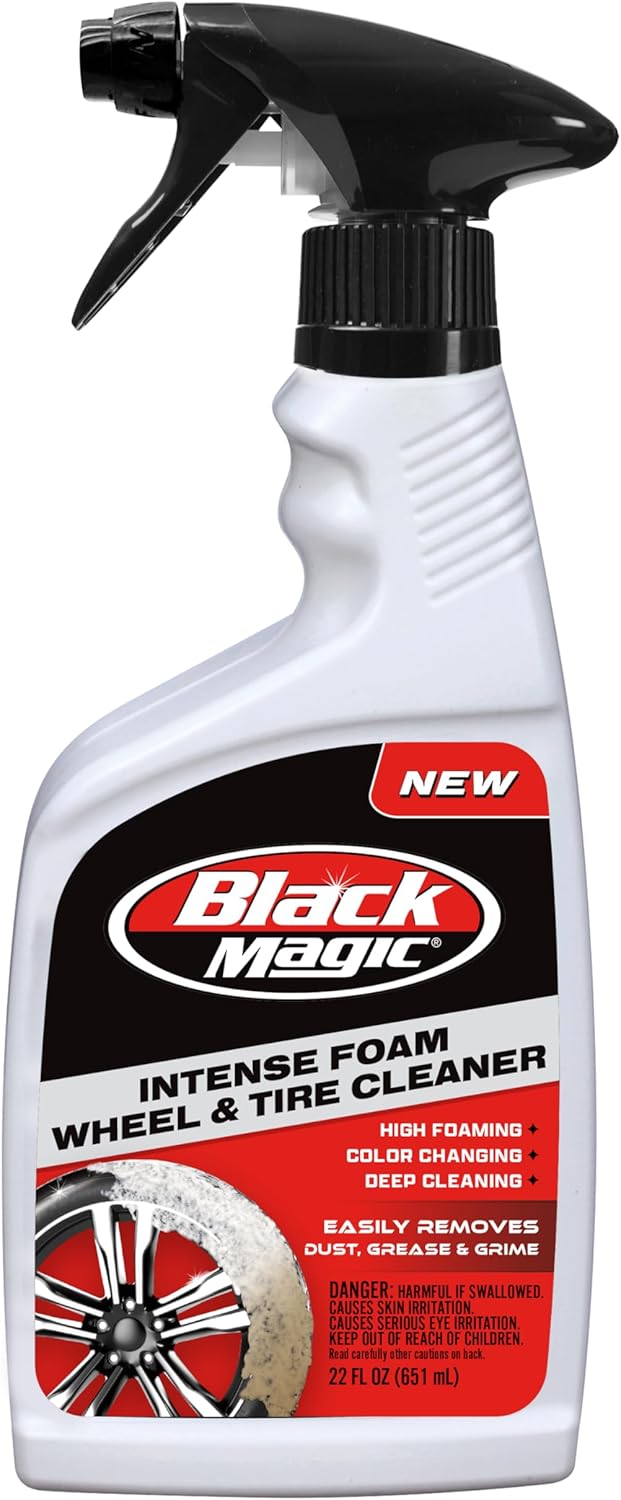
Black Magic Intense Foam Wheel & Tire Cleaner uses a high-foaming action to lift away dirt, grime, and brake dust without scrubbing. The color-changing formula helps show contaminants being dissolved as foam turns from white to brown. Safe for all wheel types and even wheel wells, it leaves a like-new, slick finish with a fresh cherry scent.
Rinse Off Loose Dirt First
Use a hose or pressure washer to rinse the tires and wheels thoroughly before you scrub. This removes loose sand, grit, road salt, and small stones that could scratch the wheel finish or get dragged across the rubber. Work from several angles so water reaches the tread grooves, outer sidewall, lug areas, spokes, and inside rim barrel.
If you use a pressure washer, keep the spray moving and avoid holding the nozzle inches from the tire, valve stem, wheel weights, or painted wheel finish. The goal is to loosen dirt, not blast one spot aggressively.
Note: If you wash at home, keep runoff out of storm drains when possible. The U.S. EPA warns that vehicle wash water can carry detergents, oils, grease, metals, and hydrocarbons. Wash on gravel or grass where allowed, use a wash mat, or choose a commercial wash bay that captures wastewater.
Clean the Wheels Before Dressing Tires
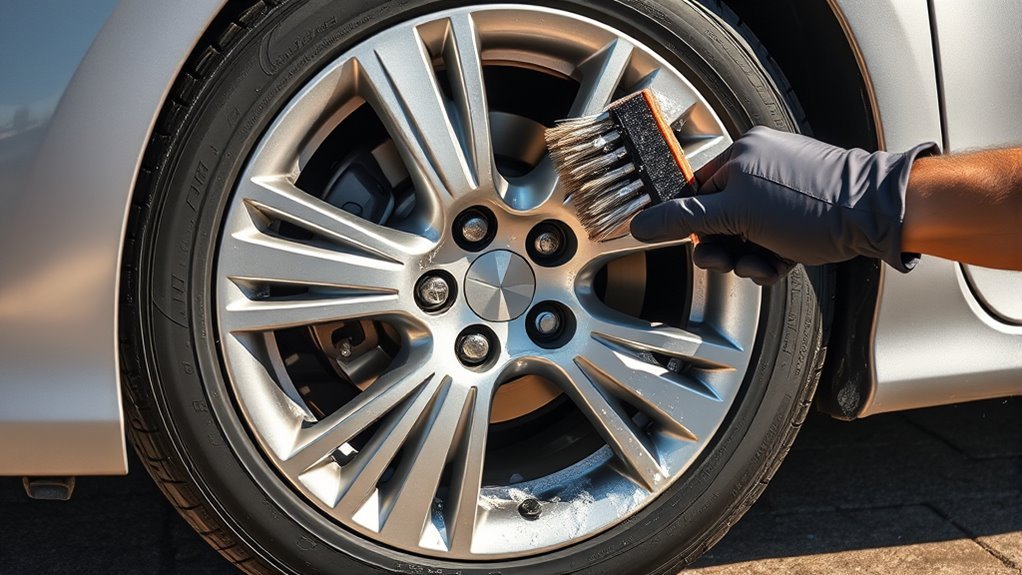
Clean the wheels before you apply tire dressing. Brake dust and loosened grime can splash onto freshly dressed sidewalls, leaving streaks and dull patches. Use a wheel-safe cleaner matched to your finish, then agitate gently with a soft wheel brush.
Wheel Cleaning First
Spray the wheel cleaner onto a cool wheel, following the product label for dwell time. Scrub the spokes, lug nut pockets, outer lip, and the rim barrel if you can reach it. Do not let cleaner dry on the wheel, especially in direct sun or on a hot wheel.
- Apply cleaner evenly to one wheel at a time.
- Use a soft-bristled wheel brush, not a hard tire brush, on painted or clear-coated areas.
- Rinse until no cleaner or loosened brake dust remains.
- Repeat only if brake dust is still visible.
- Dry the wheel before final dressing work.
Rinse Away Brake Dust
Brake dust can contain fine metallic particles that cling to the wheel finish. Rinse it away fully before it dries back onto the surface. Clean wheels also make it easier to see whether the tire is truly clean or just surrounded by dirty water.
Dress Tires Last
Tire dressing should be the final cosmetic step, after the tires and wheels are clean and dry. Dressing too early traps dirt, creates streaks, and increases sling. If the rubber is still wet, wait a few minutes or dry it with a towel before applying the dressing.
Scrub Camry Tires Thoroughly
Use a medium-soft tire brush to scrub the sidewalls and outer shoulder area. Apply your tire cleaner according to the label. Most foaming cleaners need a short dwell time before agitation, while some concentrated cleaners need dilution.
Scrub one tire at a time for about one to two minutes. Use steady pressure, not force. The cleaner and brush should do the work. Rinse the brush often so you do not grind loosened grit back into the sidewall.
Soft Brush Technique
When the tires are cool to the touch, brush in small overlapping sections around the sidewall. Work around raised lettering, grooves, and texture where grime collects. Avoid metal brushes and overly stiff bristles; they can scuff rubber and damage decorative lettering.
For light dirt, warm water and a dedicated tire cleaner may be enough. For heavy grime, repeat the tire-cleaner step rather than jumping to harsh household chemicals.
Deep Clean Passes
For brown or neglected tires, use two or three controlled cleaning passes:
- Rinse loose debris.
- Apply a rubber-safe tire cleaner and let it dwell for the label-recommended time.
- Scrub the sidewall with a tire brush.
- Rinse completely.
- Repeat if the rinse water or foam still looks heavily brown or dirty.
Do not use abrasive powders, bleach, or strong degreasers unless the product label specifically says the cleaner is safe for tires and wheels. A slower repeat pass with the right product is safer than one harsh pass with the wrong one.
Remove Tire Browning and Stubborn Grime
Tire browning is often called tire bloom. It can come from road grime, old dressings, brake dust, and anti-ozonant compounds that migrate to the surface of the rubber as the tire ages. Regular cleaning helps the sidewall look even, but browning by itself is usually a cosmetic issue, not proof that the tire has failed.
Warning: Stop cleaning and inspect the tire if you see deep cracks, exposed cords, bulges, splits, severe sidewall cuts, or uneven wear. The National Highway Traffic Safety Administration advises drivers to inspect tires for cracks, foreign objects, uneven wear, and other signs of trauma. Cosmetic dressing should never hide tire damage.
To remove browning, apply tire cleaner, let it dwell briefly, scrub small sections, and rinse fully. If the foam turns brown, that usually means residue is lifting. Repeat until the sidewall looks evenly clean. Once the tire is clean and dry, a thin water-based dressing can help restore a darker finish.
Clean tire browning with repeat gentle passes, not harsh chemicals. If the tire shows structural damage, cleaning stops and inspection starts.
- Clean only cool tires.
- Use a tire cleaner labeled safe for rubber.
- Scrub in small sections around the sidewall.
- Rinse until cleaner residue is gone.
- Dry before applying any dressing.
[Products Worth Considering]

Cristal Products Untouchable Tire Shine Spray delivers a deep, wet-look gloss that enhances your vehicle’s tires. It’s quick-drying and spreads smoothly for consistent, streak-free coverage, while forming a protective coating against UV rays, road grime, and weather. Suitable for all tire types, it helps restore dull, faded tires to a showroom-quality finish.

Suds Lab WB Premium Detailing Wheel Brush delivers a scratch-free clean using ultra-soft microfiber bristles that lift brake dust, dirt, and grime without swirling. The ergonomic non-slip handle helps you deep-clean rims, wheels, and tires with reduced hand fatigue while reaching tight contours. It’s reusable and machine washable for long-term detailing, and works across cars, trucks, SUVs, and motorcycles plus multi-purpose cleaning tasks.

This professional wheel and rim brush kit makes it easy to lift brake dust, grime, and dirt from wheels and tires without scratching finishes. The brushes feature soft, metal-free wool heads and a flexible 360-degree rim brush design for reaching hard-to-clean areas. Includes multiple brush types plus accessories for thorough car, motorcycle, and general vehicle detailing.
Apply Tire Dressing Without Sling
To keep tire dressing from slinging onto your Toyota Camry’s paint, use less product than you think you need. Put a small amount on a foam applicator and work it into the center of the sidewall, then spread it evenly toward the raised lettering and outer edge.
Choose a water-based dressing for a clean satin finish and easier control. Avoid thick, oily layers. After application, wipe the sidewall once with a microfiber towel to remove visible excess. Let the tire dressing cure for 15–30 minutes before driving, or longer if the product label says so.
Warning: Apply tire dressing to the sidewall only. Do not put dressing on the tread, brake rotors, brake calipers, wheel faces, pedals, steering wheel, or floor mats. Slick residue in the wrong place can reduce traction or create a driving hazard.
Pro Tip: For a factory-clean look, apply one thin coat, wait a few minutes, then buff the tire. A second thin coat is better than one heavy coat if you want more shine.
Common Mistakes to Avoid
- Cleaning hot tires: Heat can make cleaners dry too quickly and leave streaks.
- Skipping the first rinse: Loose grit can scratch wheels and make scrubbing harder.
- Using one brush for everything: Keep a tire brush for rubber and a softer wheel brush for painted or clear-coated wheels.
- Letting cleaner dry: Work one tire and wheel at a time.
- Over-applying dressing: Excess product slings onto paint and attracts dust.
- Ignoring tire condition: Cleaning does not fix cracks, bulges, exposed cords, or unsafe tread wear.
How Often Should You Clean Camry Tires?
For normal driving, clean your Camry tires every two to four weeks or whenever you wash the car. Clean sooner after road salt, mud, heavy brake dust, construction-zone driving, or long highway trips. Fresh grime is easier to remove than baked-on buildup.
Cleaning is not the same as maintenance. The U.S. Tire Manufacturers Association highlights tire pressure, tread, rotation, and alignment as key tire-care essentials. Use cleaning time as a chance to check sidewalls, tread depth, valve caps, and uneven wear.
Frequently Asked Questions
Is Dawn dish soap safe for car tires?
Dawn can be used occasionally in a diluted wash for dirty tire rims and wheels, and Dawn publishes its own wheel-and-tire cleaning instructions. For routine Camry tire care, a dedicated rubber-safe tire cleaner is the better choice because it is made for automotive rubber, wheel finishes, brake dust, and rinse behavior. If you use dish soap in a pinch, dilute it, keep it off hot paint, and rinse thoroughly.
Should I clean Camry wheels or tires first?
Clean the wheels first, then clean the tires, then dress the tire sidewalls last. This sequence prevents brake dust and wheel cleaner from splashing onto freshly dressed rubber.
Why do my Toyota Camry tires turn brown?
Brown sidewalls can come from road grime, brake dust, old tire shine, and tire bloom. Tire bloom happens when protective compounds in the rubber migrate to the surface and oxidize. Clean it with a tire-safe cleaner and gentle brushing, then apply a thin dressing after the tire dries.
Can tire shine damage tires?
Tire shine is usually safe when it is labeled for tires, applied thinly, and used only on sidewalls. Problems come from harsh solvent-heavy products, over-application, and putting dressing on tread or brake parts. Choose a water-based dressing and wipe off excess.
How do I know if a tire should be inspected instead of cleaned?
Have the tire inspected if you see deep cracks, exposed cord or fabric, sidewall bulges, splits, severe cuts, punctures near the sidewall, or unusual wear. Cleaning improves appearance; it does not make a damaged tire safe.
Conclusion
When you use safe cleaners, rinse first, scrub with the right brush, and save dressing for the final step, your Camry tires will look cleaner without creating extra mess. Clean the wheels before dressing the tires, let the rubber dry, apply a thin water-based dressing to the sidewall only, and wipe away excess. The small details matter: they protect the wheel finish, reduce sling, and help you spot tire damage before it becomes a bigger safety issue.
Sources
- Toyota Owners — 2025 Camry cleaning and protecting the vehicle exterior — supports rinsing first and cleaning each component according to its material.
- U.S. Tire Manufacturers Association — Tire Care Essentials — supports pressure, tread, rotation, and alignment as tire-care fundamentals.
- NHTSA TireWise — supports regular tire inspection and tire safety awareness.
- U.S. EPA — Vehicle Maintenance and Washing Stormwater BMP — supports car-wash runoff precautions.
- Meguiar’s — Non-Acid Wheel & Tire Cleaner — supports choosing a wheel-and-tire cleaner labeled for OEM clear-coated, painted, and chrome wheels.
- Dawn — How to Clean Tire Rims and Wheels — supports the FAQ nuance that dish soap can be used for occasional wheel/tire cleaning when diluted and rinsed properly.