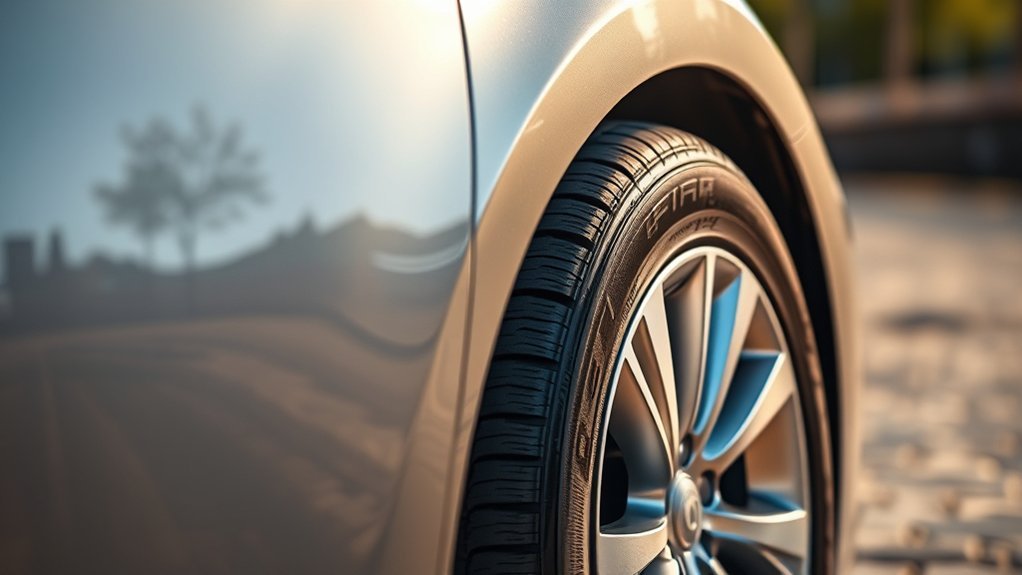
For a 2007–2011 Toyota Camry, the two common factory tire sizes are 215/60R16 and 215/55R17. These sizes are close in overall diameter, but they do not fit every wheel or trim the same way. Before buying tires, check the Tire and Loading Information Label on the driver-side door jamb and match the size, load rating, speed rating, and cold tire pressure listed for your exact car.
Reviewed for accuracy · Last updated July 6, 2026
Quick Answer
Most 2007–2011 Toyota Camry models use either 215/60R16 or 215/55R17 tires. Toyota’s 2007 manual lists P215/60R16 94V at 30 psi and P215/55R17 93V at 32 psi, but your driver-door placard is the final source for your exact car.
Key Takeaways
- 215/60R16 is the common 16-inch Camry size and has a theoretical diameter of about 664 mm.
- 215/55R17 is the common 17-inch Camry size and is slightly taller by tire-code math, not smaller.
- Toyota’s 2007 manual lists P215/60R16 94V at 30 psi and P215/55R17 93V at 32 psi, but your door placard controls.
- Always use the cold PSI on the driver-door placard or owner’s manual, not the maximum PSI printed on the tire sidewall.
- Non-stock tire sizes can affect clearance, speedometer accuracy, braking feel, TPMS behavior, and ride quality.
- For winter driving, tire type and rubber compound matter more than simply choosing a wider tire.
At a Glance
| Time Required | 10–20 minutes to verify tire size, door-label PSI, tread depth, and sidewall condition |
| Difficulty | Easy for stock replacement; moderate if changing wheel size, offset, or tire diameter |
| Tools Needed | Tire pressure gauge, tread depth gauge or penny, owner’s manual, and the driver-door tire placard |
| Cost | Free to check; tire replacement cost depends on tire size, brand, tire type, installation, balancing, valve service, and alignment needs |
2007–2011 Camry Tire Sizes, PSI, and OE Ratings
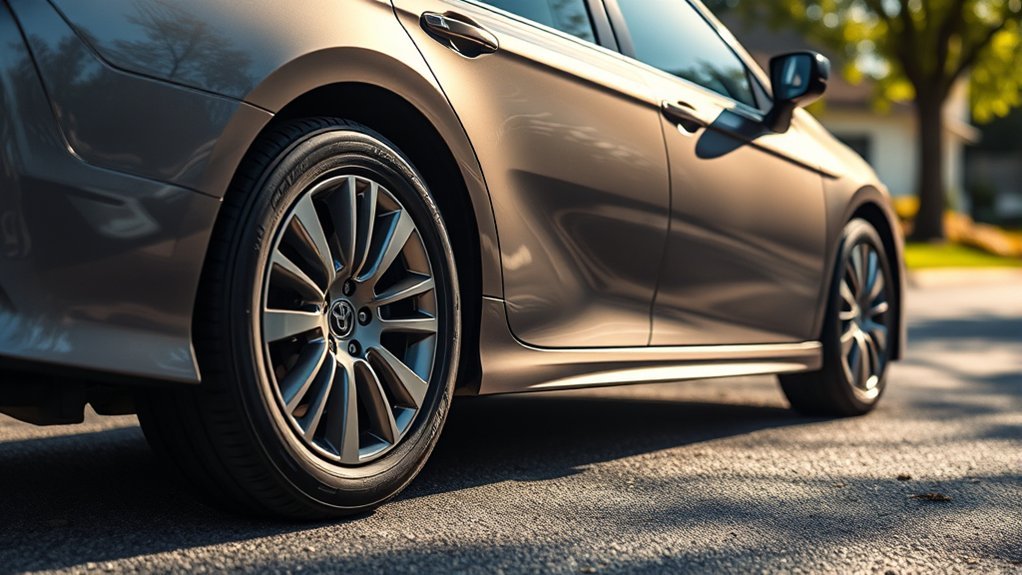
The sixth-generation Toyota Camry sold for the 2007–2011 model years commonly uses two tire sizes: 215/60R16 and 215/55R17. The exact tire size depends on trim, wheel package, market, and any previous wheel changes made by a past owner.
Do not rely only on an online fitment chart. Open the driver door and read the Tire and Loading Information Label. The National Highway Traffic Safety Administration says the owner’s manual or the driver-side tire label is the correct place to find your vehicle’s tire size and recommended cold tire pressure.
Note: The PSI molded on the tire sidewall is the tire’s maximum pressure rating, not the recommended pressure for your Camry. Use the cold PSI listed by Toyota on the door placard or in the owner’s manual.
| Common OE Size | Load / Speed Rating | Toyota-Listed Cold PSI* | Wheel Size Listed in 2007 Manual | Theoretical Tire Diameter |
| P215/60R16 | 94V | 30 psi front / 30 psi rear | 16 x 6 1/2 J or 16 x 6 1/2 JJ | About 664 mm / 26.16 inches |
| P215/55R17 | 93V | 32 psi front / 32 psi rear | 17 x 7 J | About 668 mm / 26.31 inches |
| T155/70D17 compact spare | 110M | 60 psi front / 60 psi rear | 17 x 4T | Temporary-use spare only |
*These figures come from the 2007 U.S. Toyota Camry owner’s manual. Your own door placard and exact owner’s manual still control because trim, market, production date, and tire changes can vary.
The two common sizes are close enough that Toyota could use them on the same Camry generation, but they are not identical. The 215/55R17 size is slightly larger in theoretical diameter than 215/60R16. That small difference is usually acceptable when the size is factory-listed for your car, but it still shows why guessing tire sizes can create speedometer and clearance problems.
How to Read Camry Tire Size Numbers
A tire size such as 215/60R16 tells you more than the wheel diameter. The first number is the tire width in millimeters. The second number is the aspect ratio, which means the sidewall height is that percentage of the tire width. The “R” means radial construction, and the final number is the wheel diameter in inches.
- 215 = tire section width in millimeters.
- 60 or 55 = sidewall height as a percentage of width.
- R = radial tire construction.
- 16 or 17 = wheel diameter in inches.
- 94V or 93V = load index and speed rating. Replacement tires should meet or exceed the original requirement unless a qualified tire professional confirms a safe alternative.
This is why a 17-inch tire can still have a similar overall diameter to a 16-inch tire. The 17-inch tire uses a shorter sidewall, while the 16-inch tire uses a taller sidewall.
How Tire Sizes Affect Performance and Handling
Tire size affects how your Camry rides, steers, brakes, and reports speed. A taller sidewall, such as the one on many 215/60R16 tires, usually gives a softer ride and more cushion over broken pavement. A shorter sidewall, such as the one on 215/55R17 tires, can make steering feel more direct but may feel firmer on rough roads.
Width also matters, but wider is not always better. A wider tire may increase dry-road grip if the tire compound, tread design, and wheel fitment are right. It can also add weight, reduce fuel economy, follow road grooves more easily, and rub against fenders or suspension parts if the offset is wrong.
A tire size change that looks small on paper can still affect speedometer accuracy, ABS behavior, traction control, ride comfort, TPMS behavior, and wheel-well clearance.
For a daily-driver Camry, the safest path is simple: stay with the size on your door placard unless a tire professional confirms that the alternate size matches your wheel width, load rating, speed rating, and clearance.
How to Choose Replacement Tires for Your Camry
Start with the label on your car, then compare tire models. This keeps the shopping process safe and avoids choosing a tire only because it looks close in an online search.
- Match the tire size first: Use the exact size printed on your Tire and Loading Information Label when possible.
- Match or exceed the load index: Do not choose a tire with a lower load capacity than the original requirement.
- Match the speed rating unless advised otherwise: A lower speed rating may limit safe operation and handling expectations.
- Choose the right tire type: Touring all-season tires suit most daily Camry driving. Winter tires suit regular snow and ice. Summer tires suit warm-weather performance only.
- Check the date code: Even a tire with good tread can age. Inspect sidewalls for cracking, bulges, cuts, and uneven wear.
- Balance and align when needed: New tires should be balanced. Alignment is worth checking if the old tires show one-sided wear, feathering, or cupping.
Warning: Do not install a tire with a lower load rating than Toyota specified for your Camry. A tire that looks correct by size can still be wrong if its load index, speed rating, or construction does not match the vehicle’s needs.
[Products Worth Considering]

Monitor tire tread wear with a smart, color-coded depth gauge that shows clear condition ranges at a glance. The bar is range marked for fast, easy readings, helping you maintain safer traction and performance. Each gauge is portable with a pocket clip, and the set includes 20 units for daily use and sharing.

The VEHLIVE SU-50448 II TPMS relearn tool provides a fast activation reset to restore accurate tire pressure monitoring after sensor replacement or tire rotation. It supports 315 MHz and 433 MHz GM series sensors and helps clear dashboard pressure warnings. With simple two-button operation and horn-confirmed relearning order, you can reprogram sensors conveniently at home.

The SAFELIFE dial tire tread depth gauge measures tread depth in 1/32 inch increments with clear, easy-to-read 2-inch dial face. Color zones using a traffic light system help you quickly judge whether tread is low, marginal, or ample for safer driving. Built with a durable zinc cast body and a metal detect probe for precise, comfortable use across cars, motorcycles, trucks, and buses.
How to Pick Wheels and Tires for Your Custom Build
If you want aftermarket wheels, start with fitment before style. A wheel can look close and still fit poorly if the offset, hub bore, width, lug-seat type, or brake clearance is wrong. Confirm every wheel specification by VIN, trim, and wheel supplier before ordering.
Use this checklist before buying custom wheels or non-stock tires:
- Door placard size: Match the tire size Toyota listed for your exact car when possible.
- Load index: Choose a tire with a load rating that meets or exceeds the original requirement.
- Speed rating: Do not downgrade the speed rating unless a tire professional confirms it is suitable for your driving use.
- Wheel width: Make sure the tire is approved for the rim width you plan to use.
- Offset: Keep the wheel centered in the wheel well so it does not rub the strut, fender liner, or outer fender.
- Bolt pattern, hub bore, and lug seat: Confirm the wheel mounts correctly and uses the right lug nut style.
- Brake clearance: Test fit or confirm clearance before mounting a full set.
- TPMS compatibility: Confirm sensor fitment, sensor registration, and reset procedure before installation.
Warning: Do not install a tire just because it clears while the car is parked. Check clearance while turning, braking, carrying passengers, and driving over bumps. Rubbing can damage the tire sidewall and create a safety risk.
When plus-sizing from 16-inch to 17-inch wheels, keep the overall tire diameter close to the factory size. A tire shop can compare revolutions per mile and confirm whether the speedometer change stays within a safe range. Avoid guessing with oversized options such as 215/70R16 or 215/65R16 unless a qualified installer confirms clearance and system compatibility.
Best Seasonal Tires for Your Camry and Maintenance Tips
The best tire type for your Camry depends on your climate. All-season tires suit mild year-round driving and can handle a mix of dry roads, rain, and light winter conditions. Winter tires are the better choice if you regularly drive in deep snow, ice, freezing rain, or long cold seasons. Summer tires can feel responsive in warm weather, but they are not designed for freezing temperatures, snow, or ice.
The NHTSA TireWise guide notes that all-season tires can handle several road conditions, while winter tires are more effective than all-season tires in deep snow. Toyota’s owner guidance also recommends snow tires or chains for snow or ice and says snow tires should be installed on all wheels.
Pro Tip: If you use winter tires, mount them on a separate set of wheels in the correct Camry size. Seasonal swaps become faster, and your main wheels face less mounting wear.
Note: If you install winter tires, use the same size, construction, and load capacity as the originally installed tires unless a qualified installer confirms another safe setup. Do not install winter tires on only the front wheels.
[Products Worth Considering]

Accurately measure tire tread depth with a calibrated gauge marked from 0 to 1 inch in 1/32 inch increments. The color-coded bar helps you quickly identify tread condition ranges, supporting safe driving for trucks, motorcycles, automobiles, and passenger vehicles.

Keep your tires properly inflated with this analog VONDIOR tire pressure gauge, designed for fast, easy readings without batteries. The swiveling, two-axis hose and large glow dial help you measure at any tire angle with instant visibility. Built with a protective rubber shield, it supports durable, low-maintenance use for cars and trucks.

This TPMS sensor training and relearn reset tool is customized for Ford, Lincoln, and Mercury vehicles to help activate tire pressure programming after sensor replacement or tire rotation. It can activate individual tire pressure sensors with one-button operation, helping prevent TPMS warning light illumination. It is not a sensor programming tool and cannot program replacement sensors—use it to trigger/activate sensors only.
Camry Tire Maintenance Checklist
Good tire maintenance matters as much as choosing the right size. Use this quick checklist once a month and before long trips:
- Check pressure cold: Measure PSI before driving or after the car has sat for at least three hours.
- Use the door label: Set pressure to the Toyota-listed cold PSI, not the sidewall maximum.
- Inspect tread depth: Replace tires when tread reaches 2/32 inch. For rain or snow, consider replacing earlier if grip has dropped.
- Rotate regularly: Follow the owner’s manual. If rotation is recommended, NHTSA lists 5,000–8,000 miles as a common interval range.
- Watch for uneven wear: Feathering, cupping, or one-sided wear can point to alignment, balance, or suspension issues.
- Check sidewalls: Replace tires with bulges, deep cuts, exposed cords, or cracking.
- Do not rely only on TPMS: A tire pressure warning system is helpful, but it does not replace monthly pressure checks with a gauge.
- Reset TPMS correctly: If your Camry has a reset procedure after rotation, tire service, or a tire-size change, set all tires to the correct cold PSI before initializing the system.
Common Fitment Issues and How to Fix Them
Most Camry tire fitment problems come from changing more than one variable at the same time. A larger wheel, wider tire, lower offset, and taller sidewall can combine to create rubbing even when each change looks small by itself.
Here are the most common issues and safer fixes:
- Rubbing at full steering lock: Recheck tire width, wheel offset, and inner fender clearance. A narrower or more factory-like size may be needed.
- Speedometer reads wrong: Compare tire diameter and revolutions per mile against the original size before buying.
- Harsh ride after installing larger wheels: Move back to a taller sidewall or choose a touring tire with comfort-focused construction.
- Uneven tread wear: Check alignment, balance, tire pressure, and worn suspension parts.
- TPMS light after tire service: Confirm sensor condition, sensor registration, correct cold pressure, and reset procedure.
- Poor winter traction: Choose proper winter tires instead of relying on a wider all-season tire.
- Vibration after installation: Recheck wheel balance, wheel centering, lug-seat match, bent wheels, and tire defects.
If you already bought tires and notice rubbing, vibration, pulling, or a TPMS warning, stop treating it as a normal break-in issue. Have the tires inspected by a qualified tire shop before driving long distances.
[Products Worth Considering]

The Trivd Frol 1/2" air impact wrench delivers high performance torque up to 1500 ft-lbs with a twin hammer impact mechanism for strong, balanced blows. It features an ergonomic grip, compact lightweight design, and quick-stop control with 3 forward speeds up to 8000 RPM plus a reverse speed. Built for demanding automotive repair and tire shop work, the rear exhaust helps keep debris away from the surface.

Upgrade your wheels with MIKKUPPA M12x1.5 mag seat lug nuts built for secure, corrosion-resistant performance. These closed-end chrome lug nuts are a direct replacement for select Toyota models, including Camry, Corolla, RAV4, Sienna, Avalon, Highlander, Matrix, Venza, and Prius. Triple-chromium plating and cold-forged, heat-treated steel help deliver strength for daily driving and replacement needs.

The 22800 wheel stud installer makes replacing wheel studs quick and secure, saving time and effort during tire service. It uses a ratchet or impact wrench to pull new studs firmly into place, helping when existing studs are too long. Compatible with most automotive wheels and light-duty truck wheel studs, it’s designed for easy, tool-assisted installation.
Frequently Asked Questions
What tire size fits a 2007–2011 Toyota Camry?
The common factory sizes are 215/60R16 and 215/55R17. Your exact size depends on trim, wheel package, market, and any prior wheel changes, so check the Tire and Loading Information Label on the driver-side door jamb before buying tires.
What PSI should I use for my Toyota Camry tires?
Use the cold tire pressure listed on your driver-door placard or in the owner’s manual. For reference, Toyota’s 2007 Camry manual lists P215/60R16 94V at 30 psi front and rear, and P215/55R17 93V at 32 psi front and rear. Your own placard is still the final source.
Is 215/55R17 smaller than 215/60R16?
No. By tire-code math, 215/60R16 is about 664 mm in theoretical diameter, while 215/55R17 is about 668 mm. The difference is small, but the 17-inch size is slightly taller.
What are the original load and speed ratings for these Camry tire sizes?
Toyota’s 2007 Camry manual lists P215/60R16 as 94V and P215/55R17 as 93V. Replacement tires should meet or exceed the original load index and speed rating unless a qualified tire professional confirms a safe alternative for your use.
Can I install bigger tires on a 2007–2011 Camry?
You can sometimes use an alternate size, but it must match the wheel width, load index, speed rating, overall diameter, and available clearance. Oversized tires can rub and can affect speedometer accuracy, ABS, traction control, TPMS behavior, and ride quality.
Do I need to reset TPMS after changing Camry tires?
You may need to initialize or reset the tire pressure warning system after tire rotation, tire service, pressure changes, or tire-size changes, depending on your Camry equipment. Set all tires to the correct cold PSI first, then follow the owner’s manual reset procedure.
Are winter tires worth it for a Toyota Camry?
Yes, if you drive in regular snow, ice, or freezing temperatures. Winter tires use rubber compounds and tread designs built for cold-weather grip. Install winter tires on all four wheels and use the correct size, construction, and load capacity.
Does tire size cause common 2007 Camry engine problems?
No. Tire size can affect ride, handling, speedometer accuracy, traction control behavior, TPMS behavior, and clearance. It will not cause or fix engine issues such as oil consumption. Keep tire fitment and engine maintenance as separate checks.
Conclusion
The right tire size for a 2007–2011 Toyota Camry starts with the driver-door placard. Most models use either 215/60R16 or 215/55R17, but your exact wheel package matters. Match the listed size, cold PSI, load rating, and speed rating before comparing tire brands or seasonal options.
If you want a simple, comfortable daily setup, the factory 16-inch size is usually the easiest path. If your Camry came with 17-inch wheels, the 215/55R17 size keeps the car close to its intended handling and speedometer behavior. For any custom setup, verify diameter, offset, clearance, load rating, speed rating, and TPMS compatibility before installation.
Sources
- 2007 Toyota Camry Owner’s Manual — tire sizes, OE load/speed ratings, cold tire pressure, compact spare pressure, TPMS reset guidance, tire replacement cautions, snow tire guidance, and wheel nut torque
- NHTSA TireWise — driver-door tire label, cold tire pressure, sidewall pressure warning, tread depth, rotation, TPMS, tire size, and tire-type guidance
- NHTSA Winter Driving Tips — cold tire checks, tread and sidewall inspection, 2/32-inch tread guidance, and winter tire preparation
- Toyota Owner’s Manuals and Emergency Response Guides — official Toyota manual lookup and production-date verification context