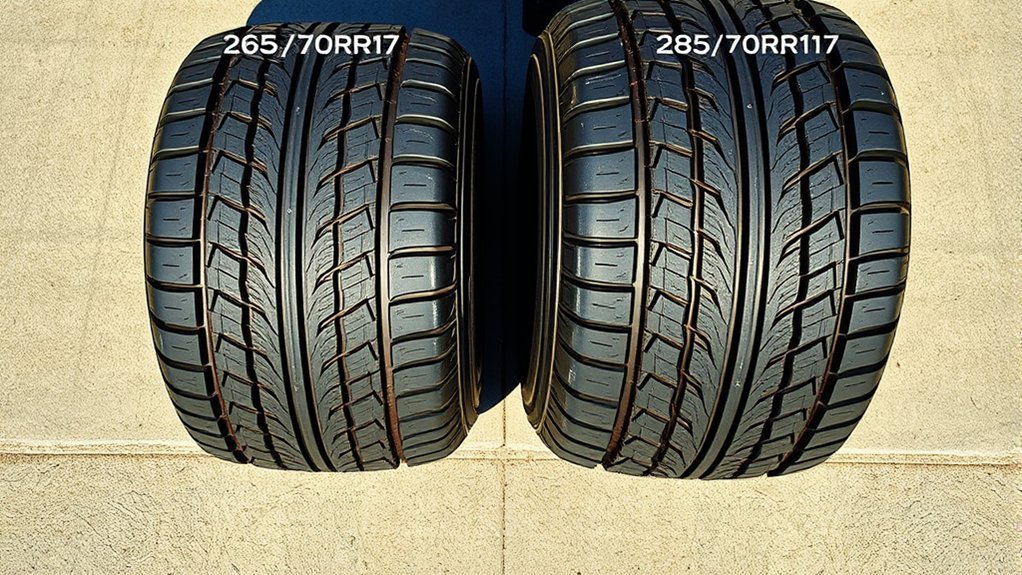
Comparing 265/70R17 vs 285/70R17 tires comes down to more than a wider tread. The 285/70R17 is about 20 mm wider, about 1.10 inches taller in overall diameter, and adds roughly 0.55 inches of ground clearance. That can help stance, clearance, and off-road grip, but it can also affect speedometer accuracy, fuel economy, steering feel, and fender clearance.
Quick Answer
A 285/70R17 tire is about 0.79 inches wider and about 1.10 inches taller than a 265/70R17. You gain about 0.55 inches of ground clearance, but you may also get rubbing, slower acceleration, speedometer error, and slightly lower fuel economy unless your vehicle has enough clearance and the right wheel setup.
Key Takeaways
- The 285/70R17 is 20 mm wider than the 265/70R17, which equals about 0.79 inches of extra section width.
- The 285/70R17 is about 32.71 inches tall, while the 265/70R17 is about 31.61 inches tall.
- The taller 285/70R17 adds about 0.55 inches of ground clearance, but it also changes speedometer readings by about 3.5%.
- Load rating is not guaranteed by size alone. Check the exact tire’s load index, load range, wheel rating, and your vehicle placard.
- A 285/70R17 often looks stronger and grips well off-road, but a 265/70R17 usually fits easier and keeps better efficiency.
What Are the Tire Size Differences Between 265/70R17 and 285/70R17?
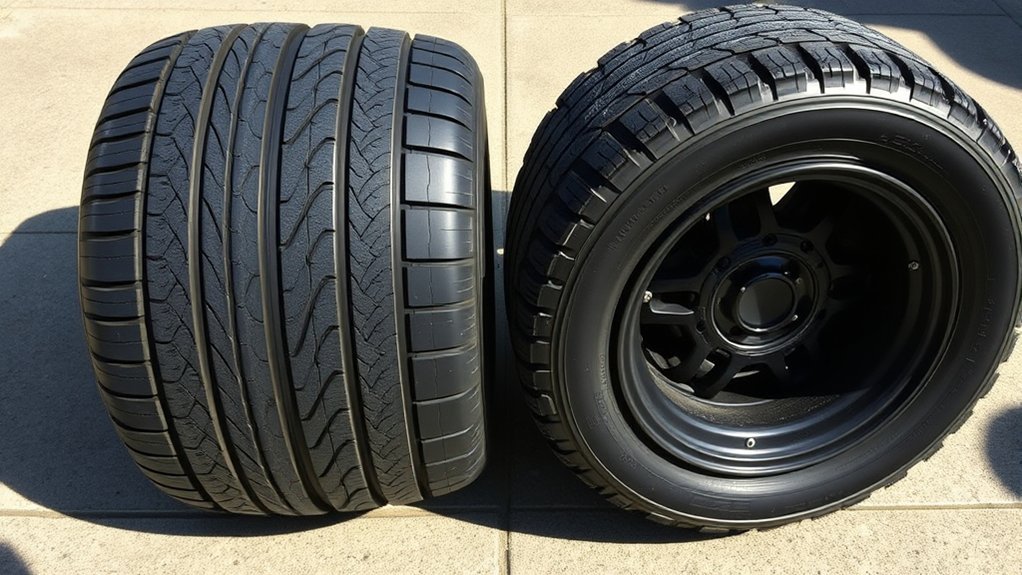
The first number in each tire size is the nominal section width in millimeters. So a 265/70R17 tire is 265 mm wide, while a 285/70R17 tire is 285 mm wide. That makes the 285 about 20 mm, or 0.79 inches, wider.
The second number, 70, is the aspect ratio. It means the sidewall height is 70% of the tire’s section width. Because both tires use the same 70-series sidewall, the wider 285 tire also becomes taller.
| Measurement | 265/70R17 | 285/70R17 | Difference |
|---|---|---|---|
| Nominal width | 265 mm / 10.43 in | 285 mm / 11.22 in | +20 mm / +0.79 in |
| Sidewall height | 185.5 mm / 7.30 in | 199.5 mm / 7.85 in | +14 mm / +0.55 in |
| Overall diameter | 31.61 in | 32.71 in | +1.10 in |
| Approx. circumference | 99.29 in | 102.76 in | +3.49% |
| Ground-clearance gain | Baseline | About +0.55 in | Half the diameter gain |
These numbers are calculated from the tire size code, not measured from one exact tire model. Actual mounted height and width can vary by brand, tread design, wheel width, and inflation pressure. That is why a tire-size calculator is useful for estimating the change, but the tire maker’s spec sheet is still the best source for exact dimensions.
Note: A 1.10-inch increase in tire diameter does not lift the vehicle by 1.10 inches. Ground clearance rises by about half that amount because only the tire radius changes under the axle.
What Are the Load Ratings for Each Tire Size?
Load rating is where many tire-size comparisons get confusing. A 265/70R17 or 285/70R17 size does not automatically tell you the safe load capacity. You need to check the exact tire’s load index, load range, and maximum load marking on the sidewall.
The National Highway Traffic Safety Administration recommends using the tire size listed in your owner’s manual or on the Tire and Loading Information Label, and it also warns that replacement tires should be properly sized and load-rated for the vehicle. The federal tire-marking standard also separates maximum load, inflation pressure, actual ply count, and load-range marking, which means you should not treat “ply rating” and actual plies as the same thing.
| Term | What It Means | Why It Matters |
|---|---|---|
| Load index | A number that corresponds to maximum load capacity. | This is one of the most important numbers when replacing tires. |
| Load range | A light-truck construction category such as C, D, or E. | It affects capacity and inflation needs, but it still must match the exact tire and vehicle. |
| Ply rating | A historical strength rating, not the actual number of body plies. | Do not assume “10-ply rated” means the tire physically has 10 plies. |
| Vehicle placard | The label on the driver-side door area showing OE size and cold pressure. | This is the baseline for safe tire size, pressure, and load selection. |
You may find 265/70R17 tires in passenger, LT, C, or E-rated versions, depending on the tire. You may also find 285/70R17 tires in different load ranges. So the safer rule is simple: choose a replacement tire with a load index and load capacity that meet or exceed your vehicle’s requirements.
Warning: Do not upgrade to 285/70R17 tires for towing just because they look stronger. Your safe towing limit still depends on the tire load index, wheel rating, axle rating, GVWR, hitch rating, suspension, brakes, and manufacturer guidance.
[Products Worth Considering]
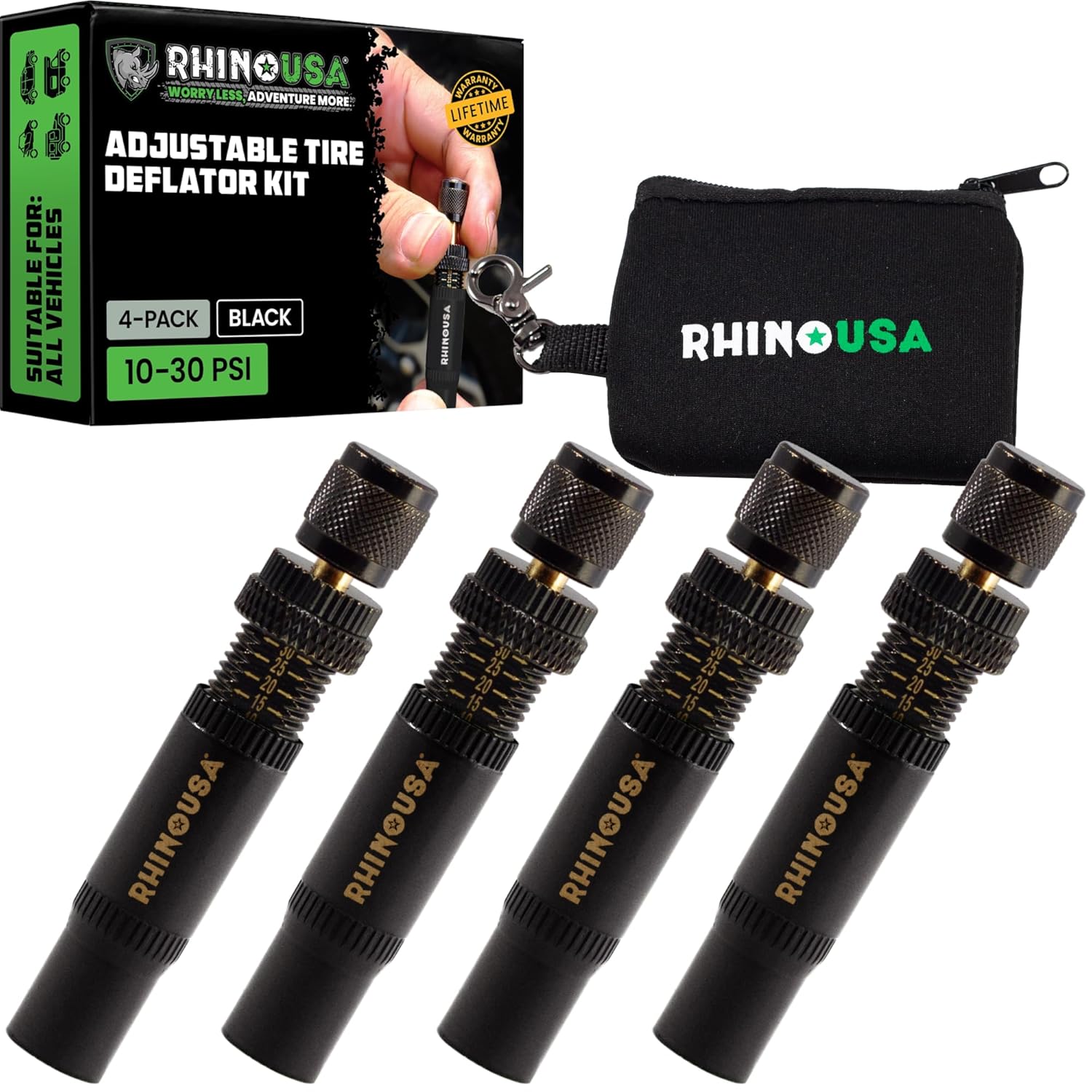
Use the Rhino USA adjustable tire deflators to air down all four tires at once by screwing one deflator onto each valve stem, letting you step away while the tires reach your preset pressure. Each deflator independently adjusts across a 10–30 PSI range with laser-etched indicators for quick setup and verification, making it ideal for beach, sand, and rocky off-road trails.

The Ziopetru adjustable magnetic wheel alignment tool helps you check and restore camber and caster positioning after removing and reinstalling undercarriage components. With a clear leveling/bubble measurement system and an easy zeroing adjustment knob, it supports precise horizontal angle checking. The strong magnetic base mounts to metal surfaces for convenient use at home on cars, motorcycles, trucks, vans, and SUVs.

Keep your tires properly inflated with this analog VONDIOR tire pressure gauge, designed for fast, easy readings without batteries. The swiveling, two-axis hose and large glow dial help you measure at any tire angle with instant visibility. Built with a protective rubber shield, it supports durable, low-maintenance use for cars and trucks.
Are There Rubbing or Clearance Issues With These Tire Sizes?
A 265/70R17 tire is usually the easier fit because it is narrower and shorter. A 285/70R17 tire takes up more space in the wheel well, so it can rub on the fender liner, mud flap, control arm, sway bar, body mount, or inner wheel well.
Rubbing often appears during full steering lock, backing up, driveway angles, hard compression, or off-road articulation. A tire that clears while parked can still rub when the suspension compresses.
- Check wheel width: Make sure the wheel falls within the tire maker’s approved rim-width range.
- Check offset and backspacing: The same tire can fit differently on different wheels.
- Check full steering lock: Turn both directions and inspect the inner and outer clearance.
- Check compression clearance: Look at fender liners, mud flaps, body mounts, and bumper edges.
- Check spare-tire storage: A 285/70R17 spare may not fit in the factory spare location on every vehicle.
- Check alignment after installation: Upsizing can expose worn suspension parts or alignment issues.
If your vehicle is stock, a 265/70R17 will usually be the safer low-hassle choice. A 285/70R17 may require trimming, caster adjustment, different wheel offset, a mild lift, or other fitment changes, depending on the vehicle.
Pro Tip: Test fit one front tire before mounting the full set. The front wheels reveal most rubbing problems because they turn and move through suspension travel.
[Products Worth Considering]

Upgrade your 2024-2026 Tesla Model 3 Highland with REEVAA all-weather mud flaps designed for seamless fit along the original body lines. The set of four delivers strong splash protection against mud, gravel, and road debris while using OEM-grade durable materials. Installation is non-destructive with original hole positions and snap-in clips, and the aerodynamic design helps minimize impact on efficiency.

Replace your worn or missing TPMS sensors with pre-programmed, direct-fit sensors for compatible Ford, Lincoln, and select Mazda models. Each sensor comes ready to activate with a scan tool, helping restore accurate tire pressure monitoring and trouble-free installation. Built with a long-life CR2032 battery and tested before factory release, this set provides dependable performance with a one-year warranty.

Replace worn or missing TPMS sensors with a pre-programmed 4-pack designed for compatible GM vehicles. These 315MHz sensors provide real-time tire pressure monitoring and alert you if pressure is too high, too low, or if a rapid air leak occurs. Most installations are ready with minimal relearn effort after mounting, helping improve safety and driving confidence.
How Does Switching Sizes Affect Vehicle Performance?
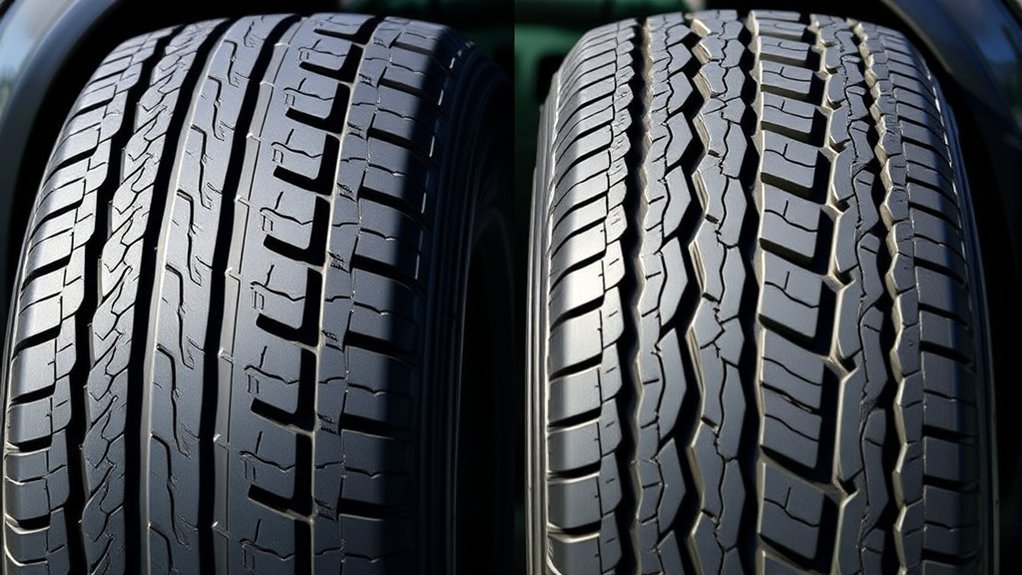
Switching from 265/70R17 to 285/70R17 tires can improve stance and ground clearance, especially on trucks and SUVs. The larger contact patch may also help off-road traction in sand, dirt, rocks, or loose terrain, depending on tread design and tire pressure.
On pavement, the change is not always an upgrade. A wider and heavier tire can make steering feel slower, reduce acceleration, and increase braking distance. The taller tire also changes the effective gear ratio, which can make the vehicle feel less eager from a stop.
You may also notice more tramlining, especially with aggressive all-terrain or mud-terrain tread patterns. Tramlining happens when wider tires follow grooves and uneven pavement more than narrower tires.
How Does Switching Sizes Affect Speedometer and Odometer Readings?
The 285/70R17 has about 3.49% more circumference than the 265/70R17. That means the tire travels farther with each rotation. If your speedometer is calibrated for 265/70R17 tires, it will usually read low after switching to 285/70R17 tires.
| Speedometer Shows | Approx. True Speed With 285/70R17 |
|---|---|
| 30 mph | 31.0 mph |
| 60 mph | 62.1 mph |
| 70 mph | 72.4 mph |
This can also affect odometer readings, transmission shift behavior, cruise control accuracy, and driver-assistance systems. Many modern trucks can be recalibrated with a dealer tool, scan tool, tuner, or vehicle settings menu, depending on the model.
How Does Switching Sizes Affect Fuel Efficiency?
Switching from 265/70R17 to 285/70R17 tires can reduce fuel efficiency, but the exact change depends on the tire model. Tire weight, tread pattern, rubber compound, inflation pressure, vehicle gearing, and driving speed all matter.
A wider tire can create more rolling resistance and air drag. A heavier LT tire can also take more energy to accelerate. On some vehicles, the change may be small. On others, especially with heavy all-terrain or mud-terrain tires, the loss can be more noticeable.
Tire pressure also plays a major role. NHTSA says proper tire pressure affects safety, tire durability, and fuel consumption. It also says the correct pressure comes from the vehicle manufacturer’s placard or owner’s manual, not the maximum pressure printed on the tire sidewall.
Note: After changing tire size or load range, ask a qualified tire shop how to set cold inflation pressure for your vehicle’s axle loads. Do not guess based only on the tire’s maximum sidewall pressure.
What Do Users Say About Their Experiences With Each Tire Size?
Drivers who choose 265/70R17 tires often like the simpler fit, lighter feel, and better daily-driving manners. This size usually works well for commuting, highway driving, towing within factory limits, and mild off-road use when paired with the right tread.
Drivers who choose 285/70R17 tires usually want more stance, more sidewall height, and a stronger off-road look. They may also like the added clearance on trails. The tradeoff is that the 285 can feel heavier, rub more easily, and reduce fuel economy depending on the tire.
Performance Differences Noted
- Traction: A 285 tire can offer more footprint, but tread design and tire pressure matter more than width alone.
- Steering feel: A 265 tire usually feels lighter and more direct on pavement.
- Clearance: A 285 tire adds about 0.55 inches of ground clearance, but it also needs more wheel-well room.
- Acceleration: A heavier and taller 285 can make the vehicle feel slower, especially with stock gearing.
- MPG: A 265 tire usually has the advantage for daily driving and highway fuel economy.
Aesthetic Preferences Shared
Many truck, SUV, and Jeep owners prefer the 285/70R17 because it fills the wheel well and gives the vehicle a wider, more planted stance. It can look more aggressive without jumping to a much larger tire size.
The 265/70R17 has a more factory-like look. It may not appear as bold, but it often keeps the vehicle easier to drive, easier to align, and less likely to rub. If you care more about daily comfort than stance, the 265 is often the cleaner choice.
Which Size Should You Choose?
Choose 265/70R17 if you want easier fitment, better fuel economy, lighter steering, fewer rubbing concerns, and a size closer to many factory setups. It is the safer choice for most daily drivers who do not want suspension or trimming changes.
Choose 285/70R17 if you want more stance, more ground clearance, and a wider tire for off-road use, and you are willing to verify clearance. It works best when your wheel offset, suspension, alignment, and vehicle gearing can support the larger size.
The biggest practical difference is not just width. The 285/70R17 changes diameter, clearance, speedometer accuracy, and fitment room all at once.
[Products Worth Considering]

This universal wheel alignment tool helps you accurately restore tire tilt angles after tire or suspension repairs using an adjustable camber gauge. It features a powerful magnetic base that firmly attaches to brake rotors for stationary, slip-free readings, improving consistency during measurement. Built from durable PC plastic, it resists wear and corrosion and is compact enough for car, truck, RV, and motorcycle alignment tasks.

The ETENWOLF T600 digital tire pressure gauge delivers precise, manually calibrated readings to ANSI B40.7 Grade 2A standards with ±0.5% PSI accuracy. Its 360° rotating nozzle and display hold make it easy to check pressures from any angle, while a bleed button helps dial tires to the perfect level. With a 0–250 PSI range and support for PSI, BAR, and KPA, it’s a convenient tool for maintaining tire performance across many vehicles and seasons.
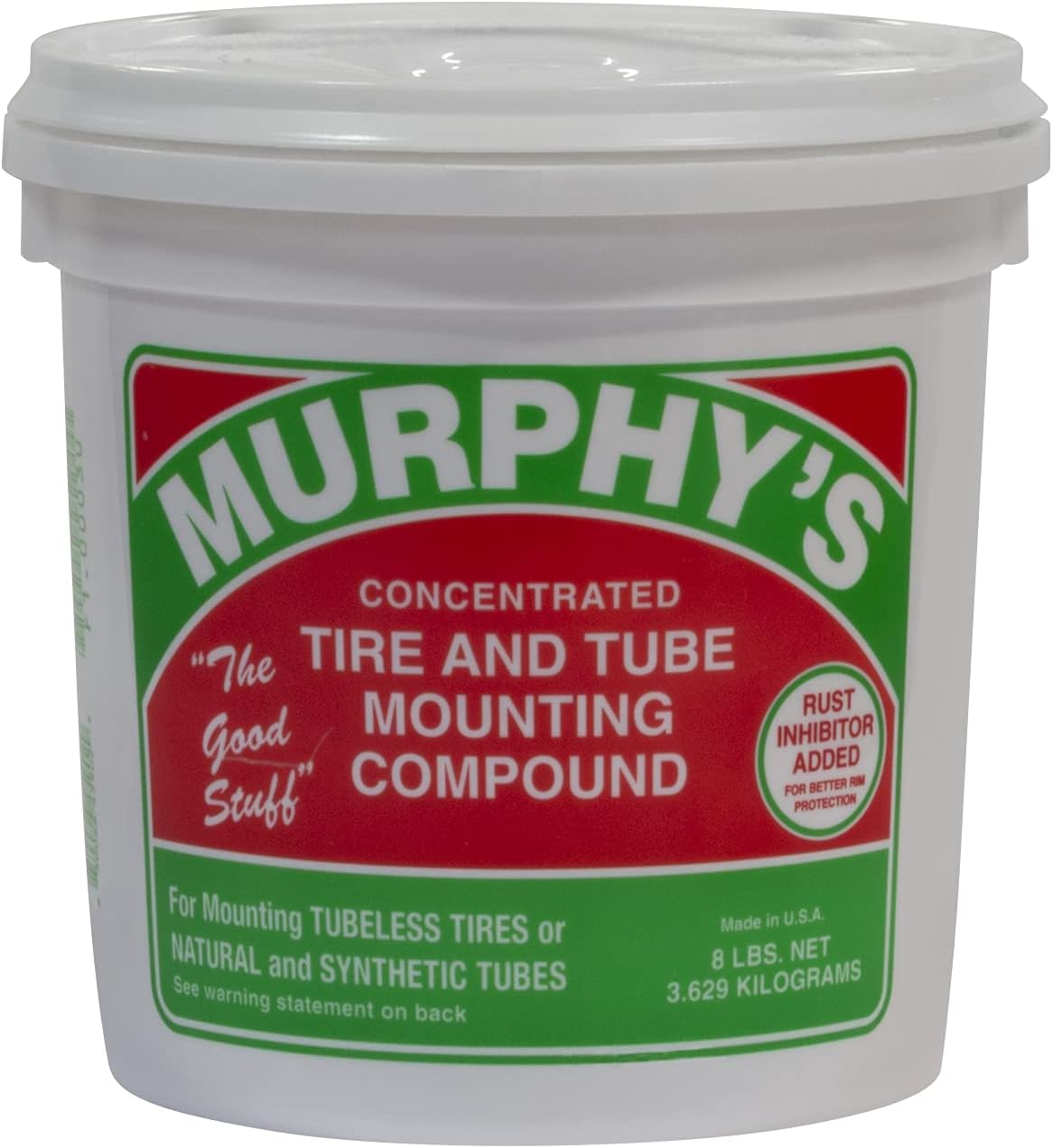
A concentrated tire and tube mounting compound designed to help simplify mounting rubber tires and tubes on passenger, semi truck, construction, and OTR applications. Its ultra-thick formula packs beads effectively and includes rust inhibitors to help protect against corrosion during use.
Frequently Asked Questions
Is 285 considered a wide tire?
Yes. A 285 tire is wider than a 265 tire by 20 mm, or about 0.79 inches. Whether it is “wide” for your vehicle depends on your wheel width, offset, suspension clearance, and fender space.
Is 285/70R17 a good tire size?
Yes, 285/70R17 can be a good size for trucks, SUVs, and Jeeps when you want a taller stance and more ground clearance. It is not automatically the best choice for every vehicle because it can rub, weigh more, and affect speedometer accuracy.
How much taller is a 285/70R17 than a 265/70R17?
A 285/70R17 is about 1.10 inches taller in overall diameter. Since ground clearance changes by radius, your vehicle gains about 0.55 inches of clearance under the axle.
Will 285/70R17 tires rub on stock suspension?
They might. Some vehicles clear 285/70R17 tires on stock suspension, while others need trimming, different offset, caster adjustment, or a lift. Check full steering lock and suspension compression before committing to the size.
Do 285/70R17 tires hurt gas mileage?
They can. A 285/70R17 tire is usually wider and often heavier, which can increase rolling resistance. The actual MPG change depends on tire weight, tread pattern, inflation pressure, gearing, and driving speed.
Does a 285/70R17 have a higher load rating than a 265/70R17?
Not always. Load rating depends on the exact tire, not just the size. Always compare the load index, load range, and maximum load shown on the sidewall against your vehicle’s tire placard and owner’s manual.
Conclusion
The 265/70R17 is the better choice if you want a simple fit, better road manners, and fewer fuel-economy or rubbing concerns. The 285/70R17 is the better choice if you want a wider stance, about 0.55 inches of extra ground clearance, and a more aggressive look.
Before switching, check wheel width, offset, load index, tire pressure, full-lock clearance, and speedometer error. A 285/70R17 can be a strong upgrade, but only when your vehicle has the clearance and load capacity to run it safely.
Sources
- NHTSA TireWise — supports correct tire-size selection, tire pressure guidance, load-rated tire safety, and tire-maintenance guidance.
- Discount Tire Tire Size Calculator — supports tire-size comparison factors such as section width, overall diameter, circumference, revolutions per mile, and speedometer effects.
- Goodyear Tire Load Index Guide — supports load-index interpretation and light-truck load-index differences.
- 49 CFR § 571.119 — supports tire marking requirements for maximum load, inflation pressure, actual plies, and load-range letter.