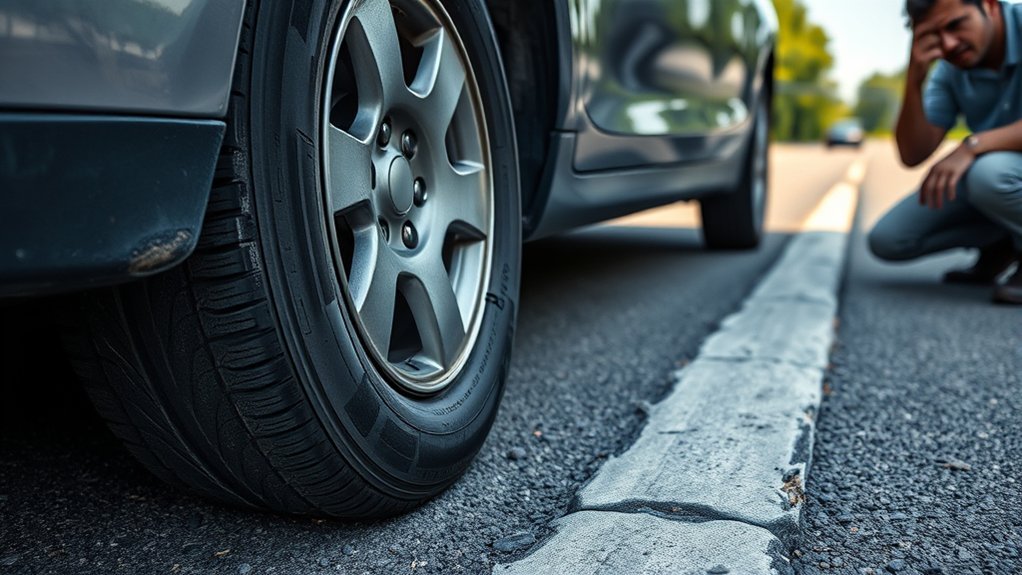
Yes, hitting a curb can pop your tire, but the damage does not always show up right away. A hard curb strike can cut the sidewall, break internal tire cords, bend the wheel, cause a slow leak, or knock the alignment out. After any strong impact, inspect the tire, wheel, steering feel, and tire pressure before you keep driving normally.
Quick Answer
A curb hit can pop your tire immediately or create hidden damage that fails later. Check for sidewall bubbles, cuts, cracks, exposed cords, bent rims, pressure loss, vibration, pulling, or a crooked steering wheel. If you see damage or the car feels unsafe, stop driving and get the tire, wheel, and suspension inspected.
Key Takeaways
- A curb strike can pop a tire, cut the sidewall, break internal cords, or create a slow leak.
- Sidewall bubbles, exposed cords, deep cuts, rapid pressure loss, or a bent rim are not safe to ignore.
- A tire can look fine after impact but still have hidden damage, so check pressure for the next few days.
- Pulling, vibration, clunking, or an off-center steering wheel can point to alignment, wheel, or suspension damage.
- If anything looks or feels wrong, drive only as far as needed to stop safely and arrange a professional inspection.
At a Glance
| Time Required | 5 to 10 minutes for a basic roadside check, plus a shop visit if you notice damage or handling changes. |
| Difficulty | Easy for visual checks. Professional help is needed for internal tire damage, wheel bends, alignment, or suspension inspection. |
| Tools Needed | Tire pressure gauge, flashlight, phone camera, and your vehicle owner’s manual or door-jamb tire-pressure label. |
| Cost | Free for a basic self-check. Repair costs vary if the tire, wheel, alignment, or suspension parts need service. |
Can Hitting a Curb Pop Your Tire?
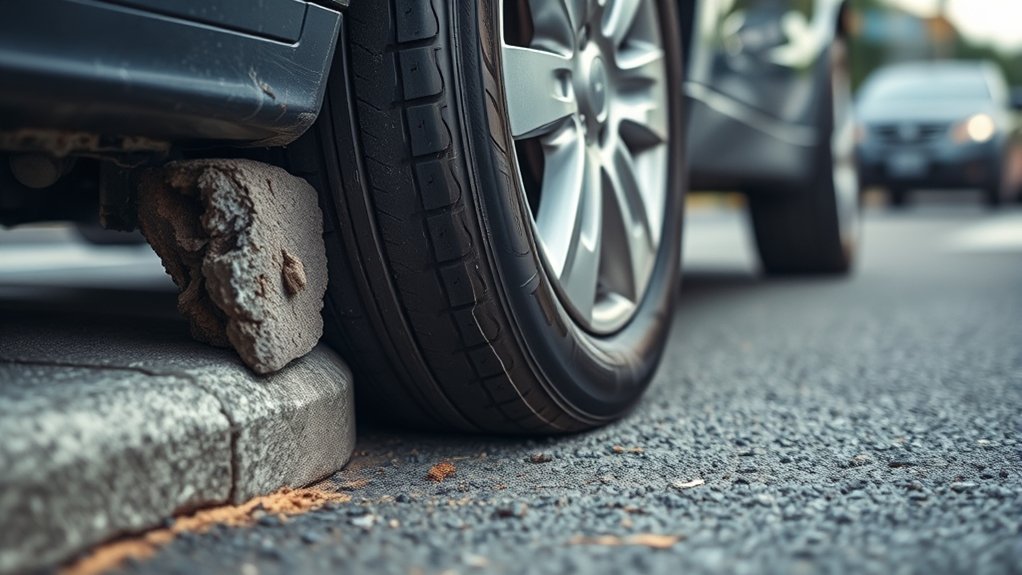
Yes, a curb hit can pop your tire if the impact pinches the sidewall, cuts the rubber, breaks internal cords, unseats the tire bead, or bends the wheel enough to let air escape. Sometimes the tire goes flat right away. Other times, it holds air at first but develops a slow leak, sidewall bubble, vibration, or uneven wear later.
The risk depends on your speed, the curb angle, tire pressure, sidewall height, load, wheel size, and the sharpness of the impact. A low tire or low-profile tire has less cushion between the rim and the curb, so the sidewall can take more force. Still, any tire can suffer hidden structural damage after a hard strike.
The National Highway Traffic Safety Administration warns that a tire can suddenly lose pressure after you bump a curb and says tires should be checked for pressure, tread, and physical damage. That is why you should not judge the tire only by whether it still looks inflated.
Warning: Do not keep driving normally if you see a sidewall bubble, deep cut, exposed cords, leaking air, a bent rim, or feel new vibration after the curb hit. Those signs can point to unsafe tire, wheel, or suspension damage.
What to Check First After Hitting a Curb
Pull over in a safe place before you inspect the damage. Turn on your hazard lights if you are near traffic, and avoid standing between your vehicle and moving cars. Once you can check safely, start with the tire that hit the curb and compare it with the tire on the opposite side.
- Check the sidewall. Look for bubbles, bulges, cuts, cracks, slices, scuffs, missing chunks, or exposed fabric cords.
- Check the tread edge. Look for torn rubber, a shifted tread block, embedded debris, or a fresh split near the shoulder.
- Check the wheel lip. Look for bends, dents, cracks, fresh curb rash, or a gap where the tire bead meets the rim.
- Check tire pressure. Use a gauge, then compare the reading with the pressure listed on the driver’s door-jamb label or in the owner’s manual.
- Check how the car drives. Watch for pulling, steering-wheel vibration, wobbling, clunking, or an off-center steering wheel.
If the tire pressure is dropping, the wheel looks bent, or the vehicle feels unstable, stop driving and arrange roadside help or a shop inspection. A small scuff may only be cosmetic, but a deep sidewall mark or bubble is a safety issue.
Inspect Curb Damage on Tires and Wheels
After a curb strike, inspect the tire and wheel in bright light. The sidewall matters most because it flexes while you drive and cannot be judged only by tread depth. Any raised bubble usually means the tire’s internal cords have been damaged. A deep cut, split, or exposed cord means the tire is no longer safe for normal driving.
Next, inspect the rim lip. A bent wheel can cause a bead leak, vibration, or steering shake even if the tire itself has not popped. You may notice fresh curb rash, a dented rim edge, or a small gap where the tire seats against the wheel. If you hear hissing, smell rubber, or see the sidewall collapsing, do not drive on that tire.
A tire that still holds air after a curb hit can still be unsafe if the sidewall, bead, rim, or internal structure was damaged.
- A scuffed wheel edge can hide a bent rim or bead leak.
- A sliced sidewall can fail suddenly under load or at highway speed.
- Uneven wear on one shoulder can point to an alignment problem after the hit.
- A new shake through the steering wheel can point to wheel, tire, or suspension damage.
[Products Worth Considering]

Replace or upgrade your zero-turn lawn mower tires with a universal fit flat-free tire and wheel assembly in a convenient 2-pack. Smooth tread front-caster style helps turning with reduced turf damage, while flat-free design eliminates the maintenance and downtime of air-filled flats. The included adapter kit supports 5/8-inch axles and hub lengths from 3.4 to 5 inches for compatibility across most ZTR mowers.
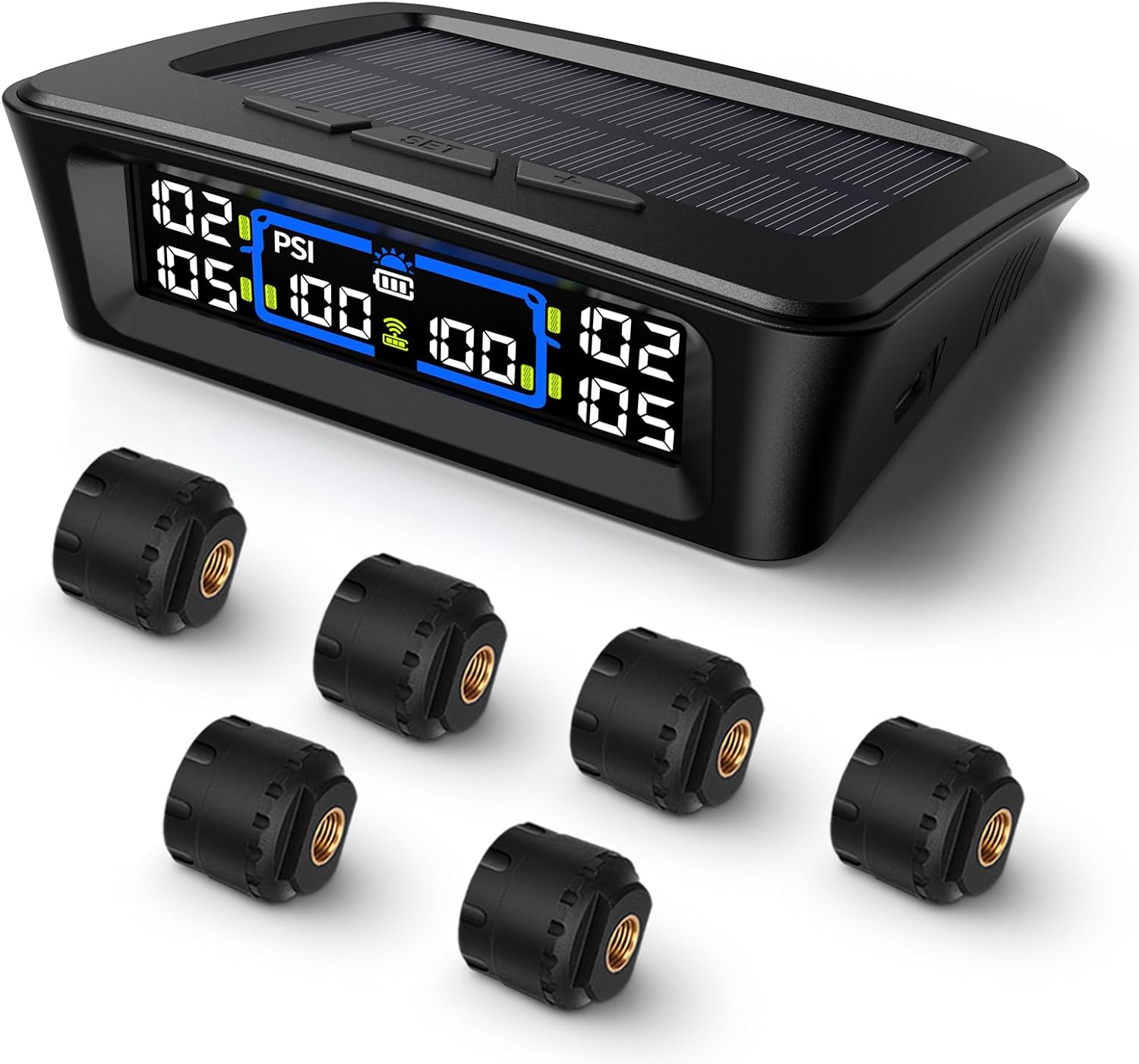
The Tymate TM12 RV TPMS delivers real-time tire pressure and temperature monitoring with a stable 433Hz display for safer long-distance driving. It supports simultaneous monitoring across vehicle and trailer zones, includes six alarm modes for pressure, temperature, leakage, battery, and signal loss, and features easy DIY installation with auto calibration. Power is supplied via USB-C charging or solar recharging, with a wide 0–144 PSI range and up to 50 ft signal coverage for RVs and towable trailers.

Monitor tire tread wear with a smart, color-coded depth gauge that shows clear condition ranges at a glance. The bar is range marked for fast, easy readings, helping you maintain safer traction and performance. Each gauge is portable with a pocket clip, and the set includes 20 units for daily use and sharing.
Check for Sidewall Bubbles and Slow Leaks
A sidewall bubble is one of the clearest warning signs after hitting a curb. It usually means the tire’s inner reinforcement has been damaged and air pressure is pushing the weakened area outward. You cannot safely patch a sidewall bubble. The usual safe fix is tire replacement.
Also watch for a slow leak. Check tire pressure when the tire is cold, then check it again the next morning and over the next few days. Bridgestone recommends checking pressure with cold tires and using the vehicle manufacturer’s recommended PSI from the door jamb or owner’s manual. If one tire keeps losing air after the curb hit, assume there is a leak until a technician proves otherwise.
Do not rely only on the Tire Pressure Monitoring System. TPMS can warn you when pressure drops significantly, but it cannot confirm that the tire structure is healthy. A tire can have impact damage before the dashboard warning light comes on.
Pro Tip: Take a clear photo of the tire, wheel, and curb-rash area right after the impact. Photos help you compare whether a bubble grows and can help if you need a repair estimate or insurance claim.
[Products Worth Considering]

Measure tire tread depth quickly and accurately with this LUMITECO dial gauge that reads in 1/32" increments up to 14/32". The color-coded green/yellow/red zones make it easy to judge tire wear and know when replacement is needed. A rugged, compact design with a protective pouch helps keep the gauge ready for use on cars, trucks, motorcycles, and more.

This professional wheel and rim cleaning brush set lifts brake dust, grime, and dirt with soft, scratch-free microfiber and synthetic wool fibers. The rim brush bends up to 360 degrees for easy access to hard-to-reach areas around spokes, lips, and faces. Ideal for thorough cleaning of car, truck, motorcycle, bicycle, RV, and more wheel and tire surfaces.

Accurately measure tire tread depth with a calibrated gauge marked from 0 to 1 inch in 1/32 inch increments. The color-coded bar helps you quickly identify tread condition ranges, supporting safe driving for trucks, motorcycles, automobiles, and passenger vehicles.
Check Alignment and Suspension Damage
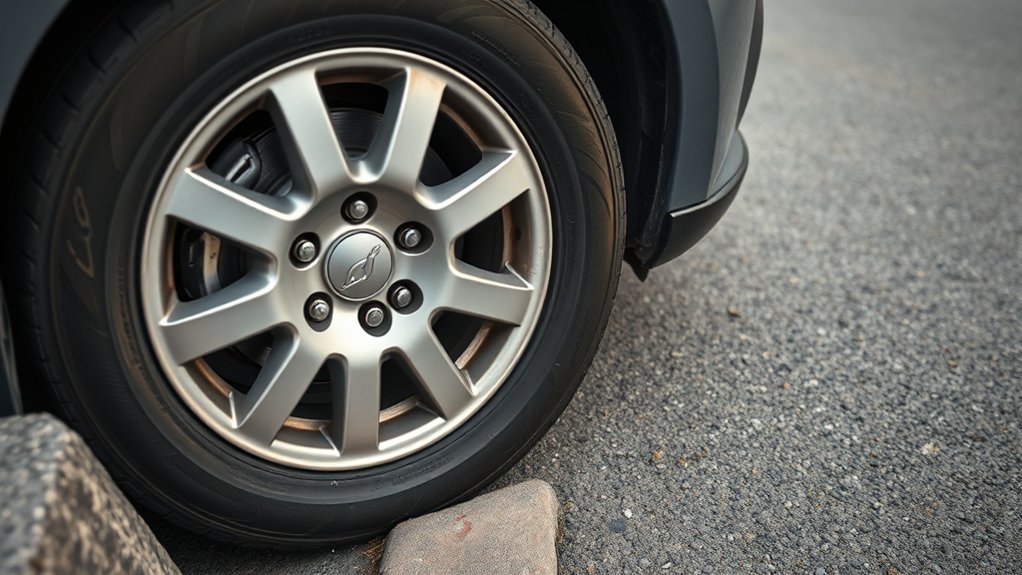
Even if the tire looks intact, a curb strike can affect your alignment, wheel balance, steering parts, or suspension. You may notice the vehicle drifting to one side, the steering wheel sitting off-center, or the car shaking at certain speeds. Those signs mean you should have the vehicle inspected before the tire starts wearing unevenly or the handling gets worse.
Ask a technician to check the wheel, tire, alignment angles, control arm, tie rod, ball joint, sway bar link, strut, and wheel bearing if the hit felt hard. NHTSA says tire balancing and wheel alignment help prevent vibration, veering, and premature tire wear, so an alignment check is a smart step after a strong impact.
- Pulling left or right: possible alignment shift, bent suspension part, or tire damage.
- Crooked steering wheel: possible toe-angle change after impact.
- New vibration: possible bent wheel, damaged tire, lost wheel weight, or suspension issue.
- Clunking or looseness: possible steering or suspension damage.
- Rapid shoulder wear: possible misalignment or bent component.
[Products Worth Considering]

Replace worn tires quickly with this universal 4.80/4.00-8 tire and inner tube set designed for wheelbarrows and outdoor utility carts. The ribbed tread helps reduce turf damage while the natural rubber construction supports longer service life. Compatible with 15.5-inch outer diameter, 4-inch width, and 8-inch rim diameter wheels, it uses a straight TR-13 valve stem for easy installation. For best results, inflate with a manual pump and do not exceed 25 PSI.

The TYAMATE TM8 solar-powered wireless TPMS delivers real-time tire pressure and temperature monitoring with six alarm modes for safer driving. A vibrant color LCD display shows readings clearly while windshield mounting keeps it hands-free and easy to read. With a wide 0–87 PSI range, strong 433.92 MHz signal transmission, and quick sensor pairing, it’s ideal for RV, sedan, SUV, MPV, and truck use.
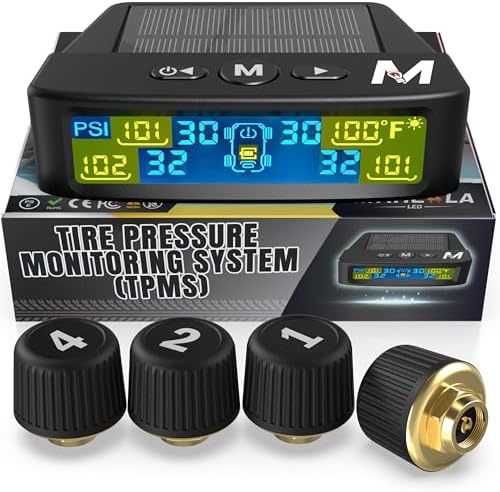
Marcala’s TPMS set of four sensors helps you monitor tire pressure and temperature in real time while driving, with updates every second. The bright color LCD uses auto-dimming for easy viewing, powered by dual solar and USB charging, and offers six alarm modes. Built for trailers, RVs, campers, trucks, and towing setups, the sensors support monitoring 1-4 wheels up to 98 PSI with IP67 waterproof protection.
What to Do After Hitting a Curb
After hitting a curb, your first goal is safety. Slow down smoothly, pull over where it is safe, and inspect the tire before you keep driving. If the tire is flat, shredded, leaking quickly, or has a sidewall bubble, do not drive on it. Use the spare only if your vehicle has one and you can install it safely.
If the tire looks normal and holds pressure, drive slowly at first and pay close attention to steering feel. Stop again if the vehicle pulls, shakes, wobbles, or makes new noises. Schedule a tire and alignment inspection if the impact was hard, the steering wheel is off-center, or you see any wheel damage.
Note: A visual check helps, but it cannot reveal every internal tire injury. When in doubt, have a tire professional remove and inspect the tire and wheel assembly.
When to Stop Driving Immediately
Stop driving and arrange help if you notice any of these warning signs after a curb impact:
- A visible sidewall bubble or bulge
- A deep sidewall cut, crack, or exposed cord
- A tire losing air quickly
- A bent, cracked, or heavily dented wheel
- Strong vibration or wobbling
- Vehicle pulling hard to one side
- Grinding, clunking, or scraping noises
- Steering that feels loose, crooked, or unstable
If you must move the vehicle out of traffic, drive only the shortest safe distance at low speed. A damaged tire can fail with little warning, especially once heat and load build up.
Frequently Asked Questions
Why did my tire pop when I hit a curb?
Your tire likely popped because the curb impact pinched the sidewall between the rim and curb, cut the rubber, unseated the bead, or bent the wheel enough to release air. Low tire pressure, higher speed, a sharp curb angle, and low-profile tires can increase the risk.
How hard do you have to hit a curb to pop your tire?
There is no single speed or force that guarantees a popped tire. A light scrape may only mark the sidewall or wheel, while a hard impact at an angle can cut the tire, break internal cords, or bend the rim. The tire’s pressure, sidewall height, vehicle load, and curb shape all matter.
How can you tell if a tire is okay after hitting the curb?
Check the sidewall, tread edge, rim lip, and tire pressure. The tire is more likely okay if there are no bubbles, cuts, cracks, exposed cords, leaks, bent wheel edges, vibrations, pulling, or steering changes. Still, have it inspected if the impact felt hard or the pressure drops later.
Is hitting a curb a serious fault?
It can be serious because a curb strike can damage the tire, wheel, alignment, steering, or suspension. A minor scrape may not need repair, but vibration, pulling, pressure loss, sidewall damage, or a crooked steering wheel should be treated as a safety concern.
Can you drive with a sidewall bubble after hitting a curb?
No. A sidewall bubble usually means the tire’s internal structure has been damaged. Do not drive normally on that tire. Move the vehicle only if needed for safety, then replace the tire or have it handled by a tire professional.
Will my TPMS warn me after curb damage?
TPMS may warn you if tire pressure drops significantly, but it cannot confirm that the tire’s sidewall, cords, bead, wheel, or suspension are safe. Always inspect the tire and wheel after a curb strike, even if no dashboard warning appears.
Conclusion
Yes, hitting a curb can pop your tire, but the bigger risk is that the damage may be hidden at first. A curb strike can cause a slow leak, sidewall bubble, bent rim, alignment problem, or suspension damage that affects handling and tire wear. Inspect the tire and wheel right away, check pressure again over the next few days, and get professional help if you see damage or feel anything unusual.
Sources
- NHTSA TireWise — tire pressure, physical tire damage, tread checks, blowout safety, TPMS limits, and alignment guidance.
- Bridgestone: How to Check Tire Pressure — cold tire-pressure checks, monthly pressure checks, and using the vehicle manufacturer’s recommended PSI.
- NHTSA Recalls — tire and vehicle recall lookup for safety-related defects.