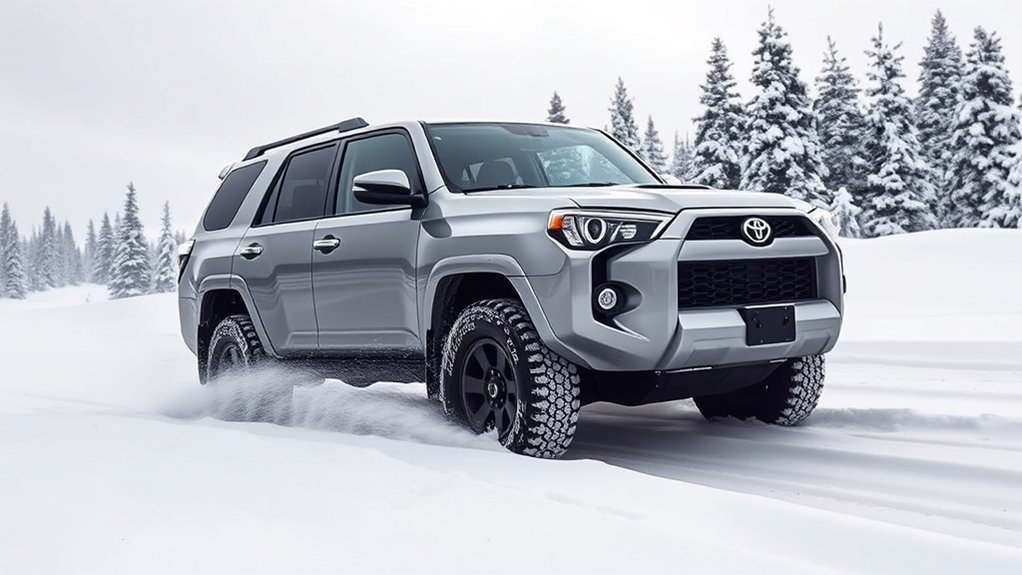
All-terrain tires can work on your Toyota 4Runner during occasional light snow, especially when the tires carry the Three-Peak Mountain Snowflake symbol and still have healthy tread. However, an aggressive tread pattern and four-wheel drive do not guarantee reliable braking or cornering on ice. Your local climate, tire condition, exact tire model, and driving conditions should determine whether you need dedicated winter tires.
Quick Answer
A 3PMSF-rated all-terrain tire can be adequate for a 4Runner used in occasional light or moderate snow on maintained roads. Choose dedicated winter tires when you regularly encounter ice, packed snow, steep roads, prolonged freezing temperatures, or severe storms. Winter tires normally provide more dependable cold-weather braking, steering, and recovery.
Key Takeaways
- Look for the 3PMSF symbol, but do not assume it makes an all-terrain tire equal to a dedicated winter tire.
- Four-wheel drive can help your 4Runner move forward, but braking and cornering still depend heavily on tire grip.
- Use the cold pressure on the driver-door placard, not a generic PSI range or the maximum pressure molded into the tire.
- Install winter tires as a matching set of four and verify size, load index, speed rating, and chain restrictions.
- Choose winter tires when ice, packed snow, steep roads, or extended sub-45°F temperatures are normal rather than occasional.
Last updated: July 17, 2026. Tire fitment and chain compatibility vary by 4Runner model year, trim, wheel size, and tire size.
Comparing All-Terrain Tires and Dedicated Winter Tires
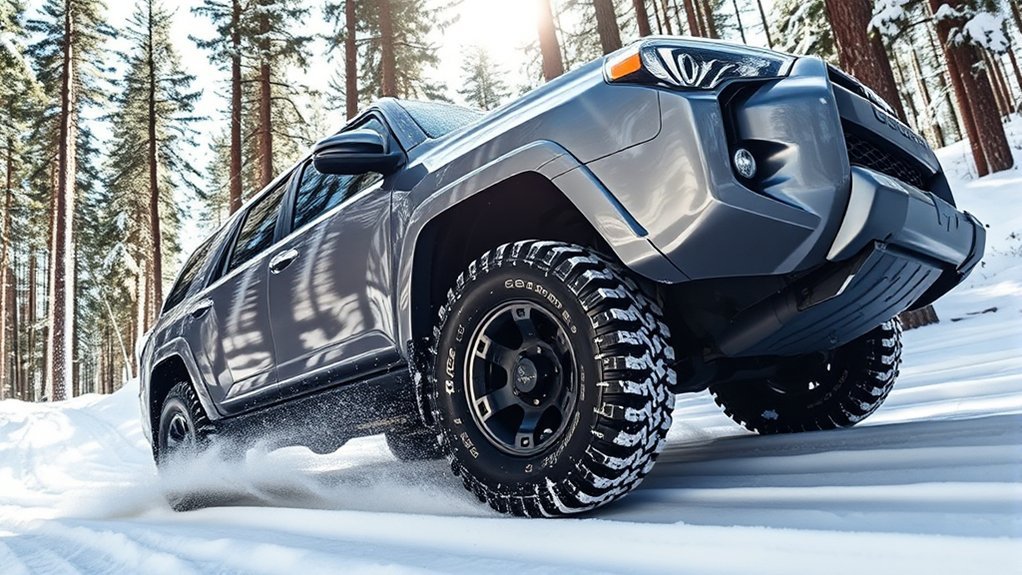
All-terrain and winter tires are designed around different priorities. An all-terrain tire must balance paved-road driving, loose dirt, gravel, mud, durability, and year-round wear. A dedicated winter tire focuses more heavily on cold pavement, snow, slush, and ice.
Some all-terrain tires, including the Cooper Discoverer AT3 4S, Falken Wildpeak A/T4W, Toyo Open Country A/T III, and BFGoodrich All-Terrain T/A KO3, carry the Three-Peak Mountain Snowflake symbol in applicable sizes. That marking shows that the specific tire meets a defined severe-snow traction requirement. It does not guarantee that the tire will match a dedicated winter tire during ice braking, emergency cornering, or repeated driving on packed snow.
Dedicated winter models use tread patterns, siping, and compounds developed primarily for cold-weather traction. SUV winter tires such as the Bridgestone Blizzak DM-V2 or suitable Firestone Winterforce models may therefore provide a more complete winter package when available in the correct 4Runner size and load rating.
| Factor | 3PMSF All-Terrain Tire | Dedicated Winter Tire |
|---|---|---|
| Primary purpose | Year-round on-road and off-road versatility | Cold pavement, snow, slush, and ice |
| Light snow | Often adequate when tread is healthy | Generally strong |
| Packed snow and ice | Performance varies widely by model | Usually the safer category |
| Warm-weather use | Designed for year-round service | Should normally be removed after winter |
| Off-road durability | Usually better suited to rocks, gravel, and trails | Not the main design priority |
Four-wheel drive helps you start moving, but the tires still determine how effectively your 4Runner stops and changes direction.
[Products Worth Considering]

These universal tire valve stem caps help protect valve cores from dust, debris, and moisture while helping maintain stable tire pressure. The corrosion-resistant metal construction and sealed design provide reliable protection in road grime, mud, and winter conditions. Twist-on installation makes them quick to fit on cars, SUVs, trucks, and motorcycles.

Monitor tire tread wear with a smart, color-coded depth gauge that shows clear condition ranges at a glance. The bar is range marked for fast, easy readings, helping you maintain safer traction and performance. Each gauge is portable with a pocket clip, and the set includes 20 units for daily use and sharing.

The Kurgo Seasonal Tire Tote helps protect your car interior, clothes, and garage from tire grime, brake dust, and residue during seasonal tire changes. Its universal design fits most passenger tires between 22" and 31" in diameter, making storage and transport simpler with less mess. Built for rugged, repeated use, it’s machine washable for easy care and comes with a lifetime warranty.
How All-Terrain Tires Perform in Snowy Conditions
All-terrain performance cannot be judged by tread appearance alone. Two tires with similar-looking shoulder blocks can produce very different acceleration, braking, and cornering results. Tire size, compound, tread depth, vehicle load, road temperature, and the specific type of snow all affect the outcome.
All-Terrain Tire Advantages
A suitable all-terrain tire gives your 4Runner one set of tires for pavement, gravel, dirt, and occasional winter weather. Large tread voids can help clear loose snow and slush, while biting edges and sipes can improve traction on a snowy surface.
A tire displaying the Three-Peak Mountain Snowflake symbol has met a defined snow-traction requirement. That makes it a better starting point for winter use than choosing an all-terrain tire solely because it displays an M+S marking or has an aggressive appearance.
For drivers who see a few storms each year and mainly travel on quickly plowed roads, a strong 3PMSF all-terrain tire may provide a practical balance. It also avoids the storage and seasonal changeover required by a second tire set.
Limitations in Snow Conditions
All-terrain tires make compromises so they can work across many surfaces. Those compromises become clearer on polished ice, packed snow, steep grades, and during emergency braking. Current comparative testing shows that even capable all-weather or all-terrain designs may give up meaningful snow and ice traction to dedicated winter tires.
Tread depth also matters. A tire may still be legal for dry-road use while having too little depth to clear snow effectively. Transport Canada advises against using tires worn close to 4 mm, approximately 5/32 inch, on snow-covered roads.
Added 4Runner weight from passengers, recovery equipment, roof cargo, or towing can further increase the distance needed to stop. Do not assume that a heavy LT tire automatically provides better winter grip. A stiffer, heavier construction may improve durability while changing ride, steering, and cold-weather response.
Comparing With Winter Tires
Dedicated winter tires normally offer their clearest advantage during repeated exposure to low temperatures, ice, and compacted snow. Transport Canada recommends considering winter tires as temperatures remain below 7°C or 45°F because winter compounds are designed to retain useful flexibility in colder conditions.
Recent independent winter testing also shows why the 3PMSF symbol should not be treated as proof that an all-weather or all-terrain tire equals a dedicated winter model. Compare actual snow braking, ice braking, acceleration, and handling tests in the size or category closest to your vehicle.
Note: M+S is a manufacturer-applied tread classification. The 3PMSF symbol represents a defined severe-snow traction test. Neither marking by itself tells you the tire’s complete ice-braking or cold-pavement performance.
Choose Tires Based on Your Actual Winter Conditions
| Typical conditions | Reasonable starting choice | Why |
|---|---|---|
| A few light storms, mostly plowed urban roads | Quality 3PMSF all-terrain tire | Balances occasional snow capability with year-round use |
| Frequent snow, freezing mornings, or rural roads | Dedicated winter tires | More consistent cold, snow, and ice performance |
| Mountain passes, steep grades, or regular black ice | Dedicated winter tires plus approved traction equipment where required | Braking and lateral grip matter more than off-road appearance |
| Unplowed trails with occasional road snow | Well-tested 3PMSF all-terrain tire | Retains off-road durability while adding verified snow capability |
| Severe winter plus frequent off-road travel | Season-specific setup selected with a qualified tire professional | No single tire category perfectly covers both extremes |
Signs You Need Dedicated Winter Tires Instead
Your present tires and driving experience provide useful warning signs. Do not wait for a crash or near miss to confirm that your setup lacks enough traction.
[Products Worth Considering]

Upgrade your Toyota’s wheels with durable aluminum alloy valve stem caps that help protect valve cores from corrosion and direct exposure to road grime, clay, water, and snow. Rubber rings improve sealing to help prevent air leakage and maintain stable tire pressure for safer driving. These caps are easy to install or remove without tools and add a unique, stylish look to your car.

Steelman white tire marking crayons provide high-contrast, semi-permanent marks for repairing and inspecting tires and equipment. They write on wet or dry, smooth or coarse surfaces including rubber, metal, glass, and wood, making them ideal for puncture location and damage outlining. The lead- and zinc-free crayons resist weather and fading yet wipe away when you no longer need the marks.

The Continental Grand Prix 5000 is an allround road bike tire engineered for faster rolling, improved ride comfort, and enhanced puncture protection. It features a Vectran Breaker cut-protection layer, Lazer Grip micro-profile tread for confident cornering control, and Active Comfort Technology to damp vibration for smoother rides. BlackChili compound optimizes grip and speed for everyday performance and long-lasting confidence.
Inadequate Snow Traction
Consider dedicated winter tires when your 4Runner repeatedly struggles to start on modest inclines, activates traction control during gentle acceleration, pushes straight ahead while turning, or takes noticeably longer to stop on packed snow.
A 3PMSF all-terrain model such as the Toyo Open Country A/T III or Cooper Discoverer AT3 4S may be suitable in some conditions, but the sidewall symbol cannot predict every part of its performance. Review independent same-category testing rather than relying only on manufacturer descriptions or owner comments from vehicles with different weights and tire sizes.
Frequent Slippage and Sliding
Frequent sliding during gentle braking or normal-speed turns means you have exceeded the available grip. Slow down immediately, increase your following distance, and reconsider the tire setup before continuing to use the vehicle in similar conditions.
Electronic stability control, ABS, traction control, and four-wheel drive can help you manage available traction. They cannot create grip that the tire does not have.
- Your commute regularly includes untreated roads or steep hills.
- Black ice is common in the morning or evening.
- Temperatures remain near or below 45°F for much of the season.
- You must travel before roads are plowed.
- You carry children, tow, or cannot postpone travel during storms.
- Your all-terrain tread is approaching 5/32 inch.
Essential Features of All-Terrain Tires for Winter Performance
Start with the correct 4Runner fitment, then compare winter capability. A tire with excellent snow reviews is still unsuitable if its size, load capacity, or wheel clearance does not meet your vehicle’s requirements.
- Correct tire size: Match an approved size for your model year, trim, and wheel unless a qualified professional has verified an alternative setup.
- Adequate load index: Never choose a tire with less load capacity than Toyota specifies.
- Suitable speed rating: Follow Toyota and tire-manufacturer requirements, including any winter-tire speed limitations.
- 3PMSF marking: Prefer this symbol when an all-terrain tire will see meaningful snow use.
- Useful siping: Numerous biting edges can help on snow and slippery surfaces.
- Balanced tread design: Large voids help with loose material, while excessive block movement can reduce paved-road precision.
- Independent test results: Prioritize measured braking and handling over appearance or marketing language.
- Healthy tread depth: Replace tires before snow capability becomes marginal.
Warning: Verify chain clearance in the owner’s manual before buying or installing chains. Some 4Runner tire sizes have limited clearance or prohibit conventional chains. Use only the approved axle, chain type, size, and installation procedure for your exact vehicle.
[Products Worth Considering]

This 100-piece set of snap-in tubeless tire valve stems is designed for standard 0.453 in (11.5 mm) rim holes and helps maintain reliable, steady tire pressure. Made with ozone-resistant rubber and brass cores, the valves are built for durability and long-term use. Easy to install by hand, they support safe driving and are suitable for cars, light trucks, trailers, and more.

Upgrade your ride with a 2-pack set of 26x1.95 folding mountain bike tires built for dependable traction on mud, rocks, and trail surfaces. A reinforced puncture-resistant layer helps protect against sharp debris, while included butyl inner tubes provide strong sealing and shock absorption. Ready for fast swaps with included tire levers and universal sizing for most bikes.

Replace worn pool cleaner tires with this all-purpose C10 tire set made to fit compatible Polaris automatic pool cleaners. The tires are designed for maximum traction while helping protect your pool finish, and they match Polaris OEM size and material. Each pack includes three new tires in sealed bags.
User Experiences With All-Terrain Tires in Winter Conditions
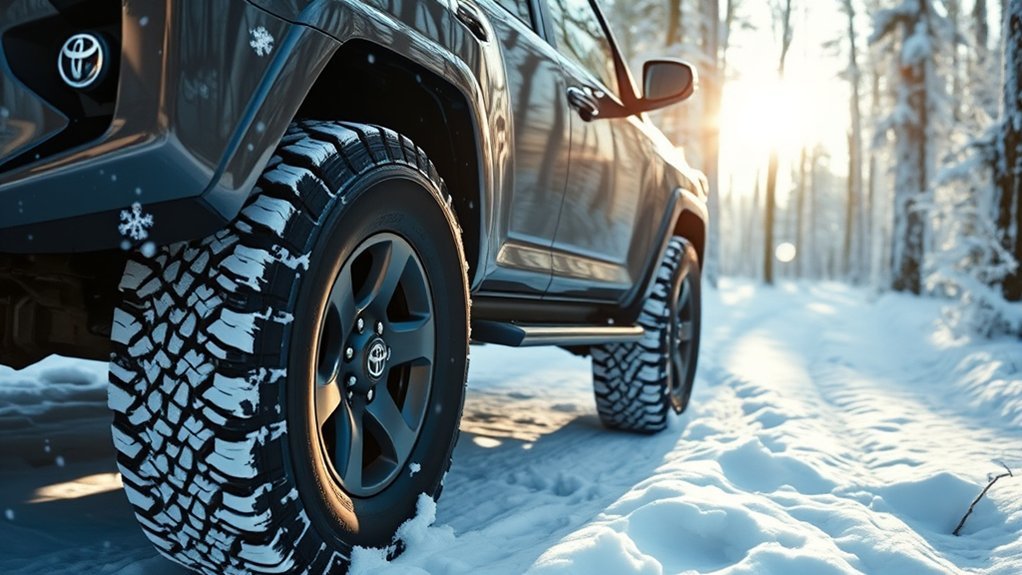
Owner reports can help identify noise, wear, comfort, and common weaknesses, but they should not replace controlled testing. A driver describing “excellent snow traction” may be discussing fresh powder at low speed, while another driver may be evaluating polished ice, mountain grades, or emergency braking.
Reports about the Cooper Discoverer AT3 4S, Falken Wildpeak A/T4W, Toyo Open Country A/T III, and BFGoodrich KO3 therefore need context. Check the tire size, remaining tread, inflation pressure, 4Runner generation, vehicle load, temperature, and exact road surface before applying someone else’s experience to your vehicle.
Current all-terrain testing confirms that category labels alone do not predict the winner in every winter exercise. One tire may brake well on ice but feel less stable during a snow-covered turn. Another may accelerate strongly yet require more distance to stop.
Pro Tip: When comparing test results, look first at snow braking, ice braking, and emergency handling. Straight-line acceleration matters, but stopping and directional control are usually more important for avoiding a collision.
Regional Considerations for All-Terrain Tire Use in Winter
Local climate should strongly influence your decision. A driver in a mild coastal climate who encounters wet slush twice per year has different needs from someone who travels through lake-effect snow, Canadian cold, or mountain passes every week.
All-terrain tires may be practical where roads are plowed quickly and severe storms are uncommon. Dedicated winter tires make more sense where temperatures remain low, snow becomes packed, freezing rain is common, or road treatment is limited.
Also check local winter-tire and traction-device laws before traveling. Rules can change across provinces, states, mountain routes, and seasonal checkpoints. A legal tire in one location may still require chains or another approved traction device on a controlled route.
Maintaining All-Terrain Tires in Winter
Winter maintenance helps a capable tire perform as designed. It cannot turn a worn or unsuitable all-terrain tire into a dedicated winter tire.
Proper Tire Pressure Maintenance
Check all tires when cold, meaning the vehicle has been parked long enough for the tires to return close to ambient temperature. Use the cold pressure printed on the driver-side Tire and Loading Information label or specified in the model-specific owner’s manual.
NHTSA tire-safety guidance explains that the correct road pressure is the vehicle manufacturer’s recommendation. The pressure molded into the tire sidewall is not the normal target for your 4Runner.
Pressure usually decreases as ambient temperature falls, so inspect it regularly and before long winter trips. Do not intentionally reduce pressure for ordinary snow-covered public-road driving. Underinflation can increase heat buildup, sidewall flex, steering delay, and tire damage.
Seasonal Tread Inspection Tips
Inspect the full width of each tread rather than measuring one easy-to-reach spot. Look for uneven wear, cuts, punctures, cracking, bulges, embedded objects, and damaged valve stems.
- Consider replacing winter-use tires before they wear close to 5/32 inch.
- Check multiple points because alignment or inflation problems can create uneven depth.
- Remove packed snow and ice from the wheel wells before driving.
- Rotate tires according to the Toyota maintenance schedule and tire warranty.
- Have alignment checked if the vehicle pulls or the tread wears unevenly.
- Inspect the spare tire and winter emergency equipment.
If your 4Runner uses a full-size spare, remember that its age, pressure, tread, and size compatibility matter too. A neglected spare may not be suitable for extended travel in winter conditions.
When Should You Switch to Winter Tires?
Plan the seasonal change before the first major storm. A practical trigger is when average temperatures begin staying near or below 45°F or 7°C, rather than waiting until snow is already accumulating.
Replace winter tires with your normal set when sustained temperatures rise and meaningful winter risk has passed. Continued warm-weather use can accelerate winter-tire wear and reduce the crispness of handling.
Toyota’s 4Runner winter-driving guidance instructs owners using snow tires to fit them on all four wheels, use the specified size, maintain the recommended pressure, and avoid mixing incompatible tires. Consult the manual for your exact model year because chain and tire instructions can differ.
How to Ensure All-Terrain Tires Perform Well in Winter
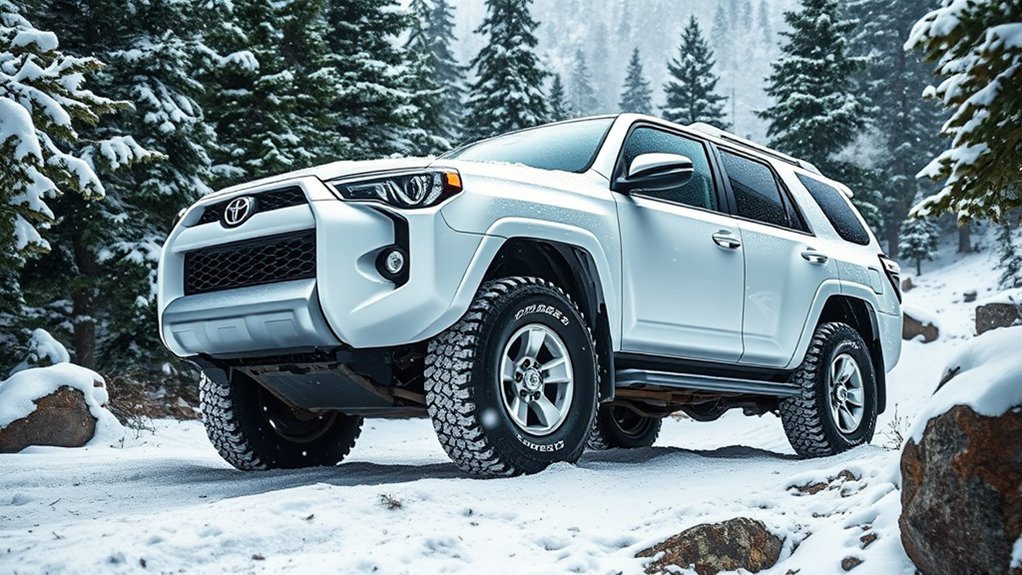
Begin with a correctly fitted 3PMSF all-terrain tire that has credible snow and ice test results. Confirm the tire’s size, service description, load capacity, and clearance before installation.
Maintain Toyota’s specified cold pressure, inspect tread regularly, and rotate according to the applicable maintenance schedule. Keep all four tires closely matched in brand, model, size, construction, and tread depth, particularly on a four-wheel-drive vehicle.
Adjust your driving even when the tires are highly rated. Accelerate gently, brake earlier, increase following distance, reduce speed before a curve, and avoid abrupt steering. Clear snow from the roof, lights, cameras, windows, and wheel wells before departure.
| Factor | Best Practice |
|---|---|
| Tire selection | Use a correct-fitment 3PMSF tire with relevant independent winter testing. |
| Inflation | Set cold pressure to the driver-door placard specification. |
| Tread | Measure across each tire and replace before snow traction becomes marginal. |
| Matching tires | Keep the same size, type, model, and similar tread depth on all four positions. |
| Driving technique | Slow down, leave more space, and make steering and pedal inputs gradually. |
| Traction equipment | Follow the model-specific manual and local regulations. |
Final Thoughts on Choosing the Right Tires for Your 4Runner
The best tire is not simply the one with the most aggressive tread. It is the tire that fits your exact 4Runner, carries the required load, performs well in the conditions you actually face, and retains enough tread to deliver that performance.
- Assess your climate: Occasional light snow may suit a strong 3PMSF all-terrain tire. Regular ice and packed snow favor dedicated winter tires.
- Verify fitment: Confirm tire size, load index, speed rating, wheel clearance, TPMS compatibility, and chain restrictions.
- Compare measured performance: Review snow and ice braking, not only manufacturer claims or owner ratings.
- Maintain the setup: Use placard pressure, monitor tread, and keep four closely matched tires.
- Drive for the conditions: Reduce speed and increase following distance regardless of tire category.
A 3PMSF all-terrain tire can be a sensible year-round compromise. It should not be treated as an automatic substitute for winter tires when severe winter weather is a normal part of your driving.
Frequently Asked Questions
What is the best all-terrain tire for snow on a 4Runner?
No single all-terrain tire is best for every 4Runner and climate. The BFGoodrich All-Terrain T/A KO3 is one current 3PMSF option, as are applicable sizes of the Falken Wildpeak A/T4W, Cooper Discoverer AT3 4S, and Toyo Open Country A/T III. Verify fitment and compare independent snow and ice testing before choosing.
Are Toyota 4Runners safe in snow?
A properly maintained 4Runner can be capable in snow when equipped with suitable tires and driven at a safe speed. Four-wheel drive can improve forward traction, but it does not eliminate longer stopping distances or loss of cornering grip. Tires, tread depth, pressure, driver input, and road conditions remain critical.
Is a 3PMSF all-terrain tire the same as a winter tire?
No. The 3PMSF symbol confirms that a tire met a defined severe-snow traction requirement. It does not establish that the tire matches a dedicated winter tire in ice braking, cold-road grip, emergency handling, or every type of snow.
Should I lower my 4Runner’s tire pressure for snow?
Do not intentionally lower pressure for ordinary public-road winter driving. Set the tires to Toyota’s recommended cold pressure on the driver-door placard. Off-road airing down is a separate technique that requires suitable conditions, equipment, speed limits, and reinflation before returning to paved roads.
Do I need four winter tires on a four-wheel-drive 4Runner?
Yes. Install winter tires as a matching set of four. Mixing winter and non-winter tires can create unequal grip between the axles, which may make the vehicle less predictable during braking, steering, or sudden maneuvers.
When should I replace all-terrain tires used in snow?
Replace them when damage, age, uneven wear, or reduced traction makes continued use unsafe. For regular snow driving, consider replacement before the tread wears close to 5/32 inch, even if the tire has not reached the minimum legal tread depth for dry roads.
Conclusion
All-terrain tires can be enough for a Toyota 4Runner that sees occasional light snow, maintained roads, and moderate winter temperatures. Choose a correctly fitted 3PMSF model, keep the tires properly inflated and above a useful winter tread depth, and adjust your speed for the conditions.
Dedicated winter tires are the stronger choice when ice, packed snow, mountain grades, untreated roads, or prolonged freezing temperatures are common. Your 4Runner’s four-wheel-drive system can help it move, but only the available tire grip can help it stop and turn.
Sources
- Toyota 4Runner Owner’s Manual: Winter Driving Tips — snow-tire installation, pressure, tire matching, and chain precautions.
- NHTSA TireWise — cold inflation pressure, tire placards, inspection, and maintenance.
- NHTSA Winter Weather Driving Tips — winter inspection and tire-pressure safety.
- Transport Canada: Using Winter Tires — 3PMSF guidance, 7°C threshold, four-tire installation, and winter tread depth.
- USTMA Severe-Snow Tire Definition — industry definition supporting the 3PMSF marking.
- Tire Rack 2026 All-Weather vs. Winter Tire Test — comparative snow and ice performance testing.