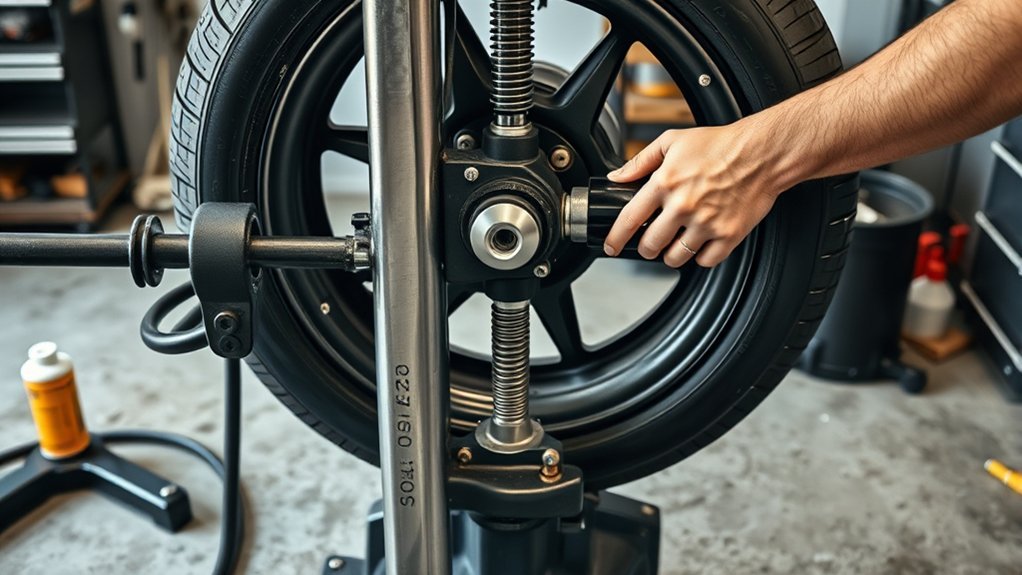
Using a manual tire machine is mostly about setup, leverage, lubrication, and patience. Before you start, make sure the tire, rim, and machine are compatible, inspect the wheel for damage, wear eye protection and gloves, and work only on tire sizes your machine is designed to handle. This guide covers basic one-piece passenger-car and light-truck tires; do not use a basic manual tire changer for split rims, lock-ring wheels, large truck tires, agricultural tires, run-flat tires, or low-profile performance tires unless your machine manual specifically allows it and you have the right training.
Quick Answer
To use a manual tire machine, fully deflate the tire, break both beads, clamp the wheel securely, lubricate the tire beads and rim edges, lever the old tire off, guide the new tire on, and inflate slowly until the beads seat. Never exceed the tire, wheel, or machine maker’s inflation limit when seating the bead.
Key Takeaways
- Check tire size, rim diameter, wheel condition, and machine capacity before applying force.
- Remove the valve core and fully deflate the tire before breaking the bead or demounting.
- Use only approved tire mounting lubricant; avoid oil, grease, solvents, silicone spray, and flammable products.
- Keep the opposite bead down in the drop center so the tire can stretch over the rim without bead damage.
- Inflate slowly, stand clear of the tire’s trajectory, and stop if the bead does not seat within the approved pressure limit.
At a Glance
| Time Required | 20–45 minutes per tire for a careful DIY user |
| Difficulty | Moderate; harder with stiff sidewalls, alloy wheels, low-profile tires, or older corroded rims |
| Tools Needed | Manual tire changer, valve core tool, tire mounting lube, tire irons or mount/demount bar, rim protectors, gloves, eye protection, pressure gauge, clip-on air chuck, and soapy-water leak check |
| Cost | Usually low after buying the machine, but balancing, valve stems, TPMS service kits, and professional help may add cost |
Warning: A tire and wheel assembly can release air with explosive force if the tire is mismatched, damaged, overinflated, or not secured. Follow the tire, wheel, vehicle, and machine manufacturer instructions. For workplace and safety guidance, review OSHA’s small-tire hazard bulletin before servicing automobile or light-truck tires: OSHA SHIB: Hazards while Servicing Light Truck, Automobile, and Other Small Tires.
How a Manual Tire Machine Works
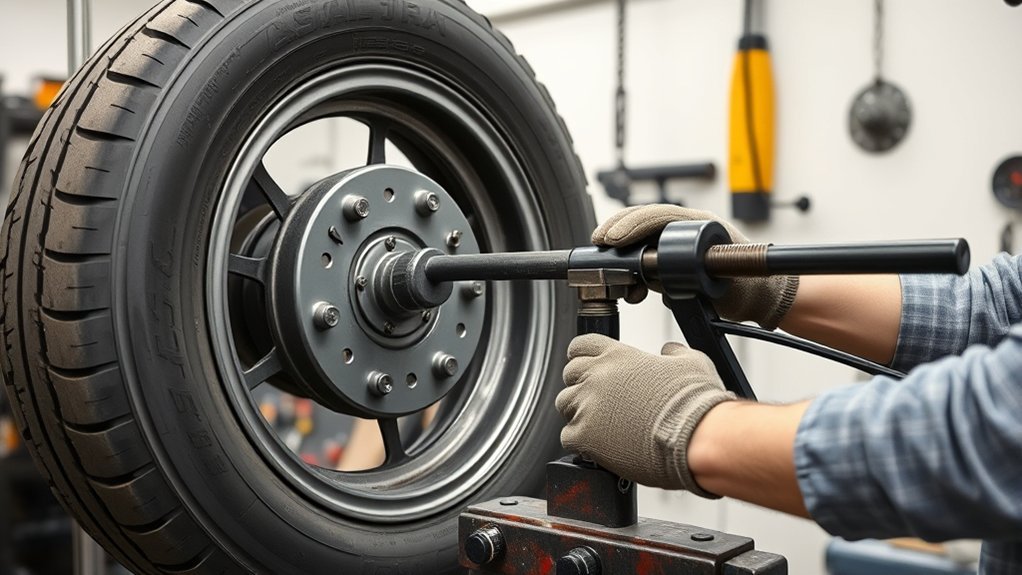
A manual tire machine uses mechanical leverage instead of electric or pneumatic rotation. The basic parts are the base, bead breaker arm, center post, rim clamps or hold-down hardware, and a mount/demount bar or duck head. The bead breaker pushes the tire bead away from the rim seat. The center post holds the wheel in position. The mount/demount tool then guides each bead over the rim edge.
The machine does not make the job automatic. You still need the right tire size, correct rim width, a clean bead seat, enough tire lubricant, and smooth pressure. The safest work comes from small controlled movements, not sudden force.
Note: A manual tire machine changes the tire, but it does not balance the wheel. After mounting, have the wheel balanced before regular road use unless you are using a separate balancing tool and know how to use it.
Gather Tools and Inspect the Wheel
Before you touch the tire, gather your tools and inspect everything that will be under pressure. You will need gloves, safety glasses, a valve core remover, tire mounting lubricant, a tire pressure gauge, a clip-on air chuck with a gauge or regulator, a lever bar, rim protectors for alloy wheels, and a spray bottle of soapy water for checking leaks. If the wheel will go back on a vehicle immediately, keep a torque wrench nearby for the lug nuts.
Inspect the wheel for cracks, bends, gouges, severe corrosion, damaged bead seats, or an oval center bore. Inspect the tire for bulges, exposed cords, torn beads, punctures near the sidewall, age cracking, and previous run-flat damage. Do not mount a damaged tire or a damaged wheel.
Confirm the tire size and rim diameter before inflation. The tire’s bead diameter must match the rim diameter exactly. For example, a tire made for a 16-inch wheel must not be mounted on a 16.5-inch rim. Also check wheel width, load rating, tire direction arrows, and “inside/outside” markings on asymmetric tires. Michelin’s mounting guidance also emphasizes tire-and-wheel compatibility and approved rubber-compatible mounting lubricant: Michelin tire inspection and mounting preparation.
Pro Tip: If your manual tire changer is not bolted firmly to the floor or a heavy stand, secure it before starting. A machine that shifts while you pull the lever can scratch the rim, tear the bead, or injure your hands.
[Products Worth Considering]

This 20-piece tire changer kit makes motorcycle and bike tire repairs easier with extended 14.5-inch spoons for leverage and access. Built from CrV steel with a corrosion-resistant chrome finish, it helps resist bending while protecting rims and tubes using smooth rounded spoons and included rim protectors. The all-in-one set includes valve removal and accessory tools for faster tire changes across motorcycles, bicycles, ATVs, and lawn equipment.

This manual duck head tire changer kit makes tire installation and removal simpler by letting you embed the duck head into the tire with applied pressure. The integrated design and durable steel construction help reduce friction and improve efficiency and safety during use. Suitable for 16–21 inch wheels, it’s convenient for cars, trucks, SUVs, and ATV tires, with 24-hour after-sales support.

Malco tire mounting and demounting lubricant is a ready-to-use tire lube formulated to reduce friction during tire installation for passenger cars, light trucks, farm tires, and heavy-duty equipment. It provides rust-inhibiting protection to help reduce corrosion on rims and wheels, and helps support proper tire bead seating during inflation to reduce air leakage. The silicone-free, soap-free formula is whitewall safe to help prevent discoloration on whitewall tires and sensitive sidewall markings.
Set Up the Manual Tire Machine
Place the machine on a flat, stable surface and check that the bead breaker, center post, clamps, and pivot points move smoothly. Make sure all guards, pins, and hold-down parts are present. Do not modify the machine or remove safety parts.
Read the operator manual for your specific machine. Manual tire changers have different jaw ranges, center-post designs, bead breaker positions, and wheel-size limits. Cornell’s tire changer safety guide recommends reviewing the operator manual, matching the correct tire and rim, using proper PPE, and staying out of the tire’s trajectory during inflation: Cornell Tire Changer Safety Awareness Guide.
[Products Worth Considering]
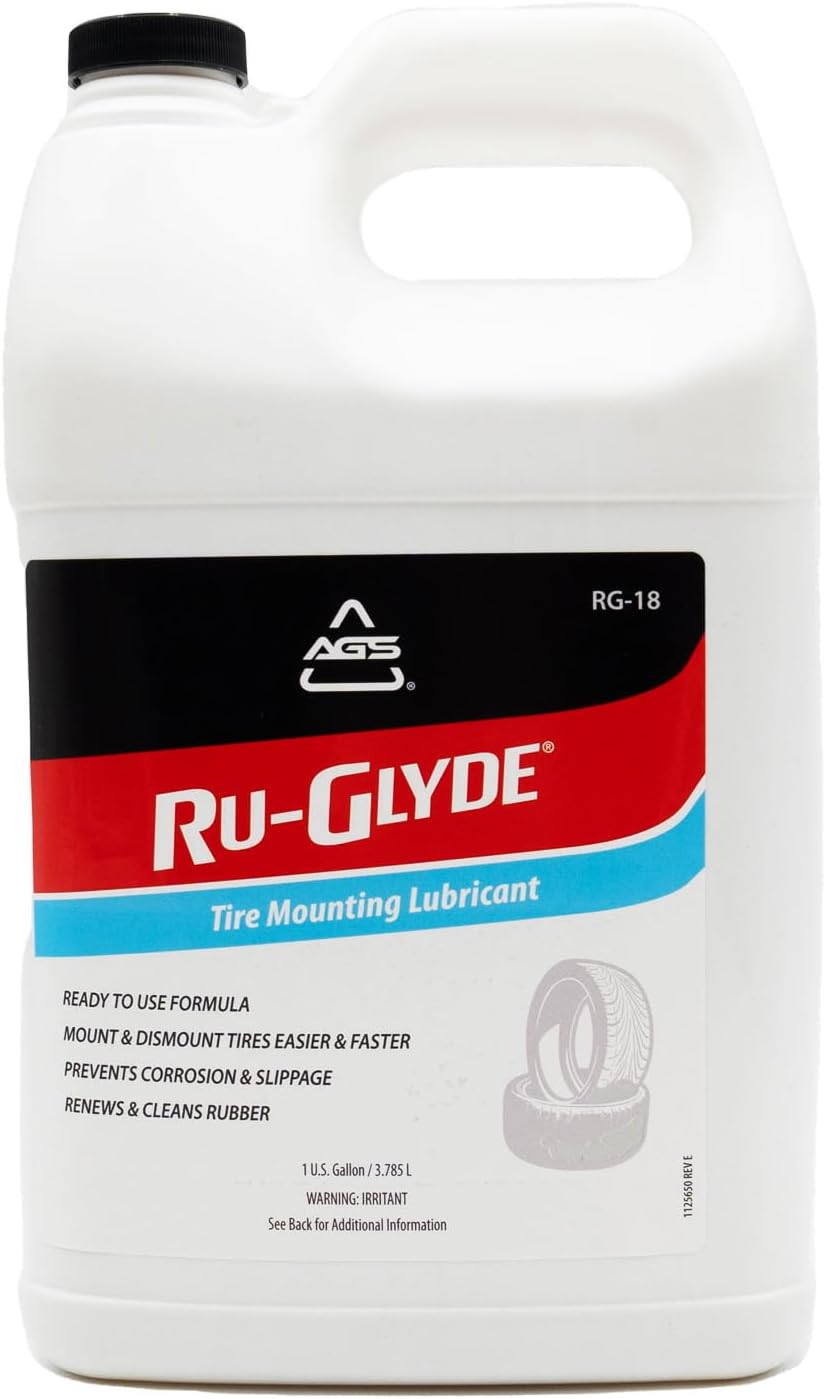
Ru-Glyde tire mounting lubricant from AGS seats tire beads smoothly on the first try with a thick, stay-put formula. It is ready to use with no mixing or dilution, helps prevent rim rust, and dries completely without causing bead slip residue. The water-based formula also conditions aged rubber, making it useful for sidewalls, gaskets, and door seals while remaining safe for tire, wheel, and technicians.

This VEVOR tire bead breaker uses a slide-hammer impact and wedge tip to separate tire beads from rims quickly and efficiently without damaging hub surfaces. The long handle and sturdy steel construction help reduce user strain while providing reliable, portable tire changing for cars, trucks, and more. Ideal for home mechanics and repair shops handling multiple vehicle tire sizes.

This 1/2-inch drive breaker bar delivers powerful leverage for loosening and tightening stubborn lug nuts and automotive fasteners. The 180-degree flex head helps you reach tight spaces at the angle you need, making tire and brake jobs easier. A spring-loaded ball detent design holds 1/2-inch sockets securely while the chrome-moly head provides durable strength for everyday use.
Clamp the Wheel on the Machine
Set the clean wheel on the turntable or base with the valve stem positioned where you can reach it. If your machine uses clamps, choose the correct clamping position for the rim and tighten the wheel evenly. If it uses a center post and hold-down cone, center the wheel and secure it so it cannot rock.
Use rim protectors on painted, polished, chrome, or alloy wheels. Apply only enough clamping pressure to hold the wheel firmly. Over-tightening can mark or deform the rim; under-tightening lets the wheel shift while you lever the tire.
After clamping, press lightly on opposite sides of the wheel by hand. If the assembly moves, release it, recenter it, and clamp again before applying the bead breaker or lever bar.
[Products Worth Considering]

This Dr.Roc tire valve stem puller tools set helps install or remove snap-in tubeless valve stems safely and efficiently. It includes ozone-resistant EPDM snap-in valve stems, a valve stem installer, and a valve core remover for quick core removal or installation during tire service. Designed for reliable tubeless tire repair on motorcycles, ATVs, lawn equipment, cars, and trucks.

This 4-in-1 tire valve core removal tool helps you deflate, unblock, and remove or install valve cores quickly for easier tire repair. The multifunction design also supports re-taping damaged threads and reaming inside the valve stem for smoother service. Included as a 2-pack, it’s compact for convenient carry and works for cars, bicycles, and motorcycles.
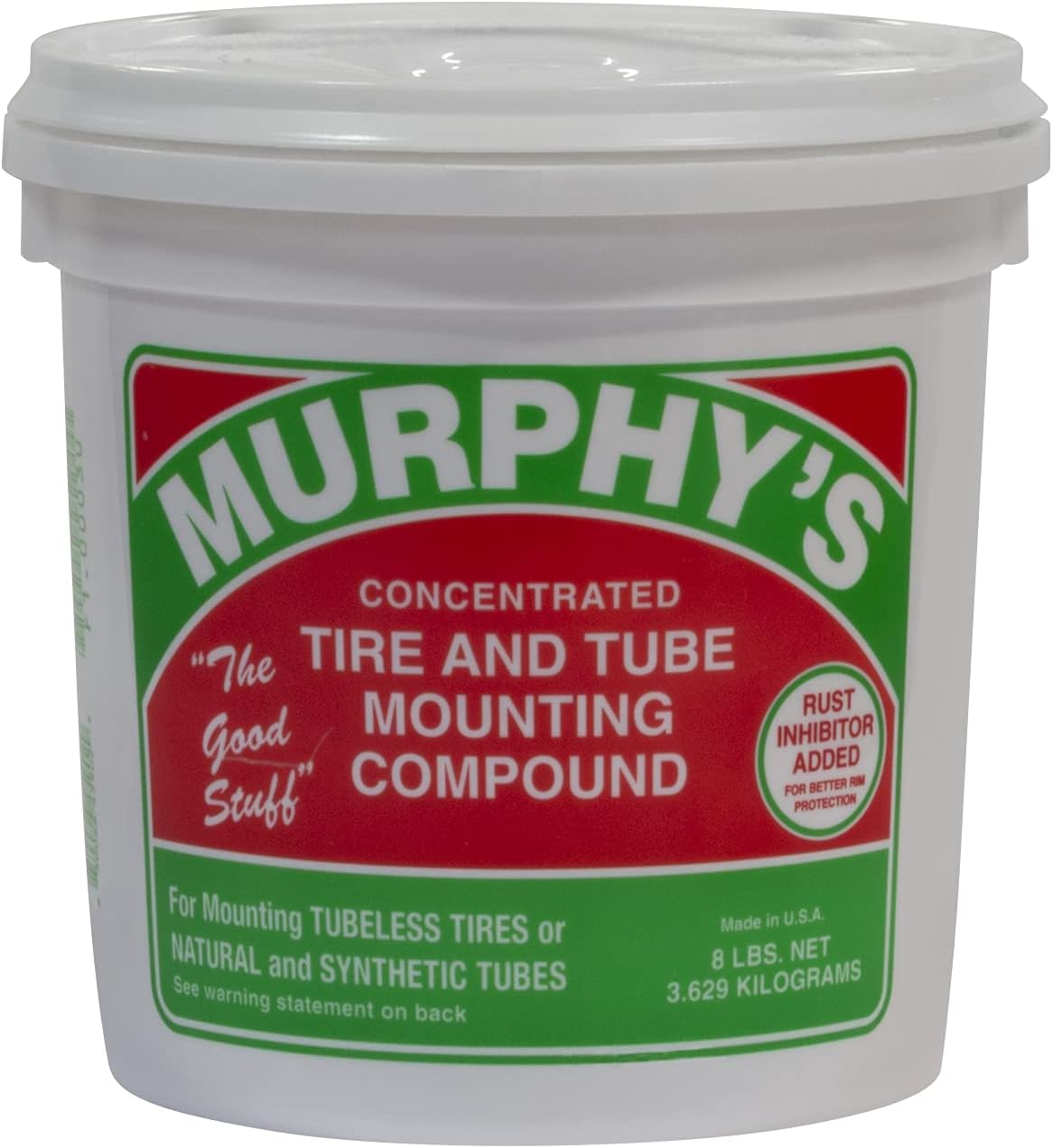
A concentrated tire and tube mounting compound designed to help simplify mounting rubber tires and tubes on passenger, semi truck, construction, and OTR applications. Its ultra-thick formula packs beads effectively and includes rust inhibitors to help protect against corrosion during use.
Break the Bead and Remove the Tire
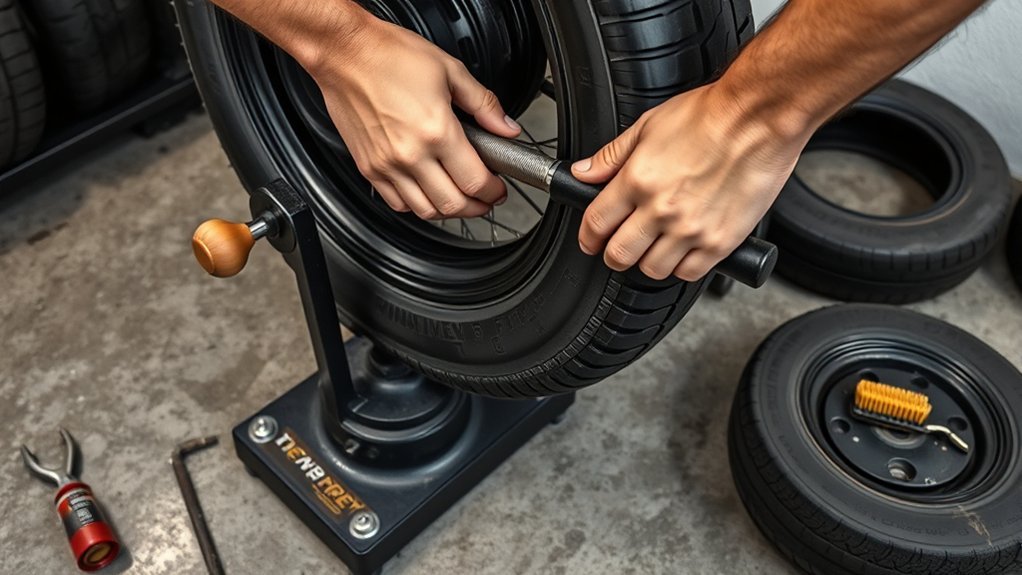
Remove the valve cap and use a valve core tool to remove the valve core. Wait until the tire is fully deflated. Never try to break the bead or remove the tire while it still contains air pressure.
Breaking the Tire Bead
Place the tire in the bead breaker so the breaker shoe presses close to the rim edge without hitting the rim. Push the bead breaker arm smoothly until the bead separates from the bead seat. Rotate the tire and repeat around the sidewall until the bead is loose all the way around.
Flip the wheel and repeat on the second side. If the bead is stuck because of dirt or corrosion, add tire lubricant, reposition the breaker shoe, and use steady pressure. Do not hammer the wheel, heat the rim, or force the bead while the tire is pressurized.
| Step | Action | Why It Matters |
|---|---|---|
| 1 | Remove the valve core | Fully deflates the tire before bead breaking |
| 2 | Place the bead breaker close to the rim edge | Separates the bead without crushing the sidewall |
| 3 | Repeat on both sides | Both beads must be loose before demounting |
Lifting Off the Tire
Once both beads are broken, lubricate the top bead and rim edge. Insert the mount/demount bar or lever between the tire bead and rim flange. Lift only enough bead over the rim to start the removal. Keep the opposite side of the tire pushed down into the wheel’s drop center; this gives the bead extra room to move over the rim.
Work around the rim in controlled sections until the top bead comes off. Then repeat the same process for the lower bead. If the tire binds, stop and check whether the opposite bead is still in the drop center. More force is usually the wrong answer; better positioning and more lubricant usually solve the problem.
Mount the Tire on the Rim
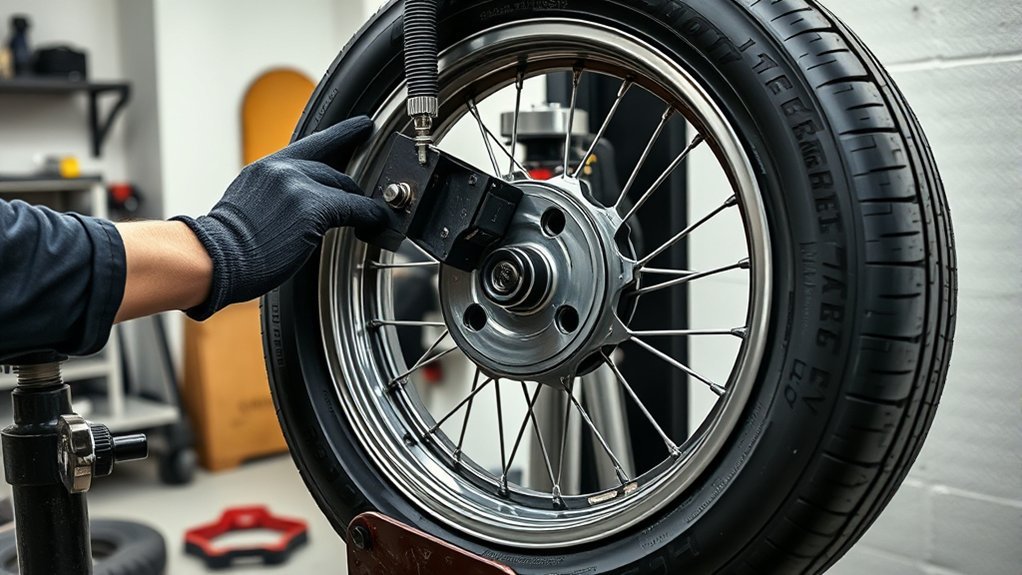
Clean the rim bead seat and apply approved tire mounting lubricant to both tire beads and the rim edges. Do not use motor oil, grease, petroleum jelly, silicone spray, solvent, WD-40, starter fluid, ether, or any flammable product. The lubricant should be compatible with rubber and designed to dry after mounting.
Prepare Tire and Rim
Check the tire direction before mounting. Directional tires have arrows that must point in the forward rotation direction when installed on the vehicle. Asymmetric tires have “outside” and “inside” markings. If the wheel has a TPMS sensor, note its location and avoid prying directly against it.
Place the tire over the rim and start with the lower bead. Keep one side of the bead in the drop center while you guide the rest over the rim. Use smooth lever pressure and protect the rim edge if the wheel is alloy or painted.
Align the Bead to the Mount/Demount Head
Position the mount/demount head or duck head so it guides the bead over the rim without scraping metal. Keep the tire bead slightly above the tool on the entry side and pressed into the drop center on the opposite side. If the bead climbs out of the drop center, stop and reset it before continuing.
After the lower bead is mounted, repeat the process for the upper bead. Do not pinch the bead, fold the sidewall, or pry against a TPMS sensor. If the tire is extremely stiff, low-profile, or fighting the tool, stop before damage occurs and use a professional tire changer.
Inflate Until the Bead Seats
Before inflation, confirm again that the tire and rim size match, the beads are not pinched, and the tire is centered on the wheel. Use a clip-on air chuck with a pressure gauge so your hands and face are away from the tire. Stand to the side, not over the tire and rim.
Inflate slowly and watch the bead line on both sides. A bead may make a sharp pop as it seats, but sound alone is not enough; visually confirm that the bead line is even all the way around. Follow the tire, wheel, vehicle, and machine manufacturer’s limit. If no lower manufacturer limit applies, do not exceed 40 psi while seating the beads. California’s tire inflation rule also states that tires should be inspected for proper seating at intervals not exceeding 20 psi and fully deflated before adjustment if they do not seat: California Code of Regulations, Title 8, Section 3325.
Warning: Never use starter fluid, ether, gasoline, or any flame-based method to seat a tire bead. If the bead does not seat within the approved pressure limit, stop, deflate completely by removing the valve core, inspect the tire and rim, relubricate, and try again only after fixing the cause.
Seat the Bead and Inflate Safely
Once both beads are seated, release the air, reinstall the valve core, and inflate the tire to the vehicle placard or tire manufacturer’s recommended cold pressure. Do not use the tire sidewall maximum pressure as the normal operating pressure unless the vehicle or tire manufacturer specifically calls for it.
Spray soapy water around the bead seats and valve stem. Bubbles indicate a leak. If you see bubbles at the bead, deflate the tire, break the bead loose, clean the bead seat, relubricate, and reseat. If the valve stem leaks, replace the valve stem or TPMS service kit as appropriate.
The safest tire change is the one you stop early when something does not look right: mismatched size, damaged bead, bent rim, unexplained leak, or bead seating trouble.
Final Checks After Mounting
After the tire is inflated to the correct cold pressure, inspect the bead line on both sides again. It should be even around the full circumference. Check that the valve core is tight, reinstall the valve cap, and wipe away extra lubricant from the tire and rim.
Have the wheel balanced before normal driving. A manual tire machine does not correct imbalance, and an unbalanced wheel can cause vibration, uneven wear, and steering shake. When reinstalling the wheel on the vehicle, tighten lug nuts in the correct pattern with a torque wrench to the vehicle manufacturer’s specification.
Avoid Common Manual Tire Machine Mistakes
Most manual tire machine problems come from poor setup, wrong fit, not enough lubrication, or too much force. Keep the wheel centered, work within your machine’s size limits, and stop whenever the tire bead starts to tear or the rim begins to bend.
| Mistake | Risk | Fix |
|---|---|---|
| Using the wrong tire/rim size | Explosive bead failure during inflation | Match bead diameter, rim width, and tire type before mounting |
| Working on a loose machine | Machine shifts while levering | Bolt the machine down or mount it to a stable base |
| Using oil or grease as lubricant | Rubber damage, tire slip, poor bead seating | Use approved tire mounting lubricant only |
| Forcing the bead | Torn bead or scratched rim | Reset the bead in the drop center and add lubricant |
| Overinflating to seat the bead | Tire or wheel failure | Stop at the manufacturer limit or 40 psi if no lower limit applies |
Troubleshooting Bead Seating Problems
If the bead will not seat, do not keep adding air. Deflate the tire completely, remove the valve core, and inspect the bead area. Common causes include dry beads, dirt or corrosion on the rim, the bead sitting outside the drop center, a bent rim, a torn bead, or the wrong tire/rim combination.
Clean the rim, relubricate the bead, and reset the tire evenly before trying again. If the bead still will not seat, stop and take the tire and wheel to a professional shop. A tire that needs excessive pressure to seat may be damaged, mismatched, or outside the capability of your manual tire machine.
Frequently Asked Questions
What tire sizes can a manual tire machine handle?
It depends on the machine. Many basic manual tire changers are intended for common one-piece passenger-car and light-truck wheels within a specific rim diameter and width range. Check the machine manual before use. Do not assume it can handle low-profile, run-flat, motorcycle, ATV, large truck, agricultural, split-rim, or lock-ring wheels.
Do I need special training before using one?
You should at least read the operator manual, watch a proper demonstration, and understand tire inflation hazards before using a manual tire machine. Tire work involves stored air pressure, pinch points, sharp rim edges, and possible bead failure. If you are unsure about tire/rim matching, bead seating, TPMS sensors, or damaged wheels, use a professional tire shop.
How much force should I apply when clamping?
Apply only enough force to keep the wheel from moving while you work. The wheel should not rock or rotate on the machine, but the clamps should not crush, bend, or gouge the rim. For alloy or finished wheels, use rim protectors and stop if you see the coating or metal deforming.
Can I use a manual tire machine on alloy wheels?
Yes, but only if the machine can hold the wheel securely without damaging it. Use plastic rim protectors, clean clamps, careful lever placement, and plenty of tire mounting lubricant. If the wheel is polished, chrome, expensive, or has a sensitive finish, a professional touchless or rim-clamp changer is safer.
How often should the machine be lubricated?
Inspect the machine before each use. Lubricate pivots, sliding parts, and threaded hardware according to the machine manual. Heavy shop use may require more frequent lubrication than occasional home use. Keep grease off the tire bead and rim seat, because bead areas need tire mounting lubricant, not machine grease.
What should I do if the bead does not seat?
Stop inflating, deflate the tire completely, and remove the valve core before adjusting anything. Check for mismatched tire/rim size, a damaged bead, dirty rim seat, poor lubrication, or the bead sitting outside the drop center. Relubricate and reset the tire. If it still will not seat within the approved pressure limit, take it to a professional.
Do I need to balance the tire after using a manual tire machine?
Yes. Mounting changes the tire and wheel assembly, but it does not balance it. For normal road use, balance the wheel after mounting to reduce vibration, steering shake, and uneven tire wear.
Conclusion
A manual tire machine can save time and money when you use it within its limits. The safe process is simple: inspect the tire and wheel, confirm compatibility, deflate fully, break both beads, clamp the wheel securely, lubricate the bead and rim, mount with steady leverage, and inflate slowly while standing clear. If the tire does not seat correctly, the rim is damaged, the bead is torn, or the fit seems questionable, stop and get professional help. Tire pressure deserves respect, and careful work is always cheaper than a damaged wheel or an injury.
Sources
- OSHA Safety and Health Information Bulletin: Hazards while Servicing Light Truck, Automobile, and Other Small Tires — tire/rim mismatch hazards and small-tire inflation safety.
- OSHA 29 CFR 1910.177 — rim-wheel servicing procedures, inspection, compatibility, deflation, and workplace safety practices for covered rim wheels.
- Cornell Environment, Health and Safety: Tire Changer Safety Awareness Guide — PPE, operator manual review, 40 psi bead-seating limit, trajectory warnings, and machine limitations.
- California Code of Regulations, Title 8, Section 3325: Tire Inflation — clip-on chuck, pressure gauge, bead seating, inspection intervals, and 40 psi maximum unless otherwise recommended.
- Michelin USA: Visual Tire Inspection Before Mounting — tire/wheel compatibility, directional/asymmetric tire checks, and approved rubber-compatible mounting lubricant.