
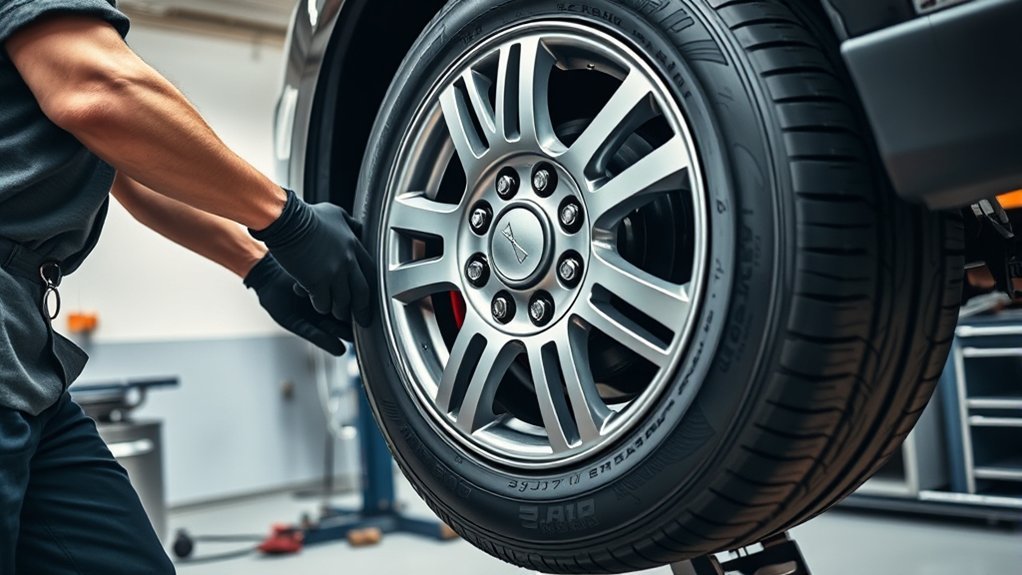
Using a tire machine is a controlled shop process for removing an old tire from a wheel and mounting a new one without damaging the bead, rim, valve stem, or TPMS sensor. Work only if you have been trained on your specific tire changer, have the machine manual nearby, and can follow safe inflation procedures from start to finish.
Quick Answer
To use a tire machine, inspect and fully deflate the tire, break both beads, clamp the wheel securely, dismount the old tire, lubricate the beads, mount the new tire through the drop center, then inflate slowly while standing clear until both beads seat evenly.
Key Takeaways
- Use a tire machine only after training on that exact machine and after reading the manufacturer’s operating manual.
- Fully deflate the tire by removing the valve core before breaking the bead or demounting the tire.
- Confirm the tire and wheel match in bead diameter, width, load rating, and condition before mounting.
- Use approved tire mounting lubricant, not oil, grease, silicone, or flammable products.
- Inflate slowly, stand clear of the tire’s trajectory, and never exceed the tire or wheel manufacturer’s bead-seating limit.
At a Glance
| Time Required | 15–30 minutes per wheel for a trained user, not including balancing or vehicle removal/installation. |
| Difficulty | Moderate to advanced; unsafe for untrained DIY use because bead seating and inflation can be hazardous. |
| Tools Needed | Tire machine, valve core tool, approved tire lubricant, tire lever if required, clip-on inflation chuck, pressure gauge, safety glasses, gloves, and leak-check solution. |
| Cost | Usually the cost of shop labor if outsourced; DIY cost depends on machine access, lubricant, valve stems, wheel weights, and balancing. |
Warning: A tire and wheel assembly can release explosive energy during inflation. Never mount a damaged or mismatched tire and wheel, never stand over the assembly during inflation, and stop immediately if the bead will not seat within the manufacturer’s pressure limit.
Before You Start: Safety and Setup
Before touching the tire, confirm that the tire changer is clean, stable, connected to the correct air supply, and set up according to the machine manufacturer’s manual. Hunter, for example, provides model-specific digital tire changer operation manuals, and your machine may have different clamps, assist arms, inflation controls, or bead-breaking procedures.
Put on safety glasses and work gloves. Keep loose clothing, jewelry, and long hair away from moving parts. Make sure the turntable, bead breaker, mount/demount head, clamps, inflation hose, and foot pedals move smoothly before loading the wheel.
Note: This guide explains the general process for common passenger and light-truck tire changers. Always follow the tire, wheel, vehicle, and machine manufacturer’s instructions when they are more specific.
Inspect and Deflate the Tire and Wheel
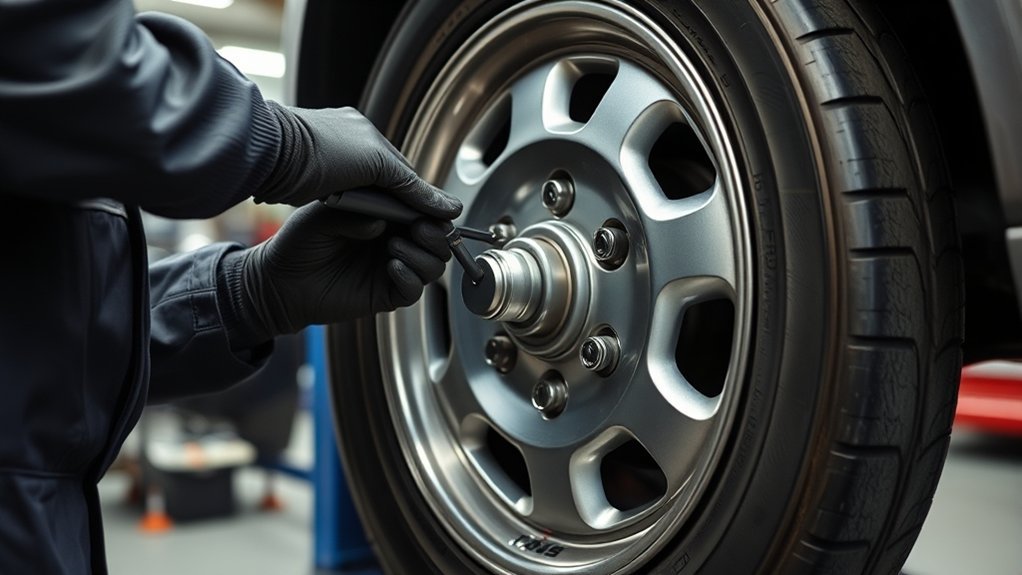
Start with a full inspection. Check the tire for cuts, bulges, exposed cords, bead damage, punctures, weather cracking, and signs that it was driven flat. Check the wheel for cracks, bends, corrosion, heavy rust, damaged bead seats, and loose or broken valve hardware.
Confirm that the tire size matches the wheel diameter and that the wheel width is approved for that tire. OSHA’s rim-wheel safety standard requires checking bead diameter, tire and wheel width, and type compatibility before assembly, and the same habit helps prevent dangerous mismatches on passenger and light-truck work.
- Remove the valve cap.
- Use a valve core removal tool to remove the valve core.
- Let the tire fully deflate before using the bead breaker.
- Keep the valve core and cap in a clean tray so they do not get lost.
- Mark the TPMS sensor location if the wheel has one, so you can avoid striking it with the bead breaker or tire lever.
If the wheel has a direct TPMS sensor, the valve stem area needs extra care. Tire pressure monitoring systems use sensors or wheel-speed information to warn drivers about significant underinflation, so damaged TPMS hardware can cause leaks or dashboard warnings. For final pressure, follow the vehicle placard or owner’s manual, not the maximum pressure molded on the tire sidewall, as explained by NHTSA TireWise.
Break the Tire Bead Safely
The bead is the reinforced edge of the tire that seals against the wheel. Before the tire can come off, both beads must be separated from the rim.
- Place the wheel in the bead breaker area with the valve stem and TPMS sensor positioned away from the breaker shoe.
- Set the bead breaker shoe close to the rim edge, but not on the rim lip.
- Press the bead breaker pedal or control slowly until the bead releases.
- Rotate the wheel and repeat until that side is loose all the way around.
- Flip the wheel and repeat on the other bead.
Use controlled pressure, not force. If the bead breaker is contacting the rim, stop and reposition it. If the bead will not move, add approved tire lubricant around the bead and try again. Do not hammer the wheel, heat the rim, or force the sidewall with unsafe tools.
Pro Tip: Keep the valve stem at a safe clock position away from the bead breaker and mount/demount head. On many wheels, that simple habit helps protect TPMS sensors and rubber valve stems.
[Products Worth Considering]

This VEVOR tire bead breaker uses a slide-hammer impact and wedge tip to separate tire beads from rims quickly and efficiently without damaging hub surfaces. The long handle and sturdy steel construction help reduce user strain while providing reliable, portable tire changing for cars, trucks, and more. Ideal for home mechanics and repair shops handling multiple vehicle tire sizes.

Malco tire mounting and demounting lubricant is a ready-to-use tire lube formulated to reduce friction during tire installation for passenger cars, light trucks, farm tires, and heavy-duty equipment. It provides rust-inhibiting protection to help reduce corrosion on rims and wheels, and helps support proper tire bead seating during inflation to reduce air leakage. The silicone-free, soap-free formula is whitewall safe to help prevent discoloration on whitewall tires and sensitive sidewall markings.

This tire inflator with pressure gauge delivers long-lasting performance with a durable rubber-protected gauge and sturdy build. The longer hose and 360 swivel air chuck help you seal the valve securely and keep your hands free while measuring, inflating, or deflating. It’s battery-free for reliable use and provides ±2 PSI accuracy in the mid-range for most typical tires, with universal compatibility for 1/4 NPT compressor outputs.
Secure the Wheel on the Tire Machine
After both beads are broken, move the wheel to the tire machine turntable or center clamp. Secure it according to your machine design. Some tire changers clamp the wheel from the outside, some clamp from the inside, and some use a center post.
Make sure the wheel is flat, centered, and locked before rotating the table. For alloy wheels, use plastic protectors or the machine’s rim-safe accessories when required. Set the mount/demount head so it clears the rim by the machine manufacturer’s recommended gap; too tight can scratch the rim, and too loose can let the tool slip.
[Products Worth Considering]
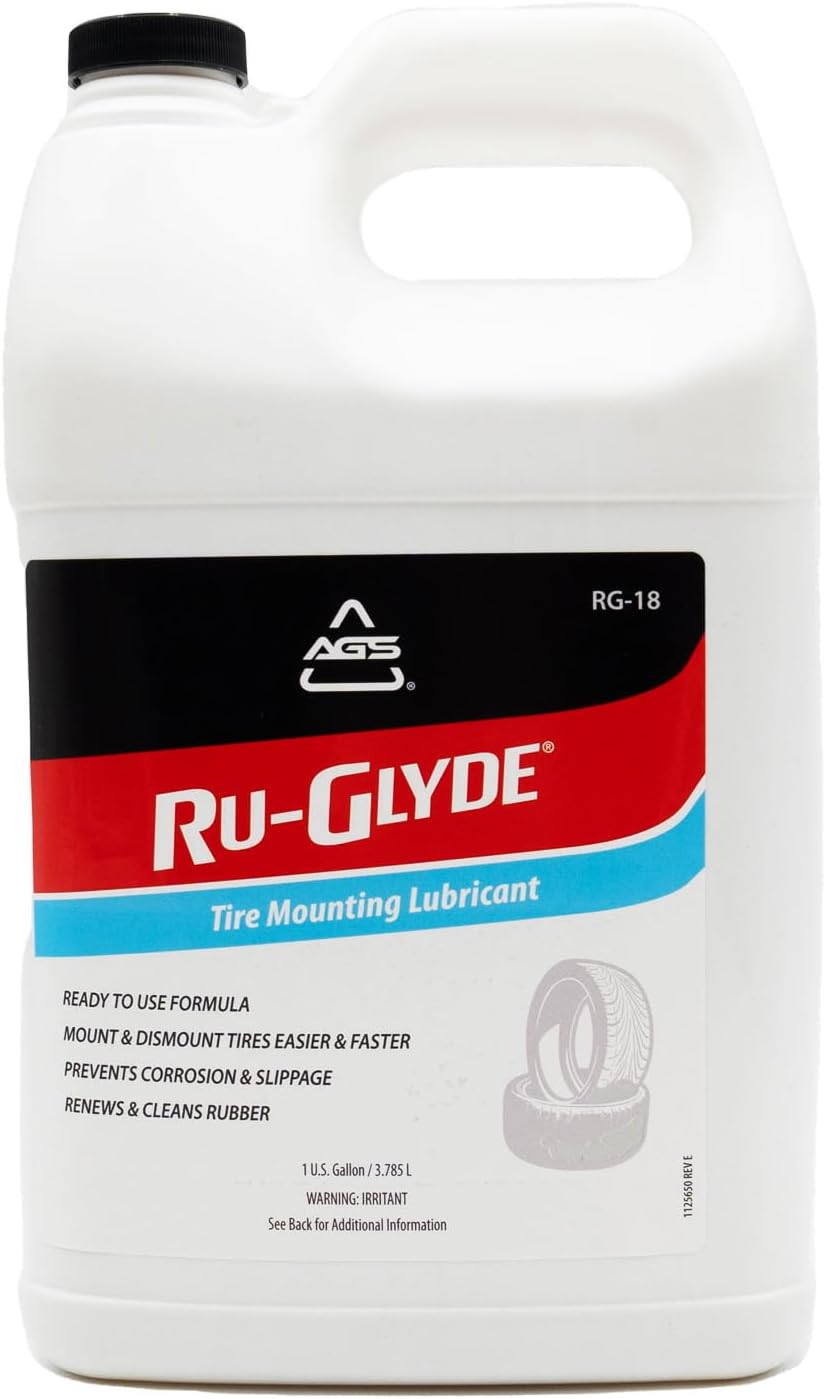
Ru-Glyde tire mounting lubricant from AGS seats tire beads smoothly on the first try with a thick, stay-put formula. It is ready to use with no mixing or dilution, helps prevent rim rust, and dries completely without causing bead slip residue. The water-based formula also conditions aged rubber, making it useful for sidewalls, gaskets, and door seals while remaining safe for tire, wheel, and technicians.

This manual duck head tire changer kit makes tire installation and removal simpler by letting you embed the duck head into the tire with applied pressure. The integrated design and durable steel construction help reduce friction and improve efficiency and safety during use. Suitable for 16–21 inch wheels, it’s convenient for cars, trucks, SUVs, and ATV tires, with 24-hour after-sales support.

This 20-piece tire changer kit makes motorcycle and bike tire repairs easier with extended 14.5-inch spoons for leverage and access. Built from CrV steel with a corrosion-resistant chrome finish, it helps resist bending while protecting rims and tubes using smooth rounded spoons and included rim protectors. The all-in-one set includes valve removal and accessory tools for faster tire changes across motorcycles, bicycles, ATVs, and lawn equipment.
Dismount the Tire From the Rim
With the wheel secured, lubricate the upper bead and rim edge with an approved tire mounting lubricant. Position the mount/demount head at the correct point near the rim edge. If your machine uses a tire lever, insert it carefully between the bead and the mount head, keeping the lever away from the TPMS sensor.
- Lift the upper bead over the mount/demount head.
- Hold the bead in the wheel’s drop center opposite the mount head.
- Rotate the turntable slowly until the upper bead comes off.
- Repeat the process for the lower bead.
- Lift the old tire away from the wheel and inspect the rim again.
The drop center is the recessed channel in the middle of the wheel. Keeping part of the bead in that channel gives the opposite side enough slack to pass over the rim without stretching or tearing the bead.
Mount the New Tire
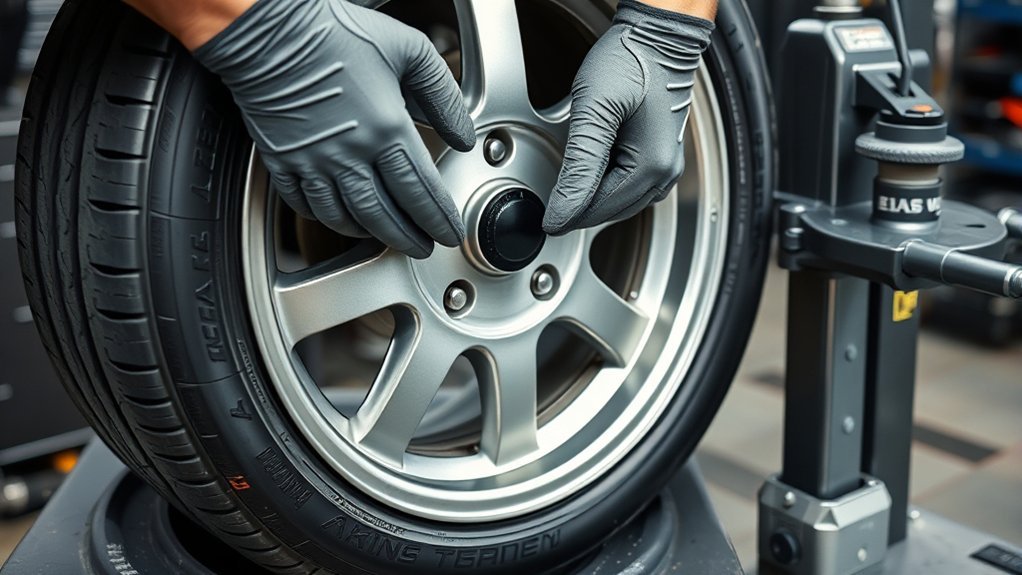
Before mounting, confirm the tire direction if it is directional, the outside marking if it is asymmetrical, and the tire size/load rating against the vehicle requirement. Clean the rim bead seats and apply approved tire mounting lubricant to both tire beads and the wheel’s bead-seat areas. USTMA’s tire bead lubricant bulletin is a useful reference for why proper lubricant matters.
- Set the tire on the wheel at an angle, with the lower bead started under the mount/demount head.
- Keep the bead opposite the mount head pressed into the drop center.
- Rotate the turntable slowly until the lower bead is fully mounted.
- Reposition the upper bead under the mount/demount head.
- Use the assist arm or bead depressor if the sidewall is stiff, low-profile, or run-flat.
- Rotate slowly again until the upper bead is fully mounted.
Never force the bead with a pry bar if it feels locked. Stop, relubricate, check the drop-center position, and restart the bead at a better angle. Forcing the bead can damage the tire internally even if the damage is not visible.
Inflate the Tire and Seat the Beads
Inflation is the highest-risk part of using a tire machine. Remove the valve core if it is still installed, attach a clip-on inflation chuck, and stand to the side of the assembly. Do not lean over the tire, reach across it, or put any part of your body in the likely air-blast path.
Inflate in short, controlled bursts while watching the pressure gauge. OSHA’s tire service standard says a tire changing machine should use only the minimum pressure needed to move the bead onto the rim ledge, and Michelin’s tire handling guidance says bead seating pressure should never exceed 40 psi. If your tire or wheel manufacturer lists a lower bead-seating limit, follow the lower limit.
- Start inflation slowly with the valve core removed so air can flow quickly.
- Watch both bead areas and the molded bead seating line on the tire.
- Listen for bead movement, but do not rely only on a “pop.”
- Stop once both beads are evenly seated.
- Disconnect the air, reinstall the valve core, and inflate to the vehicle manufacturer’s recommended cold pressure.
- Check both beads, the valve stem, and the rim edge with leak-check solution.
Warning: If the bead does not seat before reaching the manufacturer’s bead-seating pressure limit, stop. Deflate the tire, remove it if needed, inspect for mismatch or damage, relubricate, and try again only after the cause is corrected.
A safe tire change is not finished when the tire is on the rim. It is finished only after the beads are seated evenly, the valve is sealed, the pressure is correct, and the assembly passes a leak check.
Troubleshooting Common Tire Machine Problems
| Problem | Likely Cause | Safe Fix |
| Bead will not break | Old bead, corrosion, wrong breaker position, or not fully deflated | Confirm valve core is out, relubricate, reposition the breaker shoe, and work around the bead gradually. |
| Bead will not mount | Bead is not in the drop center or there is not enough lubricant | Stop rotation, press the opposite bead into the drop center, relubricate, and restart slowly. |
| Bead will not seat | Dry bead, mismatch, damaged bead, bent rim, or air leaking too quickly | Deflate, inspect, relubricate, and retry. Do not exceed the manufacturer’s bead-seating pressure limit. |
| Air leak after mounting | Valve core, valve stem, bead seat corrosion, or bead not fully seated | Use leak-check solution, replace bad valve parts, clean the bead seat, and reseat only after deflating. |
| TPMS warning after service | Sensor damage, low pressure, or relearn procedure needed | Check pressure, inspect valve/sensor area for leaks, and follow the vehicle’s TPMS relearn procedure. |
[Products Worth Considering]

This Dr.Roc tire valve stem puller tools set helps install or remove snap-in tubeless valve stems safely and efficiently. It includes ozone-resistant EPDM snap-in valve stems, a valve stem installer, and a valve core remover for quick core removal or installation during tire service. Designed for reliable tubeless tire repair on motorcycles, ATVs, lawn equipment, cars, and trucks.

Masoll Gen 2 external TPMS sensors are a DIY replacement set of 4 for select GM vehicles made after 2006, helping you shut off the TPMS warning light quickly. Simply screw the sensors onto the tire valves and sync to your car ECU using the included EL-50448 relearn tool. Dual-frequency 315/433 MHz design provides OEM-level performance with accurate readings and replaceable batteries for about two years.
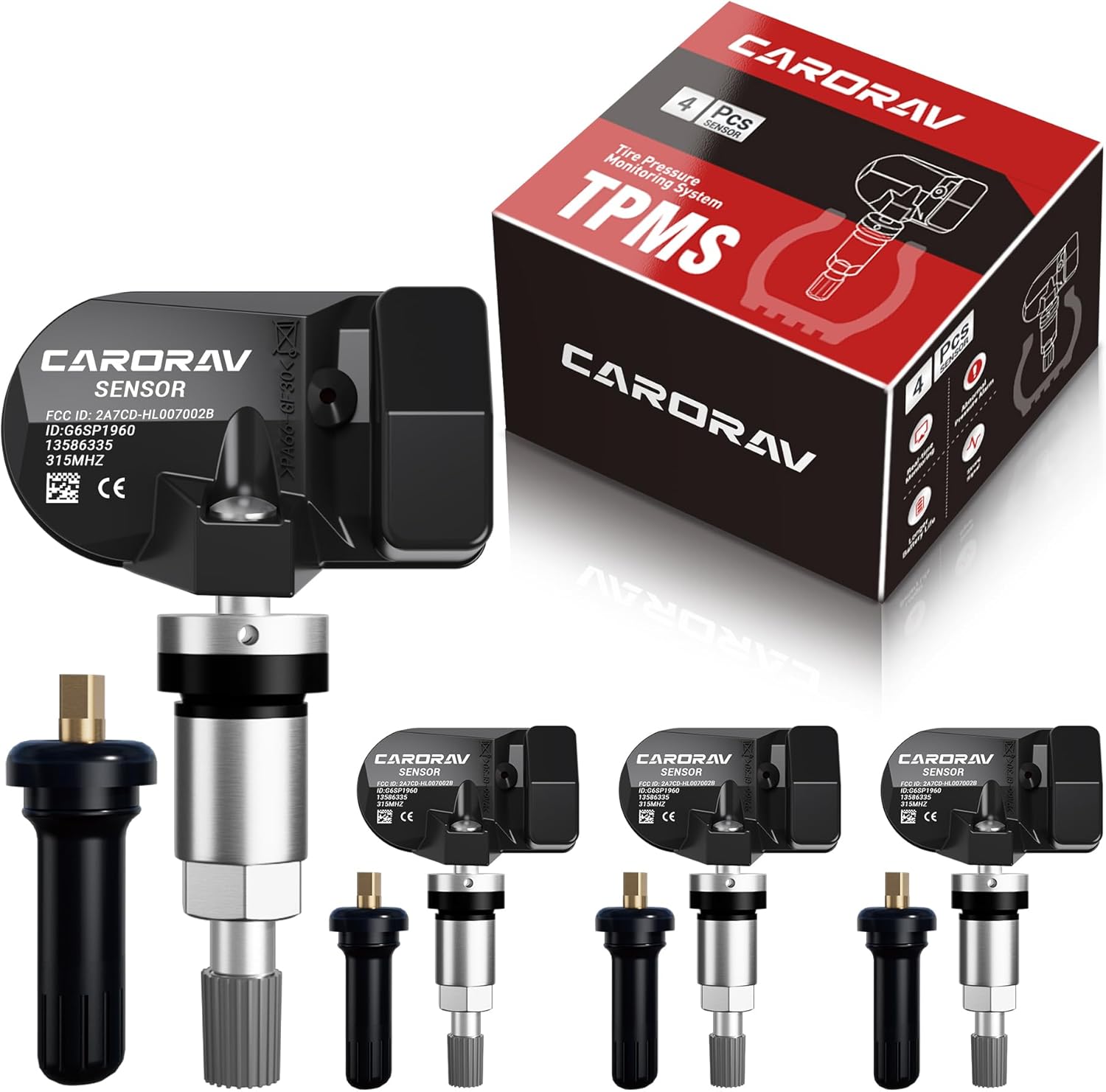
Replace worn or missing TPMS sensors with CARORAV pre-programmed GM-compatible sensors for a smoother installation experience. These 315MHz replacement sensors help monitor tire pressure in real time with long battery life, and they are designed to withstand harsh temperatures. Manual or OBDII relearn may be required to reset the system for proper recognition.
Balance the Wheel Before Installation
A tire machine mounts the tire, but it does not balance the wheel. After mounting and leak-checking, use a tire balancing machine to correct vibration before installing the assembly on the vehicle. Clean the wheel, remove old weights, enter the wheel dimensions, spin the assembly, and apply the weight amount and location shown by the balancer.
If the tire has a red or yellow uniformity mark, follow the tire manufacturer’s match-mounting instructions when applicable. Some shops align a yellow dot with the valve stem or use a red dot with the wheel’s low point, but markings and wheel standards vary by tire maker.
When to Stop and Get Professional Help
Stop the job and get a trained tire technician if you find a cracked wheel, heavy corrosion, bead damage, sidewall bulge, mismatched tire and rim size, damaged TPMS hardware, or a bead that will not seat within the allowed pressure. Also stop if you are working on run-flat, low-profile, motorcycle, commercial truck, split-rim, agricultural, or heavy-equipment tires without the correct machine and training.
Frequently Asked Questions
What is the 3% rule for tires?
The 3% rule usually refers to keeping a replacement tire’s overall diameter within about 3% of the original size when changing tire sizes. It is not a universal tread-depth rule and it is not a tire-machine operating rule. Always follow the vehicle manufacturer’s approved tire sizes, load rating, and inflation pressure.
How do you use a tire machine at the gym?
A gym “tire machine” usually means fitness equipment for tire flips, sled pushes, or strength drills, not an automotive tire changer. For gym equipment, adjust the resistance or tire weight, keep a neutral back, drive through your legs, and follow the trainer’s instructions. Do not confuse gym tire equipment with a shop tire-changing machine.
How do you use a tire inflator machine?
Attach the inflator chuck to the valve stem, set or monitor the target pressure, add air in short bursts, and check the pressure with a reliable gauge. For a mounted vehicle tire, inflate to the cold pressure listed on the vehicle placard or owner’s manual, not the sidewall maximum.
How do you use a tire balancing machine?
Mount the wheel on the balancer, enter the wheel diameter, width, and offset, lower the guard, and spin the assembly. The machine shows where to place wheel weights. Add the weights, spin again, and repeat until the balancer shows the assembly is within specification.
Can you use dish soap instead of tire mounting lubricant?
Use an approved tire mounting lubricant whenever possible. Dish soap can dry, leave residue, or promote corrosion depending on the mixture. Never use petroleum grease, oil, silicone spray, gasoline, ether, or any flammable product to mount or seat a tire bead.
Do you need to replace the valve stem when changing a tire?
It is smart to replace standard rubber snap-in valve stems during tire service because they age, crack, and leak. For TPMS valve stems, replace the service kit or seal parts recommended by the sensor manufacturer instead of replacing the entire sensor unless it is damaged or expired.
Conclusion
A tire machine makes tire removal and installation faster, but it does not make the job automatic. The safe process is to inspect, fully deflate, break both beads, clamp the wheel correctly, dismount with the bead in the drop center, lubricate and mount the new tire, then inflate slowly while standing clear. Finish by checking bead seating, setting the correct pressure, testing for leaks, and balancing the wheel before it goes back on the road.
Sources
- OSHA 29 CFR 1910.177 — Servicing multi-piece and single piece rim wheels — deflation, compatibility, lubrication, safe inflation, and trajectory precautions for covered rim-wheel service.
- NHTSA TireWise — tire size, vehicle placard pressure, cold inflation pressure, and TPMS basics.
- Michelin Tire Safety Tips — trained mounting, matching tire/wheel diameters, approved equipment, and 40 psi bead-seating warning.
- Hunter Tire Changer Digital Operation Manuals — model-specific tire changer operating manuals.
- USTMA TISB 41 — tire bead lubricants, mounting aids, bead sealers, and related tire service materials.

