
A 96V tire has a load index of 96, equal to 710 kg (1,565 lb) per tire when properly inflated, and a V speed rating, equal to 240 km/h (149 mph) under specified conditions. The combined 96V code is the tire’s service description. For replacement, match the vehicle manufacturer’s required tire size, load index, speed rating, and load type.
Last updated: August 18, 2026. Load-index, speed-rating, replacement, and tire-pressure guidance was rechecked against current manufacturer and NHTSA sources.
Quick Answer
A 96V tire has a load index of 96, which equals 710 kg (1,565 lb) per tire when properly inflated, and a V speed rating, which means the tire is rated for up to 240 km/h (149 mph) under specified test conditions. The code does not tell you the recommended tire pressure or increase the vehicle’s own load limit. Always check the vehicle placard or owner’s manual before replacing tires.
Key Takeaways
- 96 is the tire’s load index and corresponds to 710 kg (1,565 lb) per tire when properly inflated.
- V is the speed rating and means the tire is rated for up to 240 km/h (149 mph) under specified conditions.
- The correct tire rating is listed on the tire sidewall, driver’s door placard, and vehicle owner’s manual.
- Replacement tires should meet or exceed the vehicle manufacturer’s required load index and speed rating.
- A higher tire load rating does not increase the vehicle manufacturer’s payload, GVWR, or axle limits.
What Does 96V Mean on a Tire?
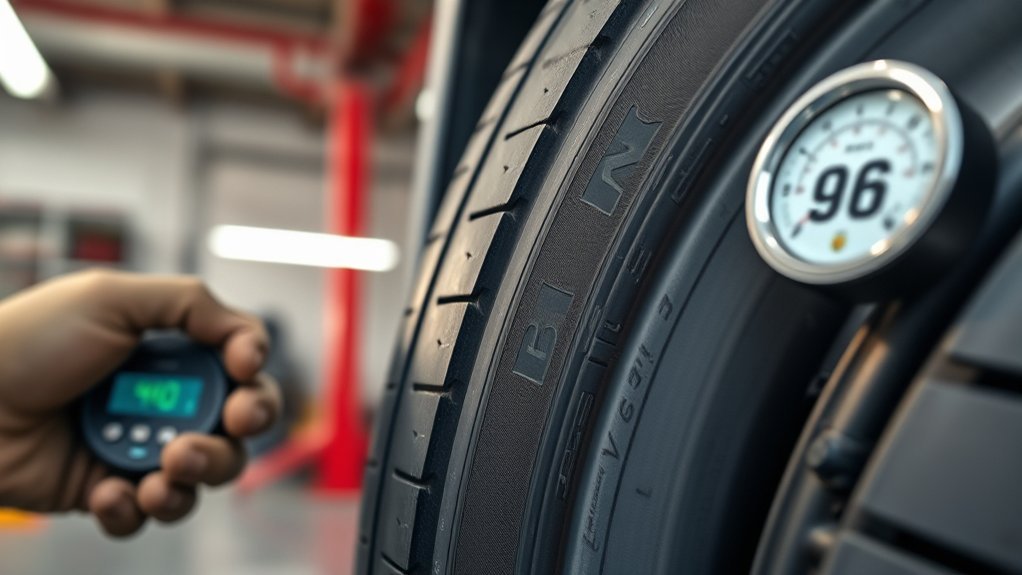
When you see 96V on a tire, you are looking at the tire’s load index and speed rating. This combined code is often called the tire’s service description. Tire makers mold this information into the sidewall so drivers, shops, and inspectors can confirm whether the tire fits the vehicle’s requirements.
| Code | Meaning | What It Tells You |
|---|---|---|
| 96 | Load index | Maximum load of 710 kg (1,565 lb) per tire when properly inflated |
| V | Speed rating | Rated for up to 240 km/h (149 mph) under specified conditions |
According to Michelin’s tire load and speed rating guide, load and speed ratings identify the maximum weight a tire can carry and the maximum speed it can sustain when properly inflated and loaded. Continental’s sidewall guide also lists V as a 149 mph speed rating.
Warning: A tire speed rating is not permission to drive at that speed. It is a laboratory-based capability rating. Always obey posted speed limits, road conditions, vehicle limits, and the tire pressure listed on your vehicle placard.
Where to Find 96V on a Tire
You can usually find the 96V marking at the end of the tire size on the sidewall. A common example would look like this:
235/50R17 96V
In that example, 235 is the tire width in millimeters, 50 is the aspect ratio, R means radial construction, 17 is the wheel diameter in inches, and 96V is the service description. This exact 235/50R17 96V combination appears in current Bridgestone passenger-tire specifications, so the example is not a made-up size.
If you see 96V XL, the 96 and V keep the same meanings. XL means Extra Load and describes reinforced construction intended for higher load capability at the specified inflation conditions. If your vehicle was equipped with XL tires, match that requirement when replacing them. For the rest of the size code, see TubeTyre’s guide to reading a tire code.
If the sidewall is dirty, worn, or hard to read, check these places:
- Driver’s door placard: Usually on the door jamb or door frame.
- Owner’s manual: Look under tires, wheels, specifications, or maintenance.
- Current tire sidewall: Use it as a reference, but verify it against the placard because previous owners may have installed the wrong tires.
- Tire shop database: A tire professional can confirm the original equipment size and rating for your exact vehicle trim.
Your vehicle manufacturer’s placard is the most important reference because it lists the tire size, inflation pressure, and load requirements selected for your vehicle.
What Does Tire Load Index 96 Mean?
A load index of 96 means one tire can support up to 710 kg (1,565 lb) when it is properly inflated and used within its rated conditions. Because a vehicle uses four tires, that does not mean you can simply multiply 1,565 by four and load the vehicle to that number. The vehicle’s own gross vehicle weight rating, axle ratings, suspension, brakes, and tire placard still control what the vehicle can safely carry.
| Load Index | Maximum Load Per Tire | Common Meaning |
|---|---|---|
| 94 | 670 kg (1,477 lb) | Lower capacity than 96 |
| 96 | 710 kg (1,565 lb) | The rating in a 96V tire |
| 98 | 750 kg (1,653 lb) | Higher capacity than 96 |
For a broader reference beyond 94, 96, and 98, use TubeTyre’s tire load index chart and guide.
Load capacity depends on correct inflation. A tire that is underinflated may not safely carry its rated load because extra sidewall flex creates heat. The National Highway Traffic Safety Administration tire safety booklet says maintaining proper tire pressure, observing vehicle load limits, and inspecting tires are among the most important ways to avoid tire failure.
What Does the V Speed Rating Mean?
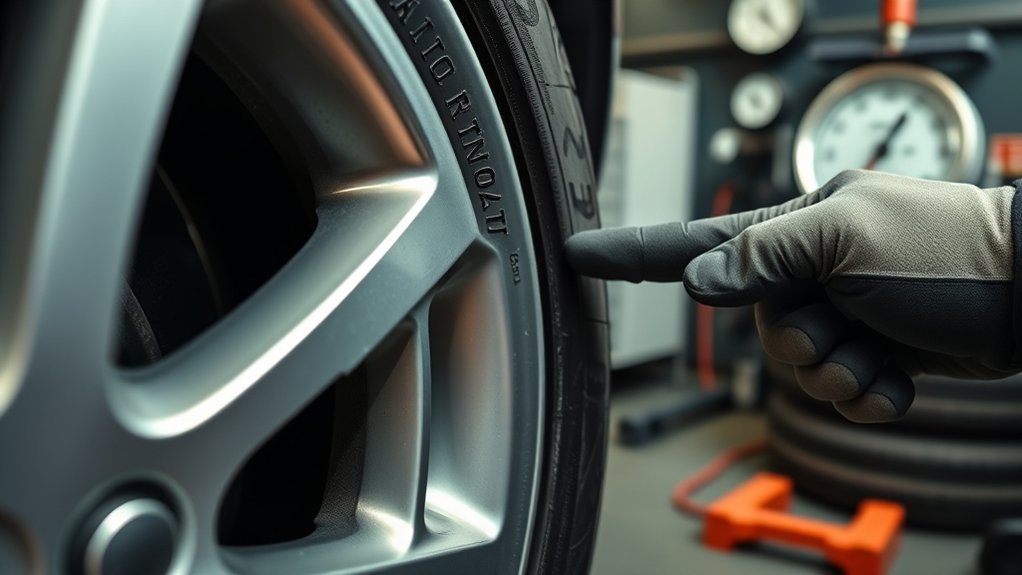
The V speed rating means the tire is rated for speeds up to 240 km/h (149 mph) under specified conditions. V-rated tires are common on sport sedans, coupes, and some performance-oriented passenger vehicles, but the speed rating alone does not tell you everything about grip, braking, comfort, tread life, or winter traction.
A tire’s real-world performance also depends on tread design, rubber compound, tire age, tread depth, alignment, inflation pressure, road surface, weather, and vehicle condition. That is why two different 96V tires can feel very different even though their load and speed ratings match.
| Speed Rating | Maximum Rated Speed | Compared With V |
|---|---|---|
| H | 210 km/h (130 mph) | Lower speed category |
| V | 240 km/h (149 mph) | The rating in 96V |
| W | 270 km/h (168 mph) | Higher speed category |
For the full letter-by-letter comparison, see TubeTyre’s tire speed rating chart.
Note: Speed rating is part of fitment, not a complete performance review. A 96V touring all-season tire and a 96V ultra-high-performance tire may share the same service description but behave differently in wet grip, comfort, noise, and treadwear.
[Products Worth Considering]

Steelman white tire marking crayons provide high-contrast, semi-permanent marks for repairing and inspecting tires and equipment. They write on wet or dry, smooth or coarse surfaces including rubber, metal, glass, and wood, making them ideal for puncture location and damage outlining. The lead- and zinc-free crayons resist weather and fading yet wipe away when you no longer need the marks.
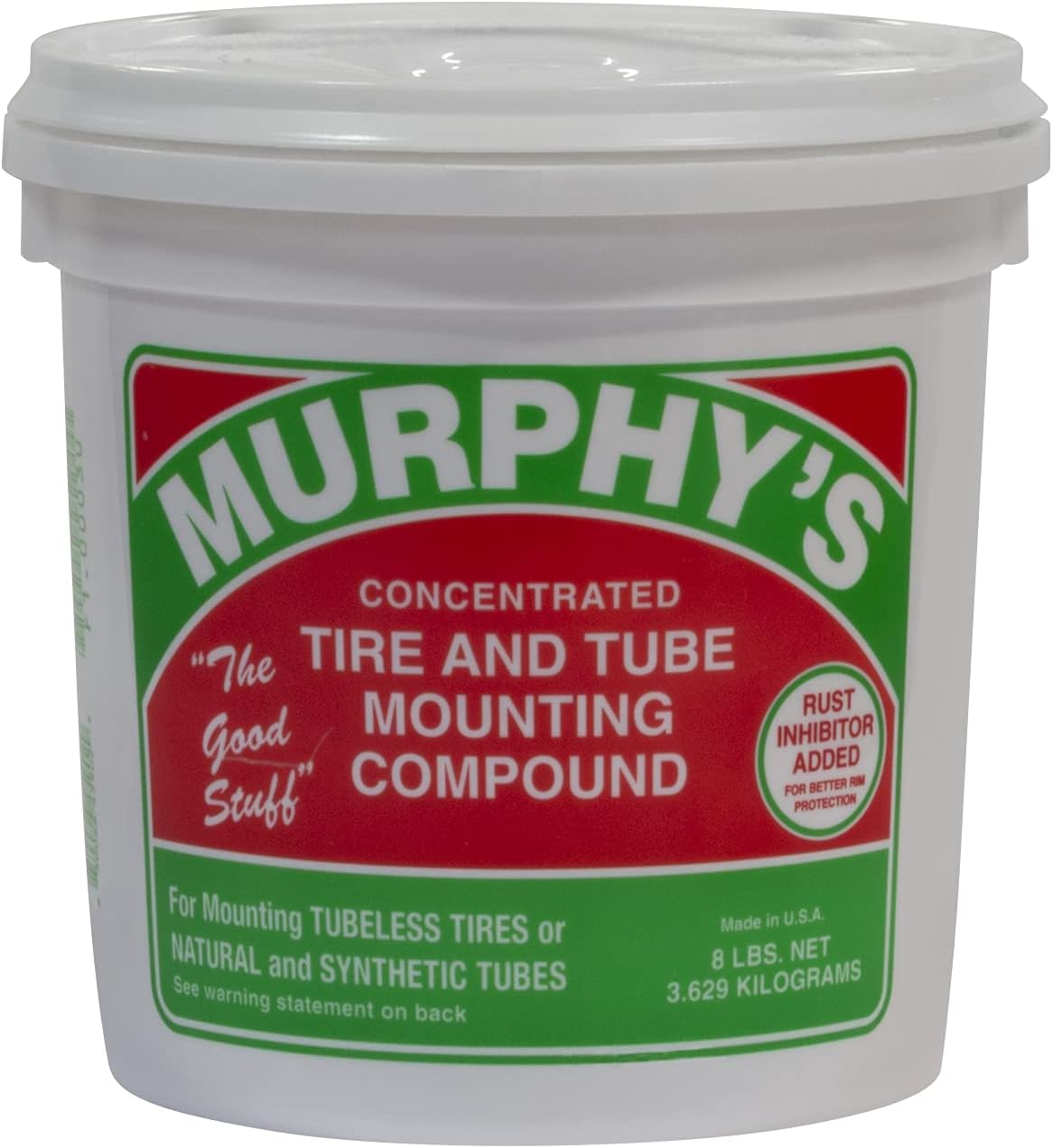
A concentrated tire and tube mounting compound designed to help simplify mounting rubber tires and tubes on passenger, semi truck, construction, and OTR applications. Its ultra-thick formula packs beads effectively and includes rust inhibitors to help protect against corrosion during use.

The SAFELIFE dial tire tread depth gauge measures tread depth in 1/32 inch increments with clear, easy-to-read 2-inch dial face. Color zones using a traffic light system help you quickly judge whether tread is low, marginal, or ample for safer driving. Built with a durable zinc cast body and a metal detect probe for precise, comfortable use across cars, motorcycles, trucks, and buses.
How to Read Tire Sidewall Markings
To read a tire sidewall, start with the full tire size and move from left to right. In the verified example 235/50R17 96V, each part has a specific meaning:
- 235 — tire section width in millimeters.
- 50 — aspect ratio, meaning the sidewall height is 50% of the tire width.
- R — radial construction.
- 17 — wheel diameter in inches.
- 96 — load index.
- V — speed rating.
You may also see other markings, such as XL for Extra Load, M+S for mud and snow, 3PMSF for severe snow service, or the DOT date code. Those markings matter too, but they do not replace the load index and speed rating required by your vehicle.
What 96V Does Not Mean
The 96V marking is useful, but it is easy to misread. Here is what it does not mean:
- It does not mean your vehicle can safely carry more weight. The vehicle’s axle and weight ratings still apply.
- It does not mean you should drive 149 mph. The rating describes tire capability under specified conditions, not road legality or safety.
- It does not guarantee better traction. Grip depends on the tire model, tread, compound, and conditions.
- It does not replace tire pressure checks. A 96V tire still needs the correct cold inflation pressure listed by the vehicle manufacturer.
Can You Use a Higher Load Index Tire?
Yes, you can often use a tire with a higher load index, but only if the tire also matches the correct size, construction, speed rating, load range, and fitment requirements for your vehicle. For example, moving from 94V at 670 kg (1,477 lb) per tire to 96V at 710 kg (1,565 lb) per tire increases the tire’s rated load capacity, but it does not increase the vehicle’s maximum allowable load.
Michelin notes that installing a tire with a higher load rating may be permitted, but the vehicle’s maximum allowable load remains limited by the vehicle’s axle ratings and manufacturer specifications.
[Products Worth Considering]

The Big Rig Defense Tire Thumper is a truck tire pressure checker that lets you quickly check multiple tires by giving them a firm whack. Listen for a reassuring thump and feel the stick bounce when a tire is fully inflated, helping you get back on the road safely. It features a comfortable, glove-friendly handle and a secure wrist strap for confident use on busy routes.

Measure tire tread depth quickly and accurately with this LUMITECO dial gauge that reads in 1/32" increments up to 14/32". The color-coded green/yellow/red zones make it easy to judge tire wear and know when replacement is needed. A rugged, compact design with a protective pouch helps keep the gauge ready for use on cars, trucks, motorcycles, and more.

The Kurgo Seasonal Tire Tote helps protect your car interior, clothes, and garage from tire grime, brake dust, and residue during seasonal tire changes. Its universal design fits most passenger tires between 22" and 31" in diameter, making storage and transport simpler with less mess. Built for rugged, repeated use, it’s machine washable for easy care and comes with a lifetime warranty.
Higher Load Index Benefits
A higher load index can provide a stronger load reserve when the tire is otherwise correct for the vehicle. Some higher-load tires also use reinforced construction, especially if they are marked XL or Extra Load. This can help on vehicles that require that construction from the factory.
However, a higher load index can also change ride feel, weight, and sometimes price. It is not automatically “better” for every driver.
Fitment and Safety
Before choosing a higher load index, confirm these items:
- The tire size matches the vehicle placard or an approved alternate size.
- The speed rating meets or exceeds the vehicle manufacturer’s requirement.
- The load index meets or exceeds the manufacturer’s requirement.
- The tire has the correct load range, such as Standard Load or Extra Load.
- All tires on the same axle match in size, type, construction, and rating.
Michelin’s tire mixing guidance recommends keeping tires consistent in size, type, speed rating, load capacity, and construction unless the vehicle manufacturer specifies a staggered setup.
When Not to Upgrade
Do not upgrade to a different tire rating if the tire does not match your vehicle’s required size, load range, speed rating, or wheel fitment. You should also avoid using a lower load index just to save money, because that can reduce load capacity and increase heat stress.
| Choice | Usually Safe? | What to Check |
|---|---|---|
| Same rating as manufacturer specification | Yes | Correct size, pressure, and load range |
| Higher load index | Often | Fitment, speed rating, ride feel, and manufacturer approval |
| Lower load index | No | Avoid unless the manufacturer specifically approves it |
| Lower speed rating | Usually no | Winter tire exceptions and maximum speed limits |
Can You Replace 96V Tires With a Different Rating?
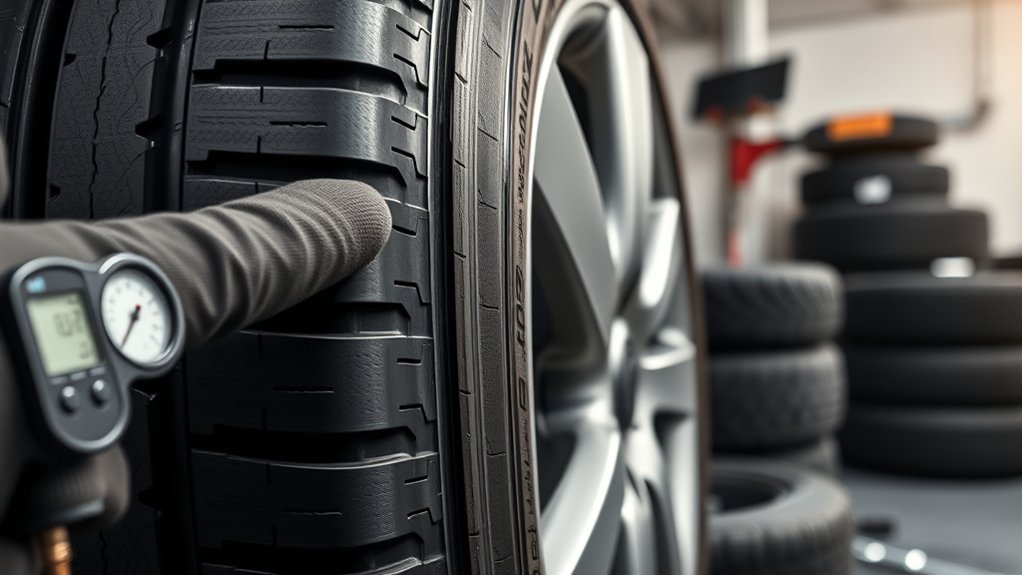
You can replace 96V tires with a different rating only when the replacement tires still meet your vehicle manufacturer’s minimum requirements. In most cases, that means choosing a tire with the same size, a load index of 96 or higher, and a speed rating of V or higher, unless your vehicle manual allows another setup.
Here is the safest replacement checklist:
- Match the tire size listed on the door placard or approved by the vehicle manufacturer.
- Match or exceed the load index so you do not reduce weight capacity.
- Match or exceed the speed rating unless the manufacturer allows a lower-rated seasonal tire.
- Match the load range, especially if the original tire is marked XL or Extra Load.
- Avoid mixing ratings across the vehicle unless the manufacturer specifically designed the vehicle that way.
- Inflate to the placard pressure, not the maximum pressure molded on the tire sidewall.
[Products Worth Considering]

Monitor tire tread wear with a smart, color-coded depth gauge that shows clear condition ranges at a glance. The bar is range marked for fast, easy readings, helping you maintain safer traction and performance. Each gauge is portable with a pocket clip, and the set includes 20 units for daily use and sharing.

Accurately measure tire tread depth with a calibrated gauge marked from 0 to 1 inch in 1/32 inch increments. The color-coded bar helps you quickly identify tread condition ranges, supporting safe driving for trucks, motorcycles, automobiles, and passenger vehicles.

Malco tire mounting and demounting lubricant is a ready-to-use tire lube formulated to reduce friction during tire installation for passenger cars, light trucks, farm tires, and heavy-duty equipment. It provides rust-inhibiting protection to help reduce corrosion on rims and wheels, and helps support proper tire bead seating during inflation to reduce air leakage. The silicone-free, soap-free formula is whitewall safe to help prevent discoloration on whitewall tires and sensitive sidewall markings.
If Your Vehicle Requires 96V, What Can You Use?
| Candidate Rating | What Changes? | General Replacement Rule |
|---|---|---|
| 96V | Nothing in the service description | Use when size, load type, and all other fitment requirements also match. |
| 98V | Higher load index; same V speed rating | Often acceptable if the tire size, construction, load type, wheel fitment, and manufacturer guidance all match. |
| 96W | Same load index; higher speed rating | Often acceptable if every other fitment requirement matches. |
| 94V | Lower load index | Do not substitute when 96 is the required minimum. |
| 96H | Same load index; lower speed rating | Generally avoid unless the vehicle manufacturer allows the lower speed rating, including applicable winter-tire exceptions. |
Pro Tip: When comparing 94V, 96V, and 98V tires, the letter tells you the speed category and the number tells you the load capacity. A 98V tire carries more load than a 96V tire, but both share the same V speed rating.
Frequently Asked Questions
Is an H or V tire better?
A V tire has a higher speed rating than an H tire. V is rated up to 149 mph, while H is rated up to 130 mph. That does not automatically make V better for every vehicle. The better choice is the rating your vehicle manufacturer specifies. If your vehicle requires V-rated tires, do not replace them with H-rated tires unless the manufacturer or a qualified tire professional confirms it is acceptable.
What does 96 V mean on a tire?
96 V means the tire has a load index of 96 and a V speed rating. The 96 load index equals 710 kg (1,565 lb) per tire when properly inflated. The V speed rating means the tire is rated for up to 240 km/h (149 mph) under specified conditions.
What is better for tires, 98V or 94V?
A 98V tire has a higher load index than a 94V tire, so it can carry more weight when properly inflated. Both have the same V speed rating. The better choice depends on your vehicle’s required load index, tire size, and load range. Never choose 94V if your vehicle requires 96V or 98V.
What is the difference between 95T and 95V tires?
95T and 95V tires have the same load index, so they carry the same rated load when properly inflated. The difference is speed rating. T is rated up to 118 mph, while V is rated up to 149 mph. If your vehicle requires V-rated tires, a 95T tire is usually not an appropriate replacement.
Can I use a lower speed rating than V?
Usually, you should not use a lower speed rating than the vehicle manufacturer specifies. Some winter or severe-snow-rated tires may have lower speed ratings, but you must follow the tire’s maximum speed limit and the vehicle manufacturer’s guidance. When in doubt, match or exceed the original rating.
Can I replace a 96V tire with a 98V tire?
Often yes, because 98 has a higher load index while V keeps the same speed rating. However, the replacement still needs to match the correct tire size, load type such as SL or XL, construction, wheel fitment, and vehicle manufacturer guidance. A higher load index does not increase the vehicle’s rated payload or axle limits.
What does 96V XL mean on a tire?
96V XL means the tire has a 96 load index, a V speed rating, and Extra Load construction. The 96 and V keep their normal meanings; XL describes reinforced construction intended for higher load capability at specified inflation conditions. If your vehicle requires XL tires, keep that requirement when choosing replacements.
Does 96V mean the tire is safe for towing?
Not by itself. A 96V tire tells you the tire’s load and speed ratings, but towing safety also depends on the vehicle’s tow rating, axle ratings, hitch rating, cargo weight, tire pressure, and trailer setup. Never exceed the vehicle manufacturer’s towing or load limits.
Conclusion
A 96V tire combines a 96 load index, equal to 710 kg (1,565 lb) per tire when properly inflated, with a V speed rating of 240 km/h (149 mph) under specified conditions. Before buying a replacement, read the complete size and service description on your current tire, then verify the required size, load index, speed rating, load type, and cold inflation pressure against the vehicle placard or owner’s manual. If any requirement is unclear, confirm the fitment with the vehicle or tire manufacturer or a qualified tire professional.
Sources
- Michelin — Tire Load Rating & Speed Rating Explained — supports service description, load rating, speed rating, replacement guidance, and higher load rating limits.
- Continental Tire — How to Read Your Tire Sidewall — supports sidewall code explanation and V speed rating value.
- NHTSA — Tire Safety Booklet — supports proper tire pressure, load limits, inspection, and tire failure prevention guidance.
- Michelin — Mixing Tires Safety Guidance — supports matching tire size, type, speed rating, load capacity, and construction.
- Goodyear — Tire Speed Rating — supports common speed rating categories and speed-rating interpretation.
- Bridgestone — Turanza EverDrive Resources — confirms a current 235/50R17 96V passenger-tire size example.
