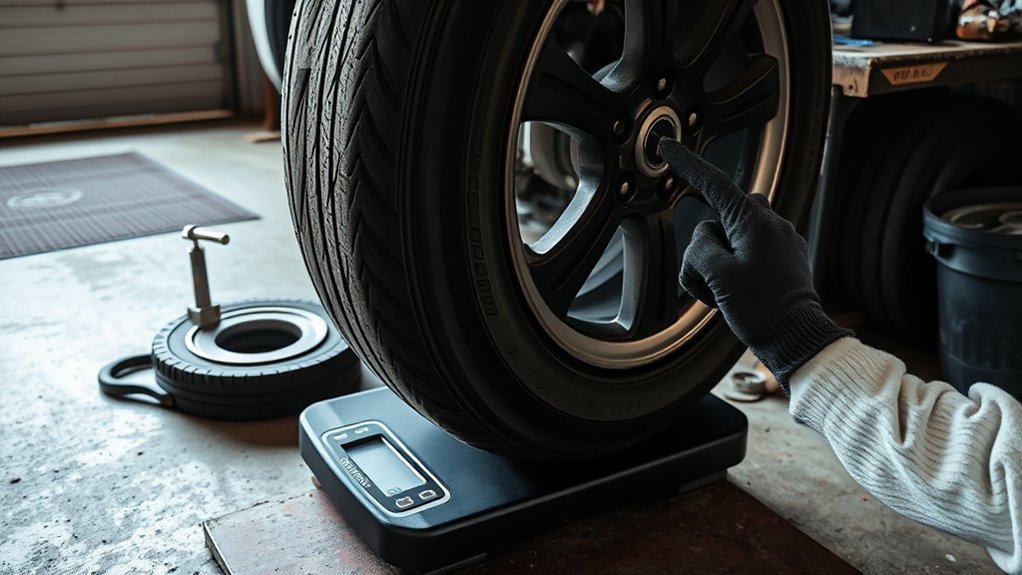
A car tire usually weighs about 15 to 30 pounds for many passenger cars, but the exact weight depends on the tire’s size, load rating, tread depth, and construction. Crossover and SUV tires often land around 25 to 45 pounds, while light-truck, all-terrain, and heavy-duty tires can run 35 to 70 pounds or more. Tire weight matters because it affects what you lift, ship, store, and install, and it can also influence ride feel, handling, and efficiency.
Quick Answer
Most passenger car tires weigh about 15 to 30 pounds each. Larger crossover and SUV tires often weigh about 25 to 45 pounds, while light-truck and aggressive all-terrain tires commonly weigh 35 to 70 pounds or more. Always check the exact tire size, load index, and product spec sheet before buying.
Key Takeaways
- A typical passenger car tire weighs about 15–30 lb, or roughly 7–14 kg.
- Crossover and SUV tires vary widely, but many are around 25–45 lb; light-truck and off-road tires are usually heavier.
- Tire size, width, tread depth, load range, sidewall strength, and internal materials all affect weight.
- Do not choose a replacement tire by weight alone. Match the vehicle’s required size, load index, speed rating, and inflation guidance.
- A bathroom scale can give a useful home estimate, but a tire shop or shipping scale is better for precise weight.
How Much Does a Car Tire Weigh?
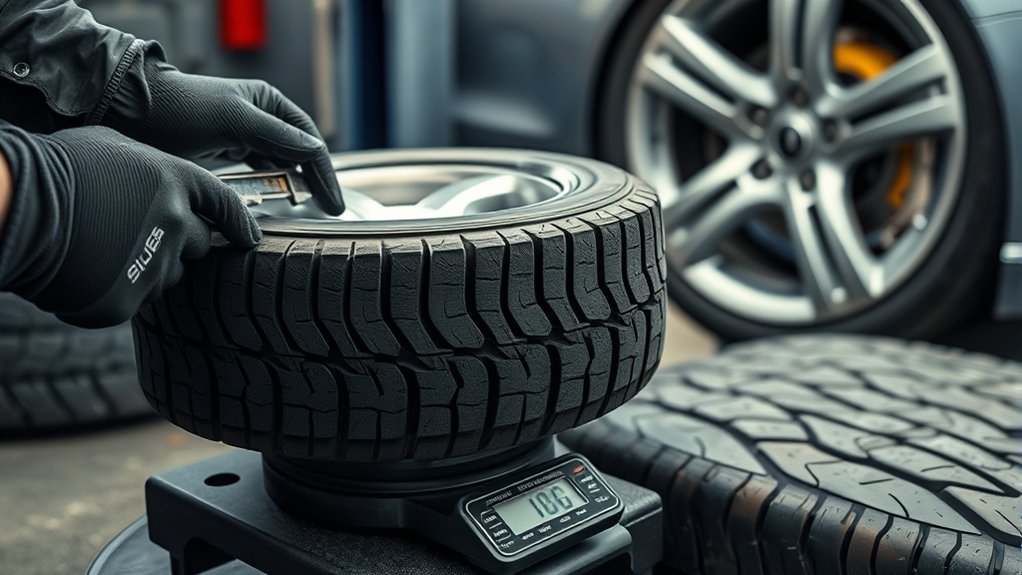
A standard passenger car tire usually weighs about 15 to 30 pounds. Smaller compact-car tires may be near the lower end of that range, while larger touring, performance, winter, and EV-ready tires can weigh more because they use extra rubber, reinforcement, or noise-reducing materials.
For larger vehicles, the range gets wider. Many crossover and SUV tires weigh about 25 to 45 pounds, but light-truck tires, load range E tires, and aggressive all-terrain tires can weigh 50, 60, or 70 pounds each. Specialty tires, commercial truck tires, and monster truck tires can go far beyond normal passenger-vehicle weights.
Note: Tire weight usually means the rubber tire by itself. A mounted tire-and-wheel assembly weighs much more because the wheel, valve stem, balancing weights, TPMS sensor, and sometimes a spare-tire carrier are included. The air inside the tire adds very little weight.
| Tire type | Common weight range | What affects the range |
|---|---|---|
| Compact car tire | 15–25 lb | Smaller diameter, narrower width, lighter casing |
| Sedan or touring tire | 18–30 lb | Size, speed rating, tread depth, comfort features |
| Crossover or SUV tire | 25–45 lb | Larger diameter, higher load index, stronger sidewall |
| Light-truck or all-terrain tire | 35–70+ lb | LT construction, load range, deeper tread, off-road casing |
| Temporary spare tire | 15–30 lb | Narrow design, limited-use construction, smaller tread |
What Makes a Tire Heavier or Lighter?
Tire weight changes because each tire is a mix of rubber compounds, steel belts, fabric cords, bead bundles, sidewall reinforcement, tread blocks, and sometimes foam or puncture-resistant layers. The same outside diameter does not guarantee the same weight, because two tires can use different construction methods for different jobs.
Tire Size and Width
Size is one of the biggest drivers of tire weight. A wider tire uses more tread rubber. A taller tire uses more sidewall material. A larger rim diameter can also change casing shape and construction. That is why a 205/55R16 passenger tire usually weighs much less than a 275/65R18 truck tire.
You can read the tire size on the sidewall. For a metric passenger tire such as 225/65R17, the first number is section width in millimeters, the second is aspect ratio, and the last number is wheel diameter in inches. Goodyear’s tire size guide explains the sidewall format for standard passenger tires and high-flotation tire sizes.
Materials and Tread Design
Tread design also matters. A highway touring tire with a shallow, closed tread pattern is usually lighter than a rugged all-terrain tire with deep voids, large shoulder lugs, and reinforced sidewalls. Winter tires can weigh more than a similar all-season tire when they use extra siping, deeper tread, or a specialized cold-weather compound.
According to the National Highway Traffic Safety Administration, tire design, materials, construction, and tread design can influence fuel efficiency, durability, wet and dry traction, handling, ride comfort, and rolling resistance. That means weight is only one part of the tire’s real-world behavior.
Pro Tip: When comparing two tires in the same size, check the spec sheet for weight, tread depth, load index, and load range together. A heavier tire may be stronger or have deeper tread, but it may also ride firmer or reduce efficiency.
Car Tire Weight by Vehicle Type
Vehicle type gives you a rough estimate, but the tire’s exact size and construction are more important. A small sedan tire and a large electric SUV tire can both be “passenger tires,” yet their weights may be very different.
| Vehicle type | Typical tire weight | Quick guidance |
|---|---|---|
| Small car | 15–25 lb | Common for compact cars and smaller sedans. |
| Midsize sedan | 18–30 lb | Touring and performance models can weigh more. |
| Crossover / SUV | 25–45 lb | Check exact size; many modern SUV tires are lighter than truck tires. |
| Pickup / light truck | 35–70+ lb | LT tires, load range E/F tires, and off-road tread add weight. |
| Motorcycle | 8–30 lb | Weight varies by front/rear tire and touring vs sport use. |
| Golf cart / lawn equipment | 5–20 lb | Small utility tires are usually easy to lift by hand. |
[Products Worth Considering]

Keep your tires properly inflated with this analog VONDIOR tire pressure gauge, designed for fast, easy readings without batteries. The swiveling, two-axis hose and large glow dial help you measure at any tire angle with instant visibility. Built with a protective rubber shield, it supports durable, low-maintenance use for cars and trucks.

The 22800 wheel stud installer makes replacing wheel studs quick and secure, saving time and effort during tire service. It uses a ratchet or impact wrench to pull new studs firmly into place, helping when existing studs are too long. Compatible with most automotive wheels and light-duty truck wheel studs, it’s designed for easy, tool-assisted installation.

A concentrated tire and tube mounting compound designed to help simplify mounting rubber tires and tubes on passenger, semi truck, construction, and OTR applications. Its ultra-thick formula packs beads effectively and includes rust inhibitors to help protect against corrosion during use.
How Tire Weight Affects Fuel Economy and Handling
Tire weight can affect how a vehicle feels, but it should not be confused with rolling resistance. A heavy tire adds rotating mass and unsprung weight, which can make acceleration, steering response, and suspension control feel slower. Rolling resistance is different: it measures energy loss as the tire rolls under load.
NHTSA estimates that a 10% reduction in tire rolling resistance can improve vehicle fuel economy by about 1–2%. That does not mean every 10 pounds of extra tire weight automatically costs 1–2% fuel economy. In real driving, fuel use depends on tire construction, inflation pressure, tread compound, vehicle weight, speed, road surface, alignment, and driving style.
A lighter tire is not automatically the better tire. The safest choice is the lightest tire that still matches the vehicle’s required size, load index, speed rating, pressure guidance, and driving conditions.
Fuel Economy Impact
Fuel economy is most directly affected by rolling resistance and proper inflation. Underinflated tires flex more, waste energy, build heat, and can wear faster. NHTSA recommends checking all tires, including the spare, at least once a month when the tires are cold and using the pressure listed on the vehicle’s tire information placard or owner’s manual.
Acceleration and Braking
Heavier tire-and-wheel assemblies can require more energy to spin up and slow down. That can make a vehicle feel less responsive, especially during stop-and-go driving. The exact effect is not the same for every vehicle, so avoid relying on universal claims such as a fixed 0–60 mph gain or a fixed braking percentage for each pound removed.
Suspension and Grip
Tires are part of the vehicle’s unsprung mass. More unsprung mass can make it harder for the suspension to keep the tire planted over bumps. Still, grip depends on more than weight. Tread compound, tread pattern, tire temperature, road surface, alignment, and inflation pressure all matter.
Does Tire Size Change Tire Weight?
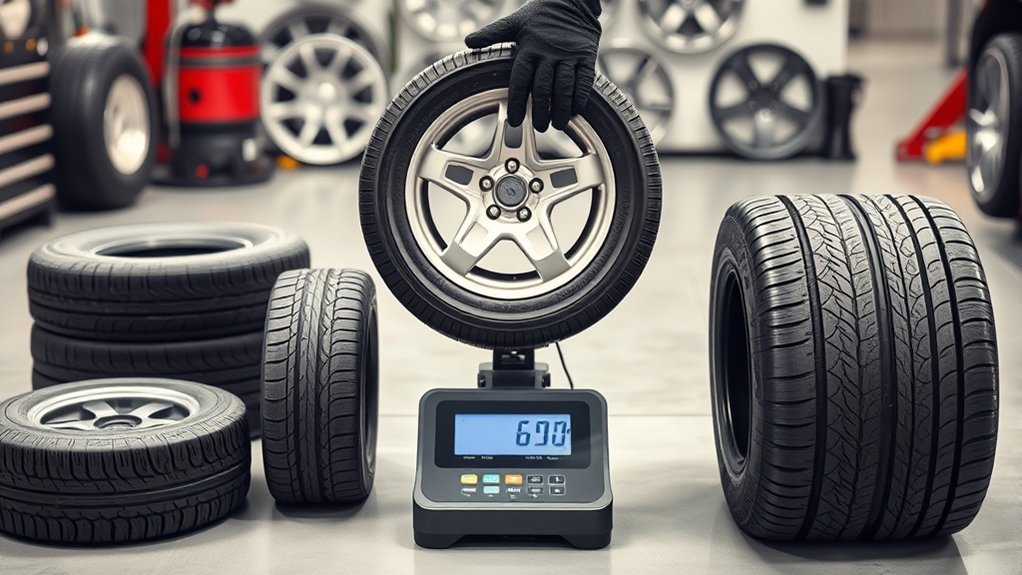
Yes. Tire size usually changes tire weight because larger and wider tires need more rubber, belt material, sidewall structure, and bead reinforcement. A wider section width often adds tread and casing material, while a taller sidewall adds more rubber and fabric around the tire.
| Sidewall number | What it means | How it can affect weight |
|---|---|---|
| 225 | Section width in millimeters | Wider tires usually use more tread and casing material. |
| 65 | Aspect ratio | Taller sidewalls can add rubber and reinforcement. |
| R17 | Radial tire for a 17-inch wheel | Wheel diameter changes the tire’s shape and construction. |
Size is only the starting point. A highway tire and an all-terrain tire in the same size can differ by several pounds because tread depth, casing strength, and load range are different.
[Products Worth Considering]

Replace or upgrade your zero-turn lawn mower tires with a universal fit flat-free tire and wheel assembly in a convenient 2-pack. Smooth tread front-caster style helps turning with reduced turf damage, while flat-free design eliminates the maintenance and downtime of air-filled flats. The included adapter kit supports 5/8-inch axles and hub lengths from 3.4 to 5 inches for compatibility across most ZTR mowers.

The SAFELIFE dial tire tread depth gauge measures tread depth in 1/32 inch increments with clear, easy-to-read 2-inch dial face. Color zones using a traffic light system help you quickly judge whether tread is low, marginal, or ample for safer driving. Built with a durable zinc cast body and a metal detect probe for precise, comfortable use across cars, motorcycles, trucks, and buses.

This digital tire pressure gauge with built-in inflator helps you accurately check and adjust tire pressure for safer driving and better fuel efficiency. It supports multiple units (PSI, KPA, BAR, KG/CM²) and reads within 1% for reliable results. The 3-in-1 design inflates, deflates, and measures, with a quick-connect air chuck and compatible hose setup for cars, trucks, SUVs, RVs, and motorcycles.
How to Weigh a Car Tire at Home
At a Glance
| Time Required | 2–5 minutes per tire |
| Difficulty | Easy, as long as you can lift the tire safely |
| Tools Needed | Bathroom scale, clean floor, gloves if the tire is dirty |
| Cost | Free if you already own a scale |
You can weigh a car tire at home with a bathroom scale. First, make sure the scale is on a flat, hard surface and reads zero. Place the tire upright or flat on the center of the scale, then read the number once it settles. If the tire is too wide or unstable, weigh yourself alone, then weigh yourself while holding the tire, and subtract your body weight.
- Clean off mud, stones, or water so the reading is not inflated.
- Set the scale on a level tile, concrete, or hardwood floor.
- Zero the scale before placing the tire on it.
- Center the tire so the load is not hanging off one side.
- Write down the result and label it as “tire only” or “mounted tire and wheel.”
Warning: Do not strain your back lifting a heavy truck tire or mounted wheel assembly. If the tire is too heavy or awkward, use a shop scale, shipping scale, or tire service professional.
How to Choose a Replacement Tire by Weight and Size
Choose a replacement tire by safety fit first, then compare weight. The correct tire must match the size and service requirements listed in your owner’s manual or on the Tire and Loading Information Label on the driver’s doorjamb. NHTSA recommends buying tires in the same size as the original tires or another size recommended by the vehicle manufacturer.
Also check the load index and speed rating on the sidewall. Michelin explains that the load index is the number that tells you the maximum weight a tire can safely carry when properly inflated, and the speed rating is the letter that tells you the maximum speed capability under specified conditions. Never install a tire with a lower load index than the vehicle’s factory requirement.
| Check | What to verify | Why it matters |
|---|---|---|
| Size | Match OEM size or approved alternate size | Protects handling, clearance, speedometer accuracy, and safety systems |
| Load index | Use equal or higher than factory requirement | Prevents overloading, overheating, and sidewall failure |
| Speed rating | Match the vehicle maker’s recommendation | Keeps the tire appropriate for the vehicle’s performance capability |
| Weight | Compare product spec sheets | Helps you compare ride feel, handling response, shipping, and lifting effort |
| Pressure | Use vehicle placard cold PSI, not the maximum PSI on the tire sidewall | Supports safety, fuel economy, tread life, and ride quality |
Note: EVs, hybrids, trucks, vans, and towing vehicles may require higher load indexes or special tire construction. A tire that fits physically is not automatically safe for the vehicle’s load and use.
[Products Worth Considering]

Protect your spare wheel with a waterproof, dustproof tire cover made to resist sun and harsh weather. The elastic band design makes it easy to install and remove without tools, while reinforced stitching helps it keep its shape. Available in multiple sizes, it fits common RV, trailer, Jeep, SUV, and truck spare tires.

Monitor tire tread wear with a smart, color-coded depth gauge that shows clear condition ranges at a glance. The bar is range marked for fast, easy readings, helping you maintain safer traction and performance. Each gauge is portable with a pocket clip, and the set includes 20 units for daily use and sharing.

Upgrade your garden cart, wagon, trolley, or hand truck with solid puncture-guarded tires that help prevent flats for worry-free pushing. Textured tread improves stability, grip, and shock absorption for smoother, safer travel over outdoor surfaces. Built with strong polyurethane and durable bearing components for long-lasting performance and confident handling.
Frequently Asked Questions
How heavy is a full tire?
If “full tire” means an inflated tire without the wheel, the air adds very little weight, so it will be close to the tire’s listed product weight. If it means a mounted tire-and-wheel assembly, add the wheel weight too. That can turn a 25-pound tire into a 45- to 60-pound assembly, depending on the wheel.
What is the 3% rule for tires?
The 3% rule is a common tire-sizing guideline that says the new tire’s overall diameter should stay within about 3% of the original diameter. It is a rule of thumb, not a substitute for the vehicle manufacturer’s approved tire sizes. Larger changes can affect speedometer accuracy, clearance, gearing, ABS, traction control, and handling.
What is the 105% rule on tires?
For everyday passenger vehicles, do not use a “105% rule” as permission to overload a tire. The safer rule is simple: never exceed the tire’s rated load capacity or the vehicle’s load limit, and never install a replacement tire with a lower load index than the vehicle requires.
What is the 7-7 rule for tires?
The “7-7 rule” is not the standard tire-safety rule most drivers should follow. NHTSA says tires are not safe and should be replaced when tread is worn to 2/32 inch. Some vehicle and tire manufacturers also recommend replacing tires at six to 10 years old, regardless of tread depth. Replace tires sooner if you see cracks, bulges, cuts, uneven wear, vibration, or other damage.
Where can I find the exact weight of my tire?
Look up your exact tire model and size on the tire maker’s website or a detailed retailer spec page. Use the full sidewall size, such as 225/65R17 102H, because the same tire model can weigh differently in different sizes and load ratings.
Conclusion
A car tire usually weighs about 15 to 30 pounds for many passenger vehicles, but larger SUV, light-truck, all-terrain, and heavy-duty tires can weigh much more. The best replacement tire is not simply the lightest one. Choose a tire that matches your vehicle’s size, load index, speed rating, pressure guidance, and driving needs, then use weight as one comparison point for handling, efficiency, shipping, and ease of installation.
Sources
- NHTSA TireWise — tire pressure, tread depth, aging, tire safety, and rolling-resistance guidance.
- Michelin Tire Load Rating & Speed Rating — load index and speed rating explanation.
- Michelin Tire Markings Explained — how to read sidewall load and speed ratings.
- Goodyear Tire Size Chart — standard passenger tire and high-flotation sidewall sizing formats.
- Tire Rack Michelin CrossClimate2 Specs — real-world passenger, crossover, and SUV tire weight examples by size.
- Tire Rack Goodyear Wrangler DuraTrac RT Specs — real-world light-truck and all-terrain tire weight examples by size and load range.