
What Tires for Highway Driving on a RAV4? Top Considerations

For mostly highway driving, the best RAV4 tire is usually a quiet touring or highway all-season tire that matches your exact year, trim, load index, and speed rating. The right choice should reduce road noise, support fuel economy, handle rain confidently, and wear evenly on long trips. Do not buy by model name alone: confirm the tire size on the driver-side door placard before ordering.
Quick Answer
Choose a touring or highway all-season tire for a RAV4 that spends most of its time on pavement. Common recent RAV4 sizes include 225/65R17, 225/60R18, and 235/55R19, but your door placard is the final fitment source. Prioritize wet traction, quiet ride, proper load rating, and low rolling resistance.
Key Takeaways
- For highway use, a touring or highway all-season tire is usually better than an all-terrain tire because it is quieter, smoother, and often more efficient.
- Do not assume one RAV4 tire size fits all trims. Verify the size, load index, and speed rating on the driver-side tire placard or owner information.
- Low rolling resistance can help fuel economy, but correct cold tire pressure matters just as much for everyday MPG, wear, and safety.
- If you drive in deep snow or regular ice, compare severe-snow-rated tires instead of relying only on standard all-season tires.
At a Glance
| Time Required | 10–20 minutes to verify size and compare tires; installation usually requires a shop appointment. |
| Difficulty | Easy to research; professional mounting and balancing are required for installation. |
| Tools Needed | Driver-side tire placard, owner information, tire-pressure gauge, tread-depth gauge or penny, and quotes from tire retailers. |
| Cost | Varies by size and model. Budget for four tires, mounting, balancing, valve stems or TPMS service, disposal fees, and an alignment check if wear is uneven. |
Best Tires for Highway Driving on a RAV4

For a RAV4 used mostly on highways, start with a touring all-season or highway all-season tire. These tires are built for steady pavement driving, low cabin noise, predictable wet braking, and long tread life. Examples worth checking in your exact size include the Michelin Defender 2, Bridgestone Ecopia H/L 422 Plus, and Continental CrossContact LX25.
Those model names are not a substitute for fitment. A RAV4 may use different sizes by year, trim, wheel package, gas/hybrid/plug-in model, and market. Before you compare prices, confirm the size and service description on your tire placard. Tire Rack’s RAV4 guide lists common recent RAV4 sizes such as 225/65R17, 225/60R18, and 235/55R19, but your vehicle’s placard is still the final authority.
Warning: Never choose a replacement tire with a lower load rating or speed rating than required for your RAV4. Also, do not use the maximum PSI printed on the tire sidewall as your normal inflation pressure; use the cold pressure listed on the vehicle placard.
[Products Worth Considering]

Protect your Tesla during lifting with durable rubber jack pads designed to cushion pressure and help safeguard the battery and chassis. The non-slip, plug-and-play puck set fits Tesla Model 3/Y/X/S for safe, secure jacking. Each pack includes a portable storage case for cleaner trunk organization.

This roadside assistance kit helps drivers and passengers in urgent situations after an accident or breakdown, providing practical support while waiting for help. It includes a lightweight, compact tire inflator for fast inflation of standard vehicle tires, plus reinforced jumper cable protection for safer handling. Ideal for winter weather, road trips, camping, and travel, with everything stowed neatly in a trunk bag.

The JACO FlowPro Tire Inflator measures, inflates, and airs down tires up to 100 PSI with battery-free operation and ±2% accuracy after calibration. It features a glowing pressure dial for night visibility, a heavy-duty steel build with a hybrid hose, and a precision push-to-inflate thumb trigger. The patented Lightning Air Chuck locks on for a secure seal, and the kit includes quick-connect hardware for easy inline use with your air compressor.
How Tires Affect MPG, Comfort & Braking
Tires affect highway driving in three big ways: rolling resistance, ride comfort, and traction. NHTSA TireWise explains that tire design, including materials, construction, and tread design, influences fuel efficiency, durability, wet and dry traction, handling, ride comfort, and rolling resistance.
Fuel Economy Impact
Low-rolling-resistance tires reduce energy loss as the tire rolls. NHTSA estimates that a 10% reduction in tire rolling resistance can improve vehicle fuel economy by about 1–2%. That is useful, but it is not magic. Real-world savings depend on tire size, vehicle condition, inflation pressure, road surface, temperature, speed, and driving style.
Proper pressure is the easiest MPG win. FuelEconomy.gov says keeping tires inflated to the proper pressure can improve gas mileage by 0.6% on average and up to 3% in some cases. Check pressure when the tires are cold, at least monthly, and before long trips.
Ride Comfort & Braking
Touring tires usually use tread patterns and casing designs that reduce vibration and road hum. For braking, look beyond comfort claims. Check wet traction, tread depth, tire age, and independent test results when available. NHTSA’s tire-rating guidance explains that traction grades indicate a tire’s ability to stop on wet pavement, with AA as the highest grade.
Note: A quiet tire is not automatically the safest tire. Balance road-noise claims with wet traction, hydroplaning resistance, load rating, speed rating, and warranty terms.
RAV4 Tire Sizes & How to Check Fitment by Trim
The safest way to confirm RAV4 tire size is simple: open the driver door and read the Tire and Loading Information Label. The label gives the original tire size and recommended cold inflation pressure. Your owner information and the current tire sidewall can help, but the placard is the starting point.
Common recent RAV4 replacement sizes include:
- 225/65R17 — common on many LE and XLE-style trims.
- 225/60R18 — common on several hybrid, sport, and package trims.
- 235/55R19 — common on some premium, Adventure, Limited, and plug-in-style trims.
When comparing tires, match the full service description, not just the size. For example, a tire listed as 225/65R17 102H includes the size, load index, and speed rating. Use Toyota’s tire information and your vehicle placard to confirm the correct specification.
- Read the placard: Confirm size, recommended cold PSI, and loading information.
- Match the service rating: Keep the required load index and speed rating or higher where appropriate.
- Check wheel diameter: Do not buy 17-inch tires for 18-inch wheels, or 19-inch tires for 18-inch wheels.
- Consider your trim: AWD, hybrid, plug-in, Adventure, Woodland, and TRD-style trims may use different original equipment.
- Ask before upsizing: Suspension lifts, wheel changes, and oversized tires can affect clearance, speedometer accuracy, ride, and safety systems.
Top Low-Rolling-Resistance Highway Tires for RAV4
The best highway tire depends on your priority. Use the table below as a shortlist, then verify that each tire is available in your exact size, load rating, and speed rating.
| Best Need | Tire Type to Start With | Examples to Compare | What to Check |
| Quiet highway commuting | Touring all-season | Michelin Defender 2, Continental CrossContact LX25 | Noise reviews, wet braking, tread warranty, exact size |
| Fuel economy focus | Low-rolling-resistance all-season | Bridgestone Ecopia H/L 422 Plus, Continental CrossContact LX25 | Rolling-resistance claims, wet traction, pressure maintenance |
| Rain confidence | Grand touring or crossover touring all-season | Michelin, Continental, Bridgestone, Pirelli, Goodyear options in your size | Wet traction grade, water-evacuation grooves, test results |
| Light trails plus highway | Mild all-terrain or trail all-season | Falken Wildpeak-style options or similar mild A/T tires | Noise, weight, MPG impact, winter rating, tread warranty |
Low Rolling Resistance Choices
If your priority is fuel economy, start with tires marketed for low rolling resistance or fuel efficiency. The Bridgestone Ecopia H/L 422 Plus is positioned as a fuel-efficient touring tire for SUVs, CUVs, and minivans, with features such as full-depth grooves, an optimized tread pattern, and a 70,000-mile limited mileage warranty. Continental’s CrossContact LX25 uses EcoPlus Technology and is marketed for fuel savings, wet braking, low road noise, and extended tread life.
Quiet Touring Tire Picks
If cabin noise bothers you on long drives, prioritize touring all-season tires with a comfort-focused tread pattern, strong owner reviews, and independent road-noise testing where available. The Michelin Defender 2 and Continental CrossContact LX25 are both reasonable examples to compare, but availability and performance can vary by size.
Long-Wear Fuel Savers
Long tread life matters for highway drivers because replacement cost is spread over more miles. Michelin publishes Defender 2 testing in size 225/65R17 on 2021 Toyota RAV4 vehicles, while Bridgestone and Continental publish limited mileage warranty information for the Ecopia H/L 422 Plus and CrossContact LX25. Treat warranties as comparison tools, not guarantees. Alignment, rotation, inflation, road surface, climate, and driving style all affect real tread life.
Pro Tip: Compare the installed price, not just the tire price. Mounting, balancing, TPMS service, disposal fees, road-hazard coverage, and alignment can change the real total by a noticeable amount.
Quiet Touring Tires: Road-Noise Ratings Explained

Quiet tire shopping can be confusing because many U.S. tire pages describe noise qualitatively instead of giving one standardized road-noise number. Look for signs of a comfort-focused tire: touring category, symmetric or computer-optimized tread pattern, closely spaced tread blocks, continuous center ribs, and reviews that mention low road hum on concrete and asphalt.
Do not choose based on quietness alone. A tire that is very quiet but weak in wet traction is a poor highway choice. Compare wet traction, hydroplaning resistance, tread warranty, and speed rating along with noise. If you drive long interstate miles, small comfort differences can reduce fatigue, but wet braking and stability should remain the top safety filters.
All-Terrain vs Highway for RAV4: When to Choose Each
Highway tires and all-terrain tires solve different problems. For most commuters and road-trip drivers, a touring or highway all-season tire is the better match. It is usually quieter, smoother, and more efficient on pavement. An all-terrain tire makes sense when gravel roads, dirt trails, campsite access, snow-packed rural roads, or stronger tread blocks matter more than cabin quietness.
- Choose highway/touring all-season tires if you mainly drive pavement, commute, take long highway trips, and want low noise and good fuel economy.
- Choose mild all-terrain tires if you regularly drive gravel, trailheads, rough rural roads, or light off-pavement routes.
- Choose winter or all-weather severe-snow-rated tires if you regularly face deep snow, ice, or mountain winter driving. Standard all-season tires have limits in severe winter conditions.
NHTSA describes all-terrain tires as a compromise between on-road driving and off-road capability, while winter tires are more effective than all-season tires in deep snow. Match the tire to where you actually drive, not just how the tread looks.
[Products Worth Considering]

Blackline Blackout is a water-based trim and tire dressing that restores rubber, vinyl, and plastic with a rich satin, blackout look. Its no-sling formula dries quickly and helps prevent messy transfer onto paint. The coating repels water and offers UV protection to help prevent fading, cracking, and discoloration for a clean, long-lasting finish.

This car emergency kit keeps essential roadside tools organized in a durable, portable bag so you can respond quickly during common driving emergencies. It includes battery jumper cables, a bright LED headlight, first aid supplies, a tire pressure gauge, and safety essentials like gloves and an emergency poncho. Designed for trunk or storage use, it helps you be prepared for dead batteries, minor malfunctions, and unexpected roadside issues.
Costs & Long-Term Fuel Savings by Tire Type
The best value is not always the cheapest tire. A lower-priced tire can cost more over time if it is noisy, wears quickly, reduces wet grip, or hurts fuel economy. A premium touring tire can be worth the extra cost when it gives you better wet performance, quieter highway miles, and a stronger treadwear warranty.
When comparing cost, calculate the full set:
- Four tires in the correct size and service rating
- Mounting and balancing
- Valve stems or TPMS service kit
- Old-tire disposal fees
- Road-hazard coverage, if you want it
- Alignment check or alignment service if the old tires wore unevenly
The lowest long-term cost usually comes from the tire that fits correctly, wears evenly, stays quiet, handles rain well, and is maintained at the correct cold pressure.
Where to Buy & Installation Tips for RAV4 Highway Tires
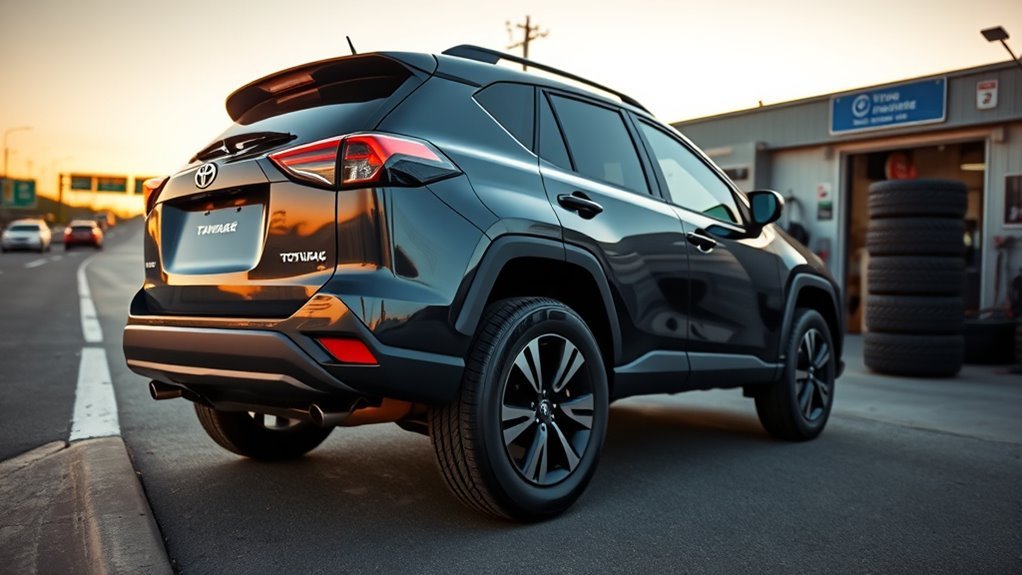
Buy from a retailer or installer that can verify fitment by VIN, trim, or placard size. Good options include local tire shops, Toyota dealers, warehouse clubs, and online retailers that ship to approved installers. Before paying, ask for the installed out-the-door price and confirm what is included.
Use this installation checklist:
- Confirm fitment: Size, load index, speed rating, and wheel diameter must match your RAV4 requirements.
- Install as a matching set: For AWD and hybrid models, a matched set is usually the safest choice when the old tires are significantly worn.
- Balance every tire: Proper balancing reduces vibration and helps highway comfort.
- Check alignment: Get an alignment check if the old tires show cupping, feathering, or one-sided wear.
- Reset or service TPMS: Make sure the tire-pressure monitoring system works after installation.
- Set cold pressure: Use the vehicle placard pressure, not the tire sidewall maximum.
- Document the service: Keep receipts and rotation records for warranty claims.
Maintenance Schedule to Maximize Highway Performance
Good highway tires only perform well if they are maintained. USTMA tire-care guidance highlights pressure, tread, rotation, and alignment as the core maintenance items. Build a simple routine and stick to it.
- Monthly: Check cold pressure on all tires, including the spare if equipped. Inspect for cuts, bulges, nails, cracks, and uneven wear.
- Before long trips: Check pressure, tread depth, and visible damage. Do not wait for a TPMS warning; TPMS is not a replacement for regular checks.
- Every 5,000–7,500 miles: Rotate tires unless your owner’s manual or tire warranty specifies a different interval.
- With new tires or uneven wear: Ask for an alignment check.
- As tires age: Inspect the DOT date code and ask a tire professional about replacement if the tires are old, cracked, damaged, or performing poorly.
Note: Tire warranties often require proof of proper rotation and maintenance. Keep your invoices and write down mileage at each rotation.
Frequently Asked Questions
Is the Toyota RAV4 good for highway driving?
Yes. The RAV4 is well suited to highway commuting and road trips when it is fitted with properly sized tires in good condition. For the best highway feel, choose tires that balance quiet ride, wet traction, stable handling, and correct load rating.
What are the best tires for driving many highway miles in a RAV4?
Start with touring or highway all-season tires from reputable brands. Michelin Defender 2, Bridgestone Ecopia H/L 422 Plus, and Continental CrossContact LX25 are useful examples to compare, but the best choice is the one available in your exact RAV4 size, load index, and speed rating.
What tire size does my RAV4 need?
Check the Tire and Loading Information Label on the driver-side door area. Common recent RAV4 sizes include 225/65R17, 225/60R18, and 235/55R19, but the correct size depends on your year, trim, wheel package, and market.
Are all-terrain tires bad for highway driving on a RAV4?
No, but they are a trade-off. Mild all-terrain tires can be useful for gravel, trailheads, and rough roads, but they may add road noise, weight, and rolling resistance compared with touring highway tires. If you rarely leave pavement, a touring all-season tire is usually the better highway choice.
Do low-rolling-resistance tires really save fuel?
They can help, but the savings are usually modest and depend on the vehicle, road, speed, tire design, and pressure. NHTSA estimates that a 10% reduction in tire rolling resistance can improve vehicle fuel economy by about 1–2%. Keeping tires at the correct cold pressure is also essential.
Conclusion
For a highway-driven RAV4, the best tire is usually a quiet touring or highway all-season model that fits your exact placard size and service rating. Start with fitment, then compare wet traction, road noise, rolling resistance, tread warranty, and installed cost. If you drive mostly pavement, skip aggressive all-terrain tread unless you truly need the extra off-road durability. With correct pressure, regular rotation, and proper alignment, your RAV4 tires will stay safer, quieter, and more efficient over long highway miles.
Sources
- NHTSA TireWise — tire sizing, ratings, inflation, traction grades, maintenance, and rolling-resistance guidance.
- FuelEconomy.gov Gas Mileage Tips — proper tire inflation and fuel-economy impact.
- U.S. Tire Manufacturers Association Tire Care Essentials — pressure, tread, rotation, and alignment maintenance guidance.
- Toyota Owners 2025 RAV4 Tire Information — Toyota tire-information reference for RAV4 owners.
- Tire Rack Toyota RAV4 Tire Guide — common RAV4 replacement sizes and tire categories.
- Michelin Defender 2 Product Information — example touring all-season tire data and RAV4-related test information.

Related Articles

Toyota RAV4 TPMS Reset: Easy Steps That Work
Unlock the secrets to resetting your Toyota RAV4's TPMS effortlessly—discover the essential steps to ensure your tires are always safe.
Read More
Toyota RAV4 Tire Rotation: DIY Steps & Pattern
Take control of your Toyota RAV4's tire maintenance with our simple DIY rotation guide—discover the best steps for optimal performance and longevity!
Read More
Mix Tire Brands on a Toyota RAV4? Expert Guide
Keeping your RAV4 safe? Learn when mixing tire brands risks traction, ABS/TCS and AWD damage — and what exact matches you must insist on.
Read More