
You choose one versatile tire set or two dedicated sets by looking at where your Toyota 4Runner actually spends its miles. If most of your driving is pavement with occasional forest roads, a quality all-terrain tire keeps the truck quiet, efficient, and trail-capable. If you regularly chase deep mud, rock ledges, or technical ruts, a second mud-terrain set can be worth the storage, cost, and swap hassle. The right answer is not the most aggressive tire; it is the tire that matches your real driving split.
Quick Answer
Most 4Runner owners should run one strong all-terrain tire set. Choose two sets only if you drive extreme trails often enough to justify mud-terrain tires, extra wheels, TPMS, storage, and swap time. Winter drivers may still need dedicated winter tires or 3PMSF-rated all-terrains, depending on ice and snow severity.
Key Takeaways
- Run one all-terrain set if your 4Runner is a daily driver that sees light trails, gravel, camping roads, or occasional mud.
- Run two tire sets if you wheel hard and often enough that mud-terrain grip matters more than road noise, fuel economy, and tread life.
- Do not use 10 PSI as a blanket rule. Airing down depends on tire construction, wheel size, vehicle weight, terrain, and speed.
- Crawl Control and A-TRAC still need grip. Toyota’s systems manage wheel spin, but tire tread, compound, and pressure decide how much traction is available.
- Verify fitment before buying. Tire size, load rating, wheel offset, spare fit, TPMS, and rubbing matter as much as tread pattern.
At a Glance
| Time Required | 10–20 minutes to audit your driving split; longer if you inspect fitment, compare sizes, or price a second wheel-and-tire package. |
| Difficulty | Easy for tire-type selection; moderate if you swap mounted wheel sets yourself; professional help recommended for mounting, balancing, alignment, or uncertain fitment. |
| Tools Needed | Tire-pressure gauge, tread-depth gauge, owner’s manual, tire placard, portable compressor, deflator, torque wrench if swapping mounted wheels, and a fitment check before upsizing. |
| Cost | One set costs the tires plus mounting and balancing. Two sets add wheels, TPMS sensors, storage, seasonal swaps, and faster cash outlay. |
Do You Really Need Two Sets of Tires for Your 4Runner?
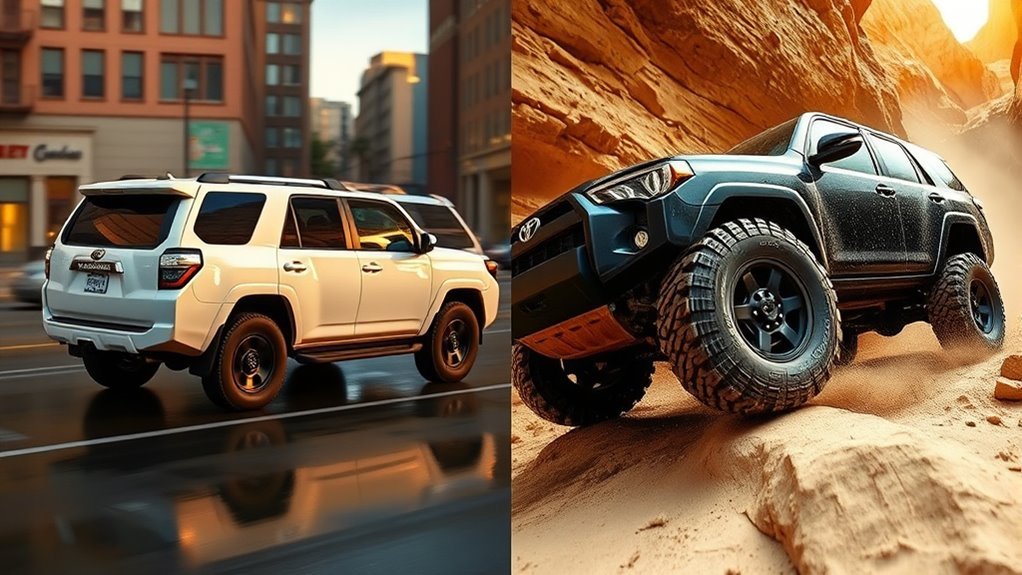
Ask the blunt question first: how often does your 4Runner leave pavement, and how hard is the terrain when it does?
If your week is commuting, errands, highway trips, and occasional camping roads, a single all-terrain tire is the cleanest setup. A tire such as the Michelin LTX A/T2 leans toward long tread life, road comfort, and gravel-road durability. A more aggressive all-terrain such as the Goodyear Wrangler DuraTrac moves closer to trail performance while still being built for mixed use.
If your weekends include deep mud, slick clay, rocky ledges, or trails where self-cleaning tread blocks matter, a second mud-terrain tire set starts to make sense. Mud-terrains such as the BFGoodrich Mud-Terrain T/A KM3 or Yokohama GEOLANDAR M/T G003 are built for aggressive off-road traction and durability. The tradeoff is real: more noise, more rotating weight, more wear on pavement, and less daily comfort.
Note: A second tire set only pays off when the trail benefit is frequent enough to overcome the cost, storage space, TPMS setup, swap time, and extra maintenance.
Use this simple rule: if you are mostly pavement with occasional trails, run one premium A/T. If you are regularly choosing trails where a mild A/T clogs, slips, or takes sidewall damage, consider a dedicated M/T trail set.
Which 4Runner Tire Type Matches Your Actual Driving?
Your tire choice should follow your driving ratio, not the most aggressive build you saw online. Match the tread to the job.
| Driving Pattern | Best Tire Setup | Why It Works |
| 80–95% pavement, light gravel, camping roads | Highway-terrain or mild all-terrain | Best balance of comfort, tread life, fuel economy, and light trail ability. |
| 60–80% pavement, regular dirt, rocks, ruts, forest roads | Premium all-terrain | The most practical one-set solution for most 4Runner owners. |
| Frequent deep mud, slick clay, rock crawling, technical trails | Mud-terrain trail set, possibly with a separate daily set | Open tread voids and tougher construction help in terrain where A/T tires clog or lose bite. |
| Cold climates with snow and ice | 3PMSF-rated A/T for mixed use, or dedicated winter tires for severe winter | The Three-Peak Mountain Snowflake symbol indicates tested snow traction, but it does not make every A/T equal to a dedicated winter tire. |
Daily pavement drivers do not automatically need the most aggressive A/T. Weekend trail drivers do not automatically need mud-terrains. The winning setup is the one that handles your most common miles without failing your hardest miles.
How 4Runner Tire Width, Load Range, and Pressure Affect Traction
Tread pattern gets the attention, but width, load range, and pressure often decide how your 4Runner actually feels on the road and trail.
On pavement, wider tires can add grip, but they can also add weight, rolling resistance, steering effort, and hydroplaning risk if the tread design is not well matched to wet roads. In snow and slush, a narrower tire can sometimes cut down to firmer material instead of floating on top. In sand, wider tires and lower pressure can help flotation. In mud, tread voids and self-cleaning matter more than width alone.
Load range matters too. A stronger LT tire with a higher load range may resist sidewall damage better, but it can ride harsher and weigh more than a lighter tire. That extra weight can dull acceleration, braking, and fuel economy. If your 4Runner is lightly loaded and mostly daily-driven, do not upgrade to a very stiff tire just because it sounds tougher. If you carry armor, drawers, a roof tent, recovery gear, passengers, and trail supplies, load capacity and sidewall strength become more important.
Pro Tip: Before buying heavier tires, compare the tire’s load index, weight, diameter, and approved rim width against your 4Runner’s placard, manual, and real vehicle weight. Stronger is not automatically better if it makes the truck worse for 90% of your driving.
Pressure adjustment is powerful off-road. Airing down lets the tire conform to rocks, washboard, sand, and uneven surfaces. It can improve ride comfort and traction, but it also increases sidewall flex and heat. Toyota says to use the tire information placard or owner’s manual for recommended road pressure, and NHTSA advises checking tire pressure at least monthly and measuring when tires are cold.
[Products Worth Considering]

Measure tire tread depth quickly and accurately with this LUMITECO dial gauge that reads in 1/32" increments up to 14/32". The color-coded green/yellow/red zones make it easy to judge tire wear and know when replacement is needed. A rugged, compact design with a protective pouch helps keep the gauge ready for use on cars, trucks, motorcycles, and more.

This ALL-TOP auto-stop tire deflator valve kit lets you air down off-road tires quickly without watching pressure, automatically stopping when your preset PSI is reached. Each valve is individually calibrated for reliable performance with an acceptable +/- 2 PSI tolerance. The adjustable deflator range covers 10 to 30 PSI and includes four valves plus valve caps and a zipper pouch for easy setup on trucks, SUVs, RVs, UTVs, and powersports.
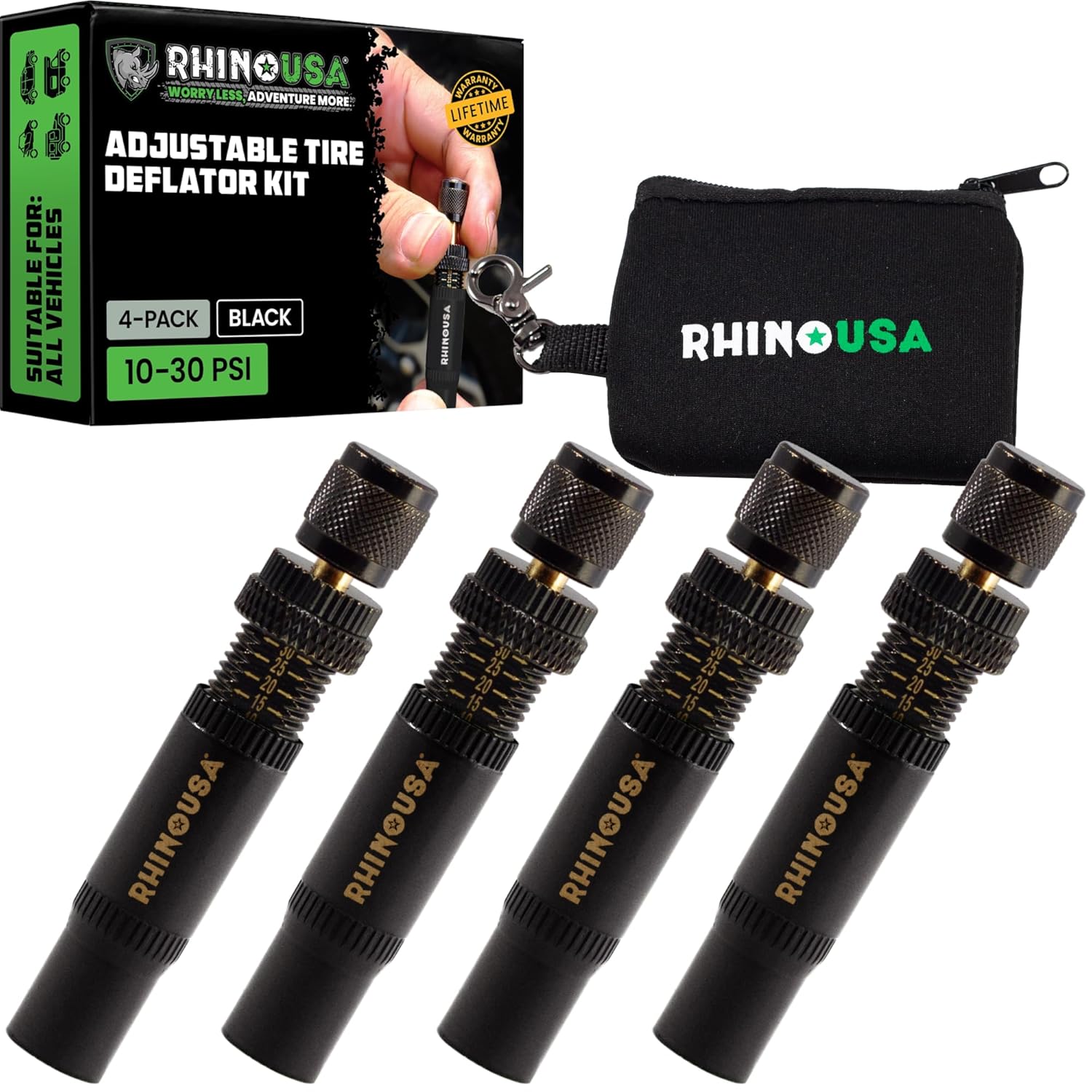
Use the Rhino USA adjustable tire deflators to air down all four tires at once by screwing one deflator onto each valve stem, letting you step away while the tires reach your preset pressure. Each deflator independently adjusts across a 10–30 PSI range with laser-etched indicators for quick setup and verification, making it ideal for beach, sand, and rocky off-road trails.
Safe Airing-Down Checklist for a 4Runner
Airing down can transform trail traction, but it must be done with a plan. Do not treat 10 PSI as a universal target.
- Start with your cold road pressure. Use the tire placard and owner’s manual as the road-pressure baseline.
- Choose pressure by terrain. Sand and snow often need more flotation; rocks and mud often need enough flex without unseating the bead.
- Account for tire and wheel setup. Large wheels with short sidewalls should not be aired down as aggressively as taller-sidewall tires.
- Drive slower when aired down. Low pressure builds heat and can damage tires at speed.
- Carry a compressor. Air back up before returning to pavement.
- Recheck all four tires. Uneven pressure can make the truck pull, handle poorly, or trigger TPMS warnings.
Warning: Driving on pavement with trail-low tire pressure can cause poor handling, excess heat, rapid wear, bead unseating, and tire failure. Air back up before highway driving.
[Products Worth Considering]

Keep your tires properly inflated with this analog VONDIOR tire pressure gauge, designed for fast, easy readings without batteries. The swiveling, two-axis hose and large glow dial help you measure at any tire angle with instant visibility. Built with a protective rubber shield, it supports durable, low-maintenance use for cars and trucks.

Steelman white tire marking crayons provide high-contrast, semi-permanent marks for repairing and inspecting tires and equipment. They write on wet or dry, smooth or coarse surfaces including rubber, metal, glass, and wood, making them ideal for puncture location and damage outlining. The lead- and zinc-free crayons resist weather and fading yet wipe away when you no longer need the marks.

The Kurgo Seasonal Tire Tote helps protect your car interior, clothes, and garage from tire grime, brake dust, and residue during seasonal tire changes. Its universal design fits most passenger tires between 22" and 31" in diameter, making storage and transport simpler with less mess. Built for rugged, repeated use, it’s machine washable for easy care and comes with a lifetime warranty.
Is Swapping 4Runner Tires Worth the Hassle?
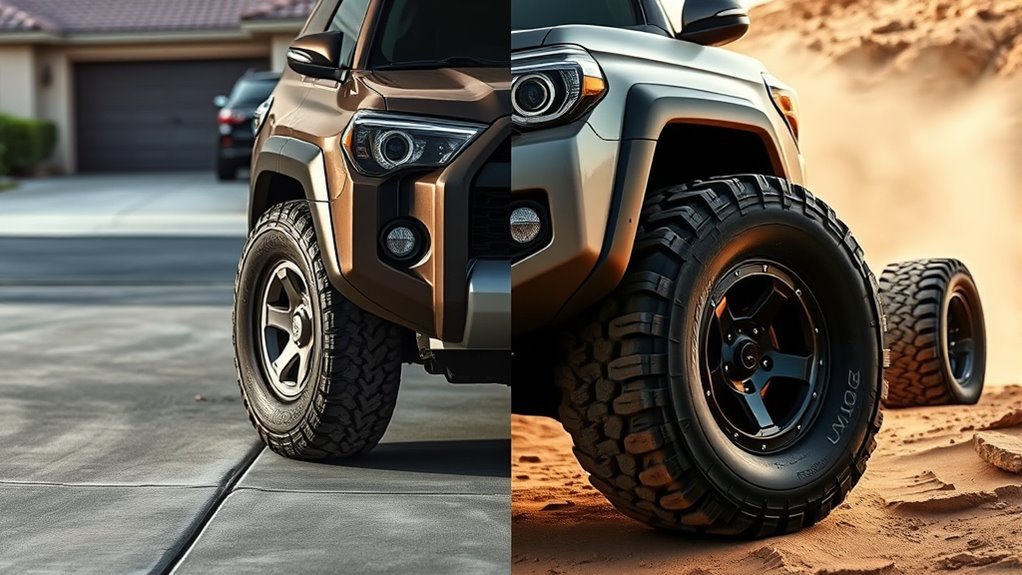
Two tire sets sound ideal until you live with them. You need space for the second set, a safe way to lift and torque the truck if you swap wheels yourself, TPMS sensors or warning-light tolerance, a rotation plan, and enough trail days to justify the expense.
A dedicated mud-terrain set delivers its value when the terrain is serious. It can bite harder in deep mud, clear debris better, and protect the sidewall better in sharp trail conditions. But on pavement, mud-terrains usually bring more noise, more weight, and faster wear. For most 4Runner owners, the better compromise is one excellent all-terrain tire.
The best tire setup is not the most aggressive one. It is the setup that performs safely on your most common roads and still has enough margin for your hardest trails.
Choose one set if you want lower maintenance, consistent handling, less storage hassle, and better daily drivability. Choose two sets if your 4Runner has a clear split personality: quiet pavement miles during the week and hard trail work often enough to punish a daily tire.
Do Crawl Control and A-TRAC Work Better With Certain 4Runner Tires?
Yes, but not because the electronics become more powerful. They work better because the tire gives the system more real grip to manage.
Toyota’s 2025+ 4Runner TRD Off-Road models include off-road hardware and software such as all-terrain tires, Bilstein shocks, Multi-Terrain Select, and Crawl Control, with Off-Road Premium adding comfort and visibility features such as Multi-Terrain Monitor and upgraded cabin technology. Toyota describes Multi-Terrain Select as a system that helps control wheel spin on surfaces such as mud, dirt, and sand, while Crawl Control works like low-speed off-road cruise control so the driver can focus on steering.
A-TRAC and Crawl Control can brake spinning wheels and manage throttle response, but they cannot create traction from a tire that is packed with mud, overinflated for rocks, or wrong for snow. A good A/T tire gives these systems enough grip for mixed terrain. A true M/T tire gives them more bite in deep mud and technical trail conditions. A winter tire or 3PMSF-rated tire gives them a better starting point in snow.
Note: Lockers, Crawl Control, A-TRAC, and Multi-Terrain Select are support systems. Tires still set the physical traction limit.
Fitment Checks Before Buying 4Runner Tires
Before you order a tire set, verify the basics. Tire choice is not only tread pattern.
- Factory size: Start with the tire size on your door placard and owner’s manual.
- Load rating: Match or exceed the required load rating for your vehicle and real cargo weight.
- Wheel width: Make sure the tire is approved for your wheel width.
- Offset and clearance: Wider or taller tires may rub the fender liner, body mount, mud flaps, or suspension at full lock and compression.
- Spare tire fit: Confirm the spare location can hold the matching tire size.
- TPMS: A second wheel set may need extra TPMS sensors or relearning.
- Speedometer and gearing: Larger tires can change indicated speed, odometer readings, shift behavior, and effective gearing.
- Rotation pattern: Directional tires, full-size spares, and staggered wear can affect how you rotate.
If you are moving beyond factory size, get a tire shop or 4Runner specialist to confirm clearance before you spend money. A tire that looks perfect online can still rub, ride poorly, or overload the spare carrier.
[Products Worth Considering]

Monitor tire tread wear with a smart, color-coded depth gauge that shows clear condition ranges at a glance. The bar is range marked for fast, easy readings, helping you maintain safer traction and performance. Each gauge is portable with a pocket clip, and the set includes 20 units for daily use and sharing.

Vigorder rubber cement glue delivers superior adhesion and cures quickly within about 30 seconds for seamless rubber bonding. Once cured, it helps provide a strong, durable, waterproof seal that holds up to vehicle weight, pressure, and heat. Suitable for cars, motorcycles, trucks, bicycles, and off-road tires, it’s designed for emergency patch and maintenance repairs.

Upgrade your 2024-2026 Tesla Model 3 Highland with REEVAA all-weather mud flaps designed for seamless fit along the original body lines. The set of four delivers strong splash protection against mud, gravel, and road debris while using OEM-grade durable materials. Installation is non-destructive with original hole positions and snap-in clips, and the aerodynamic design helps minimize impact on efficiency.
Frequently Asked Questions
Can I use off-road wheels for everyday driving?
Yes, you can use off-road wheels every day if they fit correctly, have the proper load rating, clear the brakes and suspension, and are paired with tires suited to road use. The main tradeoffs are weight, noise, ride quality, fuel economy, and tire wear. Avoid beadlock-style or trail-only setups unless they are legal and appropriate for street use in your area.
What is the difference between 4Runner Off-Road and Off-Road Premium?
For 2025+ 4Runner models, TRD Off-Road brings the core off-road equipment, including 18-inch wheels, 33-inch all-terrain tires, Bilstein shocks, Multi-Terrain Select, and Crawl Control. TRD Off-Road Premium builds on that with features such as Multi-Terrain Monitor, SofTex-trimmed power seats, a 14-inch multimedia screen with JBL audio, JBL FLEX speaker, hands-free power liftgate, TRD shift knob, and heated steering wheel. Always verify by model year because older 4Runner trims differ.
Are all-terrain tires good enough for most 4Runner trails?
Yes. A quality all-terrain tire is enough for most forest roads, gravel, light mud, sand access roads, camping routes, and moderate trails. Mud-terrain tires become worth it when you repeatedly drive deep mud, slick clay, sharp rocks, or technical routes where an A/T tire clogs or loses sidewall protection.
Should I air my 4Runner tires down to 10 PSI off-road?
Not as a blanket rule. Some experienced drivers use very low pressures in specific conditions, but the safe pressure depends on wheel size, sidewall height, tire construction, vehicle weight, terrain, and speed. Many stock-wheel setups should stay higher to reduce bead-unseating risk. Always carry a gauge and compressor, drive slowly when aired down, and reinflate before pavement.
Do I need 3PMSF tires for winter?
If you drive in snow, a Three-Peak Mountain Snowflake rated tire is a smart minimum because it has met a snow-traction standard beyond basic M+S marking. However, not every 3PMSF all-terrain performs like a dedicated winter tire on ice, packed snow, and very cold pavement. Severe winter drivers should consider a dedicated winter set.
Will bigger tires make Crawl Control and A-TRAC better?
Not automatically. Better-suited tires can give Crawl Control and A-TRAC more grip to work with, but oversized tires can add weight, reduce braking performance, affect gearing, rub, and change steering feel. Choose tread, size, and load range together instead of assuming bigger is always better.
Conclusion
Your 4Runner does not need the most aggressive tire it can physically wear. It needs the tire setup that fits your real miles. If you are mostly pavement with regular but moderate trail use, one premium all-terrain set is the smartest compromise. If your trails are frequent, muddy, rocky, and hard enough to punish an A/T, two sets can unlock more capability without destroying your daily tires. Check your placard, confirm fitment, choose the right load range, air down safely, and let the terrain—not marketing—make the decision.
Sources
- Toyota USA Newsroom: 2025 Toyota 4Runner — TRD Off-Road, TRD Off-Road Premium, Crawl Control, Multi-Terrain Select, and factory tire context.
- Toyota Support: Recommended Tire Pressure — confirms the owner’s manual and tire information placard are the official pressure sources.
- NHTSA Tire Safety — tire-pressure placard, cold-pressure checks, monthly checks, and vehicle-load safety.
- Tire Rack: Three-Peak Mountain Snowflake Symbol — explains 3PMSF snow-traction meaning and winter-tire limitations.
- Discount Tire: How to Air Down Tires — airing-down benefits, tools, terrain pressure ranges, and reinflation warnings.
- Michelin LTX A/T2, Goodyear Wrangler DuraTrac, BFGoodrich Mud-Terrain T/A KM3, and Yokohama GEOLANDAR M/T G003 — manufacturer references for tire category, tread intent, durability, and terrain positioning.