
Your Toyota 4Runner may have four-wheel drive, but its ability to stop and turn still depends on the grip available at each tire. Plan to install winter tires when daily temperatures regularly stay near or below 7°C (45°F), especially if you expect snow, slush, freezing rain, or icy roads. Do not wait for the first major storm if colder weather is already settling in.
Quick Answer
Switch your 4Runner to winter tires when temperatures consistently stay near or below 7°C (45°F), or sooner if snow and ice are forecast. Install a matched set on all four wheels, confirm the exact size and load rating, and replace tires that are near 4 mm, or about 5/32 inch, of tread.
Key Takeaways
- Use sustained temperatures near or below 7°C, upcoming weather, and local road conditions as your switching signals.
- Four-wheel drive helps your 4Runner move, but it does not replace the braking and cornering grip provided by suitable tires.
- Install the same winter-tire model on all four wheels and follow the size, load, and pressure information on the driver-door placard.
- Look for the Three-Peak Mountain Snowflake symbol, but remember that it is a severe-snow rating rather than a guarantee of identical ice performance.
- For dependable winter use, plan to replace tires as they approach 4 mm, or about 5/32 inch, of remaining tread.
At a Glance
| Best Time to Install | Before sustained temperatures fall below 7°C or before the first likely snow or ice event |
| Difficulty | Easy for a tire shop; moderate for an experienced owner with approved lifting and torque equipment |
| Tools Needed | Tread-depth gauge, accurate pressure gauge, and, for a DIY wheel swap, a rated jack, jack stands, wheel chocks, correct socket, and torque wrench |
| Cost | Varies by tire size, tire construction, wheel choice, mounting, balancing, local labor, and TPMS requirements |
Why Winter Tires Are Essential for Your 4Runner
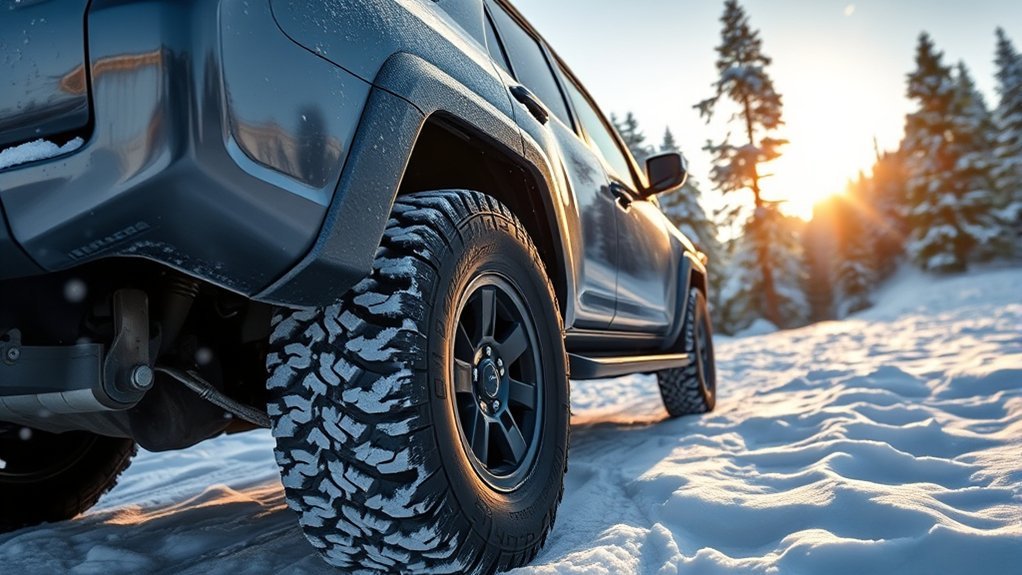
Winter tires use tread compounds and patterns designed to work in cold, snowy, and icy conditions. At temperatures below about 7°C, all-season and summer tires begin to lose elasticity, while winter tires are designed to remain more flexible. That flexibility helps the tread maintain contact with the road.
Winter tread patterns also contain more biting edges and small cuts called sipes. These features help the tire grip packed snow, clear slush, and manage the thin layer of water that can form over ice. Actual braking improvement varies with the tire model, vehicle, speed, tread depth, temperature, and road surface, so no single stopping-distance figure applies to every situation.
Transport Canada recommends winter tires on all four wheels for cold, snowy, or icy driving. Toyota gives similar guidance for the 4Runner and warns against using snow tires on only some wheels.
Note: Four-wheel drive helps your 4Runner accelerate when traction is limited. It does not create extra tire grip during braking or prevent the vehicle from sliding sideways in a turn.
How to Tell When All-Season Tires Are No Longer Enough
All-season tires can handle mild cold and occasional light snow, but they are a compromise. They do not normally provide the same cold-weather grip as dedicated winter tires in packed snow, deep snow, freezing rain, or repeated icy conditions.
Consider making the seasonal change when one or more of these conditions apply:
- Daytime and nighttime temperatures regularly stay near or below 7°C.
- Snow, freezing rain, or repeated overnight frost appears in the forecast.
- You drive before sunrise or after dark, when pavement temperatures may be lower.
- Your route includes hills, mountain passes, unplowed roads, or shaded areas where ice lasts longer.
- You make long winter trips or cannot postpone driving during poor weather.
- Local law requires winter-rated tires, chains, or other traction equipment.
A tire carrying only an M+S marking may have a tread design intended for mud and snow, but that marking alone does not prove that the tire passed a standardized severe-snow traction test. For stronger snow qualification, look for the Three-Peak Mountain Snowflake symbol.
When to Change Your 4Runner Tires for Winter
Use temperature as your main planning tool rather than waiting for a specific date. In many colder regions, the right window falls in October or November, but your local climate, elevation, travel schedule, and regulations matter more than the calendar.
- Watch the weekly temperature trend. Book the change when temperatures are regularly approaching 7°C, not after one unusually cold night.
- Check the extended forecast. Install early when snow, freezing rain, or a mountain trip is expected.
- Inspect your existing winter tires. Check tread depth, age, cracking, punctures, bulges, and uneven wear before the appointment.
- Confirm your exact fitment. Read the tire-information placard on the driver’s door frame and check the owner’s manual for your model year.
- Plan before tire shops become busy. Early scheduling gives you more time to correct damaged wheels, unavailable sizes, or TPMS problems.
Pro Tip: Do not remove winter tires because of one warm afternoon. Wait until temperatures are consistently above 7°C and the risk of regular snow or freezing conditions has passed.
Check Winter-Tire Tread and Condition
Tread depth strongly affects a tire’s ability to move snow and slush away from its contact patch. Although legal minimums vary, a tire can remain technically legal after much of its useful winter grip has declined.
For dependable snow performance, plan to replace winter tires as they approach 4 mm, or about 5/32 inch, of tread. Measure several points across every tire because alignment or suspension problems can cause uneven wear.
Warning: Do not rely only on the general 2/32-inch treadwear bars when deciding whether a tire is suitable for winter. A tire may reach poor snow performance before it reaches the basic legal replacement limit.
Replace or professionally inspect a tire if you find:
- Cracks in the tread or sidewall
- Bulges, exposed cords, or impact damage
- Repeated pressure loss
- Uneven or cupped tread wear
- Damage from improper storage
- Age-related deterioration, even when tread remains
Selecting the Best Winter Tires for Your 4Runner
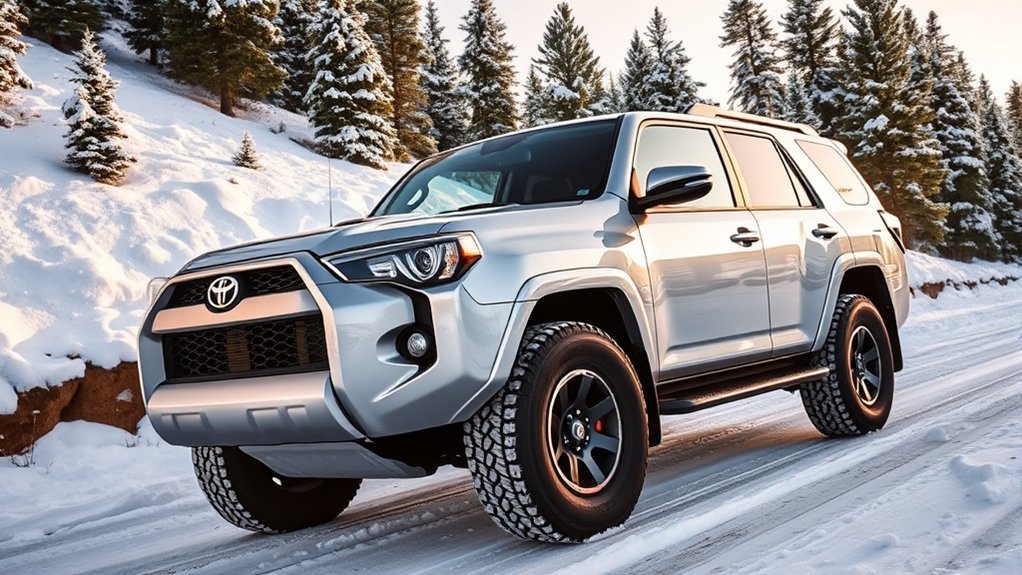
Start with the tire-information placard on your 4Runner’s driver-side door frame. The correct tire depends on the model year, trim, wheel diameter, original tire size, load requirement, and any suspension or wheel modifications.
[Products Worth Considering]

Monitor tire tread wear with a smart, color-coded depth gauge that shows clear condition ranges at a glance. The bar is range marked for fast, easy readings, helping you maintain safer traction and performance. Each gauge is portable with a pocket clip, and the set includes 20 units for daily use and sharing.

Steelman white tire marking crayons provide high-contrast, semi-permanent marks for repairing and inspecting tires and equipment. They write on wet or dry, smooth or coarse surfaces including rubber, metal, glass, and wood, making them ideal for puncture location and damage outlining. The lead- and zinc-free crayons resist weather and fading yet wipe away when you no longer need the marks.

The 22800 wheel stud installer makes replacing wheel studs quick and secure, saving time and effort during tire service. It uses a ratchet or impact wrench to pull new studs firmly into place, helping when existing studs are too long. Compatible with most automotive wheels and light-duty truck wheel studs, it’s designed for easy, tool-assisted installation.
Match the Required Size and Load Capacity
Use the specified tire size unless Toyota or a qualified tire professional approves another fitment. A replacement tire must have enough load capacity for the vehicle. The wheel must also provide correct clearance for the brakes, suspension, steering components, and body.
Light-truck tires may offer stronger construction, but they can also add weight and ride stiffness. Do not choose an LT tire solely because the 4Runner is an SUV. Select the construction that suits the vehicle’s specifications, payload, towing use, roads, and driving conditions.
Look for the Correct Winter Symbol
The Three-Peak Mountain Snowflake, often shortened to 3PMSF, shows that a tire meets a defined severe-snow traction requirement. It is a better winter indicator than an M+S marking alone.
The symbol does not mean every 3PMSF tire performs equally on glare ice, wet pavement, or dry roads. Some newer tires also carry a separate Ice Grip symbol after meeting an ice-braking standard.
Choose Studless or Studded Tires
Modern studless winter tires are suitable for many drivers and avoid the noise, road wear, and legal restrictions associated with studs. Studded tires can provide added grip on some icy surfaces, but their use may be limited to certain dates or prohibited in your area. Check local regulations before buying them.
Compare Current Tire Options
The Bridgestone Blizzak IcePeak is Bridgestone’s current studless winter model for cars, SUVs, minivans, and trucks. Bridgestone launched it in May 2026 as the replacement for the Blizzak DM-V2 and WS90. It carries both 3PMSF and Ice Grip certification. Confirm that an approved size and load rating are available for your exact 4Runner.
The Nokian Tyres Hakkapeliitta LT3 is an LT-focused winter option available in several truck and SUV sizes. It may suit drivers who need compatible light-truck construction for demanding winter use. Its heavier-duty design is not automatically the best choice for every 4Runner.
Availability changes by region and season. Treat these models as examples, not universal fitment recommendations. A qualified installer should verify size, load index, speed rating, wheel compatibility, and intended use before installation.
Getting Ready for a Seasonal Tire Swap
Complete these checks before installing your winter set:
- Inspect all four tires and wheels. Look for damage, corrosion, bends, cracking, and uneven tread.
- Confirm the tire positions. Follow directional arrows and inside/outside sidewall markings.
- Record the tread depth. This helps you monitor wear and plan future rotations or replacement.
- Check the cold pressure. Use the pressure on the vehicle placard, not the maximum pressure molded into the tire sidewall.
- Inspect the TPMS equipment. A second wheel set may require compatible sensors and registration or relearning.
- Install all four winter tires. Do not place winter tires only on the front or rear axle.
- Torque the wheel nuts correctly. Use the specification and sequence provided for your model year.
- Recheck the installation. Follow the installer’s recommendation for a wheel-nut torque recheck after the wheels have been driven.
The Toyota 4Runner owner’s manual instructs drivers to use the specified tire size, maintain the recommended pressure, and install snow tires on all four wheels. Toyota also warns against mixing tire makes, models, tread patterns, or significantly different treadwear on four-wheel-drive models.
Warning: Attempt a DIY wheel change only when you have suitable equipment, understand the approved lifting points, and can torque the wheel nuts correctly. Never work under a vehicle supported only by a jack.
Check Tire Pressure and TPMS in Cold Weather
Air pressure decreases as temperatures fall. Transport Canada notes that tire pressure can drop by about 1 psi for each 5°C decrease in temperature. This can trigger a TPMS warning after the first cold spell even when no puncture is present.
Check pressure when the tires are cold, preferably before driving or after the vehicle has been parked for several hours. Inflate each tire to the cold-pressure specification on the driver-door placard. Do not use the maximum pressure printed on the tire sidewall as the vehicle’s target setting.
Inspect pressure at least monthly, before long trips, and after major temperature changes. If one tire repeatedly loses more pressure than the others, have it inspected for a puncture, valve leak, wheel damage, or bead-sealing problem.
Should You Use a Second Set of Wheels?
A separate winter wheel set can reduce repeated mounting and dismounting of the tire beads. It may also protect more expensive factory wheels from salt, grit, and winter damage.
The second set still needs the correct diameter, width, offset, bolt pattern, center-bore fit, brake clearance, load capacity, and compatible lug hardware. Depending on the model year and equipment, you may also need compatible TPMS sensors and a relearn or registration procedure.
[Products Worth Considering]

The Kurgo Seasonal Tire Tote helps protect your car interior, clothes, and garage from tire grime, brake dust, and residue during seasonal tire changes. Its universal design fits most passenger tires between 22" and 31" in diameter, making storage and transport simpler with less mess. Built for rugged, repeated use, it’s machine washable for easy care and comes with a lifetime warranty.

Measure tire tread depth quickly and accurately with this LUMITECO dial gauge that reads in 1/32" increments up to 14/32". The color-coded green/yellow/red zones make it easy to judge tire wear and know when replacement is needed. A rugged, compact design with a protective pouch helps keep the gauge ready for use on cars, trucks, motorcycles, and more.

The Trivd Frol 1/2" air impact wrench delivers high performance torque up to 1500 ft-lbs with a twin hammer impact mechanism for strong, balanced blows. It features an ergonomic grip, compact lightweight design, and quick-stop control with 3 forward speeds up to 8000 RPM plus a reverse speed. Built for demanding automotive repair and tire shop work, the rear exhaust helps keep debris away from the surface.
Check Snow-Chain Compatibility
Do not assume that every 4Runner wheel and tire combination can accept chains. Clearance and chain instructions vary by model year, tire size, and trim. Some Toyota manual configurations prohibit chains on particular tire sizes because there is not enough clearance between the tire and vehicle body.
Read the winter-driving section of the owner’s manual for your exact 4Runner before buying or installing chains. Follow local road signs and laws, use the specified axle and chain size, and obey the chain manufacturer’s speed limit.
[Products Worth Considering]

Milton S-921 pencil tire pressure gauge helps you maintain optimal tire pressure for passenger cars with accurate readings in PSI and kPa. It features a built-in deflator valve for convenient pressure adjustments, plus a single chuck head and nylon indicator bar for easy use on the go. Built from durable plated brass and designed for reliable performance, it’s a practical road trip and cold-weather maintenance tool.

Protect tire valves from water, dust, and sand to help prevent leaks and support safe driving. These universal stem caps install quickly by hand and feature durable aluminum alloy construction with an inner sealing ring for better air retention. Compatible with cars, SUVs, trucks, motorcycles, and bicycles for everyday convenience.
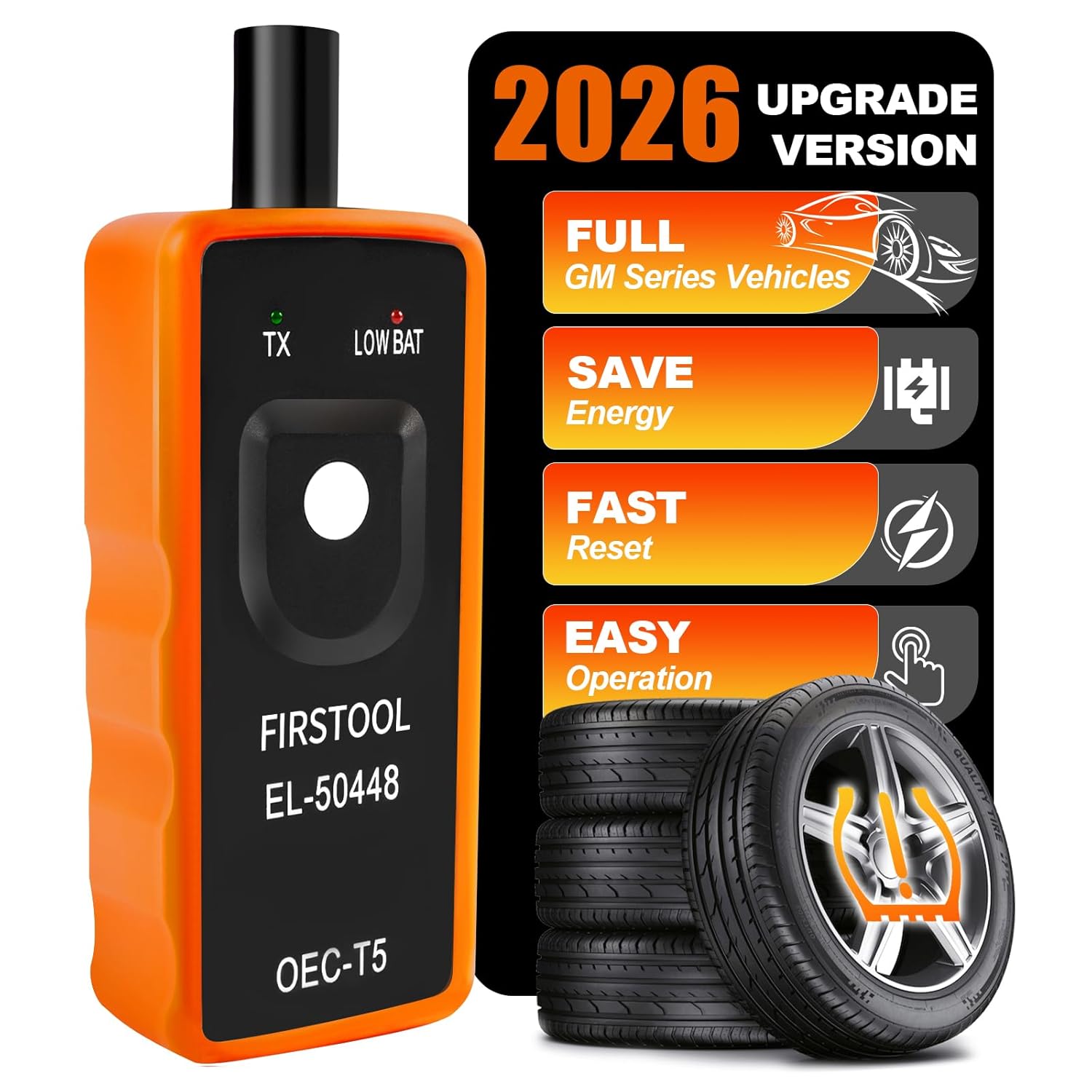
This TPMS relearn tool helps you quickly activate, match, and reset GM tire pressure sensors to keep the vehicle monitoring system working properly. It clears tire pressure alarms and dashboard warning lights after sensor replacement or tire rotation, and supports learning for common 315/433 MHz TPMS sensors. Designed for simple one-button operation, it can help you avoid unnecessary trips to repair shops.
Store Off-Season Tires Correctly
Clean dirt, salt, and brake dust from the tires and wheels before storage. Allow them to dry fully, then mark their previous positions so you can plan the next rotation.
- Store tires in a cool, dry, and shaded location.
- Keep them away from direct sunlight, heaters, electric motors, fuel, solvents, and ozone-producing equipment.
- Place unmounted tires upright and rotate them periodically.
- Stack mounted wheel-and-tire assemblies safely or use a suitable wheel rack.
- Protect the assemblies with clean tire bags after they are dry.
When to Remove Winter Tires
Switch back when temperatures consistently remain above about 7°C and regular snow or freezing conditions have ended. Winter compounds can wear faster and feel less precise in sustained warm weather.
Do not remove them during a brief warm period if cold nights, mountain travel, or another winter storm remain likely. Check local seasonal rules if your tires are studded.
Frequently Asked Questions
Does a 4Runner need winter tires?
A 4Runner benefits from winter tires when you regularly drive in temperatures near or below 7°C, snow, packed snow, freezing rain, or ice. Four-wheel drive improves acceleration, but winter tires provide the contact grip needed for braking and cornering.
Is mid-October too early for winter tires?
Not necessarily. Mid-October can be appropriate in colder climates, at higher elevations, or when regular temperatures are approaching 7°C. Use your forecast and driving conditions rather than the date alone.
What month is best for installing winter tires?
October or November is common in many Northern Hemisphere regions, but no single month works everywhere. Install them before temperatures regularly fall below 7°C or before your first expected snow, ice, or cold-weather trip.
Can you install winter tires on only two wheels?
No. Use a matched set on all four wheels. Mixing winter and all-season tires can create different grip levels between the axles, making the 4Runner less predictable during braking, steering, and emergency maneuvers.
Are 3PMSF all-terrain tires enough for winter?
A 3PMSF all-terrain tire has passed a severe-snow traction requirement and may work for moderate winter use. A dedicated winter tire will usually be the stronger choice for repeated ice, packed snow, very low temperatures, and demanding winter routes.
When should you take winter tires off a 4Runner?
Remove them when temperatures consistently stay above about 7°C and regular snow or freezing weather has ended. Waiting for stable spring conditions helps prevent an early change followed by another winter storm.
Conclusion
Switch your 4Runner to winter tires before cold weather becomes a daily problem. Sustained temperatures near or below 7°C, upcoming snow or ice, and difficult winter routes are stronger signals than a fixed calendar date.
Use a matched set on all four wheels, verify the exact size and load requirements, maintain the placard pressure, and replace winter tires as they approach 4 mm, or about 5/32 inch, of tread. These steps will give your 4Runner a more stable and predictable foundation, but you should still reduce your speed and leave extra stopping distance whenever roads are slippery.
Sources
- Transport Canada: Using Winter Tires — supports the 7°C guideline, 3PMSF explanation, four-tire installation, tread-depth guidance, and cold-pressure checks.
- Toyota 4Runner Owner’s Manual: Winter Driving Tips — supports specified-size, recommended-pressure, four-wheel installation, matching-tire, and chain guidance.
- NHTSA: Winter Weather Driving Tips — supports cold-pressure measurement, tire inspection, and winter vehicle preparation.
- Bridgestone: Blizzak IcePeak — supports current product features and its 3PMSF and Ice Grip certifications.
- Nokian Tyres: Hakkapeliitta LT3 — supports current LT winter-tire availability and published size information.