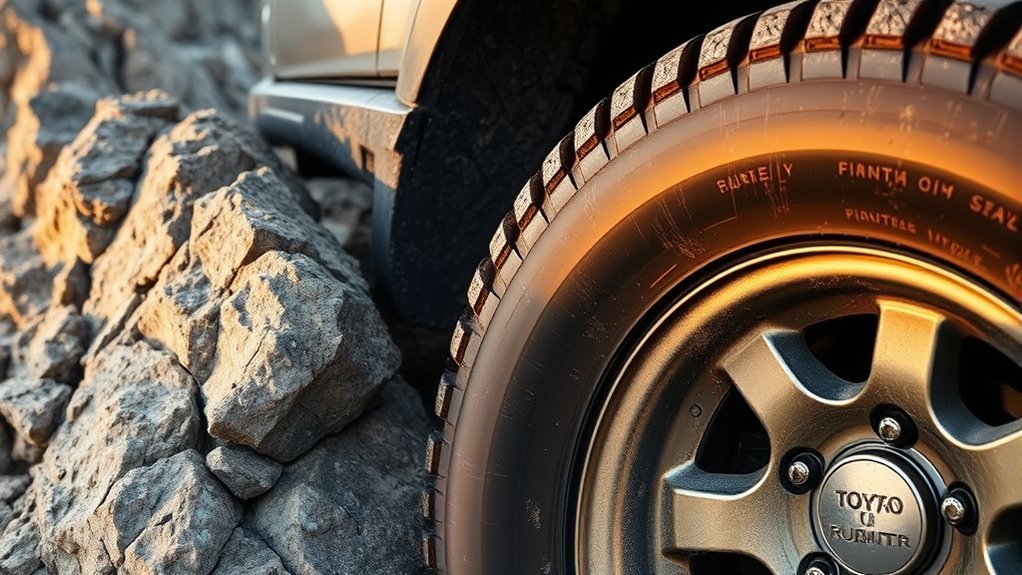
Your Toyota 4Runner’s tires do more than support the vehicle. Their sidewalls affect how the truck carries weight, absorbs sharp impacts, flexes over rocks, and responds after you lower pressure for trail traction. Stronger construction can help off-road, but no single “LT,” load-range, ply-count, or PSI rule fits every 4Runner setup.
Quick Answer
A stronger tire sidewall can improve cut resistance, load stability, and control when your 4Runner is aired down off-road. However, choose tires by exact size, load index, construction, terrain, and vehicle weight. Do not assume every LT tire has three sidewall plies or that 15 PSI is safe for every setup.
Key Takeaways
- Load index, load range, and actual sidewall construction describe different tire characteristics.
- An LT tire may suit heavy loads and difficult trails, while a properly rated P-metric tire may ride better for mostly paved driving.
- There is no universal air-down pressure. Tire size, wheel width, vehicle weight, speed, terrain, and bead retention all matter.
- Reinflate before returning to pavement, and replace tires with structural sidewall damage rather than attempting a permanent repair.
Protect Your 4Runner: How Sidewall Strength Works Off-Road
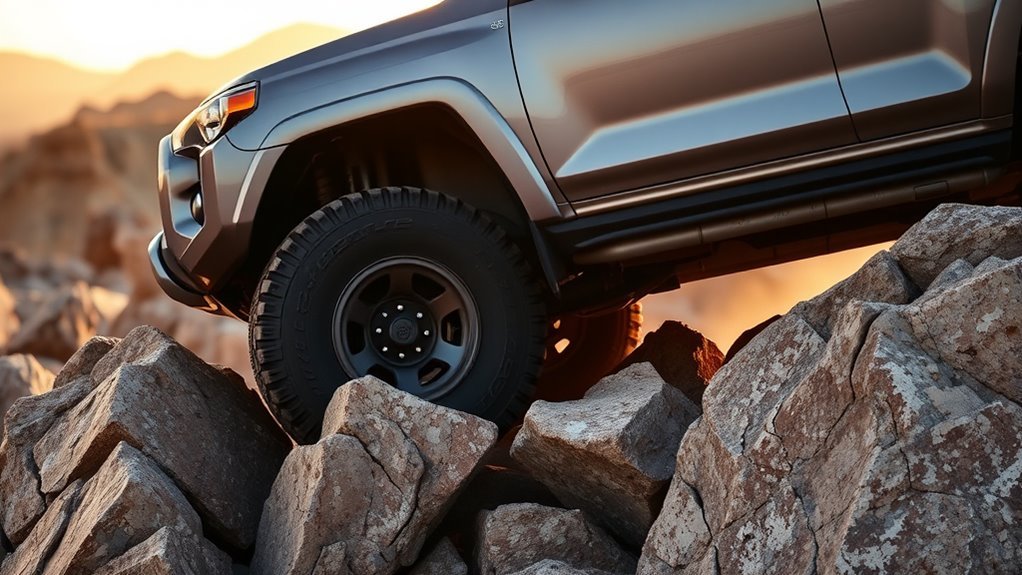
A tire sidewall contains rubber, body cords, bead components, and other reinforcements that work together as the tire flexes. Off-road, this structure must tolerate repeated bending, sharp edges, side loads, and impacts that are less common during ordinary highway driving.
More robust sidewall construction can help resist cuts, bruising, and excessive deformation. For example, BFGoodrich describes its current All-Terrain T/A KO3 as using CoreGard Technology, split- and bruise-resistant sidewall rubber, and deflection features. That is a model-specific design, not proof that every LT tire or every three-ply tire performs the same way.
Sidewall stiffness also changes how a tire feels. A stiffer casing may provide steadier steering under load and less sidewall roll, but it may transmit more vibration on pavement. A more flexible tire may ride smoothly and conform well to the ground, yet it can be more vulnerable if its construction, pressure, or load is unsuitable for the terrain.
Note: Sidewall strength is not one published number. Compare the complete tire specification, including size, load index, load range, listed construction materials, approved rim width, maximum load, and the manufacturer’s intended use.
Decode the Build: How 2-Ply and 3-Ply Sidewalls Differ
A tire advertised with a two-ply or three-ply sidewall generally has two or three body-cord layers running through the sidewall. A third layer can add reinforcement, but performance also depends on cord material, cord angle, rubber compound, shoulder protection, sidewall thickness, and the overall casing design.
Do not confuse actual sidewall ply count with a tire’s load range or old-style “ply rating.” Load range describes load and inflation capability within a tire specification. It does not guarantee that a Load Range E tire contains ten physical plies or that every LT tire has a three-ply sidewall.
| Term | What It Tells You | What It Does Not Prove |
|---|---|---|
| Sidewall ply count | Number of listed body-cord layers in the sidewall | Exact puncture resistance or load capacity by itself |
| Load index | Maximum load represented by the service description under specified conditions | Permission to exceed the 4Runner’s GVWR or axle ratings |
| Load range | A tire’s load and inflation category | The actual number of physical plies |
| P-metric or LT-metric | The tire application and sizing system | That one category is always stronger in every comparable size |
[Products Worth Considering]

This tire inflator with pressure gauge delivers long-lasting performance with a durable rubber-protected gauge and sturdy build. The longer hose and 360 swivel air chuck help you seal the valve securely and keep your hands free while measuring, inflating, or deflating. It’s battery-free for reliable use and provides ±2 PSI accuracy in the mid-range for most typical tires, with universal compatibility for 1/4 NPT compressor outputs.

Vigorder rubber cement glue delivers superior adhesion and cures quickly within about 30 seconds for seamless rubber bonding. Once cured, it helps provide a strong, durable, waterproof seal that holds up to vehicle weight, pressure, and heat. Suitable for cars, motorcycles, trucks, bicycles, and off-road tires, it’s designed for emergency patch and maintenance repairs.
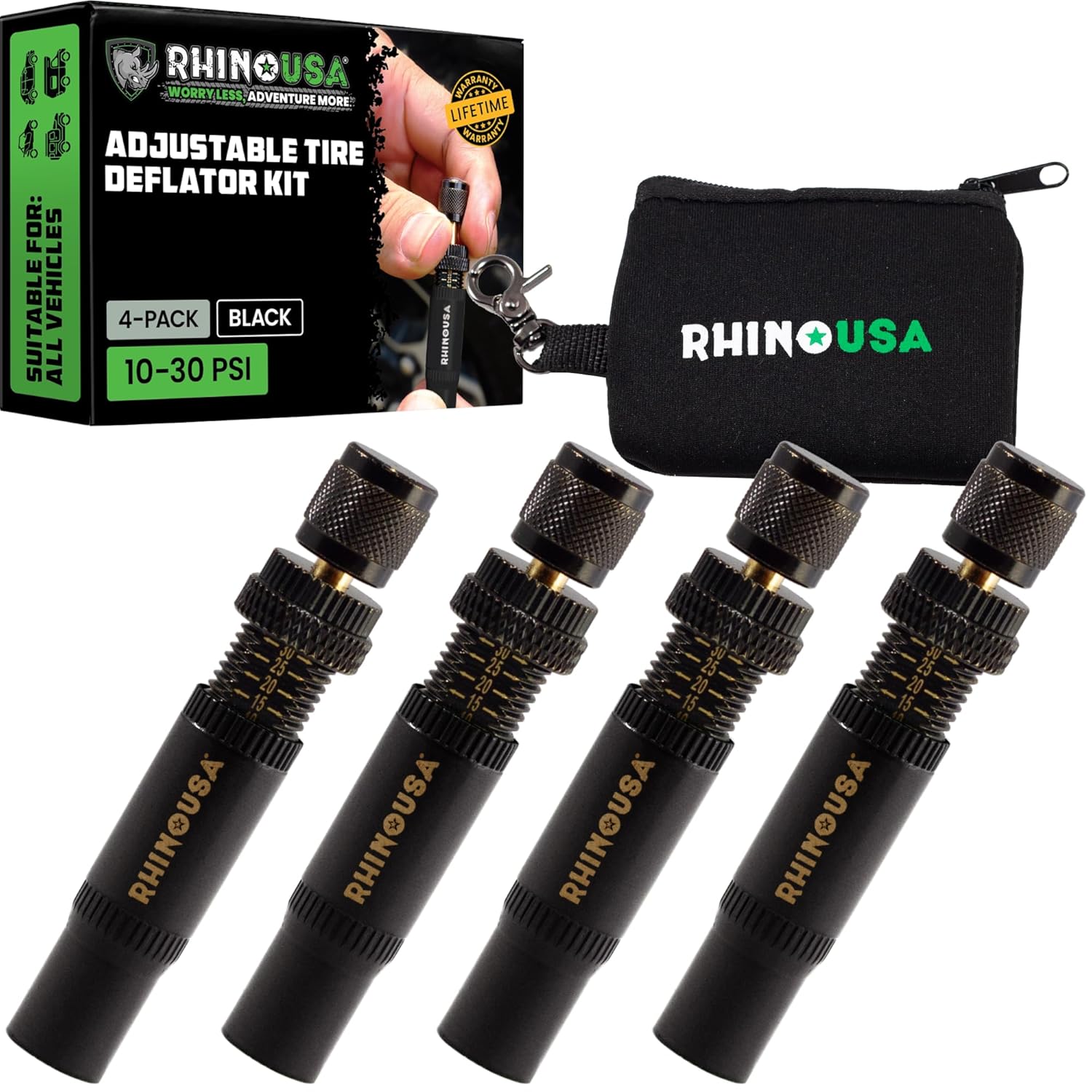
Use the Rhino USA adjustable tire deflators to air down all four tires at once by screwing one deflator onto each valve stem, letting you step away while the tires reach your preset pressure. Each deflator independently adjusts across a 10–30 PSI range with laser-etched indicators for quick setup and verification, making it ideal for beach, sand, and rocky off-road trails.
Read the Sidewall Markings Before Buying
Start with the tire size and service description shown on the tire and the 4Runner’s tire placard. The load index identifies how much one tire can carry when properly inflated under its rated conditions. Michelin’s current guidance explains that replacement tires should meet or exceed the vehicle manufacturer’s required load rating, while a higher tire rating does not raise the vehicle’s own maximum allowable load.
Check these items before changing tire type or size:
- Original tire size and recommended cold pressure: Find these on the driver-door placard and in the owner’s manual.
- Load index and speed rating: Match or exceed the vehicle requirement unless the tire and vehicle manufacturer approve another specification.
- Actual construction: Read the sidewall’s materials statement and the manufacturer’s technical data.
- Approved rim-width range: A tire mounted on an unsuitable wheel width may not shape or retain its bead as intended.
- Vehicle limits: Tire capacity does not increase the 4Runner’s gross vehicle weight rating, axle ratings, suspension capacity, or braking capability.
Michelin’s updated explanation of load and speed ratings is useful when decoding these markings.
[Products Worth Considering]

This ALL-TOP auto-stop tire deflator valve kit lets you air down off-road tires quickly without watching pressure, automatically stopping when your preset PSI is reached. Each valve is individually calibrated for reliable performance with an acceptable +/- 2 PSI tolerance. The adjustable deflator range covers 10 to 30 PSI and includes four valves plus valve caps and a zipper pouch for easy setup on trucks, SUVs, RVs, UTVs, and powersports.

Keep your tires properly inflated with this analog VONDIOR tire pressure gauge, designed for fast, easy readings without batteries. The swiveling, two-axis hose and large glow dial help you measure at any tire angle with instant visibility. Built with a protective rubber shield, it supports durable, low-maintenance use for cars and trucks.

The Topeak SmartGauge D2 delivers precise digital tire pressure readings for bikes, motorcycles, and sports equipment up to 250 psi (17 bar). Its rotating SmartHead works with both Presta and Schrader valves, so you can check pressure quickly without adapters. The LCD display makes it easy to read results in psi, bar, or kg/cm² with an included CR2032 battery for immediate use.
Pick Your Rating: P-Rated or LT-Rated for Stronger Sidewalls?
You cannot compare all P-metric and LT-metric tires with one pair of load numbers. Capacity varies by exact size, load index, inflation pressure, and design. Some LT tires provide higher load capability and more robust casings, but they can also be heavier, firmer, and less efficient than a lighter alternative.
[Products Worth Considering]

This 100-piece set of snap-in tubeless tire valve stems is designed for standard 0.453 in (11.5 mm) rim holes and helps maintain reliable, steady tire pressure. Made with ozone-resistant rubber and brass cores, the valves are built for durability and long-term use. Easy to install by hand, they support safe driving and are suitable for cars, light trucks, trailers, and more.

Milton S-921 pencil tire pressure gauge helps you maintain optimal tire pressure for passenger cars with accurate readings in PSI and kPa. It features a built-in deflator valve for convenient pressure adjustments, plus a single chuck head and nylon indicator bar for easy use on the go. Built from durable plated brass and designed for reliable performance, it’s a practical road trip and cold-weather maintenance tool.

This all-in-one air compressor accessories kit includes a tire inflator with gauge for car tires and a combined air chuck setup for easier inflation. It also features a durable 1/4 inch polyurethane air hose for connecting compressors to air tools, plus a heavy-duty blow gun and industrial hose fittings for cleaning and routine projects. Ideal for keeping your air system ready for inflating, cleaning, and quick-connect tool use.
Load Rating Differences
A P-metric tire that meets the 4Runner’s original specification can be suitable for commuting, highway travel, light dirt roads, and moderate loads. An LT-metric tire may be a better match when you regularly carry heavy camping gear, tow within Toyota’s limits, travel on sharp rock, or need a casing designed for demanding truck use.
Do not choose a lower load index than Toyota specifies. If you change from the original tire size or from P-metric to LT-metric, ask the tire manufacturer or a qualified tire professional to determine the pressure required to carry the same load. The maximum pressure molded onto the tire is not the normal target pressure for the vehicle.
Construction Material Variations
Sidewalls commonly use polyester or other textile body cords, while the tread area may include steel belts and additional cap plies. The exact layout varies by tire model and size, including within the same product family. Read the construction statement molded into the sidewall rather than assuming a category-wide design.
For difficult trails, look for manufacturer-documented features such as reinforced sidewall rubber, extra shoulder protection, deflection ribs, or a three-ply sidewall. For mixed daily driving, compare those benefits against weight, ride quality, wet braking, noise, warranty, and the pressure needed for your 4Runner.
Air Down With Confidence: Why Sidewall Strength Matters at Low PSI
Lowering pressure off-road lets the tire flex more and can enlarge its contact patch, improving flotation and compliance on sand, rocks, and uneven ground. However, the tire still needs enough pressure to support the vehicle and keep the bead seated on the wheel.
There is no universal “15 PSI” setting. BFGoodrich’s off-road guidance states that the best pressure depends on the tire, terrain, and vehicle weight. It also warns that going too low can unseat the tire and that aired-down tires must be reinflated before pavement use. Michelin similarly says that pressures below 20 PSI may be used off-road only at low speed and only when the tire still has adequate load-carrying capacity.
Preventing Sidewall Damage
A reinforced casing may tolerate trail impacts better, but it cannot make a tire puncture-proof. At lower pressure, avoid striking sharp edges with speed. Place the tread on the obstacle when possible instead of scraping the sidewall along it, and use a spotter where wheel placement is difficult.
Repeated pinching between a rock and the wheel can damage the casing. Watch for fresh cuts, exposed cords, bulges, air loss, or a change in handling after a hard impact. Stop and inspect the tire rather than continuing at speed.
Maintaining Tire Shape
As pressure falls, the sidewall bulges more and the tire responds more slowly to steering. A stronger casing can control some of that movement, but wheel width, tire size, bead design, load, and cornering force remain important. Low pressure combined with abrupt steering can increase the chance of bead unseating or tire damage.
Drive slowly, use smooth steering inputs, and avoid high-speed side loads. A pressure that works in soft sand may be too low for a rocky trail with sharp impacts.
Enabling Lower Pressures
Strong sidewalls can expand your usable off-road pressure range, but they do not remove the need to test cautiously. Lower pressure in small steps, check the tire’s shape, and confirm that the rim is not approaching rocks or roots.
- A larger contact patch can improve flotation and traction on loose surfaces.
- More sidewall flex can soften impacts and help the tread conform to obstacles.
- Too little pressure can create heat, casing damage, poor steering response, or bead loss.
- Added vehicle load generally requires more pressure than an unloaded setup.
Your goal is controlled flex, not the lowest possible gauge reading.
Warning: Never use a generic trail PSI as your highway pressure. Reinflate to the correct cold-pressure target before driving at road speed. If you changed tire size or type, obtain a load-based pressure recommendation for that exact setup.
How to Choose a Safe Air-Down Pressure
- Confirm your starting pressure. Check all tires cold and record the normal road setting.
- Know the load. Include passengers, cargo, accessories, and trailer tongue weight where applicable.
- Start conservatively. Reduce pressure in small, equal steps rather than jumping to a low target.
- Inspect the shape. Look for excessive bulging, rim exposure, or instability.
- Drive slowly and reassess. Stop after a short distance and check pressure, bead position, and sidewall condition.
- Reinflate before pavement. Use a dependable compressor and verify pressure with a separate gauge.
BFGoodrich’s off-road tire-selection guide recommends carrying a reliable pressure gauge and portable compressor and confirms that no single off-road pressure works for every vehicle and terrain combination.
Pro Tip: Carry a full-size spare close to the diameter of your installed tires, a pressure gauge, an air compressor, valve tools, and safe recovery equipment. A tread plug may serve as a temporary trail measure, but it is not a permanent sidewall repair.
Balance the Trade-Offs: Sidewall Strength vs. Daily Ride Comfort
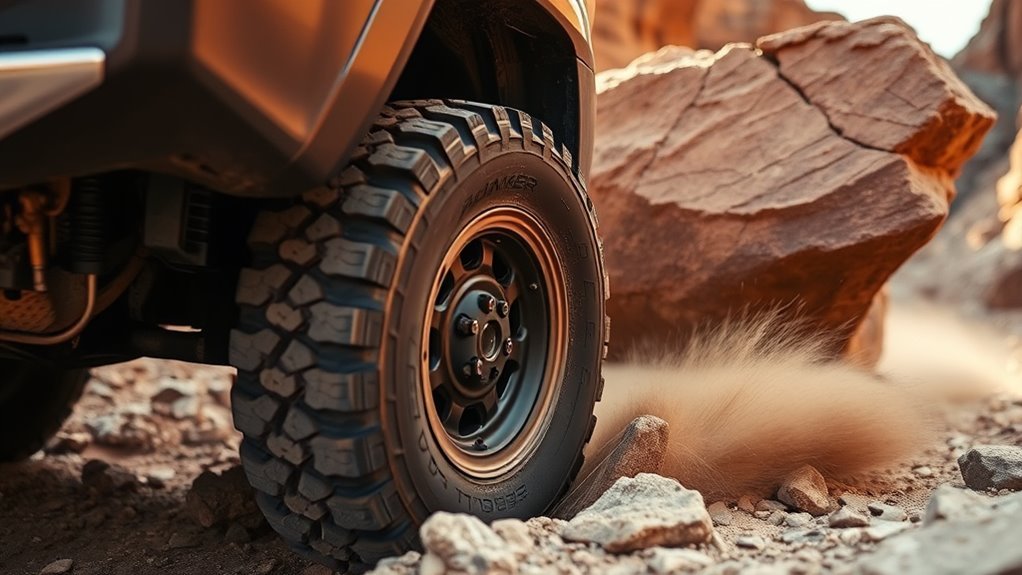
Stronger, heavier tire construction often feels firmer and can add rotating mass. Depending on the tire, you may notice slower acceleration, different steering response, more road noise, or a small change in fuel use. These effects come from the complete tire design, not sidewall ply count alone.
Do not reduce highway pressure simply to soften the ride unless the resulting pressure is correct for the tire and load. Underinflation increases heat and can damage the tire. NHTSA advises using the vehicle manufacturer’s recommended cold pressure for original-size tires and checking pressure when the tires are cold.
Balance your priorities. A mostly stock daily-driven 4Runner may not benefit from the heaviest available casing. A heavily loaded trail vehicle may justify extra sidewall protection even if the ride becomes firmer.
Match Sidewall Strength to How You Drive
- Mostly pavement and maintained roads: Prioritize correct OE fitment, wet braking, ride comfort, noise, and sufficient load index. A P-metric or reinforced passenger tire may be appropriate.
- Mixed commuting and weekend trails: Look for an all-terrain tire with documented sidewall protection, suitable load capacity, manageable weight, and good on-road behavior.
- Loaded overlanding: Calculate total payload carefully and consider an LT tire when its load-and-inflation characteristics fit the vehicle and actual load.
- Rock crawling and sharp terrain: Prioritize manufacturer-documented sidewall reinforcement, shoulder protection, appropriate wheel fitment, a full-size spare, and conservative low-speed pressure management.
Always keep Toyota’s payload, axle, towing, and wheel requirements as the upper limits. A stronger tire cannot compensate for an overloaded vehicle.
Inspect Before You Roll: Spot Sidewall Damage Early
Inspect the tread and sidewalls before a long trip and after off-road driving. NHTSA recommends regular checks for cuts, punctures, bulges, scrapes, cracks, bumps, and irregular wear. A low-pressure warning light is not a substitute for inspection because TPMS normally alerts only after a tire is already significantly underinflated.
Use good lighting and rotate the vehicle as needed so you can see the full circumference. Wear gloves if you need to feel for damage, since exposed cords or embedded debris can be sharp. Look for:
- Cuts, gashes, or punctures in the sidewall or shoulder
- Bulges, bubbles, or wavy areas that may indicate internal damage
- Exposed fabric or steel cords
- Cracking, severe abrasion, or missing chunks of rubber
- Fresh rub marks caused by suspension, bodywork, or an unsuitable wheel offset
- Repeated pressure loss or a new vibration after an impact
Remove a damaged tire from service and have it inspected by a trained tire professional. The U.S. Tire Manufacturers Association limits standard puncture repairs to qualifying injuries in the tread area. Damage that extends into the shoulder or sidewall is not repairable under its recommended procedure.
The safest sidewall is not simply the stiffest one. It is the tire whose construction, load rating, pressure, wheel fitment, and intended use match your 4Runner and the terrain.
Frequently Asked Questions
What’s the best sidewall material for extreme rock crawling?
No single cord material guarantees the best result. Look for a complete design with documented cut- and bruise-resistant rubber, reinforced body plies, shoulder protection, suitable wheel fitment, and a load rating that matches your vehicle. Compare manufacturer data for the exact size because construction can vary within one tire line.
Can I repair a torn sidewall, or must I replace the tire?
Replace the tire. Industry-recommended permanent repairs are limited to qualifying punctures in the tread area. A cut, puncture, bulge, or exposed cord in the sidewall can compromise the tire’s structure and should be inspected by a professional and removed from service.
Does sidewall strength affect fuel economy significantly?
It can contribute, but there is no reliable universal percentage. A stronger off-road tire may also be heavier, use a more aggressive tread, and have different rolling resistance. Tire pressure, size, tread design, vehicle speed, alignment, load, and driving style all affect fuel use.
How does temperature change affect sidewall durability?
Temperature changes tire pressure, while prolonged heat can accelerate tire aging and damage caused by underinflation or overloading. Check pressure cold, adjust it to the correct target, and inspect tires more often during extreme heat, cold, or heavy-load travel.
Are stronger sidewalls worth the extra weight penalty?
They can be worthwhile when your trails, cargo, or travel conditions justify the added protection. They may be unnecessary for a lightly loaded 4Runner that spends nearly all its time on pavement. Choose the lightest tire that still provides the required load capacity, durability, traction, and safety margin for your real use.
Does my 4Runner need LT tires for off-road driving?
Not automatically. Moderate trails can be handled by a properly rated tire designed for that use. LT tires become more attractive for heavy loads, repeated sharp-rock exposure, or demanding truck service. Confirm the exact tire’s load requirement, pressure, weight, wheel compatibility, and on-road behavior before switching.
Can I drive on the highway after airing down?
Not at trail pressure. Low off-road pressure can reduce stability, generate heat, damage the casing, and increase the risk of failure at road speed. Reinflate all tires to the correct road-pressure target and check them with a gauge before returning to pavement.
Conclusion
Sidewall strength matters when your 4Runner carries weight, crosses sharp terrain, or runs reduced trail pressure. The best choice is not automatically the highest load range or the largest advertised ply count. Match the exact tire to Toyota’s requirements, your real payload, wheel fitment, road use, and trail difficulty. Then manage pressure carefully, inspect after impacts, and replace any tire with structural sidewall damage.
Sources
- National Highway Traffic Safety Administration: TireWise — tire pressure, inspection, load, and replacement safety.
- U.S. Tire Manufacturers Association: Tire Repair Basics — repairable tread-area limits and sidewall exclusions.
- BFGoodrich: Off-Road Tire Selection Guide — air-down variables, reinflation, and trail preparation.
- BFGoodrich: All-Terrain T/A KO3 — current model-specific sidewall protection technology.
- Michelin: Tire Load and Speed Ratings — interpreting load index and vehicle requirements.
- Michelin: Tire FAQs — lower-pressure limits and off-road operating conditions.