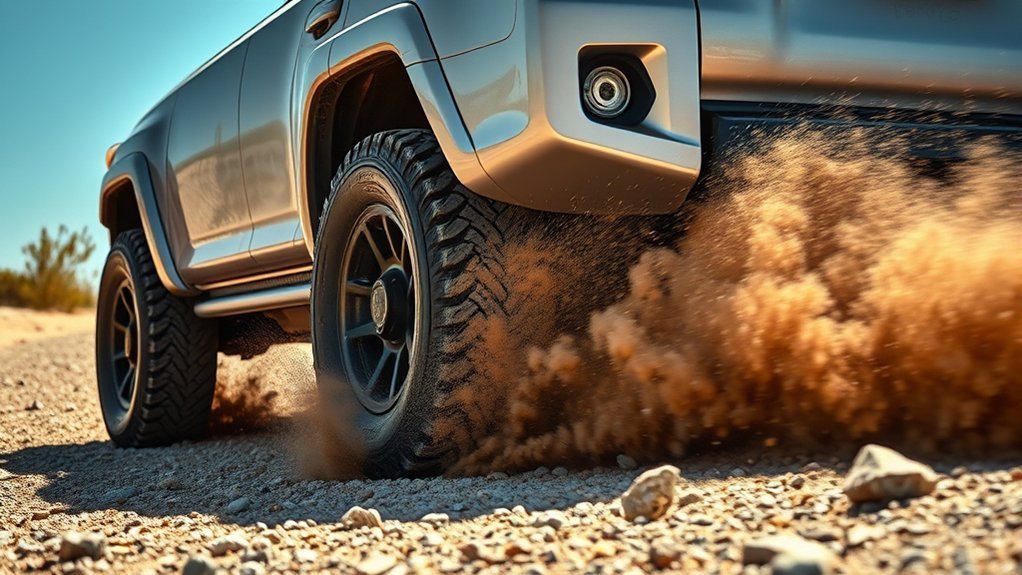
Last updated: July 17, 2026. Loose gravel can make your Toyota 4Runner feel less stable because the tires are rolling over stones that move beneath them. Better traction starts with lower speed, smooth driver inputs, suitable tires, and the correct drivetrain setting. Airing down may help on rough off-pavement routes, but you should never use one pressure target for every 4Runner, tire, load, and trail.
Quick Answer
Improve 4Runner traction on loose gravel by slowing down, using smooth steering and braking, selecting the correct 4WD or terrain mode for your model, and adjusting tire pressure only when conditions justify it. Start from the door-placard pressure, air down in small steps, avoid a universal PSI target, and reinflate before paved or high-speed driving.
Key Takeaways
- Reduce speed before changing tire pressure. Smooth steering, throttle, and braking often produce the biggest immediate improvement on gravel.
- Use the cold pressure on the driver-side door placard as your normal paved-road baseline.
- No single off-road PSI works for every 4Runner. Tire type, vehicle load, wheel design, temperature, and terrain all affect a safe pressure.
- Decrease pressure gradually and test at low speed instead of jumping directly to a very low number.
- Carry a gauge and compressor, inspect the tires, and reinflate before returning to pavement or sustained speed.
At a Glance
| Time Required | About 10 to 20 minutes for inspection, adjustment, and a low-speed test |
| Difficulty | Beginner to intermediate |
| Tools Needed | Accurate pressure gauge, tire deflator, portable compressor, full-size spare, and tire-repair kit |
| Cost | No additional cost if you already carry the tools; otherwise, cost varies by gauge and compressor quality |
Start With the Correct Tire Pressure for Your 4Runner
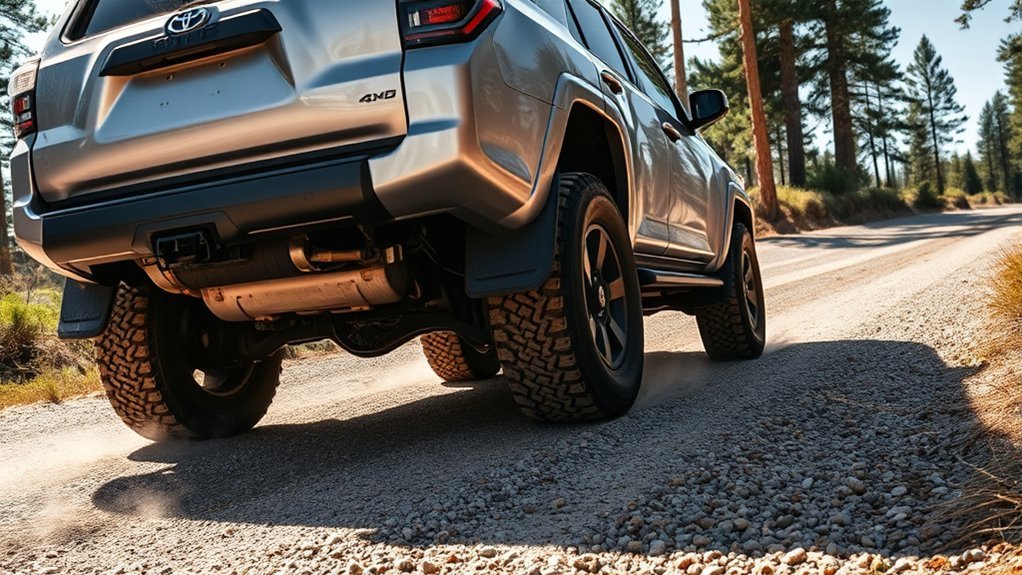
Your normal road pressure should come from the Tire and Loading Information label on the driver-side door jamb or the owner’s manual. The number molded into a tire’s sidewall is normally its maximum rated pressure under specified conditions, not the correct everyday pressure for your 4Runner.
The National Highway Traffic Safety Administration recommends checking tires cold, usually before driving or after the vehicle has been parked for at least three hours. That cold reading gives you a reliable paved-road baseline.
Airing down is a temporary off-pavement adjustment. It allows the tread to spread and the sidewall to flex more, which may help the tire conform to corrugations, stones, and uneven ground. It does not mean every gravel road requires lower pressure.
Note: A maintained public gravel road may not require airing down at all. First reduce your speed and use smoother inputs. Consider a small pressure adjustment only when the surface is rough, loose, and suitable for controlled off-pavement driving.
Why One PSI Number Cannot Fit Every Setup
A safe trail pressure depends on several variables:
- Tire construction: A passenger tire, LT tire, reinforced all-terrain tire, and mud-terrain tire can flex differently at the same pressure.
- Vehicle load: Passengers, camping equipment, recovery gear, roof loads, and trailers increase the work each tire must perform.
- Wheel design: Standard wheels do not retain the tire bead as securely at very low pressures as purpose-built beadlock systems.
- Tire size: A factory tire and a larger aftermarket tire may need different pressure calculations.
- Terrain: Smooth gravel, sharp rock, deep sand, and washboard surfaces create different traction and sidewall demands.
- Temperature: Pressure changes as tire and ambient temperatures change.
If your 4Runner has aftermarket wheels or tires, the factory placard remains useful vehicle information, but it may no longer provide the complete answer for that modified combination. Ask the tire manufacturer or a qualified tire specialist to confirm pressure and load capacity.
Must-Have Tools for Off-Road Tire Pressure
Never air down unless you have a dependable way to measure pressure and restore it. A complete setup also prepares you for common gravel-road punctures and tire damage.
| Tool Type | Purpose | Why It Helps |
|---|---|---|
| Accurate tire-pressure gauge | Measures each tire before and after adjustment | Prevents uneven pressures and guesswork |
| Tire deflator | Releases air in controlled amounts | Makes small, repeatable adjustments easier |
| Portable air compressor | Reinflates tires before pavement | Restores handling, load support, and heat control |
| Full-size spare and tire-repair kit | Provides a backup after a tread puncture | Helps prevent a minor puncture from ending the trip |
| Traction boards and shovel | Creates a stable path when tires begin digging | Provides safer assistance than loose logs or random debris |
Pro Tip: Test your compressor at home and time how long it takes to refill all four tires. A compressor that works for a small car tire may overheat or take too long when filling larger 4Runner tires.
[Products Worth Considering]

AstroAI’s calibrated digital tire pressure gauge delivers precise readings across a 0–150 PSI range, with high clarity from a backlit LCD. Built for everyday road use, it features one-button operation, an anti-slip ergonomic grip, and support for multiple pressure units plus auto shutoff. Powered by AAA batteries, it’s an all-weather essential for checking tire health and TPMS warnings.

Monitor tire tread wear with a smart, color-coded depth gauge that shows clear condition ranges at a glance. The bar is range marked for fast, easy readings, helping you maintain safer traction and performance. Each gauge is portable with a pocket clip, and the set includes 20 units for daily use and sharing.
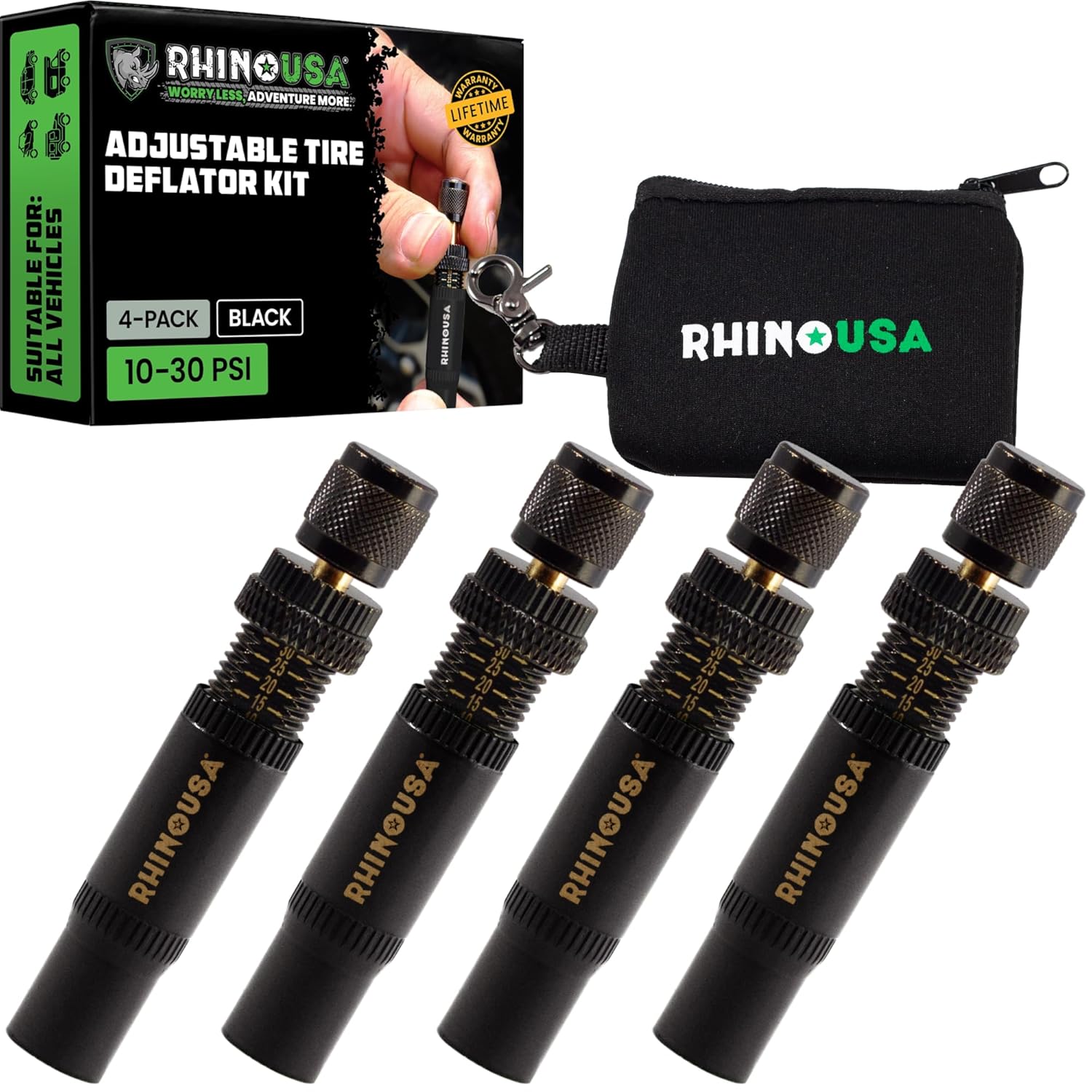
Use the Rhino USA adjustable tire deflators to air down all four tires at once by screwing one deflator onto each valve stem, letting you step away while the tires reach your preset pressure. Each deflator independently adjusts across a 10–30 PSI range with laser-etched indicators for quick setup and verification, making it ideal for beach, sand, and rocky off-road trails.
Benefits and Limits of Airing Down on Loose Gravel
When used carefully, lower off-road pressure can improve how your 4Runner behaves on rough gravel. The benefits come from controlled tire flex, not from chasing the lowest possible PSI.
- Larger effective footprint: The tread can spread across more of the loose surface, which may reduce concentrated digging.
- Better conformity: A more flexible tire can wrap around small stones and uneven sections instead of bouncing across them.
- Improved ride comfort: Additional tire flex can absorb some washboard vibration and sharp impacts.
- Reduced wheel hop: Keeping the tread in more consistent contact with the surface may make throttle control easier.
Airing down can improve footprint and comfort, but no single PSI is safe or effective for every 4Runner, tire, wheel, load, and gravel surface.
Going too low creates a different set of problems. The steering may feel delayed, the sidewall may fold during a turn, and sharp rocks may force the tire into the rim. Very low pressure can also allow the tire bead to separate from a standard wheel.
When and How to Safely Air Down Your Tires for Better Grip
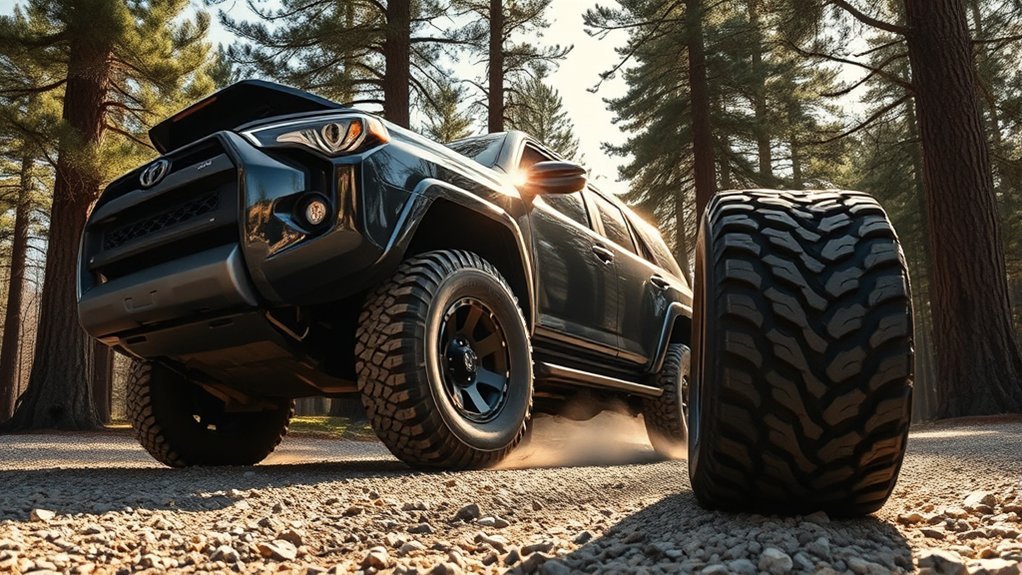
Air down only after you leave normal paved-road travel and reach a safe stopping point. Use a level area away from traffic, sharp rocks, unstable shoulders, and fire hazards.
[Products Worth Considering]

This ALL-TOP auto-stop tire deflator valve kit lets you air down off-road tires quickly without watching pressure, automatically stopping when your preset PSI is reached. Each valve is individually calibrated for reliable performance with an acceptable +/- 2 PSI tolerance. The adjustable deflator range covers 10 to 30 PSI and includes four valves plus valve caps and a zipper pouch for easy setup on trucks, SUVs, RVs, UTVs, and powersports.

This tire inflator with pressure gauge delivers long-lasting performance with a durable rubber-protected gauge and sturdy build. The longer hose and 360 swivel air chuck help you seal the valve securely and keep your hands free while measuring, inflating, or deflating. It’s battery-free for reliable use and provides ±2 PSI accuracy in the mid-range for most typical tires, with universal compatibility for 1/4 NPT compressor outputs.

Measure tire tread depth quickly and accurately with this LUMITECO dial gauge that reads in 1/32" increments up to 14/32". The color-coded green/yellow/red zones make it easy to judge tire wear and know when replacement is needed. A rugged, compact design with a protective pouch helps keep the gauge ready for use on cars, trucks, motorcycles, and more.
Step 1: Inspect the Tires and Wheels
Check every tire for cuts, bulges, exposed cords, embedded objects, leaking valve stems, or visible wheel damage. Do not deliberately lower pressure in a damaged tire. Confirm that your spare is inflated and usable.
Step 2: Record the Starting Pressure
Measure all four tires with the same gauge. Tire pressure rises during driving, so a warm trailhead reading should not be confused with the cold pressure listed on the door placard. Record the current readings so you can make equal adjustments.
Step 3: Reduce Pressure in Small Steps
Release about 2 PSI from each tire, then measure again. Keep the pressures balanced unless your vehicle, tire, or load setup specifically requires different front and rear values.
Avoid jumping directly to 30, 18, 15, or any other number copied from another driver. Their vehicle weight, tire volume, wheel, load, and terrain may be different from yours.
Step 4: Test at Walking Speed
Drive a short distance at very low speed. Check whether the ride becomes more controlled and whether wheelspin decreases. Stop if steering response becomes vague, the sidewall folds heavily, the wheel approaches rocks, or the tire appears unstable on the rim.
Step 5: Adjust Only as Much as Needed
Make another small reduction only if traction or ride quality still needs improvement and your tire and wheel combination can safely support it. Drivers who plan to use unusually low pressure should obtain setup-specific guidance from the tire manufacturer or an experienced off-road tire professional.
Step 6: Recheck During the Trip
Pressure can change as tires heat or the outside temperature changes. Recheck after a difficult section, a hard impact, or any noticeable change in steering or vibration.
Step 7: Reinstate Road Pressure
Use your compressor before returning to pavement or driving at sustained speed. Adjust the tires to the appropriate road pressure, then check them again when cold at the next practical opportunity.
Warning: Do not drive at normal paved-road or highway speed on deliberately aired-down tires. Excessive flex can generate heat, reduce steering stability, damage the tire, and increase the chance of bead separation or failure.
Advanced Grip Techniques for Your 4Runner
Tire pressure is only one part of gravel traction. Your speed, throttle control, drivetrain settings, tires, and recovery method work together.
Use Smooth Throttle
Apply power gradually. A sudden throttle input can break the tires loose and scatter the gravel beneath them. If a tire begins spinning, ease off slightly instead of pressing harder.
Brake Before the Corner
Loose gravel increases stopping distance and reduces cornering grip. Slow down while the vehicle is straight, then use a steady speed through the turn. Heavy braking or abrupt lifting in the middle of a corner can upset the vehicle.
Keep Steering Inputs Gentle
Look farther ahead and turn the wheel smoothly. Sharp corrections can overload the front tires and start a slide. If the vehicle drifts, reduce speed calmly and avoid snapping the steering wheel in the opposite direction.
Choose the Correct Drivetrain Setting
4Runner controls vary by model year, trim, and drivetrain. Review the instructions for your exact vehicle through the Toyota owner’s manual portal.
On current four-wheel-drive 2025–2026 models, Toyota uses A-TRAC to help manage wheelspin. Available Multi-Terrain Select can adjust wheel-slip control for surfaces such as Dirt, Mud, and Sand. These systems and the electronic locking rear differential are not included on every trim.
- Use a dirt or loose-surface mode only when your manual recommends it for the conditions.
- Do not assume instructions for a 2026 model apply to an older fifth-generation 4Runner.
- Use a locking differential only in the low-speed conditions described in your manual, not as a routine high-speed gravel setting.
- Remember that traction systems support the driver. They cannot overcome excessive speed or abrupt inputs.
Use Traction Aids Correctly
If forward movement stops, avoid prolonged wheelspin. Clear loose material from in front of the tires with a shovel and place purpose-built traction boards in the intended direction of travel. Keep people away from spinning tires and any object that could be thrown from beneath them.
Choose Tires That Match Your Gravel Driving
You do not automatically need the most aggressive tread available. Select tires based on how often you drive on pavement, maintained gravel, sharp rock, mud, or deep sand.
- Highway-terrain tires: Usually provide quieter pavement driving and may be adequate for maintained gravel when they have healthy tread and suitable load capacity.
- All-terrain tires: Often offer a useful balance of gravel grip, sidewall durability, wet-road behavior, and pavement comfort.
- Mud-terrain tires: Use larger tread voids for mud and rugged trails but may add noise, weight, vibration, and less predictable behavior on some wet or hard surfaces.
Choose a tire with the correct size, load rating, speed rating, and wheel compatibility. Larger is not automatically better. An oversized tire can rub the body or suspension, alter gearing and speedometer readings, and create spare-tire fitment problems.
[Products Worth Considering]

ETENWOLF T300 is a calibrated digital tire pressure gauge for accurate readings from 3 to 200 PSI across light and heavy-duty vehicles. It includes thermal compensation for reliable performance in extreme cold or heat, with an auto shut-off to extend battery life and an LED for easier reading. The sturdy design supports rugged everyday use, making it ideal for pickups, RVs, and industrial applications.

The SAFELIFE dial tire tread depth gauge measures tread depth in 1/32 inch increments with clear, easy-to-read 2-inch dial face. Color zones using a traffic light system help you quickly judge whether tread is low, marginal, or ample for safer driving. Built with a durable zinc cast body and a metal detect probe for precise, comfortable use across cars, motorcycles, trucks, and buses.

Milton S-921 pencil tire pressure gauge helps you maintain optimal tire pressure for passenger cars with accurate readings in PSI and kPa. It features a built-in deflator valve for convenient pressure adjustments, plus a single chuck head and nylon indicator bar for easy use on the go. Built from durable plated brass and designed for reliable performance, it’s a practical road trip and cold-weather maintenance tool.
Inspect Your 4Runner Before and After Gravel Driving
Gravel can cut tread blocks, chip wheels, loosen embedded stones, and damage sidewalls. A brief inspection can identify a small problem before it becomes a failure.
Before the Drive
- Measure all four tires and the spare.
- Check tread depth and uneven wear.
- Inspect sidewalls for cuts, cracks, bulges, and exposed material.
- Confirm valve caps are installed.
- Make sure the vehicle is not overloaded.
- Secure cargo so weight cannot shift suddenly.
After the Drive
- Look for punctures, fresh cuts, bulges, and wheel damage.
- Remove only loose stones that are safely accessible.
- Check pressure again if you struck a sharp edge or pothole.
- Investigate new vibration, pulling, or repeated pressure loss.
- Have a tire professional inspect any sidewall damage or suspected internal impact damage.
Troubleshooting Poor Traction on Gravel
The Tires Spin as Soon as You Accelerate
Reduce throttle and straighten the wheels. Confirm that the correct drivetrain or terrain setting is selected. If the surface is suitable for airing down, make a small equal pressure adjustment and test again.
The 4Runner Wanders or Feels Slow to Respond
Your speed may be too high, the surface may be deeply crowned, or pressure may be too low. Slow down and inspect the tires. Add air if the sidewalls look heavily folded or steering response has become vague.
You Feel or Hear the Wheel Strike Rocks
Stop and inspect the tire and wheel. Add pressure before continuing. Repeated rim contact can damage the wheel, pinch the tire, or harm the tire’s internal structure.
The TPMS Warning Appears
The tire-pressure monitoring system may illuminate after intentional air reduction because it detects pressure below its warning threshold. Use an accurate gauge rather than relying only on the dashboard light. Reinflate the tires before normal road travel and investigate any tire that continues losing air.
The Tires Keep Digging Into Loose Material
Stop spinning the wheels. Back out gently if possible, clear material with a shovel, and use traction boards. More throttle usually digs a deeper hole and increases the chance of tire or trail damage.
Frequently Asked Questions
Do gravel roads cause tires to lose traction?
Yes. Loose stones can move beneath the tread, reducing braking and cornering grip. Slow down before turns, leave extra stopping distance, and use smooth steering, throttle, and braking. Healthy tires and the correct drivetrain setting also help.
Does traction control help on gravel?
It can help manage excessive wheelspin, but operation differs by model. Some 4Runners use TRAC or A-TRAC, while equipped 2025–2026 models may also offer Multi-Terrain Select. Follow the owner’s manual for your year, trim, and drivetrain.
What PSI should I use on loose gravel?
No universal PSI is safe for every setup. Begin with the vehicle’s correct road pressure, consider whether airing down is necessary, and reduce pressure in small equal steps while testing at low speed. Tire construction, wheel type, cargo, temperature, and terrain all affect the result.
Can I drive on the highway after airing down?
No. Reinstate the appropriate paved-road pressure before normal road speed. Aired-down tires flex more, build heat, respond more slowly, and have less protection against rim impact and bead separation.
Do I need all-terrain tires for gravel roads?
Not always. Healthy highway-terrain tires may handle maintained gravel adequately. All-terrain tires can add tread and sidewall durability for frequent rough-road use, but they must still have the correct size, load rating, pressure, and wheel fitment.
Why did my TPMS light turn on after airing down?
Intentional pressure reduction can cross the system’s warning threshold. Confirm every tire with a gauge, continue only at controlled off-pavement speed, and reinflate before returning to normal road travel. A tire that keeps losing pressure needs inspection.
Sources
- National Highway Traffic Safety Administration: TireWise — proper cold-pressure checks, tire placards, TPMS limitations, and tire-safety guidance
- Toyota Owner’s Manuals and Warranties — model-year-specific 4Runner controls, warnings, and operating procedures
- Toyota: The 2026 Toyota 4Runner — current A-TRAC, Multi-Terrain Select, 4WD, locking-differential, and trim information
- BFGoodrich Off-Road Tire Guide — air-down benefits, setup variables, bead-separation risk, and pavement reinflation
- Michelin Tire Pressure Guide — pressure measurement, cold readings, and tire-maintenance practices
Conclusion
Better 4Runner traction on loose gravel comes from combining the right speed, smooth controls, healthy tires, and the correct vehicle setting. Airing down can improve comfort and grip on rough off-pavement sections, but it should be a measured adjustment rather than a fixed PSI rule.
Begin with a tire inspection, reduce pressure only in small steps, and test the vehicle at low speed. Watch for vague steering, excessive sidewall flex, wheel contact, or continued wheelspin. Most importantly, carry a working compressor and restore the correct road pressure before returning to pavement or sustained speed.