
When to Put Snow Tires on a Toyota Camry: Timing, Signs & Tips
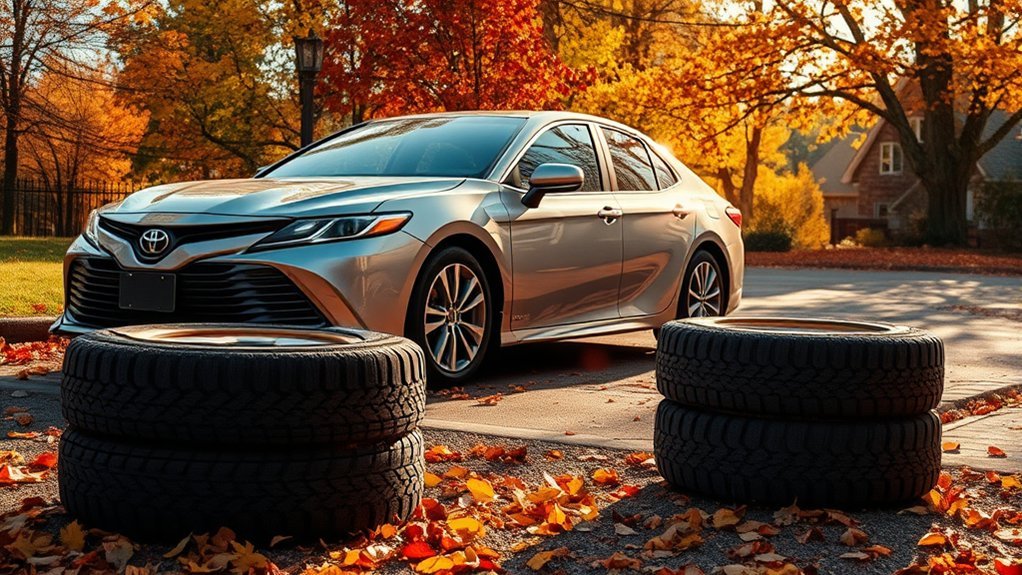
Your Toyota Camry does not need winter tires because the calendar says winter has arrived. It needs them when cold weather becomes consistent and your driving conditions include frost, snow, slush, or ice. Planning the change before the first major storm gives you time to choose the correct tires and avoid the seasonal installation rush.
Quick Answer
Install winter tires on your Toyota Camry when daily temperatures are consistently around or below 45°F (7°C), ideally before snow or ice becomes common. Use four matching tires in the correct size, confirm the cold inflation pressure on the driver-door placard, and choose tires carrying the three-peak mountain snowflake symbol.
Key Takeaways
- Use temperature, forecasts, and your normal routes to time the change instead of waiting for the first major snowfall.
- Install winter tires as a set of four. Mixing winter and all-season tires can create an unstable traction imbalance.
- Match Toyota’s specified tire size, construction, and load capacity for your Camry model year and trim.
- Use the pressure on the driver-door tire label, not a generic PSI range or the maximum pressure molded into the tire sidewall.
- Replace winter tires before their snow traction becomes poor, even if they have not yet reached the legal minimum tread depth.
Understanding the Importance of Snow Tires for Your Toyota Camry

Winter tires, often called snow tires, use cold-weather rubber compounds and tread patterns designed to stay flexible and grip snow, slush, and cold pavement. Transport Canada advises that all-season and summer tires begin losing elasticity below 7°C, while winter tires retain useful flexibility at lower temperatures.
The benefit is not limited to deep snow. Cold rain, frost, packed snow, and black ice can all reduce available grip. Winter tires cannot eliminate skids or guarantee a short stop, but they can improve braking, steering response, and acceleration compared with tires not designed for the conditions.
A second set also reduces the winter mileage placed on your all-season or summer tires. That can extend the time before those tires wear out, although the winter set adds purchase, installation, and storage costs.
[Products Worth Considering]
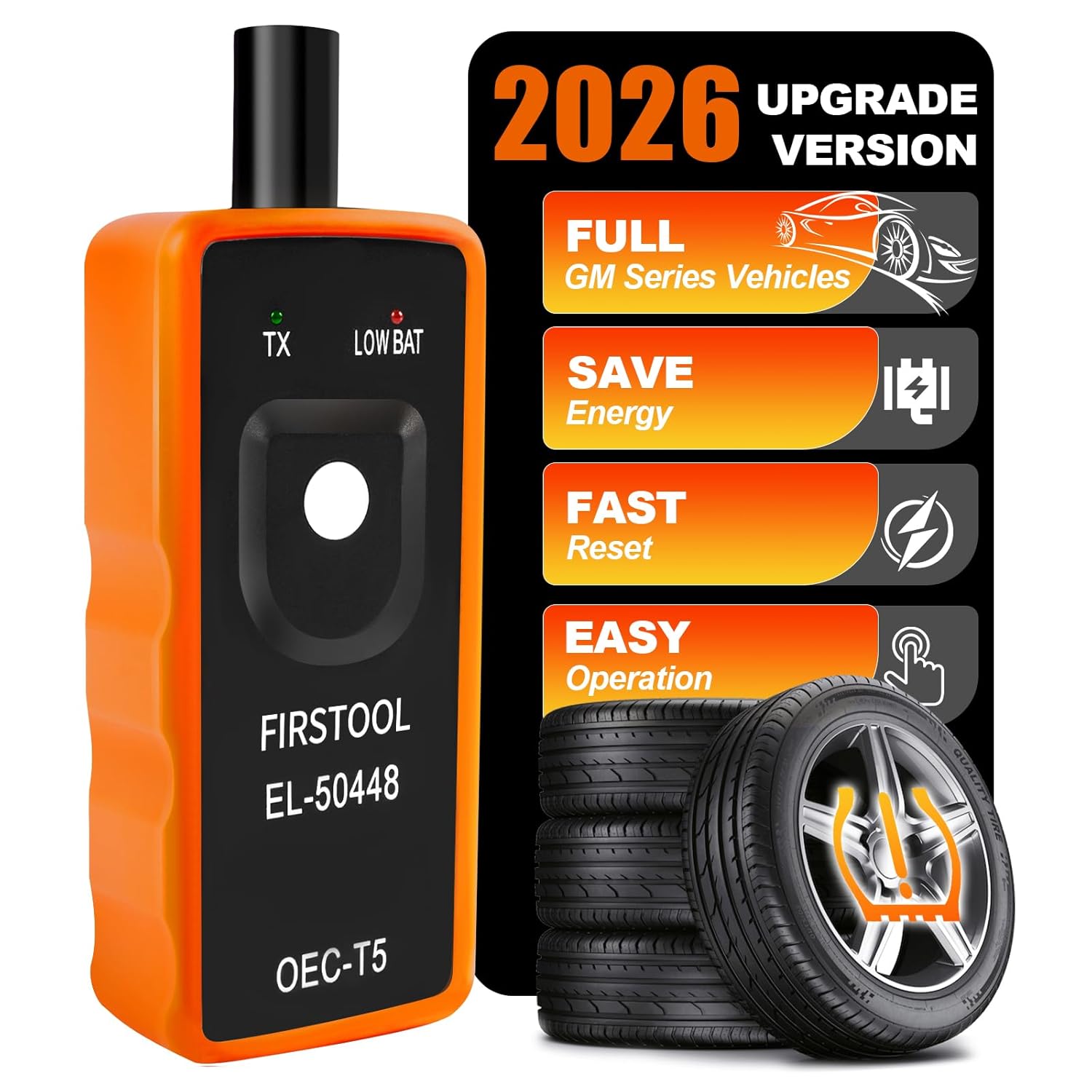
This TPMS relearn tool helps you quickly activate, match, and reset GM tire pressure sensors to keep the vehicle monitoring system working properly. It clears tire pressure alarms and dashboard warning lights after sensor replacement or tire rotation, and supports learning for common 315/433 MHz TPMS sensors. Designed for simple one-button operation, it can help you avoid unnecessary trips to repair shops.

Monitor tire tread wear with a smart, color-coded depth gauge that shows clear condition ranges at a glance. The bar is range marked for fast, easy readings, helping you maintain safer traction and performance. Each gauge is portable with a pocket clip, and the set includes 20 units for daily use and sharing.

Steelman white tire marking crayons provide high-contrast, semi-permanent marks for repairing and inspecting tires and equipment. They write on wet or dry, smooth or coarse surfaces including rubber, metal, glass, and wood, making them ideal for puncture location and damage outlining. The lead- and zinc-free crayons resist weather and fading yet wipe away when you no longer need the marks.
How Snow Tires Improve Safety and Performance
A tire creates control only through the small contact patch touching the road. When a tire compound becomes stiff, it cannot conform to the pavement as effectively. Winter compounds, deeper grooves, and small tread cuts called sipes help the tire maintain contact and clear snow or slush.
The actual improvement varies with tire model, tread depth, temperature, road surface, speed, and braking technique. Avoid relying on a fixed claim such as “30% shorter stopping distance” unless it comes from a test that matches your exact tires and conditions.
| Winter-tire feature | Practical benefit |
|---|---|
| Cold-flexible compound | Helps preserve grip as temperatures fall. |
| Deeper grooves | Moves snow and slush away from the contact patch. |
| High-density siping | Adds biting edges for packed snow and slippery surfaces. |
| Four matching tires | Keeps front and rear traction more balanced during braking and cornering. |
Winter tires increase available grip, but safe speed and extra following distance still determine whether you have enough room to stop.
When to Install Snow Tires: Key Temperature Guidelines
Use 45°F (7°C) as a planning threshold, not a magic switch. Once daily temperatures remain near or below that point, winter tires are generally better suited to the conditions. Book installation before the first major storm because tire shops often become busy as soon as snow enters the forecast.
Why the Temperature Threshold Matters
The road can be cold enough to affect tire behavior even when it is dry and clear. Check the temperatures during the hours you actually drive. A mild afternoon does not cancel a week of freezing morning commutes.
The “7-7 rule” is a useful memory aid rather than a law: install winter tires after temperatures stay at or below 7°C for roughly seven days. You do not need to wait seven full days when an earlier storm, freezing rain event, mountain trip, or legal deadline makes an earlier change safer.
Signs Winter Is Approaching
| What you notice | What to do |
|---|---|
| Daily temperatures near or below 45°F (7°C) | Schedule the seasonal change. |
| Repeated frost or black-ice warnings | Install before your next early-morning trip. |
| Snow, freezing rain, or mountain travel in the forecast | Do not wait for local accumulation. |
| Cold-weather wheelspin or longer stops | Slow down immediately and inspect your tires. |
Signs It Is Time to Switch to Snow Tires
Temperature is the clearest signal, but your route matters too. A Camry used on plowed city streets in a mild climate faces different conditions from one driven before sunrise, through lake-effect snow, or over mountain passes.
- Cold is becoming consistent: Your normal driving hours are regularly near or below 45°F (7°C).
- Winter precipitation is likely: Snow, freezing rain, frost, or black ice appears in repeated forecasts.
- Your routes stay untreated: Side streets, rural roads, steep grades, bridges, and shaded areas remain slippery longer.
- You plan winter travel: Your destination may have colder weather, chain controls, or winter-tire rules even when your home area does not.
- Your current tires feel less secure: Wheelspin, ABS activation, sliding, or increased stopping distance means you should reduce speed and have the tires inspected.
Warning: Do not treat winter tires as permission to drive at normal dry-road speeds. Ice can overwhelm any tire, and stopping distances can remain much longer than expected.
Choosing the Right Winter Tires for Your Camry
The correct tire depends on your Camry’s model year, trim, wheel size, and load requirements. Read the driver-door tire label and your owner’s manual before ordering. Toyota’s manuals and warranties portal lets you select the exact year and model.
Look for the Three-Peak Mountain Snowflake Symbol
Choose a tire carrying the three-peak mountain snowflake, or 3PMSF, symbol for severe-snow service. An M+S marking describes tread characteristics but does not, by itself, show that the tire passed the 3PMSF snow-traction test.
Use Four Matching Winter Tires
Install winter tires on all four wheels, even on a front-wheel-drive Camry. Two winter tires on the drive axle can leave the other axle with less grip, which may cause understeer or oversteer. For predictable handling, use the same size, construction, load capacity, and preferably the same model and similar tread depth on all four positions.
Studless, Studded, or All-Weather
- Studless winter tires: The best default for most drivers who face cold pavement, snow, and occasional ice.
- Studded winter tires: Can improve ice traction in some conditions, but they are noisy, can damage pavement, and may be restricted by local law.
- All-weather tires: Some carry the 3PMSF symbol and can work for moderate climates, but they usually involve compromises compared with a dedicated winter set in severe conditions.
Check the laws where you live and where you will travel. Seasonal dates, required symbols, minimum tread depths, and stud restrictions vary by jurisdiction.
Debunking Common Myths About Snow Tires
Winter-tire advice becomes misleading when it uses absolute statements. Your climate, routes, tire type, tread depth, and local rules all affect the right decision.
Myth: Snow Tires Are Never Necessary
Some drivers can manage mild winters with quality all-season or 3PMSF all-weather tires. That does not make dedicated winter tires unnecessary for everyone. They offer a larger cold-weather safety margin when you regularly face snow, ice, freezing rain, steep roads, or long winter trips.
Myth: All-Season Tires Are Always Sufficient
All-season tires are designed for a broad range of conditions, and they may be adequate in light, infrequent winter weather. They are not the same as dedicated winter tires. In sustained cold, deep snow, loose snow, or ice, a suitable winter tire normally provides better traction.
Myth: AWD Replaces Winter Tires
All-wheel drive can help a Camry accelerate when traction is limited, but it does not create extra tire grip during braking. Steering and stopping still depend on the tires. An AWD badge should not determine whether you install winter tires.
The Risks of Delaying Snow Tire Installation
Waiting until roads are already covered creates avoidable risks. You may have to drive to an appointment on tires that are poorly suited to the conditions, and shops may not have convenient openings or your preferred size in stock.
- Reduced cold-weather grip: Summer tires can become especially unsuitable as temperatures fall, while all-season performance also declines.
- Unbalanced handling: Installing only two winter tires or mixing tire types can make one axle lose grip before the other.
- Damage to summer tires: Some performance summer tires can crack or suffer compound damage when used or flexed in very low temperatures. Follow the tire manufacturer’s temperature restrictions.
- Rushed purchasing: Last-minute demand can limit your choice of matching tires and installation dates.
Pro Tip: Set a recurring reminder in early fall to inspect tread, confirm tire size, find the wheel-lock key, and book installation before the first cold-weather rush.
[Products Worth Considering]

The Kurgo Seasonal Tire Tote helps protect your car interior, clothes, and garage from tire grime, brake dust, and residue during seasonal tire changes. Its universal design fits most passenger tires between 22" and 31" in diameter, making storage and transport simpler with less mess. Built for rugged, repeated use, it’s machine washable for easy care and comes with a lifetime warranty.

The SAFELIFE dial tire tread depth gauge measures tread depth in 1/32 inch increments with clear, easy-to-read 2-inch dial face. Color zones using a traffic light system help you quickly judge whether tread is low, marginal, or ample for safer driving. Built with a durable zinc cast body and a metal detect probe for precise, comfortable use across cars, motorcycles, trucks, and buses.

Measure tire tread depth quickly and accurately with this LUMITECO dial gauge that reads in 1/32" increments up to 14/32". The color-coded green/yellow/red zones make it easy to judge tire wear and know when replacement is needed. A rugged, compact design with a protective pouch helps keep the gauge ready for use on cars, trucks, motorcycles, and more.
Follow These Best Practices for Winter Tire Maintenance
Winter tires still need routine inspection. Cold air lowers pressure, potholes can damage wheels, and snow can hide cuts or bulges that would be obvious in summer.
Tire Inspection Checklist
- Tread depth: Use a tread-depth gauge. Transport Canada advises against using tires worn close to 4 mm (5/32 inch) on snow-covered roads. The penny test only identifies roughly 2/32 inch and cannot confirm 6/32 inch.
- Sidewalls and tread: Look for cuts, punctures, bulges, cracking, exposed cords, and embedded objects.
- Uneven wear: Feathering, one-sided wear, or cupping may point to alignment, balance, suspension, or inflation problems.
- Age and condition: Tread depth alone does not prove a tire is safe. Have an older or questionable tire inspected by a qualified tire professional.
Check Pressure and TPMS
Use the Camry’s recommended cold inflation pressure from the driver-door label or owner’s manual. Do not use a generic 30–35 PSI range, and do not inflate to the maximum number on the tire sidewall. NHTSA recommends checking all tires at least monthly when cold, meaning the car has been parked for at least three hours.
Pressure falls as air temperature drops, roughly 1 PSI for each 10°F (about 5°C) decrease. Recheck after a major temperature change. A TPMS warning means action is needed, but the system does not replace manual monthly checks.
Rotation, Balance, and Alignment
Follow the rotation interval in your Camry maintenance schedule and the tire manufacturer’s guidance. Have the wheels balanced if you feel vibration. An alignment is not automatically required after every seasonal swap, but it should be checked when the car pulls, the steering wheel sits off-center, or the tires show uneven wear.
Proper Storage Techniques
Before removal, mark each tire’s position so the shop can rotate the set correctly next season. Clean off road salt and dirt, let the tires dry fully, and keep them away from sunlight, moisture, fuel, oil, solvents, electric motors, and other ozone-producing equipment.
Properly Storing Your Snow Tires Off-Season
USTMA recommends a clean, dry, cool, well-ventilated storage area. Indoor storage is better than leaving tires exposed outdoors. Opaque tire bags can provide extra protection after the tires are completely clean and dry, but do not trap water inside.
- Mounted tires: Stack them horizontally or hang them from suitable wheel supports. Do not hang an unmounted tire by its rubber bead.
- Unmounted tires: Store them upright on their tread and rotate their position occasionally to reduce prolonged deformation.
- Before reinstalling: Inspect for cracking, bulges, bead damage, uneven wear, and low tread. Confirm pressure after the wheels are mounted.
If storage space is limited, many tire shops offer seasonal storage and may include an inspection before the next installation.
Switching Back to All-Season Tires: What You Should Know
Remove winter tires when temperatures remain consistently above 45°F (7°C) and the risk of frost or snow has passed. The reverse 7-7 guideline, about seven days above 7°C, is useful for planning, but local weather and travel plans should control the final date.
Winter compounds can wear faster in warm conditions and may feel less precise on hot, dry pavement. Before storage, inspect and clean the set. After reinstalling your warm-season tires, set each tire to the door-label pressure and check for vibration, pulling, or unusual noise.
Winter Tire Installation Checklist
- Confirm all four tires match the required size, construction, and load capacity.
- Check that each tire has adequate tread and no visible damage.
- Verify directional arrows or “outside” sidewall markings are installed correctly.
- Set cold pressure to the driver-door placard specification.
- Make sure TPMS sensors are working and the warning light clears after installation.
- Retorque wheel fasteners according to the installer or owner’s manual guidance when required.
- Drive gently at first and allow extra following distance in every winter condition.
Note: Tire chains, studded tires, and seasonal tire requirements vary by location and Camry configuration. Check your exact owner’s manual and local road rules before using them.
Frequently Asked Questions
Is October too early to put winter tires on a Toyota Camry?
Not necessarily. October is appropriate when temperatures in your area are consistently near or below 45°F (7°C), winter travel is planned, or local rules set an installation date. In a warm climate, installing too early can increase winter-tire wear.
How does a Toyota Camry handle snow?
A Camry can be predictable in light to moderate snow when it has suitable tires and you use smooth steering, braking, and acceleration. Ground clearance is limited compared with many SUVs, so deep or unplowed snow can still stop the car or damage lower body panels.
What is the 7-7 rule for winter tires?
It is a rule of thumb that says to install winter tires after temperatures stay at or below 7°C (45°F) for seven days, then remove them after temperatures remain above that level for seven days. It is a planning guide, not a universal legal requirement.
What should tire pressure be in winter on a Toyota Camry?
Use the cold pressure printed on your Camry’s driver-door tire label or listed in the owner’s manual. The correct value varies by model year, trim, tire size, and axle specification, so a universal 30–35 PSI answer is not reliable.
Do I need four winter tires on a front-wheel-drive Camry?
Yes. Four matching winter tires provide more balanced acceleration, braking, and cornering grip. Installing only two can make the front and rear axles respond differently on a slippery road.
How much tread should winter tires have?
For dependable snow performance, plan replacement before the tires approach 4 mm (5/32 inch). A tire may still be above a local legal minimum yet have too little tread for confident snow and slush evacuation.
Conclusion
Put winter tires on your Toyota Camry when temperatures settle near or below 45°F (7°C), not after the first serious storm has already arrived. Choose four matching 3PMSF tires in the correct size, use the door-label pressure, monitor tread and damage, and remove the set after sustained spring warmth. Winter tires add grip, but careful speed, smooth inputs, and extra following distance remain essential.
Sources
- Transport Canada: Using winter tires — 7°C guidance, 3PMSF identification, four-tire installation, tread depth, and cold-weather pressure.
- NHTSA TireWise: Tire safety — cold pressure checks, door-label pressure, tread inspection, and routine maintenance.
- NHTSA: Winter driving tips — winter tire inspection and safe-driving preparation.
- Toyota Owners: Manuals and warranties — model-year-specific tire size, inflation, chain, and winter-driving instructions.
- U.S. Tire Manufacturers Association: Tire facts — safe tire inspection and storage conditions.
[Products Worth Considering]
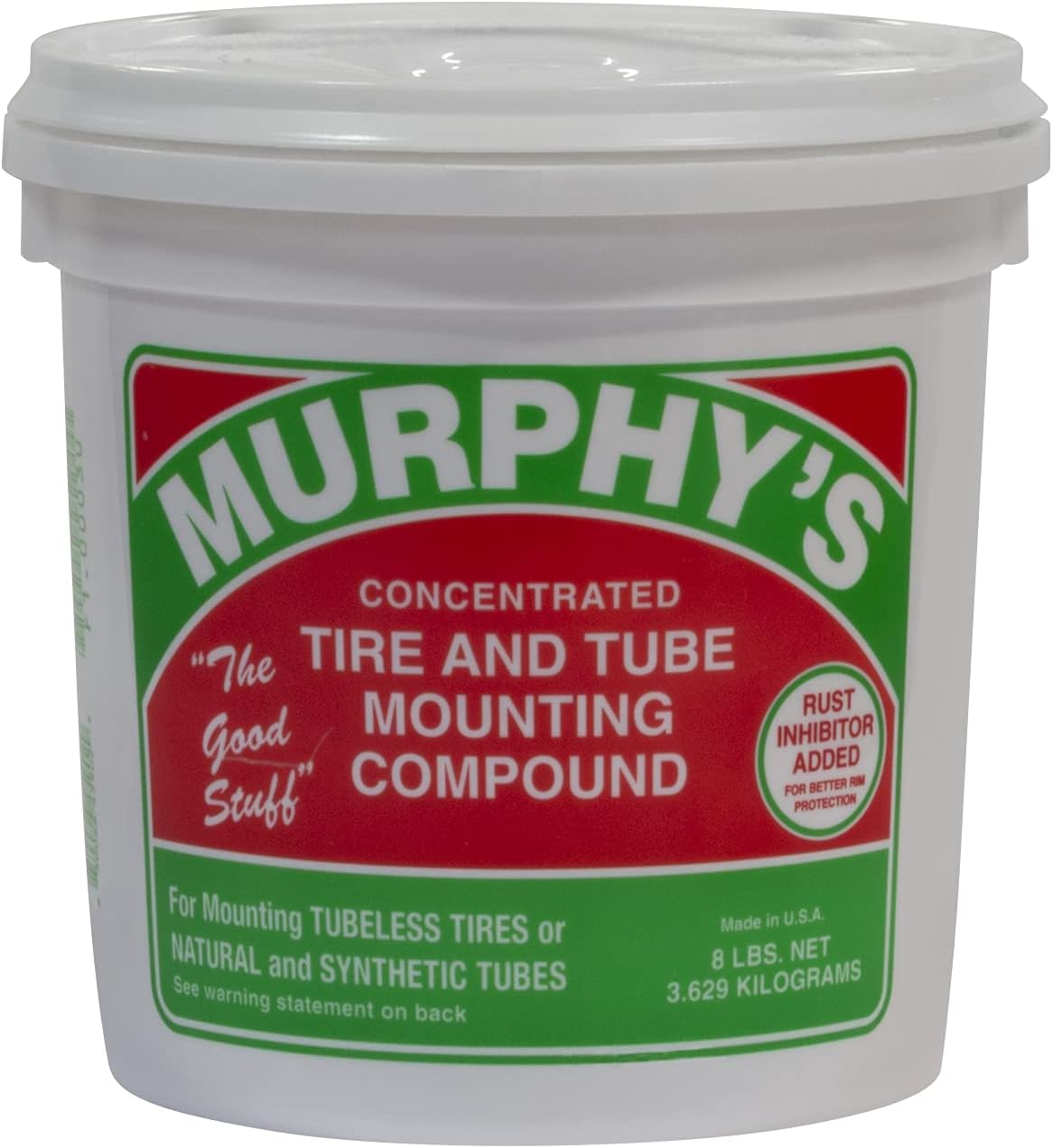
A concentrated tire and tube mounting compound designed to help simplify mounting rubber tires and tubes on passenger, semi truck, construction, and OTR applications. Its ultra-thick formula packs beads effectively and includes rust inhibitors to help protect against corrosion during use.

Keep your tires properly inflated with this analog VONDIOR tire pressure gauge, designed for fast, easy readings without batteries. The swiveling, two-axis hose and large glow dial help you measure at any tire angle with instant visibility. Built with a protective rubber shield, it supports durable, low-maintenance use for cars and trucks.

Milton S-921 pencil tire pressure gauge helps you maintain optimal tire pressure for passenger cars with accurate readings in PSI and kPa. It features a built-in deflator valve for convenient pressure adjustments, plus a single chuck head and nylon indicator bar for easy use on the go. Built from durable plated brass and designed for reliable performance, it’s a practical road trip and cold-weather maintenance tool.

Related Articles

Toyota Camry All-Season Tires Explained: What They Can and Can’t Do
In exploring Toyota Camry all-season tires, discover their benefits and limitations—are they really the right choice for your driving needs?
Read More
Toyota Camry Tire Traction in Ice and Snow: A Practical Winter Driving Guide
Learn essential tips for maximizing tire traction on ice and snow in your Toyota Camry, ensuring your winter driving is safe and confident. Discover more now!
Read More
Do Toyota Camry Tires Need Snow Chains? When They Help and When They Don’t
How do snow chains enhance your Toyota Camry's winter driving safety, and when should you avoid using them? Discover the essential details inside!
Read More