
When to Put on Snow Tires for a Toyota RAV4: Timing Is Key
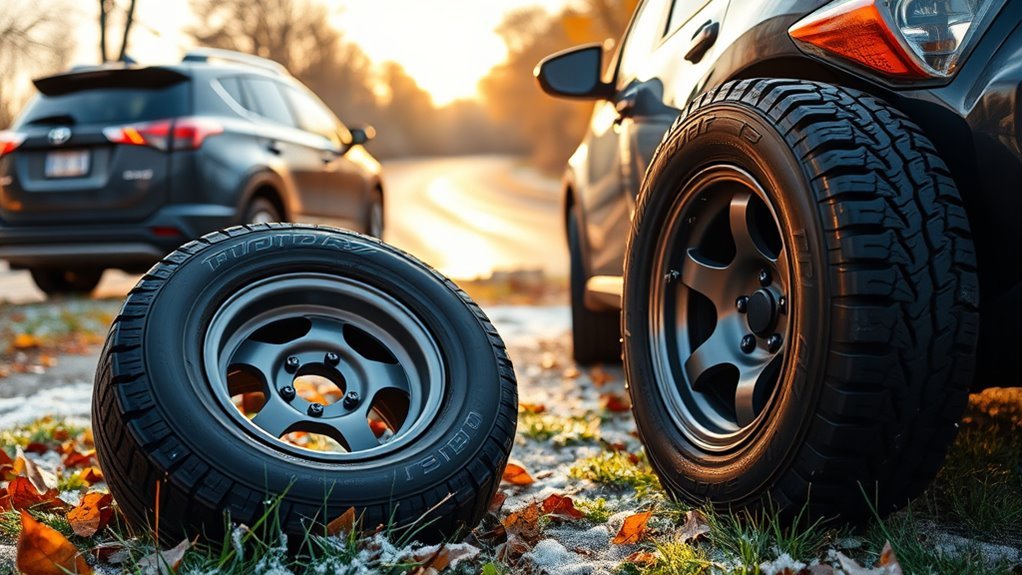
You should switch your Toyota RAV4 to winter tires when daily lows are repeatedly near or below 7°C (45°F), especially if frost, slush, snow, black ice, or winter highway travel is likely. At that temperature, all-season tires can start losing cold-weather grip, while winter tires stay more flexible and deliver better control on cold pavement, snow, and slush.
Quick Answer
Swap your RAV4 to winter tires when temperatures are consistently below 7°C (45°F), before the first sustained cold snap. Install four matching winter tires, check cold tire pressure, confirm TPMS operation, and follow your owner’s manual for lug torque and chain or cable fitment.
Key Takeaways
- Use the 7°C / 45°F rule as your main timing trigger, not the first snowfall.
- Install winter tires in a full set of four for balanced braking, steering, and stability.
- AWD helps your RAV4 get moving, but it does not replace tire grip for stopping or cornering.
- Check your exact RAV4 owner’s manual before fitting chains, cables, wheel sizes, or TPMS sensors.
- Book your seasonal tire swap early, because tire shops fill quickly after the first frost or snow forecast.
At a Glance
| Time Required | 30–90 minutes for a shop swap; longer if mounting tires onto wheels |
| Difficulty | Easy at a tire shop; moderate for a home wheel swap |
| Tools Needed | Pressure gauge, torque wrench, jack and stands if doing a wheel swap yourself |
| Cost | Varies by tire size, tire brand, wheels, TPMS sensors, installation, and storage |
When to Swap to Winter Tires: Simple Temperature Rule Below 45°F / 7°C
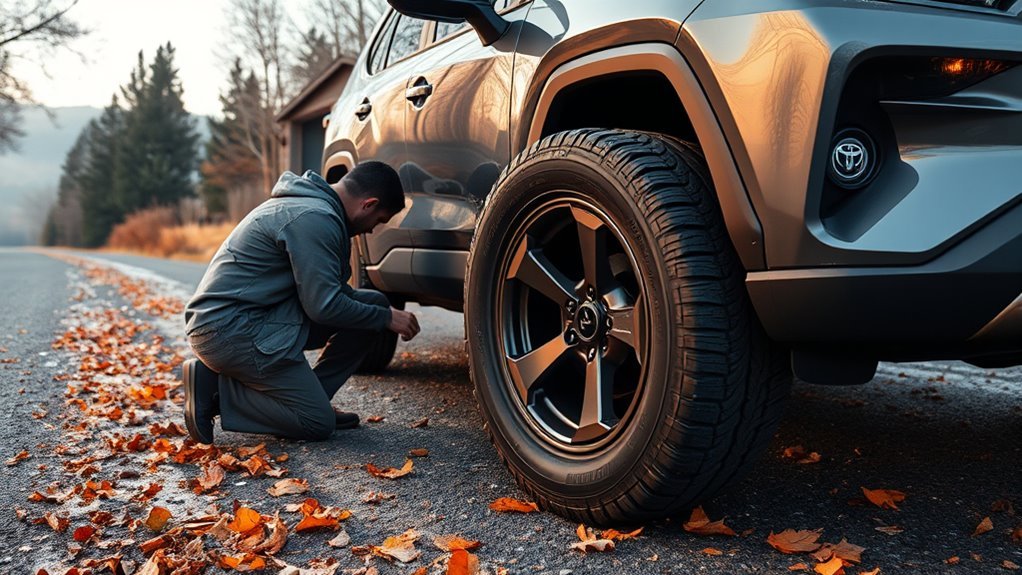
Switch your RAV4 to winter tires once local temperatures are consistently near or below 7°C (45°F). You do not need to wait for deep snow. Cold pavement, frost, slush, and freezing rain can reduce traction before roads look dangerous.
The reason is simple: the rubber compounds in many all-season and summer tires can stiffen as temperatures drop. Winter tires use cold-weather compounds and tread patterns designed to stay pliable, move slush, and bite into snow. That helps with stopping distance, steering response, and stability.
For most RAV4 owners, the best practical rule is this: watch the forecast for a week. If overnight lows are repeatedly under 7°C, or if the forecast shows frost or early snow, book the swap. Waiting until the first storm often means long shop waits and riskier driving.
Note: The 7°C rule is a timing guide, not a legal standard. Your actual need depends on your region, commute, tire condition, elevation, and whether you drive before sunrise or after dark when roads are colder.
[Products Worth Considering]

Keep RV, trailer, or truck dual-axle tires protected with waterproof, UV-resistant covers that help guard against sunlight, snow, rust, and dirt. The dual tire covers are easy to install with a rope/bungee fastener for a stable fit that won’t easily slip. Designed for 27–30 inch diameter wheels, they help maintain tire condition through harsh weather.

RVMATE dual-axle RV tire covers help shield your tires from sunlight, snow, rust, and dirt to keep them in better condition in harsh weather. Made with heavy-duty waterproof, UV-resistant 420D Oxford fabric, they provide strong shading and help reduce wear. They install easily by placing the cover on the wheel and fastening the rope for a stable fit.
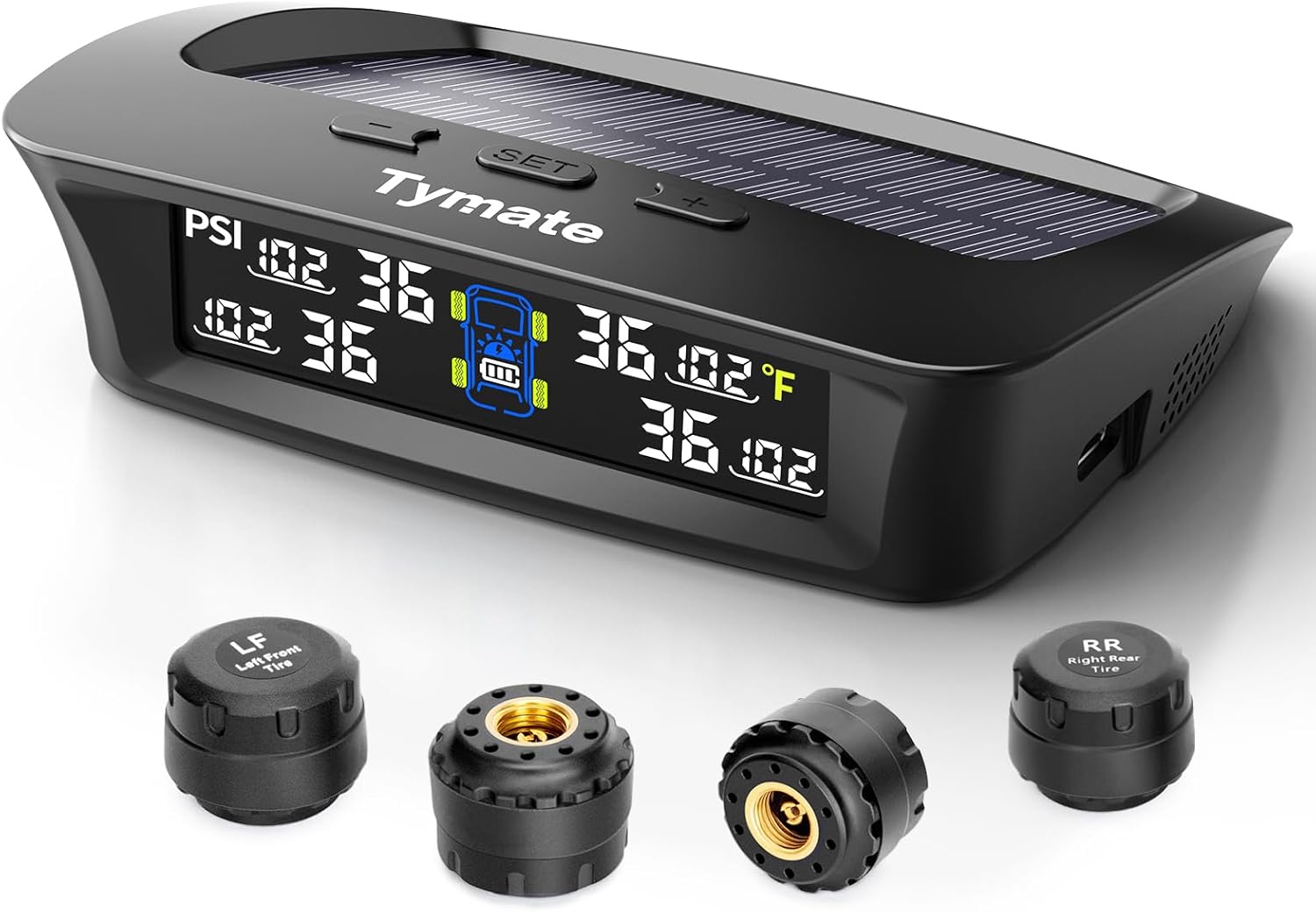
The Tymate TM3 RV TPMS delivers real-time tire pressure monitoring from 0 to 144 PSI with accurate readings and dependable wireless communication. It includes four external sensors with pre-pairing, six alarm modes for rapid leak, pressure extremes, temperature, and signal loss, plus an easy-reference setup for alert thresholds. Solar and USB-C charging help keep the display powered, while the color LCD and adaptive backlight improve visibility for safer driving and towing.
Weather and Calendar Cues That Mean Change Now
Temperature is the best trigger, but weather and calendar cues help you avoid being caught late. In many Canadian regions, including the Greater Toronto Area, that often means planning the swap in October or early November rather than waiting for the first major snowfall.
Consistent Below 7°C
If temperatures stay consistently below 7°C (45°F), schedule your seasonal tire swap. Your RAV4 may still drive normally on dry roads, but cold rubber and cold pavement reduce the margin you have in sudden braking, quick turns, and emergency maneuvers.
Pay special attention if you drive early mornings, late evenings, rural roads, bridges, shaded roads, or higher-elevation routes. Those areas can freeze sooner than main roads.
First Frost or Snow
The first frost on your windshield, grass, driveway, or door handles is a clear warning that overnight road surfaces are entering winter-tire territory. First snow, freezing rain, or a forecasted cold snap means you should change immediately if your winter tires are not already installed.
If you are travelling north from Brampton, heading to cottage country, crossing into Quebec, or driving through mountain passes in another province or state, fit winter tires before you leave. Conditions can change quickly once you leave urban roads.
Pro Tip: Set a reminder to check tire-shop availability as soon as nighttime lows start approaching 7°C. Booking before the first snowfall usually gives you better appointment times and more tire choices.
How to Schedule Your Seasonal Tire Swap for Less Wait
Most drivers wait until snow is in the forecast. That is exactly when service bays fill up. To avoid the rush, book your RAV4’s winter tire appointment when temperatures first begin dropping toward 7°C, not after roads turn icy.
Book Early Appointments
Early booking gives you more control over timing, tire selection, and storage. It also helps you avoid driving on cold-weather roads with tires that are not suited to the conditions.
- Watch the forecast: Book when overnight lows begin trending toward 7°C.
- Choose off-peak slots: Mid-week appointments are often easier to secure than Saturdays.
- Confirm what is included: Ask whether the appointment includes balancing, TPMS checks, pressure adjustment, and lug torque.
- Ask about storage: Tire storage can save space and make spring and fall swaps easier.
Off-Peak Scheduling Options
If your schedule is flexible, aim for weekday mid-morning or early afternoon. These times often have shorter waits than evenings and weekends.
| Day | Time Window | Likely Wait |
|---|---|---|
| Tuesday | 10:00–13:00 | Low |
| Wednesday | 11:00–14:00 | Low |
| Thursday | 09:30–12:30 | Low |
Bring your wheel-lock key, confirm your tire size, and ask the shop to note your tire tread depth and tire pressure on the work order. Those small details help you plan future tire replacement before the next season.
All-Season vs Winter Tires for a RAV4: What Changes in Cold
Your RAV4’s all-season tires may handle light cold and occasional flurries, but they are a compromise. Winter tires are designed for low temperatures, snow, slush, and ice-prone roads.
- Compound: Winter tires stay more flexible in cold weather; many all-season tires stiffen as temperatures drop.
- Tread: Winter tread blocks and sipes help grip snow and move slush away from the contact patch.
- Braking: Winter tires can reduce stopping distance on cold, snowy, or icy roads compared with all-season tires.
- Stability: Four matching winter tires help your RAV4’s ABS, traction control, and stability systems work with more predictable grip.
- AWD limits: AWD can help acceleration, but it does not create extra braking grip. Tire traction still matters most when stopping and turning.
AWD helps a RAV4 move forward. Winter tires help it stop, steer, and stay controlled when the road surface is cold, snowy, slushy, or icy.
How to Choose: Studded, Studless, or All-Weather Winter Tires
Choose your RAV4’s tires based on the winter conditions you actually drive in. A daily Brampton commute, a northern Ontario highway route, and a mountain ski trip all place different demands on tires.
Studless Winter Tires
Studless winter tires are the best fit for many RAV4 owners. They use winter rubber compounds and aggressive tread designs without metal studs. They are well suited to cold pavement, snow, slush, and mixed winter driving.
Studded Winter Tires
Studded tires can help on hard-packed ice, but laws vary. In Ontario, studded tires are restricted and are generally not allowed for Southern Ontario residents. If you live in or regularly travel through a region where studs are permitted, check the current provincial or state rules before buying.
All-Weather Tires
All-weather tires are different from typical all-season tires. Many carry the Three-Peak Mountain Snowflake symbol and can be used year-round. They are convenient for mild winters and lower-mileage drivers, but dedicated winter tires are still the stronger choice for frequent snow, ice, and severe cold.
What Symbol to Look For
Look for the Three-Peak Mountain Snowflake symbol on winter or all-weather tires. In Canada, this symbol identifies tires that meet regulated snow-traction performance requirements for winter use.
Warning: Do not mix winter tires with all-season or summer tires on the same RAV4. Transport Canada recommends installing winter tires in sets of four to maintain control and stability.
Local Laws and When Chains or Cables Are Required for a RAV4
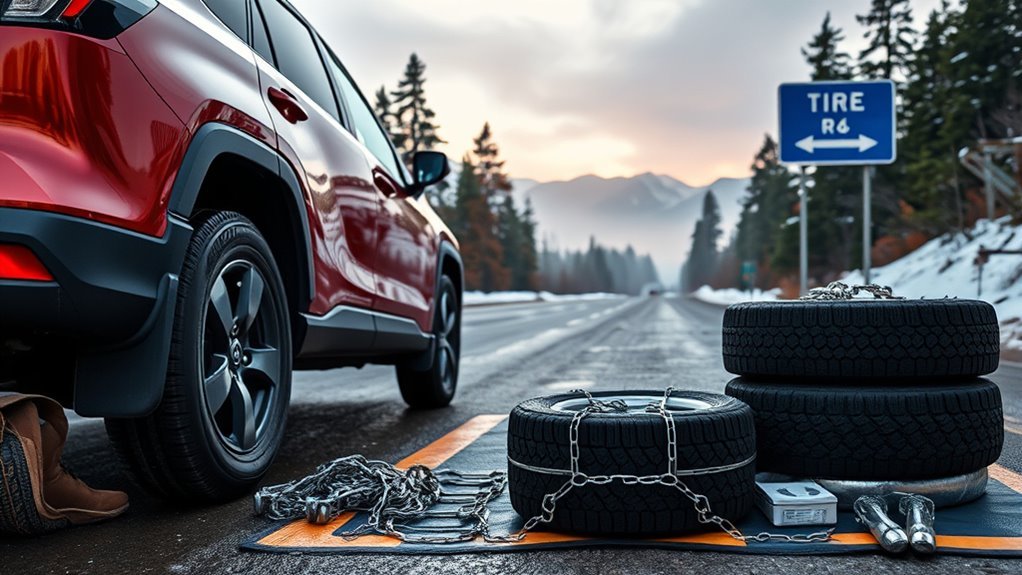
Chain and cable rules depend on where you drive. Ontario drivers may be focused on winter tires and studded-tire restrictions, while mountain routes in British Columbia, the United States, and other regions may use posted chain-control rules during storms.
Province, State, and Route Rules
Before a winter road trip, check official transportation websites for the province or state you will drive through. Do not rely only on general tire advice, because chain rules can change by route, vehicle type, tire type, and weather condition.
- Ontario and local commuting: Winter tires are strongly recommended, and all-season tires can start to lose grip around 7°C. Studded tire use is restricted by region and residency.
- Quebec travel: Quebec has province-wide winter tire requirements during the winter season, so check the dates and vehicle exemptions before entering.
- Mountain travel: Some routes require approved winter tires or chains during posted periods or storms.
- Cross-border travel: U.S. chain laws vary widely by state and highway, so check official road-condition sites before departure.
When Chains Are Required
Chains or cables are usually required only when authorities post or announce chain controls. If signs say chains are required, comply immediately and use designated chain-up areas where provided.
| Situation | What to Check | Action |
|---|---|---|
| Mountain pass | Posted chain-control signs | Install approved chains or cables if required |
| Severe storm | Official road-condition updates | Follow route-specific instructions |
| RAV4 tire size | Owner’s manual clearance rules | Use only compatible traction devices |
| AWD RAV4 | Model-year manual instructions | Do not assume AWD exempts you |
| Bare pavement | Road surface condition | Remove chains to avoid damage |
Chain and Cable Fitment
Always check your exact RAV4 owner’s manual before buying or installing chains. Some RAV4 manuals specify chain size, clearance limits, and which axle to use. For many recent RAV4 models, Toyota instructs drivers to fit chains on the front tires only, but you should confirm this for your model year and tire size.
Using incompatible chains can damage wheels, suspension, body panels, brake components, and TPMS sensors. When in doubt, ask a Toyota service department to confirm fitment.
When and How to Fit Chains/Cables on a RAV4: Step Checklist
Practice fitting chains or cables before you need them. Trying to learn in blowing snow beside a busy road is stressful and unsafe.
- Check the manual first: Confirm your RAV4 model year, tire size, approved chain type, and installation axle.
- Inspect the chains: Look for broken links, damaged cables, missing tensioners, or twisted sections.
- Park safely: Pull fully off the road, use a level area if possible, turn on hazard lights, and set the parking brake.
- Lay them out: Untangle the chains or cables and position them exactly as the manufacturer instructs.
- Fit them tightly: Drape over the tire, connect the inner fastener, connect the outer fastener, and attach the tensioner.
- Move and recheck: Drive a short distance slowly, then stop safely and retighten. Some Toyota manuals advise retightening after about 0.5–1.0 km.
- Drive slowly: Follow the chain manufacturer’s speed limit and avoid sudden steering, braking, and acceleration.
- Remove on clear pavement: Chains are for snow or ice-covered roads, not long stretches of bare pavement.
Warning: Never install chains on the wrong axle or use chains that rub. Stop immediately if you hear scraping, banging, or vibration after installation.
[Products Worth Considering]
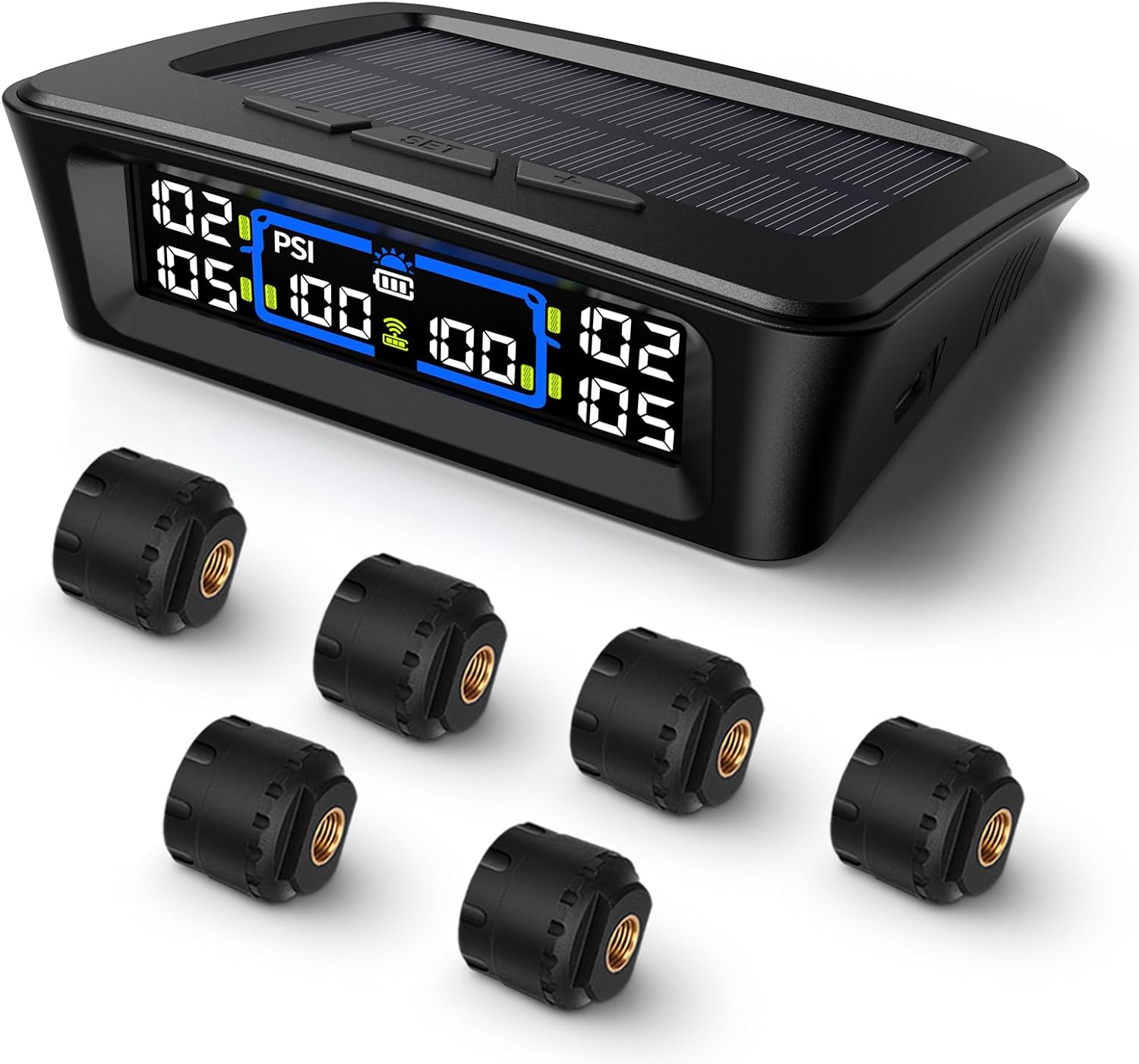
The Tymate TM12 RV TPMS delivers real-time tire pressure and temperature monitoring with a stable 433Hz display for safer long-distance driving. It supports simultaneous...
Winter Tire Install Checklist: TPMS, Lug Torque, and Pressures
A winter tire swap is not finished until pressure, TPMS, tread, wheel seating, and lug torque are checked. These details affect safety as much as the tire choice itself.
- Check tread depth: Do not use worn winter tires in severe winter conditions. Transport Canada advises not using tires with less than 4 mm tread depth on snow-covered roads or in severe snow conditions.
- Install four matching tires: Use the same type, size, speed rating, load index, and tread pattern on all four wheels whenever possible.
- Set cold tire pressure: Use the tire information label on the driver’s door edge or door post. Do not use the maximum pressure molded on the tire sidewall as your target.
- Confirm TPMS operation: If you use separate winter wheels, make sure the tire pressure warning valves and transmitters are compatible and registered if required.
- Torque the lug nuts: Use a calibrated torque wrench and a star pattern. Many recent RAV4 manuals list 76 ft-lbf (103 N·m), but always verify your exact model year.
- Recheck after driving: Recheck pressure after the tires are cold again and confirm the shop’s recommendation for lug-nut recheck timing.
Cold weather lowers tire pressure, so the TPMS light may appear on a cold morning even if the tire looked fine the previous afternoon. Check pressure with a gauge when the tires are cold, ideally before driving or after the vehicle has been parked for at least three hours.
Cost, Storage, and Wheel Options That Affect Timing and Value
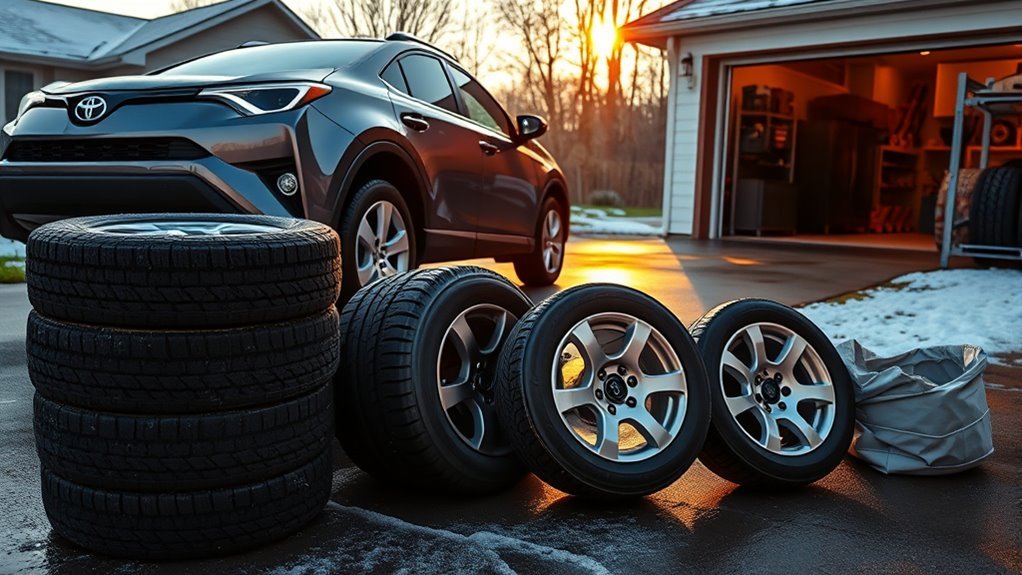
Your total winter tire cost depends on tire size, tire brand, whether you buy separate wheels, whether you add TPMS sensors, and whether you pay for seasonal storage. Buying a dedicated winter wheel package can cost more upfront but may reduce seasonal mounting costs and protect your factory wheels from repeated tire mounting.
Winter Wheels vs Seasonal Mounting
A separate set of winter wheels makes seasonal swaps faster. It can also reduce wear on tire beads because the tires do not need to be removed from the wheels twice a year. Steel wheels are often more affordable, while alloy wheels may look better and resist corrosion differently depending on finish and care.
TPMS Sensors for Winter Wheels
If your winter wheels do not have compatible TPMS sensors, your RAV4 may show a tire-pressure warning. Ask your Toyota service department whether your model can store multiple sensor sets and whether new sensors need programming.
How to Store Off-Season Tires
Store tires in a cool, dry, clean place away from direct sunlight, motors, solvents, and ozone sources. Clean off road salt before storage and use tire bags if available. If the tires are mounted on wheels, they can usually be stacked or hung. If they are unmounted, store them upright and rotate their position occasionally.
Pro Tip: Label each tire position before storage, such as front-left or rear-right. That makes next season’s rotation easier and helps even out tread wear.
Buy and Install Winter Tires Near Brampton: Why Choose Attrell Toyota
If you drive a RAV4 near Brampton, choosing a Toyota-focused service centre can simplify the winter tire process. A dealer team can confirm tire size, load rating, wheel fitment, TPMS compatibility, lug torque, and chain or cable guidance for your exact model year.
- RAV4-specific fitment: Get tire and wheel recommendations matched to your trim, tire size, and driving habits.
- Professional installation: Proper mounting, balancing, cold pressure setting, and lug torque help keep the vehicle predictable.
- TPMS support: Winter wheels can be matched with compatible tire pressure warning valves and transmitters.
- Seasonal care: Tire rotation, inspection, storage, and future tread-depth checks help you plan ahead.
Choose Attrell Toyota in Brampton for winter tire selection, fitment checks, and seasonal installation support for your Toyota RAV4.
Frequently Asked Questions
What mode should I drive my RAV4 in the snow?
Use Snow mode if your RAV4 has it, and drive gently with smooth steering, braking, and acceleration. Snow mode and AWD can help reduce wheel spin, but they do not replace winter tires. Your stopping distance still depends heavily on tire grip.
Do I need winter tires if my RAV4 has AWD?
Yes, if you regularly drive in cold, snowy, slushy, or icy conditions. AWD helps with acceleration, but it does not shorten braking distance by itself. Winter tires improve the grip your RAV4 needs to stop and turn.
Should I install two winter tires or four?
Install four matching winter tires. Mixing winter tires with all-season or summer tires can make the RAV4 less stable because the front and rear axles may grip differently during braking or turning.
When should I remove winter tires in spring?
Remove winter tires once temperatures are consistently above 7°C and winter road conditions are no longer expected. Driving winter tires for long periods in warm weather can increase wear and reduce crisp handling.
Where do chains go on a Toyota RAV4?
Check your exact owner’s manual. Many recent RAV4 manuals instruct owners to install tire chains on the front tires only, but chain fitment depends on model year, tire size, wheel size, and clearance.
Are winter tires mandatory in Ontario?
Winter tires are not mandatory for most private passenger vehicles in Ontario, but they are strongly recommended for winter safety. Some insurers may offer discounts when winter tires are installed. Quebec has province-wide winter tire requirements during its winter season.
Conclusion
The right time to switch your RAV4 to winter tires is before winter roads become a problem. Use the 7°C (45°F) rule, watch for frost and cold snaps, and book early so you are not stuck waiting after the first snowfall.
Install four matching winter tires, check TPMS and cold tire pressure, confirm lug torque, and store your off-season tires properly. Those small steps help your RAV4 stay predictable, controlled, and ready for cold-weather driving.
Sources
- Transport Canada — Using winter tires — winter tire installation, tread depth, tire pressure, and four-tire guidance.
- Ontario.ca — Winter driving — Ontario winter driving advice, 7°C grip guidance, and studded tire restrictions.
- NHTSA TireWise — cold tire pressure checks, tire labels, TPMS, balancing, alignment, and rotation guidance.
- Toyota Owners — RAV4 winter driving tips — RAV4 tire chain installation and retightening guidance for the referenced manual.
- Toyota Canada — Owner’s manuals — official place to confirm your exact RAV4 model-year instructions.
- Tire and Rubber Association of Canada — Winter Tire Advantage — winter tire performance and Three-Peak Mountain Snowflake information.

Related Articles

Toyota RAV4 TPMS Reset: Easy Steps That Work
Unlock the secrets to resetting your Toyota RAV4's TPMS effortlessly—discover the essential steps to ensure your tires are always safe.
Read More
Toyota RAV4 Tire Rotation: DIY Steps & Pattern
Take control of your Toyota RAV4's tire maintenance with our simple DIY rotation guide—discover the best steps for optimal performance and longevity!
Read More
Mix Tire Brands on a Toyota RAV4? Expert Guide
Keeping your RAV4 safe? Learn when mixing tire brands risks traction, ABS/TCS and AWD damage — and what exact matches you must insist on.
Read More